A large protest raged outside the National Press Club in Washington, DC, last night where the alt-right’s “Deploraball” celebration was being held. Some protesters started a fire to burn signs and chanted “Nazi scum” as hundreds of Donald Trump’s biggest fans entered the party.
Fox News reporter Griff Jenkins asked one young protester named Connor— dubbed a “fire-starting child” on Facebook— about the fire.
“My name’s Connor and I actually kinda started this fire,” the boy responded. After Jenkins mistakenly called him “Carter” the young, media-savvy kid set him straight.“It’s Connor,” he repeated, then informed the Fox lackey that he started the fire because:
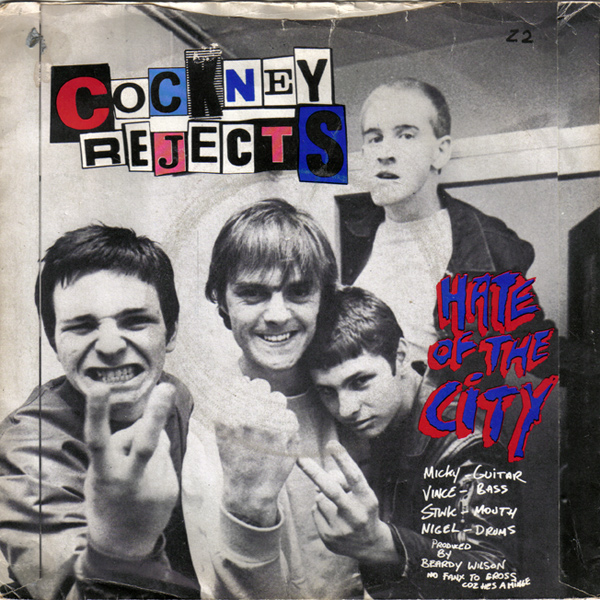
The 1970s were a hugely contentious time for the UK. In 1973 the country was reeling from a massive outbreak of worker strikes that were in retaliation to new bills that put harsh restrictions on pay increases. By May there were over 1.6 million workers walking the picket lines. On January 7th, 1974, hinging on measures introduced by then Prime Minister Edward Heath, a mandatory three-day work week was instituted. Initially a five-day restriction, the new three-day mandate came into play in order to avoid any further fallout due to the crisis-level lack of energy and fuel resources. Once the measure went into effect 885,000 workers applied for unemployment benefits. All of this discontent during this dangerously tumultuous time would be fuel for the fire of the Cockney Rejects.
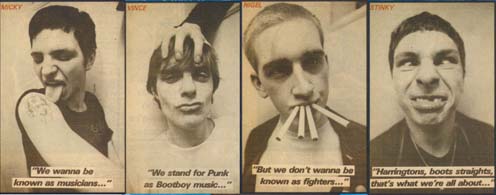
The Cockney Rejects were hardass guttersnipes, the sons of East End dockers, who were inspired by the Sex Pistols. They sang about fights, how much they hated the police and how much they loved football. And there were songs about fighting over football and being arrested.
The original group consisted of the Geggus brothers, Mickey and Jeff, AKA Stinky Turner. Both brothers were good boxers and neither had ever lost in the ring. They were joined by Vince Riordan as their bassist in 1979. After getting their start as The Shitters, the band signed with EMI (tipped by Sham 69’s Jimmy Pursey) after playing a small handful of live gigs which would quickly become known for regularly descending into violent riots. Much of the contention stirred up by quad was based on their support of their beloved West Ham United Football Club.
When the group appeared on Top of the Pops on May 22nd, 1980 following West Ham’s ascension to the FA Cup Finals, the band literally wore their pride on stage donning their “West Ham” shirts in support of their team. Apparently after barely miming their way through their hit version of the West Ham theme “I’m Forever Blowing Bubbles” the band ran amok in the hallowed halls of the BBC and were subsequently banned from performing on the show again. Still just teenagers, the Cockney Rejects would continue to live up to their reputation by playing an equally unhinged live gig at The Cedar Club in Birmingham. That show, which left fans lying bloody on the floor would go on to be known as the “Battle of Birmingham” and has been called the most “violent” live show in British concert-going history. It would also mark a turning point in the band’s career as future gigs would devolve into clashes between opposing groups of football fans and skinheads who followed the Oi! movement.
Journalist Garry Bushell, who covered the Oi! movement for SOUNDS later wrote:
With the Rejects, football was the trouble. And it was understandable because they’d been fanatically pro-West Ham aggro from the word go. Even at their debut Bridge House gig they decked the stage out with a huge red banner displaying the Union Jack, the West Ham crossed hammers and the motif ‘West Side’ (which was that part of the West Ham ground then most favoured by the Irons’ most violent fans). Their second hit was a version of the West Ham anthem ‘Bubbles’ which charted in the run-up to West Ham’s Cup Final Victory in the early summer of 1980. On the b-side was the ICF-pleasing ‘West Side Boys’ which included lines like: ‘We meet in the Boelyn every Saturday/Talk about the teams that we’re gonna do today/Steel-capped Dr. Martens and iron bars/Smash the coaches and do ’em in the cars’.
It was a red rag to testosterone-charged bulls all over the country. At North London’s Electric Ballroom, 200 of West Ham’s finest mob-charged less than fifty Arsenal and smacked them clean out of the venue. But ultra-violence at a Birmingham gig really spelt their undoing. The audience at the Cedar Club was swelled by a mob of Birmingham City skinheads who terrace-chanted throughout the support set from the Kidz Next Door (featuring Grant Fleming, now a leftwing film maker, and Pursey’s kid brother Robbie). By the time the Rejects came on stage there were over 200 Brum City skins at the front hurling abuse. During the second number they started hurling plastic glasses. Then a real glass smashed on stage. Stinky Turner responded by saying: “If anyone wants to chuck glasses they can come outside and I’ll knock seven shades of shit out of ya”. That was it, glasses and ashtrays came from all directions. One hit Vince and as a Brum skinhead started shouting “Come on”, Micky dived into the crowd and put him on his back. Although outnumbered more than ten to one, the Rejects and their entourage drove the Brummy mob right across the hall, and finally out of it altogether. Under a hail of missiles Mickey Geggus sustained a head injury that needed nine stitches and left him with what looked like a Fred Perry design above his right eye. Grant Fleming, a veteran of such notorious riots as Sham at Hendon and Madness at Hatfield, described the night’s violence as the worst he’d ever seen.
Guy Debord and Alice Becker-Ho playing Kriegspiel in 1977. Photo by Jeanne Cornet via Cabinet
After he disbanded the Situationist International in 1972, one of the obsessions that consumed Guy Debord was a board game he invented. Kriegspiel, or Le Jeu de la Guerre—German and French, respectively, for “war game”—was based on Debord’s reading of the military theorist Carl von Clausewitz. The London-based group Class Wargames describes Kriegspiel’s purpose concisely:
For Debord, The Game of War wasn’t just a game - it was a guide to how people should live their lives within Fordist society. By playing, revolutionary activists could learn how to fight and win against the oppressors of spectacular society.
So convinced was Debord of the game’s utility and revolutionary potential that, in 1977, he founded Les Jeux Stratégiques et Historiques (Strategic and Historic Games) to produce a limited run of Kriegspiel sets. Ten years later, Debord and his wife Alice Becker-Ho published a book about Kriegspiel, Le Jeu de la Guerre. Debord opens the sixth chapter of his memoir Panegyric with these reflections on his game:
I have been very interested in war, in the theoreticians of its strategy, but also in reminiscences of battles and in the countless other disruptions history mentions, surface eddies on the river of time. I am not unaware that war is the domain of danger and disappointment, perhaps even more so than the other sides of life. This consideration has not, however, diminished the attraction that I have felt for it.
And so I have studied the logic of war. Moreover, I succeeded, a long time ago, in presenting the basics of its movements on a rather simple board game: the forces in contention and the contradictory necessities imposed on the operations of each of the two parties. I have played this game and, in the often difficult conduct of my life, I have utilized lessons from it – I have also set myself rules of the game for this life, and I have followed them. The surprises of this Kriegspiel seem inexhaustible; and I fear that this may well be the only one of my works that anyone will dare acknowledge as having some value. On the question of whether I have made good use of such lessons, I will leave it to others to decide.
The Atlas Press English-language edition of Becker-Ho and Debord’s book, A Game of War, comes with a board and punch-out pieces, but Board Game Geek warns that this edition “has a faulty translation of the rules, making it more or less unplayable.” The Radical Software Group’s web version of the game has been down for some time. So if, like me, you enjoy using things without paying for them, the best bet seems to be Class Wargames’ printable boards, pieces, and battle maps. Their website also has the free bookClass Wargames: Ludic subversion against spectacular capitalism, plus information about such radical board games as Imperialism in Space, which promises to give players “a critical understanding of the political and theoretical arguments of Vladimir Lenin’s famous 1916 pamphlet Imperialism: The Highest Stage of Capitalism.”
After the jump, an explanation of Kriegspiel’s rules….
For a couple of years when I was a little kid—before I discovered rock music, so like 3rd and 4th grade—I collected Charlie Chaplin movies that I purchased on 8mm film from Blackhawk Films. Blackhawk sold newsreels of the Hindenburg disaster and WWII along with the public domain silent horror films of Lon Chaney and comedies by Chaplin, Buster Keaton and Harold Lloyd. Blackhawk advertised in comic books, Famous Monsters of Filmland and in a nostalgia magazine my grandfather used to read (I wish I could recall the name of it, I’d buy every issue on eBay). I sent for their free catalog. The price of the Chaplin shorts ranged from like $7.98 to $14.98 which was an astronomical amount of money at that time, for someone who was eight years old, or otherwise. When I say “collected,” I probably had like seven Chaplin shorts that I got from Blackhawk. I’d tell my parents and grandparents just to give me money for Christmas and birthdays so I could order them. A $10 reward for a good report card meant another Chaplin film. I would screen them in my parents’ basement on a moldy-smelling Westinghouse 8mm projector my father had long ago lost any interest in.
I was really, really Chaplin obsessed. I still am to this day.
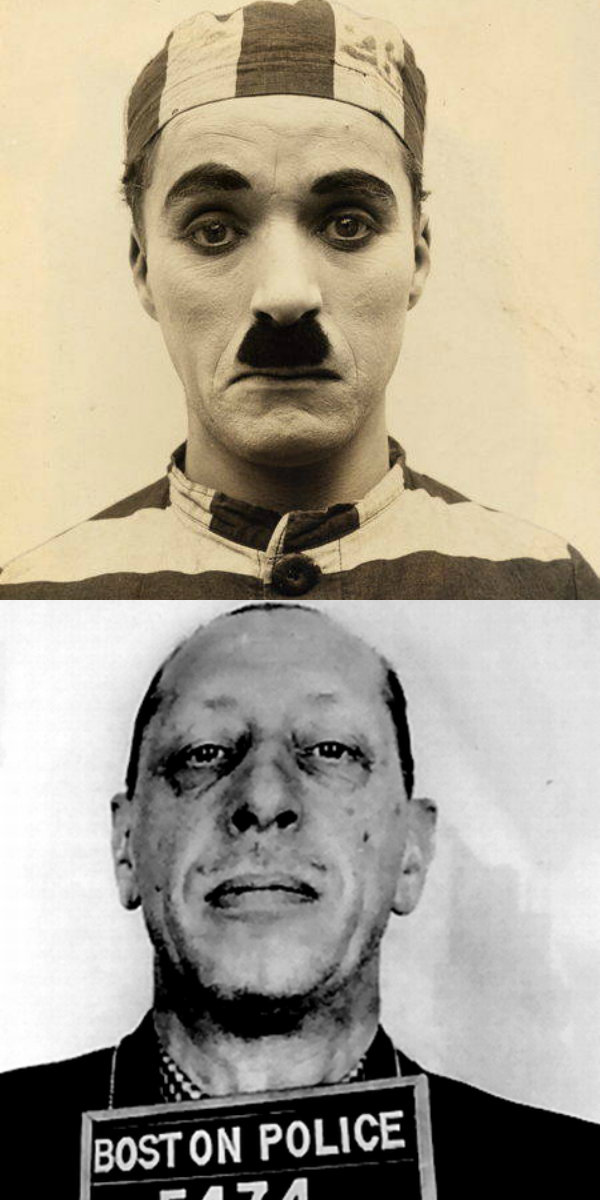
Charles Chaplin’s My Autobiography was published by Simon & Schuster in 1964, when the great man was then in his seventies and living a life of comfortable exile at Manoir de Ban, a 35-acre estate overlooking Lake Geneva in Switzerland, having been pushed out of Hollywood during the Red Scare. It’s one of the most extraordinary books that I’ve ever read. The first portion of the book describes, in brutal detail, the life of crushing Dickensian poverty that Chaplin and his brother Sydney were thrust into when their mother—who’d gone mad from syphilis and malnutrition—had to drop them off at the pauper’s workhouse, unable to care for herself, let alone them.
Chaplin’s remarkably beautiful prose is nothing short of heartbreaking. It’s not just the harsh Victorian circumstances he’s describing that are so excruciatingly Dickensian, it’s the quality of his writing as well. My Autobiography starts off exactly like a lost novel by Charles Dickens, and indeed there is probably no greater true life rags to riches story that has ever been told in the entire history of humankind. Chaplin went from being an innocent young boy who’d had his head shaved and painted with iodine for a lice treatment (there’s a group shot in the book that will hit you in the gut) in the lowest of circumstances to being the most famous man in the world just a few years later. It’s one of the best books that I’ve ever read and it’s one that will still be read long into the future as long as we don’t go the way of Planet of the Apes.
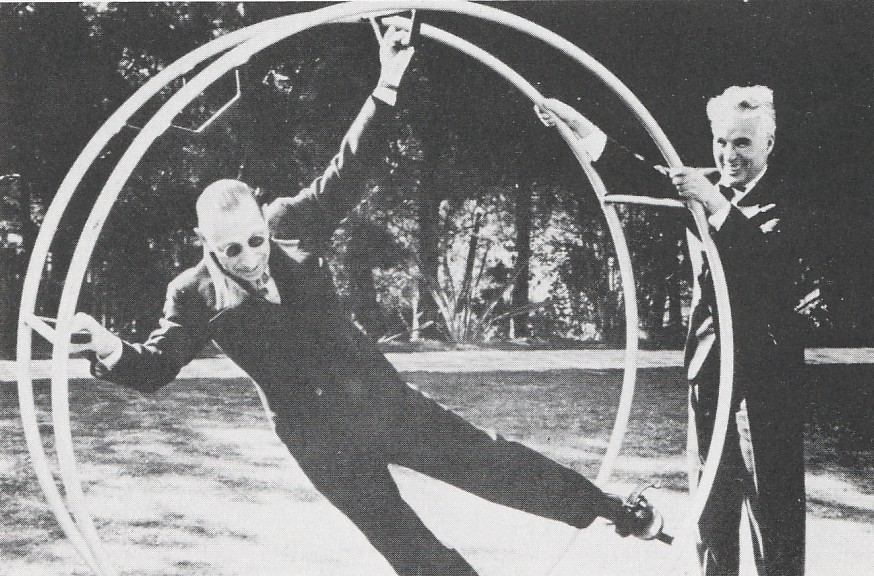
Stravinsky takes a spin on a hoop contraption that Chaplin had built at his Beverly Hills home.
And speaking of our puzzling new Bizarro World national reality, there’s an anecdote that happens later in Chaplin’s book (pages 395-397) where he writes about a meeting that he had with Russian composer Igor Stravinsky where he proposed a collaboration between them. It was sometime in 1937. War had yet to be declared, but something very dark was happening in the world.
I was thinking about this over the weekend, and how potent this imagery is in Donald Trump’s America:
While dining at my house, Igor Stravinsky suggested we should do a film together. I invented a story. It should be surrealistic, I said—a decadent night club with tables around the dance floor, at each table, greed, at another, hypocrisy, at another, ruthlessness. The floor show is the Passion play, and while the crucifixion of the Saviour is going on, groups at each table watch it indifferently, some ordering meals, others talking business, others showing little interest. The mob, the High Priests and the Pharisees are shaking their fists up at the Cross, shouting: “If Thou be the Son of God come down and save Thyself.” At a nearby table a group of businessmen are talking excitedly about a big deal. One draws nervously on his cigarette, looking up at the Saviour and blowing his smoke absent-mindedly in His direction.
At another table a businessman and his wife sit studying the menu. She looks up, then nervously moves her chair back from the floor. “I can’t understand why people come here,” she says uncomfortably. “It’s depressing.”
“It’s good entertainment,” says the businessman. “The place was bankrupt until they put on this show. Now they are out of the red.”
“I think it’s sacrilegious,” says his wife.
“It does a lot of good,” says the man. “People who have never been inside a church come here and get the story of Christianity.”
And the show progresses, a drunk, being under the influence of alcohol, is on a different plane; he is seated alone and begins to weep and shout loudly: “Look, they’re crucifying Him! And nobody cares!” He staggers to his feet and stretches his arms appealingly toward the Cross. The wife of a minister sitting nearby complains to the headwaiter, and the drunk is escorted out of the place still weeping and remonstrating, “Look, nobody cares! A fine lot of Christians you are!”
“You see,” I told Stravinsky, “they throw him out because he is upsetting the show.” I explained that putting a passion play on the dance floor of a nightclub was to show how cynical and conventional the world has become in professing Christianity.
The maestro’s face became very grave. “But that’s sacrilegious!” he said.
A note to our readers: We might not be posting until later today, if at all.
We’re as shell-shocked as you are!
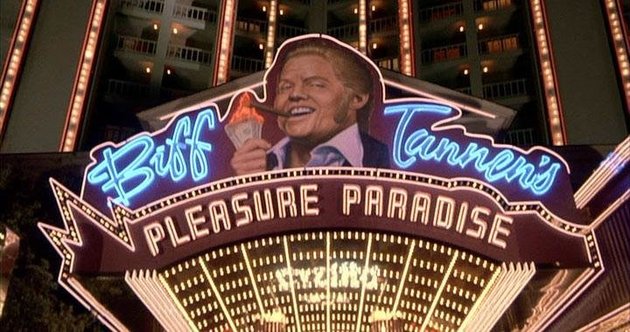
Everything seems so insignificant now. The election of Donald J. Trump—the real life inspiration for Biff Tannen, for Christ’s sake—to the highest office in the free world is a soul-sickening event.
American flunked its IQ test. One question. An EASY multiple choice.
No do-overs.
No, nothing’s amusing today unless you’re a fucking idiot. Why bother? Do you blame us? GET DRUNK AND STONED—START NOW—NO ONE WILL THINK ANY LESS OF YOU.
On a more positive note, the counterculture was reborn last night. No one knows what’s going to happen next. The goddamn storm just got here.
What are the smart people gonna do next?
Below, Alan Vega and Martin Rev let their audience fucking have it IN THE FACE with this fierce rendition of “Ghost Rider.” The perfect scream across the sky on such a dark day.
At this point, it’s a question that’s been pondered—quite a lot—by the professional political pondering class:
Is it even possible to change the mind of the hardcore Donald Trump supporter?
Is there any argument whatsoever that would sway the steadfast fan of the anus-mouthed orangey-faced bellowing billionaire fascist blowhard who sits atop the Republican ticket? Stupid is gonna stupid, and if there is one thing that this year’s election has accomplished it’s demonstrating that the American electorate is—scientifically speaking—much dumber than many of us would have liked to believe. There’s no other way to explain it. Why bend to political correctness—the great bugaboo of reichwingers everywhere, of course—when the simplest and most obvious statement of fact will suffice:
Think about it: In THIS spacetime continuum, the real-life inspiration for Back to the Future‘s caricature bully Biff Tannen is the Republican nominee.
If Trump wins, Amy Goodman will have to change the name of her NPR show to “Idiocracy Now.”
[Amusingly one of the rare times that anyone whatsoever has sent me any pushback on any of my anti-Trump tweets and retweets was none other than Trump advisor, frequent guest on The Alex Jones Show and complete shithead Roger Stone, who must search for his own name constantly. Then I sent him this. It was fun. Bigly fun. I love Twitter!]
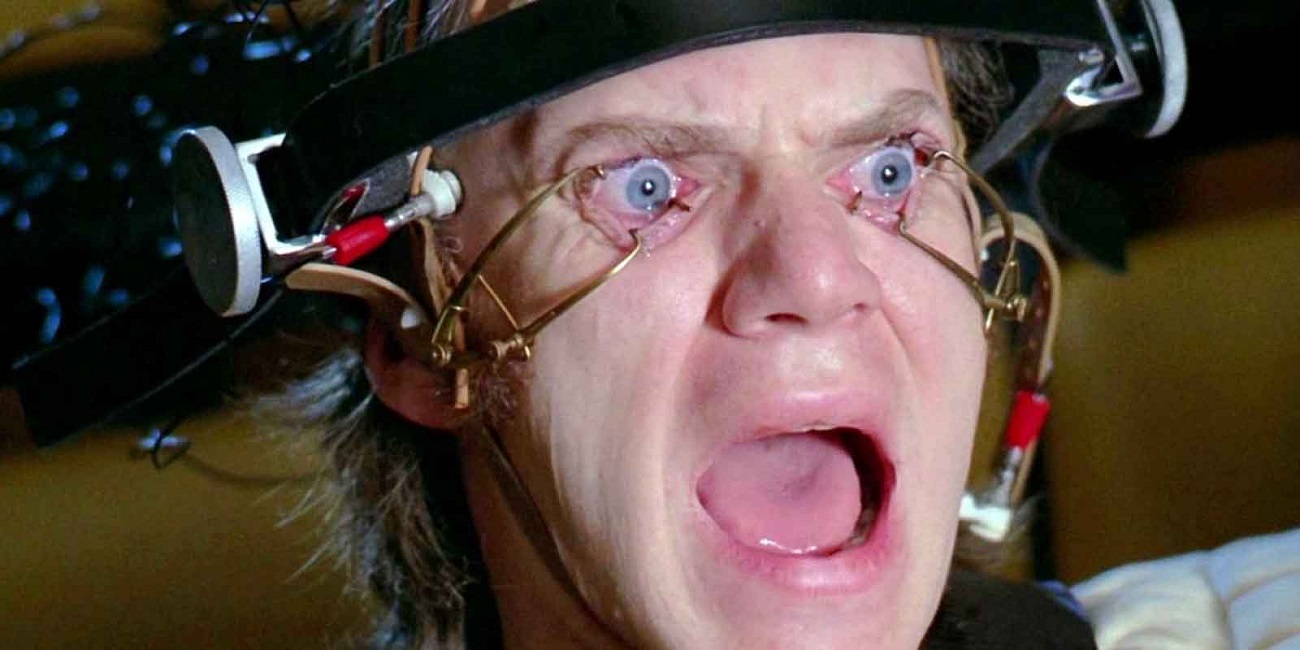
But going back to the original question, is there anything—any fact, TV commercial, slogan, viral video, bumper sticker—whatever—that would change the minds of soft-brained morons who would happily line up to vote for Biff Tannen? Something that you could make them watch, with eyes pinned open like Alex DeLarge in A Clockwork Orange that would get through to them or make a difference?
Maybe there is. The video below, made by the Patriotic Artists & Creatives PAC—which features an actual terroristic man-toddler standing in for the one who used to host The Apprentice—might be able to pry even the tightest shut minds open for a second.
Wisdom from the mouths of babes? It’s perhaps the only thing that would work on the simpleton Trump voters. Best that I’ve seen, anyway. So post it everywhere. The video, I mean, probably don’t repost this blog on Facebook, that’s just being mean (and they won’t get the jokes anyway)
What country do you want your children to grow up in?
I think many us have been there: broke and looking for any kind of gig that will get us enough money to make it from one day to another. I did phone sales of subscriptions to a right wing Orange County newspaper. I was 16 and living on the streets of L.A. and needed money… badly. I worked with a dozen or so runaway kids sitting in a miserable loft dialing numbers all day and spewing made up stories of how the subscription revenue was going to help our high school build a new gym (I was a high school dropout) or help Vietnam vets get back on their feet (if they still had any). I lied all day, every day. And for all my bullshitting, I rarely walked with any money. The lying was easy. I read from a script. When I got really bored, I’d improvise. Back then people were polite on the phone. A lot of them bought into my rap. I couldn’t stand myself. I didn’t last a week. Selling beat drugs on Sunset to weekend hippies seemed like a slightly better karmic option.
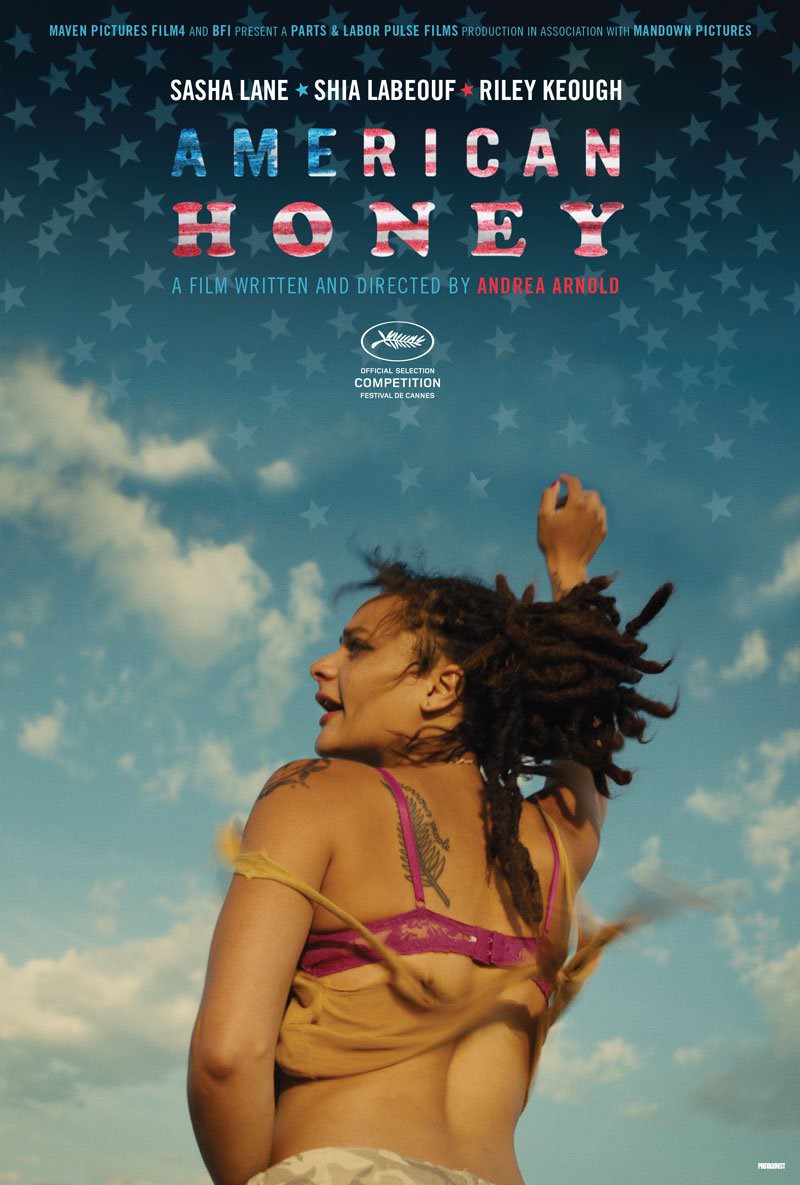
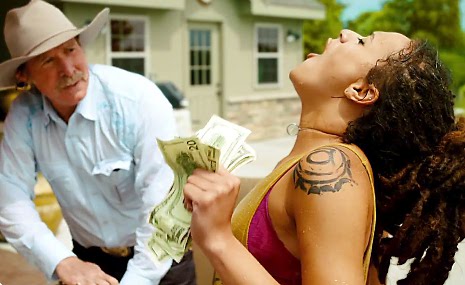
Andrea Arnold’s powerful, poetic and liberating new movie American Honey deals with “mag crews,” young people going door to door in mostly affluent neighborhoods selling magazine subscriptions, using lies and artful scams to make a few bucks. For every subscription sold, the magazine clearing houses and publishers get a percentage and the rest is split between crew leaders and the kids doing the selling. Whatever hook it takes to sell a subscription—school projects, charities, scholarships, etc.—is used to separate a customer from their money. Selling magazine subscriptions in the digital age is hardly a ticket to the big time. But desperate times require desperate measures… even when they’re stupid.
Director Arnold (Fish Tank, Red Road) first discovered the mag crew world when she read Ian Urbina’s article on the subject in the New York Times. She decided to make a movie based on the article. She flew from England to America, rented a car, and drove alone along 1000s of miles of America’s highways. She saw all of the things that make America beautiful, wretched, intimidating and heartbreaking. She encountered hopelessness in a lot of small towns that have gone to hell because of poverty and drugs—the kind of drugs that become intertwined with a sense of there being no future.
American Honey follows a mag crew as they make the kind of trip that Arnold made. A small family of lost souls traveling across America getting stoned, singing along to rap, rock and country songs, living in the moment while the quiet dread of the unknown permeates the air like invisible thunderclouds. At times exhilarating, often tense and foreboding, American Honey subverts most of the viewer’s expectations at every turn. The film seems bleak on the surface but rays of light are constantly breaking through the darkness. Underneath the hardened exterior of these kids are layers of softness, sweetness and pain. Cuddling and sleeping together in sleazy motel rooms they appear as they are: children.
Blue Diamond Sales is typical of the kind of companies that use mag crews to generate revenue. Their website paints a rosy picture of the road to success:
Blue diamond subscriptions sells door to door subscriptions to magazines and books. Blue diamond travels the entire country helping young adults who wish to earn experience in the sales industry.
But their YouTube channel gets closer to reality:
The mag crews are tight knit bands with an almost cult-like devotion to their crew leaders—very much like a hooker’s relationship to their pimp. They travel in small groups in battered vans, crisscrossing America desperate to grab hold of the lowest rung of the American dream. From hustling truckers at truck stops to millionaire good ol’ boy ranchers and lonely, extremely horny guys working the oil fields of Oklahoma, the girls in American Honey go to where the money and easy marks are. These scenes are filled with tension, effectively tapping into the audience’s horror flick presumptions. But this is not a slasher film. The knives are psychological and go deeper beyond bone and flesh into the seat of the soul. A scene where a little girl in an Iron Maiden t-shirt sings The Dead Kennedys’ “I Kill Children” while her crackhead mother lies comatose in the background makes the torture porn of “Human Centipede” seem like “Happy Days” with hemorrhoidal itch. Reality has now entered a zone that even horror movies struggle to find resonant metaphors.
The mag crews aren’t much different than many of the kids who ended up in The Haight in 1968, the year after the Summer Of Love. They weren’t looking for an Aquarian age, they were looking to get out of bad situations back home. Many had suffered abuses of every nature. They came to the Haight to hook up with kindred spirits and forge communities. They weren’t hippies but they were open to anything that might give them a sense of better days. A sense of love. Ten years later on New York’s Lower East Side there was a similar influx of suburban kids looking to get away from the soul-deadening schools, shopping malls, and apathy that gutted whatever feelings of freedom they felt entitled to. The crews are a slightly better dressed version of the crusty punks I see camping in the woods behind my store in Austin.
Unlike the hippies or punks, the mag crews haven’t turned their backs on capitalism or the American Dream. The kids in American Honey see Wal-Mart as an oasis in the tattered streets of Crack Town. They want money. And they want it now. Bling is their thing and the rap songs on the movies soundtrack set the tone. These kids are white but their frame of reference is Black. Together they create a sense of mattering. They matter to each other.
Comparisons will be made to the films of Larry Clark and Harmony Korine, but American Honey is more lyrical and less cynical than Kids or Spring Breakers. Clark’s Ken Park has moments of the kind of tenderness and bittersweetness of Arnold’s film. Both movies celebrate humanity over complete despair. And in each film, sex is threatening as well as liberating. Arnold’s point of view is that of a woman who knows from day to day experience that men are unpredictable animals and American Honey is suffused with an atmosphere of sexual peril without being gratuitous or exploitative.
American Honey is three hours long and it rambles and careens like the crews bouncing from state to state in their Econoline van. The length of the film never seems overlong. Its length actually gives the viewer the sense of being along for the ride. There are no big dramatic moments – except for the ones in the audience’s heads. The movie constantly subverts expectations. The drama comes in the small observations and the occasional emotional explosions. All of it moving along to a soundtrack composed of 24 wildly eclectic songs ranging from Kevin Gates to The Raveonettes, Springsteen, Steve Earle, E-40 and Mazzy Star. It all works sublimely and for every moment of suffocating emptiness there’s an epiphany fueled by music, a bottle of cheap whiskey and lots of pot.
American Honey won awards at this year’s Cannes Film Festival including best actress for Sasha Lane. This is her film debut. Shia LaBeouf is perfectly cast as a cocky hustler. Sporting a Confederate flag bikini, Riley Keough (Elvis Presley’s granddaughter) is the cold-hearted crew leader and she’s amazing. The entire cast of non-professional actors ARE the real thing. Robbie Ryan’s cinematography is glorious, capturing the American landscape in a fugue-like state between night, day and what lays in between.
American Honey is opening this Friday in a few major cities and then nationwide on October 7. It’s an important movie. One that gets almost everything right about what’s bad and what’s good about America in the era of Trump. Being bombarded by dark prophecies from a sociopath running for President plays into the deeply pessimistic view young people already have of their future. American Honey hints at a way out:love
Earlier this year, at the opening ceremony for the fifth session of the Scottish Parliament, makar or national bard Jackie Kay read from her poem “Threshold.” The poem is a rallying call for people to come together and protect the nation’s “incipient democracy”:
Find here what you are looking for:
Democracy, in its infancy: guard her
Like you would a small daughter -
And keep the door wide open, not just ajar…
Though I don’t regard Scotland as nation with an infant democracy—our history tells us otherwise—it is fair to say the poem’s sentiment is well-intentioned—if a tad cutesy. Democracy must be guarded responsibly if we are to enjoy its freedoms.
The issues of freedom and democracy are at the heart of a new feature-length documentary by writer and director Rupert Russell. His film Freedom for the Wolf is epic in scale—covering events on four continents—finely made, thoughtful and nuanced. It examines how different people across the world—from Tunisian rappers to Indian comedians, from America’s #BlackLivesMatter activists to Hong Kong’s students—are joining the struggle for “the world’s most radical idea—freedom—and how it is transforming the world.”
This sounds all very exciting—though I don’t think the struggle for freedom as something new—it has been a central thread of human history for millennia. Yet every generation comes afresh to politics (most recently the Occupy Movement and Bernie Sanders revolution) and sex (Fifty Shades of Grey)—and so it is with Freedom for the Wolf.
That said, Russell’s film does highlight how different movements, primarily youth movements, are fighting the threat of governments combining dictatorships with democracy to create what is termed “illiberal democracies.” In other words, countries replacing real democratic freedom with consumerist choice—the right to liberty exchanged for the right to shop—or, as Juvenal put it, “bread and circuses.”
Occupy demonstrator in Hong Kong.
Rupert Russell was born and raised in England. He is the son of the brilliant film director Ken Russell. Rupert graduated from Cambridge University before he went on to study for a PhD in sociology under Orlando Patterson at Harvard University.
Patterson is a preeminent historical and cultural sociologist—best known for his work Freedom in the Making of Western Culture (1991), which won a National Book Award. Born in Jamaica, Patterson has long had an interest in the cultural meaning of freedom. His interest was inspired by his birth country’s association with slavery. Slavery has shaped our understanding of freedom. Patterson examined slavery from a long historical perspective pointing out that the derivation of the word slave comes from the ethnic group Slavs. Blond, blue-eyed Slavs were once the main ethnicity of slaves—further the “vast majority of slaves for over 2,000 years of Western history were white.” But it’s a different kind of slavery that threatens democracy today.
Patterson appears in Russell’s documentary and his work on freedom—what is it? what does it mean? how is it being eroded today?—underpin some of the film’s central themes—as Russell explained to me when I spoke with him over the phone:
Rupert Russell: Our original intention was to examine what freedom meant in different cultures around the world. I’d been thinking about freedom and the paradox of freedom for quite a while and I decided to do a bit of exploration into not only what freedom means in different cultures but how does it relate to power.
My advisor at Harvard during my PhD was Orlando Patterson who had already done quite extensive research on this. For example, he examined how ordinary Americans when you ask them to talk about “freedom” there were all kinds of things they said from being naked on a beach to driving their car. But invariably what they they didn’t talk about was voting.
Orlando’s hypothesis actually explains how people such as George Bush and other politicians of the Iraq war era were able to use the idea of freedom in the forefront of their rhetoric while at the same time eroding democratic institutions through things like the Patriot Act.
I was already aware there was a very sophisticated way to think about the relationship between freedom and power—the different definitions of freedom and how they can interplay with each other. How we may emphasise in a culture too much of a personal version of freedom and not connect that with a democratic or institutional version of freedom upon which our personal freedom depends.
More from Rupert Russell on ‘Freedom for the Wolf,’ after the jump…
Artist Jimmy Cauty achieved international fame as “Rockman Rock” one half of The KLF (along with Bill Drummond aka “King Boy D”) in the late 1980s and early 1990s. The KLF released a series of highly successful and influential records including “Last Train to Trancentral,” “What Time Is Love?” and “3 a.m. Eternal.” Under the name The Timelords the duo had a number one hit with “Doctorin’ the Tardis” their playful mash-up of the Doctor Who theme, Gary Glitter’s “Rock and Roll (Part Two)” and “Block Buster!” by Sweet. They had a further number one (in eighteen countries no less) with “Justified and Ancient (Stand by The JAMs),” their collaboration with country and western singer Tammy Wynette in 1991.
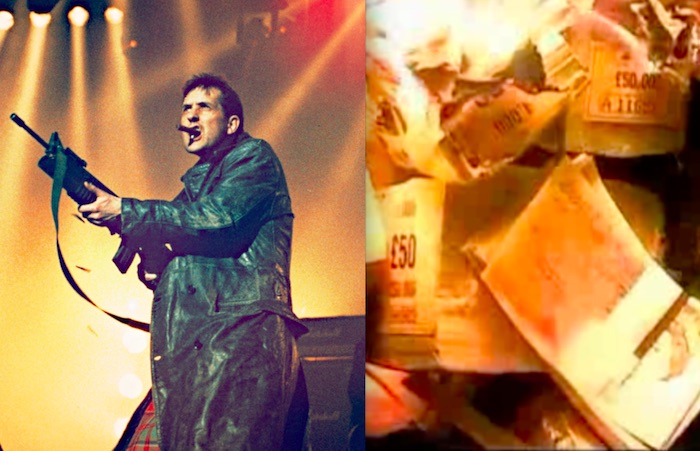
The following year The KLF appeared with grindcore band Extreme Noise Terror at the Brit Awards when they fired blanks from a machine gun over the audience’s heads. At the end of the ceremony the duo dumped a dead sheep outside the venue, then announced the end of The KLF and deleted their entire back catalog.
But this was only a taster of what was to follow.
In August 1994 Cauty and Drummond (now under the moniker The K Foundation) burned a million pounds in cash on the Scottish island of Jura. What the fuck that was about—well, no one is really quite sure—but it has become a moment that has defined the careers of both men since.
A kilted Jimmy Cauty fires blanks at the Brit Awards audience 1992, and an image from the K Foundation’s burning of one million pounds.
From 2000 Jimmy Cauty has been making political and provocative artwork—ranging from a limited edition series of stamps Black Smoke, Stamps of Mass Destruction (2003) which was eventually withdrawn after the Royal mail threatened legal action, to opening a “gift shop” at the Aquarium Gallery in 2004 selling “terror ware” based on the British government’s anti-terror leaflet Preparing for Emergencies.
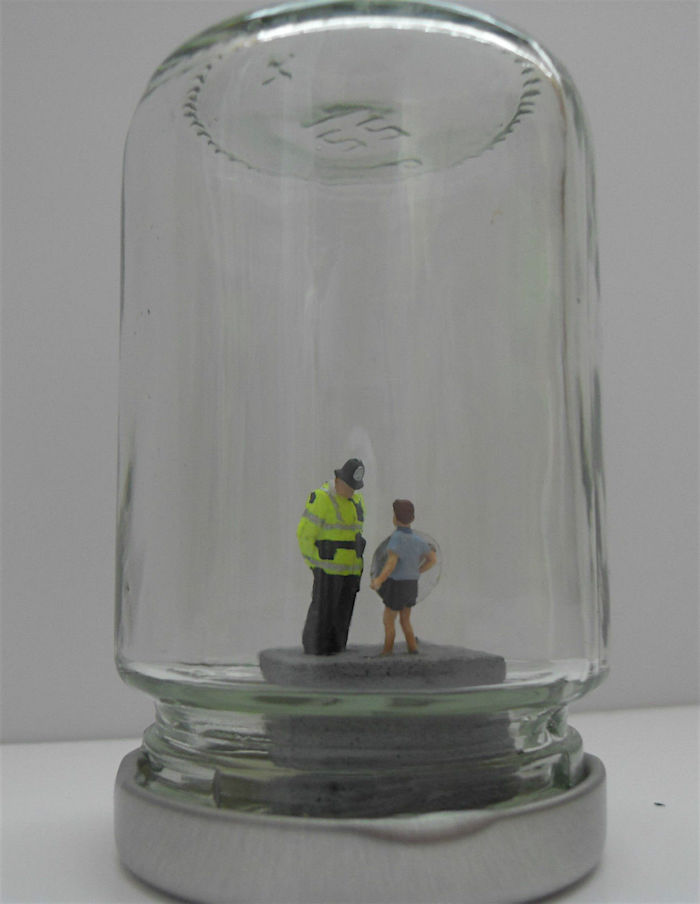
In 2011, Cauty started producing a series called A Riot in a Jam Jar featuring miniature dioramas depicting violent confrontations between the police and the public. These jam jars contained imagined scenes including the execution of the then Deputy Prime Minister Nick Clegg, and the execution of bankers and the execution of Prince Charles and the Duchess of Cornwall.
Cauty’s imagining of Prince Charles and Camilla about to be bludgeoned after their car was attacked during a student riot in 2010.
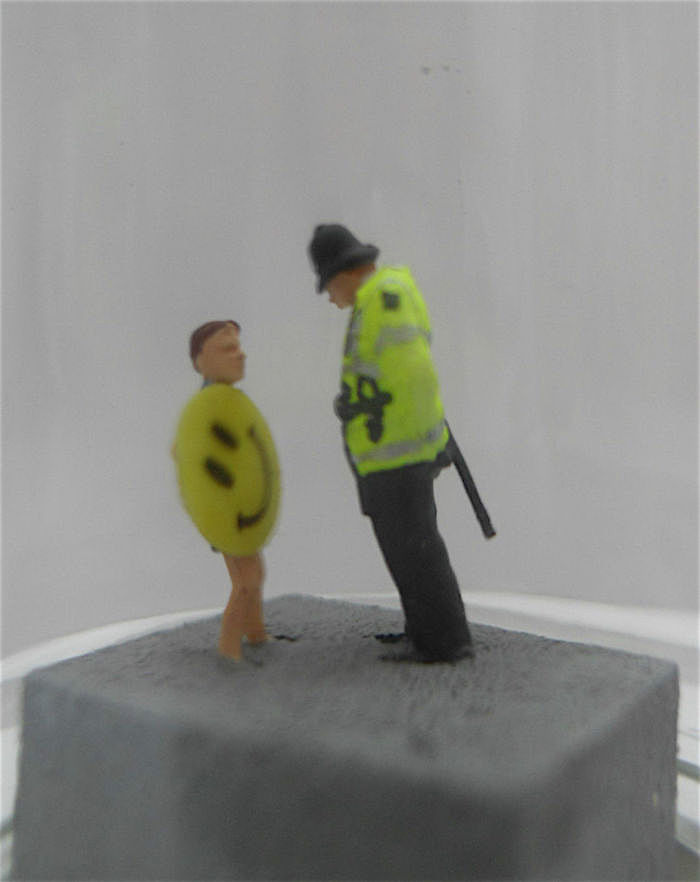
Now a limited edition of one of Cauty’s jam jars has been put up for sale on eBay. The work entitled Please Don’t Hit Me features a policeman interrogating a young boy. In a limited edition of ten—each individually numbered—Cauty’s Please Don’t Hit Me will set you back £465 (around $600). Place your order here.
More of Jimmy Cauty’s provocative jam jar art, after the jump…
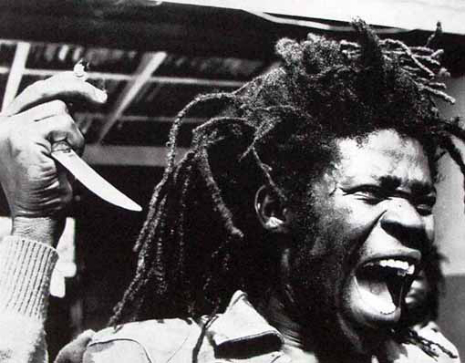
This is how Dillinger feels about your incremental liberal reforms
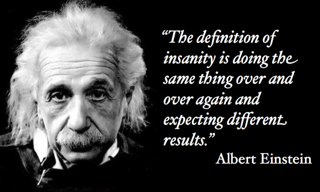
Albert Einstein did not ever once say that bullshit about “the definition of insanity” that your dimwitted boss has inked on one palm, but he did have some ideas you might actually find useful in the workplace. For instance, in his essay “Why Socialism?” published in the first issue of the Monthly Review, Einstein identified “the economic anarchy of capitalist society” as “the real source of the evil” that alienates and “cripples” individuals, and he advocated “the establishment of a socialist economy” in its place. Why not enliven your next PowerPoint presentation or office party with that fun fact?
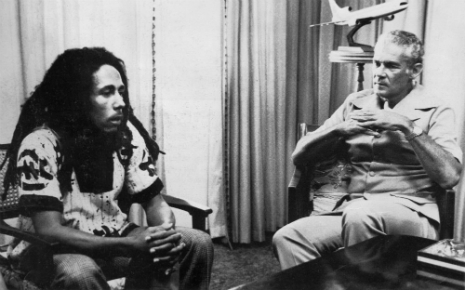
Bob Marley and Jamaican Prime Minister Michael Manley
“Gonna fight ‘gainst capitalists, gonna get rid of capitalists, gonna stamp out capitalism,” the DJ Dillinger thundered in 1975. He was one of several prominent reggae musicians who wrote explicitly socialist songs during the mid-70s in support of the policies of Jamaican Prime Minister Michael Manley and the People’s National Party. Manley, a democratic socialist, introduced a minimum wage, equal pay for women, free education and free health care, and if his program sounds familiar, that’s because everybody already knows it’s what the absolute minimum of basic decency would look like.
But Max Romeo makes the case better than I can on his single “Socialism Is Love”:
You’re asking what is socialism and what it really means
It’s equal rights for every man, regardless of his strength
So don’t let no one fool you (Joshua said)
Listen as I tell you (Joshua said)
No man are better than none,
Socialism is love between man and man
Socialism is
Love for your brothers
Socialism is
Linking hearts and hands
Would you believe it?
Poverty and hunger’s what we’re fighting
Socialism is
Sharing with your sisters
Socialism is
People pulling together
Would you believe me?
Love and togetherness, that’s what it means
Mr. Big a-trembling in his shoes, saying he’s got a lot to lose
Don’t want to hear about sufferer at all
(Joshua said) One man have too many,
While too many have too little
Socialism don’t stand for that, don’t stand for that at all
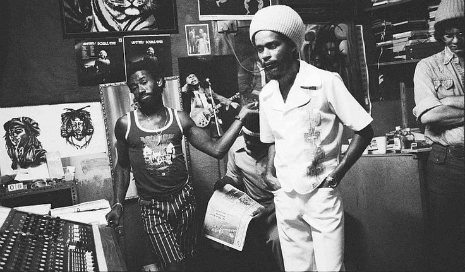
Max Romeo at Lee “Scratch” Perry’s Black Ark, 1975