My feelings about the Grateful Dead are not complicated. I like a lot of their music just fine, but it was their audience that turned me off.
I never got into that whole spinning hippies/Hacky Sack patchouli vibe, but I love the shit out of Workingman’s Dead, Anthem of the Sun, American Beauty, Live Dead and Terrapin Station. Notwithstanding the above, what I did like about Deadheads was when the tie-died circus came to the New York area, all of sudden there would be plentiful amounts of blotter acid, quality mescaline, DMT and opium around for weeks afterwards…
Drugs. Which brings me to the media below, recordings made of The Grateful Dead and Ken Kesey and The Merry Pranksters at the infamous San Francisco “Acid Tests,” as immortalized in Tom Wolfe’s classic book of “new journalism,” The Electric Kool-Aid Acid Test.
This is the Dead in 1966, some of the earliest recordings that exist of the group, but what makes these tapes of even greater historical interest is that this is the soundtrack, essentially, of the “early adopters” of the psychedelic culture getting turned on together, as large groups gathered together in one place.
On that level, the recordings go from being merely an early period Grateful Dead bootleg and become something weirder, deeper and of Smithsonian Institute-level historical importance. Incidentally, today, April 16th, is the 70th anniversary of Dr. Albert Hofmann’s 1943 discovery of LSD.
The sound can be ropey, but here it is…
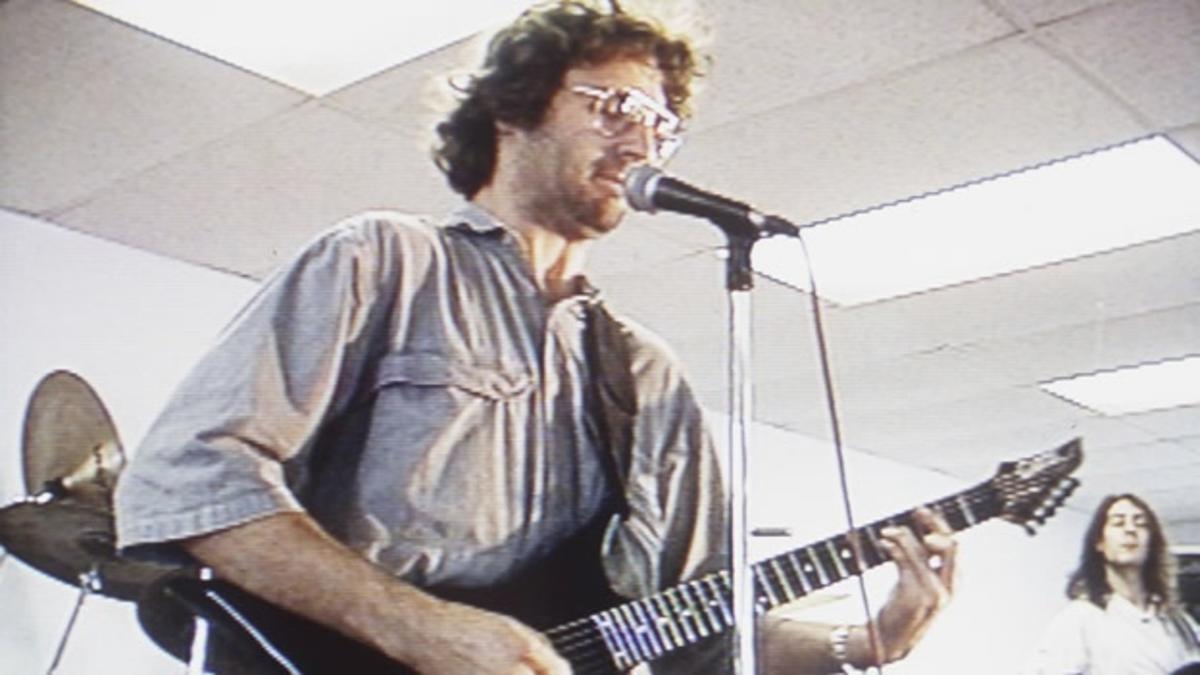
This early film of the group playing at an “Acid Test” in Los Angeles on March 19, 1966 at Carthay Studio is some of the earliest footage that I’ve ever seen of the Grateful Dead:
1976 was a difficult year for the satirical and current affairs magazine Private Eye.
This was the year its then editor, Richard Ingrams received over 60 writs from disgruntled billionaire businessman Sir James Goldsmith (aka Sir Jams Fishpaste, as the Eye called him). Goldsmith had objected to 3 stories the Eye had published about him—one in particular that suggested Fishpaste had helped his friend, Lord Lucan escape Britain from a murder charge.
Goldsmith and Lucan were bonded by several things, one in particular was a belief Communists had infiltrated western media, and Britain was on the verge of a Communist revolution. It led Fishpaste and Lucan to discuss the pros and cons of a Fascist military coup over “smoked salmon and lamb cutlets.” Their conversation reflected the paranoid, Boy’s Own fantasies of a very privileged and ruthless class.
“[Goldsmith] set out to destroy the little magazine that had presumed to offend him. He sued….But he spread the net far beyond Private Eye. In a novel exercise in overkill, he issued separate writs against all the distributors and wholesalers of the magazine. There were over 60 writs. Private Eye faced a huge financial burden. It was liable to indemnify all those whom Goldsmith had chosen to sue.
The first task was to reassure the recipients of these writs that the indemnity would be honoured. Private Eye lacked the resources but had a lot of supporters. A drive to raise money began, inspirationally named the Goldenballs Fund.
Peter Cook and Richard Ingrams check an early edition of ‘Private Eye’
The legal action brought considerable media attention, and in October, the BBC made a documentary about Ingrams and Private Eye:
“Richard Ingrams’ offices are at 34 Greek Street. A former haunt of prostitutes and drug addicts. Now the main problem is writ service. Rented at sixty-pounds-a-week, the building is small and dilapidated, but it’s all that Private Eye can afford. The magazine runs on a shoe-string budget. It comes out once a fortnight, price 20 pence, and has a circulation of 90,000.”
Ingrams may have looked like an unassuming university lecturer—dressed in a corduroy jacket, with a Viyella shirt and tie, but he was (surprisingly) a reformed drinker and smoker, who believed in God and played the organ at the local church. He was, more importantly, a superb and strongly principled editor, who understood Private Eye‘s role:
“It has to be anarchic. It has to be prepared to hit everyone—even its friends. As long as you attack everybody indiscriminately, completely indiscriminately you are safe. Immediately you start taking sides, or sticking-up for somebody, or keeping quiet, then you get into difficulties.”
Under his editorship, Private Eye had a golden decade in the seventies. It attracted some of the very best writers, journalists and artists, who brought an excellence other magazines (Punch) could only dream about. There was Auberon Waugh who produced an hilarious and corruscating diary; Paul Foot who delivered brilliant investigative reports; Peter Cook offered memorable comic contributions; and “Grovel” the Eye‘s (in)famous gossip column written by the late, Daily Mail diarist, Nigel Dempster, who claimed:
“We live in a banana peel society, where it gives no-one greater pleasure than to see someone trip up.”
Not all of the Eye writers were happy with Dempster’s column, Christopher Booker thought it edged too close to exaggeration, without thought of the damage done.
This lack of thought had led a 100 people to sue Private Eye by ‘76, which had depleted much of the magazine’s profits. But then the Eye was never really that interested in profits—it was a product of those patrician attitudes Public Schools can afford to inspire.
The magazine’s original quartet Richard Ingrams, Christopher Booker, Paul Foot and William Rushton had all met at Shrewsbury School, where they had produced their own teenage satirical magazine—a first issue was covered with hessian and embedded with free seeds. After school, university, where Ingrams hoped to become a leading comic actor. It didn’t happen, and the Famous 4 regrouped to produce the very first Private Eye in 1961, from typescript, Letra-set and cow-gum. It is interesting to note how this amateur, home-made style has remained very much the template for the Eye ever since.
This new magazine chimed with the so-called satire boom, in which Peter Cook, Dudley Moore, Alan Bennett and Jonathan Miller conquered the world with Beyond the Fringe, and producer Ned Sherrin made a star of David Frost (who Booker later described as a man with “..a peculiar ambition to be world-famous simply for the sake of being world-famous”) on the highly successful That Was The Week That Was—which proved so successful it was canceled after 2 series.
The Eye continued long after both these shows and the satire boom had run out of laughs, in part much aided by the backing of Peter Cook, who helped finance the magazine until his death in 1995.
What makes Private Eye essential is the ephemeral nature of its exceedingly good journalism. As Auberon Waugh once wrote (in the introduction to Another Voice—his essential collection of writing for The Spectator), “Timeless journalism is bad journalism”:
“The essence of journalism is that it should stimulate its readers for a moment, possibly open their minds to some alternative perception of events, and then be thrown away, with all its clever conundrums, its prophecies and comminations, in the great wastepaper basket of history.”
Though it has been occasionally wrong (MMR comes to mind) and wrong-headed (comic attitudes towards race, women, and gays have been questionable), Private Eye is indispensable and essential reading for those with an interest in the follies of politics and business of contemporary life, or the strong tradition of good investigation journalism, which most newspapers appear to have abandoned long ago. This is what made, and still makes Private Eye truly great.
Sir Jams Fishpaste launched his own magazine Talbot!, which soon disappeared without trace, before forming the I Can’t Believe It’s Not Margarine Party, a popular movement that failed to be..er..popular. He died in 1997.
Richard Ingrams quit Private Eye in 1986, and appointed alleged schoolboy Ian Hislop as Editor, who has managed the magazine with great success ever since.
Ingrams started a new magazine The Oldie in 1992, which has been described as “the new Punch and the new New Yorker,” which he continues to successfully edit today. Richard Ingrams is 94.
One of the most somber scenes you’ll ever see, the raw film footage from the NBC News archives of Sharon Tate’s funeral. John and Michelle Phillips, Warren Beatty, Yul Brynner, Doris Tate and a visibly distraught Roman Polanski—he looks like he can barely stand and who could blame him—are seen.
Sharon Tate was interred in the Holy Cross Cemetery, Culver City, California, with her unborn son, Paul Richard Polanski, cradled in her arms, on Wednesday, August 13, 1969. I can hardly imagine anything sadder than such an occasion.
The news report as it ran on NBC News can be seen here.
Calling all funkateers and cosmonauts! Wrap your peepers round this!
The history of Parilament-Funkadelic is sorely under-written. From their beginnings in 50s New Jersey, to their formative years in revolutionary 60s Detroit, from their glorious heyday in the 70s to their implosion in clouds of debt and cocaine in the early 80s, the P-Funk story is one of the most epic in all of popular music.
One Nation Under A Groove may not be perfect, but it’s a start. I guess there’s just too many people and stories surrounding the band(s) to fit into one hour-long program, it would really need to be a mini-series, but ONUAG is a great introduction, essential viewing for anyone with an interest in the more out-there elements of popular culture.
George Clinton is heavily featured, of course, as are all the original members of The Parliaments (his barbershop doo-wop group that would go on to form the vocal nucleus of the Parliafunkadelicment thang) but there’s not enough Bootsy for my liking, and synth wizard Bernie Worrell, so fundamental to the establishment of this musical empire, is notably absent.
It goes without saying that I frikin LOVE this band. Or bands, whatever. P-Funk not only made some of the outright funkiest records of all time, but they also created an aesthetic world their fans could get completely emerged in. P-Funk to me is TRUE psychedelia, made all the more powerful by reflecting the outsider-ness of the black experience in America at the time. Surely just the very nature of the Parliament-Funkadelic—mixed race, gender, age, sexuality, etc, all united by the dance and the physical act of perspiring—is he essence of the liberal dream come to life? Historical documents about P-Funk are important not just ‘cos they were so awesome, but also for the generations born after the 1970s that discover P-Funk through the filter of G-Funk. Gangsta rap strip-mined P-Funk for the grooves but casually tossed aside the outsider elements that made the band(s) so vital, replacing them instead with a kind of coked-up, uber-macho, gang-colors conformity. It’s probably a post for another day, but I think Dr Dre/Death Row/et al robbed the funk of its freak flag.
Anyway, if you want to know more about the history of Parilament-Funkadelic (and who doesn’t?!) let me point you in the direction of the book For The Record, George Clinton And P-Funk: In Their Own Words, which is the P-Funk story told by the band and crew members themselves, with refreshingly little editorial input. I recommend it very highly, but for now, and for the newcomers, dig this:
This is what cultural revolution looked like in the early 1960s: youngsters dancing in a cramped television studio, as smartly dressed men and women mime love songs.
From its opening line: “The weekend starts here!” Ready, Steady, Go! was one of the most revolutionary and influential programs on British TV.
Between 1963 and 1966, Ready, Steady, Go! brought pioneering performances by the biggest pop names to millions of homes across the country. The Beatles, The Rolling Stones, Dusty Springfield, Lulu, The Animals, Cilla Black, Gerry and The Pacemakers, The Searchers, and even Peter Cook & Dudley Moore—who later parodied the show in their film Bedazzled.
The miming eventually stopped in April 1965, after the show moved to a bigger studio and artists were asked to play live—most notably now legendary sets by The Who, Jimi Hendrix, Manfred Mann and The Walker Brothers. It gave the show an immediacy and power its rivals could only dream about, but by 1966, as the beat revolution moved on, Ready, Steady, Go! was canceled.
Ready, Steady, Go! had an unprecedented influence on shaping musical taste, and youth fashion, and in 2011, The Kinks’ Ray Davies paid homage to RSG! with a recreation of the show at the Meltdown Festival.
Ah, if only time machines had been invented already. We would each be free to zip back and visit the desired nightclub/live venue/social scene of our choice, to revel in a world we can now only read, or dream, about. I’ve thought about this before, of course, and most of my preferred time travel destinations were located in and around New York City in the 70s and the 80s.
But there will be many for whom the bright, shiny lights of NYC hold no attraction, and who would rather set the dials for the dark heart of Northern Britain in the early 1980s. These people will wear anything as long as it is black, enjoy nothing more than swaying to the heart-chilling sounds of The Cure, Joy Division or Bauhaus (possibly accompanied by nice pint of cider & blackcurrant juice) and can sometimes be spotted hanging out in mist-shrouded graveyards. Yes, you guessed it, these people are Goths, and if you are one of them, then here’s a treat for you: three films chronicling the early 80s British Goth club scene while it was in its infancy.
The received wisdom in the UK is that clubbing didn’t really exist here until after the acid house explosion in 1987/1988, with the notable exception of Northern Soul venues like The Mecca in Blackpool and the Twisted Wheel in Manchester. Well, these videos tell a very different story, displaying a flourishing alternative club scene that existed years before acid. Offering (mostly) untampered footage shot directly from the dance floors and stages of the best known Goth hangouts of the era, these films have the aura of gold dust about them. If that’s too bright and shiny for you, consider them excellent cultural curios that give a rare peek into a then-emerging subculture. These films, which vary in length from 8 minutes to over two hours, popped up on my Facebook feed this evening, so I decided to do the decent thing and group them all in a post for Dangerous Minds.
The first film is a BBC promo for the infamous London haunt The Batcave, which was originally broadcast on Halloween, 1983. Ok, the Vincent Price/William Castle inserts are cheesy as hell, but there’s some great footage of Alien Sex Fiend performing live to make up for it. The video was uploaded by the Batcave’s original DJ Hamish (aka h808) who says:
Oh yes, 1983, when the media were all trying to figure out what came after punk…. Remember that the Batcave was born of punks and glam rockers, trannies, psychos and people turned away from other clubs - we let anyone in, trainers or no trainers, businessmen and dustmen, strippers and nuns….
After the jump “The Height Of Goth” and footage from Devilles, Manchester…
Christiane F. - Wir Kinder vom Bahnhof Zoo (“Christiane F. – We Children from Bahnhof Zoo” in English) is a 1981 German film based on the autobiographical recordings of a young heroin addict and prostitute in West Berlin. It was one of the most successful German films of that year, going on to become a worldwide cult hit, but one that stirred up a lot of (I think justifiable) controversy.
Vera Christiane Felscherinow
Two journalists from Stern magazine, Kai Herrmann and Horst Rieck, met the girl, Vera Christiane Felscherinow (born May 20, 1962) in 1978 when she was a witness against a john who paid underage prostitutes with heroin. The reporters were shocked to the extent of the escalating teenage drug problem and spent over two months interviewing Christiane and other young junkies and prostitutes (of both genders) who congregated near the Berlin Zoo. They ran several articles and a book Christiane F. – Wir Kinder vom Bahnhof Zoo, covering four years (ages 12-15) of her life on the streets, was published in 1979.
Christiane lived with her mother in a bleak West Berlin neighborhood full of the sort of postwar high-rise apartment blocks that were often hives of social problems. She became fascinated by a discothèque that she had read about called “Sound” and although she was only 11-years-old, too young to be admitted, she was able to get into the club. There she fell in with a fast crowd who were experimenting with various drugs and by the time she was only 14, she was turning tricks to feed her habit in the Bahnhof Zoo train station.
When the film—directed by Oscar-winner Uli Edel—was released in 1981 it was a huge hit in Germany, and elsewhere, turning Christiane into somewhat of a celebrity in Europe, a real-life “Go Ask Alice” who had great fashion sense and cool hair. And this was the problem: Although the film does not intend in any way to glamorize the life of a heroin-addicted teenage prostitute, it inadvertently does. The fact that the actress who played Christiane F. in the film, Natja Brunckhorst, was so beautiful didn’t help matters. Soon teenage girls were emulating both the cinematic “Christiane” and the real-life Christiane’s hair style and clothes. The Bahnhof Zoo station even became somewhat of a Japanese tourist destination, for a while.
Actress Natja Brunckhorst and David Bowie
I saw this film when it came out, when I was a teenager myself, and I can recall thinking that a) Natja Brunckhorst was super hot and that b) doing some drugs with such a cute girl and going to a David Bowie concert (he’s seen in the film performing and provided the soundtrack music) seemed like a really good time to me. I can certainly understand why why German youth advocates were concerned at the time by the way impressionable young girls saw Christiane F. as a role model.
Thirty-some years after it was released, the film still has that undiminished heroin chic quality going for it. This comment was left on YouTube just one week ago:
Amazing film. Amazing book. She was so beautiful. So clever. Such a shame she ruined her life. But she’s a hero. And maybe I’m the only one who thinks this, but it looks to me kinda attractive,you know. I mean,seventies, Berlin, David Bowie, freedom,it all looks so great! Today it’s awful.. Like everything.
You see what I mean?
The real Christiane F.
Christiane F. released a few records under the name Sentimentale Jugend, in partnership with her then-boyfriend, Alexander Hacke (of Einstürzende Neubauten) in the early 1980s. (Here’s their cover of “Satisfaction.”)
The couple also appeared in the 1983 German film Decoder, along with Neubaten’s F.M. Enheit, William Burroughs and Genesis P-Orridge (you can read about the film at The End of Being) (I suppose this is as good a place as any to tell you that I once answered the phone at a German friend’s apartment. I had to take a message and when the caller said “Tell her Christiane F. called” I just HAD to ask if she was THE Christiane F. and she said yeah and seemed really annoyed with me!)
Although she has been able to support herself from author’s royalties for many years, Christiane F.‘s life has been anything but easy, She’s been on and off drugs since her teens and at one point a few years ago, she lost custody of her young son. In 2011 she was caught up in a drugs sweep when police searched her bag at the Berlin train station, Moritzplatz, a known haven for junkies, but no narcotics were found on her person. As you might expect, every couple of years the German media check in with her to “see how she is doing.”
Below, Sentimentale Jugend, live (with Christiane F. on guitar) in Berlin, 1981.
This “70s Hairy Chest Sweater” by Firebox gives me a serious case of the grodies. I get that’s (admittedly bear-y funny) the point, but how on earth were they able to make it look so… oily?
Perhaps it’s the 100% polyester fiber content?
They have a disclaimer, too: “Actual increase in virility and masculinity is debatable.” So you’ve been warned.
Oh those unconventional American presidents and their eccentric habits!
The Amphicar was manufactured in West Germany between 1960 and 1968, with only 3,770 made. This picture of LBJ driving his was taken in April of 1965—for context, that’s right around the time Johnson delivered his “Peace without Conquest” speech on Vietnam, while secretly deploying offensive operations against the Viet Cong with a massive troop increase.
Apparently, LBJ used to take unknowing passengers for rides in the Amphicar, waiting until they got to the shore before shouting, “The brakes don’t work! The brakes won’t hold! We’re going in! We’re going under!” And of course they’d slip into the water, unharmed, but terrified!
Damn, wouldn’t old-fashioned soap and water have been a hell of a lot easier?! Poor lil’ Tim…
Five-year-old Tim Gregory wears, under protest, a brush that cleans a child’s neck without the use of soap and water in Los Angeles, California. The plastic collar brush will dry-clean the youngster’s neck thoroughly as he plays. The brush was developed by the Los Angeles Brush Corp. at a mother’s suggestion.