
Slave Trading with the Stars: 1979’s ‘Ashanti’

Ashanti Cover Art for Severin Release
 
When I set on writing about 1979’s Ashanti, I was initially daunted. Not because of any issues of complex plot or obtuse dialogue, which are missing anyways, but due to one bit of research that turned up in my pre-planning notes. The bone chilling information in question, courtesy of IMDB, is that star Michael Caine has been quoted stating that it was of the worst films he has ever worked on. We’re talking in the top three and while Caine is undoubtedly a great actor, but he also undoubtedly has starred in a healthy amount of cinematic bunkum. So when the actor who has been in Jaws: The Revenge is saying something is bad, you understand my reticence.

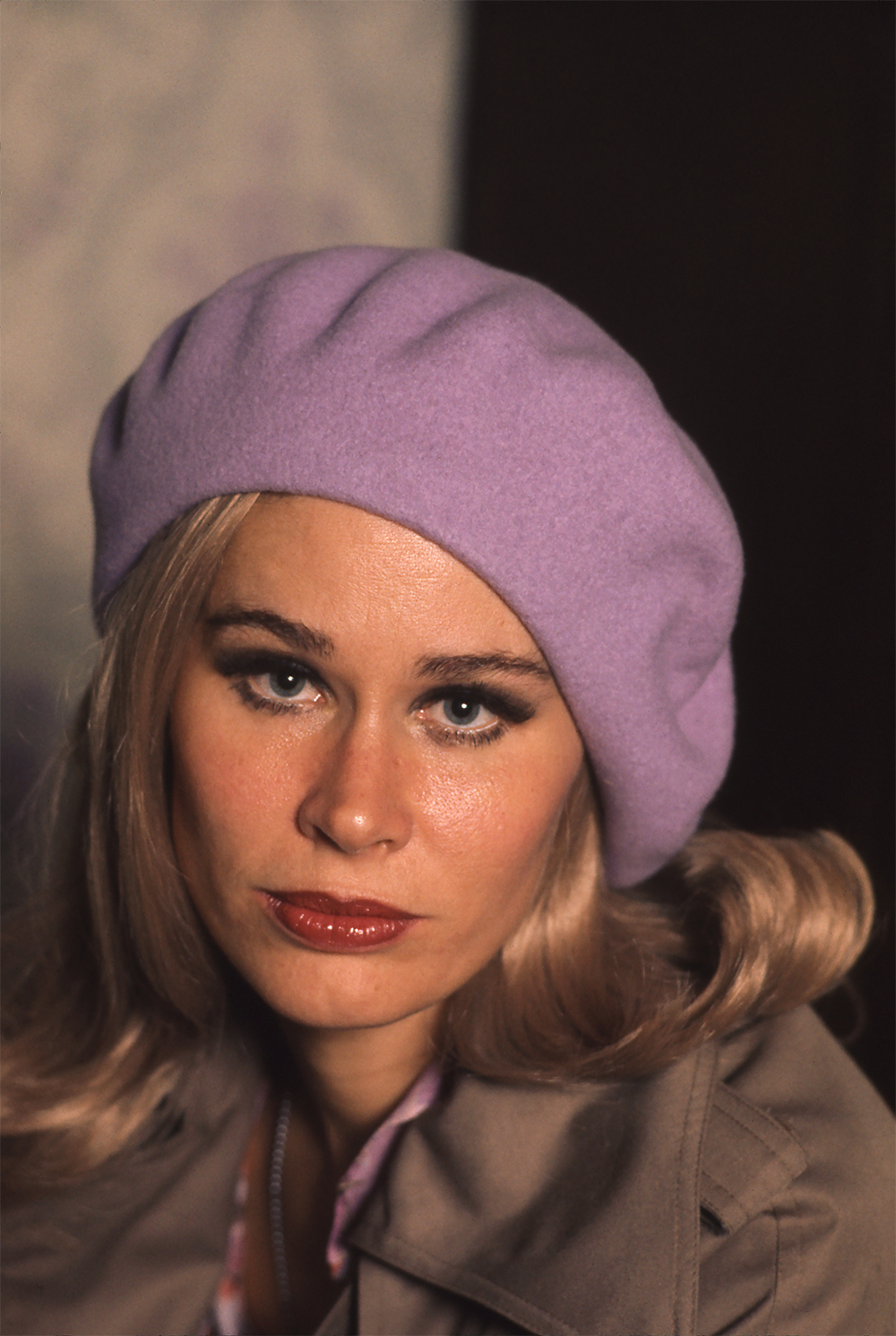
After mustering up some reviewer fortitude, I popped in Severin’s lush Blu-ray edition of Ashanti and gave her a go. Much to my relief, it wasn’t nearly as bad as Jaws: The Revenge, which is a blessing. Albeit a small one, but a blessing nonetheless. Ashanti, based on the Alberto Vazquez-Figueroa novel Ebano, deals with the theme of modern day slave trading in parts of Africa and the Middle East. Working for the World Health Organization, Dr. David Linderby (Michael Caine) and his wife, Dr. Anansa Linderby (supermodel and first African-American to ever grace the cover of Vogue, Beverly Johnson), are working on inoculations in a small village in Africa. As the natives start to dance, David stays to take some photos, while Anansa goes off for a nude swim while. By herself, which seems like an incredibly bad idea masquerading as a potential plot device. The potential part pays off quite quickly as she gets kidnapped by the smarmiest slave trader this side of Mandingo, Suleiman (Peter Ustinov).

Assuming that Anansa was just a beautiful local, Suleiman (pronounced soo-lay-mon) soon realizes that while her heritage is with the Ashanti tribe (hence the title), she is not only a born and bred American, but she also works for the United Nations. A smarter villain would have either let her go or disposed of her immediately, but then we would only have a 20 minute short as opposed to a movie approaching the two hour mark. Instead, he decides to try to sell her to the highest bidder. David goes on a hunt for his wife and with the aid of the aging but still dashing Rex Harrison, ends up getting help from both a grizzled mercenary, Jim or as I like to call him, Merc Jim (William Holden) and most importantly Malik (Kabir Bedi). But more on him in a second.

Time starts to run out as Suleiman gets closer to the market, hoping to sell Anansa off to a wealthy Prince (Omar Sharif). Will David be able to rescue his wife and spare her the indignity of having to get friendly with the Prince’s crypt-keeper-like father?

Ashanti is a film whose ambitions are never quite met, but yet doesn’t sink completely under its weight. The pros include some gorgeous cinematography, with the blue skies and earth tones of the landscape really popping, all thanks to the director of photography, Aldo Tonti, who worked with both Frederico Fellini and Luciano Visconti. Some of the acting is good, with Johnson standing out, despite being the acting acolyte surrounded by a veritable buffet of seasoned character actors. Harrison and Holden both are solid, as usual. Caine, who is typically a great actor, seems only halfway committed to the character. Granted, given some of the hokey dialogue he has to say, his lack of enthusiasm is understandable. Sharif’s role is essentially an extended cameo and Ustinov’s Suleiman is one of the greasiest portrayals of an Arab ever.

The real star of Ashanti is Kabir Bedi as the golden-eyed, vengeful Malik. His character is the most compelling, involving a backstory where his wife was raped and murdered by Suleiman, who also sold his two children into slavery. Since then, Malik has made it his life’s mission to avenge his family. All of this torment and grief has made the formidable Malik one helluva a badass, kicking mucho-macho slave-trading booty. Bedi has such incredible charisma and physical presence that as soon as he shows up, milquetoast David just fades even more in the background. Ideally, the film should have revolved around Malik and his struggles. That would have made it an infinitely more interesting work.

Another element that hurts Ashanti is that it doesn’t quite know if it wants to be an sand, death & lurid behavior exploiter or a respectable, serious film about the then and now current topic of slave trading. There’s Anansa’s aforementioned skinny dipping and one particularly weird scene where a young boy screams while (off camera) being molested. Then there’s the poster art, which features a painting of Anansa shackled with her breasts halfway hanging out. I have zero problems with luridness in cinema but like any ingredient, you have to know exactly what you are working with and how to use it. Otherwise, you’re in danger of it either being too strong or too bland. Ashanti tends to fall into the latter.

That said, Ashanti does have its merits and is still a damn sight better than Jaws: The Revenge. Plus getting to see Kabir Bedi in action is worth a viewing alone.

Posted by Heather Drain | Discussion
Mommie Dearest: Did Joan Crawford kill her last husband?
05.08.2013
11:13 am

Topics:
Crime
Movies

Tags:
Joan Crawford


Village Voice columnist Michael Musto went to see a preview of Christina Crawford’s off-Broadway show, Surviving Mommie Dearest, a documentary screening followed by a Q&A with audience members. In the past, Crawford has hinted that her mother killed her last husband, Pepsi-Cola CEO Alfred Steele, but now she’s pretty much coming right out and alleging it rather bluntly.

Musto writes:

And what she said effectively wiped away what all the apologists have conjectured for years—that mommie merely drove Steele to a heart attack by making him batty and anxious. Oh, no, kids. It’s way worse than that.

In the doc, Tina describes how Steele was found dead at the bottom of the grand stairway in the house.

“I didn’t believe it was an accident,” she asserts, knowingly. “I know what Mommie was capable of in a state of rage.”

Eek. She was implying Joan was a real-life villainess fresh out of the type of film noir Joan often played the heroine of. Mommie did like to push, after all.

“There was no autopsy,” added Christina, austerely. “He was cremated.”

Yikes! In 1959, Joan Crawford was elected to fill Alfred Steele’s vacancy on the Pepsi-Co board of directors, a spot she held until she was forced out in 1973. Crawford and Steele’s ashes are interred together at Ferncliff Cemetery in Hartsdale, New York.

Thanks Niall!

Posted by Richard Metzger | Discussion
Ray Harryhausen: The film-maker who made the impossible possible has died

nesuahyrrahyarsuineg.jpg
 
The legendary visual effects master Ray Harryhausen died today at his London home, he was 92.

A statement was issued on behalf of The Ray and Diana Harryhausen Foundation:

The Harryhausen family regret to announce the death of Ray Harryhausen, Visual Effects pioneer and stop-motion model animator. He was a multi-award winner which includes a special Oscar and BAFTA. Ray’s influence on today’s film makers was enormous, with luminaries; Steven Spielberg, James Cameron, Peter Jackson, George Lucas, John Landis and the UK’s own Nick Park have cited Harryhausen as being the man whose work inspired their own creations.

...

Harryhausen’s genius was in being able to bring his models alive. Whether they were prehistoric dinosaurs or mythological creatures, in Ray’s hands they were no longer puppets but became instead characters in their own right, just as important as the actors they played against and in most cases even more so.

If it wasn’t a monster movie, then it wasn’t worth watching. That was my narrow view of films when I was a child. There was the usual list of werewolves, and vampires, and stitched-together cadavers from Frankenstein’s lab, but there was nothing quite as thrilling as seeing Ray Harryhausen’s name on a film.

Harryhausen’s name on a movie meant unforgettable special effects that made any average film extraordinary. Before VHS or DVD recorders, we memorized those key scenes to replay in our heads, and discuss at our leisure. The ghoulish, resurrected skeletons that fought Jason and the Argonauts; the Rhedosaurus that tore up New York in The Beast from 20,000 Fathoms; the Terradactyl that terrorized Raquel Welch in One Million Years B.C.; the sinewed goddess Khali that fought Sinbad; these were memories that made many a childhood special - mine included.

It was seeing the original version of King Kong that started Harryhausen off on his career. His ability to duplicate some of Willis O’Brien’s groundbreaking effects led the young Harryhausen to meet and then work with his idol on Mighty Joe Young, in 1949. Their collaboration won an Oscar, and set Harryhausen off on his career.

Today, tributes poured in from across the film industry praising Ray Harryhausen‘s genius:

“Ray has been a great inspiration to us all in special visual industry. The art of his earlier films, which most of us grew up on, inspired us so much.” “Without Ray Harryhausen, there would likely have been no STAR WARS”  —George Lucas.

“THE LORD OF THE RINGS is my ‘Ray Harryhausen movie’. Without his life-long love of his wondrous images and storytelling it would never have been made – not by me at least”  — Peter Jackson

“In my mind he will always be the king of stop-motion animation”  —-  Nick Park

“His legacy of course is in good hands because it’s carried in the DNA of so many film fans.”  — Randy Cook

“You know I’m always saying to the guys that I work with now on computer graphics “do it like Ray Harryhausen”  — Phil Tippett.

“What we do now digitally with computers, Ray did digitally long before but without computers. Only with his digits.”  —Terry Gilliam.

“His patience, his endurance have inspired so many of us.” — Peter Jackson

“Ray, your inspiration goes with us forever.” — Steven Spielberg

“I think all of us who are practioners in the arts of science fiction and fantasy movies now all feel that we’re standing on the shoulders of a giant.
If not for Ray’s contribution to the collective dreamscape, we wouldn’t be who we are.” — James Cameron

A sad loss, and a sad day, but what movies he has left us!

R.I.P.
Ray Frederick Harryhausen
1920-2013


With thanks to NellyM
 

Posted by Paul Gallagher | Discussion
Kooks: David Bowie pushing around a baby stroller, 1971
05.06.2013
07:39 am

Topics:
Fashion
Movies
Pop Culture

Tags:
David Bowie


Here’s David and Angie Bowie taking their then 3-week-old baby Zowie out for a walk in June of 1971. Their son’s birth (and a Neil Young album) inspired the song “Kooks” on Hunky Dory.

Zowie Bowie later reverted to his birth name of Duncan Jones and is today a successful film and advertising director. He’s active in raising awareness for early breast cancer screening along with his wife, Rodene Ronquillo.


A BBC radio recording of “Kooks” from 1971:


Via Retronaut

Posted by Tara McGinley | Discussion
Growing Up John Waters

sretawnhojhsart.jpg
 
Rock and Roll taught John Waters how to annoy his parents, but it was the nuns from his local church, who inadvertently encouraged his interest in cheap, exploitation films:

‘The first thing I can remember rebelling about really, was when I was about 8-years-old and every Sunday we’d go to church. Once a year they’d read us this pledge that we had to take for the Legion of Decency, which was the Catholic Church rating the movies—what you could see and what you couldn’t—and the condemned ones were the ones they’d tell us you’d go to Hell if you saw these movies.

Well, I remember refusing to do this pledge and my mother was kind of shocked, but I was just a child, and she didn’t make a big deal out of it. And on Sundays, the nuns would read us this list, with this voice like the Devil, and you know, seeing this nun stand there saying, “Love Is My Profession, Mom and Dad, The Naked Night.” I thought “What are these movies?” I’d never heard of them—they didn’t play at my neighborhood, believe me—but I would go and see them, or read about them, and clip the little list and keep a record of all these condemned movies.  The Mom and Dad poster is hanging right in my hall—it’s still that much of an influence. But it made me want to see these movies I’d never, ever heard of. So, in fact they encouraged me, [the nuns] encouraged my interest, without ever knowing it completely.’

Growing Up With John Waters is a fabulous Channel 4 documentary from 1993, where the notorious director of Pink Flamingos, Multiple Maniacs, Female Trouble and Hairspray talks about the childhood events that shaped his life.


Posted by Paul Gallagher | Discussion
The Gentleman of Horror: Boris Karloff appears on ‘This Is Your Life,’ 1957

ffolraksirobefilruoysisiht.jpg
 
The Gentleman of Horror, Boris Karloff is the focus of this episode of This Is Your Life from 1957.

Few actors have such long and successful careers as had “Karloff the Uncanny”; or have thrilled so many different and disparate people across the world with his performances as “The Monster” from Frankenstein,  Imhotep in The Mummy, Professor Morlant in The Ghoul, all the way up to TV series, The Grinch Who Stole Christmas, Michael ReevesThe Sorcereors and Peter Bogdanovich‘s Targets.


Posted by Paul Gallagher | Discussion
‘Heavy Metal Parking Lot’ trading cards
05.02.2013
08:04 am

Topics:
Amusing
Movies

Tags:
Trading Cards
Heavy Metal Parking Lot


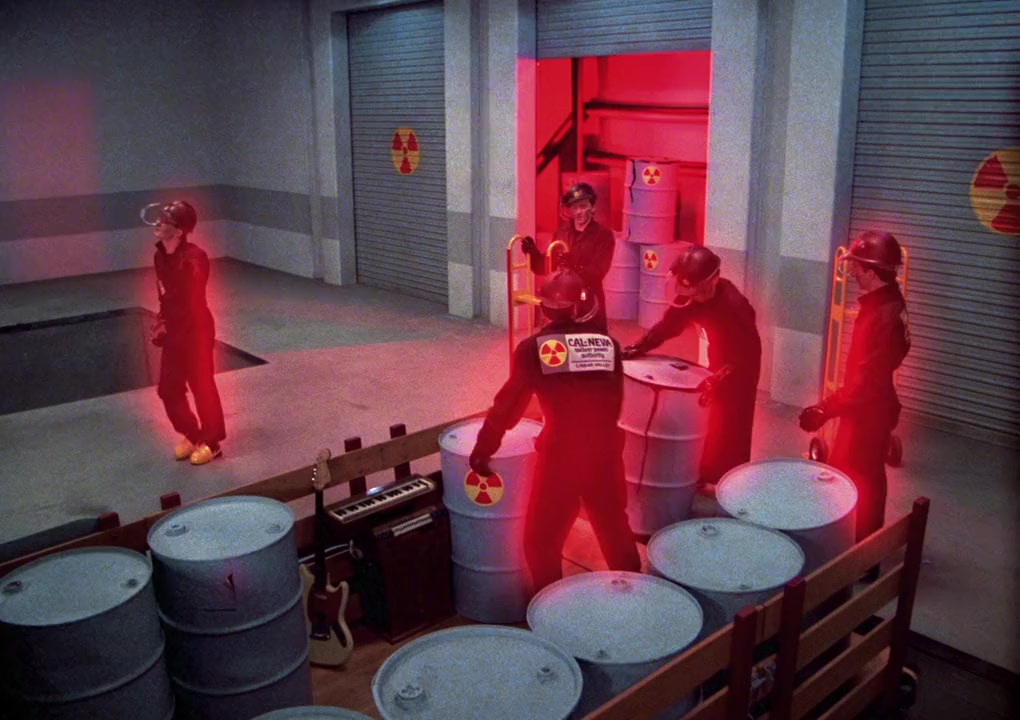
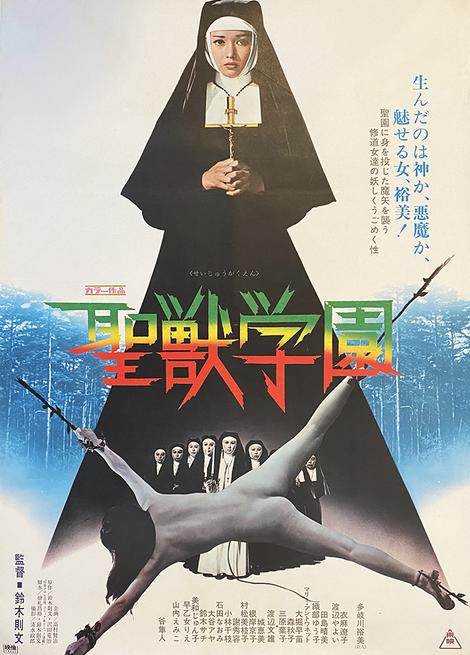
Not sure how I stumbled across these gems online, but I did. I’m also not sure who designed these or of their provenance? Were they a part of a special DVD box set of Heavy Metal Parking Lot (and the sequel of sorts, Heavy Metal Picnic)? Or were they just simply made for shits and giggles? Were they ever even printed? I don’t know, but the concept made me laugh.

You can see the rest of the set at this Flickr photostream.


More after the jump…
Posted by Tara McGinley | Discussion
The Source Family: God has a rock band
05.01.2013
12:30 pm

Topics:
Movies
Music

Tags:
The Source family


The Source Family, an extraordinary new documentary feature about a little-known hippie counterculture enclave living in Los Angeles in the 1970s is being released today in New York and coming soon to 25 other cities. Co-directed by Jodi Wille and Maria Demopoulos, The Source Family intimately examines the lives of a group of spiritual seekers who came to follow a charismatic but deeply flawed polygamous guru who opened one of the very first vegetarian restaurants in America. The Source restaurant was a Sunset Strip landmark for over two decades, attracting clientele like Warren Beatty, Julie Christie, Willam Morris super agents and various other Tinseltown notables with its healthy food and good-looking staff. (I used to eat there a lot myself in the 1990s, but the Source family members were long gone by then.).

Who were the Source Family?

Jodi: They were a utopian group of 140 beautiful young people who, for a time in the 70s, lived together in a mansion in the Hollywood Hills and explored the cosmos with a man named Father Yod, a controversial restaurateur turned spiritual leader. They had a popular vegetarian restaurant on the Sunset strip that movie stars and musicians frequented and they had their own rock band.

What was it about Father Yod that was so special that he could attract followers so easily?

Jodi: He was a wizard, a war hero, an outlaw, a conceptual genius, a father figure and a friend. He was fearless and he had a sense of humor. He showed those who were seeking how to make magic real in their own lives. And the ladies loved him.

Didn’t Woody Allen use the commune’s health food restaurant as the backdrop for some anti-Los Angeles sentiment in Annie Hall?

Maria: Indeed he did. It’s an iconic scene because it defines the great polarity at the time between the two coasts. The Source was an epicenter and represented the West Coast’s fixation on health and mysticism, which his character, “Alvy Singer,” a cynical New Yorker, perceived as self-indulgent and superficial.


How did you come to make a film about The Source?

Jodi: While I was helping to put together the book about the group (The Source, Process Media 2007) with Isis and Electricity Aquarian, Isis suggested we shoot our interviews with family members on video. Once Isis’ showed me her mind-blowing Source archives with the Super 8 home movies, color slides, scrapbooks, and hundreds of hours of audio recordings, I knew we had to make a film. I then brought in Maria, a talented and experienced commercial director and a longtime friend, to help bring things to the next level. The universe unfolded from there.

Are the Source Family still together, today?

Maria: They’re no longer an active family— they dispersed in 1977 after Yod’s death. But the internet has reconnected many of them and they also have occasional Source Family reunions. The band reunited in 2007 when the book came out, and since then they’ve toured nationally and released new three albums. While the Source Family members all have their own lives now, it’s clear when you talk to them that most still have one foot in Yod-land.

Below, the trailer for The Source Family.

 
Previously on Dangerous Minds:
Father Yod’s flower-powered ego trips and the utopian wet dreams of The Source Family

Posted by Richard Metzger | Discussion
Willie Nelson’s ‘audition tape’ for ‘The Hobbit 2’
04.30.2013
09:46 am

Topics:
Amusing
Movies

Tags:
Willie Nelson


Happy birthday, Willie Nelson! The esteemed country great (and IMO great American) turns 80 years old today. In celebration, here’s a video of Willie’s “audition tape” for The Hobbit 2.

Lose that hambone Sir Ian McKellen guy, please.
 

Posted by Tara McGinley | Discussion
Black Francis ‘The Golem: How He Came Into The World’

melogredmelogkcalbknarf.jpg
 
Black Francis scores the classic silent movie—Paul Wegener and Carl Boese’s The Golem: How He Came Into The World.

Often regarded as the height of German expressionism, the silent, black and white film The Golem (also known in it’s German form, Der Golem) was the last of a series of three films by director Paul Wegener and was released in 1920.

Set in the 16th century, The Golem: How He Came Into The World tells the story of the persecution of the Jews of Prague. The towns Rabbi (Rabbi Loew), foreseeing these events, constructs a giant ‘Golem’ out of clay in order to protect his people. Mayhem ensues when the creature rebels and begins to destroy the ghetto. The highly expressionistic imagery seen in the film was captured by legendary cinematographer Karl Freund, who went on to do the classic Metropolis in 1927.

Groundbreaking as it was, the film sat ‘silent’ for nearly 88 years until the San Francisco International Film Festival requested Black Francis score the film and perform it live for their annual film festival in April, 2008. Despite the sold out show at San Francisco’s Castro Theatre (with a line stretching around the block) the score has never been performed live since. However, BF recorded the resulting double album in a matter of days in SF at Hyde Street Studios, with help from longtime collaborator/producer Eric Drew Feldman. The album features Black Francis on vocals/guitar, the late Duane Jarvis on lead guitar, EDF on keys, Joseph Pope on bass, Jason Carter on drums and Ralph Carney on horns.


Posted by Paul Gallagher | Discussion
Page 2 of 158  < 1 2 3 4 >  Last ›