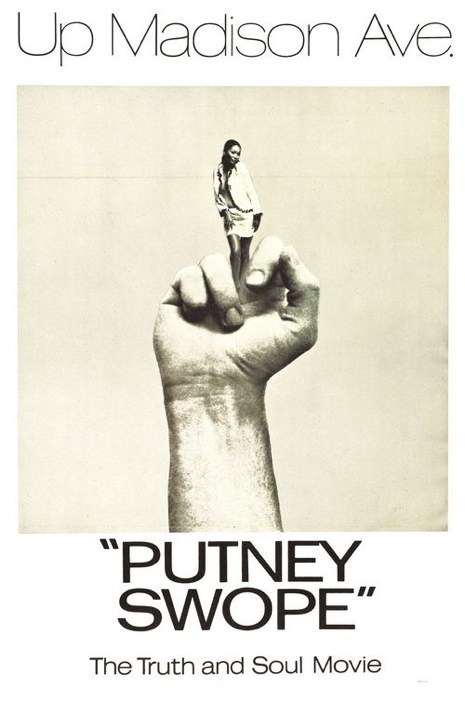
Robert Downey Sr.‘s Putney Swope is an unusual film that splits audiences into two camps without breaking a sweat: those who absolutely love it and think it’s an unheralded masterpiece, and those who utterly loathe it. (Check out the Amazon reviews!) A third and far larger category would be comprised of everyone who’s never even heard of this odd little gem in the first place. Back in the early 80s, when super rare cheap to license cult films would often appear on some schlocky VHS video label long before some mainstream films became available Putney Swope would often show up in the “Midnight Movies” or cult films section of video rental shops. After that it more or less disappeared until it finally came out on DVD. Every once in a while it’s on TV, too, but it’s still, sadly, Putney Swope not a widely known film.
The Coen Brothers, Chris Rock, Dave Chappelle and Paul Thomas Anderson are all known to be big fans of the film. Jane Fonda declared Putney Swope a masterpiece to Johnny Carson on The Tonight Show in 1969 and the Beastie Boys have sampled from it and rapped about it. Anderson even lifted something from it for Boogie Nights.
The first three times I saw Putney Swope I thought it was an incredible masterpiece. I was stunned by it. I laughed out loud. I sobbed and cried. It was amazing. It was profound and symbolic of everything! Then again, the first three times I saw the film I was ridiculously high on LSD and I watched it over and over again, by myself, three times in the same night!
When the acid wore off I still thought it was a great and profound film. I was an evangelist for this weird little underground movie, which satirized race, how race was portrayed in advertising, race in the workplace, black militants, white privilege and corporate corruption (there’s even a hint of Orwell’s Animal Farm in it), to all of my friends. Man did I force this film on a lot of (grateful!) people. I’ve easily seen it 30 times.
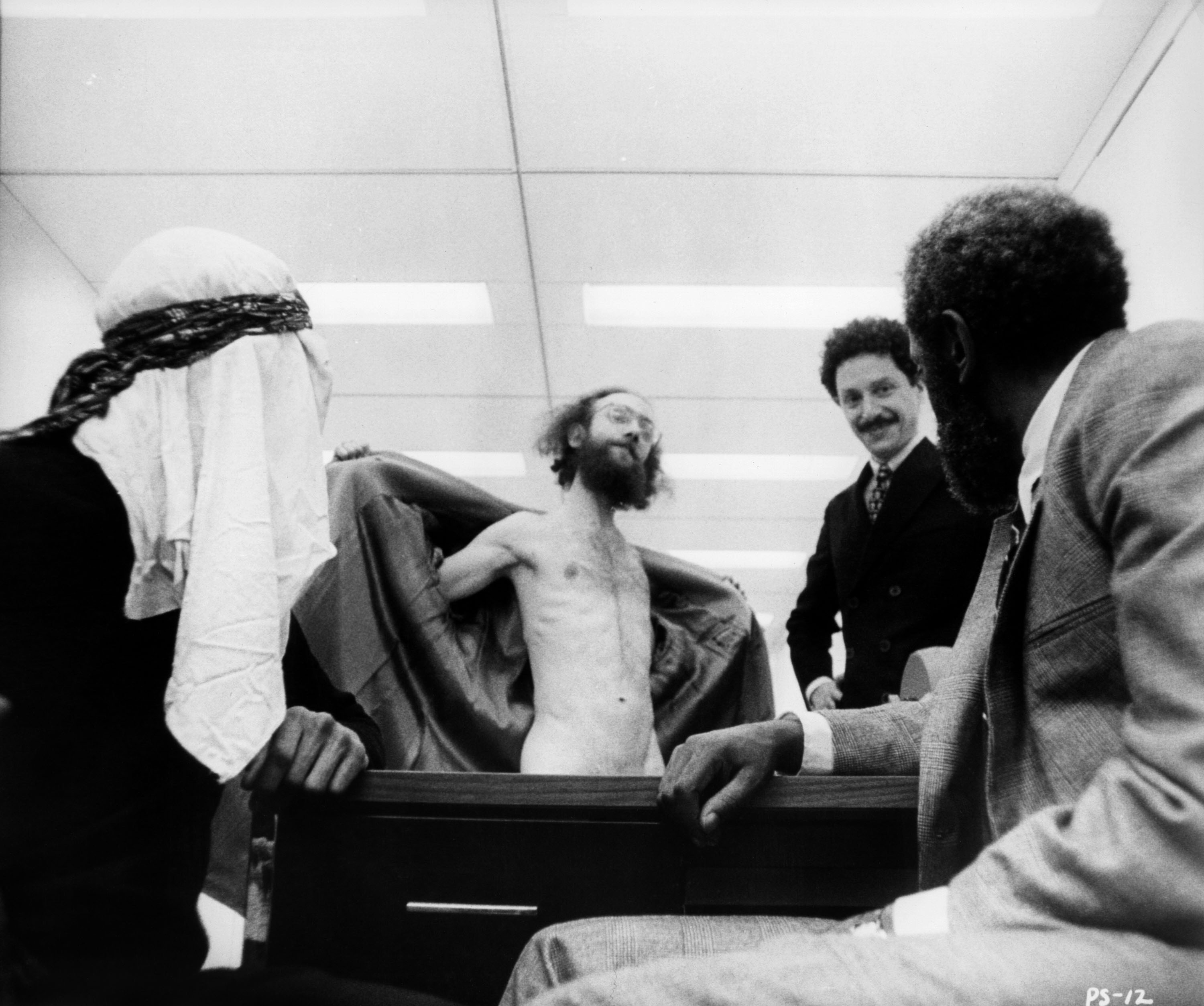
The plot goes something like this: Arnold Johnson (who later played “Hutch” on Sanford and Son) is Putney Swope, a middle-aged black man who works at a Madison Avenue advertising agency with a bunch of (obviously) corrupt corporate buffoons. When the founder of the agency dies mid-speech, the board holds a vote to find his successor while his body goes cold on the table. Everyone writes down a name on a piece of paper. They are informed that they cannot vote for themselves and so each man tears up his ballot. They cut deals with each other and then all vote for the one guy who they think no one else will vote for either, Putney Swope, the only black guy.
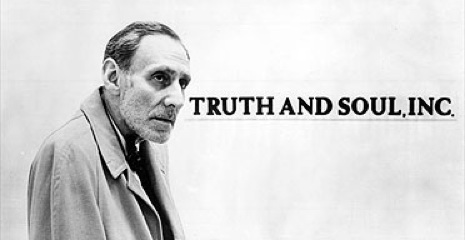
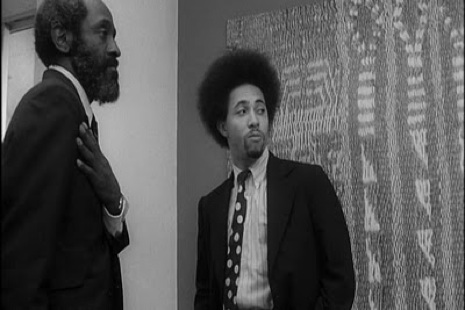
So Swope becomes the new CEO with a landslide. His motto is “Rockin’ the boat’s a drag. You gotta sink the boat!” He promptly fires all of the white executives (save for one), renames the agency “Truth & Soul” and hires a young, idealistic and politically militant black staff who want to tell the actual truth in advertising. “Truth & Soul” refuse to take accounts from cigarette manufacturers, liquor companies or the war machine. They become so successful that the government becomes alarmed. Eventually everyone becomes corrupted, even Putney himself, who takes to dressing like Fidel Castro.
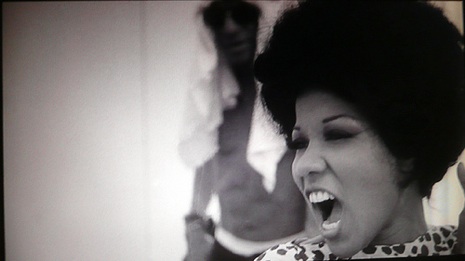
That’s about it, plot-wise, but a lot of stuff happens in Putney Swope that would be difficult to try to describe here. The film is mainly in black and white, but the commercial parodies are in color. Antonio Fargas Jr. (“Huggy Bear” on Starsky & Hutch) has a memorable role as “The Arab,” Putney’s Muslim advisor and prankster Alan Abel is also seen in a cameo role. So is Allan Arbus who would go on to Downey’s Greaser’s Palace and M*A*S*H. Putney Swope has great lines like “Anything that I have to say would just be redundant”; “A job? Who wants a JOB?”; and “Are you for surreal?!” that have been quoted over and over again (at least in my house). The US president and his wife are played by midgets who engage in a threesome with a photographer. There is a Mark David Chapman-type weirdo hovering around. It’s hard to describe, you really just have to see it. I think Putney Swope is one of the great, great, great American counterculture films of the 1960s. One day. I predict confidently, it will be seen as the equal to Easy Rider or Five Easy Pieces.
At least watch the first scene up to the point where Putney takes over the advertising agency. If that doesn’t make you want to watch the entire, then sorry, I can’t do much more for you…
Not to put too fine a point on it, but who knows, this weekend in Los Angeles might be your last chance ever to bask in the Luciferian legend that is filmmaker Kenneth Anger. He is, after all, 92 years old at this point. He might have another good decade in him, but you never know, so why take that chance? (The same could be said, of course, about his old chums the Rolling Stones who are about 15 years younger.)
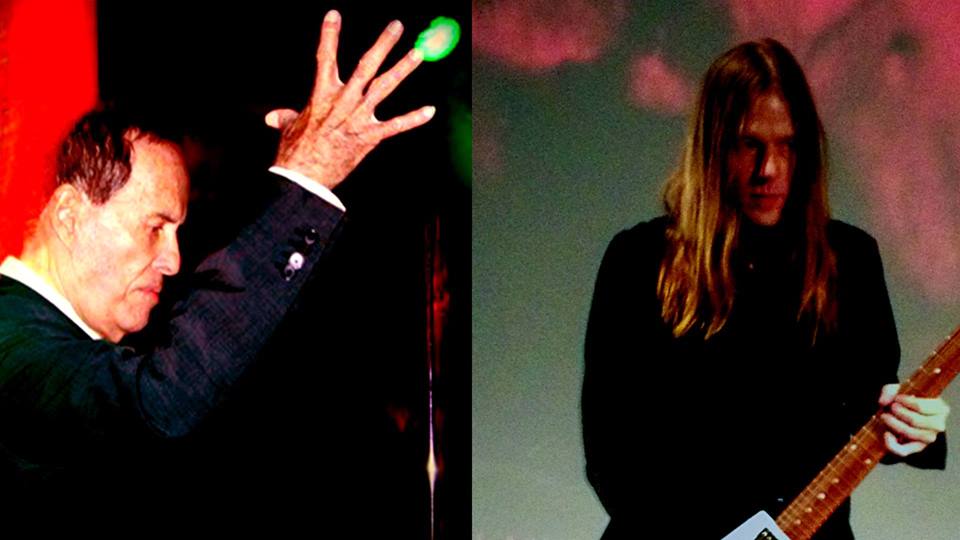
This Saturday, September 21, Spaceland and Lethal Amounts present Anger and Brian Butler in a rare appearance as Technicolor Skull:
On the occasion of the Autumnal Equinox, Kenneth Anger and Los Angeles-based artist Brian Butler will perform at the historic Regent Theater in Downtown Los Angeles. A selection of Anger’s iconic films including Invocation of My Demon Brother, Lucifer Rising, and Scorpio Rising will be presented along with a conversation on the occult forces which drive these two visionary artists. The presentation will climax with the shattering ritualistic spectacle of magick, sound and light; Kenneth Anger & Brian Butler’s Technicolor Skull.
According to VICE: “Anger and Butler’s act employs guitars, a theremin, and a 60,000 watt sound system—the type of stuff normally associated with such trivialities as mere music—in combination with visuals and stagecraft, to plunge audiences into a kind of ecstatic nightmare. If you’ve ever seen Anger’s Lucifer Rising, you’re at least partially ready for this magick ritual of light and sound.”
I saw the Technicolor Skull performance at the Museum of Contemporary Art in Los Angeles a few years back, during Anger’s big show there. It’s quite extraordinary: with Anger’s films projected behind them, Butler plays a Flying V guitar with a E-bow making a diabolical noise while Anger plays the theremin as if he is fisting it with manic glee (lest you think I am exaggerating for comic effect, first off, we are talking about Kenneth Anger here and second, he pointedly rolled up his sleeve before sticking his fist through the theremin’s… hole.)
Saturday, September 21 · Doors 8:00 PM / Show 9:00 PM at The Regent Theater. Buy tickets HERE
Above, Floria Sigismondi’s “72 hours in André Balazs’ Chateau Marmont with Kenneth Anger.”
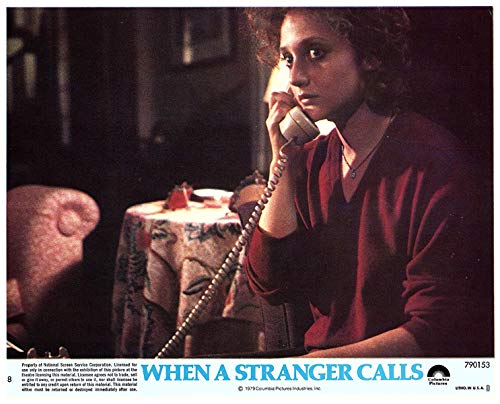
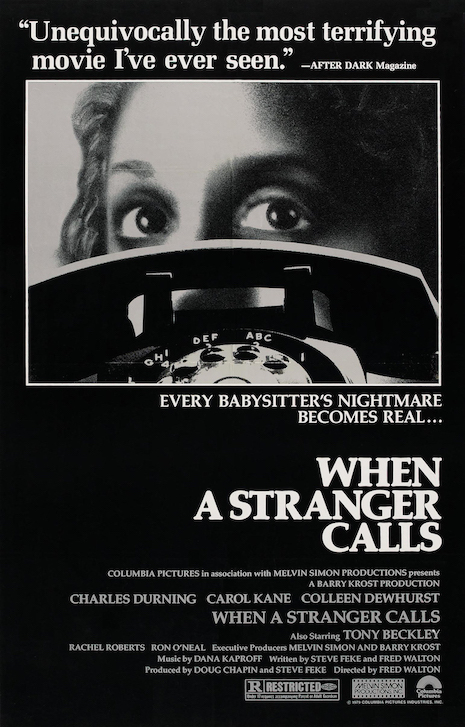
“Have you checked the children?” “The calls are coming from inside the house!” These are familiar phrases, thanks in large part to the 1979 film, When a Stranger Calls, but did you know they originated from a certain urban legend? Or that the terrifying opening of Stranger is essentially a clone of a rarely seen short film?
The 1977 short, The Sitter, was inspired by the urban legend concerning a female teenage babysitter who receives strange, frightening phone calls in which the caller keeps asking, “Have you checked the children?” Eventually, it’s determined the calls are coming from another phone line inside of the house. The tale usually ends with a shocking, disturbing reveal. “The babysitter and the man upstairs” legend is thought to have been first circulated in the early 1960s.
Fred Walton and Steve Feke were working as writers for a fleeting TV show when they came up with the idea for The Sitter. Feke told Walton the babysitter legend, which Feke believed to have actually taken place. Walton hadn’t heard the story before, and immediately thought it was something that could be developed for the screen. Thinking that it wasn’t right for the program they were writing for, Walton and Feke decided to produce a short film. The pair co-wrote the script, with Walton directing.
Shot over just three days, The Sitter is an impressive slice of low-budget, first-time filmmaking. Feke and Walton wanted it to look as professional as possible—which included hiring Jean-Luc Godard’s cameraperson and having the film processed at the same lab used by Stanley Kubrick—and it shows in the final product. All that wouldn’t matter if The Sitter wasn’t an effective little horror picture, but it certainly is.
Little-known actress Lucia Stralser as Jill, the terrorized teen, in ‘The Sitter.’
Though the short didn’t garner the attention Feke and Walton were hoping for, the duo continued to talk up The Sitter in Hollywood. Eventually, they’d secure the backing of a wealthy financier, and the decision was made to turn the short into a feature-length film. Also co-written by Feke and Walton, with the latter once again in the director’s chair, When a Stranger Calls (1979) was produced for $1.5 million; it went on to gross over $20 million in the United States alone.
The beginning of When a Stranger Calls is a virtual remake of The Sitter, with similar looking shots, pacing, and running time. For Stranger, acclaimed actress Carol Kane was cast in the role of the babysitter. Kane’s first-rate performance in the opening, along with a tightening of the script for the sequence, resulted in an improvement over The Sitter. But the short is still appealing as a separate, standalone work, in part, as not everything is duplicated in Stranger; the slow, creepy Steadicam shots are particularly noteworthy.
Rock Hudson was killing time waiting for that one big role to come along to change it all. He was making money, sure, lotsa money, he was box office mint but he was just doing the same damned thing over and over and over again. The hopes he once harbored after his performances in Giant or Written in the Wind or even The Spiral Road (a role he claimed to have studied the bejesus for) had all come to nought. Zip. Nada. No one was giving him a chance least of all his agent and long-time pal Henry Willson.
Willson was doing sweetheart deals with the studios. A stash of cash under the table to get Hudson signed-up for another goddamn contract. Five more movies, sure, Rock would love to do them…where do ya want me to sign? Hudson was Wilson’s money-maker. He pimped him out to whoever had the most moolah. Wilson felt justified in his actions. He had been the one who’d picked up the six-foot-four beefcake when he was a long-streak of piss truck-driver fresh outta Winnetka. Willson pushed Hudson on the casting circuit and got him a deal when he still couldn’t get his lines right or even make an entrance without tripping over the props. Willson had also christened him Rock (after the Rock of Gibraltar) and Hudson (after the river) and made him into America’s number one heart-throb who made teenage girls swoon and their moms all dreamy-eyed. Wilson was taking what he thought was rightfully his—money. Which meant no big dramatic roles came Hudson’s way after Giant or The Spiral Road because there was no money and no interest there. All he got was rom-coms with thirty-something girl-next-door Doris Day or sexy swing-hips Gina Lollobrigida.
Hudson’s relationship with Willson was complex. It was a business partnership with benefits. Both men were gay and Wilson had the hots for Hudson and acted on it. To make matters more Freudian, the older Willson was also a father-figure to Hudson. A replacement for the father who had abandoned Rock when he was about three. Hudson always felt he was responsible for his father’s departure, which of course wasn’t true. Eventually, his mother remarried and his new stepdad was a drunk, a coward, and a bully who beat the shit outta Hudson just because he could.
Hudson was about nine-years-old at the time. He quickly learned how to hide his feelings, how to make his face a mask, and keep his thoughts to himself.
When Hudson grew like Topsy, he was able to hit back. That put paid to the ole drunk stepdad’s violence. In the same way when Hudson became a big movie star, he didn’t need Wilson no more. The roles he sought hadn’t materialised and he no longer wanted Willson signing his life away so he could line his pockets while Hudson did all the work. Hudson fired Willson. Now he was gonna make his own decisions.
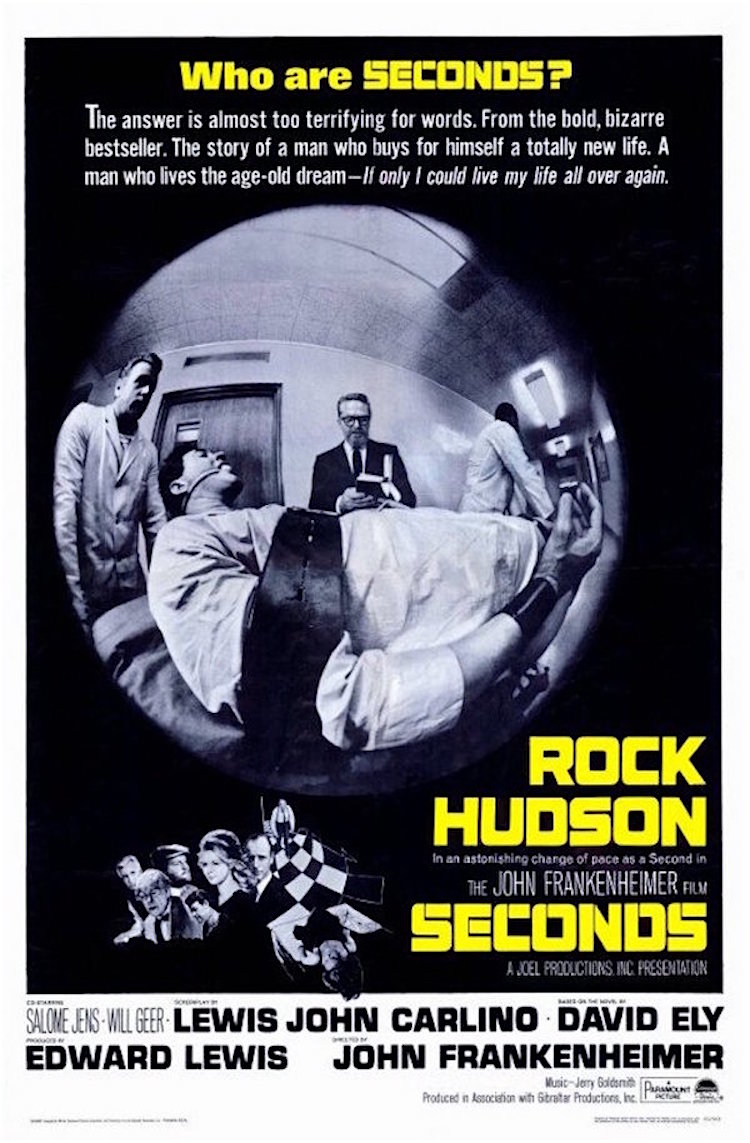
Hudson decided on making a movie that would be so different, so far removed from his usual jokey isn’t-this-fun fare, that he hoped it would make audiences and producers appreciate his talents as an actor and not his hunky good looks. His decision turned out to be a kinda Pyrrhic victory. Hudson got the part he had always wanted but the movie bombed and killed-off his ambitions to ever try something like this again.
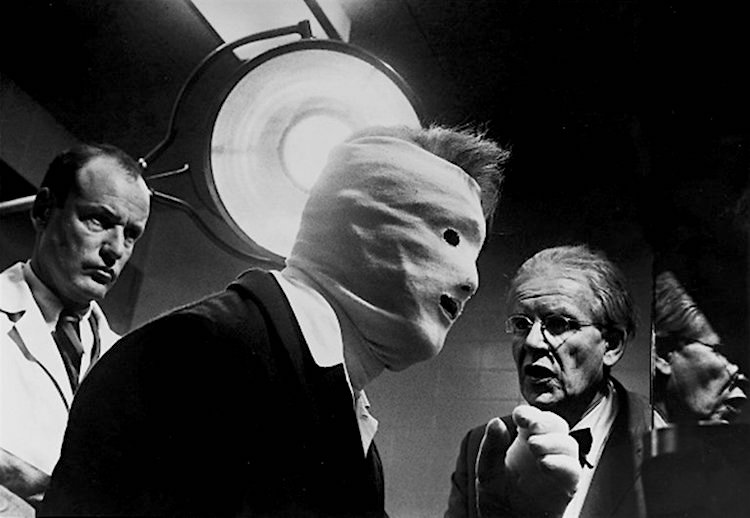
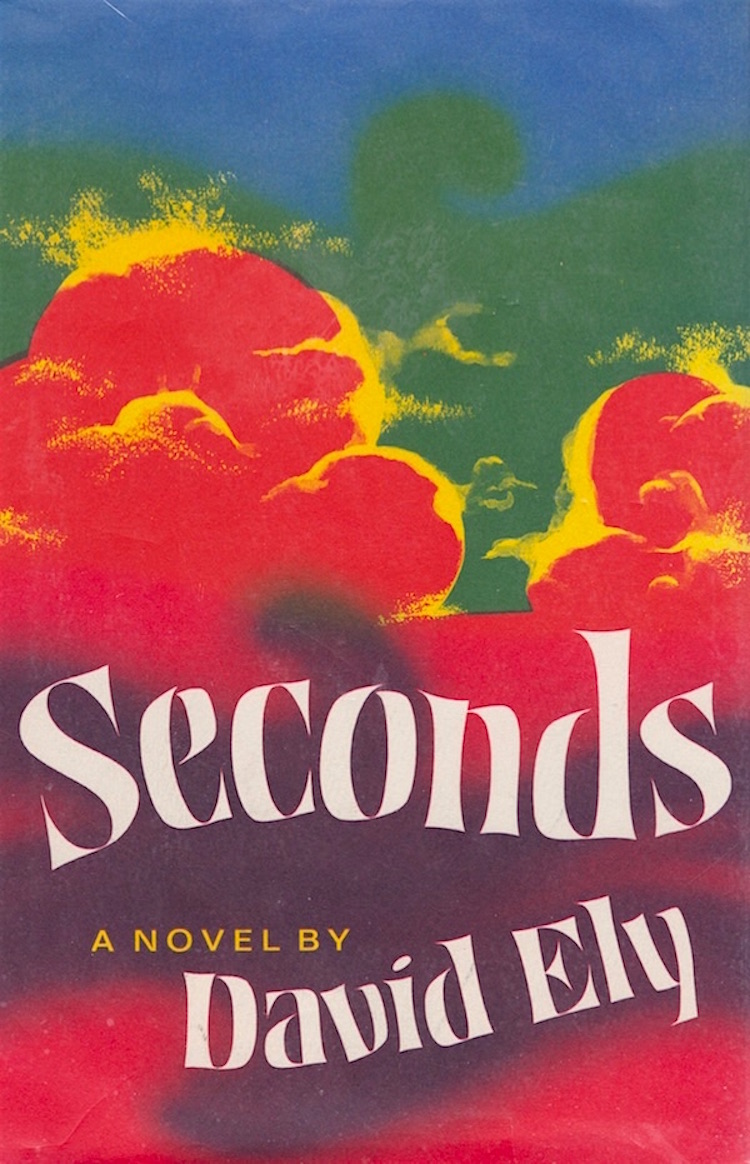
Based on a novella by (the vastly underrated) David Ely, Seconds tells the story of Antiochus Wilson (Arthur Hamilton in the film), a bored frustrated deadbeat middle-aged banker who feels his life is over until one day he is offered a second chance by a dark mysterious secret organization. For the right amount of money, this organization will give Wilson a new face, a new identity, a whole new life which he can keep so long as he plays by their rules.
Kirk Douglas had originally optioned the book thinking here was a sure-fire Best Actor Oscar if he played both the before and after roles of Hamilton/Wilson. Unfortunately, when the green light came, Douglas was busy making other plans. The rights were then bought by Paramount for their young director John Frankenheimer who’d earned his spurs and made the studio mega-bucks with a series of box hits—Birdman of Alcatraz (1962), The Manchurian Candidate (1962), Seven Days in May (1964), and The Train (1965). In Hollywood, you’re only as good as your last movie. Frankenheimer was yet to have a flop. This meant he could do what the hell he liked.
Frankenheimer thought the only actor who could play the before and after roles of Hamilton/Wilson was Laurence Olivier. He hopped on a plane to England and got the theatrical knight to agree to the role. But this wasn’t what Paramount wanted. They wanted a BIG NAME. A BIG BOX-OFFICE NAME that would bring as wide and as varied an audience to the movie as possible and therefore lotsa money. Through a friend-of-a-friend-of-a-friend, Rock Hudson was suggested as a possible lead to Frankenheimer. The director couldn’t see it but agreed to meet with the actor.
Hudson wanted the part but he knew his limitations. He suggested to Frankenheimer that two actors should play the before and after roles rather than just one. It was a clever idea—one Frankenheimer thought would work. Hudson inferred he wanted the role because he knew exactly what it was like to be Hamilton/Wilson. Here was an actor who been forced to hide his true feelings since childhood and had had a whole new (fake) identity as America’s red-blooded hetero-beefcake foisted on him by movie studios. All so he could he have the one career he had always dreamed about.
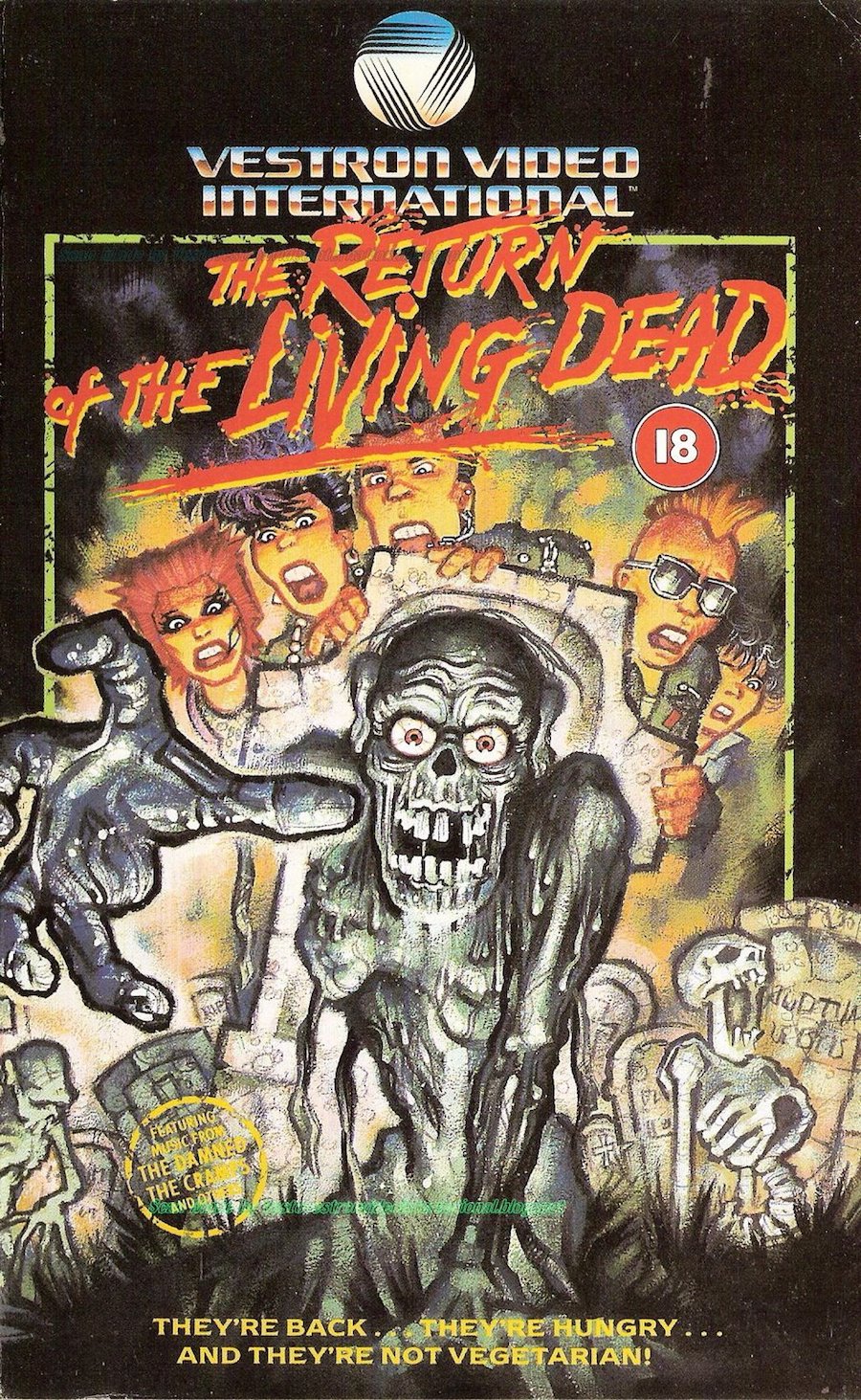
Artwork from Vestron Video and their UK VHS for ‘The Return of the Living Dead.’
Before we take a deep dive into the deviant classic that is 1985’s The Return of the Living Dead lets demystify the collection of films by late director George A. Romero and his partner John A. Russo. The first was Night of the Living Dead, released in 1968. Romero wrote the script for the film during his freshman year of college after meeting Russo while he was visiting Carnegie Tech in Pittsburgh where he was studying graphic arts. After passing the script back and forth, the pair finally agreed the zombie antagonists in their film would be of the flesh-eating variety, not primarily brain consumers. With respect to zombie film super fans, this distinction has often been lost on connoisseurs of the genre, and Romero himself has publicly lamented about being constantly asked to include the words “Eat Brains!” while signing autographs—even though his zombies were just not into eating human brains. Initially, the title of the film was “Night of the Flesh Eaters,’ which was later modified for its theatrical release in order to avoid confusion with the 1964 film, The Flesh Eaters. However the release lacked notation of copyright, errantly placing the film in public domain where by definition an artistic work is considered common property.
In 1974 Russo would pen his first novel based on Night of the Living Dead. Four years later would see the publication of Russo’s second book Return of the Living Dead, which served as the basis for his dark screenplay (written with another Romero collaborator, Rudy Ricci) and subsequent 1985 film adaptation of the book. According to an interview with Russo in 2018, none other than Frank Sinatra had agreed to finance the film but withdrew after his mother Dolly Sinatra was tragically killed in a plane crash. After it was clear George Romero wasn’t interested in directing, the late Tobe Hooper was tapped but pulled out to direct Lifeforce (1985). Eventually, Russo and Ricci’s original screenplay would end up with a man of many talents and connections, Dan O’Bannon (Heavy Metal, Alien, Total Recall and, coincidentally, one of the writers behind Lifeforce) who revamped it completely so much so Russo has said he’d still like to see his (and Ricci’s) original screenplay get the film treatment someday. Ultimately, this about-face wasn’t a bad thing at all, and at the urging of the film’s distributors, dialog and scenes were at times meant to be darkly humorous. The pioneering O’Bannon would end up in the director’s seat for the first of five Living Dead films, this being the only one directed by him. Thanks to many factors and concepts influenced or directly implemented by O’Bannon, the film would become one of the most beloved zombie flicks of all time.
Think I’m wrong? Let me help you with that starting with one of the film’s stars, actress and heavy metal fitness enthusiast Linnea Quigley, and the trick behind her long nude scene in the movie.
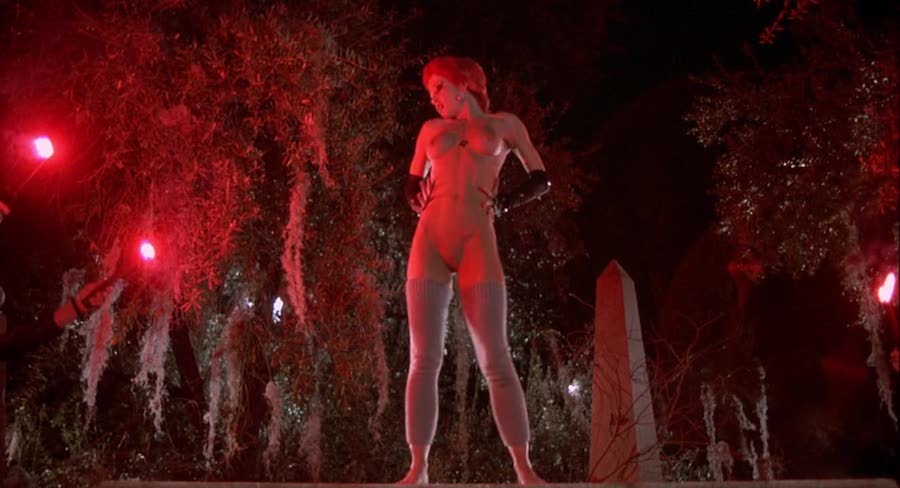
Actress Linnea Quigley as Trash getting ready to do her graveyard dance in the nude. Sort of.
Part of the plan for the release of the film was that it would also, at some point, be shown in an edited-for-TV form; devoid of most of its nudity and questionable language. At first, Quigley, who spends pretty much all of her time on camera nude, had pubic hair. The story goes, one of the film’s producers just so happened to be visiting the set while Quigley was doing her graveyard striptease and freaked out at the sight of her bush and ripped Dan O’Bannon personally, telling him that pubic hair could “not be shown on television.” The then 24-year-old Quigley was sent off for a quick Brazilian at the beauty parlor, which further horrified the producer (said to be line-producer Graham Henderson), who responded that you could now see Quigley’s “everything.” This guy. The job of disguising Quigley’s down-under parts would go to the film’s art department who created a mannequin-like prosthetic for Quigley’s hoo-hah, which made her lady parts look like a barbie’s plastic vulva. So for those of you of a certain generation which grew up believing you saw Linnea Quigley’s hairless crotch in The Return of the Living Dead, I’m sorry.
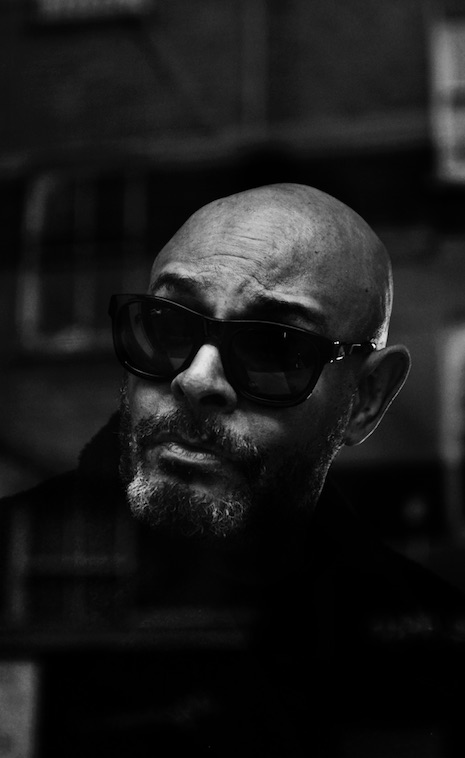
Barry Adamson is a musician, composer, writer, photographer and filmmaker. With those credentials, many people (journalists, critics, what-have-you) often describe Adamson as a “polymath.” Fair enough, but it’s not the full dollar. Coz I think Adamson is a fucking genius. And you can print that on a t-shirt and wear it with pride:
BARRY ADAMSON IS A FUCKING GENIUS
‘cause it’s true.
Over the past forty years, Adamson has produced some of the most startlingly original, uniquely brilliant, and utterly diverse music ever put to disc. His back catalog ranges from his time as bass player and co-writer with Howard Devoto’s hugely influential post-punk band Magazine, moving on through Visage, to joining the tail end of the Birthday Party before becoming one of the original key members of Nick Cave and the Bad Seeds. Quitting the Bad Seeds after their first four studio albums, Adamson delivered his debut solo album Moss Side Story in 1989—a dark and epic “filmic suite” to an as-yet unmade movie, which was described at the time by the NME as “one of the best soundtracks ever, the fact that it has no accompanying movie is a trifling irrelevance.” The album was a calling card announcing Adamson’s distinctive and undeniable talent. He followed this up with another slice of compelling urban-noir brilliance his Mercury Prize-nominated album Soul Murder in 1992.
In 1996 came Oedipus Schmoedipus—one of those albums you must hear before you die—in which Adamson collaborated with Jarvis Cocker (“Set the Controls for the Heart of the Pelvis”), Billy MacKenzie (“Achieved in the Valley of Dolls”) and old pal Nick Cave (“The Sweetest Embrace”). Apart from these gems, there was also the thrilling noirish sounds of “It’s Business as Usual,” “Something Wicked This Way Comes,” “The Big Bamboozle,” and a hat tip to Miles Davis with “Miles.” This led to As Above, So Below in 1998—a masterpiece of jazz or “rock-jazz noir” which offered “a bold, satisfying vision from an artist who shows no fear in expressing the seedier sides of life.”
By the turn of the century, Adamson was producing albums of compelling beauty, originality, and genuine thrills with music as diverse as jazz, funk, soul, rock, lounge and movie soundscapes that unlocked ports of entry to unacknowledged sensations. King of Nothing Hill (2002), the masterwork Stranger on the Sofa (2006), with the ecstatic and rousing single “The Long Way Back Again,” the near perfect “tour-de-force” Back To The Cat (2008), the triumphantly brilliant I Will Set You Free (2012), and the astonishingly great Know Where to Run (2016) which saw Adamson moving in new and untraveled directions.
Adamson has also contributed to the soundtracks of movies by Derek Jarman (The Last of England), Oliver Stone’s Natural Born Killers and David Lynch’s Lost Highway. In fact Lynch commissioned Adamson after spending ten hours non-stop listening to his albums. He then had him flown out to his studio to work on the film.
And let’s not forget his career as a writer of London noir fiction, his work as film director, producer, and screenwriter and his acclaimed photography which has been published in books and exhibited across the world.
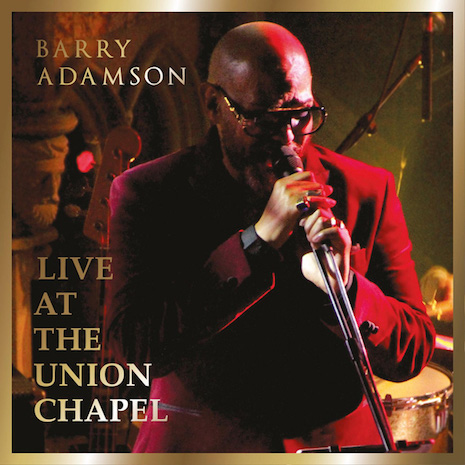
Last year to celebrate his forty years in music, Adamson released a kinda greatest hits Memento Mori which to be frank every home should own a copy of this album. Bringing this altogether, Adamson recorded a concert at the Union Chapel, London, which featured songs from across his whole career including “Split,” (Soul Murder) “Jazz Devil” (As Above So Below), “Sounds From The Big House” (Moss Side Story), “I Got Clothes” (Love Sick Dick), ‘The Hummingbird’ (Memento Mori) and the Magazine classic “The Light Pours Out Of Me.” Last week, I spoke with Adamson over the phone about his new album release, his influences, his early life and career.
Tell me about your new live album.
Barry Adamson: It was recorded at the Union Chapel, Islington, London, I was celebrating a forty year period with an album that had come out Memento Mori and it was decided to record one of the showcases around that record just to make a night of it really.
It’s a bit of closure on the last forty years. Just to have something that was a kind of memento of the whole thing—the forty years and the live experience that had not been actually recorded to date. It’s a first on that level.
It’s also for the people that were there that night and the people that weren’t there that night. For people to hear how this transposes in a live situation. I actually think the record’s really great. There’s some great things going on and it covers such a width and depth of the whole sort of things I’ve been involved in.
You were brought up in Moss Side, Manchester, which was at one point called ‘Gunchester’ because the level of deprivation, crime and violence. What was your childhood like and how did it impact on your first album Moss Side Story?
BA: It was very much a black and white world. I can remember observing everything around me—perhaps that was sort of my personality that was burgeoning at the time—but that would have its own kind of cinematic playfulness to my eye and a kind of mystery element to it as well. I found Moss Side bleak, post-industrial, and very much in a black and white way. But at the same time it was kind of vibrant and thrilling.
By the time I came to do solo work I went back to Moss Side and all the pieces seemed to fit together of something that I had observed but couldn’t articulate in my early years. Then I was able to do something with an album by just looking out the window and opening that window and hearing what was there projected from within myself. I think I was a little bit lost at the time.
What do you mean by ‘lost’?
BA: You know those times when you’ve lost something unique? When you have to come back to yourself and find the things about you that make you you and keep yourself in that way.
I was away a lot working with the Bad Seeds in Berlin. My parents were still in Manchester so I would come back and see them. On the trips back I started to make these cassettes of different ideas and little melodies and sounds. It was almost like time-off, almost like being in the studio and there was time to put something together and make a note of it. It was becoming a thing by itself really.
When I did get back, I took a big breath out. That’s when I decided to move into something that was more about myself. I stumbled upon this idea of a soundtrack that wasn’t necessarily to a movie but just a soundtrack to whatever was going on inside and outside and around me.
I think everybody in their own way goes through a dark night of the soul and I wanted to try and bring it to an end. I think things went a little darker for a while. With hindsight I knew that I was embroiled in a very dark night of the soul and I did also have a kind of resilience that took me back to feeding myself with my own energy and my own art and that’s what I think became a place where I could start the work I was supposed to start anyway. I think looking back over the years it was the right thing to do.
That’s how [Moss Side Story] came about.
Your music is so rich and diverse ranging from the filmic to the funky, rock to jazz, and everything in between, how do you go about composing, coming up with the ideas for your music?
BA: It works in really different ways. It’s like you can be sat around and you can see melodies floating by and your job is to catch them with a butterfly net. You know the ones that have got your name on it because you can recognize them and they’re already sort of formed. Sometimes you sit down and you go “Right, I’m gonna write something today.”
I had a period of about five years after Moss Side Story where I was trying to discipline myself by going into the studio every day and writing something no matter what it was, this little squiggle of notes, just to get into the practice of receiving ideas, working through ideas and becoming an artist. Now I’m very used to the idea it can come at any time and you better write it down, you better make a note of it. I keep notebooks and things to record on all the time and I sit down daily to chisel away like a sculptor until you see a bit of a hand or bit of a knee or a leg. Then you start working away.
Do you find you compose more than you record?
BA: For every album you write two albums. I always do that.
I feel like I have to see every idea out even if I get an inkling it’s not going to work I have to see it out. And really strange things happen, you might have a part that melds itself to something else. I had this happen this week. I put down an idea for something then returned with another idea the following day. Then I played the two ideas and saw they were the same idea as a progression which I didn’t think of before. It’s a bit like sitting there and saying that’s got to go and that’s got to go. The stuff that stays with you, the stuff that taps you on the shoulder you stick with because you know there is something in it and you know you can’t throw it away.
I’m very quick these days, for once I really do know something is out—it’s for the bin, it’s over.
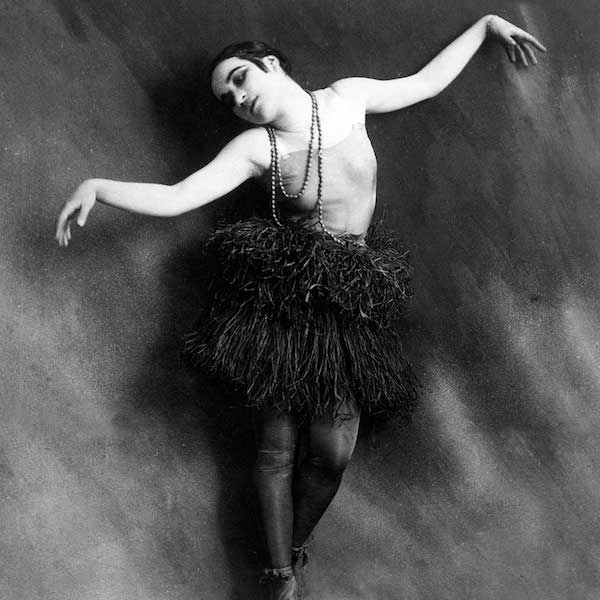
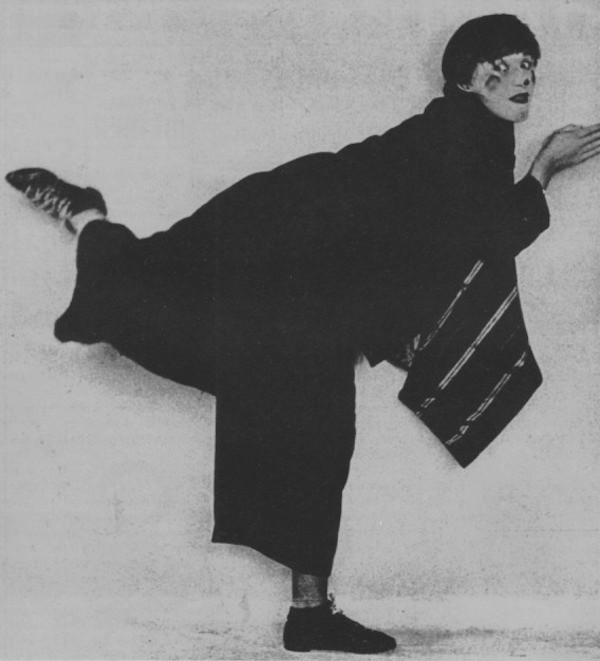
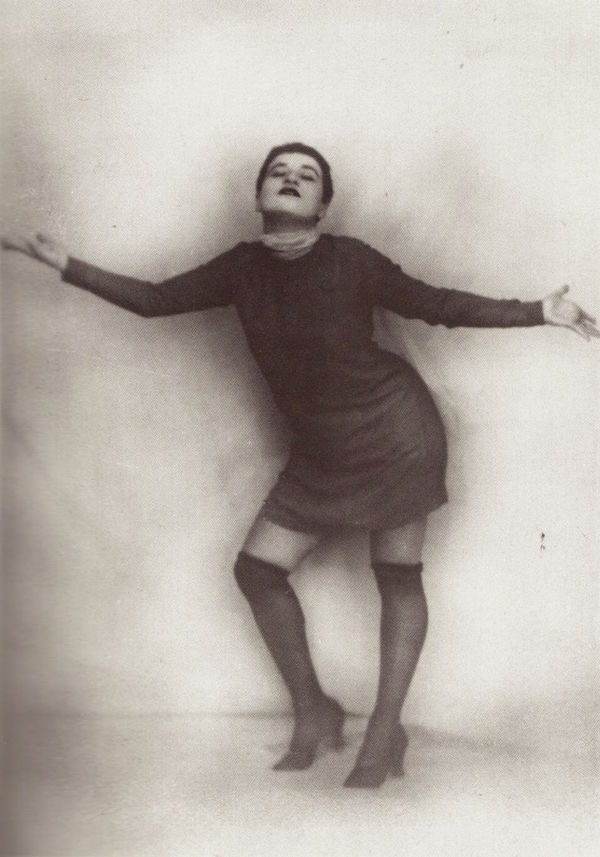
One evening at a local fleapit in Germany, sometime in the 1920s, a young woman stood on stage while the projectionist changed reels between movies and performed her latest dance called Pause. The woman was Valeska Gert who was well-known for her wild, unpredictable, highly controversial, beautiful yet often grotesque performances. The audience waited expectantly, a few coughs, a few giggles, but Gert did not move. She stood motionless in a slightly contrived awkward position and stared off into the distance. The audience grew restless. What the fuck was going on? The lights dimmed, the performance ended, and the movie came on. This wasn’t just dance, this was anti-dance. This was performance art. And nobody knew what to make of it.
Nijinsky had tried something similar a few years earlier, when he sat on the stage to a small audience and said something like: “And now I dance for you the meaning of the War.” He ended up in the booby-hatch. Gert thankfully didn’t. She just antagonized the bourgeoisie and inspired a whole new way of performance.
Valeska Gert was born Gertrud Valesca Samosch in Berlin, on January 11th, 1892. Her father was a highly successful businessman and a respected member of the Jewish community. According to her autobiographies (she wrote four of them), Gert was rebellious from the get-go. She showed little interest in school preferring to express herself through art and dance. At the age of nine, Gert was signed-up for ballet school where she exhibited considerable proficiency but a wilful subversiveness. She hated bourgeois conventions and considered traditional dance limiting and oppressive. But she was smart enough and talented enough to learn the moves and impress her teachers.
On the recommendation of one teacher, Gert was given an introduction to the renowned and highly respected dancer and choreographer Rita Sacchetto. Good ole Sacchetto thought she had a future prima ballerina on her hands and gave Gert the opportunity to perform her own dance in one of her shows. Instead of something traditional, Gert burst on stage “like a bomb” in an outrageous orange silk costume. Then rather than perform the dance as rehearsed and as expected Gert proceeded to jump, swing, stomp, grimace, and dance like “a spark in a powder keg.” Sacchetto was not pleased but the audience went wild. This became Gert’s first major performance Tanz in Orange (Dance in Orange) in 1916.
As the First World War had a dramatic and negative effect on her father’s business, Gert, buoyed by her success with Tanz in Orange, sought out her own career as a dancer, performer, and actor. She worked with various theater groups and cabarets, winning garlands for her performances in Oskar Kokoschka’s Hiob (1918), Ernst Toller’s Transformation (1919), and a revival of Frank Wedekind’s Franziska (1920).
But Gert became more interested in merging acting with dance and performance with politics. She created a series of lowlife characters who she brought to life through exaggerated performance. Or as Gert put it:
I danced all of the people that the upright citizen despised: whores, pimps, depraved souls—the ones who slipped through the cracks.
Gert’s portrayal of this figure is significant at a time when German state regulation of prostitution, which involved the supervision of sex-workers by the Sittenpolizei (moral police) and severe limitations on their freedom, became increasingly attacked as incompatible with the new democratic system and moves towards greater legal and civil rights for women. The regulation policy was in fact abolished in 1927.
Gert’s unvarnished and ruthless depiction of the prostitute renounced any idealisation. Everyday life—and misery—were reinstated over and above the aestheticised life previously represented in much dance, in particular classical ballet with its fairy-tale plots and noble, dignified representation of humanity.
~ Snip! ~
...Gert did not simply interpret this role as a critique of capitalist society and its treatment of woman as a will-less and submissive commodity. Rather, she strove to depict the female experience in a somewhat autonomous light, with the prostitute enjoying considerable control over her sexuality.
Forget The Marvelous Mrs. Maisel, this was a nice Jewish girl ripping-up the text book and changing society. Gert was making a one-woman stand for “those marginalised or excluded from bourgeois society.”
Nothing was taboo for Gert. Her performances covered a wide range of subjects, themes, and characters—from sport to news, sex to death, and to the invidious nature of capitalist society. When Gert asked Bertolt Brecht what he meant by “epic theater,” the playwright replied. “It’s what you do.”
Her reputation grew in the 1920s. She appeared in cabaret, in movies, and in theater productions. Gert would have been a superstar had not the rise of the anti-semitic Nazis brought her career to a premature hiatus. She quit Germany, moved to England, and got married. She then moved to New York, ran a cabaret where both Julian Beck and Jackson Pollock worked for her, and became friends with Tennessee Williams.
After the Second World War, Gert returned to Europe. She tried her hand at cabaret again and found herself cast in movies by Fellini, Fassbinder, and Wim Wenders. But it really wasn’t until the 1970s and the explosion of punk that Gert was fully rediscovered and embraced by a younger generation. Gert was hailed as a progenitor of punk, the woman who “laid the foundations and paved the way for the punk movement.”
Gert died sometime in March 1978. The official date is March 18th. But Gert’s body had lain undiscovered for a few days—something she predicted in her 1968 autobiography Ich bin eine Hexe (I am a Witch):
Only the kitty will be with me. When I’m dead, I can’t feed him anymore. He’s hungry. In desperation he nibbles at me. I stink. Kitty’s a gourmet, he doesn’t like me anymore. He meows loudly with hunger until the neighbours notice and break down the door.
Every year around this time, Westgate Gallery‘s poster concierge extraordinaireChristian McLaughlin drastically cuts prices for his annual Cruel Summer 50% Off Sale. Why that’s almost half off, even…
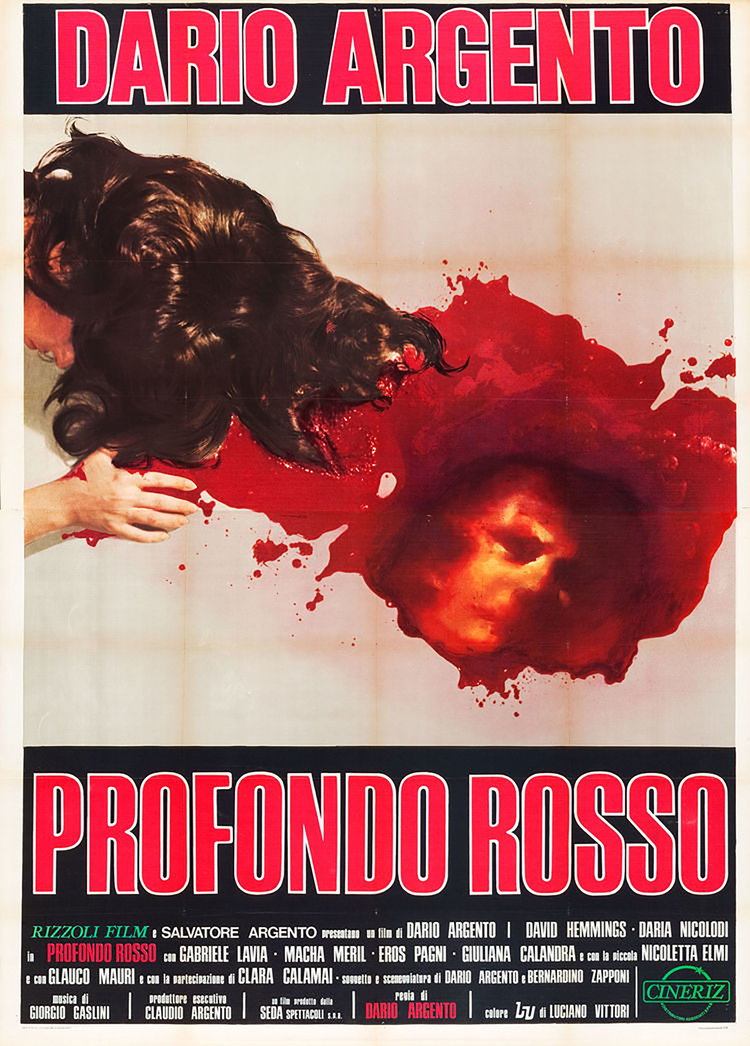
Anyway, my pal McLaughlin, a novelist and TV/movie writer and producer based in Los Angeles, is the maven of mavens when it comes to this sort of thing. You couldn’t even begin to stock a store like his if you didn’t know exactly what you were looking for in the first place, and if you want a quick (not to mention rather visceral) idea of his level of deep expertise—and what a great eye he’s got—then take a gander at his world-beating selection of Italian giallo posters. Christian is what I call a “sophisticate.”
He’s got a carefully curated cult poster collection on offer that is second to none. His home is a shrine to lurid giallo, 70s XXX and any and every midnight movie classic you can shake a stick at. But why would you want to shake a stick at a bunch of movie posters to begin with? That would be silly!
The Westgate Gallery’s Cruel Summer 50% off sale sees every item in stock at—you guessed it—50% off the (already reasonable) normal price. All you have to do is enter the discount code “CRUEL2019” at checkout and your tab will be magically cut in half.
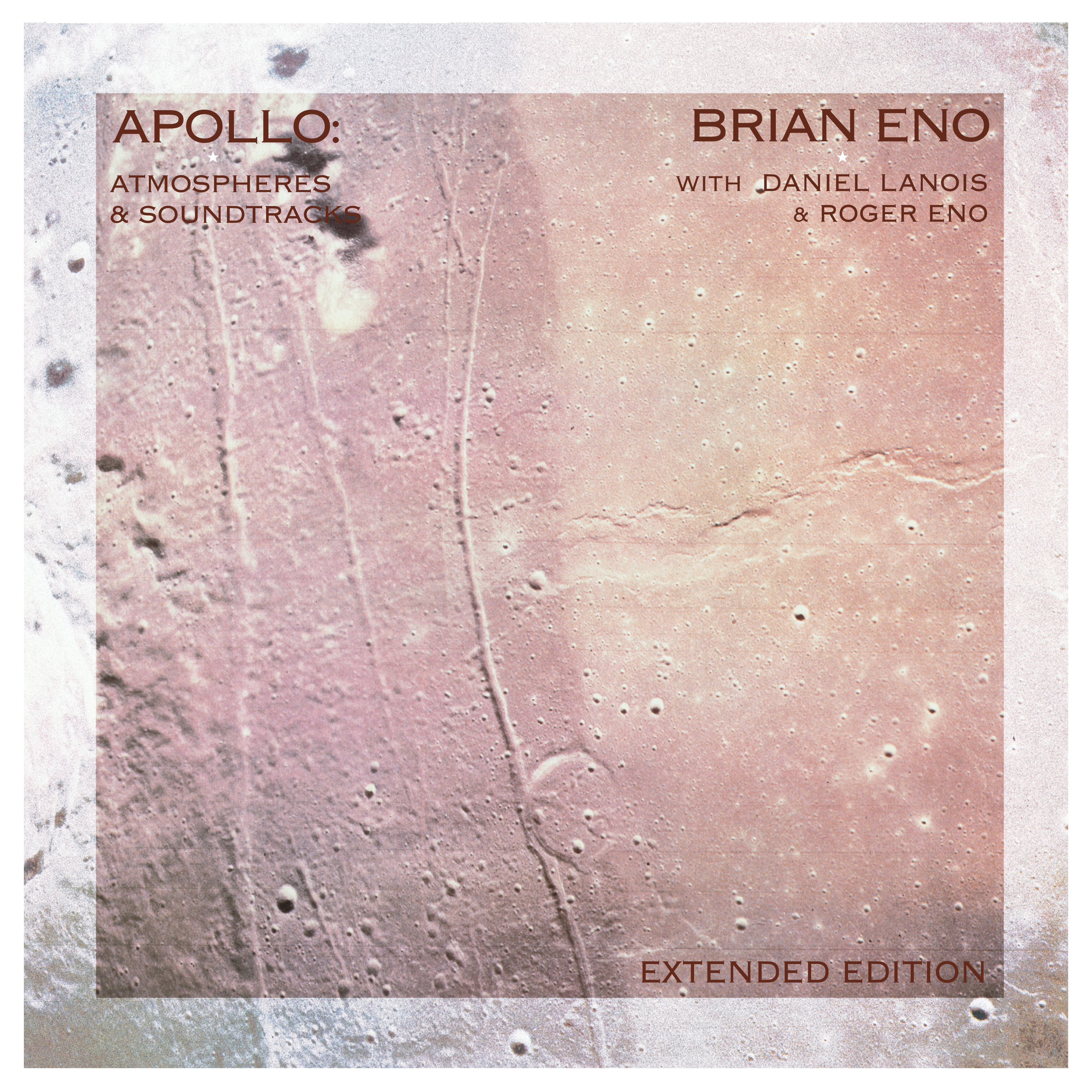
Apollo: Atmospheres & Soundtracks, the seminal collaboration between Brian Eno, his brother Roger Eno, and Daniel Lanois was recorded as the score for what ultimately became For All Mankind, the landmark, Oscar-winning 1989 feature documentary of the Apollo 11 moon landing. The music was made in 1983 when director Al Reinhart was still calling the work-in-progress “Apollo.” It would take Reinhart nearly a decade to sort through six million feet of 16mm film related to the moon mission and then enlarge the individual frames to 35mm. The film features footage of the landing with real-time commentary, as well as the Apollo astronauts sharing their recollections of the momentous events surrounding it.
Now the original album has been expanded with additional material and remastered by Abbey Road’s Miles Showell. The music from Apollo has been used to great effect elsewhere, making it familiar to millions. Danny Boyle seems especially fond of it, using the Apollo music in Trainspotting, 28 Days Later, and during his opening ceremony for the 2012 Olympics held in London.
But what’s with the pedal steel guitar? Have you ever wondered about that? New Scientist magazine interviewed Eno in 2009 when his moon music was performed at London’s Science Museum and here’s what he said:
Why is there pedal steel guitar in the Apollo composition?
When director Al Reinert approached me about doing the Apollo music – which ended up in the 1989 film For All Mankind – he told me there was music on the moon shot. Every astronaut was allowed to take one cassette of their favourite music. All but one took country and western. They were cowboys exploring a new frontier, this one just happened to be in space. We worked the piece around the idea of zero-gravity country music.
Now you know. The eleven new tracks on Apollo: Atmospheres & Soundtracks finds the brothers Eno and Lanois working collectively again for the first time since the original sessions in 1983. It will be available on July 19 as a 2XLP 180 gram vinyl release in a gatefold sleeve, as a limited numbered 2CD edition with 24-page full color hardcover book, standard 2CD edition, special digital edition with exclusive cover art and a standard digital edition.
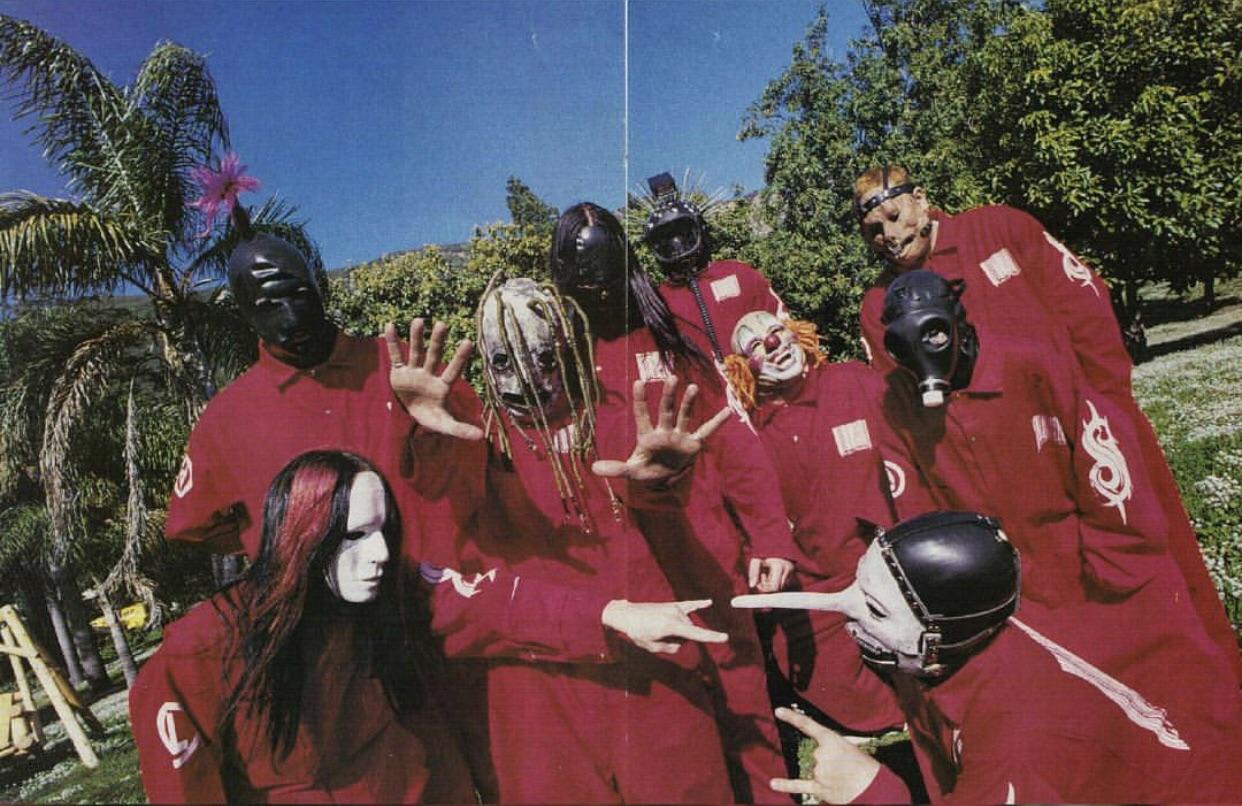
Sharon Osbourne came up with the idea for Ozzfest after her Prince of Darkness husband got snubbed from playing Lollapalooza in ’96. The most reputable touring festival of its kind, Ozzfest would reach peak popularity in the new millennium, with break-out artists of the hard rock and heavy metal persuasion. It’s safe to say that bands like Slipknot, Marilyn Manson, Disturbed, and Rob Zombie wouldn’t have achieved the same mainstream success if Ozzfest hadn’t riled up the head-banging degenerates of every American suburbia it blared through.
You are probably familiar with the work of Penelope Spheeris, most recognized for directing such films as Wayne’s World, Suburbia, The Little Rascals, and the groundbreaking underground music documentary series, The Decline of Western Civilization I-III. Spheeris is also regarded for the infamous films she declined to direct, This is Spinal Tap and Legally Blonde among them. Her refusal was due to other commitments, and in 1999, it was because of Ozzfest.
After releasing the third (and final) installment of The Decline, with its focus on Los Angeles gutter punks of the late-nineties, Spheeris was soon onto a new cultural phenomena, heavy metal in middle America. During the summer of 1999, the Ozzfest roadshow appeared in 26 cities throughout North America, headlined by the original lineup of Black Sabbath—their final “farewell” tour of the nineties reunion (before the next one). On the bill were soon-to-be household names of the burgeoning hard rock and nu-metal scene, including Rob Zombie, Slayer, System of a Down, Primus, Godsmack, and Static-X. And joining them to document the journey was Penelope Spheeris, directing a picture later unknown to many titled: We Sold Our Souls for Rock ’n Roll.
Envisioned with the same anthropological eye and creative brilliance that executed The Decline, Spheeris left no rock (or roll) unturned on her quest for the cultural core and essence of such a bizarre evolution within the early-internet age. Throughout the film, reckless and inebriated fans are pulled aside, musicians are questioned of their long-term relevance, and anti-satanist picketers are given the opportunity to sound even more insane. Not to mention, there are glimpses of Sabbath jamming backstage, a groupie’s tour of the Slayer tour bus, grotesque sideshow demonstrations, topless bull riding, bonfires, fights with security, and… Buckethead. Remember that scene in The Decline II when Ozzy cooks eggs? Well, in this one, we witness him pissing in the bushes of his Beverly Hills mansion. In just two years, the Osbourne family antics would gain mainstream notoriety, all thanks to MTV.
If the documentary had seen a wide release, I imagine it would have been as important as the other Decline films, due to like-minded outsider examination of such a raw subculture. Spheeris’ honest depiction of such a puzzling, yet beautiful, societal abnormality is truly mind-blowing and worth the attention, regardless of your take on the music. Licensing issues prevented the film from making it anywhere else besides YouTube, so I recommend that you watch ASAP before it gets pulled down.
Relive the glory (and madness) of Ozzfest ’99 below:






.jpg)
 (1979) was produced for $1.5 million; it went on to gross over $20 million in the United States alone.