Part of our mission here at Dangerous Minds is to hip readers to artists they—that’s *you*—may not be aware of. That’s certainly the case with this post, as we present J.T. IV. Even if you know this enigmatic man’s music, we have a song of his that you’ve surely never heard before.
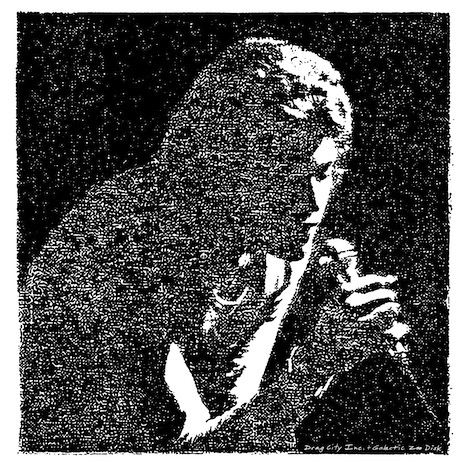
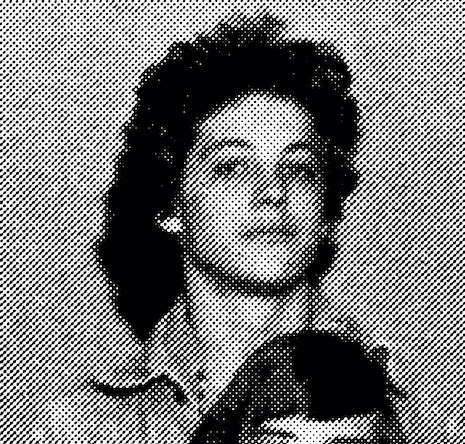
Born in 1961, Chicago native John Henry Timmis IV had an eventful, yet miserable, childhood. He grew up in an abusive household, and after his parents split up, he stayed with his mother, though he ran away several times. He struggled with substance abuse and mental illness, and when he was a teen his mother had him committed. After his year-long stay in a hospital, Timmis was released.
10th grade.
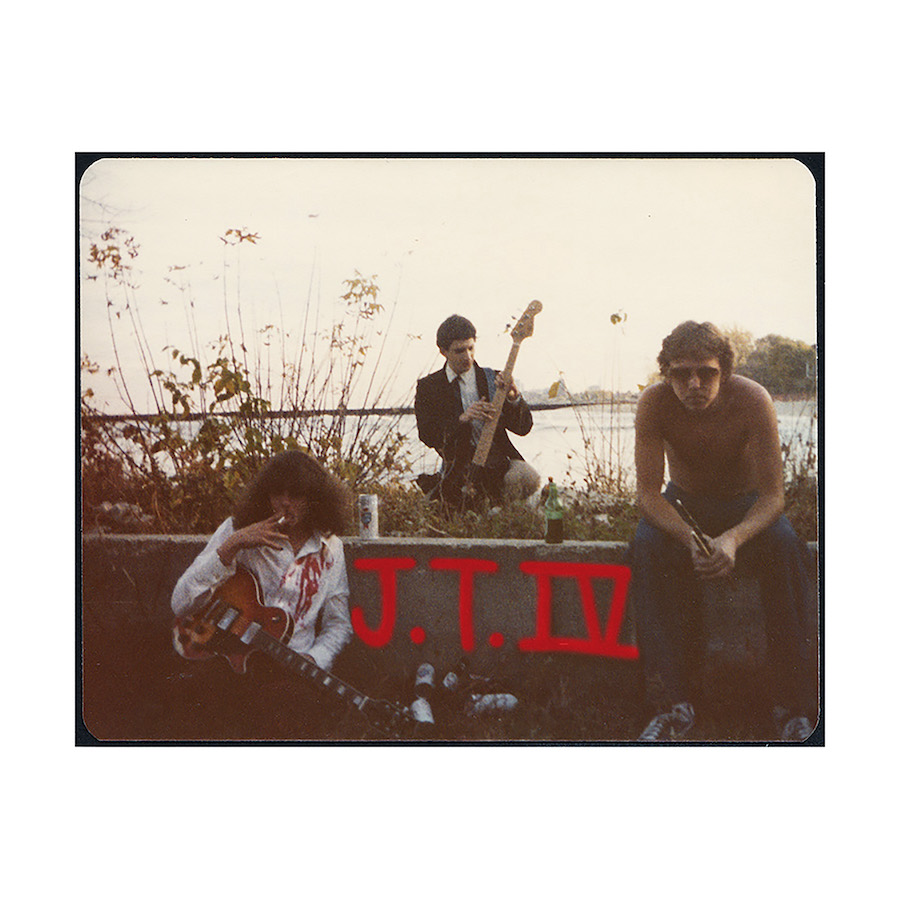
During his high school years, J.T. got really into David Bowie and the Velvet Underground, and was inspired to pick up the guitar, which he taught himself to play. He got together with his buddies for some stoned jam sessions, which were taped. From these recordings came his debut record, the first of a handful of 45s he put out on his own label—albeit in small numbers—during the 1980s. The tracks on the singles alternated between a loner folk style and “Destructo Rock,” his unique blend of glam, punk, and classic rock.
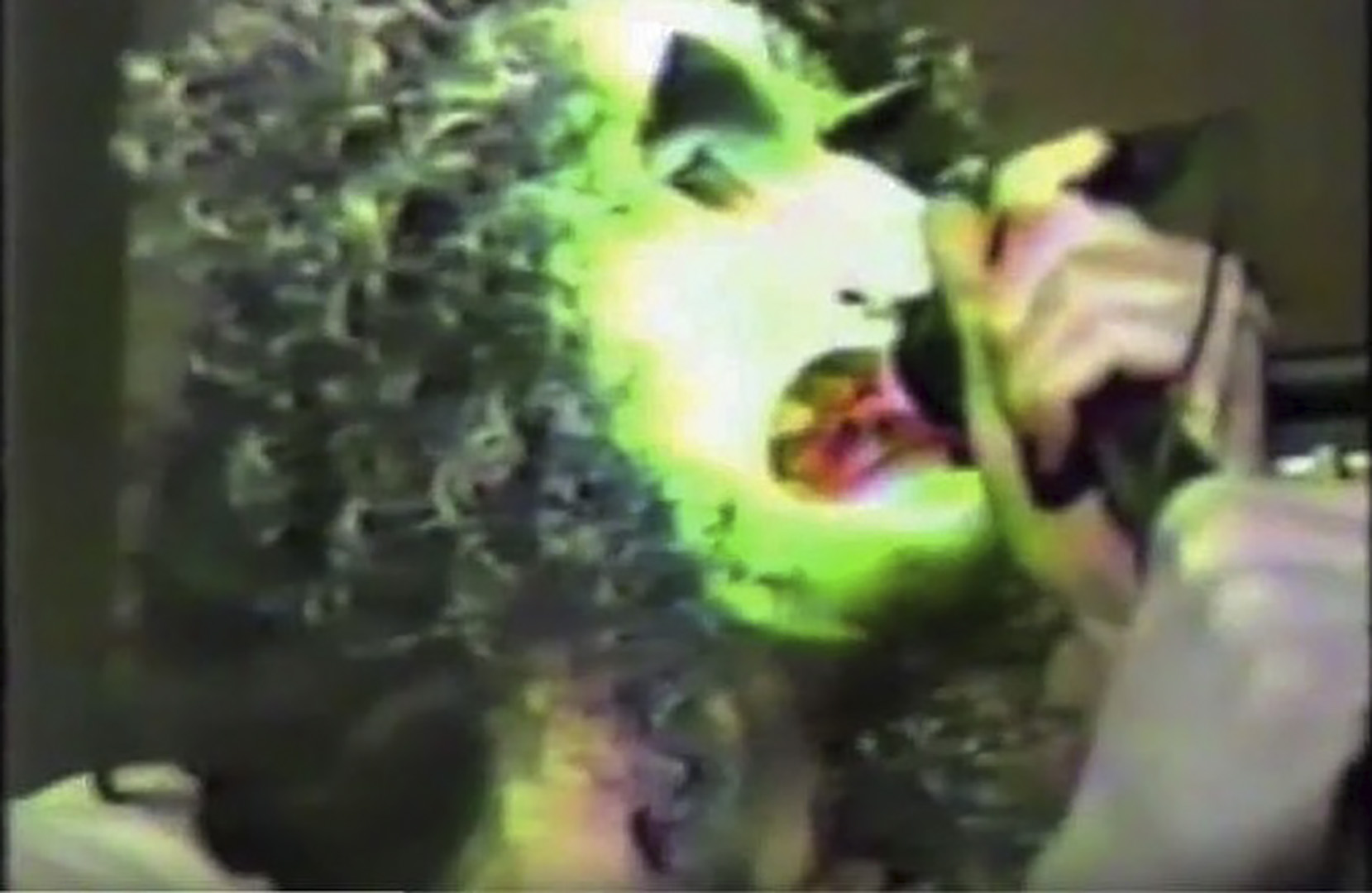
In lieu of live shows, faux applause was woven into studio tracks, and unhinged live events were staged and documented on video. J.T. was crafting his own legacy.
In 1987, material from the 45s were culled for the Cosmic Lightning LP. Just 150 copies were pressed. Not long after the album was released, J.T. packed his bags and relocated to Ohio, where he faded from view. In 2002, Timmis passed away.
In 2009, Drag City/Galactic Zoo Disk reissued the scarce Cosmic Lightning, along with a DVD of video footage.
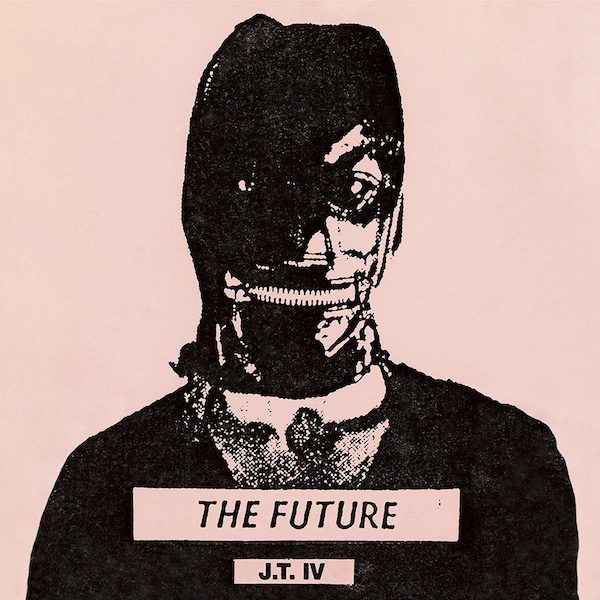
Drag City and Galactic Zoo Disk have teamed up again for a new J.T. IV release, The Future. The double album contains the fifteen songs from a rare and essentially unknown Timmis demo tape, which he entitled The Best of Johnny Zhivago Retrospective 1979-1993 (a recipient of the forgotten cassette came across it during the COVID-19 lockdown). Four stray tracks round out the release. Among J.T.’s originals are covers by such notables as Roxy Music, Lee Hazlewood, Brian Eno, and the Velvet Underground.
Dangerous Minds has the premiere of J.T. IV’s “Space Baby” from The Future. It’s a song about going to outer space and bedding an extraterrestrial—and the narrative goes on from there. What, not intriguing enough for you, dear reader? Well, it also features several minutes of face melting guitar work.
This is a guest post by Spencer Kansa, author of Wormwood Star: The Magickal Life of Marjorie Cameron, Zoning and Out There: The Transcendent Life and Art of Burt Shonberg. Perfect gifts for the festive season!
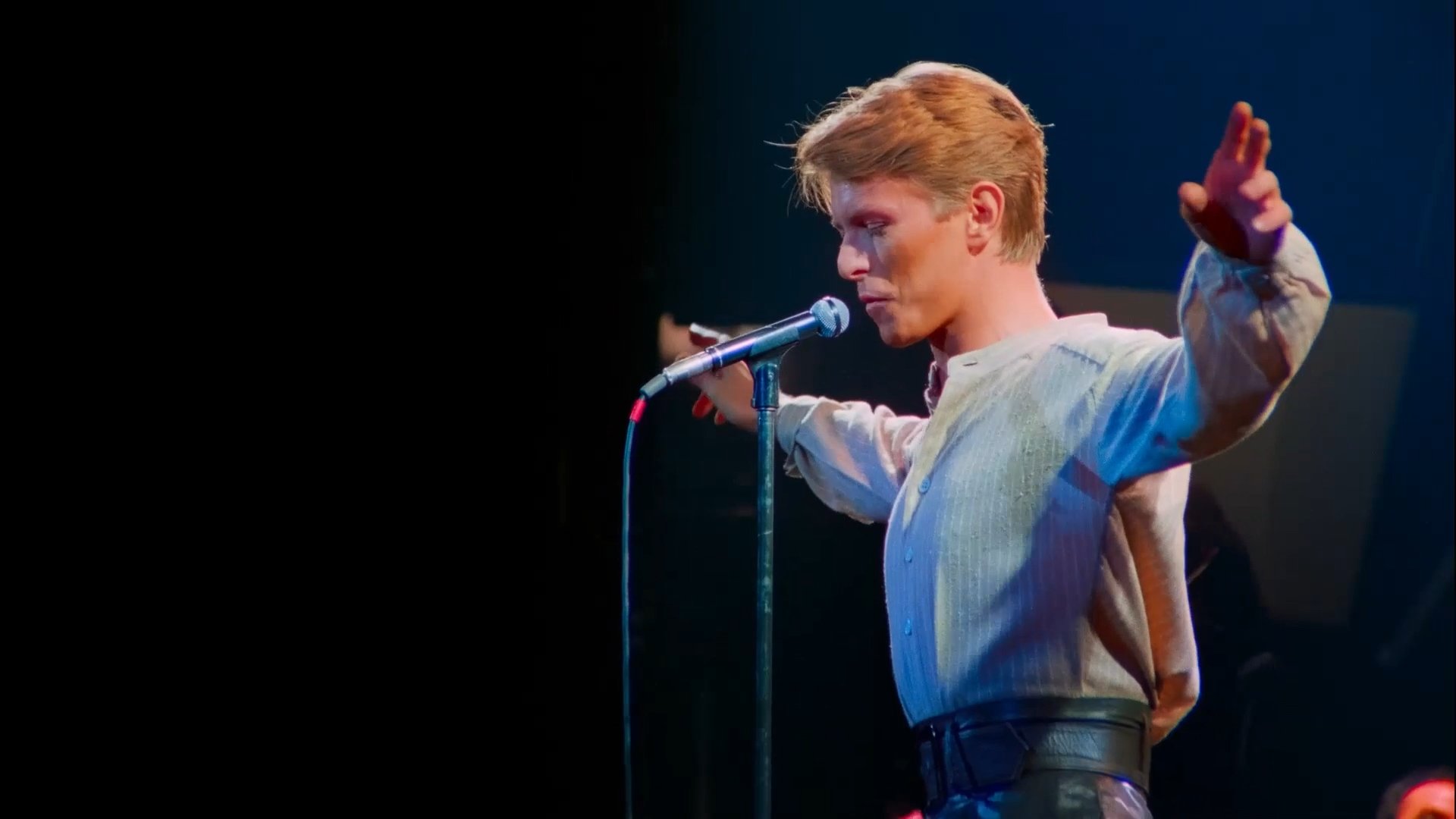
In the welter of pre-publicity for Brett Morgen’s Moonage Daydream, Bowie fans were baited with the promise that the filmmaker had been granted enviable access to the Bowie archive, an Aladdin’s cave of five million audio-visual treasures which, for the hardcore devotees amongst us, sounded like a mouthwatering prospect. That was until Morgen subsequently claimed to have stumbled upon the “Holy Grail” of lost Bowie booty: an unseen travelogue of the ever-elegant Englishman sauntering around the streets of Bangkok and Singapore, filmed during the final Asian leg of his all-conquering Serious Moonlight Tour of 1983.
Problem was, as any fan would know, this was simply not true: Richochet, as the documentary is titled, has been in wide circulation amongst the Bowie faithful for decades. The BBC had already borrowed far too heavily from it for Five Years, the first in what became their own Bowie trilogy of documentaries, and, sadly, like far too much of the content in Morgen’s film, it already exists on YouTube.
Similarly, Morgen’s much-trumpeted inclusion of the ‘Jean Genie’/‘Love Me Do’ rock-out with Jeff Beck, during the encore of the final Ziggy Stardust show, has been in the possession of fans, in grainier bootlegged form, for decades, ever since it was first broadcast on ABC-TV in 1974 and, at a later date, by the Rai network on Italian television. So, even before viewing this eagerly anticipated movie, alarm bells were ringing in some quarters.
Aside from the color correction and sound restoration that has been done, Morgen’s film is essentially an editing job pieced together in a collage fashion from the embarrassment of riches placed at his disposal; but based on the results, it would’ve been a wise move if he’d consulted more widely with Bowie connoisseurs before launching and landing the project.
While there has been some unfair criticism for what the film is not – a traditional, chronologically-paced documentary replete with exposition and talking heads – many of the rave reviews for Moonage Daydream appear to have been penned by casual fans, whereas for those in the know, the reaction has been decidedly more muted. And the reasons are manifold. Firstly, the fast cutting that Morgen periodically employs is often unnecessary and distracting, especially when your focus is the most supra-charismatic and aesthetically pleasing subject ever to appear in front of a camera. (During the ‘90s ‘Hallo Spaceboy’ section, a shot of an Earthling-era Bowie confabbing backstage at the Phoenix Festival with the Prodigy’s Keith Flint, which I’m sure both sets of fans would like to have savoured, flashes by in the blink of an eye.)
While the interpolation of classic films – from Bowie favs like Metropolis and Un Chien Andalou to clips culled from Kenneth Anger’s Magick Lantern Cycle, B-movie sci-fi schlockers and even The Matrix – is an act of supererogation, and the abstract visuals that animate several of the musical interludes are equally superfluous.
In its favour, the film offers some welcome behind-the-scenes antics and alternate camera angles from the Ziggy farewell concert at Hammersmith Odeon, including risqué upskirt shots of the Leper Messiah that clearly made the filmmaker D.A. Pennebaker blanch when he saw them as they never made it into his final cut. (Bear in mind, given the time it was filmed, Pennebaker even overdubs the words “well-hung” when Ziggy recites his resume.)
Bowie’s felt-tip pen storyboards for the proposed Diamond Dogs movie are neatly brought to life. There are some on and off-camera extras from his chin-wags with Russell Harty, and private glimpses of his mid-70s video-television art experiments that prompted John Lennon to nickname him “Video Dave.” Another gem is the previously unseen footage of Bowie live on stage in ‘Gouster’ mode, grooving while decked out in beret and fatigues and crooning a coke-hoarse rendition of ‘Rock ‘n’ Roll With Me’, taken from Philly Dogs shows, the seldom-seen soul revue that cannibalized the abandoned Diamond Dogs Tour to air cuts from his new but then-unreleased album, Young Americans.
Excerpts from the hotly coveted Earls Court concert from 1978, originally filmed by the actor/director David Hemmings, that Bowie shelved for undisclosed reasons, include tantalising teases of ‘Warszawa’, ‘Sound and Vision’ and ‘Heroes’, although this abridged version of the latter lacks the mesmeric power of the one captured in its entirety by London Weekend Television on the second night of this Earls Court run for their Bowie special.
And there are eye-catching rushes from the suspenseful ‘Jump They Say’ music video, featuring the Duke at his most dashing, as well as arresting bonus scenes from the bewitching collaboration between Bowie and La La Human Steps siren, Louise Lecavalier, extricated from the ‘Fame ‘90’ promo and the scrim projections of the accompanying Sound and Vision Tour for which they were originally conceived.
But despite such enticements, Moonage Daydream is a frustrating watch at times, especially those moments when Morgen maddeningly muffs the money shot. The sublime segue from ‘Wild Eyed Boy From Freecloud’ into ‘All the Young Dudes’ is one of the key moments of the entire Ziggy Stardust concert film, but instead of letting it play out to cast its spell, as the original footage does, Morgen cuts away to solar flares and ruins the effect.
When Bowie’s Lincoln Town Car arrives backstage for his concert at Earls Court, Morgen switches to fans filing into the arena, at precisely the wrong moment, so we don’t actually get to see the star of the show and his entourage emerge. (It’s hard to imagine that David Hemmings, who shot the actual footage, would have pulled away at that precise moment.)
While a montage, set to ‘Let’s Dance’, to showcase what a tasty little mover the Dame was, features his impressive tap dancing sequence from Absolute Beginners, but leaves out the crucial climax from the musical’s big production number (‘That’s Motivation’), where he out-Sinatra’s Sinatra and is winched into the air, Flying by Foy, to hand jive on top of a rotating globe. Morgen even excises the ending of the famous quote uttered by the bubbly moon-eyed fangirl outside the Diamond Dogs concert: “I’m just a space cadet – he’s the commander!”
I’m also surprised the filmmaker hasn’t received a litigious letter from the BBC, as he replays, in expanded form, pertinent Ziggy-era interviews about the rising importance of individualism and the rock star as false prophet that have already aired on their own Bowie documentaries. And he recycles two set pieces from their celebrated Cracked Actor doc. Firstly, by sampling the scene where a life mask is made of Bowie’s face, which Morgen marries to the very same song, ‘Quicksand’, albeit an alternative, non-album version. And although the ‘Cracked Actor’ live performance from the same programme is enhanced with some new footage, rather than cutting away, as the BBC does, to a waxwork of Elizabeth Taylor and other mannequins from the Golden Age of Hollywood, to help illustrate the theme of the song, Morgen merely superimposes stills from the famous photo session of Bowie with the movie queen instead.
And it’s not only major media corporations that Morgen’s recycled ideas from. The section dedicated to Bowie’s definitive film role, as Thomas Jerome Newton in The Man Who Fell To Earth, is scored with ‘Subterraneans’, an idea already realised, far more effectively, by Bowie superfan/film restorer, Nacho.
Furthermore, the insertion of Ziggy declaiming ‘Rock ‘n’ Roll Suicide’, inartfully juxtaposed with the Pepsi TV advert Bowie shot in exchange for their sponsorship of his highly ambitious but expensive to run Glass Spider Tour, that a couple of critics have taken as a rebuke to his, quite literal, ‘80s commercialism, doesn’t appear that mercenary at all if you already know that the money generated from it was used to pay for another stage – which took three days to assemble and pack down – so that Bowie could leapfrog shows and keep up a gruelling schedule.
The inclusion of late 60s deep cuts ‘Cygnet Committee’ and ‘Memory of a Free Festival’ (Bowie’s denunciation and celebration of hippiedom), which somewhat bookend the film, is another curious and unwelcome choice considering both are lower-tier tracks in his canon, and neither are indicative of the major themes that forged his legend during his Imperial Period that began when he left that decade for dead and relaunched himself into 70s rock superstardom.
And there are other strange anomalies. There’s a close-up of a widely seen schoolboy shot of the young master Jones, only his head has been transplanted from an even earlier school picture – for no reason whatsoever – so it makes him look like the younger brother of his classmates. And the ‘Ashes to Ashes’ promo, which was the life-changing moment for many second-generation Bowie fans, and remains one of his most magical moments, is marred by the oversaturation of colour that renders it a blur.
We expected so much more. Where’s the Ziggy rehearsal footage filmed at Haddon Hall? The recovered but still under-wraps performance of ‘Starman’ on Lift Off With Ayshea? The long-rumoured existence of Bowie’s full performance in The Elephant Man play? The Good Morning America interview with Rona Barrett? The unexpurgated footage of the Duke’s hero’s welcome at Victoria Train Station? The never-released concert footage of Bowie headlining the final night of the US Festival, in 1983, in front of an estimated 300,000 peoploids. Or Bowie being stalked and attacked by his alter-egos, in sinister puppet form, from the mothballed ‘The Pretty Things Are Going To Hell’ promo?
Inexplicably, the final chapter of the film, sees Morgen rerunning previously shown clips of Bowie riding the Escheresque escalators in the Singapore shopping plaza, and miming a flower blooming from an earlier seen outtake from ‘The Heart’s Filthy Lesson’ promo, for no apparent purpose. In fact, it seems like a shoddy oversight. And you can’t shake the nagging suspicion that, by now, Morgen has been so overwhelmed by his project that he’s resorted to just throwing stuff at the screen, and only makes you lament the other unseen material that could and should’ve been used in its place.
In this regard, Moonage Daydream has been rivalled for the Bowie highlight of the year by this recently shared pro-shot footage of a Serious Moonlight concert held at the Sydney Showground, which has lain unseen for nearly forty years.
Despite my misgivings, the film has struck big with cinema audiences, raking in millions at the regular box office and from special IMAX screenings, as well as via streaming services, where not only votaries but those uninitiated or new to the Bowieverse await. For the cognoscenti, the Earls Court concert footage is worth the price of admittance alone, although your appetite may be whetted, it won’t be satiated until the Bowie estate finally releases the full show. And how much longer are they going to wait? First-generation Bowie fans are now in their dotage, and us second-generation fans are getting up there in years, too. If the estate doesn’t start sharing some of the untapped jewels in the archive soon, many will no longer be around to see and appreciate them. And yet, the estate seems far more concerned with squeezing every last shekel from the fanbase – from licensing his name on Barbie dolls, NFTs, Stylophones and pop-up stores – to care.
Moonage Daydream is screening in select cinemas, and on streaming services, and is available to buy on DVD and Blu-ray.
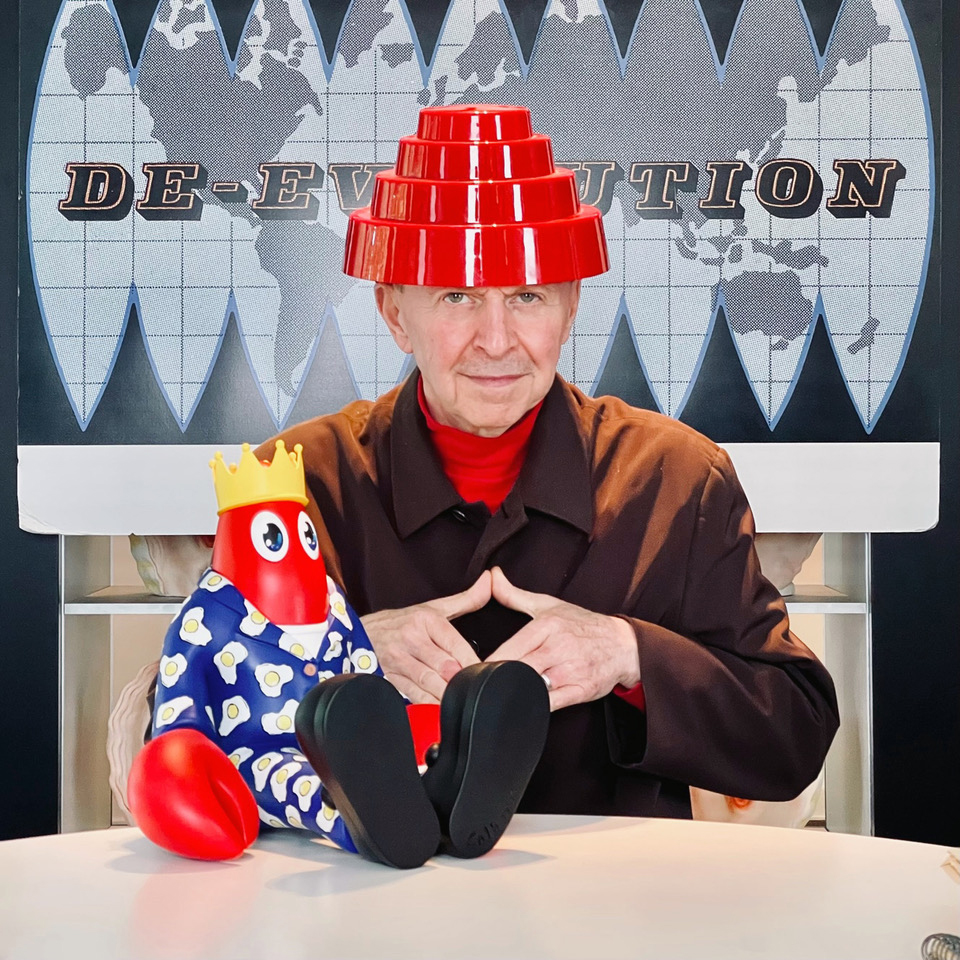
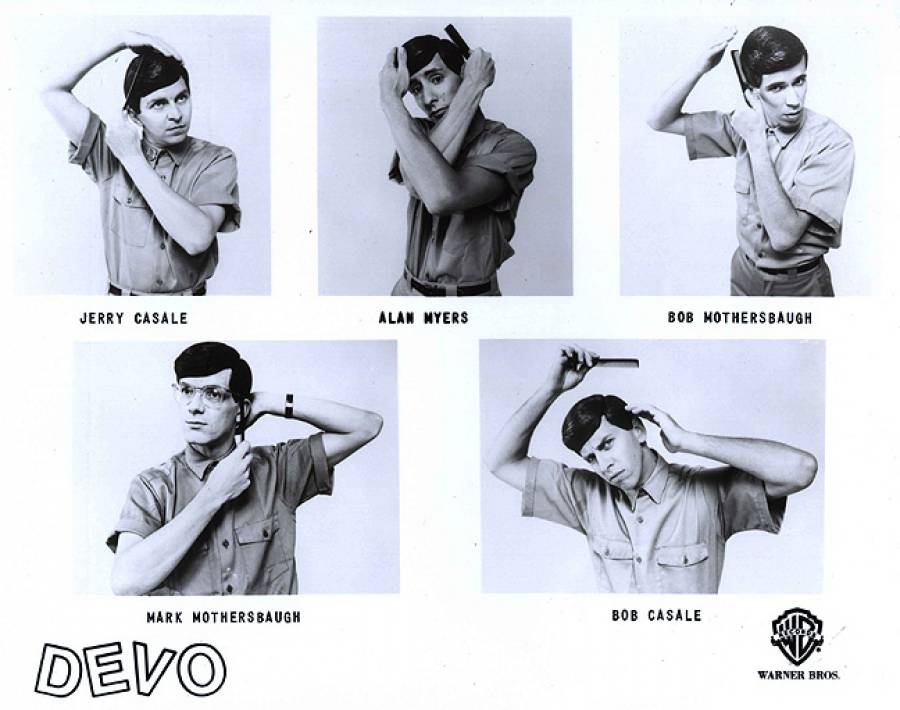
The poster that came with DEVO’s 1981 New Traditionalists album depicts the band sheltering an ethnically diverse triad of babies from the worst elements in American society: a horde of pirates, pushers, concert promoters, and Puritans looking to instrumentalize these newborns for their own unspeakable ends. Arrayed against this mob in matching JFK pompadours and Nutra work outfits, the men of DEVO face the challenge with poise and sangfroid, ready to open a cold can of whup-ass on these would-be baby-wreckers.
In the background, the uncredited artist represents the USA as a rolling lawn ornamented with a few topiary trees, their branches shaped into stacked orbs that taper like the steps of the DEVO energy dome, three leafy cocktail onions of descending size impaled on toothpicks stuck in the horizon. This is the landscape on which DEVO’s Gerald V. Casale stretches his legs in the music video for his latest solo release, “The Invisible Man.”
Once again, it’s “morning in America,” except for the glans-pated dweeb who dogs Jerry’s steps on the yellow brick road, subjecting him to sexual harassment, humiliation, and abuse. But as the story plays out, Jerry begins to suspect—his opponent’s neck tattoo of the D.R.I. logo notwithstanding—he’s once again doing battle with The Mark Inside, old Number One from The Prisoner.
Dangerous Minds caught up with Jerry by 21st-century videophone on November 22, 2022.
Before I ask you about “The Invisible Man,” it’s November 22. I’ve read a lot of DEVO interviews and I don’t know if you’ve spoken about this very much, so I thought it would be interesting to ask what you remember about the Kennedy assassination, and how you think that event affected your young minds.
Yeah! Probably, that was like the opening salvo in a barrage of timed traumas that just continued the next seven years, that pretty much twisted up everything in my life and set me on a fork in the road, kind of like the proverbial red pill in The Matrix.
I remember everything. I was in French class in my high school. We had a particularly sexy French teacher who was a graduate student, so she was probably, I don’t know, six or seven years older than us, and wore more trendy clothing, like herringbone-print skirts that were above the knee, and black boots, and little blouses that got the boys going. Anyway, suddenly the principal walked in, middle of class, and said, “Class, I have to tell you that the president of the United States has been killed today.” And [laughs] you know, you’re just, like, almost unable to process what you’re hearing, like it’s kind of real, but not really real? And then some of the girls start bursting out crying, and he goes, “And as a result of that, we decided to suspend all classes for the day and send you home.”
And it was interesting, ‘cause [laughs] a girl that I was really interested in, in this kind of puppy way where I didn’t even understand what I was doing, she was crying, and something in me, despite the fact that I was really freaked by what I’d just heard, and kind of understood how serious that was, or how frightening that was, to the United States, I of course used it to offer to walk her home [laughs]. So, you know, the little budding man in me started taking over, and I felt all, like, you know, it was a real, I don’t know, what was it, Stand By Me moment, like these coming-of-age comedies. And I walked her home, and I had my arm around her, and had her holding my hand, and I felt so, like, brave and excited, and scared at the same time.
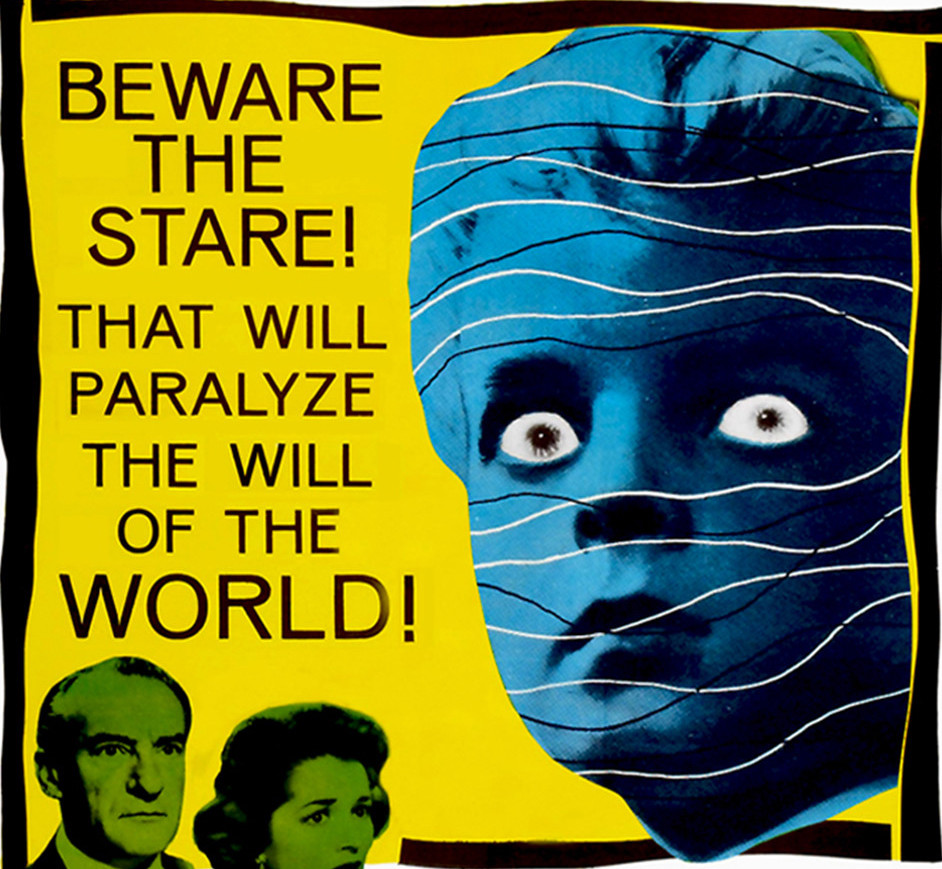
Detail from the ‘Village of the Damned’ poster
And then I didn’t go home right away. I thought I’m not going home, I’m not going home to my parents, ‘cause I was already at odds with them. ‘Cause they were blue collar and authoritarian, they didn’t understand me, they were policing my reading list and always criticizing me, and I felt like they didn’t understand how smart I was. So I decided to freak them out by just doing something I never did, which is I walked downtown and I went to the movie theater. I forget what was playing now; it was a black-and-white film, of course. It might have been Village of the Damned, English, great film.
And then, you know, when I got out of the theater it was already dark, ‘cause it was November in Ohio and it got dark at like five o’clock. And the moment I walked home, of course, I got attacked and talked to and screamed at. But then the television was on, and it was wall-to-wall coverage of the assassination. And, believe it or not, and I don’t know if other people have told you this, but you know the famous Zapruder film, where this guy was shooting, innocently, the arrival of the president in Dallas in his motorcade with a Super 8 camera, and it became the primary evidence of what the Warren Commission kind of bastardized. We saw it unedited, played over and over on TV. There were only three channels, they were all national, so the news—there was real news then, guys like Walter Cronkite just presenting things—would show it. I guess the country wasn’t centralized enough into some kind of CIA disinformation clampdown where you could see the impact, over and over and over! You could see the shots and her crawling on the trunk, Jackie Kennedy. You’d never see the Zapruder film that way again, because once the Warren Commission got ahold of it, they edited it, and what you saw afterwards in history, after that weekend, is never really the film.
And Ι saw the assassination then on Sunday, you know, we were Catholics and forced to go to church, so Sunday morning, television’s on, we’re watching [them] taking Lee Harvey Oswald from the Dallas police station to his court hearing, and we saw live the assassination of Jack Ruby killing Lee Harvey Oswald, right there, with my parents [laughs] while we’re waiting to go to church! I was fifteen.
So it sorta blew a hole in everything, it sounds like.
Yeah! And then soon on the heels of that came the assassination of Martin Luther King, the assassination of Bobby Kennedy, the assassination of Malcolm X, as I was coming of age and reading and getting politicized and protesting against the Vietnam War. And it just all jelled. And it ended then with, you know, the National Guard killing four students and wounding nine on May 4, 1970, right in front of me.
There’s a kind of a straight line between those events, for you? Do you see it that way?
Yeah, it’s pretty much a three-stage rocket [laughs] right to supreme rage. Where you consciously put it all together, and you make a decision, and you’re on a path that sets you against all illegitimate authority forever. You’re a “difficult person,” resistive to authority. And that’s really what made me who I was, and really, I don’t think without it DEVO would exist.
I’m a big fan of the EZ listening stuff. There’s some EZ listening stuff on the new EP—
With vocals! With vocals, for the first time.
It reminds me a little bit of the Last Poets.
[Laughs] Well, I am one of the last poets now.
You are, Jerry. But as I look back at that stuff now, I wonder if there was a kind of idealism—there seems to be a real nostalgia underneath, maybe, for that New Frontier, early Sixties…
Yeah. And that’s understandable; we were fed a big heap of fantasy. And it was presented using science. When they showed you the future, it was based on innovation and technology and science. So the flying cars, the domed cities, the end of labor, it was a pretty fine middle-class fantasy of leisure and prosperity! It was a complete brainwash job.
Promotional photo from 1981 by Robert Matheu (via Club DEVO)
I keep waiting for that World’s Fair vision to materialize myself.
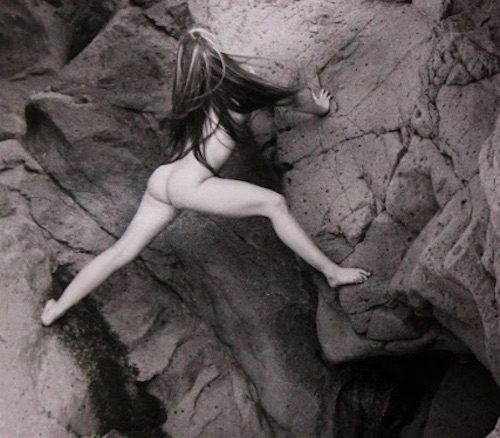
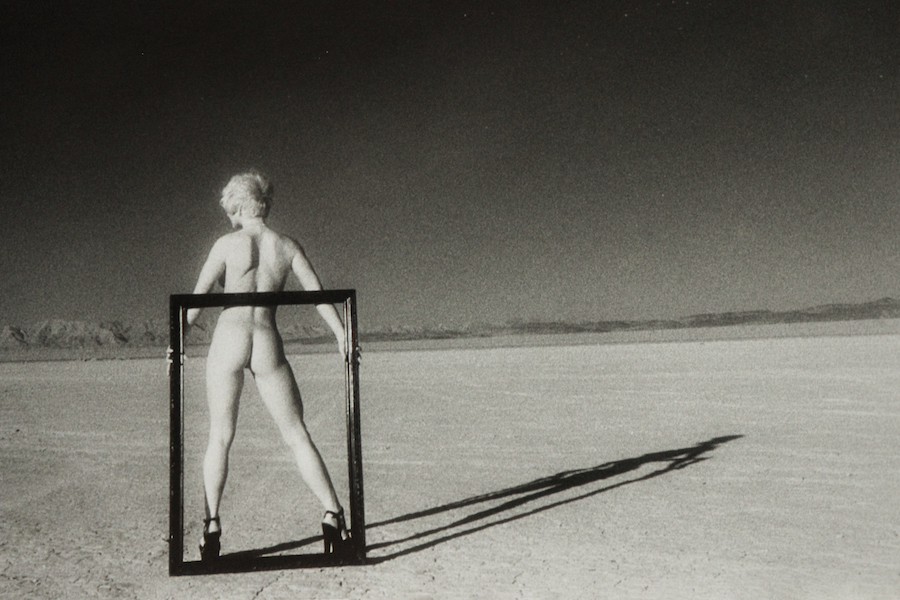
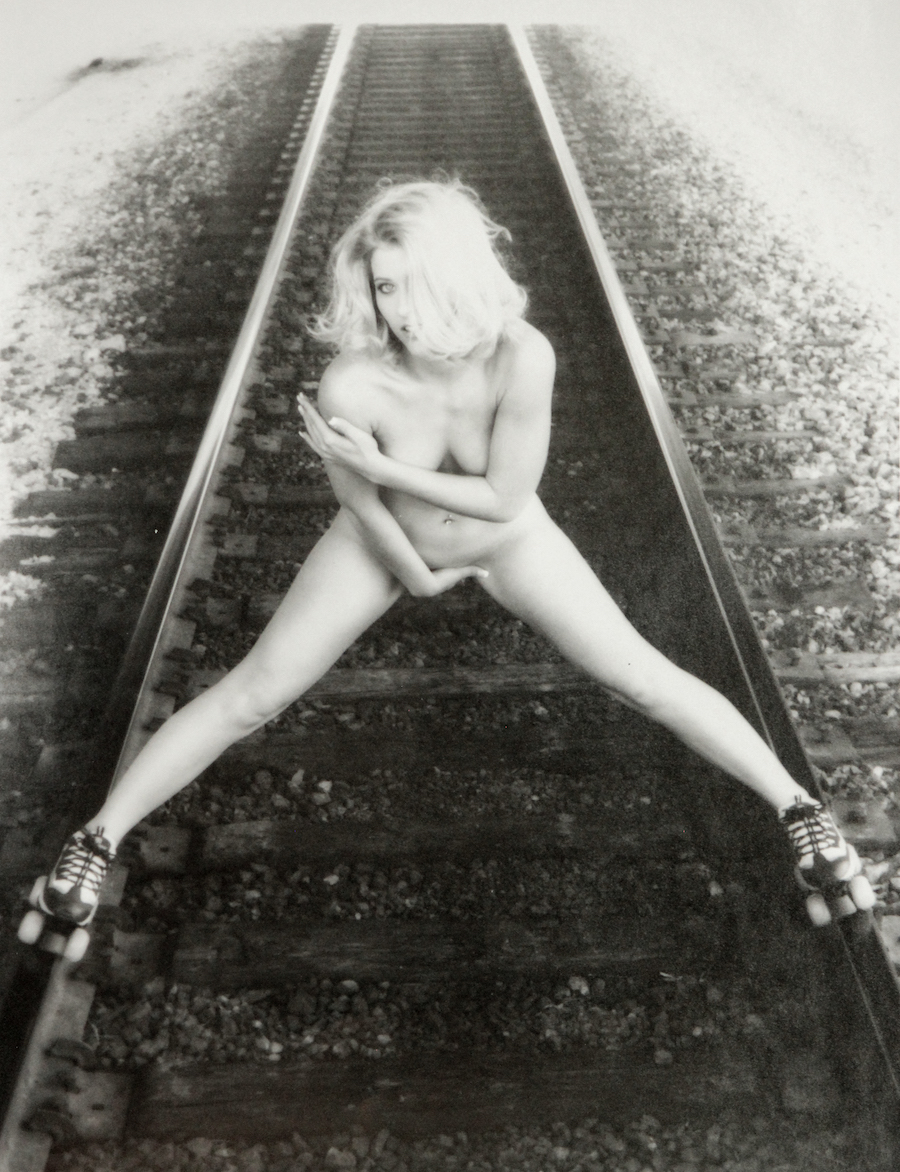
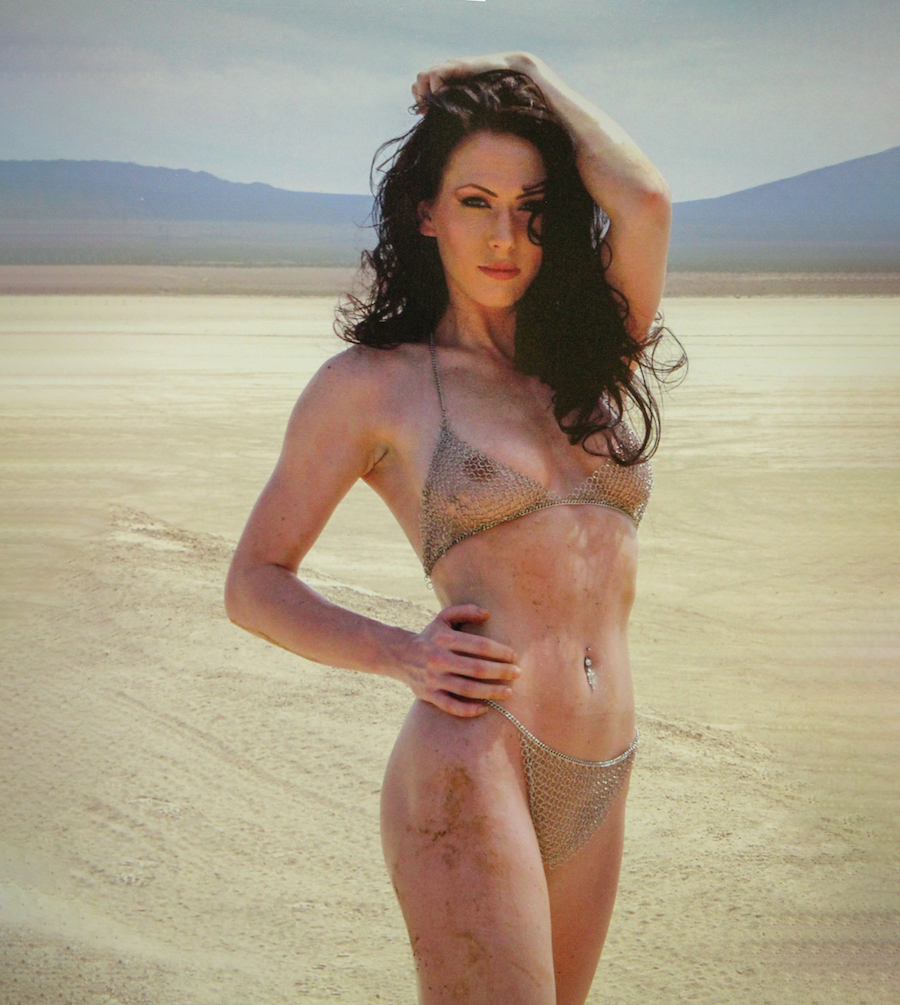
A photograph by Kelly Garni that graces the cover of his new book, ‘Naked Vegas: The Highs and Lows of A Photographers Journey’ (2022).
Kelly Garni has led a pretty storied life, his entire life. As a young teen, he became best friends with another teen, as kids do. Except Garni’s friend happened to be Randy Rhoads—a then budding guitar prodigy who would define the ultimate heavy metal sound with his instrument. Garni, who played bass, and Rhoads would go on to form Quiet Riot in the mid-70s along with vocalist Kevin Dubrow and drummer Drew Forsyth. The music put out by this original configuration of Quiet Riot is foundational, not just to heavy metal, but to glam and punk not just musically, but also in the way they dressed. Bow ties, polka dots, spandex and leather, with lots of the outfits coming from the ladies department. Their appearance created a stir at Garni and Rhoads’ high school, so much so they would routinely leave school quickly to avoid getting beat up by students who just didn’t get it. This changed once Quiet Riot started getting the attention they had worked so hard for and deserved. They were so popular, they were invited to play their high school prom even though Garni and Rhoads were barely attending classes anymore. Their classmates were no longer lining up to give them a beatdown, they were cheering for them in a swanky ballroom in Burbank. They would open for Van Halen who was coming up at the same time in Southern California. Garni’s time in Quiet Riot came to an abrupt end after an incident involving a gun and a drunken threat to kill Kevin Dubrow.
An early photo of Quiet Riot (Kelly Garni is on the left) and a ticket stub from their gig with rivals Van Halen, April 23rd, 1977. Photo by Rob Sobol. Source.
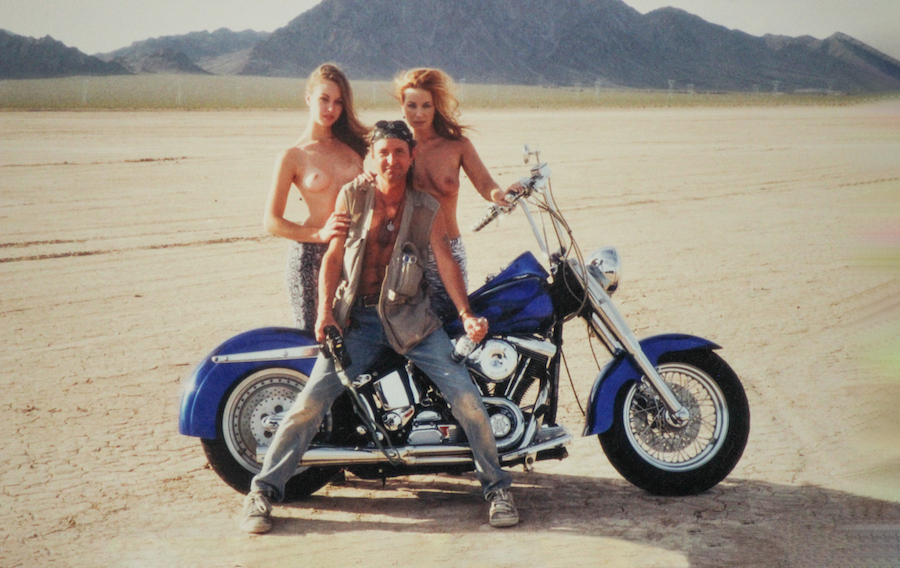
In a transitional move not unlike David Lee Roth’s in the same decade, Garni became an EMT in Los Angeles in the early 90s. As detailed in his wonderfully conversational new book Naked Vegas: The Highs and Lows of a Photographer’s Journey, he recalls the day his ambulance driver brought a 35mm camera along with her. Garni had never really used a camera and after getting some tips from his driver, he was hooked. At least until the demands of his job saving lives in LA became too time consuming, and his infatuation with photography waned. Thankfully that wouldn’t last and in the early 90s after going through what Garni describes as a very “painful divorce” he would rediscover his love of the lens. He spent time studying in the library and would chat up employees at camera stores. He built his own darkroom. Garni has never had a lack of self-confidence, and this of course worked to his advantage as he was embarking on what would become decades of photographing beautiful women merely by approaching them offering to take their photo and give it to them for free in order to hone his craft. So enthralled with the idea of photography becoming a legitimate career move, he quickly went into a bit of debt building a photography studio in his home in Las Vegas. Then Garni got the call that started it all from a modeling agency in Las Vegas that had seen some of his images. In a stroke of luck (or more likely Garni’s eye for a pretty girl), several of the girls he had recently photographed were actually working models. He would spend the next two decades taking photos of Vegas showgirls, strippers, models and sex workers, mostly in the setting of the Nevada desert. Here’s Garni on what he calls his favorite part of his life thus far:
“The next 20 years of my life (beginning in 1993) were by far my favorite. It was everything I loved. I made good money, was constantly around beautiful women, it was a non-stop party, and I was only in my early 40s. All that works for me. I had timing on my side when I started this. Timing and luck, the single greatest pairing in the history of the world for anything good that can happen to you.”
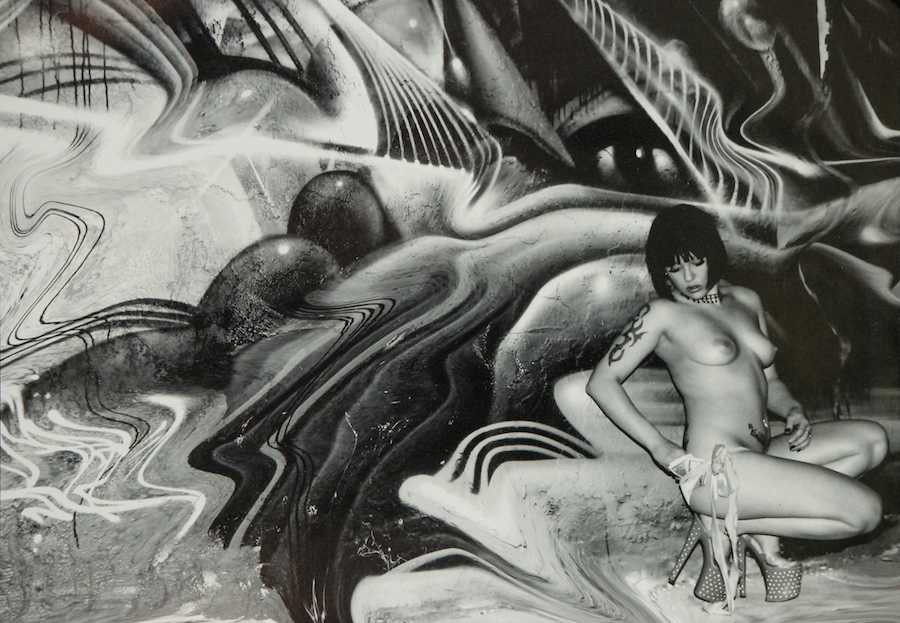
Garni getting artistic in the desert. All photos courtesy of Kelly Garni.
Garni’s assertion about this being the favorite part of his life makes sense, especially given the fact that he was living in Las Vegas during the 90s when “mega-resorts” were being built as quickly as possible. In ten years time Vegas would build massive themed “family style” resorts such as Bellagio, MGM Grand, the Luxor, Treasure Island, Mandalay Bay, the Venetian, Paris and Excalibur. Along with this, the resorts featured enormous convention facilities to help accommodate the 900 or so conventions held in the city each year. At the time, modeling agencies were making a ton of money by deploying “booth babes” to hand out company-specific merch to attendees in an effort to lure them into the all-important sales pitch from the staff inside. Garni would end up creating something called a “Zed Card” for loads of booth babes, which naturally got his images more lip-service within the Las Vegas photography industry. Though he also did other kinds of photography, demand for his nude photography soon took up 50% of his overall business. Interestingly, in his book, Garni makes it very clear that while he loves photographing women (as one should), he does not derive any kind of “enjoyment” in full-frontal nude photography as he feels it is “demeaning” to women. However, prides himself in not turning any client down, regardless of the nature of the request. Garni is a lot of things, has seen a lot of things, and has done a lot of things. Sometimes bad things (remember his desire to kill Kevin Dubrow?). But that does not make him a bad guy, and his catalog of photos in Naked Vegas convey a deep sense of admiration and respect for his subjects, even if they are buck naked. Now you might be wondering, did anything the level of “what happened in Vegas, stays in Vegas” happen to Garni during one or more of his shoots? You better believe it. And just like the debaucherous stories intertwined within the world of rock and roll, Kelly has a few shady stories about some of his clients which also reinforce his work ethic—never turn a client down. Here’s a doozy:
“Some people made this business down right creepy. This middle-aged couple came to me for pictures of a worship service at their church. They were both pastors. I guess they did alright, they had about a hundred people there donating right and left. They first asked me to do family pictures, and later, some senior pictures of their two sons. Finally, they asked about the wife doing some nudes. I thought the request was a little strange, I mean, these two were preachers. But I suppose there’s nothing wrong with a married pair of people of the fi=aith wanting some spicy pictures. Except they wanted shots that were VERY spicy. The creepy part was that during the entire shoot, the husband stood behind me. Watching. Breathing heavily. It made my skin crawl. The guy was really getting off on this. My mantra is to turn down no work no matter the nature, they became good customers in that they did these shoots several times with the husband getting more excited each time, which was always uncomfortable for me. I heard they got divorced. I don’t miss them though—they were icky to work with.”
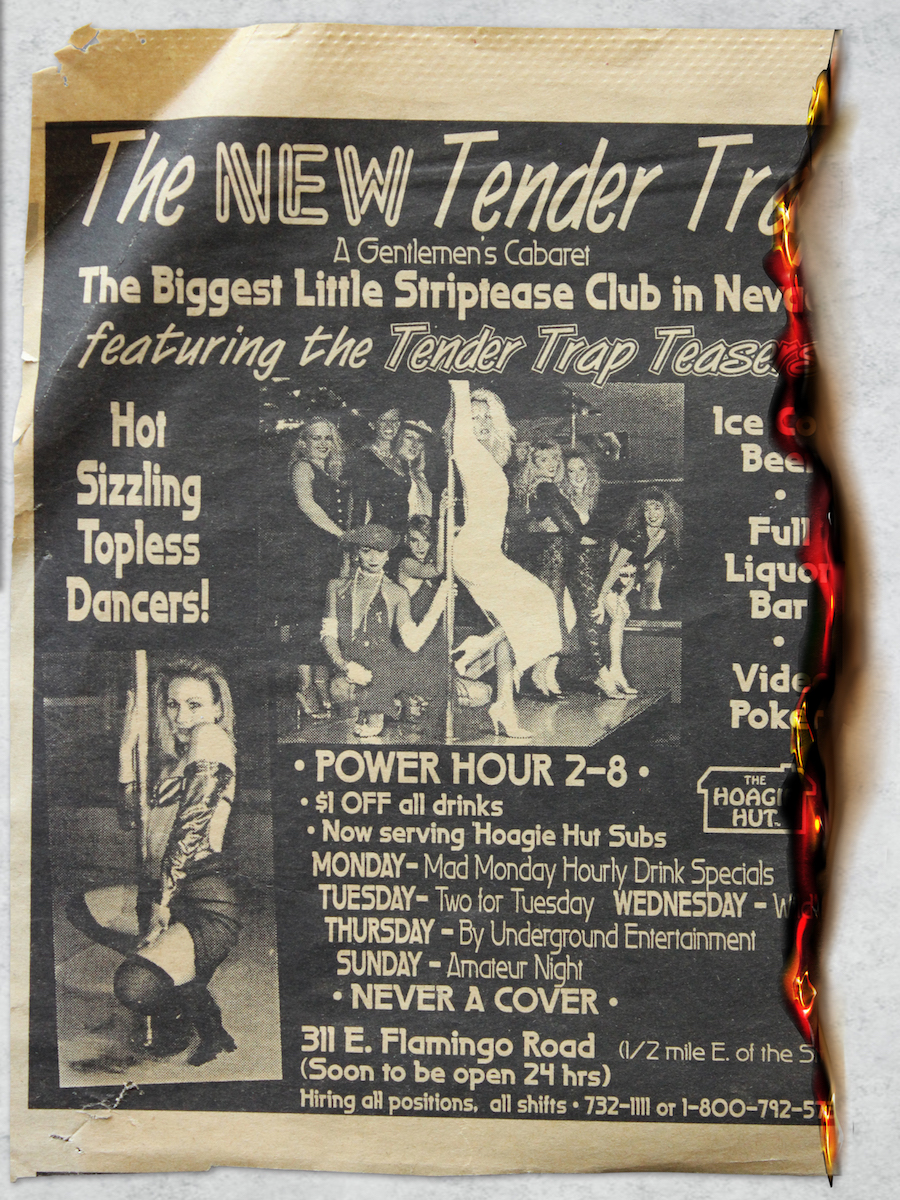
A few call girl cards featurning Garni’s photographs.
In addition to the women who worked in Vegas, Garni also did quite a lot of photography for aspiring Playboy models. And many of the images in his 153 page book are of women projecting that image. His photographs were also widely used by Vegas call girls for their business cards. If you visited Vegas during the 90s, you will remember being bombarded by people, sometimes kids, aggressively handing out fliers and cards on the strip. Most of these handouts ended up on the sidewalks of the strip itself (something I can attest to as well), creating a sidewalk plastered in photos of half-naked women with red dots on their nippples (or not). As Garni never turned any work down, he would joke that when people asked him where they could see his photographs, he said just go to the strip and “look down.” Garni spent quite a while photographing Vegas sex workers and to say he’s seen it all is an understatement. He formed friendships with many of the women he photographed and would always ask them this question; ” What’s the weirdest thing you ever had to do for a client?” As you might imagine, Garni has an arsenal of sordid tales, including one wild one about a customer the girls called “The Balloon Guy.”
“Given the number of girls who have told me about ‘the balloon guy,’ he must have spent quite a bit of time doing ‘his thing’ around Vegas. And he must also be very rich, and very old. Balloon guy would book a large suite in a major hotel. Then he would make some calls. He’d order close to a thousand balloons, small, medium and large, but not filled with helium as he wanted balloons laid on the floor. He had ‘balloon people’ spread the balloons all over the suite, covering every inch of the floor, carpet, or tile. The bathtub would be filled with water and then covered in balloons. Then the girls would arrive, strip naked and remove all their jewelry. Balloon guy was naked too, Viagra-fueled and ready to go. It was showtime. The girls were then told to sit hard on the balloons and pop them using only their bare bottoms. Hence no jewelry. Apparently, that’s cheating. Pop! Pop! Pop! He would follow them around whacking off, and then, only when the last balloon left this Earth, did he himself pop so to speak. The girls said this all took about an hour.”
The Balloon Guy sounds like he belongs somewhere in Quentin Tarantino’s character lexicon, as do some of the other stories in Naked Vegas. In it, Garni takes us along with him on his journey through Las Vegas with his eyes and lens pointed squarely on the women of Las Vegas—models, sex workers, strippers, and exotic performers, you name it. Through his photos and experience, he illuminates the some of the underbelly Vegas is known for, by navigating it himself for the first time as a self-taught photographer. Naked Vegas: The Highs and Lows of a Photographer’s Journey, is available now via Garni’s soon-to-be-redesigned website or here. Like the other images in in this post, most are NSFW. But you didn’t like that job anyway.
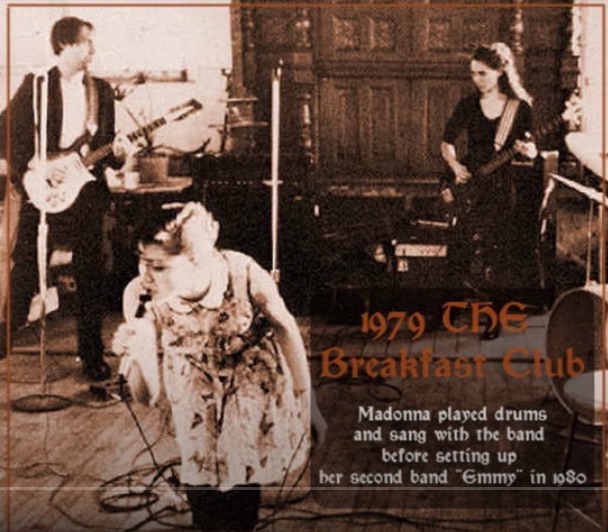
In 1979 Madonna was dating musician Dan Gilroy of the Breakfast Club. The pair were living in a converted synagogue in Queens, New York, poor but happy pursuing their respective careers which at the time for Madonna was her quest to be a dancer. Things weren’t exactly going great in that department for Madonna so Gilroy taught her how to play the drums, which she took to pretty quickly. This led to an explosion of creativity from the 21-year-old pre-Material Girl Madonna—she wrote lyrics, and the music to accompany them. She learned to play a few chords on the guitar and sing. In 2008, The Daily Beast released tapes recorded by Gilroy back in the day when he and Madonna were together. He also spoke about some of the first songs she wrote and recorded on his old cassette player. The article itself refers to this work as the “lost Madonna tapes.” And that description feels accurate as the songs you are about to listen to, written, performed, and recorded by Madonna along with Gilroy, Angie Smit on bass, and Dan’s brother Ed on guitar, come from her short time fronting the Breakfast Club. They were self-released by Madonna on cassette in 1979. She had only been in New York for about a year beforehand. She would, with Gilroy’s encouragement and help, travel to France to work as a dancer and backup singer in a Parisian disco. By 1981 she was singing her first record contract with Gotham and, as they say, the rest is history.
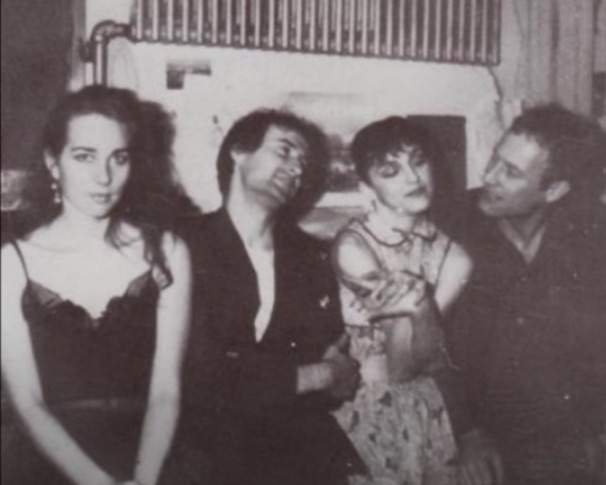
Madonna (center) and the Breakfast Club. Photos via Youtube.
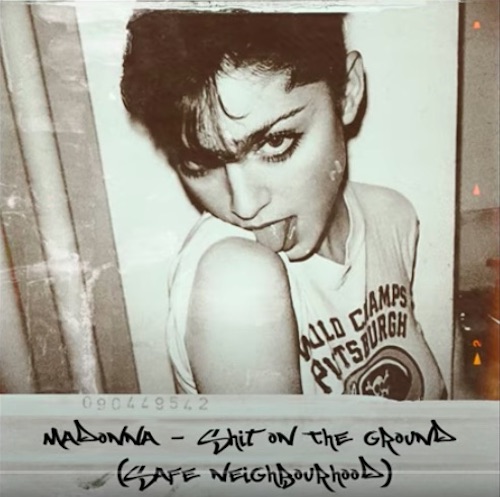
A photo of dark-haired Madonna during her time in the Breakfast Club.
Hardcore Madonna fans are likely aware of this period of Madonna’s development as a pop star thanks to the 2019 documentary, Madonna and the Breakfast Club (it’s out there streaming on multiple platforms if you’re interested in checking it out). Hardcore fans will also know Madonna has been known to perform versions of these songs (and other early material) live. Here’s the thing—much like the early days of the Go-Go’s, Madonna is definitely flexing her affinity for punk rock while mixing it with her own brand of spirited pop which the entire world would soon embrace and others would emulate. Now, if you’ve never heard this version of Madonna, and dig your punk with a side of pop, you are going to love these raw jams. It’s also quite compelling to hear them, knowing what was to come from Madonna in a few short years. The demo itself (which contains other recordings), went to auction in 2009 and sold for an astonishing $6400.
So before it disappears online (as it does from time to time), listen to four songs from the demo right here.
Four songs from Madonna’s self-released demo cassette with the Breakfast Club, 1979. Includes ‘Shit on the Ground/Safe Neighborhood,’ ‘Shine a Light,’ ‘Little Boy,’ and ‘Love Express.’
Photo of Mark Stewart by Chiara Meattelli and Dominic Lee
Mark Stewart on Mark Fisher: “HE CAME FROM THE PRESENT TO SAVE THE FUTURE AND CHANGE THE PAST.”
The question Mark, is this: Where to begin the discussion of the great free-thinker and theorist that was Mark Fisher – when the object was somebody who dealt with the ambiguity of time itself?
Can I outdo the last intellectual missive on the matter? I very much doubt it. Should I want to? If I learnt anything about Mark, I can wholeheartedly say no, I shouldn’t. He would much rather I invest my time reaching the audiences, who as yet, are entirely unaware of both him and his work. Or, better still, devising methods of my own, capable of derailing the deluge of despair, that dictates your cyclical resignation to “whatever will be, will be”, as Doris once sang. Mark’s switching of the baton to me, is not a position of privilege that I, and I alone hold, you understand? Mark made the case for all to seize it – and in turn pass it on – if we are to achieve what is required to tack through the ill-wind that blows. And that is poignant. For it was Raymond Briggs, who, with his graphic novel When The Wind Blows (pub. 1982), made his much needed anti-nuclear narrative, accessible to children. Briggs, like Fisher and other great writers, recognised that in order to avert what is seen by some as the inevitable future – one must reach the youngest of audiences. Far too many of those – now in their 40s and 50s – are fully accepting of all that their political ‘leaders’ feed them.
Mark’s work, as well as being a call to arms, is an open invitation to be challenged in order to instil agency, and ignite – with a ferociousness like I have never seen before – an anarchical phenomenon that has reached even the eye of Chile’s president, Gabriel Boric. Therefore, proving itself capable of playing an entirely different game, and winning. Which, in itself, brings me to my penning this and contributing to Niall McCann’s forthcoming film about Mark Fisher’s life & work – Lost Futures. Niall is committed to making Mark accessible to as many and varied an audience as possible. Let’s assist. For every person who’s aware of Mark Fisher’s work, there are infinite others who aren’t. If his unparalleled discourse is to hold the status of his ‘lasting legacy’, which we, his devotees rightly bestow upon him, then it is us – those already well-versed in his vision – who carry the honour of the arduous task of spreading his word. And yes, it will be arduous, but that’s the least we, who claim to admire Fisher, should be prepared to shoulder, if we are worthy of declaring ourselves to be forever changed and inspired by his work. It’s worth remembering the integral role that the blessing and a curse – that is the internet – has to play, in facilitating these necessary connections. When Fisher cast his critique of the net, so ably identifying all its holes, he did so in the hope that it would all be stitched up with better solutions. After all, there is no catch to be had, without the means to captivate what lies beneath. He plunged us to the depths in helping us to understand the effects of social media, so as to provide us with the determination to surface, with all manner of attached material coming up for air with us.
Mark wanted everyone to be in on the act. He was more than capable of disproving his most ardent ‘academic’ critics, but he’d sooner awaken the opposition than rebuke them. He never favoured wallowing in one-upmanship over the wonderment of a new inductee to the cause. Mark knew full well that the most vital respondents to his cries, were not those with enviable résumés they’d had the privilege of designing themselves, but instead those that had theirs dictated to them. The people who’ve spent a life being underestimated for all manner of reasons beyond their control, but most of all, their lack of access to a formal licence to question EVERYTHING. We need them.
Mark talked much about his belief of the links between mental health and circumstance, so if little blue pills that help get it up, or surgeries that leave patients feeling fuller, less flat, are made readily available on the NHS prescriptions list, then shouldn’t Fisher’s back catalogue be on it too? He stabs right at the heart of the mental health plague. No amount of therapy slugs or anti-depressants can better arm the depressed with the tools they need to understand their plight, than Mark Fisher, surely? And where better to reach the afflicted, than the environments that see very little material that speaks to our contemporary natural condition.
I spoke to Niall McCann (director of ‘Lost Futures’) about my writing this piece and he made reference to a quote that Fisher had once said of prisons: “Only prisoners have time to read, and if you want to engage in a twenty year long research project funded by the state, you will have to kill someone.” No greater truth. And right there, lies one of our biggest opportunities, staring us in the face. For as well as the need to reach the youngest of audiences with thought provoking material to avoid the continuation of the status quo, is it not equally important to reach all – who, by definition of their circumstances – are a ‘captive audience’? Prisoners; long-term hospital patients, mental health ward patients; ATU admissions; care home residents? After all, it is they, who tend to have unrivalled lived experience of the effects of privatisation. None of the settings in which these potential audiences reside are considered hip so get overlooked – and so too does the opportunity to learn from those within.
Surely this has to change? How to achieve that? Answers on a postcard to the usual address please, or perhaps better still, a deleted one. See it as a random act of kindness. Remember those? It’s time for retiring ‘radicals’ everywhere, to cast aside the copies of Keep Calm And Colour In Unicorns and instead inundate the mail boxes of anybody and everybody you would ordinarily deem to ‘have nothing in common with’. What’s the alternative? That you continue with a life of blinkered, onanistic self-assurance, immune to the truth of the surrounding landscape? Is this who you want to be? Only satisfied when you’ve fulfilled your own needs, regardless of who or what it denies in the process? It’s time to diversify and digress from the barely tolerated diet, and instead force yourself to swallow your most unpalatable hypocrisies. Break them down with a good glug of acid and permit your imagination to transform them into first class fertile matter, to enable new life to flourish in pastures new.
I asked Bobby Gillespie and Obsolete Capitalism to summarise what they believe to be the essence of Mark Fisher’s work for inclusion in this piece.
Bobby Gillespie:
“The beauty of Mark Fisher’s laser sharp critique of the destructive effects of life under Neoliberalism, was that it spoke to ordinary people in plain language that went beyond the often-hermetic intellectual world of academia. He is greatly missed. We need more voices like Mark’s, more than ever.”
So, let’s assist in courting the audience Mark craved to reach the most. In another conversation with a friend I’ve recently introduced to Mark’s work, they said: “It feels to me like there is a feast of fawning over Mark’s theories and a famine of practice out there.” A valid point. There are people pushing themselves to continue his praxis – one such example that comes to mind is Oneohtrix Point Never. There are numerous others, but why stop there? What can be gained by knowing much of what is wrong and how it occurred, if we just hoard the horrors in the hope that somebody else will pick up the slack in remedying them? It ain’t gonna happen. Meanwhile, the tendency to promote oneself as one of Fisher’s dedicated disciples to the already switched on, on social media, prevails. Perhaps a sin we are all guilty of to a greater or lesser degree I expect, but as the expression goes: about as much use as an ashtray on a motorbike. If you’re already familiar with Mark Fisher’s work, by now, you might be vexed that I’ve made little or no reference to Capitalist Realism, or Hauntology…etc. Maybe that’s because primarily Mark was my mate. I miss him. And for me, promoting the generosity of Mark Fisher the person, will always come first before his works. Mark gave you those. They are all available to be devoured and shared. Please do. The last word goes to Obsolete Capitalism, proving that although Mark wanted to appeal to everyone, he had a habit of impressing upon some of us an acuity that felt special, and unique to our innermost thoughts and experiences.
Obsolete Capitalism, June 2022:
“Like other great thinkers of the past – Nietzsche and Deleuze among others – Mark Fisher is a writer with “no mediation”. What is left when he tears away with a simple and definitive gesture, the enveloping screen on which the great epic fable of ‘capitalist realism’ is projected? Only emptiness. Instead of living in an age ‘saturated with history’ as Nietzsche wrote, Fisher has clearly and capably described our age as ‘saturated with emptiness’. While this “emptiness” expands into every corner of capitalism, it also discharges the supposed systemic alternatives opposing it. Helping us in liberation from ‘horror vacui’ and recognising the emptiness in the false fullness of the Real, is his most generous and enduring intellectual legacy.”
A statement about film-in-progress Lost Futures from director Niall McCann:
The video we have produced for “Storm Crow” is an attempt to visualise Mark Fisher’s ideas and combine them with music which comes from a similar place. An experiment in matching his ideas to Mark Stewart’s music in a playful way, recontextualizing old TV advertisements—which both Marks would have grown up watching—zombie movies, along with pivotal social and political moments which helped bring us to what Fisher called “Capitalist Realism” which is the idea that it is now easier to imagine the end of the world, than the end of capitalism.
The vast body of work Fisher left behind explores capitalism’s unassailable role in our lives, the closing off of any sense of a future different from the present, and the effects of this on us as individuals. His writings lifted up the veil and showed the world afresh to his readers, and that’s the core idea in the music video.
The film itself revolves around something which is central to Mark Fisher’s work: the future. When I was young the future was everywhere. It could be anything, it seemed rife with possibilities, for something better. Now, it’s only talked about as a more terrifying version of the present. This is a film about the futures we have lost and how we might start imagining new ones again.
We will use Mark Fisher’s life and his brilliant ideas as a guide through some of the most urgent questions of our time.
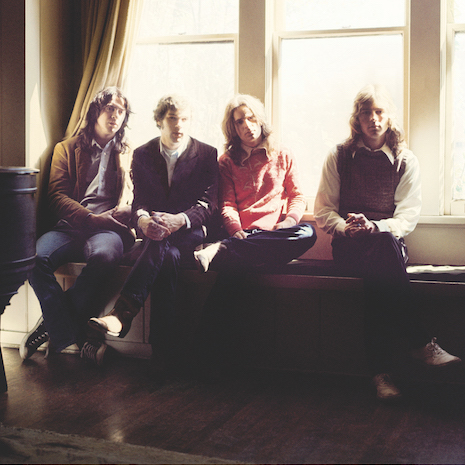
Big Star’s original lineup. L-R: Andy Hummel, Chris Bell, Alex Chilton, and Jody Stephens.
Listen to the second part of my appearance on the Discograffiti podcast, reviewing the Big Star catalog, at the end of this article. Part one is here.
The following post was first published in 2018; it’s been lightly edited.
Being a big fan of Big Star, I was excited to receive an advance copy of the oral history book, There Was a Light: The Cosmic History of Chris Bell and the Rise of Big Star (HoZac Books). I started flipping through it and was immediately drawn to the story of the Baker Street Regulars. The band existed for a brief period in 1976, and featured two former members of Big Star, Chris Bell and Jody Stephens. Considering this was a seldom discussed part of the Big Star story, I asked HoZac Books if we could run the Baker Street Regulars passages in the book. They not only said “Yes,” but provided us with the majority of the images here—many of which have rarely been seen before. There Was a Light author, Rich Tupica, has even written an introduction just for us.
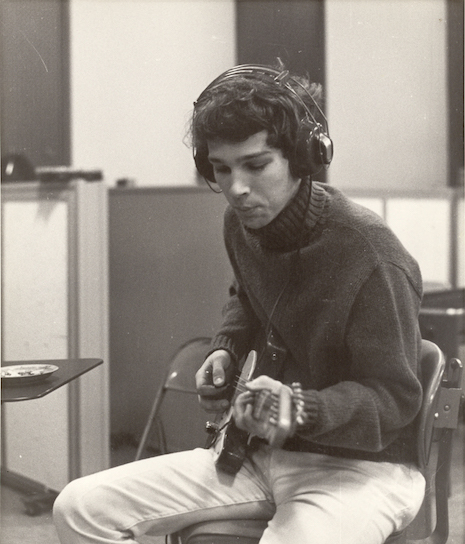
Chris Bell in Ardent Studios, pre-Big Star.
Often overshadowed by his iconic Big Star bandmate Alex Chilton, the genius of the late Chris Bell wasn’t truly uncovered until years after he was tragically killed in a car wreck in December 1978. The 27-year old remained in obscurity until 1992, when I Am the Cosmos, his posthumously released solo album was finally released to much praise.
Today, Beck and Wilco cover the enigmatic songwriter’s works, while members of R.E.M. still praise his work when asked about their favorite bands—yet at the time of his death, Bell was anything but a rock ’n roll legend. After the release of 1972’s #1 Record, Big Star’s debut LP on Ardent/Stax Records, Chris suffered a bout a clinical depression and heatedly exited the Memphis-based group—the band he masterminded from the ground up. He also had a falling out with Ardent Studios owner and Big Star producer John Fry. His life was in shambles and he realized his dream of breaking Big Star into the mainstream wasn’t going to happen.
Big Star in Alex Chilton’s bedroom, posing for a ‘#1 Record’ promo photo. (Courtesy of Carole Manning)
With Bell out of the picture, Alex Chilton and John Fry took the reins and kept Big Star going for two more equally acclaimed albums, Radio City and Third/Sister Lovers—but with little financial successes, the band fully dissolved.
Meanwhile, Bell not only became a devout born again Christian, he also attempted to launch a solo career. He even moved to London with his older brother David Bell for much of 1975 and pitched his reels of solo material to any A&R rep who’d meet with them. They were ultimately turned down by every label. By 1976, America’s Bicentennial, Chris was back in Memphis living at his parent’s upper-class estate in Germantown.
For money, Bell flipped burgers at his successful father’s fast food chain, while in the evenings he played as a sideman guitar slinger alongside fellow Memphians Van Duren in a short-lived band called the Baker Street Regulars. The band would never record a single track, but its short list of dates at low key Memphis bars would be the only time a full band would ever play Chris Bell’s solo material in front of an audience.
Chris Bell on stage during a Baker Street Regulars gig. (Courtesy of Van Duren)
The following excerpt is a portion of Chapter 20 from There Was a Light: The Cosmic History of Chris Bell and the Rise of Big Star (HoZac Books), which details this period of Bell’s life.
Chapter 20: Baker Street Regulars: 1976 Within weeks of his return from England, Chris connected with Van Duren and promptly formed the Baker Street Regulars—a Memphis-based bar band named after the Sherlock Holmes characters. The group—which also comprised former Big Star drummer Jody Stephens and guitarist Mike Brignardello—played Van’s and Chris’s original tunes along with some semi-obscure covers. For the first time since his pre-Big Star days, Chris played music just for fun.
Mike Brignardello — Bassist, Baker Street Regulars, Nashville session player: I grew up in Memphis, then hit the road immediately after high school in the early ’70s. I was in a little club band and learning about being a musician, then I came back in the mid-’70s. Big Star had come and gone in my absence, but I heard about them when I got back. They were local heroes, already a semi-cult band. One of the first guys I met when I came back to Memphis was Van Duren. We hit it off and started playing together. He was the guy who hooked us up with Chris and Jody.
Van Duren — Musician, songwriter, solo, Baker Street Regulars: The Baker Street Regulars was the name when the band first started—Chris thought of it. In December of ’75, we started to get together and rehearse, but we had been kicking around the idea of forming a band for months before that. The first time I went out to the Bells’ house, Jody took me over there for our first rehearsal. We turn off down this street and it turned into this winding driveway. You couldn’t even see the house from the street, the property was so huge.
Chris Bell poses in front of his parents’ home, Christmas 1977. (Courtesy of Bell Family Archive)
Mike Brignardello: Chris lived in, to my eyes—at least back in the day—a full-blown mansion. I remember turning down the driveway and driving, and driving, and driving and thinking, “You’ve got to be kidding me! He lives on this estate?” I had grown up as a poor kid in Memphis. He had us set up and play in the living room because his parents were overseas for like a month. I was like, “Who goes overseas for a month?”
Van Duren: Chris was different, obviously upper crust. I come from a blue-collar background, so that was a new world for me. He was from privilege and he acted that way sometimes, but he could also be quite humble. He always had a twinkle in his eye, much like Alex in a way. Sometimes you couldn’t tell if he was putting you on or being serious.
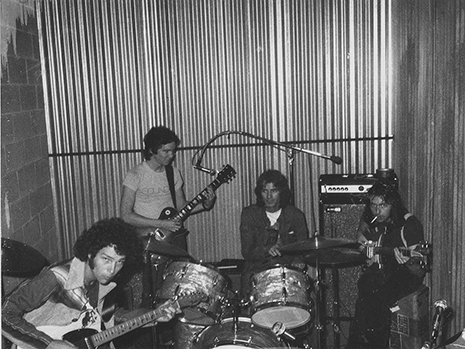
Mike Brignardello: We practiced in a corrugated-metal storage room—it wasn’t insulated or anything like that. We’d just roll the door up on hot, humid Memphis days and rehearse. My girlfriend got that photo of us in there. I thought it perfectly summed up where we were at. We were hungry to play. We sweat through those rehearsals.
The Baker Street Regulars in the metal storage unit. L-R: Chris Bell, Mike Brignardello, Jody Stephens, and Van Duren. (Courtesy of Beverly Baxter Ross)
Van Duren: It was pretty miserable in that twenty-foot-by-ten-foot mini storage—those things were brand-new in 1976. It was on Lamar Avenue and was the first of its kind in Memphis. One day, Chris showed up two hours late for rehearsal out there. He walks in wearing these tennis togs with the sweater wrapped around his neck and says, “Sorry I’m late, Tommy Hoehn and I had a vision on the tennis courts.” I didn’t know if it had to do with his religious beliefs, or if I was supposed to take him seriously or not. I was a little bent out of shape, but I just laughed when he said that. It wasn’t the first or the last time he was late. He operated on Chris time. Even so, by January of ’76, we were out playing.
The Baker Street Regulars landed shows at now-defunct venues, like Aligahpo’s on Highland Street by the University of Memphis, Procapé Gardens in Midtown on Madison, and the High Cotton Club, just south of Overton Square.
Van Duren: We played those three clubs about three times each, but the first gig was in the springtime in Oxford, Mississippi at Ole Miss at a fraternity party. We did originals and some cover material—but the covers were Beatles, Bee Gees and a lot of fairly obscure things at the time, like Todd Rundgren. We played things nobody had picked up on yet, especially in Mississippi. We threw in my songs, some Big Star songs and a few of Chris’s songs. We’d do “I Am the Cosmos,” “Make a Scene” and “Fight at the Table.” We learned Chris’s songs by listening to what he was calling demos—what later emerged as his solo album. It was a wonderful experience, even though when we played gigs we were pretty much ignored. That’s probably why we didn’t play much in the six months we were together.
I’m the guest on the latest episode of the fabulous Discograffiti podcast discussing the work of ‘70s cult band, Big Star. Host Dave Gebroe and I recently had a splendid chat about the group, and the conversation was so epic it’s been divided into two parts. Check out the first installment at the conclusion of this post.
While I love all three of the Big Star albums released in the 1970s, I’ve always had a soft spot for Radio City. It’s the first one I bought, and I instantly fell for the tight-yet-loose, catchy rock ‘n’ roll embedded in the LP’s grooves. Years after becoming a huge fan of the band, I was surprised to discover that three of the songs on Radio City aren’t really Big Star at all.
The Dolby Fuckers were a studio project that consisted of Big Star’s Alex Chilton, drummer Richard Rosebrough, and bassist Danny Jones. Chilton and Rosebrough first met back when the former was fronting the Box Tops, and at the time of the recordings Rosebrough was working full-time as an engineer at Ardent Studios. Jones, a local musician, roomed with Chilton after Alex’s marriage fell apart.
There’s a lot of uncertainty surrounding the Dolby Fuckers tracks, but one thing is for sure—no one remembers, exactly, when they were recorded. It seems most likely that the sessions took place during the months-long stretch in 1973 when Big Star were inactive. After they played a series of January shows at Lafayette’s Music Room in Memphis, which were Big Star’s first public performances following the departure of Chris Bell in late 1972, the group effectively went on hiatus. They reconvened for a now legendary concert at the first and only Rock Writers’ Convention, held on May 25-26 at Lafayette’s. The band received such a positive response from notables like Lester Bangs, Nick Tosches, and a teenage Cameron Crowe, that they decided to keep Big Star going. In the fall of 1973, the group went into Ardent to cut what would become Radio City.
Big Star: Jody Stephens, Andy Hummel, and Alex Chilton in the William Eggleston photo that appears on the back cover of ‘Radio City.’
Here’s Richard Rosebrough on the wild late night sessions at Ardent that produced two of the songs that wound up on Radio City—“She’s a Mover” and “Mod Lang”:
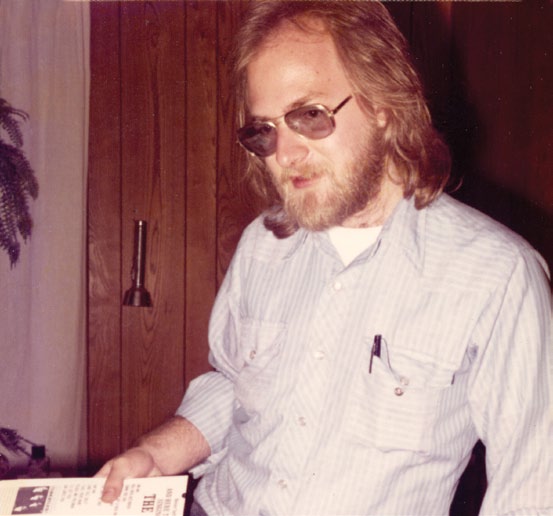
The Dolby Fuckers were just some sessions we did. There was a period when I was hanging out with Alex and I may have been working all day, then we’d meet at the bar later that night. The bar was just two doors down from the studio and we’d go in the studio at 2 a.m. and just start going crazy and making these recordings…Alex at that point was starting to fall into chaos. It got to be anything could happen. (from Big Star’s Radio City (33 1/3))
Richard Rosebrough.
A third Dolby Fuckers track, “What’s Goin’ Ahn,” was recorded during a formal Chilton session at Ardent.
Big Star recorded everything in their arsenal for Radio City, but it wasn’t enough for a full LP, so the Dolby Fuckers tracks were added to round out the record. The only information on the album related to the Chilton-led project is this credit: “Danny Jones and Richard Rosebrough played too.”
The British Invasion-sounding “She’s a Mover” is probably the oldest track on Radio City, possibly dating as far back as mid-to-late 1972. The looseness of the evening it was captured in is preserved in the recording, which ends with a jam. The odd feedback sounds came from waving a pair of headphones over a microphone. Andy Hummel later overdubbed a bass part, so he’s on the final version. Big Star took a stab at the song, but their rendering was shelved, as it was felt it didn’t have the spirit of the Dolby Fuckers’ take.
Chilton was reportedly so pleased with how “She’s a Mover” turned out that he booked a session at Ardent with Rosebrough and Jones. The result was the achingly lovely “What’s Goin’ Ahn.” The song was written by Hummel and Chilton in Alex’s bedroom, many moons before Radio City was conceived.
The rocker “Mod Lang,” credited to Chilton and Rosebrough, comes from another debaucherous evening session at Ardent. Its title is an abbreviation for “Modern Languages,” a Memphis State department. Chilton later admitted he stole the lyrics from a bunch of old blues songs.
Despite the fact that they aren’t actually Big Star songs, the Dolby Fuckers recordings fit seamlessly with the rest of the tracks, contributing to the album’s greatness.
And where to they get “Dolby Fuckers” from anyway? During one of the sessions, Alex, wondering what the point of Dolby Noise Reduction was, asked Richard, “What’s this Dolby fucker do?” Needing a way to label the recordings, that’s the name they wrote on the tape boxes.
As with #1 Record, Radio City (released in early 1974), wasn’t properly distributed, playing a large role in its failure. Their final LP, Third (a/k/a Sister Lovers), is comprised of material taken from a Chilton/Stephens project. Released years after it was recorded, it’s a Big Star album in name only.
On April 25th, 1993, Chilton and Stephens reunited, along with Jon Auer and Ken Stringfellow of the Posies, for the first Big Star show in nearly two decades. From that gig, here they are, playing the majestic Radio City track “September Gurls.”
George Miller aka Kaiser George is an artist, musician, and leader of the cult band The Kaisers—hence the moniker Kaiser George.
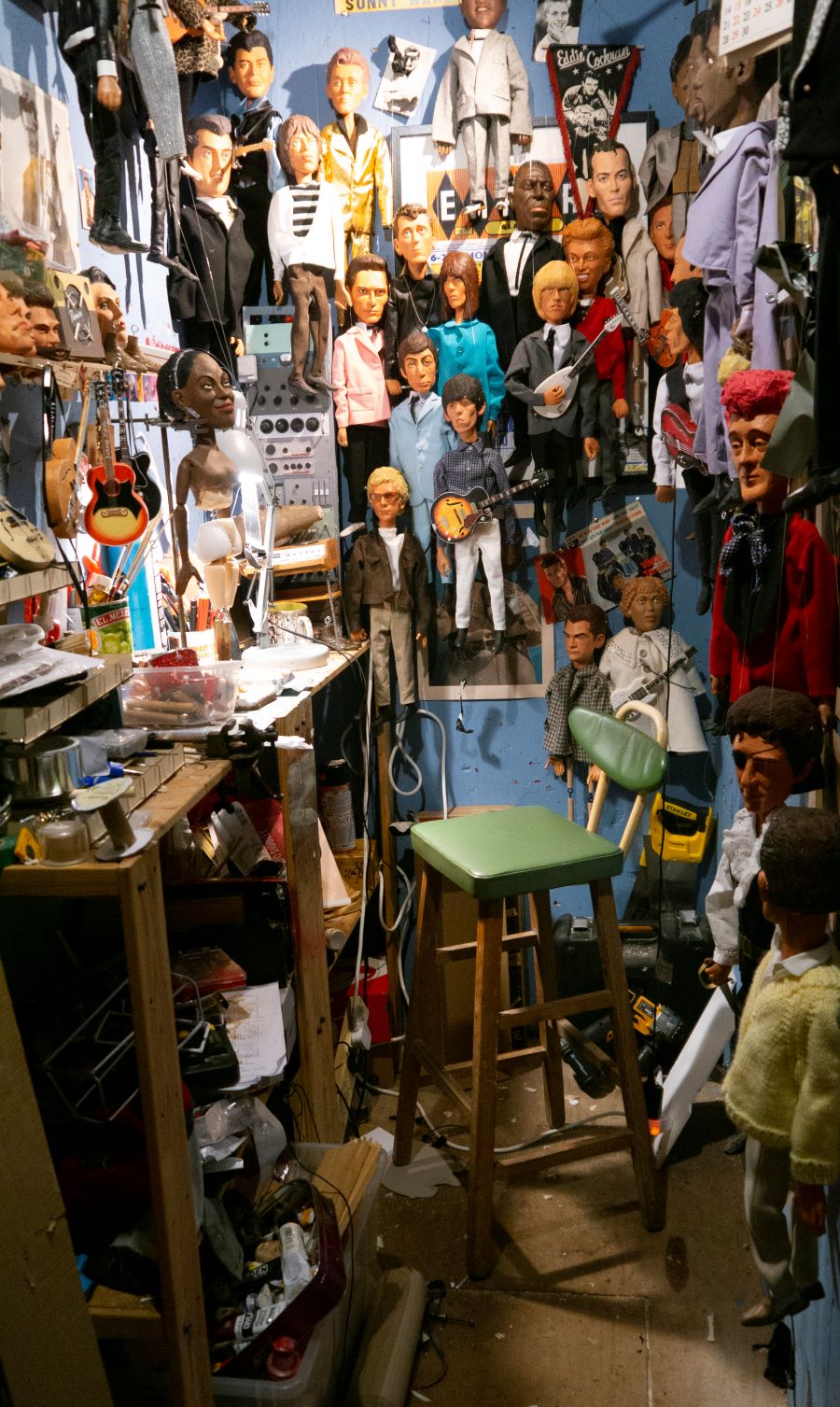
Miller is also the talent behind KGM Marionettes - the home of quality rock ‘n’ roll and R ‘n’ B pop merchandise. Two years ago, Dangerous Minds introduced you Miller’s marvellous marionettes, prints, and trading cards. Since then, Miller has expanded KGM’s output to include some British rock ‘n’ roll legends like Johnny Kidd and Wee Willie Harris and more famous ones like the Rolling Stones.
Miller’s work is more than just fun. It is culturally important artwork which brings the joys of the Golden Age of rock ‘n’ roll and some of its greatest (though often neglected) stars to the Spotify generation.
George Miller: Initially the plan was to make a Top Trumps style card set, so the puppet making went into overdrive for quite a while in order to have enough cards for the game to work properly. The String Stars set featured only stars from the US, but we made the decision to include some of the more notable UK artists, which meant a fair bit more work, but good fun nonetheless. Johnny Kidd was particularly enjoyable to make and think I may have the only Wee Willie Harris marionette in the world, but I’d love to be wrong about that.
We now have enough characters for the Top Trumps style set, but that particular project has been put on hold for now, meaning I have a cupboard full of idle puppets, but they’ll be put to work eventually.
What has the response been to your marionettes and KGM merchandise?
GM: The response has been incredibly positive to the point where I feel I have to keep making the marionettes for as long as is humanly possible. Reading the comments folk put on Facebook and seeing the photographs of KGM merchandise on display in their homes is a real thrill. People really do seem to love the puppets and the merchandise, which makes all of us at KGM feel mighty good.
The puppets have been featured in a few national newspapers and a chap by the name of Austin Vince came to Glasgow to make a short documentary which will be shown at the Adventure Travel Film Festival in the Cotswolds in August. I’ll be there to give a kind of ‘Confessions of a Rock ‘n’ Roll Puppet Maker’ talk.
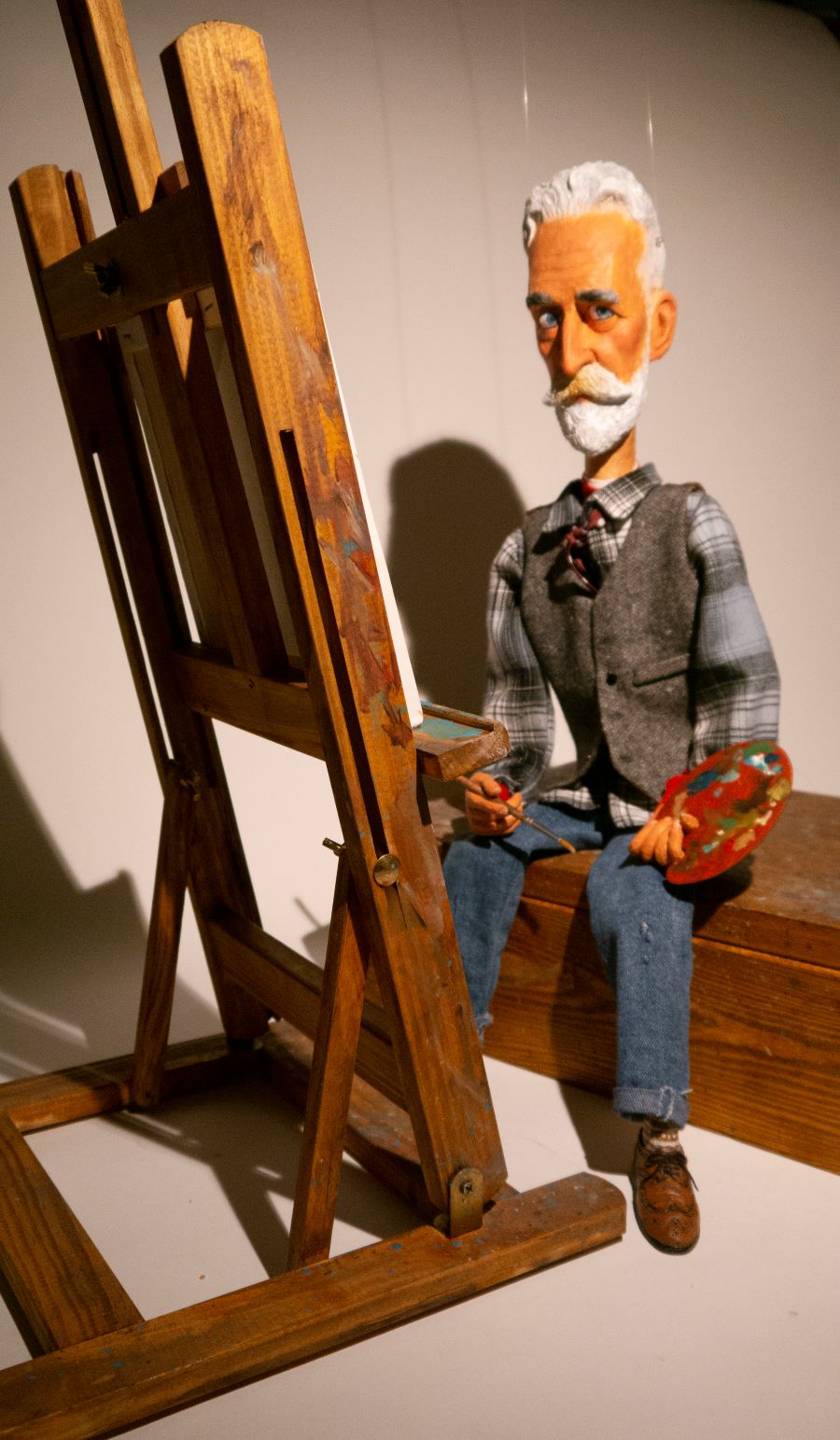
I was also asked to make a marionette of the artist John Byrne for his foundation’s charity auction, which I was delighted to do as I’m a big fan and he’s a brilliant subject for sculpting. Also he was a Teddy Boy in the 1950s, which makes me like him even more.
Playwright (‘The Slab Boys’) and artist John Byrne who is also known for his album covers for the Beatles, Donovan, Stealer’s Wheel, and Gerry Rafferty.
GM: The KGM team got pretty excited when the new owners of Sun Records asked us if we could make a bubble gum card set of Sun artists, but unfortunately US image copyright law scuppered the project. Thank goodness we don’t have that in this country.
What new wonders have you for sale and are working on?
Currently we are still selling the original String Stars card set, plus greetings cards/post cards and also ‘String Stars Stand-ups’ which are cardboard cut-out figures of a select few of the marionettes - in full colour and attractively packaged, folks.
The current major KGM project features five young men you may not want your daughter to marry.
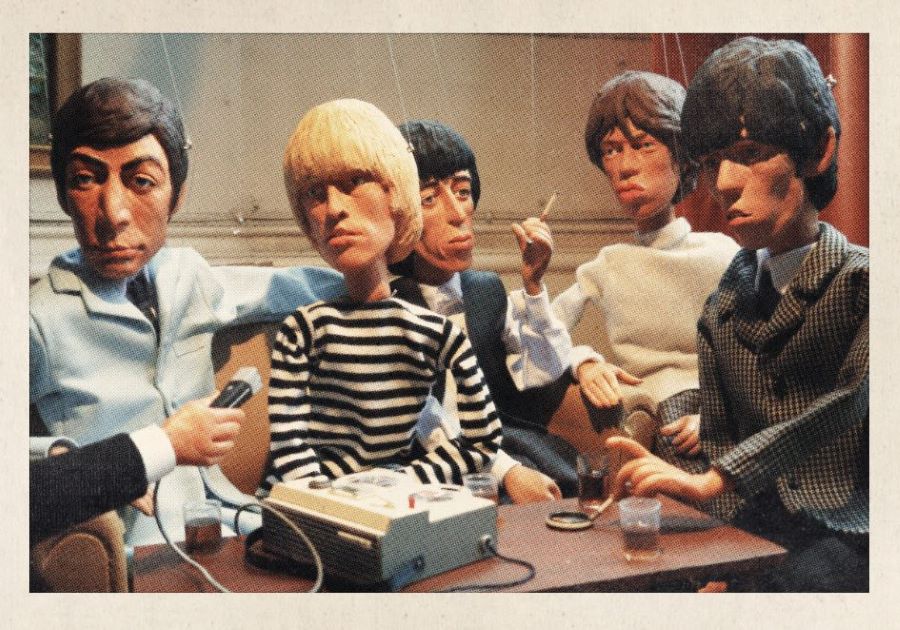
KGM Cards: The Rolling Stones.
Ah, the Stones! Tell me about the Rolling Stones marionettes and what your plans are for them. Why the studio? why the van?
GM: The Rolling Stones marionettes have rather elbowed the Top Trumps project out of the way, which seems apt somehow. I thought it would be fun to do a band for a change and the Stones seemed the perfect choice, given that they all have tremendous facial features and also it was an interesting challenge to try to capture their ‘bad boy attitude’ while retaining enough toy-like charm to make people smile.
When they were completed and dressed in Ursula [Cleary]‘s wonderful outfits, they seemed so alive that we decided we just had to do a bubble gum card set, similar to the A&BC Stones set from 1965. The set will take the form of a loose visual narrative based on a typically busy day in the life of a successful British R & B group, in which they cram in a photo shoot, TV appearance, recording session etc before a riotous gig in the evening. As with all the other KGM stuff, it’s basically an art project masquerading as pastiche pop memorabilia. It feels like we’re somehow giving the concept of celebrity an inquisitive poke with a reasonably sharp stick.
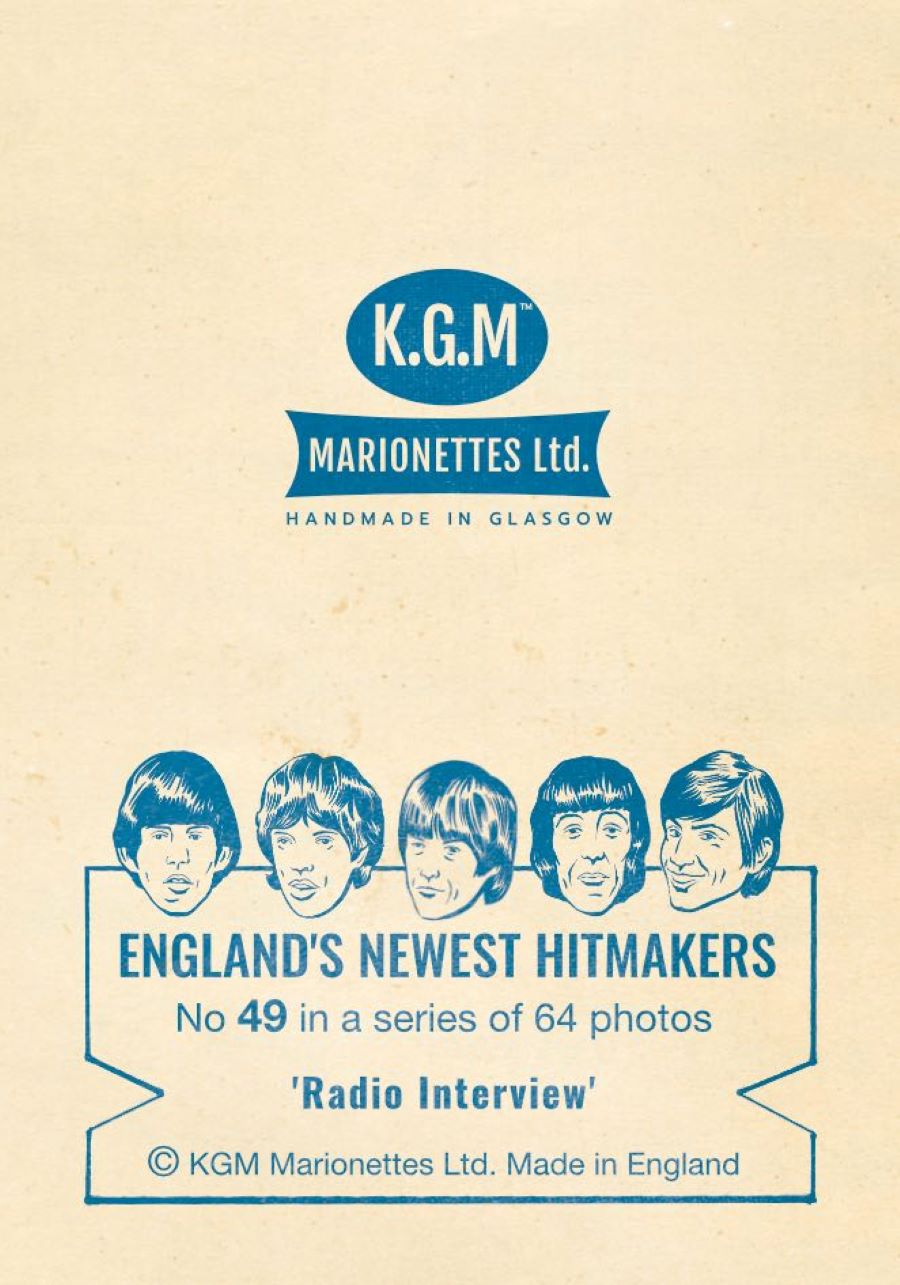
Naturally, we have no desire to infringe anybody’s copyright, so the set will be called simply ‘England’s Newest Hitmakers’ and it’ll be up to the viewer to join the dots.
Because I love all of their albums so very much, it’s difficult for me to say which is my favorite Gun Club album—it’s Mother Juno, but just by a hair—and much easier to pick out my favorite Gun Club song. That would be “Walking with the Beast” from The Las Vegas Story. (“Lupita Screams,” “Death Party” and “The Lie” run close behind.)
“Walking with the Beast” is a motherfucking motherfucker of a song. It grabs you by the throat and and shakes you until you are limp. Patricia Morrison’s rumbling bass, Kid Congo Powers’ feedback-driven power chords, and Terry Graham’s POUNDING drums almost attack the listener. It’s heavier than any heavy metal. For those of you reading this who have never had the pleasure, “Walking with the Beast” is simply the musical equivalent to looking up at the sky and realizing that a violent tornado is about to overtake you.
(I’d have embedded the song here, but YouTube currently lacks even a single upload of the studio version. I direct you then to your favorite streaming service. PLAY IT LOUD.)
When an album starts off that strong, you would think that it’s all downhill from there, but there’s one classic Gun Club winner after another, including two leftfield cover versions. At the start of side two, a skronky snippet of Pharoah Sanders’ “The Creator Was A Master Plan” segues into a plaintiff take on “My Man’s Gone Now,” the widow Serena’s aria from from George Gershwin’s classic opera Porgy and Bess. On paper, that shouldn’t work, but it does, spectacularly so.
I’ve bragged on this blog many times about seeing Gun Club live—one of the best, most exciting live shows I’ve ever seen in a long career of concert going—but what I didn’t realize until recently is that the band that I saw—Morrison, Graham, Kid Congo—didn’t last but a few more shows, when drummer Graham snuck out in the middle of the night and returned to America after discovering he wasn’t going to be paid for the tour. The incarnation of the Gun Club that recorded The Las Vegas Story, that everyone tends to see as the most iconic era of Jeffrey Lee Pierce’s revolving door of a band, lasted but a single year.
I got to see one of my all-time favorite bands, supporting one of my all-time favorite albums, but just by the skin of my teeth. Five days later Graham would leave the band, for the third and final time.
I asked The Las Vegas Story‘s producer Jeff Eyrich some questions via email.
How did you get involved with the Gun Club?
I’m from L.A. and was aware of the band from the L.A. scene at that time — from working with (producing) the Plimsouls and the Blasters. I had never seen the Gun Club play live but I knew them by name, maybe heard a track or two on the radio. I got a call from Ron Faire who was a young A&R guy at Chrysalis records and he asked if I’d be interested in producing Gun Club — that he really didn’t understand or ‘get’ their music but that they sold a lot of records overseas. He added that the budget was minimal and that he’d like to get it done in 2 weeks, start to finish. I was between projects at the time so I met with Jeffrey Lee and Kid Congo to get an idea of what they wanted to do, what the songs were — they played me some stuff on a cassette — I liked what I heard and I was impressed by how serious Jeffrey Lee was about his music, his vision, and how supportive Kid was about helping Jeffrey Lee see his vision through. I sensed that there was somewhat of a ‘risk’ factor involved but I was up for the challenge, especially given the budget and time constraints but I felt we could pull it off.
What was your take on Jeffrey Lee?
Jeffrey Lee was very serious about his music and he had a vision for the record… so much so that I felt that my role as producer on this project was basically to facilitate Jeffrey’s vision — for me to set the stage, make sure everybody was comfortable in the studio (sightlines were very important since this was a live band), that the sounds were happening right away so we could capture the spontaneity of the moment, and to keep things moving forward. We recorded the record at Ocean Way’s studio B. I mention ‘sightlines’ being crucial, as studio B is like two basketball courts side by side separated by a floor-to-ceiling glass wall. I had Terry and Patricia on one side and Jeffrey Lee and Kid Congo on the other. Jeffrey Lee and Kid had their amps turned up real loud.
We had one pre-production rehearsal that was somewhat chaotic but the one thing I took from it was how solid, simple and groovin’ Terry and Patricia were as a rhythm section. I knew from experience that whatever Jeffrey Lee and Kid did on top of that rhythm section we were going to have something that felt great.
What was he like to work with?
I found Jeffrey Lee, and everybody in the band — Terry, Patricia, and Kid Congo — very easy to work with… reasonable, communicative, respectful. No problems… on time… there to work and to make music.
What was the drug situation like in the studio?
I wasn’t aware of any drugs in the studio. The vibe in the studio was really good, the sounds happening (thank you mark ettel) — everything was happening so easily. Any drugs would’ve just fucked that up. That being said… I don’t do drugs and didn’t at that time so maybe I was just oblivious but nobody seemed drunk or stoned to me.
Did everyone realize at the time what a seminal album had been created?
I think that everybody was happy with the result and that everybody hoped for the best for the record — mission accomplished — on time and on budget. Maybe not the kind of record Chrysalis was adept at promoting, unfortunately. After I finished the mastering and turned the record in I was off to the next project — I believe it was T-bone Burnett’s Proof Through the Night— and I lost touch with the band.
But I remember about six months later running into the Gun Club in Paris — they were on tour over there — and they invited me to the show. I went and wound up mixing their sound that night. It was crazy, loud, and primal… but really good.
This performance was taped in Newcastle on October 19th, 1984 for ‘The Tube’ and is probably the best video representation of this short-lived classic Gun Club line-up
The new “super deluxe” expanded reissue includes a DVD of ‘1984 Home Movie: The Gun Club On The Road’












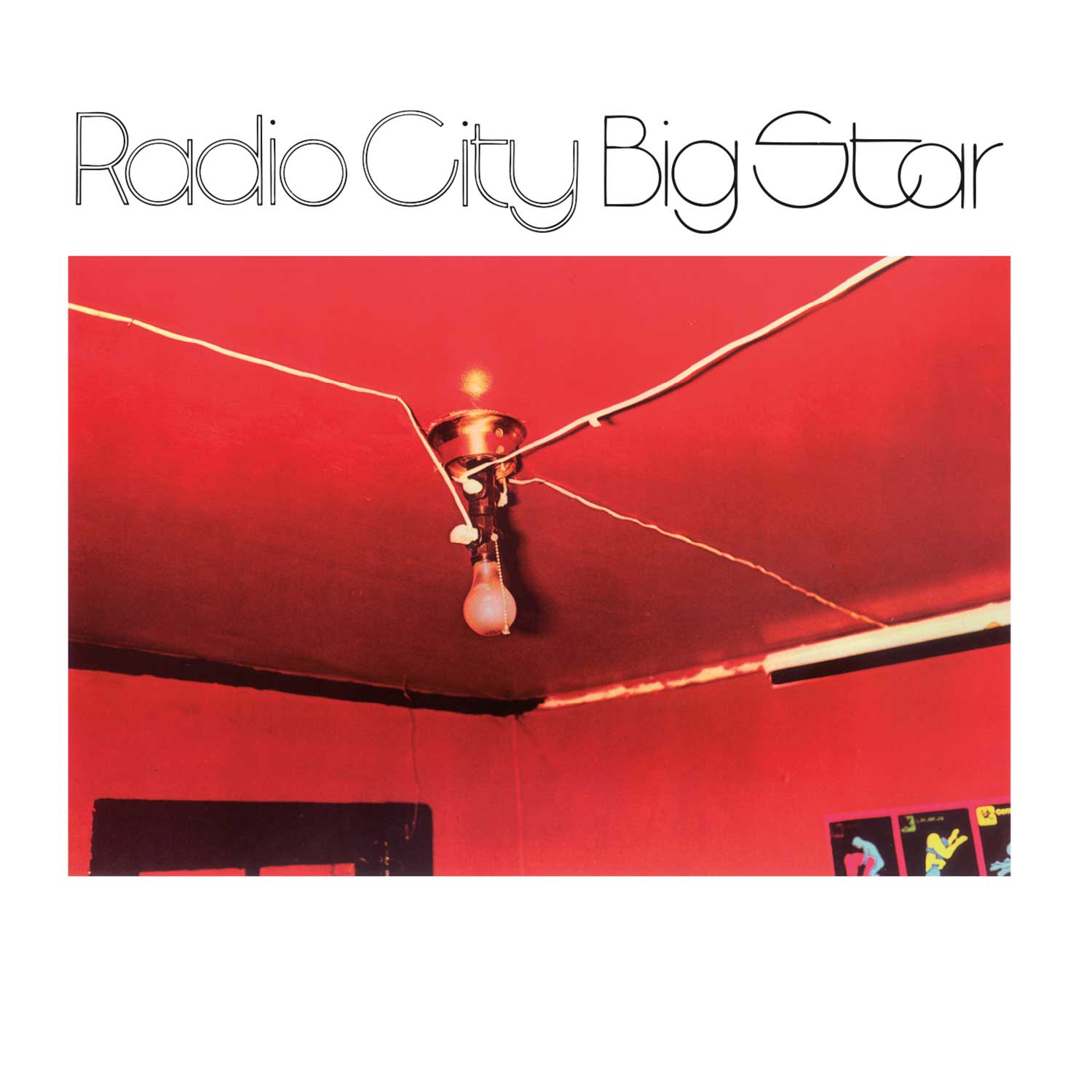
 albums released in the 1970s, I’ve always had a soft spot for
  . It’s the first one I bought, and I instantly fell for the tight-yet-loose, catchy rock ‘n’ roll embedded in the LP’s grooves. Years after becoming a huge fan of the band, I was surprised to discover that three of the songs on Radio City aren’t really Big Star at all.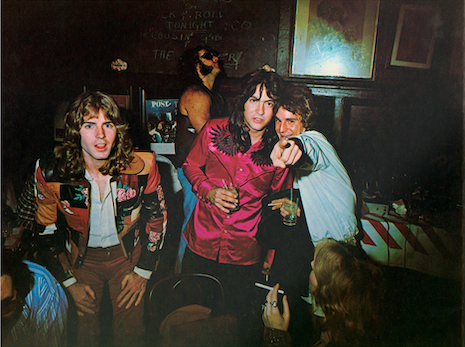
 )
)
 , Radio City (released in early 1974), wasn’t properly distributed, playing a large role in its failure. Their final LP,
  (a/k/a Sister Lovers), is comprised of material taken from a Chilton/Stephens project. Released years after it was recorded, it’s a Big Star album in name only.