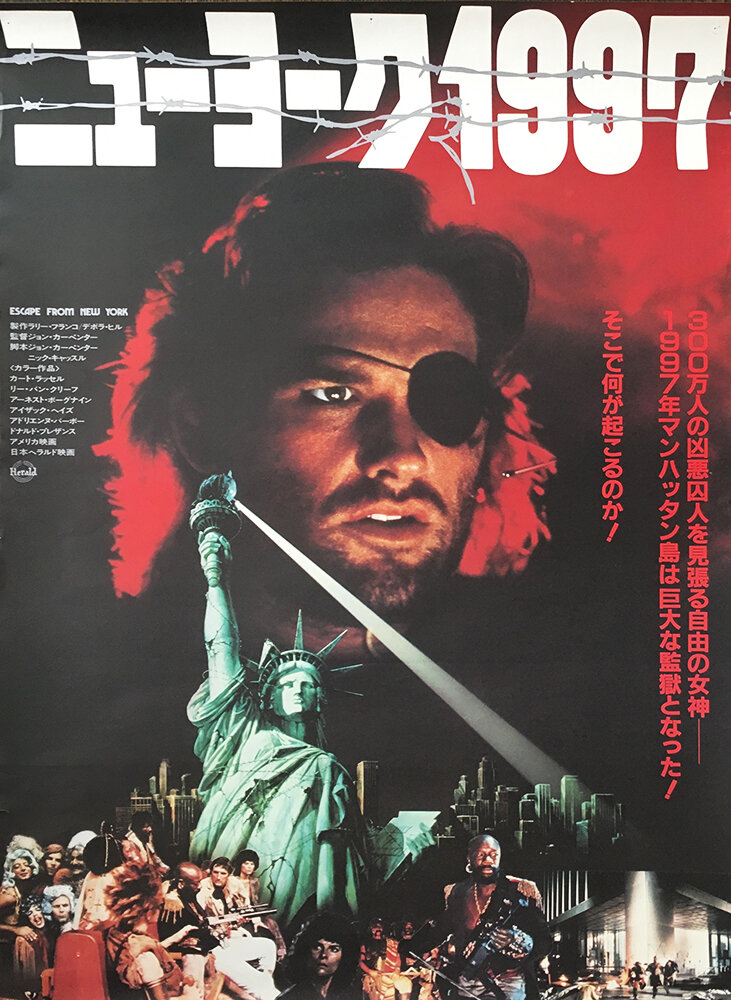
The world wasn’t supposed to end like this. Not if you were brought up, like we were, on the most deliciously lurid horror and exploitation films of the 1960s - 1980s. As a global society, we’ve been bracing for nuclear annihilation since 1945. Whatever was left of civilization would crumble into scattered, desperate pockets of humanity, mentally and physically scarred, and as depicted in the smash-hit Australian Mad Max trilogy, and the subsequent wave of cheaper, wilder Italian post-apocalyptic ripoffs like Warriors of the Wasteland (aka New Barbarians, 1981), traffic laws and vehicular safety regulations would become a distant memory as aggro alphas battled for precious petroleum to fuel outlandish road-machines used to subjugate the weak, who could look forward to imprisonment, slavery and rectal trauma at the merciless hands (and wangs) of sneering brutes in scavenged ensembles of Folsom Street finery. And that’s if a new breed of fiendishly clever mutated super-rodent didn’t rise from the ruins of a decimated metropolis (or the Cinecitta Studios backlot) to finish off you and your punked-out pals in a variety of unpleasant, micro-budget ways, as in Bruno Mattei’s 1984 Rats: Night of Terror.
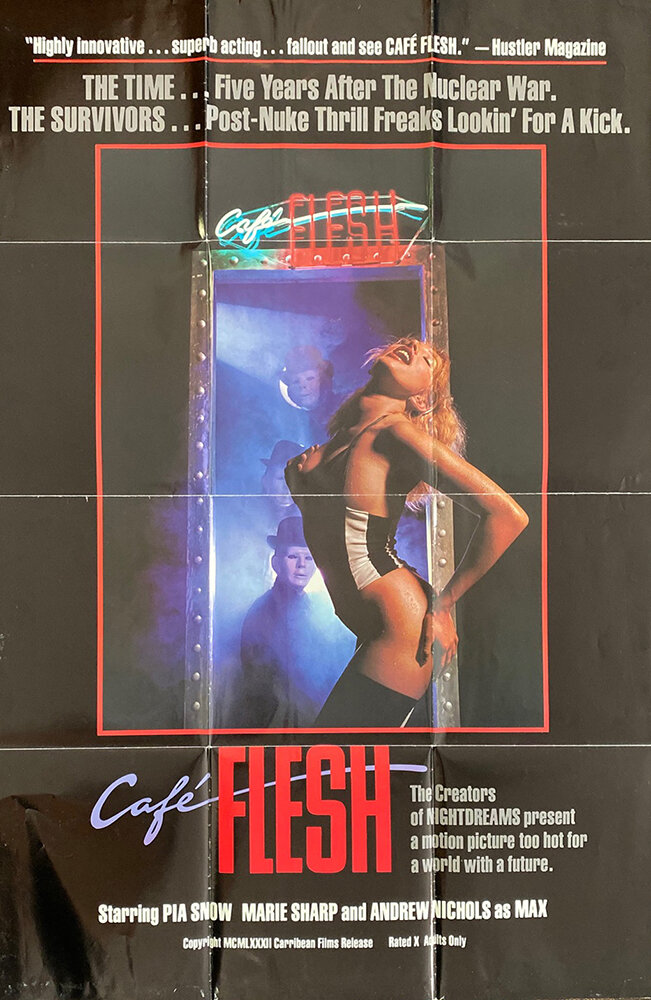
“Social Distancing’ was taken to then-new and overheated heights in the 1982 Stephen Sayadian/Jerry Stahl cult classic Cafe Flesh. In this remarkable, highly stylized bone-bender — part-Cabaret, part-MTV, part-porno chic — after the ‘Nuclear Kiss,” 99% of the population cannot touch another person without immediate and severe nausea, so the remaining 1% — including studly circuit-star Johnny Rico (Kevin James — not the one from King of Queens) are governmentally conscripted to perform together in subterranean cafes for the huddled, irradiated, voyeuristic masses (including a youngish Richard Belzer). Nick and Lana (fan fave Michelle Bauer aka Pia Snow), “the Dagwood & Blondie of Cafe Flesh”, find their loving asexual coupledom threatened by a sordid secret — Lana’s actually sex positive — and yearning for some good, hard, old-fashioned nookie!
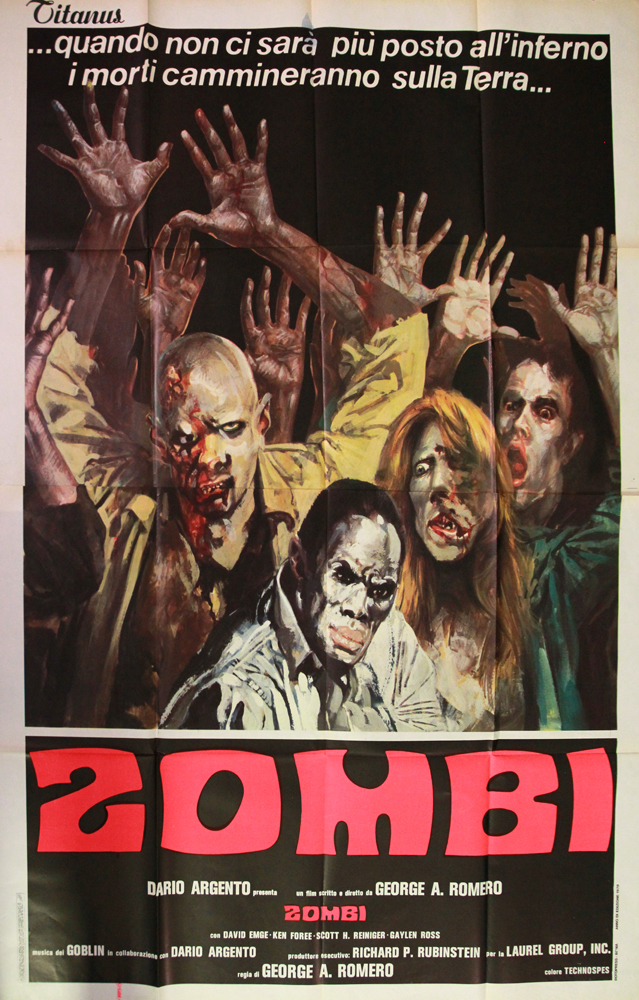
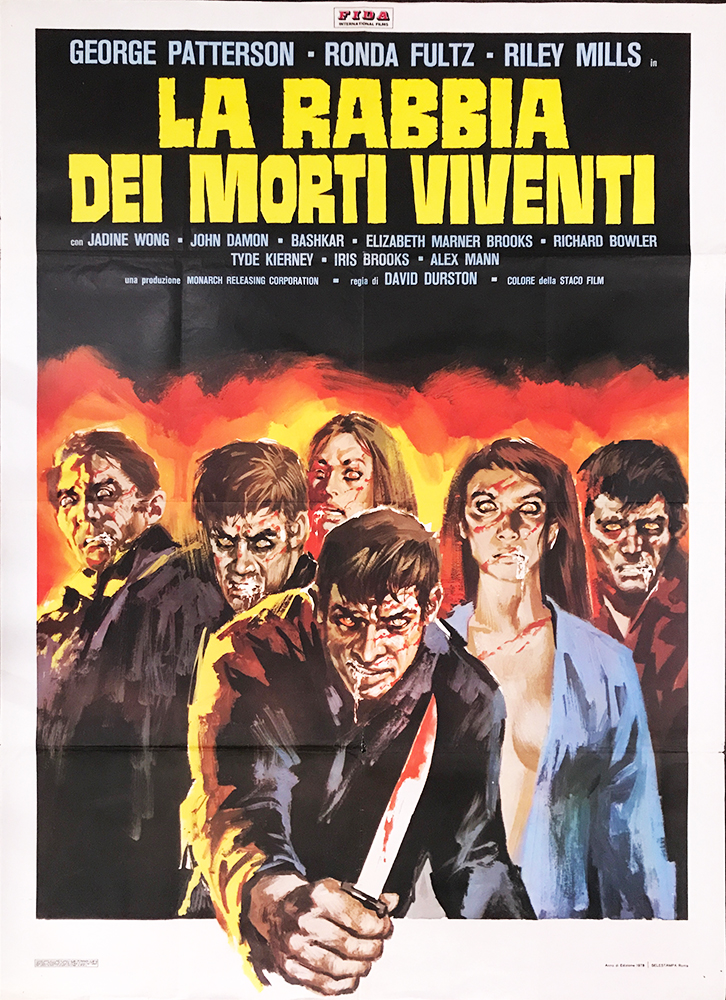
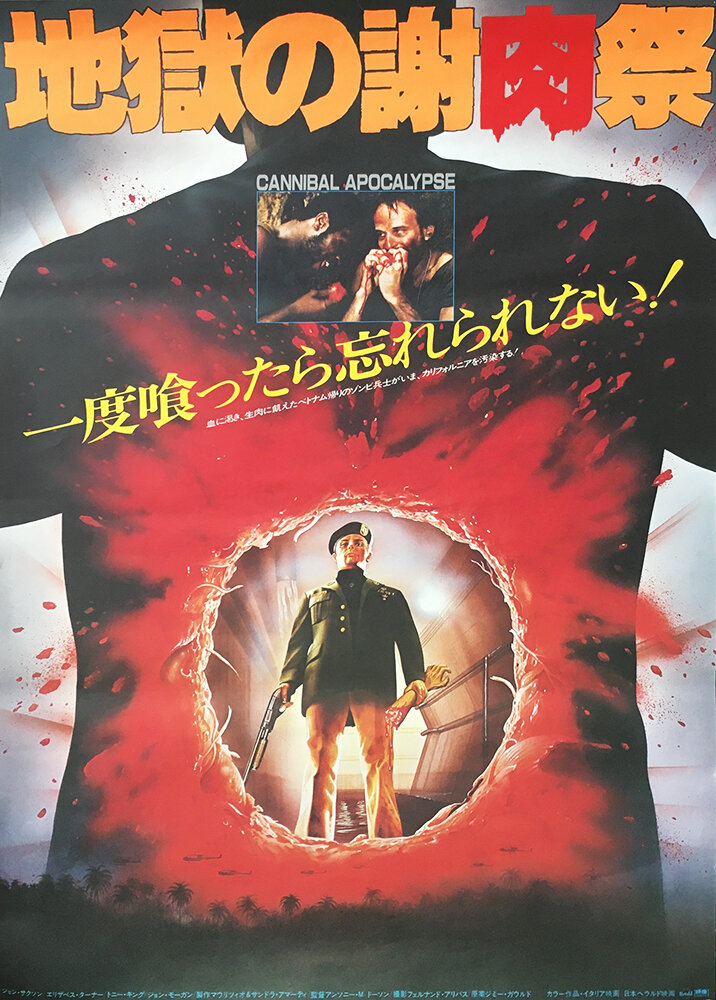
Before COVID-19 we were, of course, familiar with the concept of a pandemic — but a different, more dynamic, unambiguous, way less meh pandemic, rendered in clear black and white, with accents of dripping blood-red. George Romero set the new bar in 1968 with Night of the Living Dead: the at-risk demo was limited to fresh corpses, who promptly rose up and sought out healthy humans to consume — an army of indiscriminate cannibals, unstoppable short of fire or a bullet to the head. Romero cemented the modern zombie template in his stunning full-color sequel Dawn of the Dead (1978), Tom Savini’s jaw-dropping gory makeup effects compelling young horror fans to evade the unrated film’s self-imposed “No One Under 17 Admitted” by any means necessary. Produced by Euroshock maestro Dario Argento, Dawn did especially phenomenal box-office in Italy, igniting a Spaghetti Splatter subgenre kicked off by Lucio Fulci’s expertly crafted, pulpy, EC Comics-flavored Zombie (1979) and Antonio Margheriti’s 1980 Invasion of the Flesh-Hunters (aka Cannibal Apocalypse).
With the steady onslaught of gut-munching imports eagerly savored at local grindhouses, on pay-TV channels after dark, or as VHS and (briefly) Betamax “Video Nasties,” in 1985 Hollywood responded with glossier, widely released fare like Dan O’Bannon’s Romero-unrelated Return of the Living Dead, Fred Dekker’s retro revenant rodeo Night of the Creeps, and Tobe Hooper’s Lifeforce, a Cannon/UK co-production that detailed in big-budget, MPAA-baiting graphic detail a world apocalypse via extraterrestrial vampires led by foxy, frequently naked Mathilda May. It’s amassed a heavy cult following since bombing at the US box office — if Cannon had used any of the skull-frying Italian poster designs, things could’ve been quite different.
Let’s not forget that being dead was hardly an iron-clad prerequisite for succumbing to contagion — in a dizzying, nerve-shredding array of terror triumphs rampaging across screens both large and small, characters in surgical masks weren’t speculating about coughing Whole Foods co-shoppers. Plague victims wore it loudly, proudly and homicidally, whether infected by tainted meat-pies in the gleefully disgusting shocker I Drink Your Blood (1970); a sexually transmitted parasite in David Cronenberg’s body-horror debut They Came From Within (aka Shivers, 1975), or a stinger concealed in the silky armpit of Marilyn Chambers in his equally ferocious 1977 follow-up Rabid; or guzzling bargain-priced hooch from a Skid Row liquor mart that’s not only corrosive to the liver… we get liquefied, exploding winos, as it wipes out Street Trash (1987) more efficiently than a fun-hating, Deuce-phobic NYC mayor.
For many of us, being trapped at home these many weeks has triggered re-decoration impulses, and now Dangerous Minds’ favorite original movie-art webstore, WestgateGallery.com, has it made it frightfully easy. All of the posters seen here, as well as their entire massive international inventory of rare gems, are now 50% off for a limited time only, by using the discount code CRUELEST20 at checkout… and as part of their biggest-ever summer sale, they’re offering further incentives to sweeten the deal: spending various amounts ($400/750/1000) unlocks escalating bonus store credit ($100/250/600) — meaning $1000 buys you $3200 in list-price wall-candy. Displaying any of these posters is the perfect way to commemorate surviving COVID-19… and if we’re all doomed, then why the hell not splurge?
Julien Nitzberg. Shit-stirrer, rebel director, artist, punk rocker and genius are some titles bestowed on this forward-thinking, back-slapping smart-ass. You might know him from his earliest documentary on Hasil Adkins—lunatic rockabilly one man band-he thought the guy in the radio made the music that way. Hasil sang about beheading his girlfriend so she “can eat no more hot dogs.” At that time he met Adkins’ neighbors the White family, who were the focus of his next documentary, the VHS cult sensation The Dancing Outlaw, about Jesco White, hillbilly clog dancer and Elvis impersonator. If you added up all the views just on YouTube of the different clips of this film alone it adds up into the millions.
Fast forward to 2009, Johnny Knoxville and Nitzberg make the cult hit The Wild and Wonderful Whites of West Virginia. In between these Nitzberg did many other projects Like Mike Judge presents: Tales From the Tour Bus and the controversial The Beastly Bombing operetta, an equal opportunity love/hatefest about, well…the subtitle of the operetta is “A Terrible Tale of Terrorists Tamed by the Tangles of True Love,” if that helps. You can read about it here.
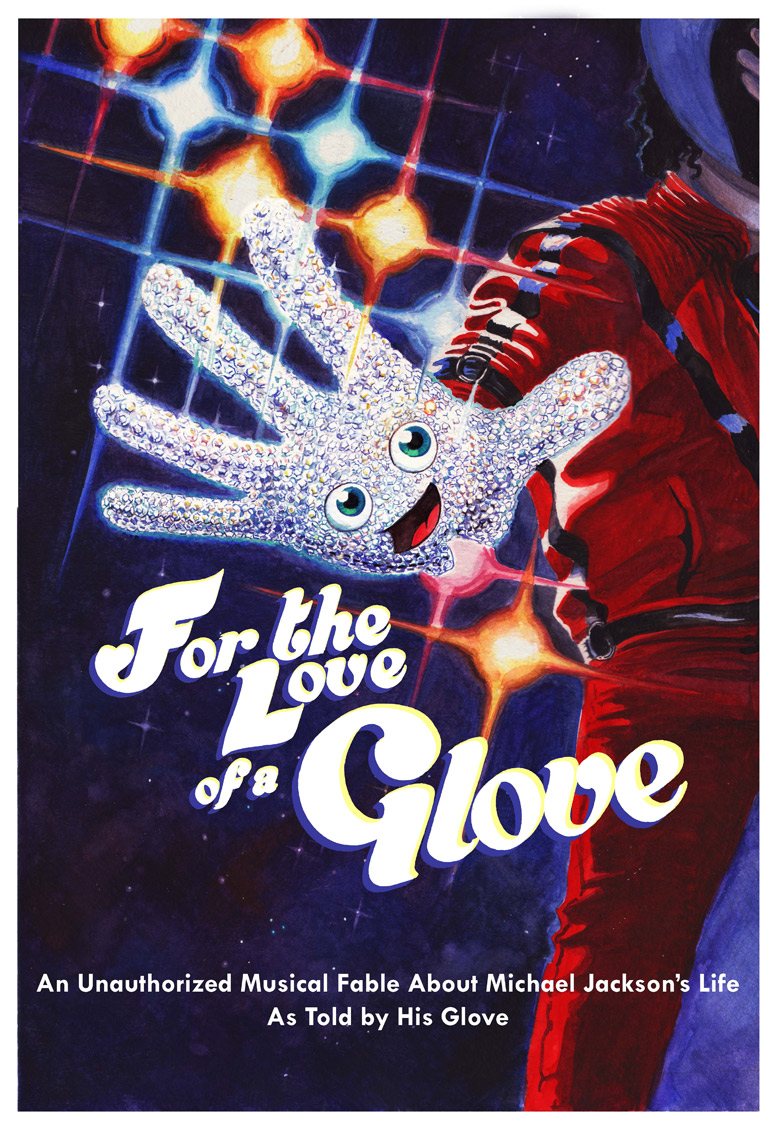
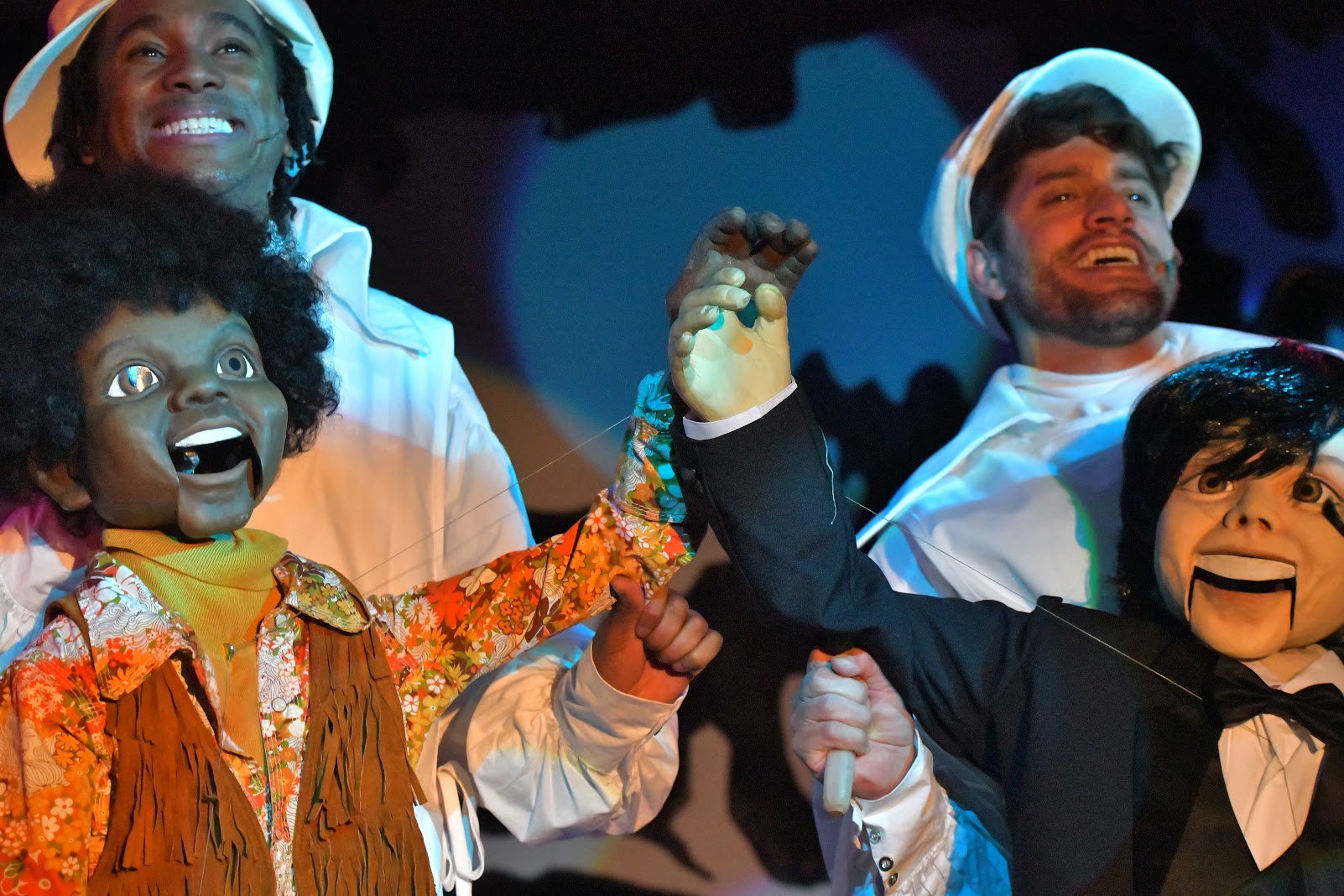
All I knew about For the Love of a Glove going in was Julien’s history and sense of humor and that it was about Michael Jackson. That alone is at least a Godzilla’s worth of possible satiric destruction in the hands of Nitzberg, and that’s putting it mildly! It seems all of MJ’s bad behavior is blamed on aliens that look like glittery gloves who come to take over humanity. Oh did I mention it’s also a musical? And a puppet show? With life-sized puppets? The main one being Donny Osmond, Michael’s mortal enemy? There’s even one of Corey Feldman! And Emmanuel Lewis!!
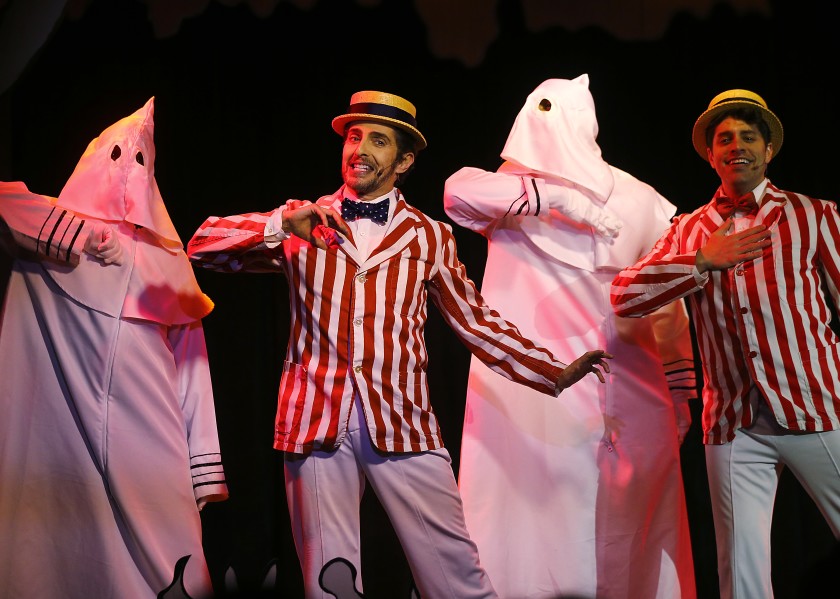
The show is a non-stop comedy clobbering of the senses, with a very small, very talented cast, great original music, cool effects, etc. Most of the actors play as many as four roles, and being that much of the cast is African American it was odd/funny and visibly uncomfortable (to some) when these actors donned white hoods for the big Ku Klux Klan musical show stopper! But if you know Julien…
In these days of modern mass paranoia and casual racism, over-sensitivity and dumbing down of all things, even I had a flash of looking behind me (as I saw others do) and wondering if this was cool to like, who was getting offended, who was laughing, and right then at that moment I realized I have been way more affected by all this modern bullshit than I thought. We need people like Julien Nitzberg to remind and instill in us that it is not only okay, but quite necessary to think, laugh (at ourselves AND at others) and learn.
I spoke to Julien Nitzberg and cast member Pip Lilly about all of this.
Howie Pyro: Okay so why now? When did the idea come to you & what brought MJ to the top of your creative lunacy?
Julien Nitzberg: The initial idea for this show came to me almost seventeen years ago. I was approached by a major cable TV network to write a Michael Jackson biopic. I’ve been a Michael Jackson fan since I was a little kid and watched the Jackson 5 cartoon on Saturday mornings. I tried to find an interesting way to tell Michael’s story, but the later years were just too bizarre and I couldn’t find a normal way to tell it. How could anyone explain Bubbles the chimp, trying to buy the Elephant Man’s bones or sleepovers with kids. It was all too bizarre. I decided that the only way to tell it was to find a surreal way into the story. I pitched them the idea that all the boys and things in Michael’s life weren’t his choices. Instead his glove was an evil alien trying to take over the world who forced Michael to do all the bizarre things in his life. The alien gave him his talent so Michael was forced into doing things that he was severely embarrassed by.
The execs laughed at this idea but then asked me to do the normal version. I knew it would turn out terribly, so I said no. Over the years my mind kept returning to Michael’s life and finally I decided to write my version of his life as a musical with all original music.
I spent a couple of years researching Michael’s life trying to find the most interesting obscure parts to talk about. I decided to have it focus on his religious upbringing as a Jehovah’s Witness. Jehovah’s Witnesses have a really fucked up attitude toward sexuality. They teach that masturbating can turn you gay because as a man you get used to a man’s hand on your penis and want other mens’ hands on your penis. I thought this was hilarious. How did MJ get raised in the religion and then his most famous dance move winds up being him grabbing his own crotch? I then realized he didn’t do the crotch grab, his alien glove forced him to do it!
I also found out more about his rivalry with Donny Osmond. The Osmonds were clearly patterned to be the white version of the Jackson 5. Five brothers singing, dressing similarly. It was creepy. The Osmonds first big hit was “One Bad Apple.” It sounded so much like the Jackson 5 that Michael’s mom thought it was the Jackson 5 when she heard it on the radio.
The Osmonds clearly ripped off the Jackson 5 and what was worse they were Mormons which at the time taught that all black people were cursed with the “Mark of Cain” and were not allowed in their temples. They even taught that if you were black and converted to Mormonism you could go to Heaven but would be a servant to white people in Heaven. It’s some of the most fucked up religious shit you can dream of. They also taught that at the end of days when Christ returns all black people will have the curse of the “Mark of Cain” removed and turn white. Of course, Michael did this in his life so that became a big part of the story. We even have a song that Donny sings to Michael called “What a Delight When You Turn White.”
I felt like now was a great time to do the show. Everyone is talking about how our country has been ruined by fucked up racist and homophobic religions. We deal with one of the clearest cases of cultural appropriation that ever existed - people who belonged to an openly racist church going out and trying to sound like the biggest black music act of the day. It all felt like things that are in our country’s cultural conversation right now.
For those who don’t know you or your sense of humor…there’s quite a few things that many different types of people would/could find offensive…do you think this is a help or a hindrance to the success of the play?
Julien Nitzberg: I have no idea. I love super offensive humor. I was raised on John Waters, Mel Brooks, the Ramones, Dead Kennedys, Tom Lehrer and Monty Python and think those influences pervade For the Love of a Glove. I hope our culture has matured enough that people can enjoy my fucked-up punk rock humor. And who wants to see a non-offensive Michael Jackson musical?
In the play most of the cast is African American and all the cast members play multiple roles. The Ku Klux Klan musical number was hysterical (and obviously not pro KKK) but was it odd to ask the African American actors to don KKK hoods?
Pip Lilly: I think donning the hoods is hysterical. I never felt weird about it. I’m an actor and it’s a costume. Plus, I have the power here. Just wearing it is a radical act that would have gotten me killed 70 years ago. Also, real talk, the Klan deserves to be besmirched and clowned over and over again. Julien does a great job of setting up the racial issues that were the foundation of 1960s black folks.
Julien Nitzberg: Since the Jackson 5 were from Gary, Indiana, I did a lot of research into the history of Indiana. I discovered that in the 1920’s, one third of the white citizens of Indiana belonged to the KKK. The KKK in Indiana had 250,000 fucking members! How crazy is that? 250,000 KKK members just in Indiana! I decided we needed a song about that called “What Is It About Indiana?” Most people think of Indiana being part of the North so that shows how fucking racist, anti-Semitic, anti-immigrant and crazy our country’s always been. I wondered how that would have affected people growing up there so I thought we needed a song about that, contextualizing the fucked up state where the Jackson 5 grew up. It’s a very Mel Brooks number with dancing KKK members. I feel like if you laugh at horrible people you make them into a joke and take away their power. The show only has ten actors. Eight are black and two are white so we ended up needing some of the black actors to play KKK members. I asked the actors if they were comfortable with it and they all laughed. They thought it was hilarious. It was a lot like when Mel Brooks plays a Nazi. You feel a certain power over the oppressors putting their clothes on and mocking them. We had the actors strolling in laughing saying “I finally joined the KKK.” Cris Judd, our choreographer, gave the KKK members in the song all these Bob Fosse-style dance moves so it’s extra ridiculous. They are always rubbing their robes sensually, like it’s a big turn on.
It’s really funny yet disturbing. But it lets the audience know early on this show is going to dive deep into American racism but by laughing at the horribleness of our history we are stealing their power.
My mom was a Holocaust survivor. I lived as a kid in Austria where I went to 5th and 6th grade and got called “a dirty Jew” by one kid there. There was swastika graffiti everywhere in Vienna. For me as a kid discovering Mel Brooks and seeing The Producers was life changing. Instead of being scared of Nazis, it was much more fun to laugh at them. This comic attitude is what I tried to bring to this show with the KKK. I don’t think there is anything that would piss off KKK members more than knowing we have black people wearing their robes, dancing like they are in a Fosse musical.
Any other major influences?
Julien Nitzberg: Another big influence was the Rutles. When I was looking for clever musical parodies to inspire the project there was only one that really stood the test of time and that was Eric Idle’s genius Beatles parody All You Need is Cash starring the Rutles. My two favorite bands as a kid were the Beatles and the Jackson 5. I saw the Rutles movie when it debuted on TV and immediately went and bought the record. In the years since, I almost never listen to the Beatles. But oddly, I still listen to the Rutles record all the time and love them more than the Beatles. When my composing team—Nicole Morier, Drew Erickson and Max Townsley—started working together, we spent a ton of time listening to the Rutles. The Rutles’ songs were as good as the Beatles. They are great pop songs. I wanted our show to do the same thing. I didn’t want the songs to sound like musical theater songs. Nicole said she wanted the songs to sound like they were lost R&B/soul music classics that never got discovered at that time. The composers worked really hard to get that right feel of the times and I think they did it majestically.
Weirdly, a good friend of mine Rita D’Albert (who created Lucha Vavoom) is friends with Eric Idle and I met him at her birthday party. He’d heard of the musical from Rita. He came up to me and said he had a new title idea for the show. I asked him what it was. He dryly said “Rhapsody in a Minor.” I looked at him totally confused and then suddenly I got the joke. It was embarrassing how long it took me. What a genius!
So you’re at this point—and this could be more than enough for what you were going for—and then you introduce a mirror image villain!! So now MJ has aliens and uptight white nerds grinding away at him! What brought the Osmonds up and were you worried Donny might upstage Michael?
Julien Nitzberg: As a kid, I was a giant Jackson 5 fan and every time I heard “One Bad Apple” I was always confused thinking “This sounds too much like a Jackson 5 song.” If you google it, you’ll even see that many people thought it was a Jackson 5 song. So when I started writing the show, I decided to research this. I soon discovered that the Osmonds were consciously created as the white equivalent to the Jackson 5. They were five brothers like the Jackson 5. They’d been a barber shop quartet who sang minstrel songs and then later were the blandest band ever to appear on the Andy Williams show. Suddenly they start sounding like the Jackson 5 and doing Motown songs. They start dancing like the Jackson 5. It’s extra fucked because they belong to a church that teaches the most racist ideology and won’t let black people into their temples. Then I discovered that their transition to being Jackson 5 imitators happened just after they toured opening for Pat Boone! Fuck, that showed me what exactly was happening. In the show we call the process of a white artist ripping off a black artist “Pat Booning” and that’s what they did.
For the more conspiracy-minded, people should note that Mike Curb was involved in the Osmonds’ career producing records by Donny. Mike Curb was a producer who was super right wing and got elected Lieutenant Governor of California with the support of his mentor Ronald Reagan. He’d dated Karen Carpenter. At one point, he was head of MGM records and kicked the Velvet Underground off the label because he considered them too pro-drugs. It would make sense that a right winger would push back against any great black artist by helping create a pale white imitation.
Let’s discuss the second act.
Julien Nitzberg: The second act has Michael as a grown-up. Then he discovers that Berry Gordy has signed Pat Boone. Then Michael and his glove have sex for the first time. Then he gets inspired by that to write “Beat It” and record Thriller. The glove suggests that Michael should be a reverse Pat Boone and play with Toto and Eddie Van Halen.
Then he can’t take feeding the gloves anymore. He invites kids over for a sleepover party. He doesn’t like it and it ends up going on a date with Brooke Shields. His glove gets jealous and starts grabbing his crotch on TV. They have a fight. The gloves decide to kill Michael. The plan is thwarted. The glove gets burnt trying to kill himself so Michael has to masturbate with the audience to save his life. The glove and Michael realize they are in love.
The second act has demented fantasy, but also a ton of history. People don’t realize that Michael only became as big as he did because CBS Records blackmailed MTV into showing Michael’s videos. MTV did not show “Urban Music.” That of course was just a euphemism for any music by black artists. They didn’t want to show “Beat It.” CBS told MTV they wouldn’t let them show any videos by Bruce Springsteen, Billy Joel or the Rolling Stones if they didn’t show Michael’s videos. It’s a really shocking take on how American racism was still awful in the 1980’s.
And so how’s the reaction been (In a literal sense)? Not live, but reviews. Misunderstandings from simple minded types that can’t get past the sight of seeing a hood stuck on a black person by a white guy etc…
Pip Lilly: My friends like the show. They seem to love the music, the comedy, and the spectacle. People are genuinely entertained, which can only help people appreciate the satire.
Julien Nitzberg: All our write ups have been great. The reaction has been great. We’ve had nights where it was all UCLA students who had not grown up with Michael Jackson. They were gasping and laughing the whole time. Despite the rumors about millennials being easily offended, the people who seemed most offended were in their 30s and 40s. But it’s been 95% positive and 5% super disgusted which I think is a great ratio.
Great news! For the Love of a Glove has now been extended until the end of March! Get tickets and info here.
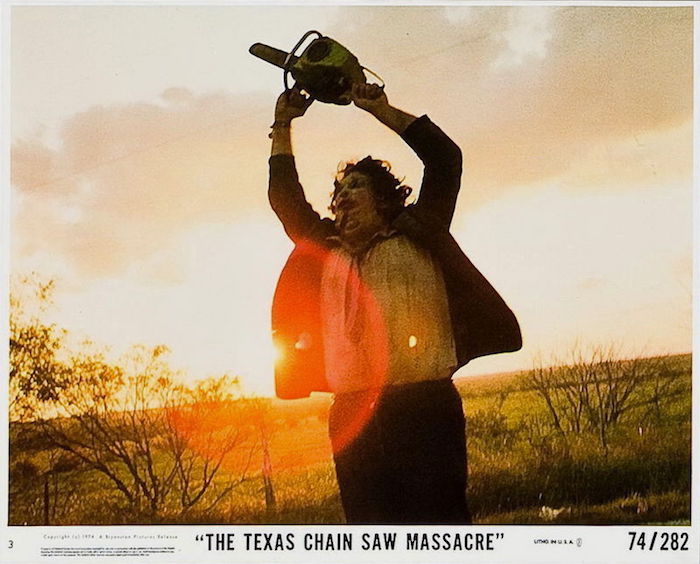
I guess there’s not much more to be said about The Texas Chain Massacre that hasn’t already been given. One of the most influential seventies American films after Star Wars and perhaps The Godfather and Jaws. What I remember of it at the time of its release has little to do with the film but everything to do with expectation and rumor.
I first heard of the movie in the schoolyard. I was too young to go see it and living in Scotland meant if you didn’t see a movie on release then you had to make do with the semaphore of rumor, exaggeration and bullshit. Which is the part that kinda interests me because why would a junior high school kid in Scotland hear about The Texas Chain Massacre unless it was something important? There was no Internet, no Google, no streaming services, no mobile, none of that stuff. Information was read in comics, newspapers and magazines or recieved second, third or fourth hand from friends who had a relative in Canada or went for a holiday to Florida where there was a bad frost and all the oranges on the trees turned into fruit sorbet. That kind of thing.
The first story I heard about this particular movie came (I think) from a guy called John Scott, who claimed some of the actors genuinely died during the making of the movie and there was this guy called Leatherface who was a butcher and he was still out there dancing with his chainsaw in the sunlight.
I had no idea what this meant, but the name “Leatherface” implied something utterly perverse and deranged. Was it a gimp mask? Or, maybe an Ed Gein flesh mask? We all knew about Ed Gein as he was our parents’ bogeyman because of Psycho, a film one relative described to me as “the wickedest movie ever made.” Gein was a real life monster like Ian Brady and Myra Hindley were real monsters. We all knew something about the horrific things they had done. But then again, what we knew of Gein was mainly through exaggeration and myth. In fact, half the stories I heard about the old cross-dressing cannibal had nothing to do with him and more to do with the speaker’s imagination, which in comparison to the actual crimes—or even those of Hindley and Brady—were utterly anemic.
The second tale I heard about The Texas Chainsaw Massacre was a reiteration of the first, that the film was based on a true story. As it turned out this was what the film actually claimed, true events which took place on August 18th, 1973. But as filming on this movie finished four days before the date given in the opening titles this was unlikely, if not impossible. That was director Tobe Hooper’s intention. He considered America during the Nixon years to be riddled with fake news and propaganda pumped out by the government.
The third tale was something to do with a guy who used two teen girls to source young boys to rape, kill and torture. This made the film seem far more debauched and unsavory. We were skeptical about this, which shows you how our pre-pubescent minds had some kind of warped standard where torturing, killing and eating people was okay, but raping, torturing and killing people—especially boys—was a step too far. Go figure. But as it later turned out, this was a tad closer to the truth as co-writer Kim Henkel had:
...noticed a murder case in Houston at the time, a serial murderer you probably remember named Elmer Wayne Henley. He was a young man who recruited victims for an older homosexual man. I saw some news report where Elmer Wayne ... said, “I did these crimes, and I’m gonna stand up and take it like a man.” Well, that struck me as interesting, that he had this conventional morality at that point. He wanted it known that, now that he was caught, he would do the right thing. So this kind of moral schizophrenia is something I tried to build into the characters.
The final story of note was the one where someone said The Texas Chainsaw Massacre was so horrific that it had been banned. This happened to be true, well at least in certain countries, but we didn’t know where and why or how the film had been banned. It was just left to our imaginations to ferment the worst possible scenarios as to what the film was actually about.
It was more than a decade before I got to see the film and thought it well-made, clever, and entertaining. Though I guess I would have paid top dollar to have seen the movie my fevered imagination had concocted all those years ago.
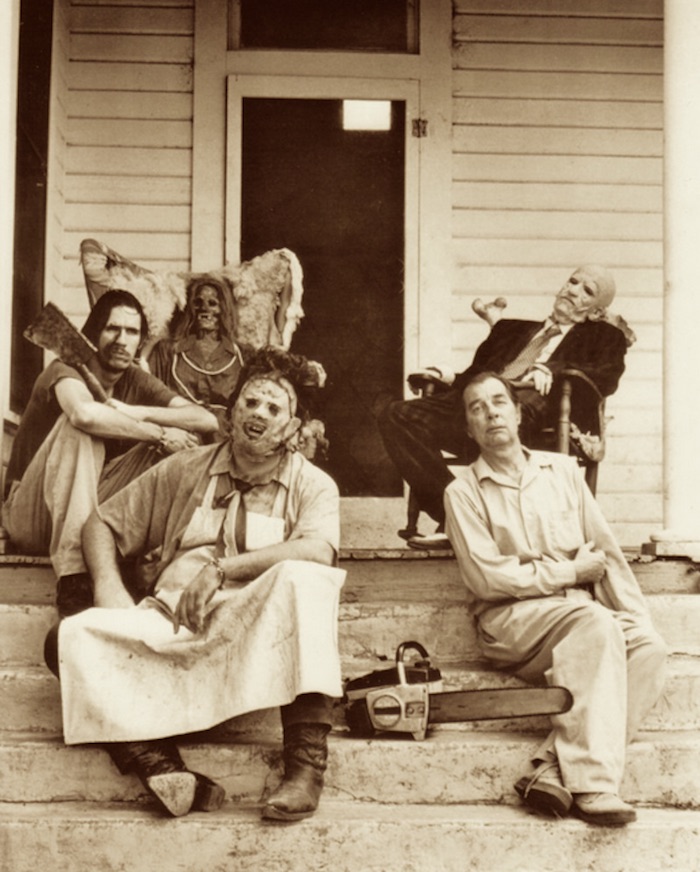
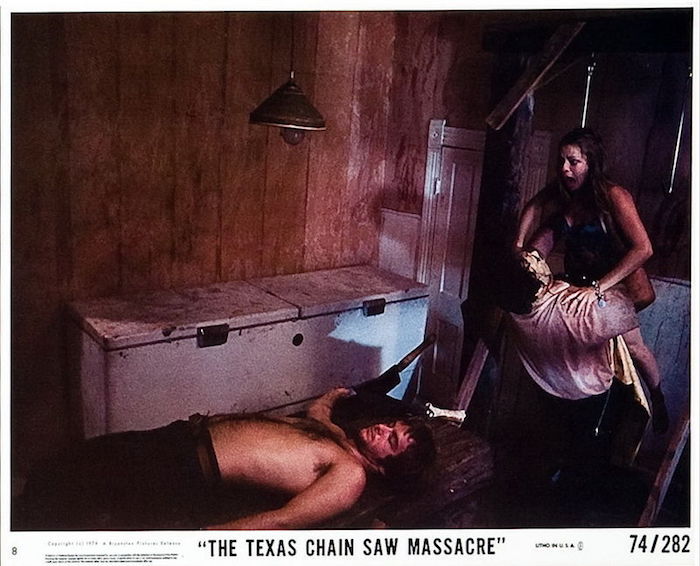
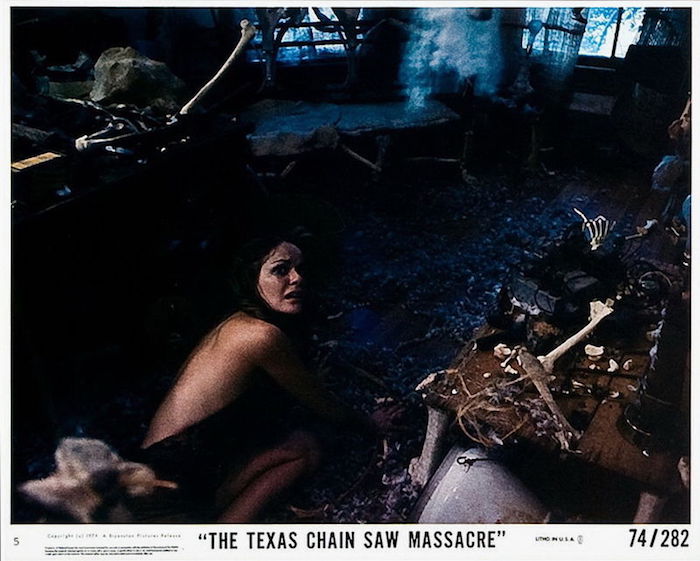
More snaps of the infamous cinematic cannibal family, after the jump…
Do you watch horror stuff faster than Netflix churns it out? Do you possess, down to the most minute detail, the know-how to take out a zombie, a vampire or even a werewolf? Have you painfully experienced the axiom that one should always tie up the boots FIRST and THEN the corset? Would your garage make Paracelsus green with envy? Neighbors curl up in a fetal position every time you pump up the volume?
Perfect!
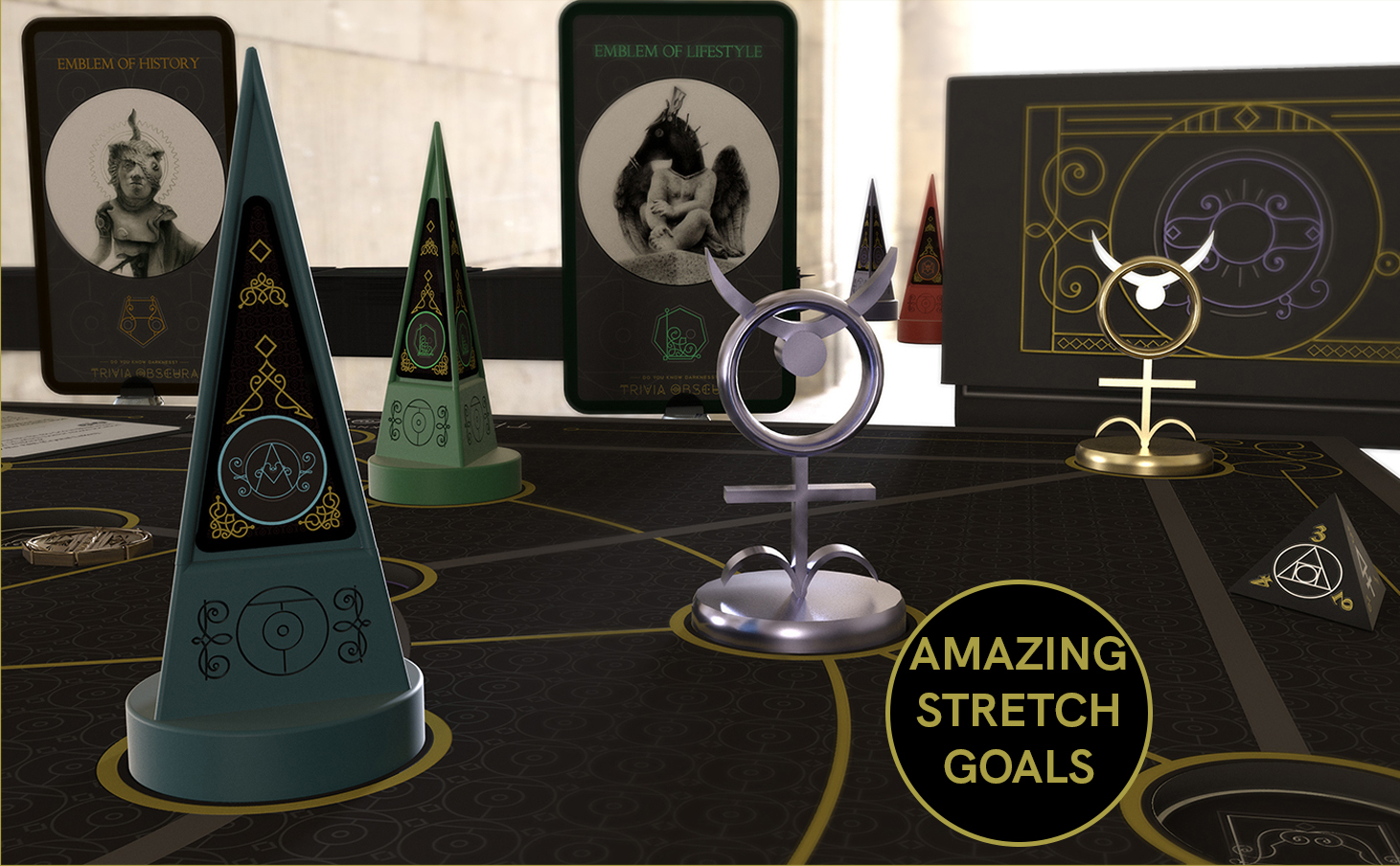
Trivia Obscura™+Do You Know Darkness?+ is the board game that allows you to bask in the glory of your dark existence and… rub your poser friends’ noses in it!
Cinema, music, video games, science, history, lifestyle, literature, the occult and many, many more carefully selected topics that flirt with the darkside, giving you all the juicy leftfield bits of info you crave. They all meet on the board of Trivia Obscura™, the first game of knowledge and strategy for lost souls!
Broadly speaking the game looks to me like a goth “Trivial Pursuit.” Is that fairly close to the mark?
Not at all!
You got it right that Trivia Obscura™ is a game based on knowledge, so you do answer questions in order to win. And you also got it right, that every question featured in the game has to be “dark”—in the general sense of the term. But Trivia Obscura™ is not just a gothic trivia game! A completely different approach towards question building has been taken. We don’t care about useless name dropping and dry facts, and we are sure that our players don’t either. So every theme presented is not just a plain old question that requires a boring answer, but a topic that is carefully selected to be interesting and intriguing, to make you go out and read more about it. Learning interesting stuff is at the heart and soul of Trivia Obscura™.
Question: Around 1232, Pope Gregory IX released a papal bull titled “Vox in Rama,” which condemned the contemporary surge in devil worship. Millions of people died the following years, because in this bull, the Pope made a connection between the Devil and ...?
Answer: Black cats. The bull mentioned that black cats were used in devil-worshipping rituals, and it inspired people to kill thousands of them. That triggered an upsurge in the rat population, which in turn brought about the Black Death.
But not everything has to be so serious. Life is a game that is not always fair and neither is Trivia Obscura™. That is why we decided to make the gameplay a bit more… interesting. We introduced the Carta Obscura cards which make Machiavelli strategists out of the players. Unlike mainstream trivia games, where the one with the most correct answers wins, in Trivia Obscura™ the players are encouraged to grab-stab-steal—or in other worlds use strategy—-and not rely only on what they know. But that’s not all. Trivia Obscura™ is also a territory building game, in which you strategically build your empire on the board, blocking other players as you expand. In order to win, you have to use your wits. So it’s a trivia/strategy/territory-building game. The result is amazing, and you get a unique gameplay every time you play!
What sort of dark knowledge a player would need to smite the competition? Give me some examples of the questions the game asks.
Darkness is in everything, and people that tend to shy away from it will be surprised on how much they know, and how interesting the things they do not know are!
There are six different categories in the game—called Houses—with two more Houses to be unlocked as stretch goals. Some Houses are more popular such as the House of Blood, which is clearly for those into horror, splatter movies, scary literature, and creepy stories. House of Music is targeted towards a goth/metal/punk audience, but not exclusively. Madonna, Prince, Niccolo Paganini, they all have their special “dark” sides, too and Trivia Obscura™ brings them out. House of the Occult is a place where if you know your Wicca from your alchemy you can’t really go wrong! Also being attentive to all those scary stories that your grandparents used to read to you to keep you well behaved, might help. Other Houses, such as the House of Science, History, the Arts, Death, and the House of Lifestyle, all bring out something dark in their respects.
For example, if you know the name of the clown in Stephen King’s IT, go for the House of Blood. If you can name all of the seven deadly sins, the House of the Occult is right up your street! Do you know which is the base ingredient for a zombie cocktail? Then the House of Lifestyle should be your first choice. House of History is for those who know the real name of Count Dracula, and House of Science for those who know the name of the natural substance that gives our skin and hair its dark color. Oh, we almost forgot, those of you who know how many of the seven wonders of the ancient world were tombs won’t feel lost in the House of the Arts. Goths and metalheads will eye up the House of Music, but do they know what a musical composition written for a funeral mass is called? But the main question remains in the House of Death: What did the deaths of King George II, Catherine the Great and Elvis Presley all share in common? And most importantly: can you name the term that typically describes conventional sex or sexual behavior that involves sex that does not include elements of bondage, sadomasochism or fetishism? (Answers below)
In contrast to other trivia games, in Trivia Obscura™ the player can choose which House to play under, the category that fits them the most. The result is tons of fun, where people struggle to win, but their opponents keep on blocking them. Chaos on the board, and that’s what it’s all about!
What is the main concept driving Trivia Obscura™?
Humanity, from ancient times, has flirted with the dark and the macabre, mainly out of fear towards the unknown, a way to come to terms with the idea of death. With Trivia Obscura™ we’ve taken a somewhat different approach. We do not bring the fear of the unknown to the fore, but we approach the dark via learning about it. We’ve gone to great lengths to ensure that all the themes in our game cast light in the shadows, and positively promote creation. We don’t want to fill people with sorrow – well unless someone gets sad after learning what caused the bubonic plague or about the life and crimes of Gilles de Rais! Knowledge is power, the purest and most important form of power there is. It gives us the ability to tame our own lives and see the world we inhabit in a positive way. It helps us accept the things we cannot change and urges us to change what can be! Knowing about the innate order of the universe helps us approach it without fear, and with love towards nature and creation. We believe that you cannot really love life unless you respect it as a whole – and death is part of life, destruction part of creation, there is no light without a shadow, and to realize all this, is a magical thing in itself. We hope Trivia Obscura™ to be a celebration of this realization!
How do you play it? And how do you win the game?
First, you light up the candles—put Hellraiser on the TV, the Sisters on the stereo, and pour some absinthe in your glass—or anything, just as long as it helps bring out your dark side. This is a very important first step! The player with the blackest attire goes first. Even socks are included in the count! You choose which House you want to play under, you roll the die, and follow your path on the board, aiming for your House spots. For each correct answer in your House, you place a ring marker element on the spot. Once a spot is fully claimed, none shall pass over it, but you. Falling behind? Unleash your inner Machiavelli by using the Carta Obscura and backstab your way to victory! Show no mercy! Win the game by fully claiming all three spots that belong to your chosen House and then crawl your way back to the Dungeon Market where the Crown of Darkness is yours!
Take a look for yourself; Trivia Obscura™premieres on Kickstarter on October 29, 2020!
It is important to note that Trivia Obscura™ is an indie project and a labor of love and hard work. It will mainly go through Kickstarter, printed in a small collectible run. If it is not funded, it will be forever stuck in limbo, and we will all be doomed to play mainstream trivia games, with questions on the reproductive cycle of the Galapagos tortoise! So boring!
There is nothing more to add but…please support Trivia Obscura™on Kickstarter, and… unleash darkness on your tabletops!!!
ANSWERS:
Answers: 1) Pennywise 2) Pride, greed, lust, envy, gluttony, wrath, and sloth. 3) Rum. 4) Vlad Tepes, (Vlad the Impaler, Prince of Wallachia). 5) Melanin. 6) Two. The Great Pyramid of Giza and the Mausoleum at Halicarnassus. 7) Requiem. 8) They all died in the toilet. 9) Vanilla sex.
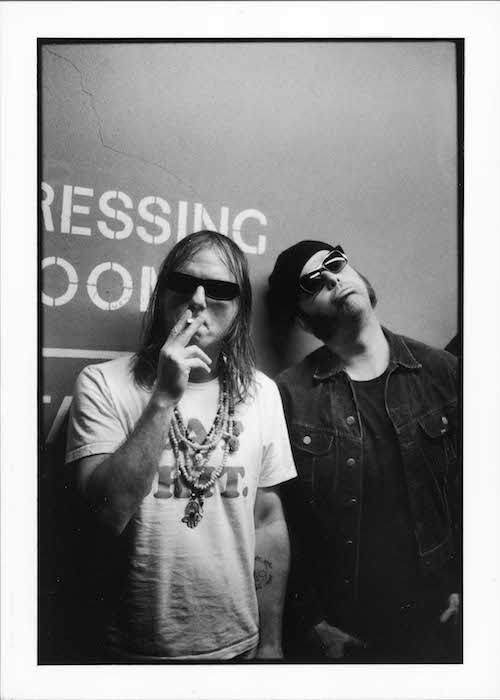
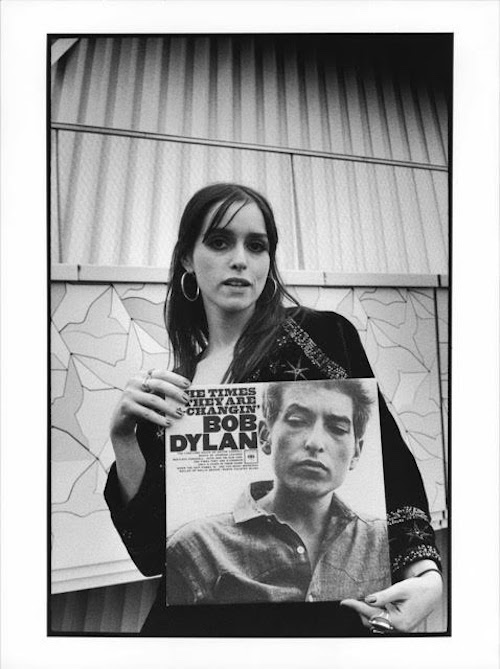
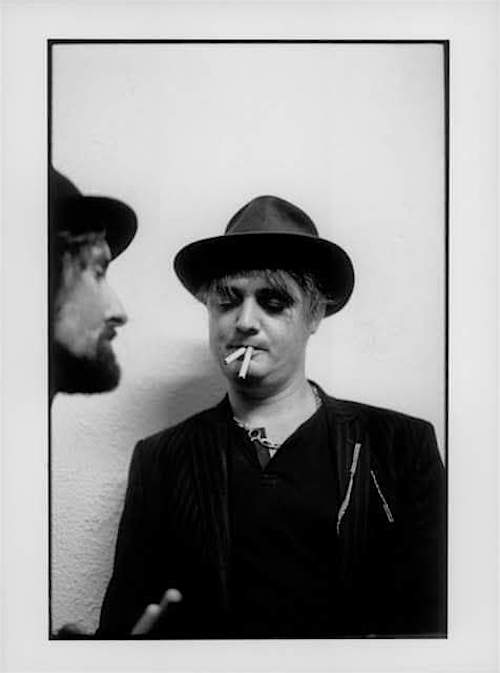
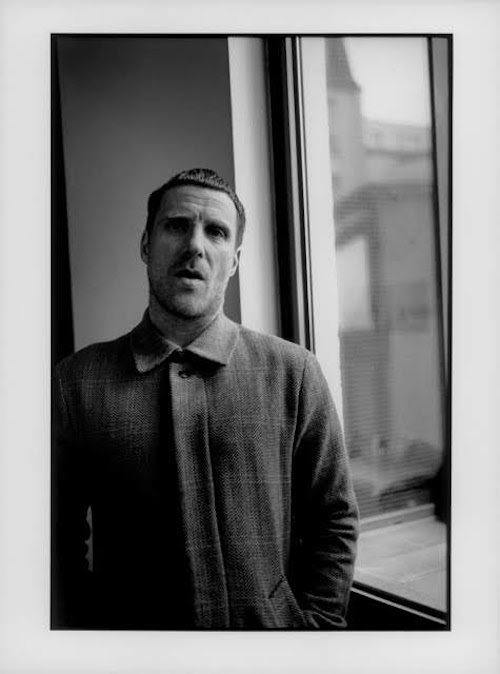
A small act of kindness can change everything. Alain Bibal was gifted a camera for his fiftieth birthday. It changed his life.
He started taking photographs of the thing he was passionate about—music. His first outing with his camera was to an Arctic Monkeys concert. He took a picture of lead singer Alex Turner. The image featured the singer’s head projected onto one of the screens at the side of the stage. The photograph was different. Eye-catching. It was picked up by the press. Alain Bibal was now a rock photographer.
But being a rock photographer (or just a photographer) is never that easy. It is something one has to work at constantly. Bibal started taking photographs of the bands who visited his home city Paris. Brian Jonestown Massacre, Tess Parks, Jarvis Cocker, the Limiñanas, Angel Olsen, and the Lemon Twigs. He traveled to England where he photographed Sleaford Mods, Suggs, Dandy Warhols, and Nick Cave. His work appeared in magazines, newspapers, and websites.
Bibal started taking pictures in his teens and twenties, then drifted into the world of work. Getting a Leica camera for his fiftieth changed everything. It reignited his talent and long held desires to be creative. He had always loved the work of rock photographers like Pennie Smith and Kevin Cummins. Photographs that were gritty, real and captured an unguarded moment of truth.
Bibal works on film, digital doesn’t interest him, working on film is more disciplined, demands more concentration. When embedded with bands at concerts or on tour, Bibal uses only two rolls of film to capture that perfect image. It means he has to stay focussed on telling a story with his camera that connects with an audience. His resulting pictures are brilliant, powerful, and iconic.
The moral of the story: be kind, you might just change someone’s life.
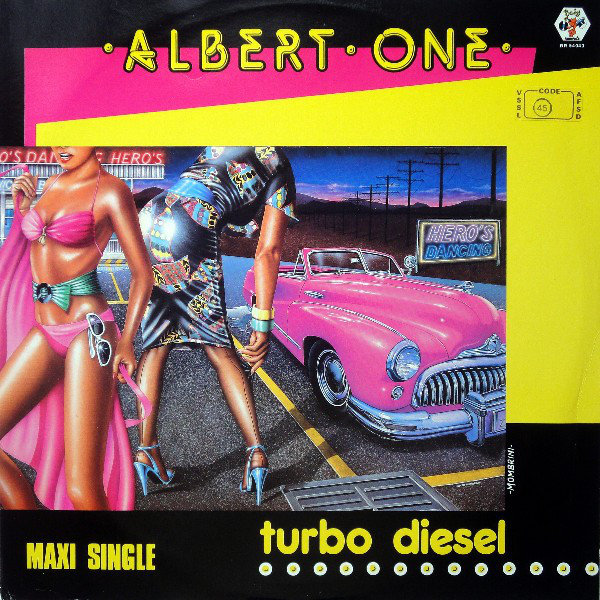
Album art by Enzo Mombrini for the 1984 album ‘Turbo Diesel’ by Italian DJ, producer and vocalist Albert One, aka Alberto Carpani.
Flemming Dalum was born and raised approximately 1000 miles away from Italy in Denmark. Starting in 1983—Dalum, considered to be one of the world’s leading authorities of Italo disco—would make eleven trips to Italy in search of records. Italo disco came into favor in the 1980s, and Dalum became recognized as an expert on the genre as it rose to prominence not only in Italy but in Germany and other parts of Europe. Since immersing himself in the music, Dalum, a self-proclaimed “Italo freak” is able to instantly identify an authentic Italo disco song. Italo disco is probably on your radar, whether you realize it or not. Do you dig Italo pioneer Giorgio Moroder or the synth jams of director and composer John Carpenter? Then it’s safe to say disco Italo style might be right up your alley. While I’d love to jaw more about the ear candy that is Italo disco, the artwork created for the records is as lit up as the music pressed deep into the vinyl inside.
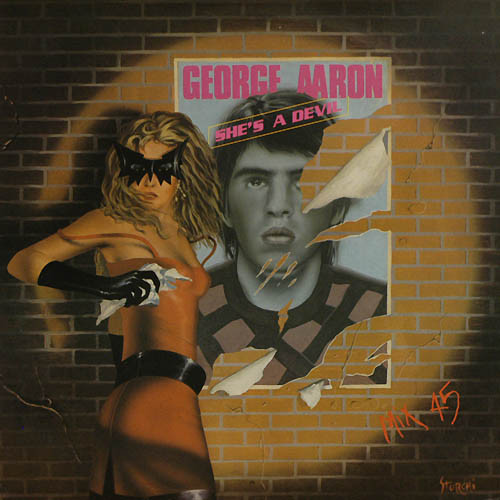
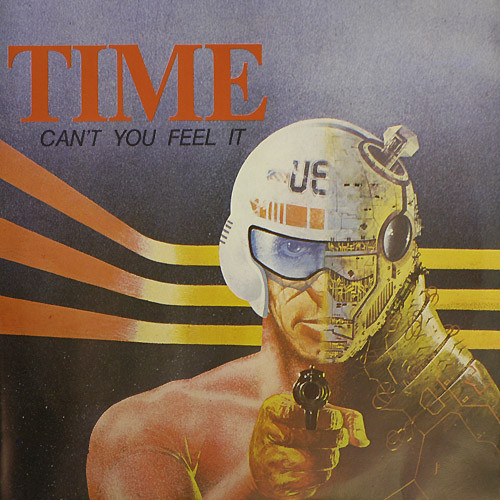
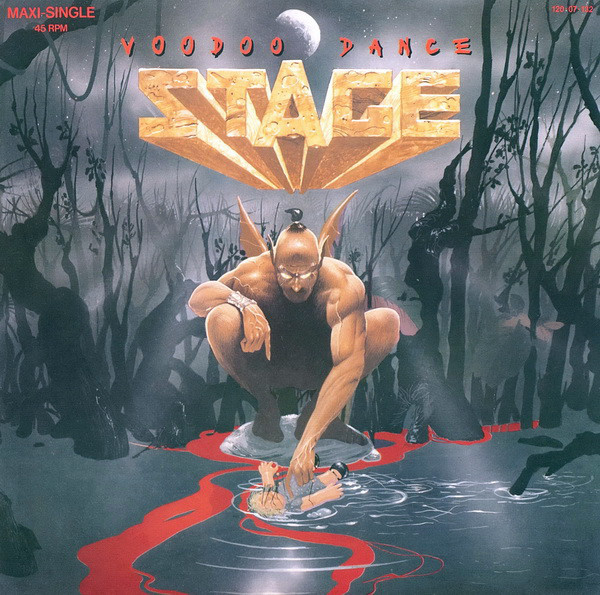
The variety of album art produced during the decade of Italo disco’s height had one foot firmly planted in the realm of futuristic fantasy, often composed in an airbrush style. That’s what we’re going to focus on for this post. Airbrush art was such a huge part of the 80s, and several artists used this style for their contributions to Italo disco records such as Giampaolo Cecchini, a giant of the Italian advertising world. Italian sci-fi and comic artist Franco Storchi also successfully used this technique for Italo disco trio Time, as did Enzo Mombrini to create his provocative images for Italo disco acts, many which slipped into obscurity, as a fondness for Italo disco started to wain toward the end of the decade. If this topic has got you thinking about fog machines and neon lighting, the 2018 documentary Italo Disco Legacy traces the origins of Italo disco and includes facts and reflections from Flemming Dalum and other curators of Italo disco history. Covers by Cecchini, Storchi, Mombrini and a few others follow. Many are NSFW.
Franco Storchi’s cover for Italian superstar George Aaron’s (Giorgio Aldighieri) single “She’s a Devil” (1984). More by Storchi follows.
Get them young and you’ll have them for life. That was the maxim when I worked in television. It was called “creating brand loyalty,” which probably explains why the bloke who was then Chief Executive of the broadcaster who occasionally employed me, was responsible for making “I Can’t Believe It’s Not Butter” a big success in the UK. I suppose, this maxim was a more cynical variation of the Jesuit saying, “Give me the child for the first seven years and I will give you the man.” Brand loyalty was a way of ensuring the audience stuck with the channel and watched the adverts. Programs were the wrapping paper for the advertisements. Advertisers in a way dictated the kinds of things that could or could not be seen on commercial TV.
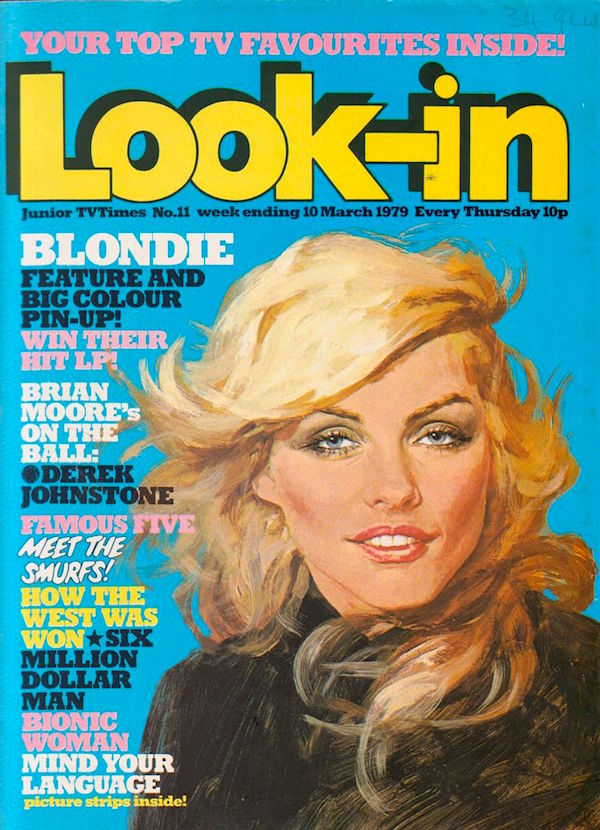
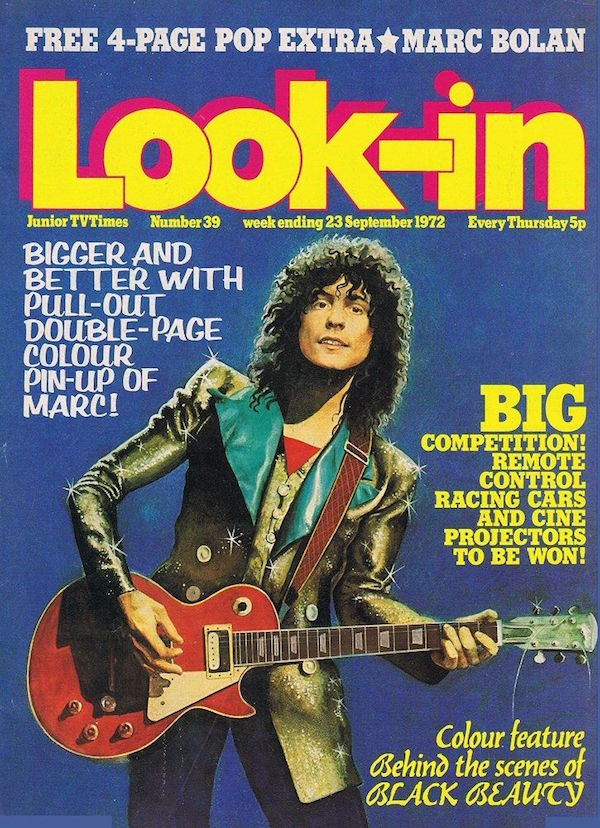
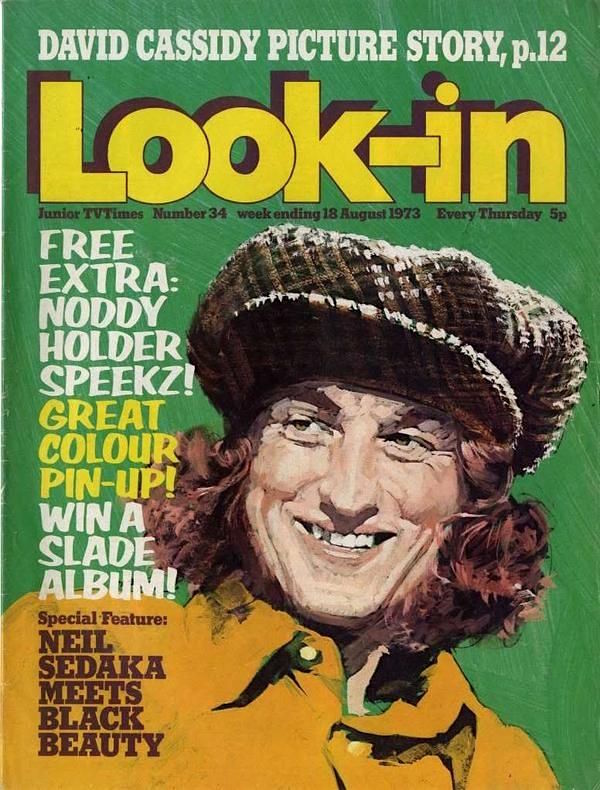
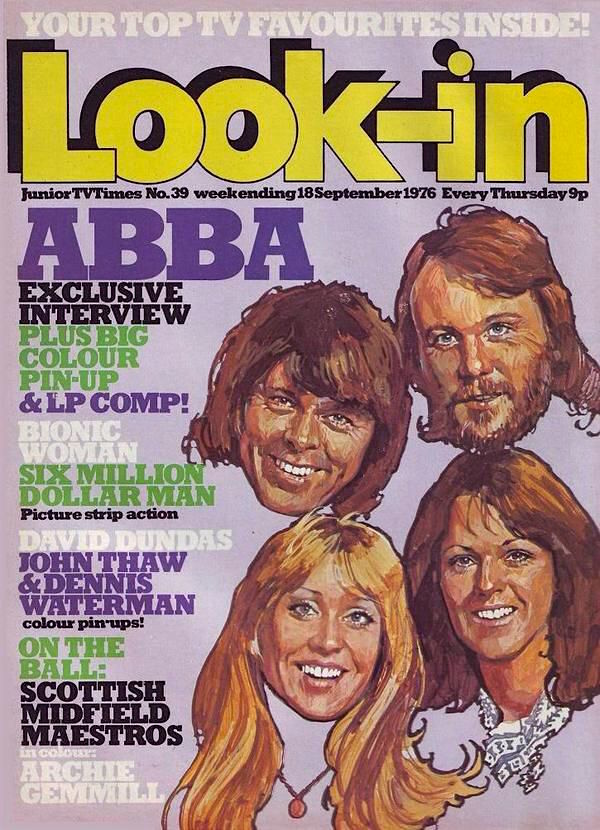
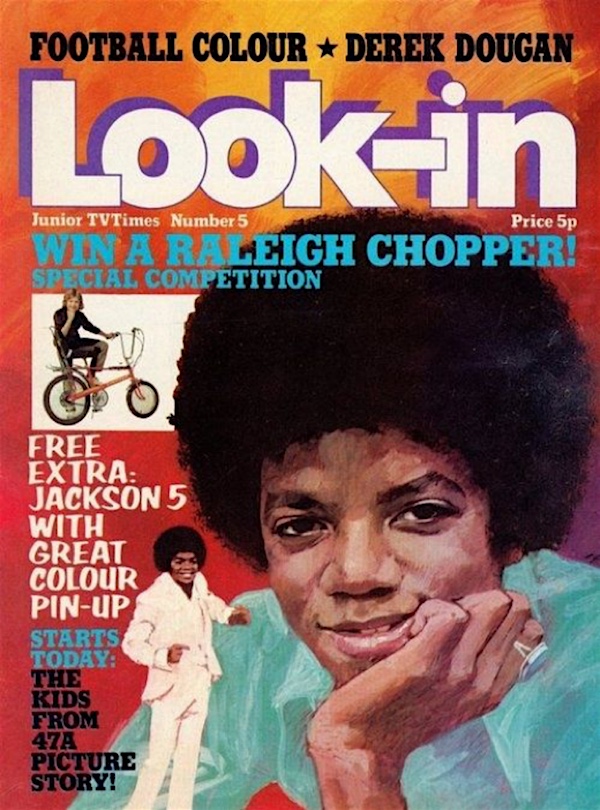
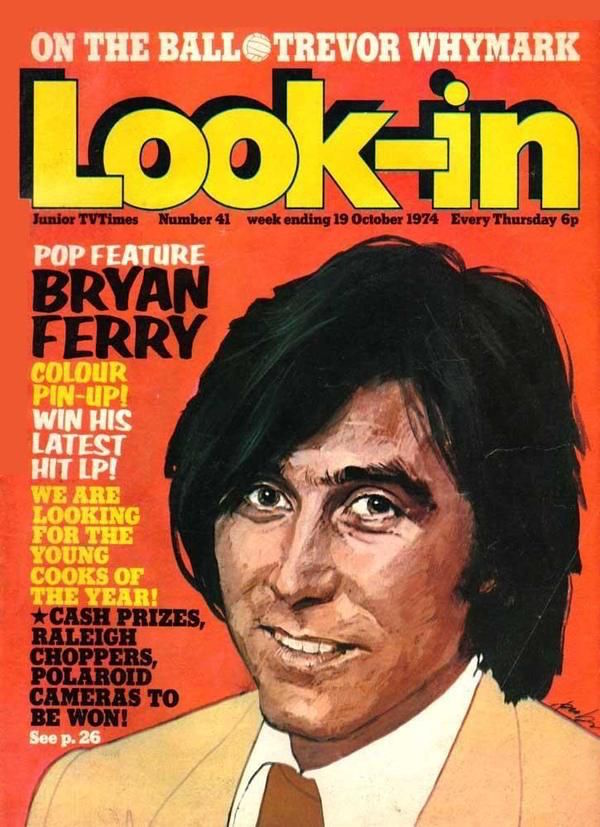
In the seventies, creating early brand loyalty saw the publication of children’s magazine Look-In in January 1971. Look-In was the equivalent of kids’ TV Guide or as it was known “The Junior TVTimes.” The TVTimes was the rival listing publication to the BBC’s Radio Times. There were basically two broadcasters back then—the BBC which was financed by a compulsory license fee payable by anyone with a TV set; and ITV, or independent television, which was financed by advertising.
Look-In was ITV’s kids comic or teen magazine. It contained a mix of cartoon strips based on popular ITV broadcast shows like Benny Hill, Man About the House, Kung Fu, The Six Million Dollar Man, Sapphire and Steel, Freewheelers, and Catweazle. There was also sports, puzzles, crosswords and plenty of pictures and pullout posters of pop stars like Marc Bolan, Debbie Harry, David Cassidy, Donny Osmond, Slade, David Bowie, Suzi Quatro, Roy Wood and so on.
If memory serves, the very first issue of Look-In contained a free, cut-out and make your very own TV studio which featured the set, presenters and a camera from ITV’s hit kids show Magpie—rival to BBC’s more mild-mannered Blue Peter. Perhaps my interest in TV started then? Who knows. Look-In was a strangely appealing magazine, for it always contained something of interest—whether a pop star interview or favorite comic strip, or just the double-paged regional listings for the week. I lived in Scotland which meant watching local programming like Knot-Tying from Drumnadrochit or Haggis Farming from Pittenweem, while the rest of the country enjoyed Captain Scarlet or Randall and Hopkirk (Deceased).
Look-In also had fabulous cover artwork featuring portraits of pop stars, DJs, and actors as painted by Arnaldo Putzu. These covers made the magazine instantly recognizable and iconic. A bit like Richard Bernstein’s covers for Andy Warhol’s Interview which followed in 1972. Putzu had a career painting movie posters, most notably for the Carry On films and Get Carter. His paintings were featured on the cover of Look-In until the 1980s when they were sadly and unimaginatively replaced with photographs.
Look-In lasted from January 1971 until March 1994 and here’s a small selection of the cover artwork from the 1970s to early eighties.
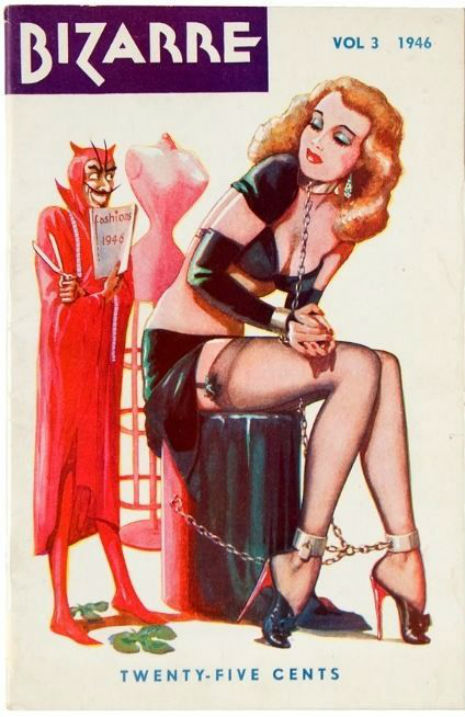
In the world of adult magazines, the devil girl has always been one of the standby icons. And not just there, but in comic books, film, art, tattooing and just about anywhere else you might look. Almost always a positive thing and a fantasy bigger than all the Bettie Pages, Marilyn Monroes and Jayne Mansfields combined. By the 1950s fantasy and reality started having blurred lines. Oh it always existed, but in the late 1940s when John Willie created the first full on fetish magazine, Bizarre, the devil girl was made flesh. This magazine influenced Irving Klaw and all the publishers of the now beloved “vintage smut” (a major hashtag on Instagram and other hashtaggy photo display sites). Magazines like Exotique, the art of Eric Stanton, Gene Bilbrew (Eneg), and others became a long running mainstay. Many of these magazines existed to display personal ads for things, even now, that many people just couldn’t come out and say they were into. Even today, the bizarre content of these 50, 60 and 70-year-old magazines is truly BIZARRE! These are the most collected adult magazines the world over.
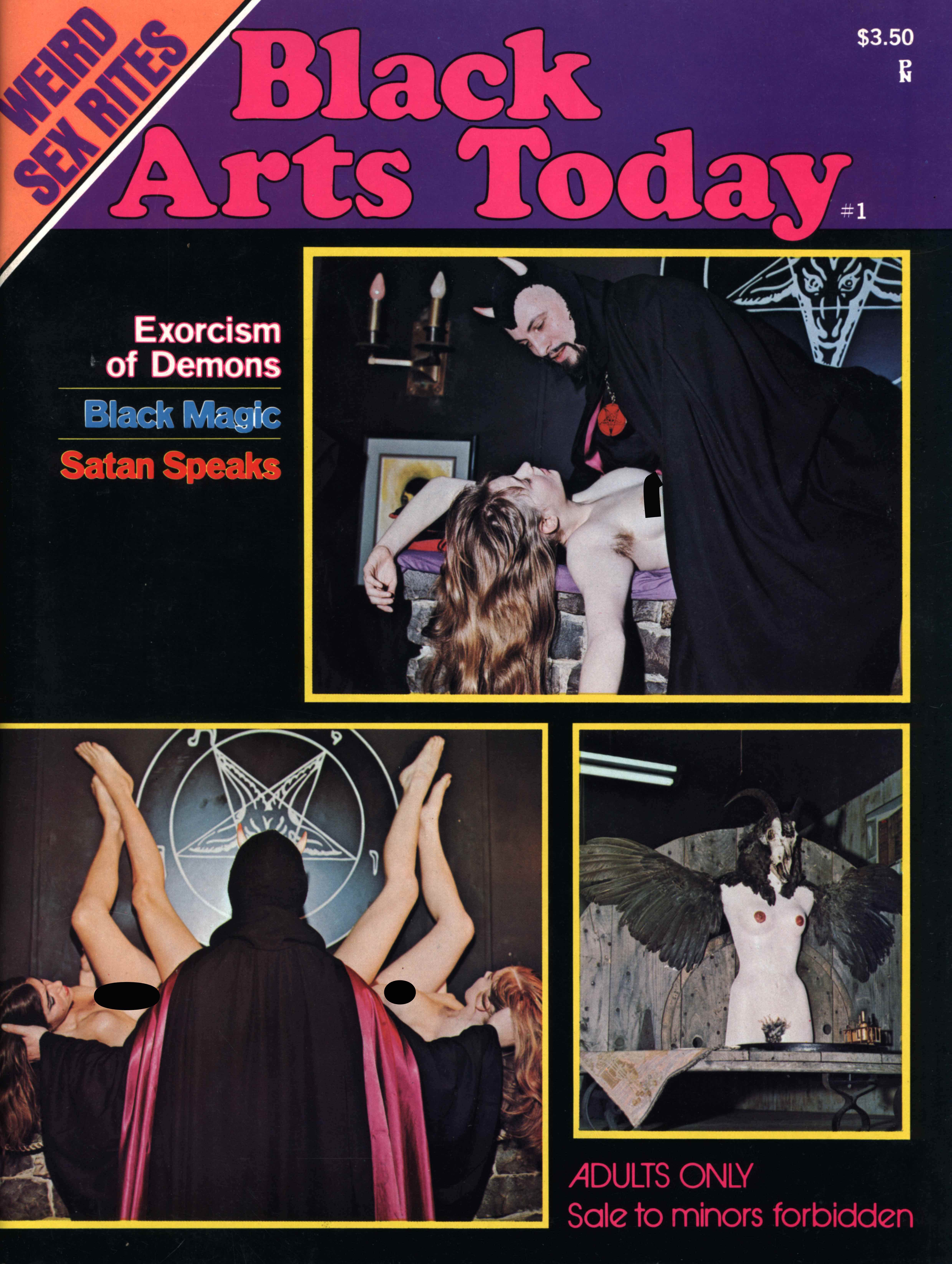
When the 60s rolled around and free love, paganism, communal living, more open nudism and—furthest from center, Anton LaVey’s Church of Satan—split the population in two as far as people interested in these activities. In pre X-rated adult films, adult magazines were approaching porno rapidly. There were the people that actually lived this stuff and even more people who wanted to know about it, but couldn’t possibly do it! This audience created the massive business we are about to discuss.
The slightly older suburban set (not the wife swappers and swingers, but the lonely uptight fellas) really wanted a glimpse into this other world, and there became the essence of adult and underground film and publications, especially the kind you could secretly take home. This audience is what is known in the adult film world as “the raincoat crowd”—horny guys who went alone to the theaters in Times Square and other places like it around the country. Many of these films are so insane they must be seen to be believed and most of them, literally thousands of them, can be bought or downloaded from Something Weird Video.
There was a great interest in the Church of Satan as they used nudity and sex magick and weren’t just some stuffy new religion, but seemed like the ultimate party! LaVey and his church got so much magazine play (they’re in movies as well including a documentary on them, Satanis The Devil’s Mass, just reissued on Blu-ray). This subject proved so popular that a cottage industry of Satanic porn magazines, some lighthearted, some very dark popped up. As innocence ended with the advent of mass-produced, readily available porn, everything rushed out the door as fast as it could be printed. These particular magazines are just about the rarest, most collectible and most expensive porn mags on the collectors market.
I had heard about an underground cult of collectors putting out a compendium of these almost secret magazines and set out my feelers to find and talk to them. When I found them I had to agree to their terms and be put in a car, blindfolded, and driven to an amazing space where I sat with a man in a leather mask. Offered a drink, I steadfastly refused. Here’s the interview…
So…do you represent some newfangled vintage smut collecting anonymous devil cult?
Vintage smut collecting is a solitary path. There is no unity or group activities that we promote. While we often encourage collectors to communicate with others regarding the titles they are actively hunting since this sort of networking may aid the buyer in searches, our sense of community does not proceed much further than communication among peers to meet collecting milestones. Sharing this material with others, is often beneficial for amorous rituals. So, it is advisable to view with one or more partners in a sensual setting to facilitate sexual rites. Publishing this book allows us to share our unholy sacrament with the chosen few. So, these interested individuals can finally obtain the hidden knowledge and elusive ritual tools that will allow them to explore this realm for themselves.
I hear just a lucky few get the wild evil record made in conjunction with this book. What does one have to do to get it and what’s on it?
To spice up this already mega tasty publication we wanted to include one of our favorite bands; the mysterious slime hard rock psycho band Ball. In the past Ball has really managed to summon the crazy satanic and murky occult vibe of these mags, in their song and video “Satanas” for example. So, we bribed them with smut and asked if they to record a new song that could be featured on an exclusive flexi-disc single for a few select copies of the book and they came up with the crazed “Horny Highlights from Debauched”. The ways to actually procure a copy are most mysterious but probably includes a solemn request directly to Ball.
How long did it take to amass this incredible collection & what else do you collect? Are there more volumes in store?
The collection has been growing in size for roughly seven years. Satanic Mojo Comix and Jason Atomic was the catalyst that first awakened our interest in these devilish artifacts. Collecting vintage magazines currently consumes most of our waking hours. All other pursuits have been obliterated to focus on “adult slicks.” The records, jukeboxes, Italian horror fumetti, and original art acquisitions are all currently sidelined and paused. Magazines reign supreme in the top collecting spot, draining bank accounts and sending us scrambling like rabid addicts to our local post office whenever a delivery is missed. There are more volumes currently in the works, and we are more than excited to continue sharing the wealth with open minded adults over the age of 18, seeking to learn more about vintage smut. There have been numerous recent 60s and 70s magazine discoveries by our acquisition team that will blow minds and leave the reader breathless and begging for more. At this precise moment we look forward to continuing and enhancing our current exploration of witchery and devilry in the next volume, being assembled in our labs.
It seems like in every circle of friends there’s at least one person who’s an inveterate weed snob. The one who can always be relied upon to spark up a joint of the good stuff. If you happen to know me, well, I’m that guy, but I have friends who are “that guy” as far as I’m concerned (nearly all of my close friends are heavy, heavy stoners). One of them is David Hershkovits, the former co-founder, co-editor/publisher (with Kim Hastreiter) of New York City’s long-running style bible PAPER magazine. Since selling PAPER David has embarked on a new enterprise, his Light Culture pot-themed podcast which is presented by Burb Cannabis in Vancouver. I asked him about it via email.
How long have you been a pot smoker?
David Hershkovits: I’ve been an off and on (but mostly on) pot smoker for 50 years. More off when my kids were born. Plus, I periodically take month-long breaks. What’s great about pot — among other things — is that you CAN stop if you have to.
So why a weed podcast? Beyond cannabis, what’s the mission of the show?
David Hershkovits: I find the Light Culture podcast a natural continuation of what I’ve been doing for all of my professional life. When I sold PAPER Communications two years ago, divesting myself of PAPER magazine, papermag.com the website with a huge social media presence, and an experiential marketing division, I was looking to stay in the game. I’d been fascinated by podcasts as media and saw Light Culture as a great opportunity to keep on playing in my favorite sandbox of pop and politics. So when I joined the Vancouver-based cannabis company Burb as a consultant, we landed on launching a podcast to connect the brand with a community that bridges cannabis past, present and future. Socially, politically and economically cannabis touches on so many issues right now. It’s an industry still early enough in its evolution to be shaped into something progressive, aware of its social justice implications, counter cultural legacy and responsibility to the disproportionately black and Latino communities who have taken the brunt of the War on Drugs. As a long-time advocate for decriminalization, I want to be part of the conversation.
Who have some of your guests been?
David Hershkovits: My guests have included Fab Five Freddy Brathwaite, a renaissance man of hip hop who paints, directs, acts, produces. We spoke on the occasion of Grass is Greener, a Netflix documentary that goes into the history and culture of the plant, especially as it relates to music and the creative impulse. With Vanessa Lavorato of Bong Appetit we spoke about food and cannabis and women’s evolving role in the culture.
It’s all too obvious where one finds cannabis culture in California—just walk outside and take a good whiff—but where do you find it in New York?
David Hershkovits: Cannabis culture is alive and well in NYC, not only on the streets where vaping and puffing proliferate and people are willing to spend to get the best shit, legal or otherwise. It spans all demographics from skate to art to foodies on the hunt. Secret clubs catering — and selling — to cannabis connoisseurs are opening as well. In a recent survey New York was named as the largest consumer of Cannabis world-wide. So there!
What is the legal situation there? Is it a state law or a municipal ordinance?
David Hershkovits: The legal situation today is that the police have been asked not to make arrests for small amounts, tickets can be written but no one is going to jail if all you’re carrying is for personal use. Still sucks, though. New York City feels like the (un)stoned age compared to Cali.
What about the dispensaries that are popping up around New York? Are they good?
David Hershkovits: Nah, I don’t use dispensaries. I’m fortunate to know who I know which means that I only smoke the best shit.
Danny Fields: David and Danny talk about the wild days of New York when weed was everywhere and Danny was a confidante of all the young dudes from Lou to Iggy to Joey and Nico.
Joe Murray aka “AJ Sour Diesel” — great story about New York in the 90s when Deadhead kids in high school were hanging out in Wetlands, scoring the best weed in the city and then going to on establish Kind Bud — Sour Diesel.
Most journalists, bloggers, writers, and what-have-yous hope to find that one special thing very few people know about and get the opportunity to bring it out to the attention of a wider audience. It’s the one big story most hope to get at some point in their careers. Rarely do stories fall into laps, they have to be earned, written, shaped and created. But then again, sometimes you get lucky.
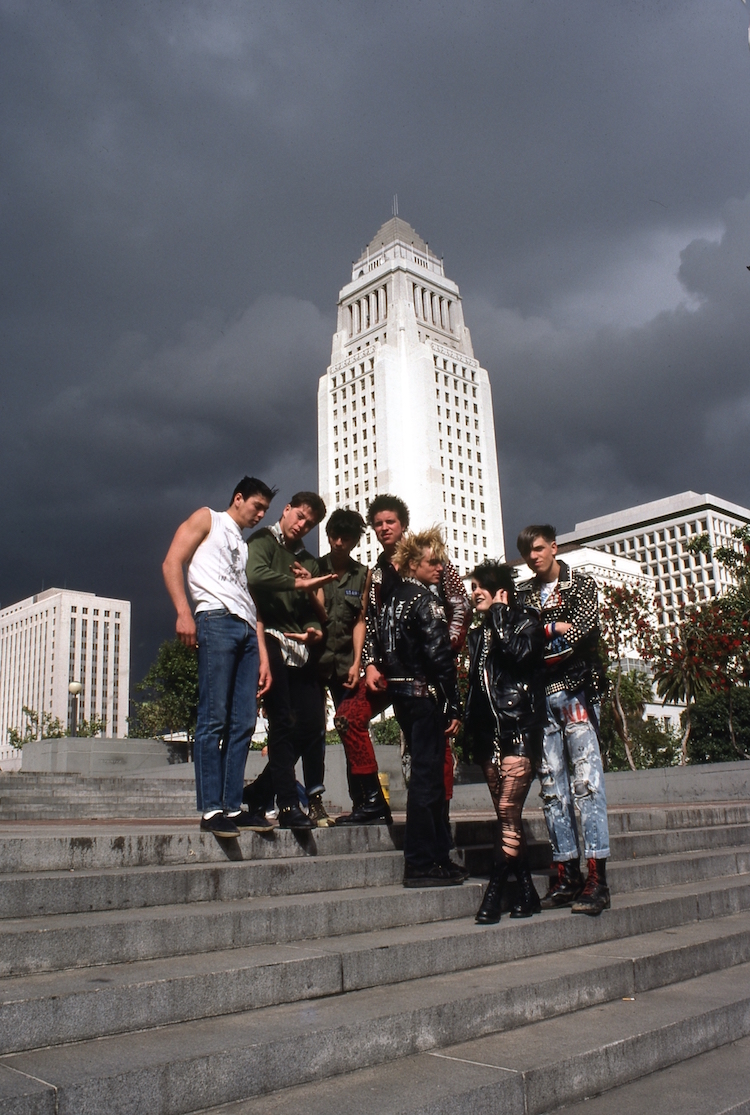
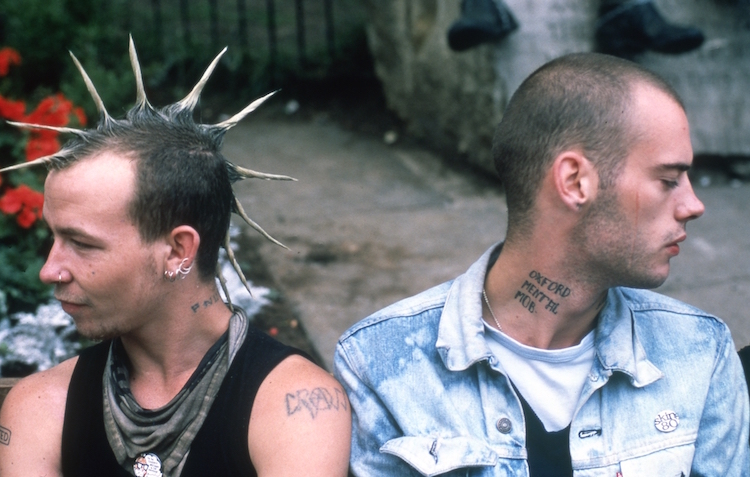
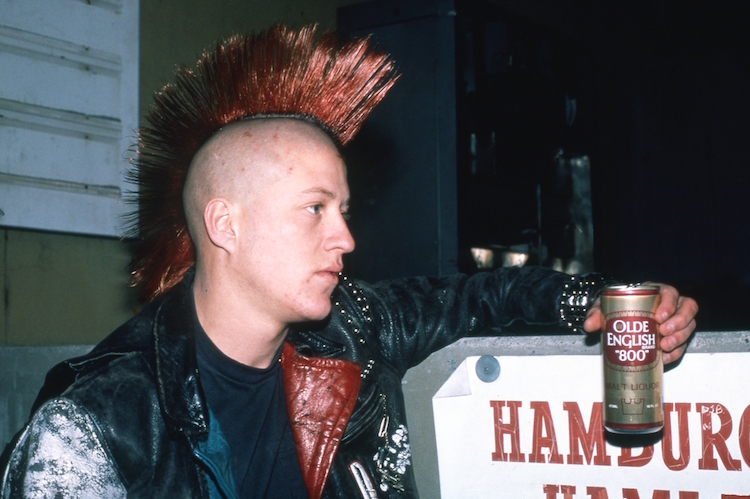
A couple of weeks ago, I was friended-up on social media by a guy called Immanuel Martin. I had no idea who he was or why he’d think I’d ever be fun to know. A day or so later, a message popped up in my in-tray. It was from Martin. He sent me an email detailing the life and work of a photographer he knew called Mary Lou Fulton. She was now in her eighties and living with her family in California. Martin explained how he had met Fulton when she worked as a photo-journalist back in the 1980s. He said that she had documented the punks, the mods and rockabilly gangs who hung around Los Angeles. Her work had been published in L.A. Weekly. Martin was one of the young teenage punks Fulton had photographed. He first met her and journalist Patrick McCartney at a Social Distortion and Redd Kross gig in January 1983.
“Like many punk shows in LA,” wrote Martin, “that particular night ended up with the LAPD arriving to shut the show down and then ensuing chaos as the LAPD overreacted and the punks rioted. It was across the street on Sunset Blvd where Mary Lou and Pat McCartney caught up with my friends and I for an interview. Mary Lou snapped several photographs and we chatted. Though Mary Lou and Pat were in their 40s, my friends and I were impressed with their genuine interest in our subculture and non-judgmental attitude. They seemed to have real empathy and understanding for us as kids just trying to be who we were but facing constant harassment by the LAPD and media seeking to paint punks in the worst possible light.”
In Reagan’s America there was no place for disaffected youth. Punk was seen as the lowest of the low and considered by some as a genuine threat to the stability of honest, decent, hard-working Americans, kinda thing. It was the same old BS that’s been spun since Cain and Abel.
A month or so later, Martin caught up with Fulton and McCartney again, this time at an Exploited gig at Huntington Park’s Mendiola’s Ballroom.
“It was an epic bill that night,’ said Martin. “with local LA punk bands, CH3, Youth Brigade, Aggression and Suicidal Tendencies. However only Suicidal Tendencies got to play before the LAPD showed up to shut the show down. They arrived in massive force with it seemed only one intention; to beat anyone they came across without regard for their affiliation to the event. The events that night are well documented so I won’t give a play-by-play here. However it was that night, that Mary Lou and Pat McCartney, journalists, faced the same LAPD violence that we faced. Both were viciously struck by the cops with their batons. Mary Lou ended up in the hospital with a broken rib.”
That night was later documented in an article written by McCartney with Bob Rivkin called “Cops and Punks: Report from the War Zone on the Destruction of a Subculture” in October 1983. The article was illustrated by a choice selection of Fulton’s photographs.
Mary Lou Fulton started her career working in advertising before she moved to Hollywood to work on commercials and documentaries. She showed considerable talent and a strong artistic flair. Fulton started taking more and more photographs which led her to becoming a photo-journalist traveling the world and working for various magazines and newspapers.
Sometime in the late-seventies/early-eighties she became fascinated by the punk rockers she met and photographed on London’s King’s Road. She liked their style, their vibrancy, and gallus attitude towards life. Back in L.A. she started documenting the local punks and all the other different youth cultures which were then flourishing in the city and becoming more prominent with the rise of MTV.
Martin and Fulton lost contact. He began his own career while Fulton continued with hers. Years passed, until one day around 2006/7, Martin rekindled his friendship with McCartney. They exchanged emails and kept in touch. It was after McCartney’s death that Martin contacted Fulton. They discussed her photographs and the hundreds of pictures she had taken of youth gangs during the eighties. Martin thought it was imperative that Fulton’s work was brought to a wider audience. He tried various sources but none, sadly, showed much interest. That’s when he contacted me. Like Martin, I think Fulton’s work brilliantly captured the energy and camaraderie of the various youth subcultures in London and Los Angeles during the 1980s. Her work deserves recognition for its artistry and cultural importance. Fulton’s work deserves to be seen by as many people as possible. And I hope this little blog here can start something happening.
More of Mary Lou Fulton’s photographs, after the jump…











.jpg)
.jpg)