‘In Bed With Joan Rivers’: a very candid interview with RuPaul


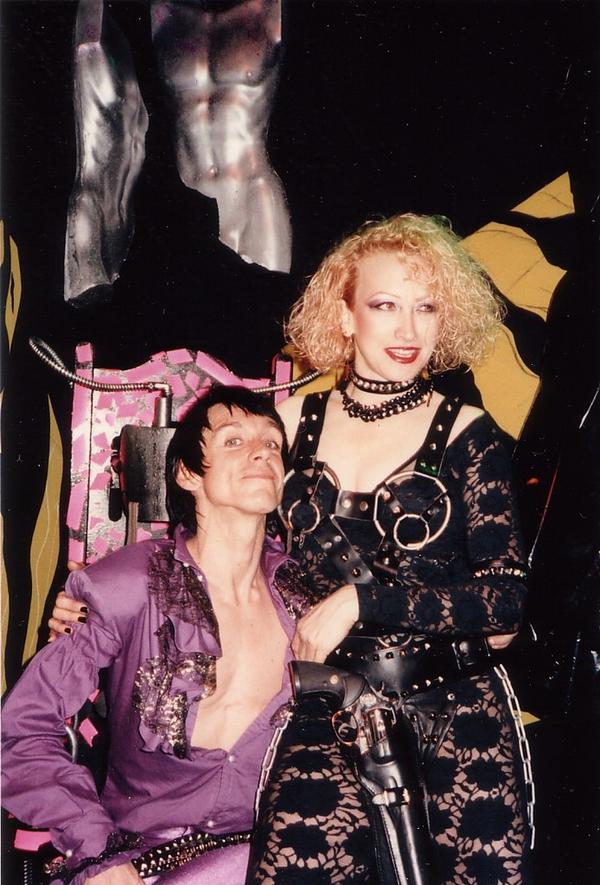
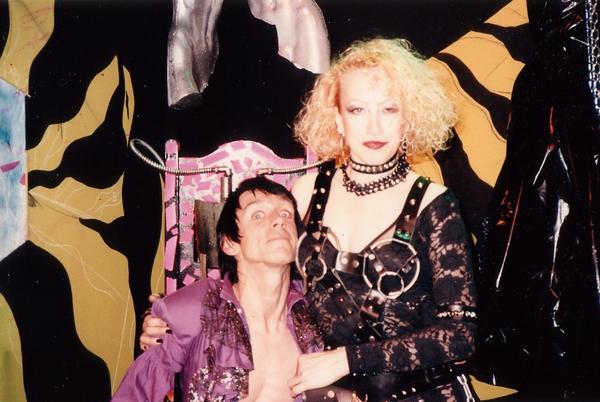
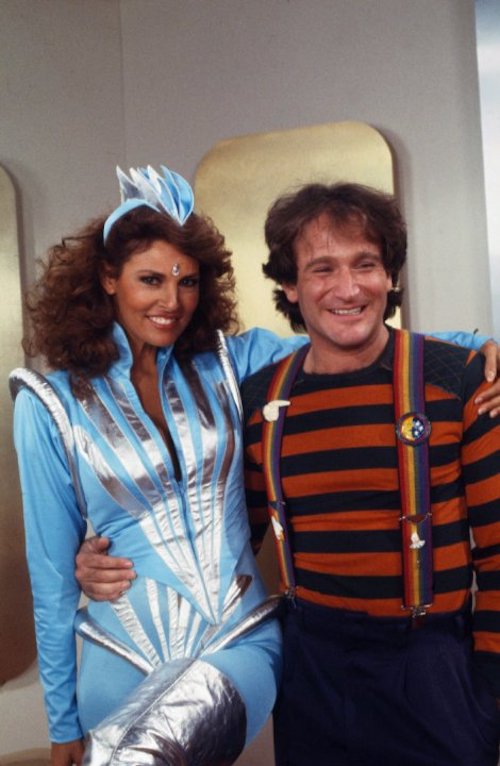
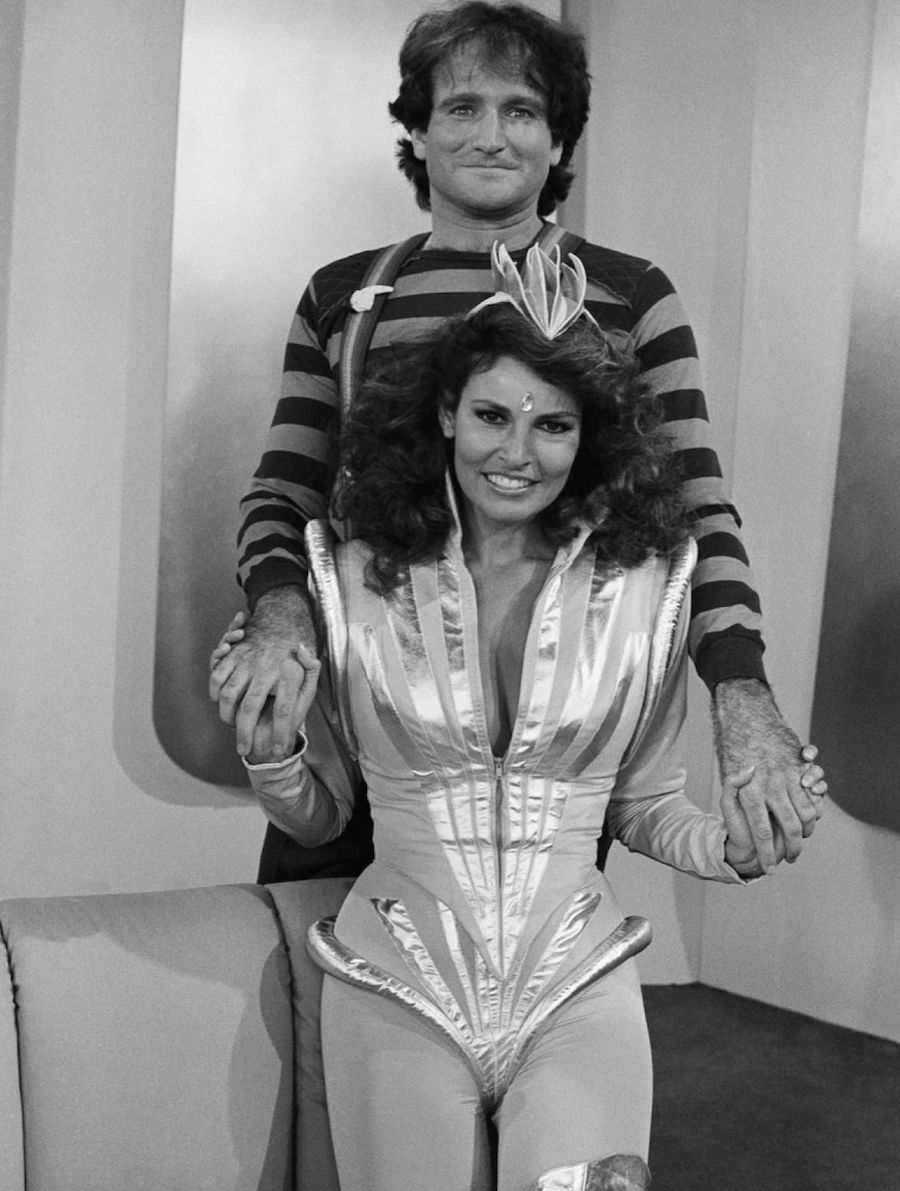
RuPaul, 1979
 
As another series of RuPaul’s Drag Race draws to a close (with its highest viewers yet), RuPaul’s position as a titan of queer culture is cemented.

It can’t be easy being the best known drag queen in the world, and fans of Drag Race will be familiar, by now, with Ru’s very Zen way of handling the spotlight, as well as handling other people.

Which is why this candid interview with Joan Rivers is so very refreshing. Ru really spills the T, from his often-overlooked background as a punk rocker and a go-go dancer, to his long term relationship and its “open” status, his mother (who sounds great!), his make-up tips, and his musings on gay culture and its relationship with the mainstream, which makes for some of the most interesting, and insightful, conversation here. You also get to find out RuPaul’s real name, which may come as a bit of a surprise if you don’t already know.

Of course, Joan Rivers is no minnow in the sea of gay culture herself, so it shouldn’t be surprising that when these too get together it’s a real treat. Both are fountains of knowledge, both queer and straight, and to see them kiki with so much mutual admiration is great. There’s simply no way they couldn’t be fans of each others’ work, which probably explains the openness and ease of this interview.

RuPaul in bed with Joan Rivers really is worth a watch:
 

Posted by Niall O'Conghaile | Discussion
What A Performance!:  A celebration of the Heroes of British Camp Comedy!

nosyargyrralpmac.jpg
 
For a generation of gay British actors and performers, camp comedy was a way to promote queer culture, through media of television and radio, into the nation’s living rooms.

Up until homosexuality was decriminalized by an act of Parliament in 1967, being gay or, admitting to homosexual acts, was a crime punishable by imprisonment or chemical castration. The latter was used as sentence on the code-breaking genius and computer pioneer, Alan Turing—which gives an idea of the brutality and bigotry of Britain pre-1967.

But through the use of camp comedy, performers such as, Kenneth Williams, Frankie Howerd, Charles Hawtrey, John Inman and Larry Grayson, were able to subvert the horrendous, homophobic orthodoxy of their time.

For me, each of these men were revolutionary, and together with writers like Eric Sykes, Galton and Simpson, Marty Feldman and Barry Took, they were able to subtly change the public’s attitudes to sex and sexuality.

In her Notes on ‘Camp’, Susan Sontag describes camp as a means for promoting integration:

...Camp proposes a comic vision of the world. But not a bitter or polemical comedy. If tragedy is an experience of hyperinvolvement, comedy is an experience of underinvolvement, of detachment.

...The reason for the flourishing of the aristocratic posture among homosexuals also seems to parallel the Jewish case. For every sensibility is self-serving to the group that promotes it. Jewish liberalism is a gesture of self-legitimization. So is Camp taste, which definitely has something propagandistic about it. Needless to say, the propaganda operates in exactly the opposite direction. The Jews pinned their hopes for integrating into modern society on promoting the moral sense. Homosexuals have pinned their integration into society on promoting the aesthetic sense. Camp is a solvent of morality. It neutralizes moral indignation, sponsors playfulness.

Camp may have been a weapon for education and change, but it wasn’t the sole preserve of gay men. Comedians such as Dick Emery, presenters like Bruce Forsyth, actresses like the Late Wendy Richard and Lesley Joseph, and most importantly writers (in particular Marty Feldman and Barry Took, who created the inimitable Julian and Sandy for Round the Horne) helped promote camp comics as innuendo-laden revolutionaries.

What A Performance is a wonderful romp through the lives and careers of some of Britain’s best known and best loved Kings of Camp: Kenneth Williams, Frankie Howard, Larry Grayson, John Inman, Julian Clary, Lilly Savage and Kenny Everett. The documentary contains contributions from Matthew Kelly, Lesley Joseph, Clive James, Harry Enfield, Chris Tarrant, Jonathon Ross, Barry Took, Wendy Richard and Cleo Rocos.


With thanks to Mark Dylan Sieber
 

Posted by Paul Gallagher | Discussion
Tom Waits on ‘America 2-Night’ in 1978
05.07.2013
09:28 am

Topics:
Amusing
Music
Television

Tags:
Tom Waits
America 2-Night


Tom Waits, wedding singer, on America 2-Night in 1978. Waits croons “Better Off Without A Wife” after a snarkily funny intro by Barth Gimbel (Martin Mull):

“I think there’s no better way to really make a tribute to these people than through music. And fortunately we have a very special guest with us… Mr. Tom Waits! And when he plays and sings, it’s almost like music.”

Waits had appeared the previous year on Fernwood Tonight before the show moved to Alta Coma, California (“the unfinished furniture capital of the world”) and changed its name.

While Waits’ appearance on Fernwood Tonight from 1976 has been viewable on Youtube for awhile, this America 2-Night clip is a bit of a rarity.

“I get a little choked up on occasions like this. Actually the closest I have ever been to a marriage is… I was the best man at a friend of mine’s divorce.”


Posted by Marc Campbell | Discussion
Growing Up John Waters

sretawnhojhsart.jpg
 
Rock and Roll taught John Waters how to annoy his parents, but it was the nuns from his local church, who inadvertently encouraged his interest in cheap, exploitation films:

‘The first thing I can remember rebelling about really, was when I was about 8-years-old and every Sunday we’d go to church. Once a year they’d read us this pledge that we had to take for the Legion of Decency, which was the Catholic Church rating the movies—what you could see and what you couldn’t—and the condemned ones were the ones they’d tell us you’d go to Hell if you saw these movies.

Well, I remember refusing to do this pledge and my mother was kind of shocked, but I was just a child, and she didn’t make a big deal out of it. And on Sundays, the nuns would read us this list, with this voice like the Devil, and you know, seeing this nun stand there saying, “Love Is My Profession, Mom and Dad, The Naked Night.” I thought “What are these movies?” I’d never heard of them—they didn’t play at my neighborhood, believe me—but I would go and see them, or read about them, and clip the little list and keep a record of all these condemned movies.  The Mom and Dad poster is hanging right in my hall—it’s still that much of an influence. But it made me want to see these movies I’d never, ever heard of. So, in fact they encouraged me, [the nuns] encouraged my interest, without ever knowing it completely.’

Growing Up With John Waters is a fabulous Channel 4 documentary from 1993, where the notorious director of Pink Flamingos, Multiple Maniacs, Female Trouble and Hairspray talks about the childhood events that shaped his life.


Posted by Paul Gallagher | Discussion
The Gentleman of Horror: Boris Karloff appears on ‘This Is Your Life,’ 1957

ffolraksirobefilruoysisiht.jpg
 
The Gentleman of Horror, Boris Karloff is the focus of this episode of This Is Your Life from 1957.

Few actors have such long and successful careers as had “Karloff the Uncanny”; or have thrilled so many different and disparate people across the world with his performances as “The Monster” from Frankenstein,  Imhotep in The Mummy, Professor Morlant in The Ghoul, all the way up to TV series, The Grinch Who Stole Christmas, Michael ReevesThe Sorcereors and Peter Bogdanovich‘s Targets.


Posted by Paul Gallagher | Discussion
Homer Simpson’s headstone?

nospmisremohevarg.jpg
 
A suitable gravestone for Homer Simpson…or, even Matt Groening, at some future date?
 
Previously on Dangerous MInds

‘Adamson’: The original Homer Simpson from 1949?


Via Tam O’Shanter and b3ta
 

Posted by Paul Gallagher | Discussion
James Brown: Getting on his good foot, ‘Soul Train’ 1973

semajnworbluosniart.jpg
 
Here comes the Super Brother—James Brown hitting the spot and getting mystical about education (“The only way you can live is to know. And to not to know, you can never live”) on Soul Train in 1973. He gives a slower, funkier version of “Sex Machine” (listen to that guitar) and impressive versions of “Try Me,” “Get On The Good Foot,” “Soul Power” and the excellent “Escapism.”


Posted by Paul Gallagher | Discussion
I Dream of Blondie: Debbie Harry interviewed by Annie Nightingale, 1990

yrraheibbedeidnolb.jpg
 
In my book, Debbie Harry can do no wrong. Whether with Blondie or as a solo artiste, Ms. Harry has made this little planet of ours a much better place—even if it is for just for 3 minutes of pop heaven at a time. Here the talented and iconic singer gives an excellent interview to Annie Nightingale—who is no slouch herself, and was the British first female DJ on BBC radio 1. Interviewed for the series One to One while promoting her album Def, Dumb & Blonde, Ms. Harry allows access to all areas of her career, and gives Nightingale some very honest and revealing answers.


Previously on Dangerous Minds

Blondie’s Autoamerican: A lost classic


Posted by Paul Gallagher | Discussion
‘Prick Up Your Ears’: Kenneth Williams and John Lahr talk Joe Orton in 1978

notroeojreeuq.jpg
 
John Lahr discusses Prick Up Your Ears, his superb biography on playwright Joe Orton, with actor and friend, Kenneth Williams and theater critic, Michael Billington, on the book’s release in 1978.

The cherubic Orton was arguably the most exciting and original playwrights to break through in the 1960s—his first play Entertaining Mr. Sloane was an influence on Harold Pinter’s The Homecoming, while his last What the Butler Saw led to political controversy and questions being raised in parliament—in reference to the size of Winston Churchill’s cock. Sadly, Orton’s life was cut short by murder—he was working on a film script for The Beatles (Up Against It) when he died (the Fabs made Magical Mystery Tour instead)—and one can only imagine what works of brilliance he would have concocted had he lived.

The quality of this interview is iffy, but it is a marvelous and important piece of cultural history for those with an interest in Orton (or even Williams). It’s also fascinating to hear some of the “politically correct” language used by presenter, Valerie Singleton, and interviewer Billington, where Orton is described as a “practicing homosexual”—as if he was in training for an examination. All jolly good fun.


Previously on Dangerous Minds

Because We’re Queer: The LIfe and Crimes of Joe Orton


Book-jackets defaced by Joe Orton in 1962


With thanks to NellyM
 

Posted by Paul Gallagher | Discussion
‘Starmaker’: Ray Davies and The Kinks’ postmodern soap opera
04.28.2013
09:56 pm

Topics:
Music
Pop Culture
Television

Tags:
Ray Davies
The Kinks


In Granada TV’s 1974’s Starmaker, head Kink Ray Davies proved once again that he’s not like everybody else, producing a rock opera for television that tells the story of an insufferable, vain, egotistical rock star (played by Davies, naturally) who switches places with an “ordinary person” named Norman, working in Norman’s crappy job and living Norman’s crappy life to find inspiration for his next album. (Well, it’s a little more complicated than that…)

Davies’ play reveled in breaking the fourth wall: cameras and microphones are visible throughout and the play’s author/star himself even ends up a member of the audience.

Starmaker was a dryrun for the themes of the Kinks’ 1975 album, The Kinks Present a Soap Opera.


Watch complete version at this link.

Posted by Richard Metzger | Discussion
Page 2 of 96  < 1 2 3 4 >  Last ›