


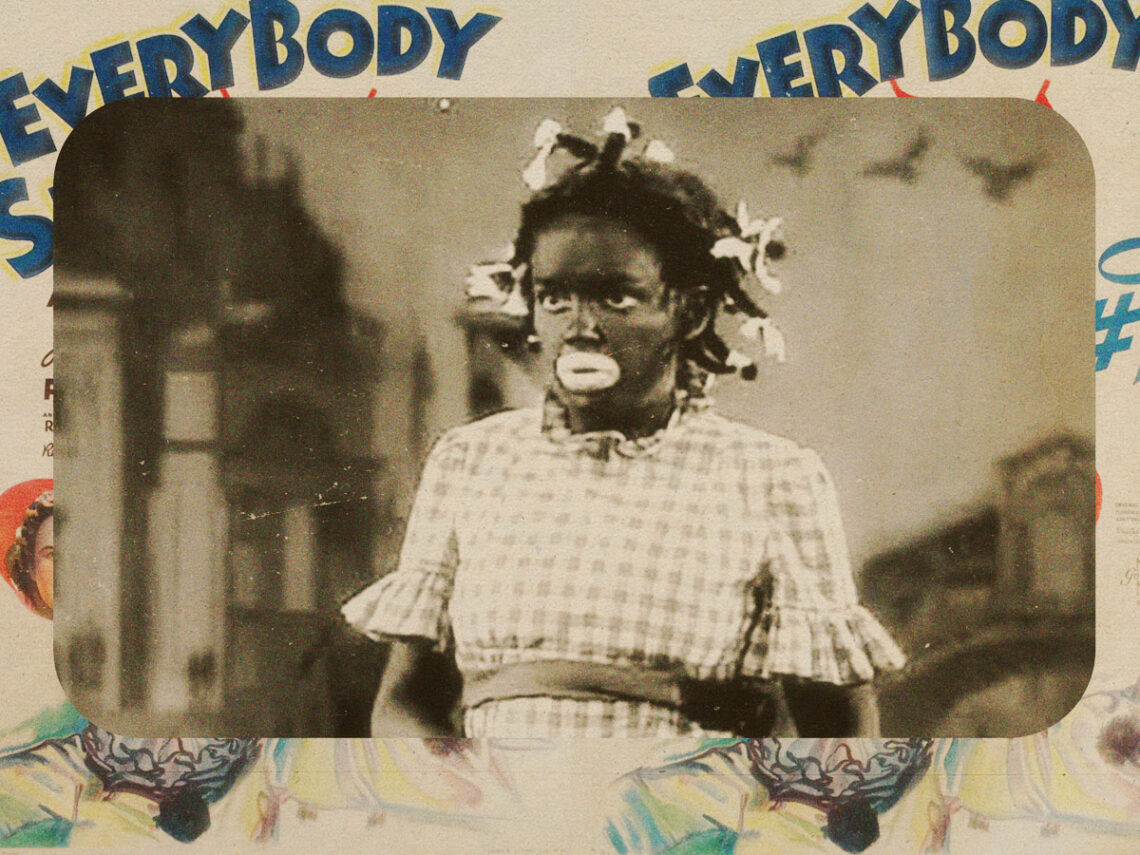
Sickening footage of Judy Garland doing ‘blackface’ two years before ‘The Wizard of Oz’
It is amazing that this was not considered unusual in 1938. Two years before she became an immortal megastar with The Wizard of Oz, Judy Garland performed in blackface in Everybody Sing.
This is, of course, one of the many ways that Hollywood helped institutionalise racism, and there she is, America’s sweetheart, dancing around in grotesque minstrel makeup, mimicking plantation-era stereotypes with wide-eyed glee and singing goofy lyrics about Uncle Tom’s Cabin. And even the year before this, Garland performed a number in Babes in Arms as a light-skinned black girl complete with an entire blackface men’s chorus.
As jaw-dropping as this is to look at through today’s lens, Garland and other performers – like Al Jolson and Mickey Rooney – obviously weren’t conscious of how history would perceive this sort of thing. DW Griffiths’ controversial 1916 film Birth of a Nation (original title The Clansman) is regarded today as much as an example of a historically significant silent film epic as it is a record of what beastly and commonly held attitudes towards black people, slavery, and the Civil War that Americans held and that Hollywood was portraying well into the 20th Century. The Ku Klux Klan were perceived as the good guys in what is, adjusted for historical and present-day monetary value, a film that’s only truly been bested at the box office by Titanic and Avatar.
In 1938, blackface was still a completely acceptable theatrical convention. But Hollywood has never truly retired its old tricks of exploiting areas of serious concern—it’s just gotten slicker at disguising them. Case in point: the 2022 film The Whale, in which Brendan Fraser dons a fat suit and plays a morbidly obese gay man as an object of pity and grotesque fascination. Critics hailed it as a “comeback”, while others pointed out the queasy lineage of using marginalised bodies as Oscar-bait costume dramas.
Or take Marvel’s Doctor Strange, which erased the Tibetan origins of the ‘Ancient One’ character and cast Tilda Swinton instead—an act of “creative liberty” clearly meant to appease Chinese censors. Or Green Book, a feel-good racism fairy tale in which a white man learns that black people are people too (and even tips well!). It won ‘Best Picture’ in 2019, a year that should’ve known better.
Yes, Hollywood is and always has been a useful propaganda tool. Hell, when the hippies started to make waves, they killed off two of them in Easy Rider and a whole fucking commune in Joe. Damn peaceniks!
However, what makes Judy Garland’s blackface routines so disorienting today isn’t just the grotesque makeup or the dehumanising lyrics—it’s the cheerful normalcy of it all. These weren’t fringe minstrel shows; they were lavish, big-budget productions from America’s most powerful cultural machine. That’s the sting. Garland wasn’t some outlier; she was the sweetheart of the era. A literal child star singing about Uncle Tom, produced and distributed by MGM with zero hesitation.
The optics have changed, sure. The makeup’s gone. But the logic underneath – the marketing of stereotypes, the whitewashing of history, the commodification of trauma – never really left. The industry doesn’t need burnt cork anymore when it has casting departments, story editors, and focus groups doing the same job, just with more plausible deniability. Watching Garland in blackface today should make your skin crawl. But if it doesn’t also make you think about what still gets greenlit, distributed, and awarded, then you’re missing the point.