


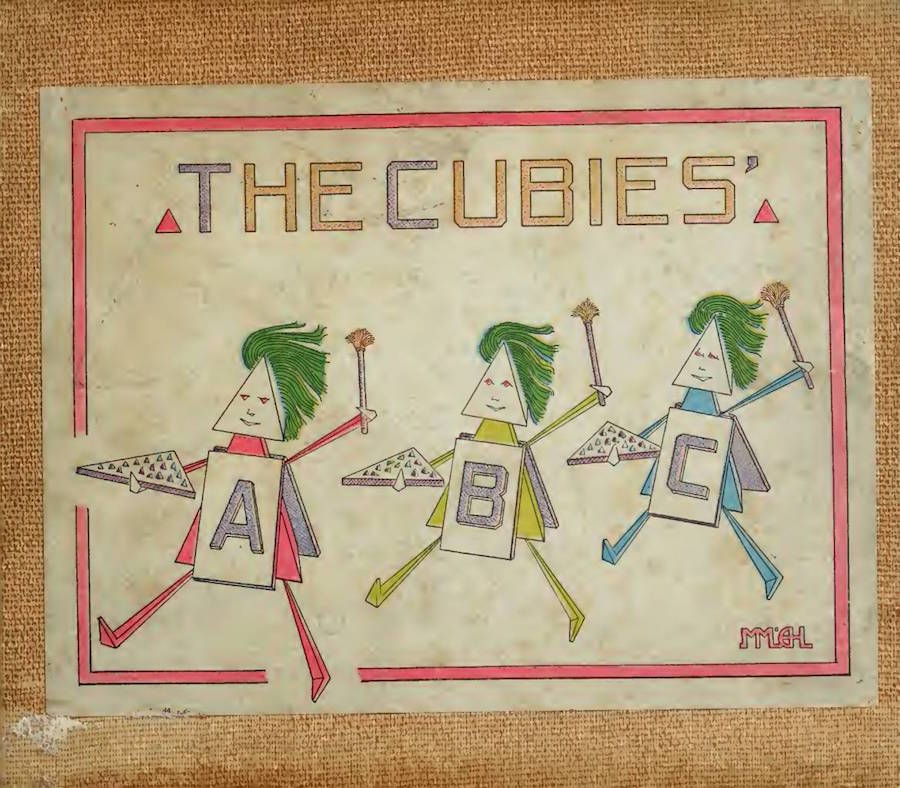
Meet the Cubies: Modern Art spoof from 1913
The revolution started on February 17, 1913, when four thousand members of the American public were confronted by the work of a group of European artists exhibited at the 69th Regiment Armory on Lexington Avenue, New York. The shock of this cultural invasion, called the Armory Show, claimed many. Some laughed. Some fumed. Some had an attack of the vapors. There were even those who felt their senses had (somehow) been physically assaulted by the canvases painted by artists like Vincent Van Gogh, Paul Cezanne, Henri Matisse, Pablo Picasso and in particular Marcel Duchamp whose Nude Descending a Staircase No. 2 proved to be the most sensational exhibit on display. This, many critics and members of the public claimed, was not art, it was mere childlike daubing. It was anarchy.
When the exhibition arrived in Chicago, the Illinois Legislative Investigators probed “the Moral Tone of the Much Touted Art” over its “many indecent canvasses and sculptures.” When a third city Boston capitulated to the exhibition later that year, Modernism had arrived in America and nothing would ever be the same.
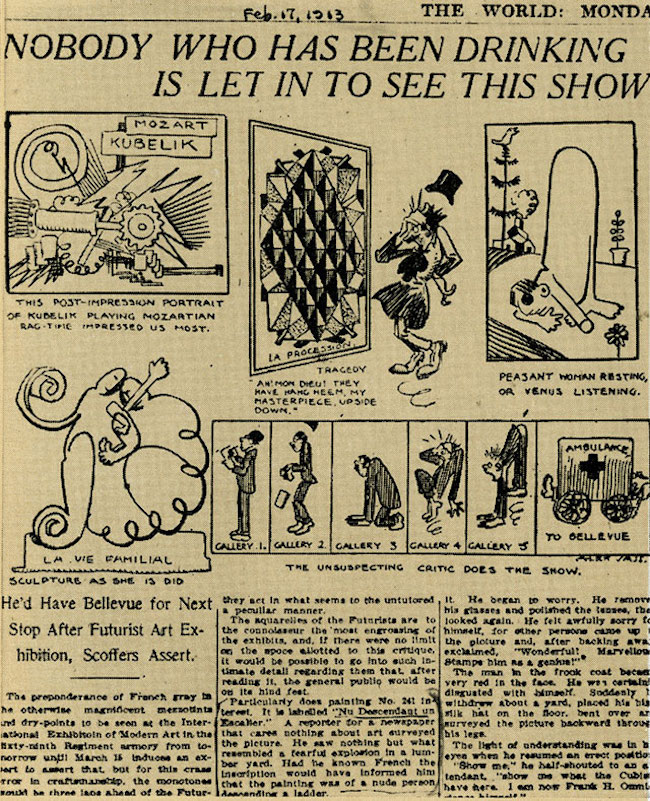
Press respond to the Armory Show from 1913.
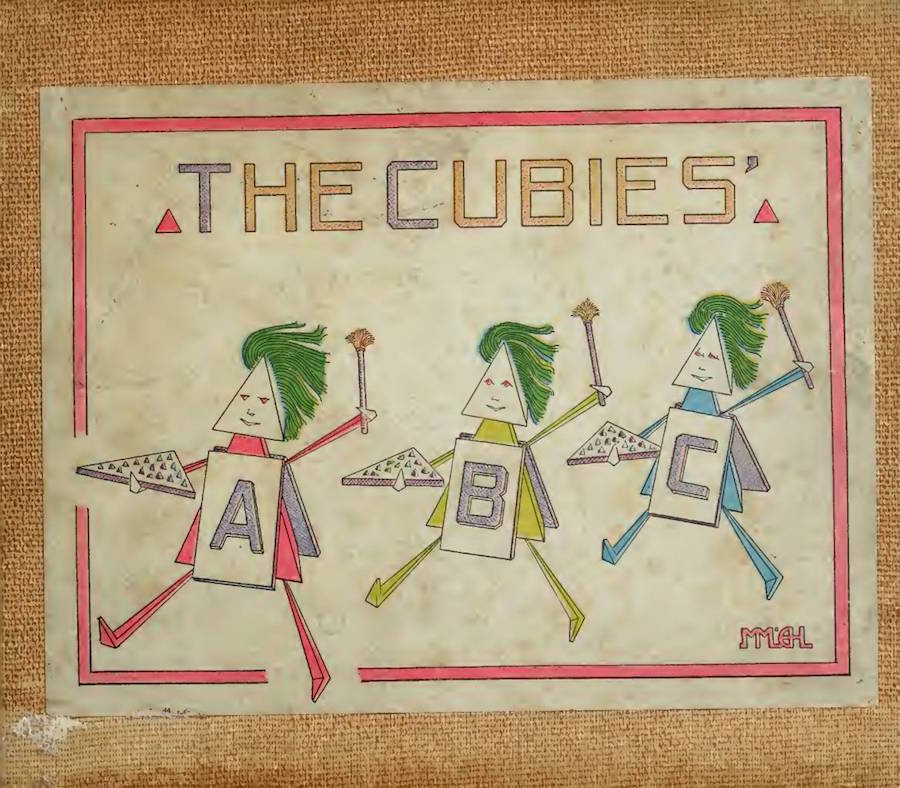
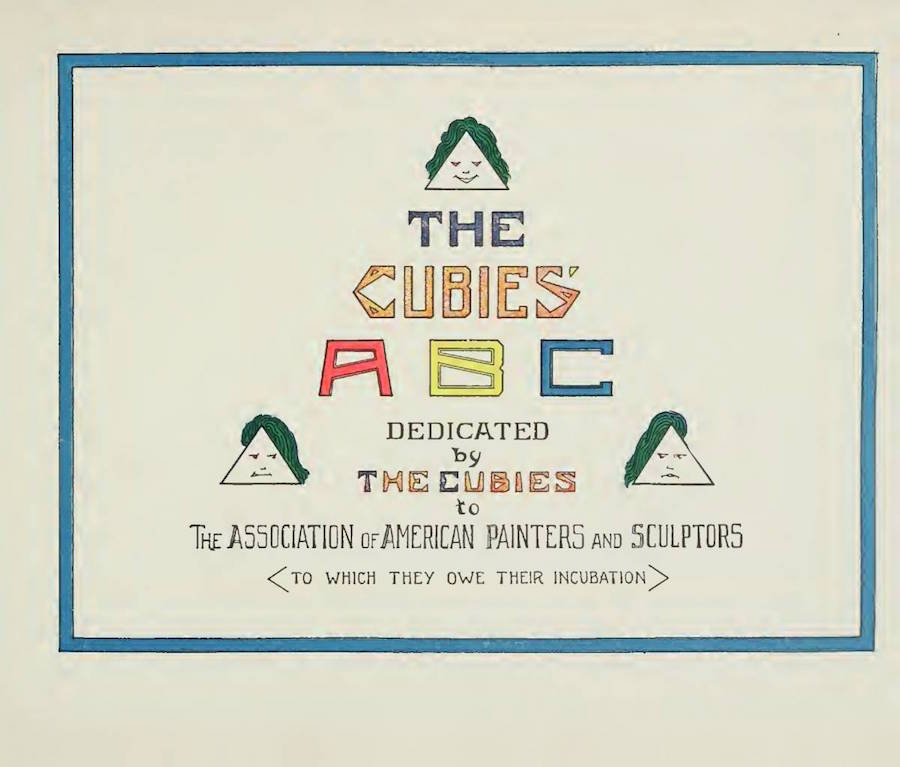
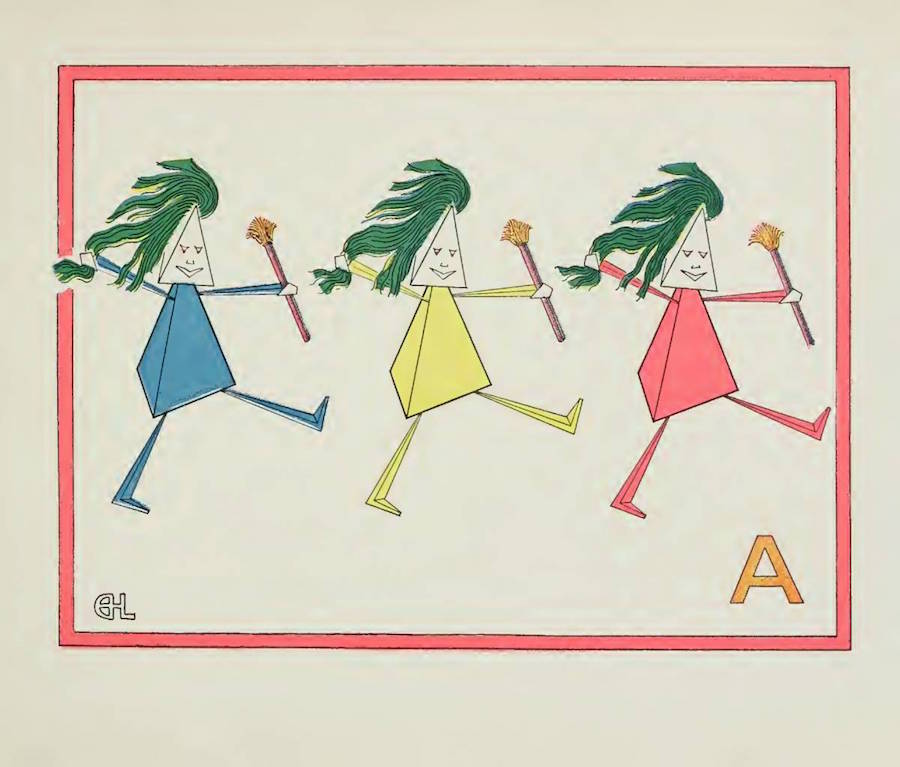
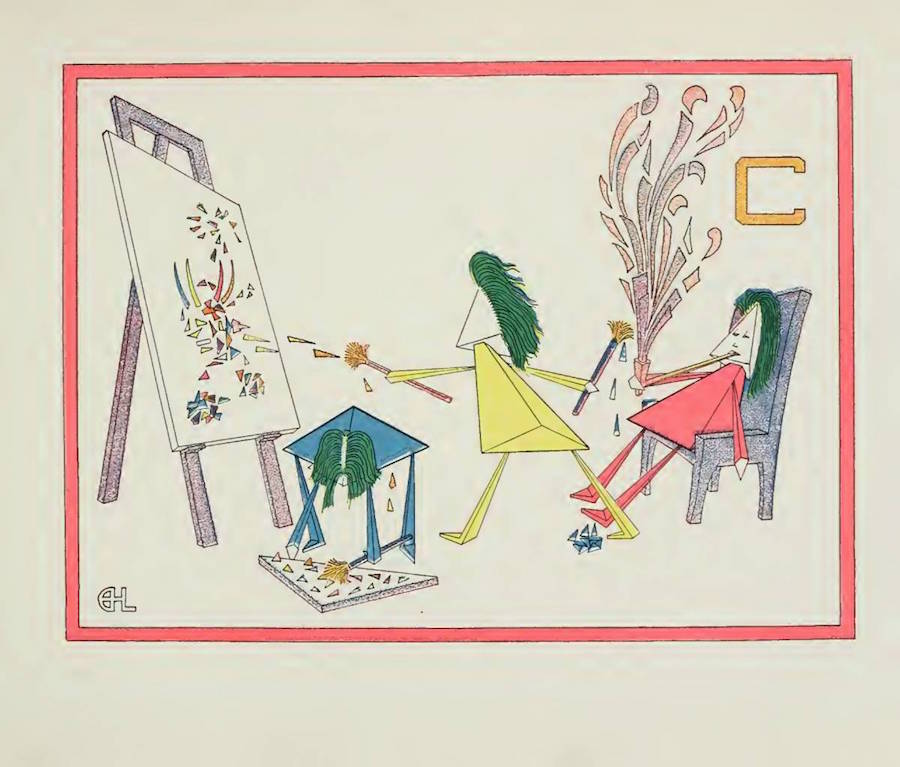
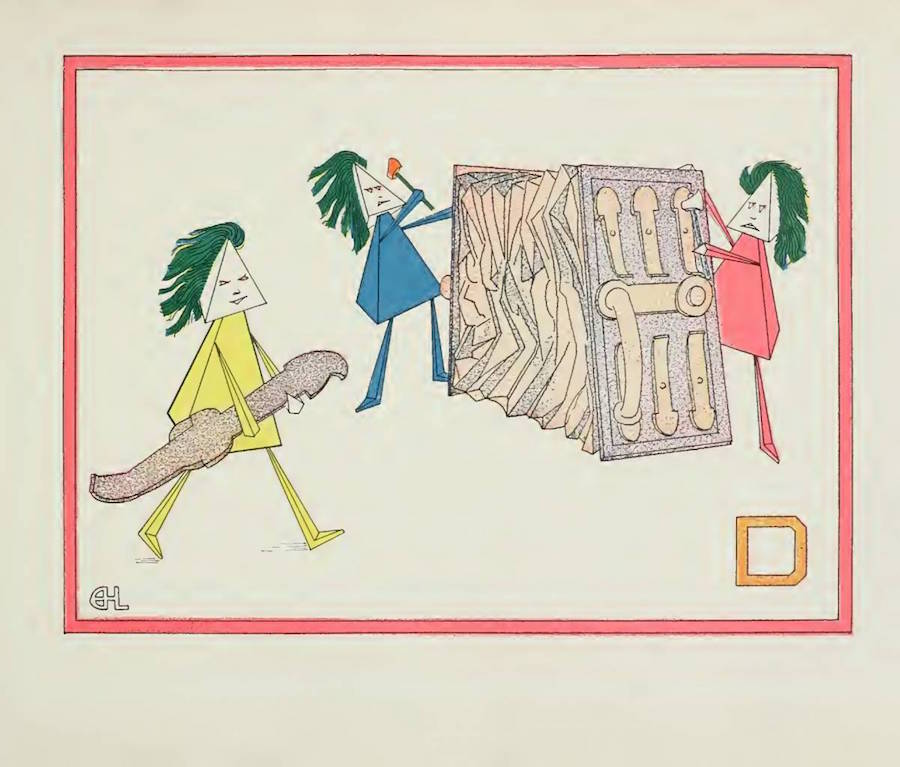
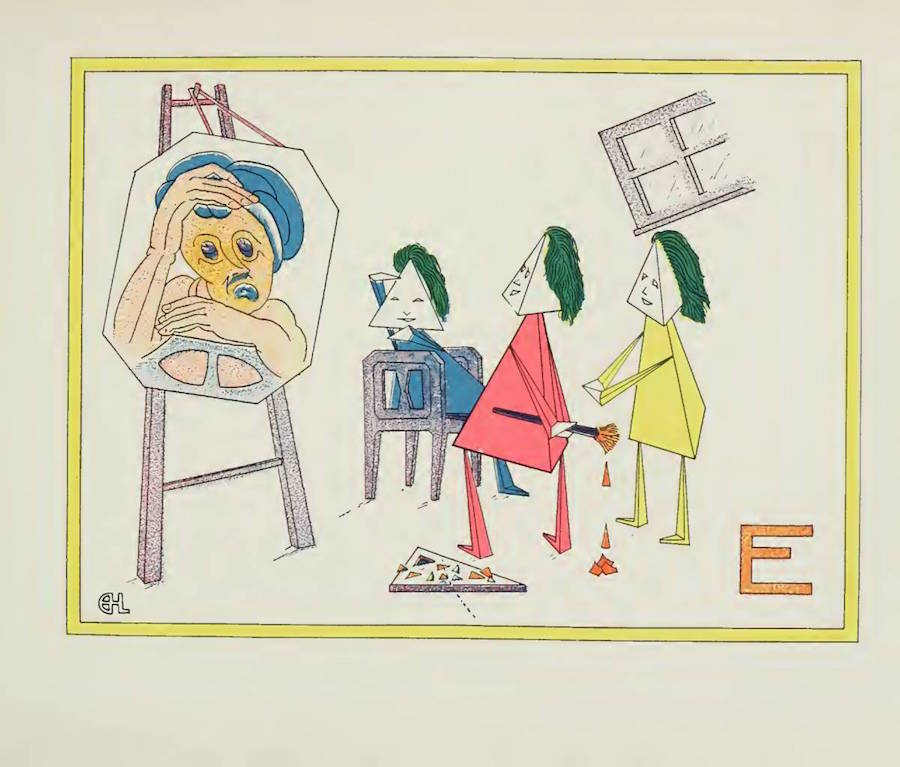
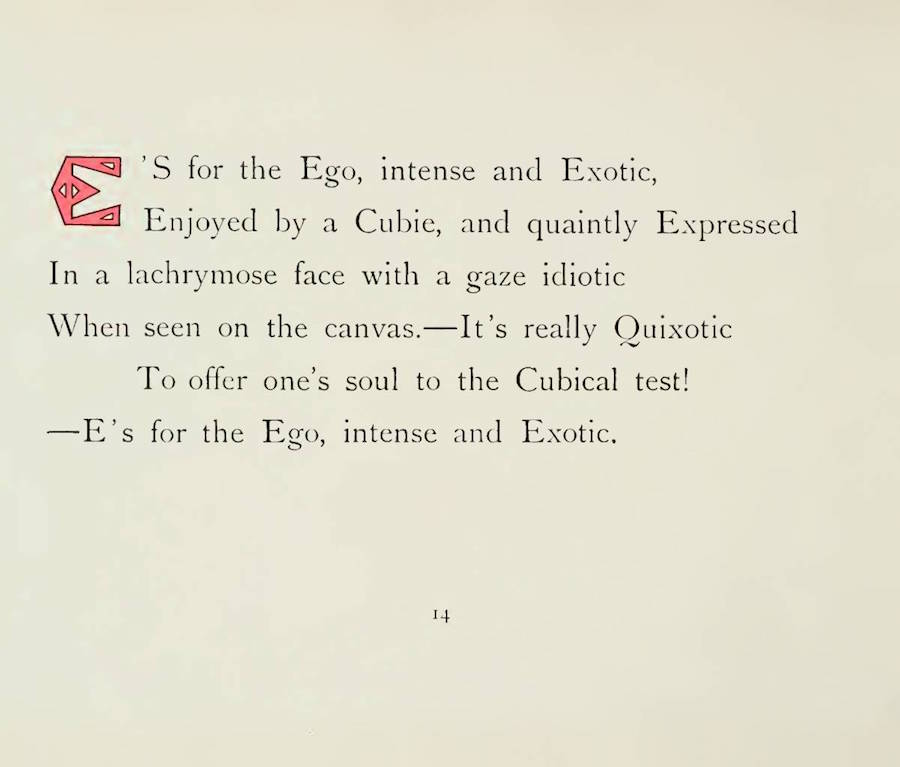
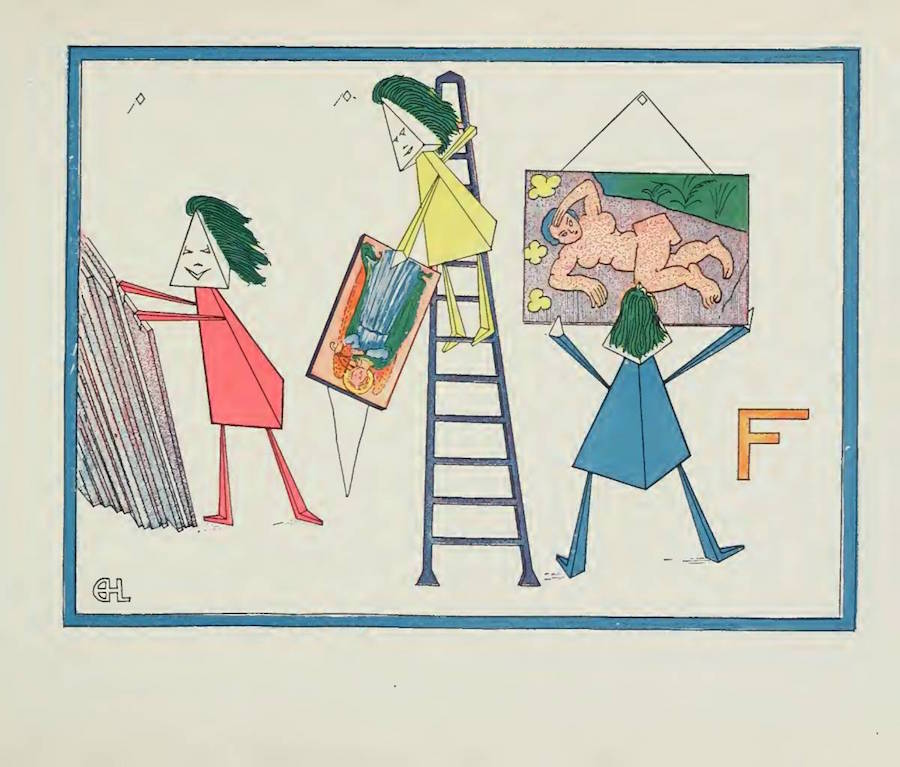
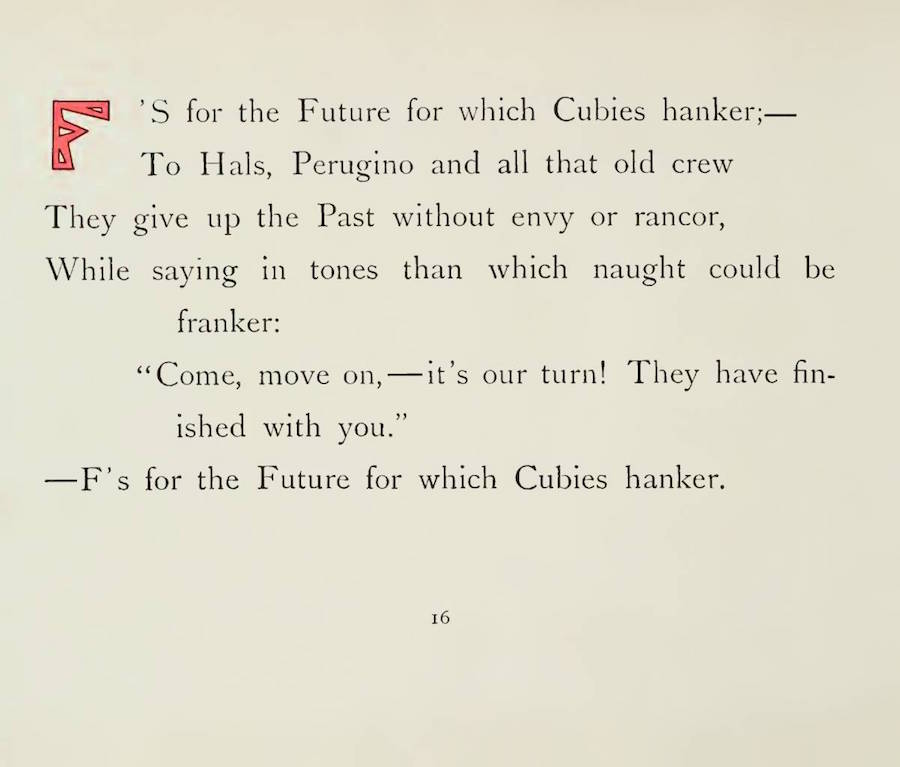
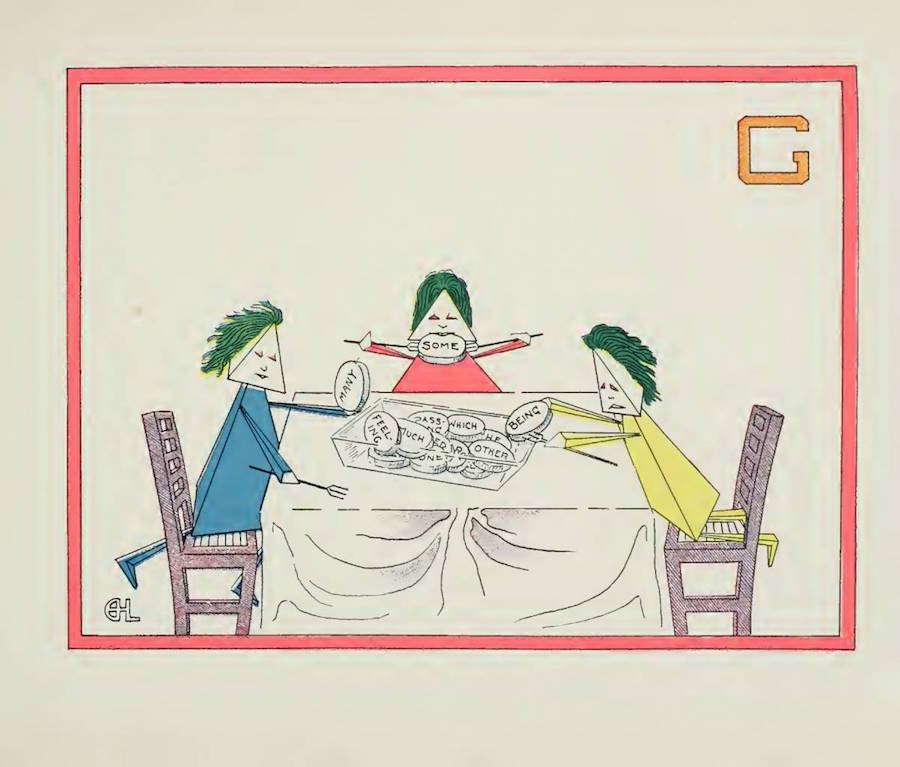
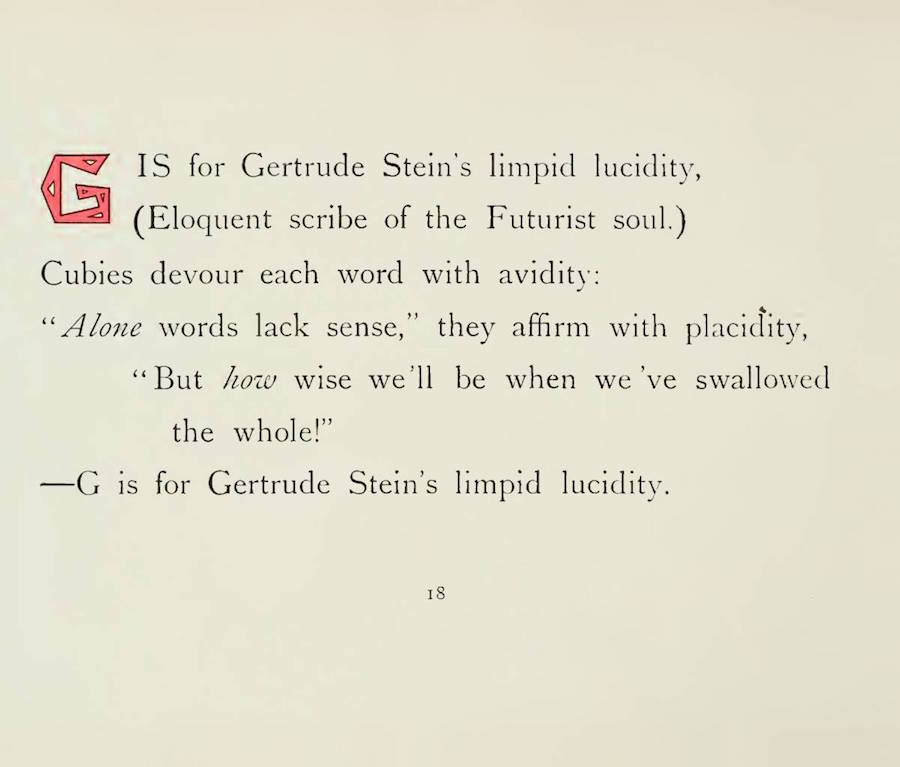
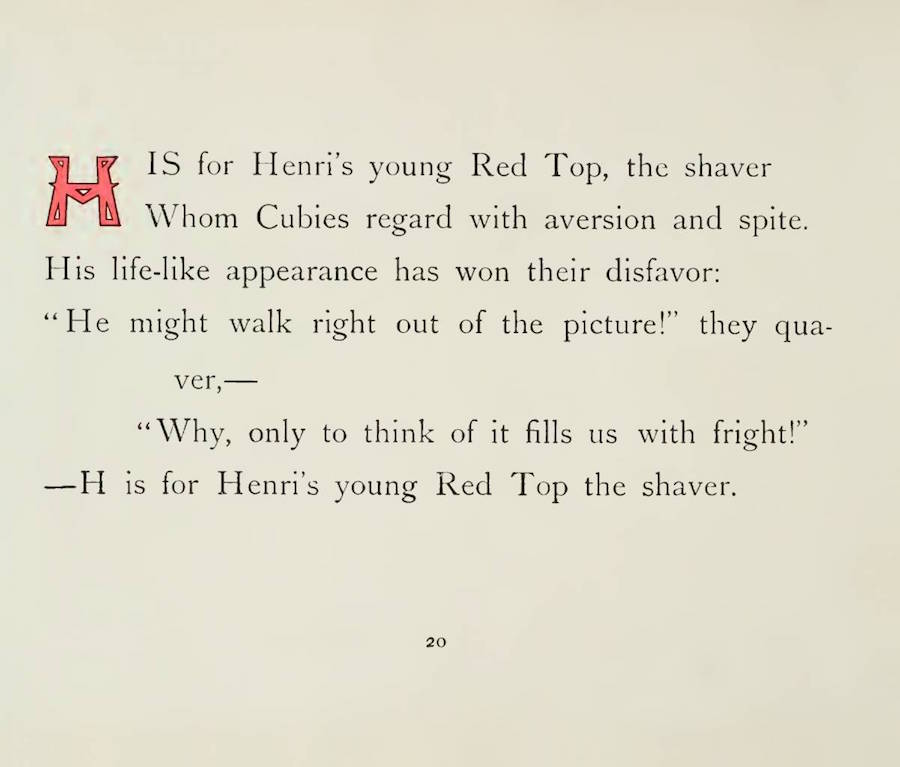
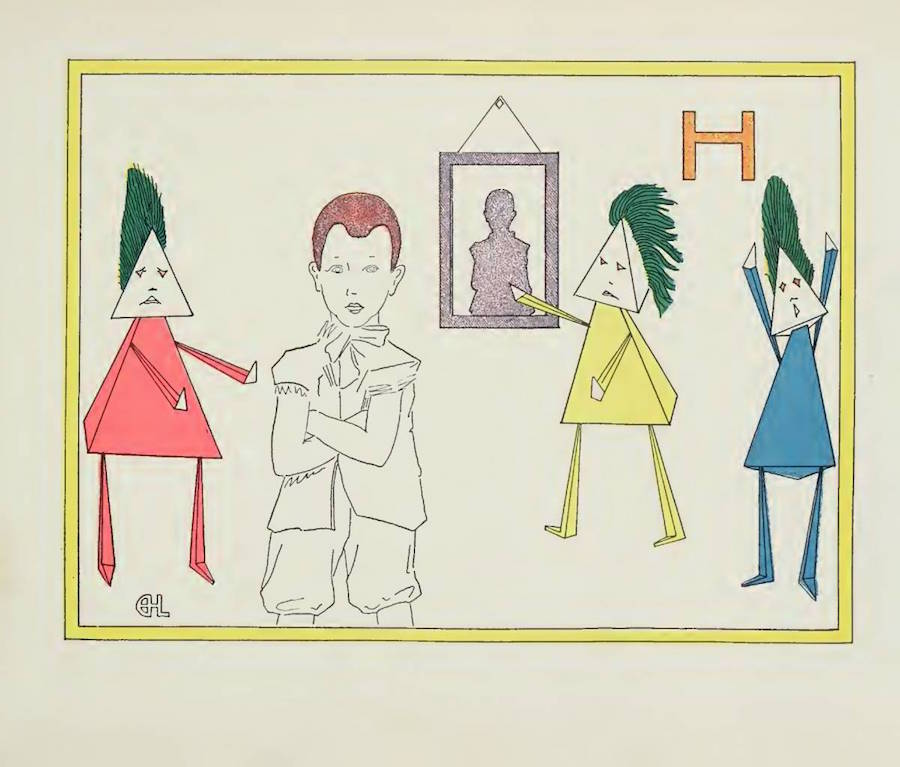
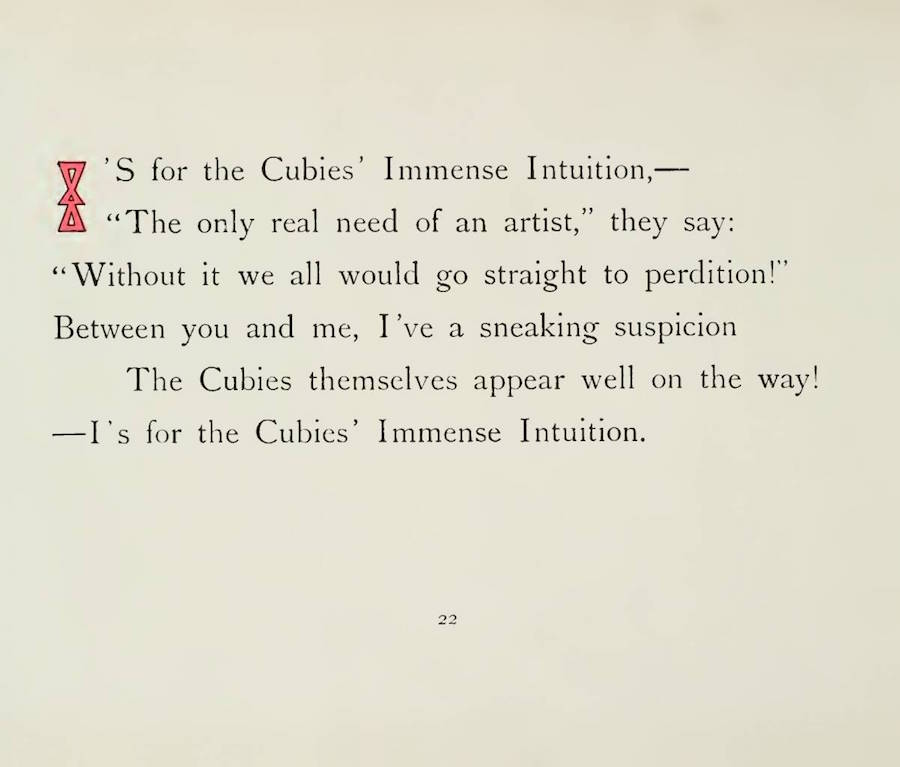
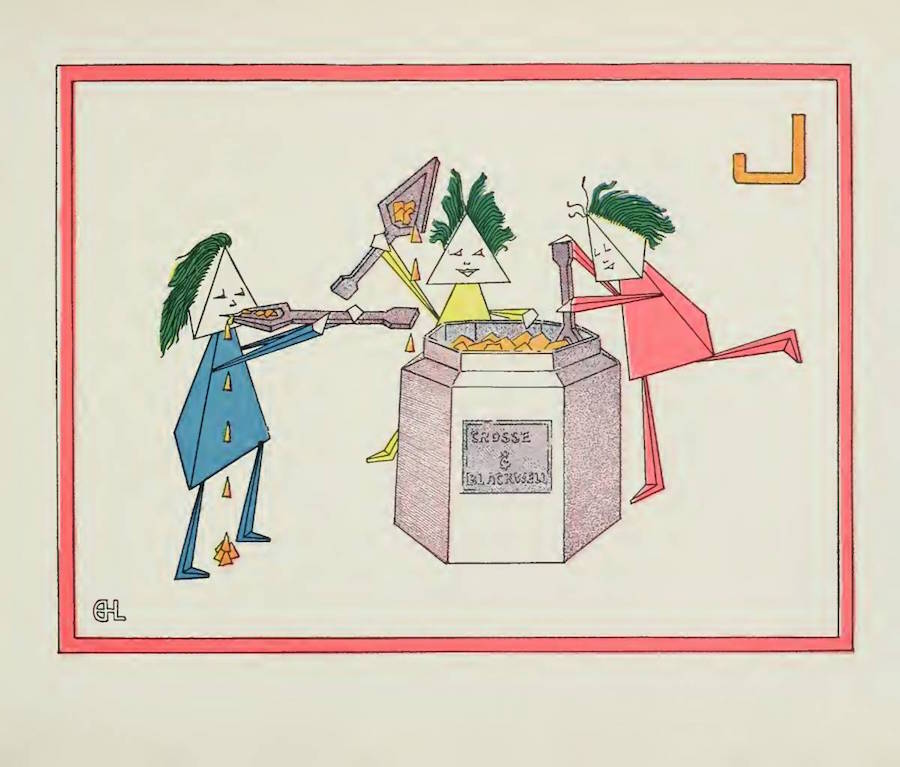
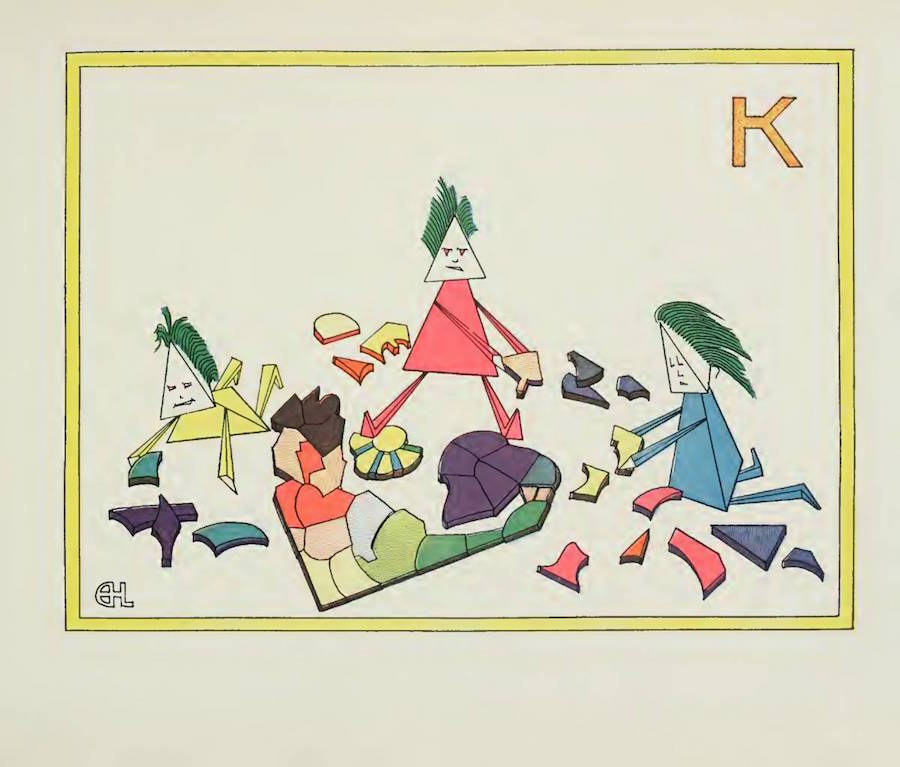
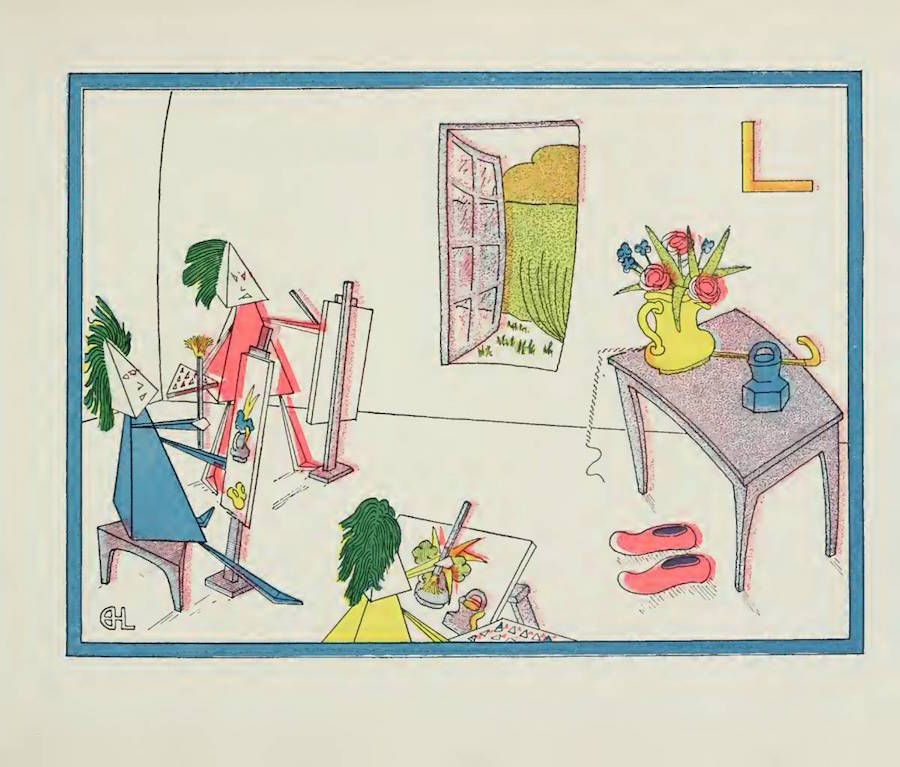
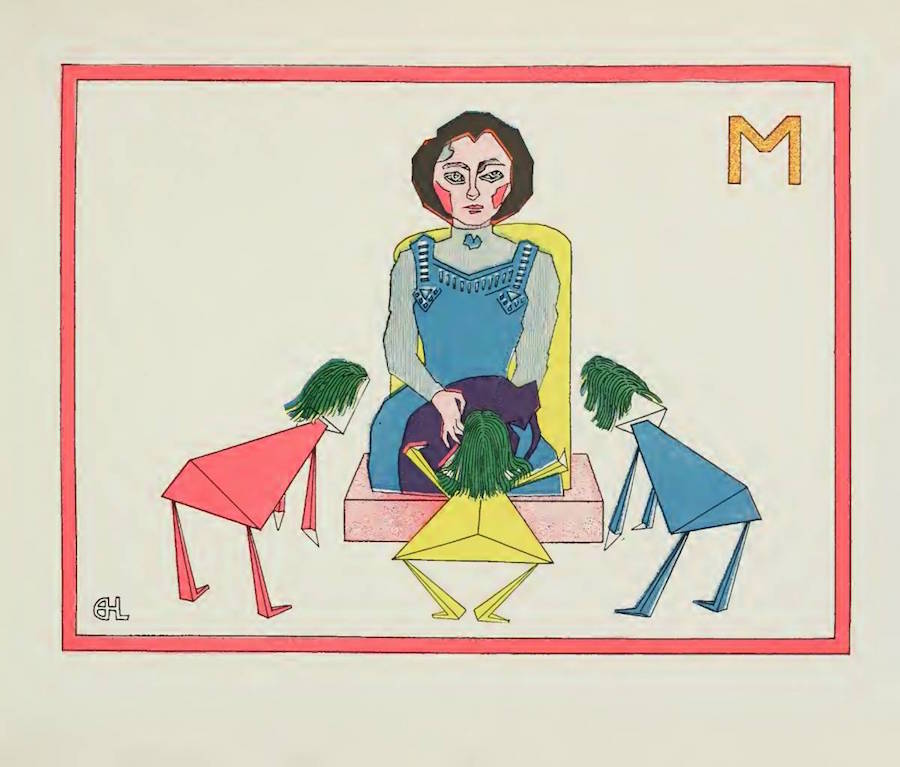
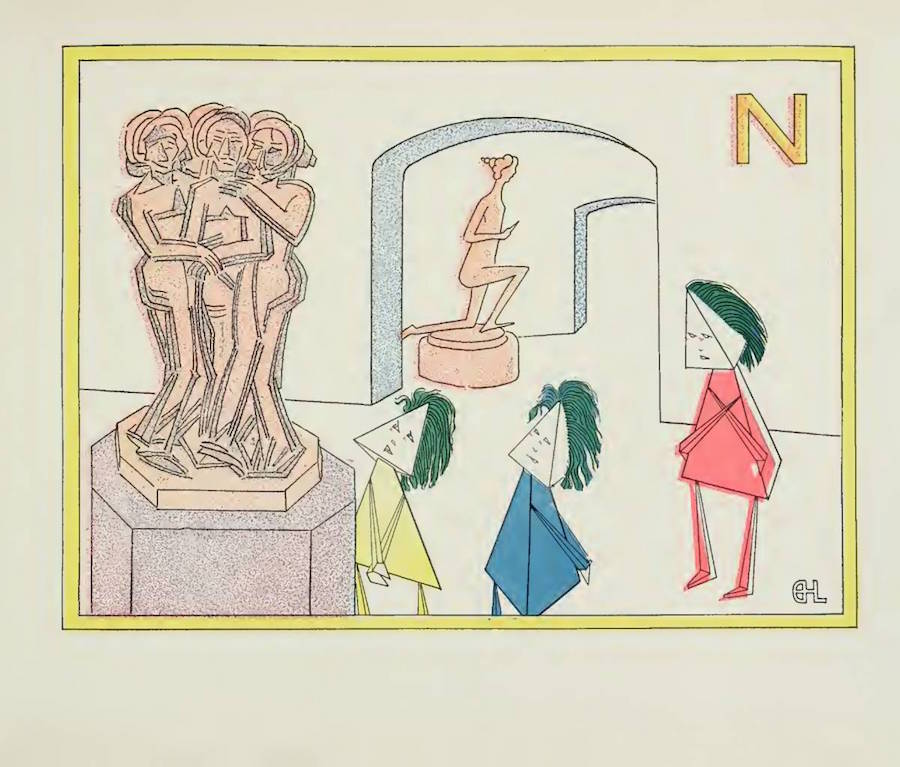
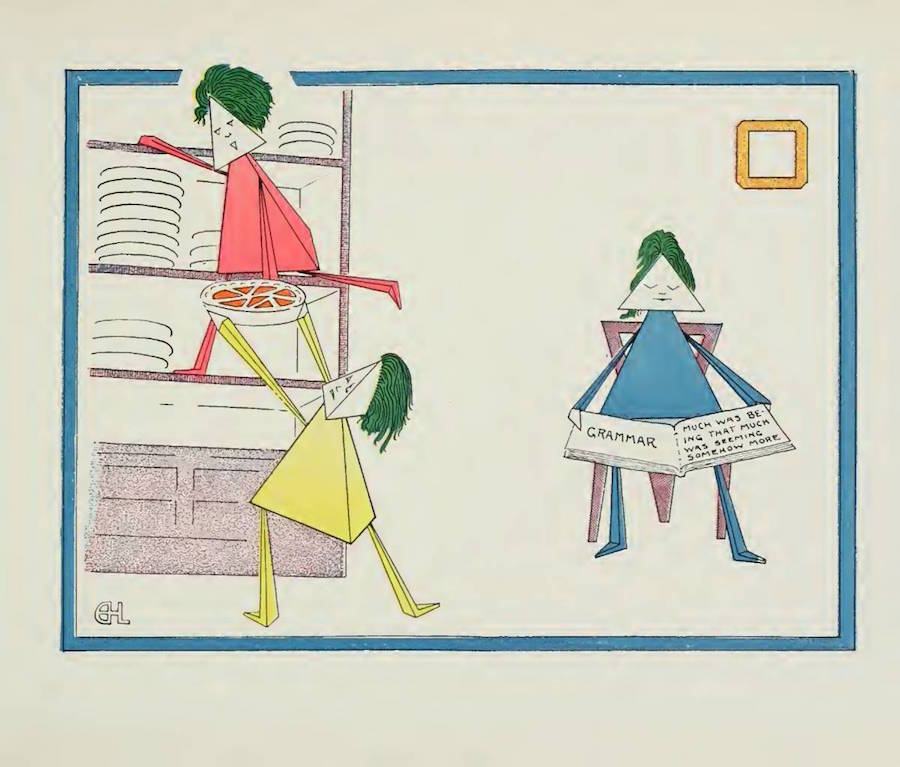
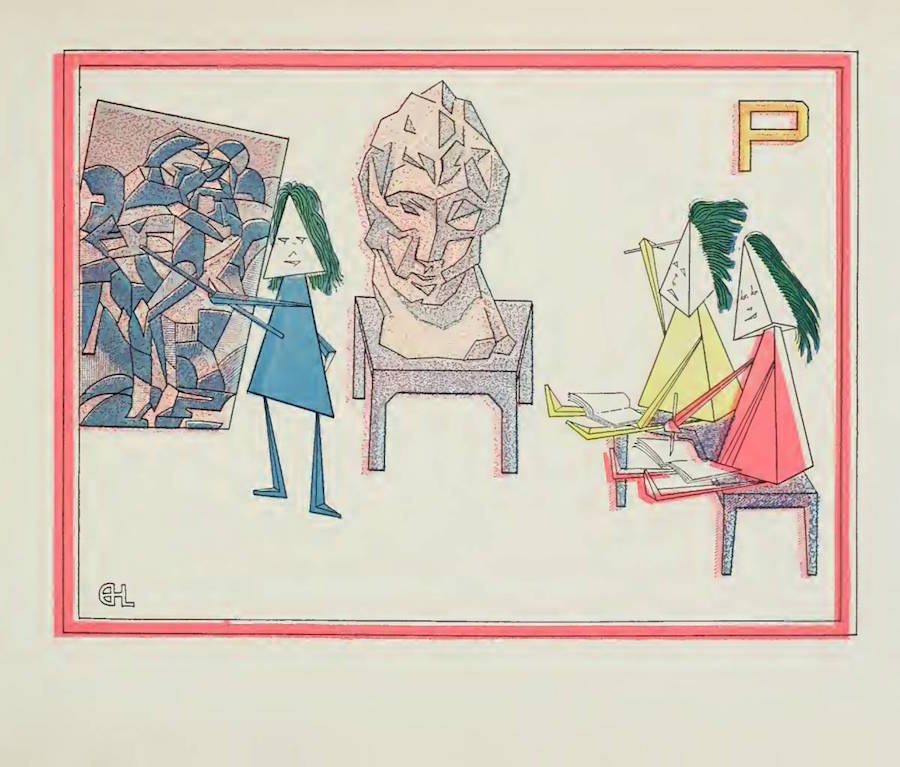
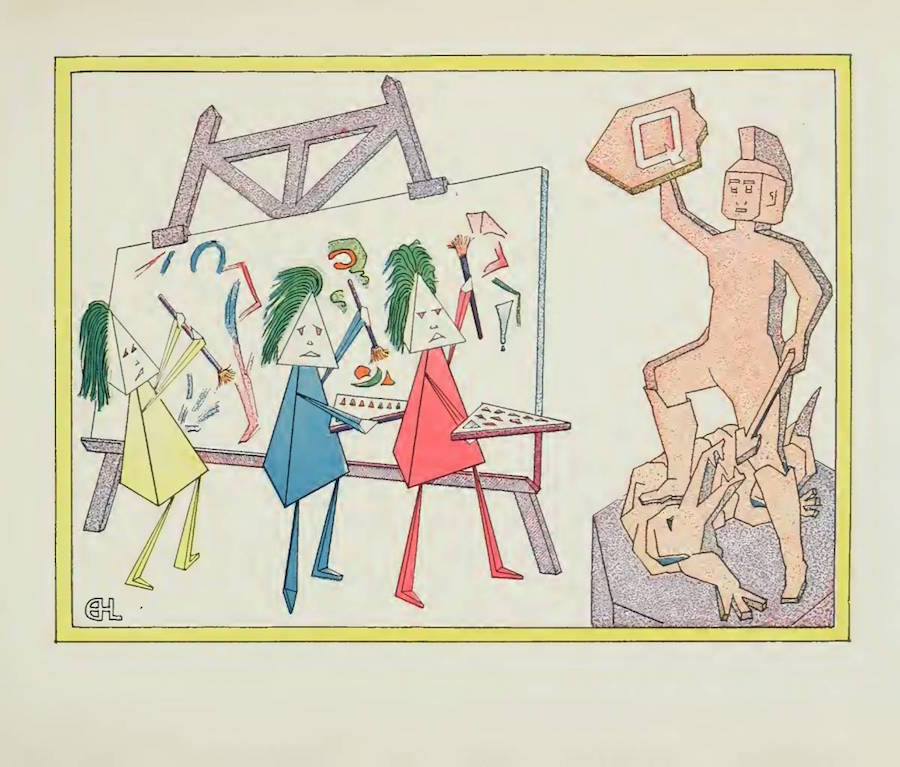
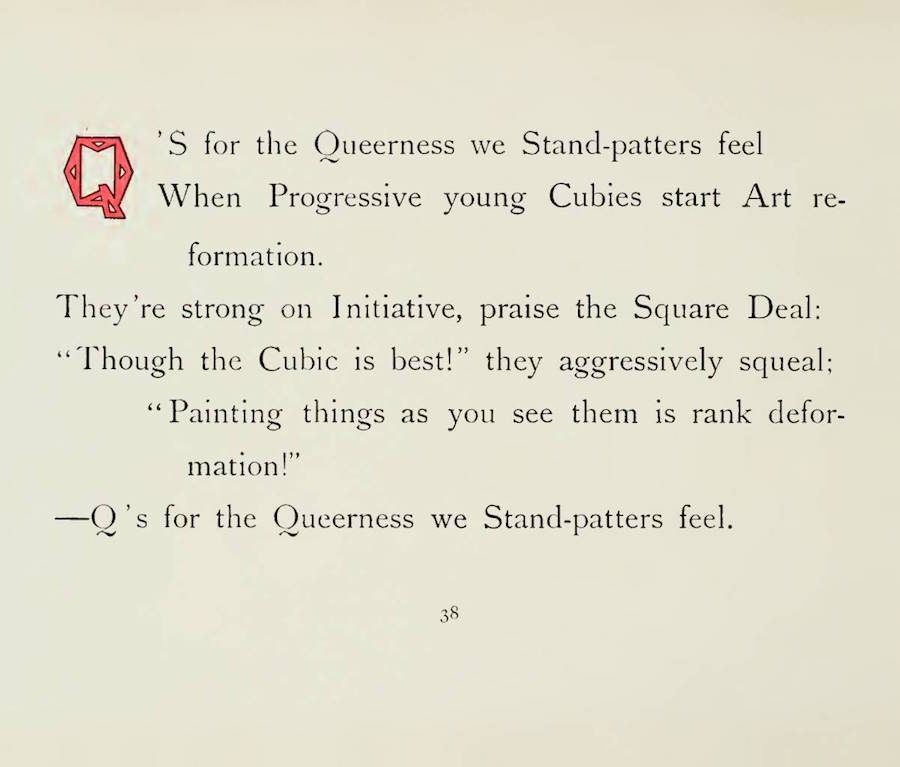
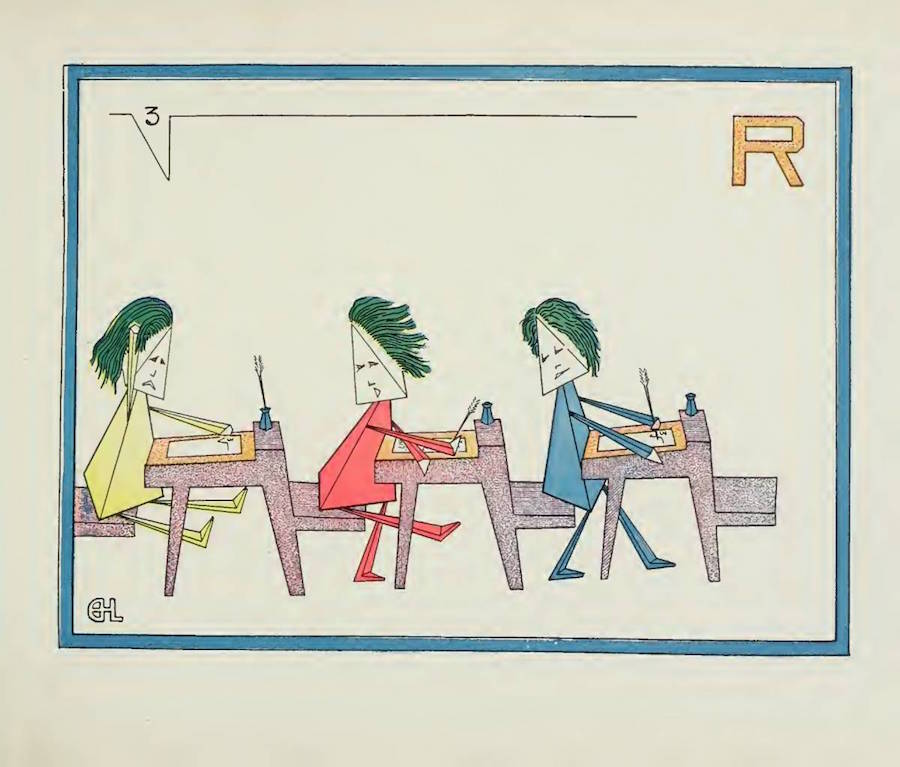
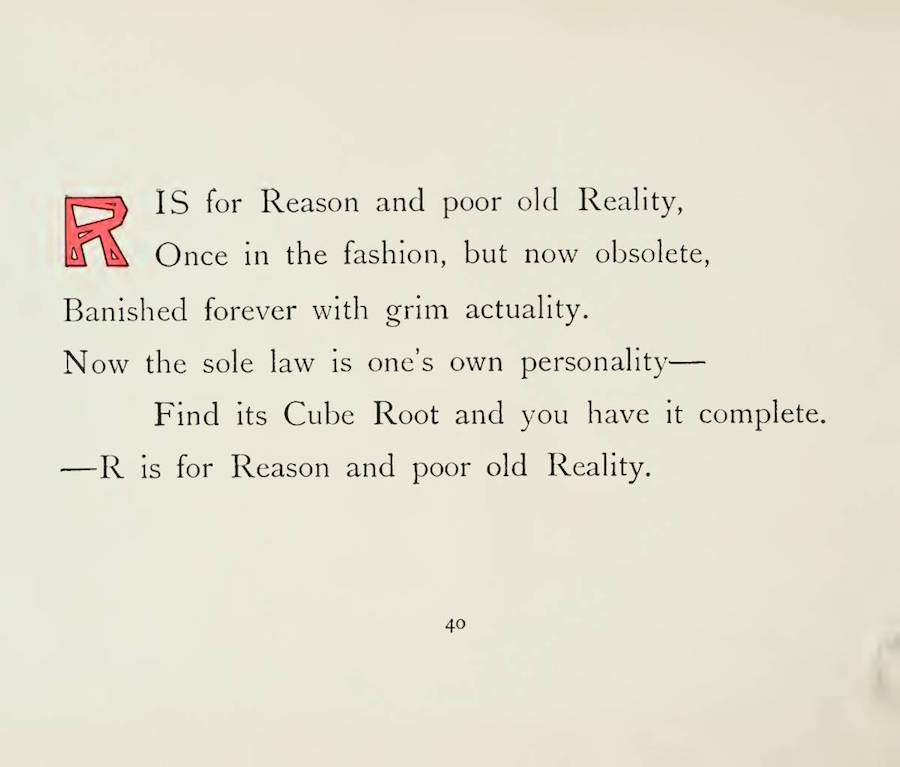
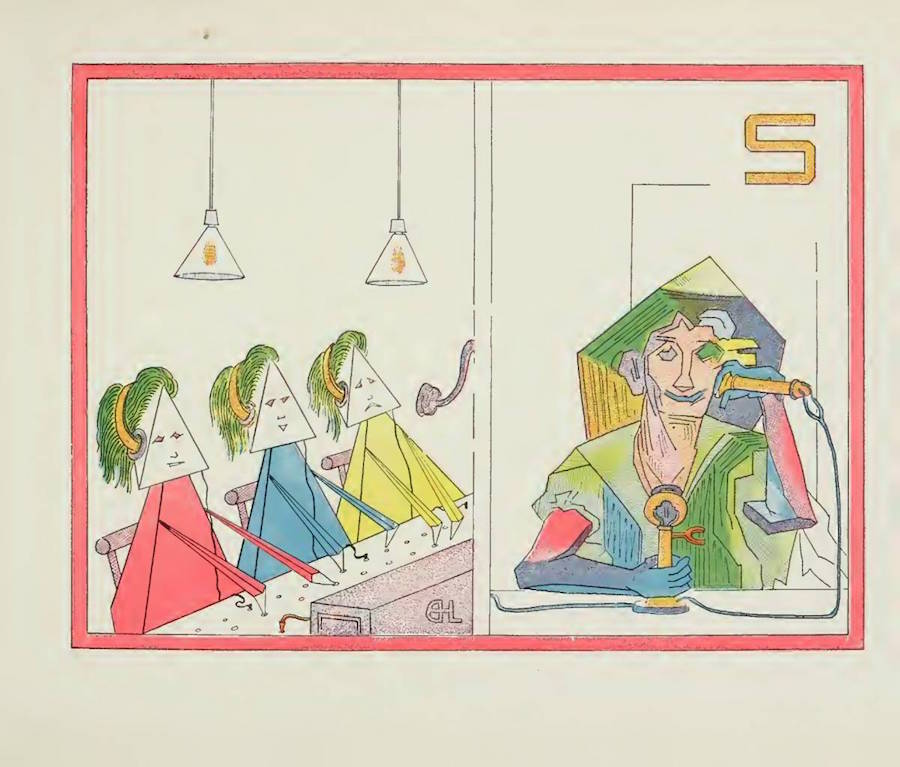
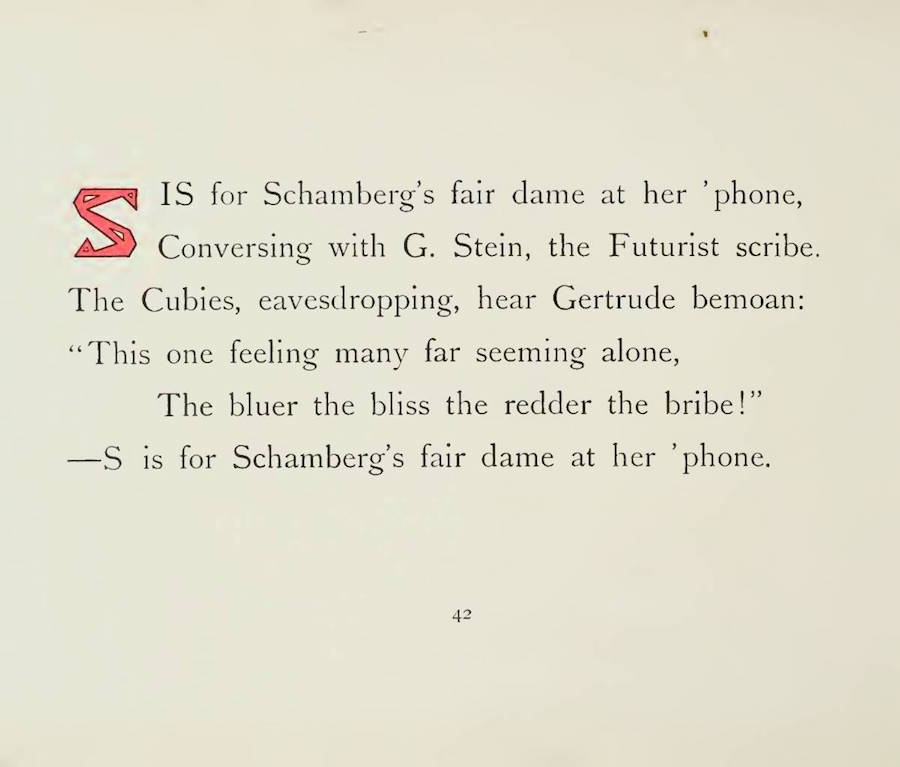
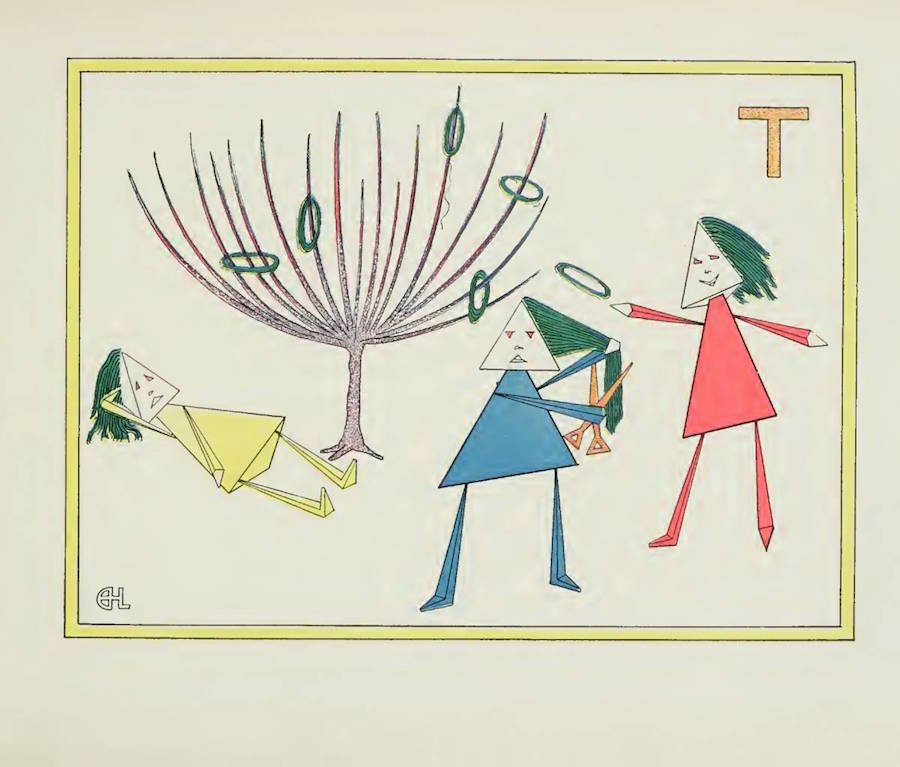
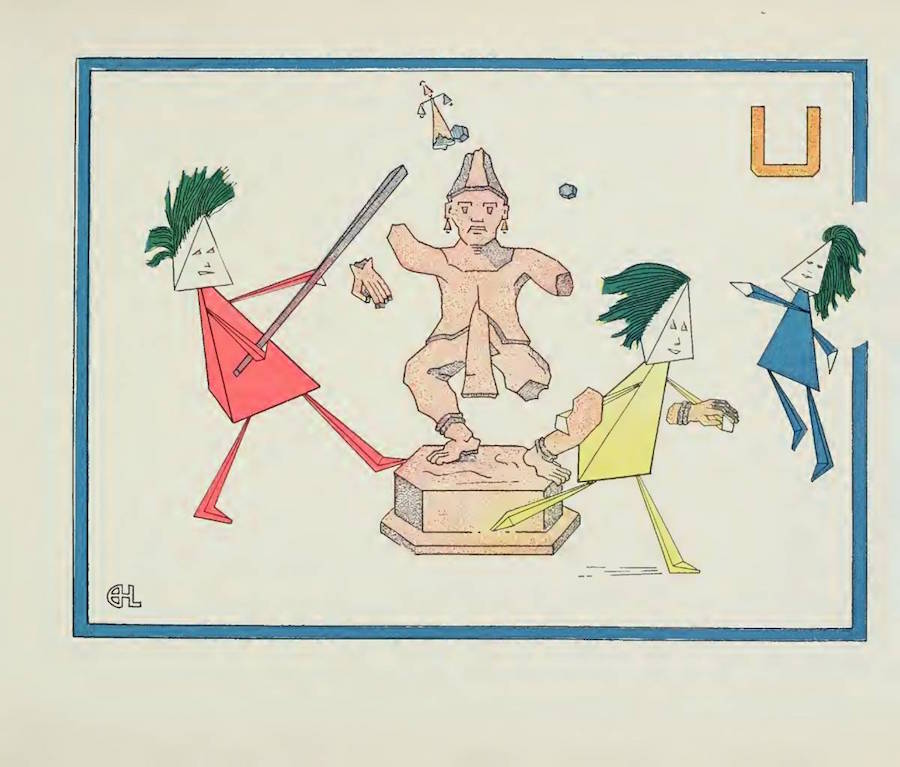
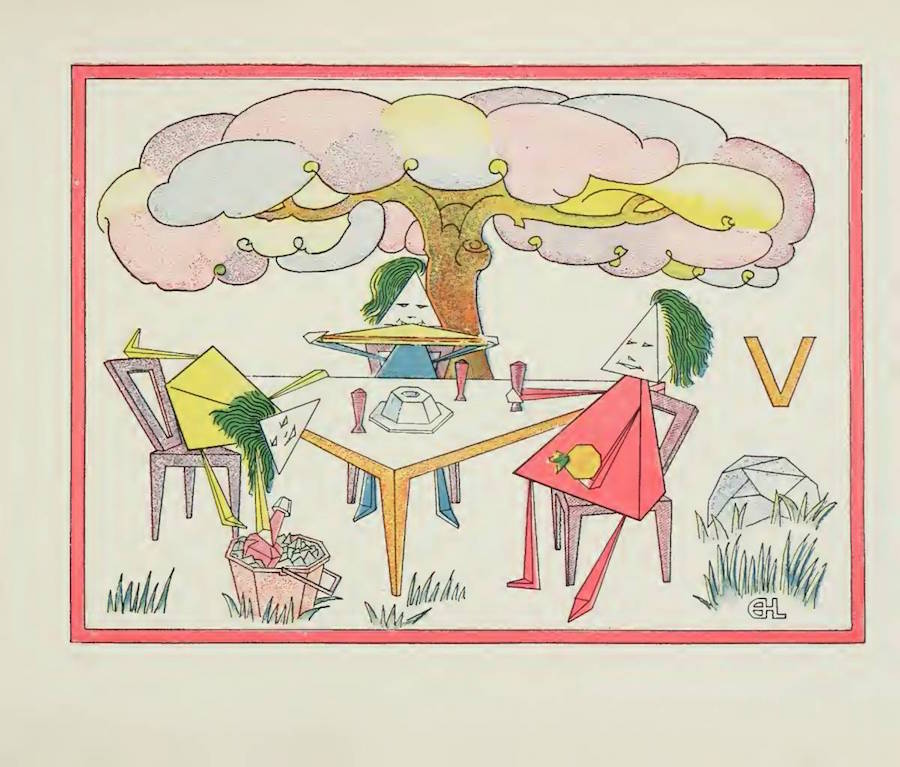
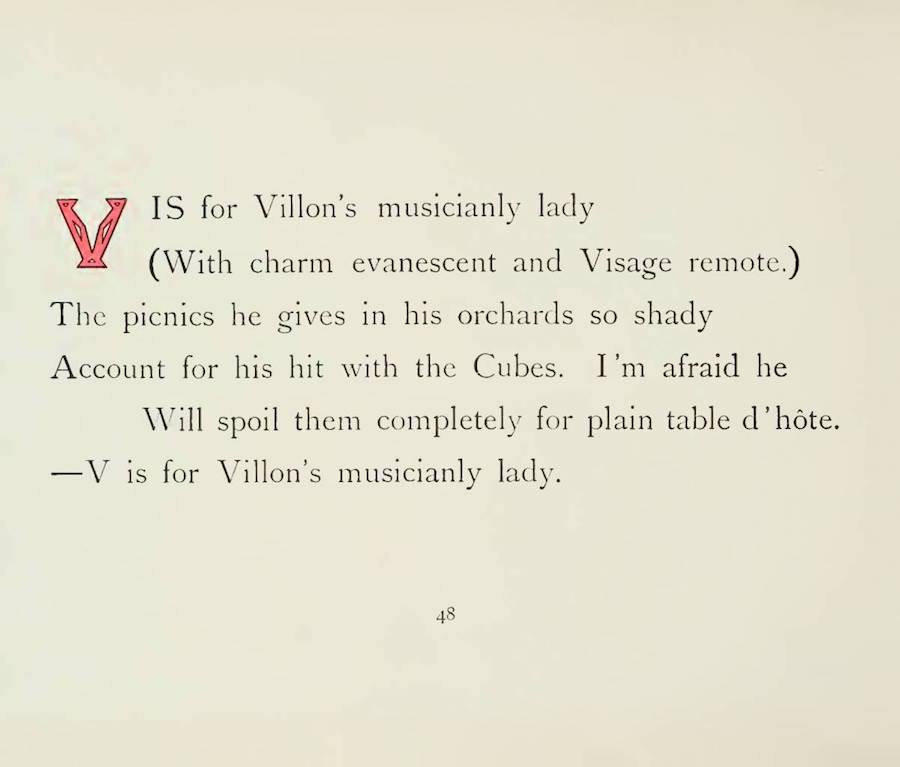
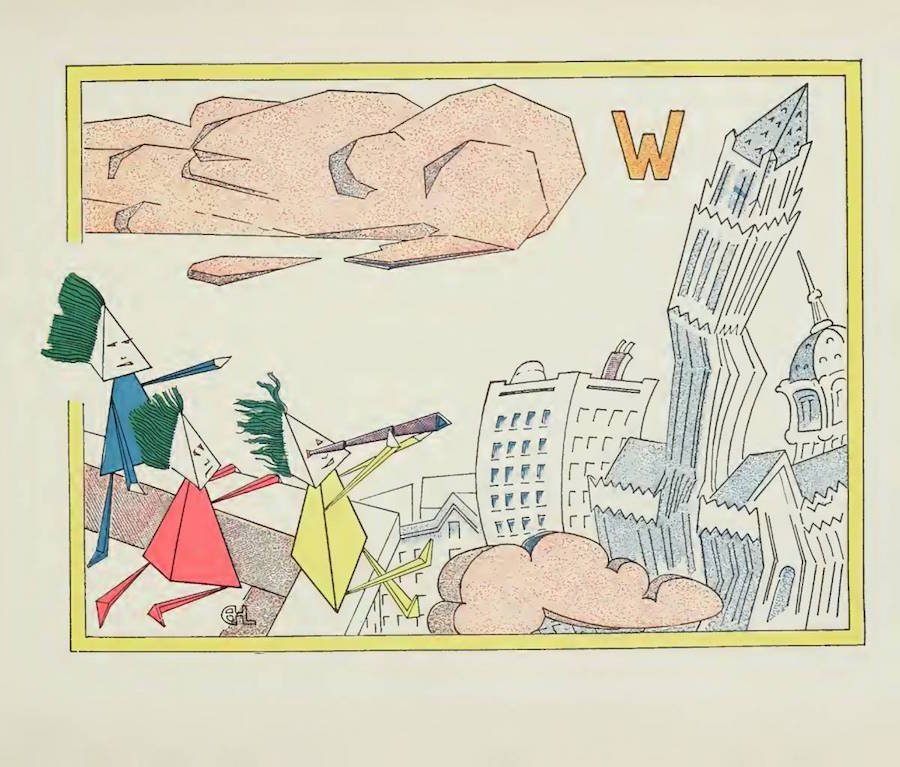
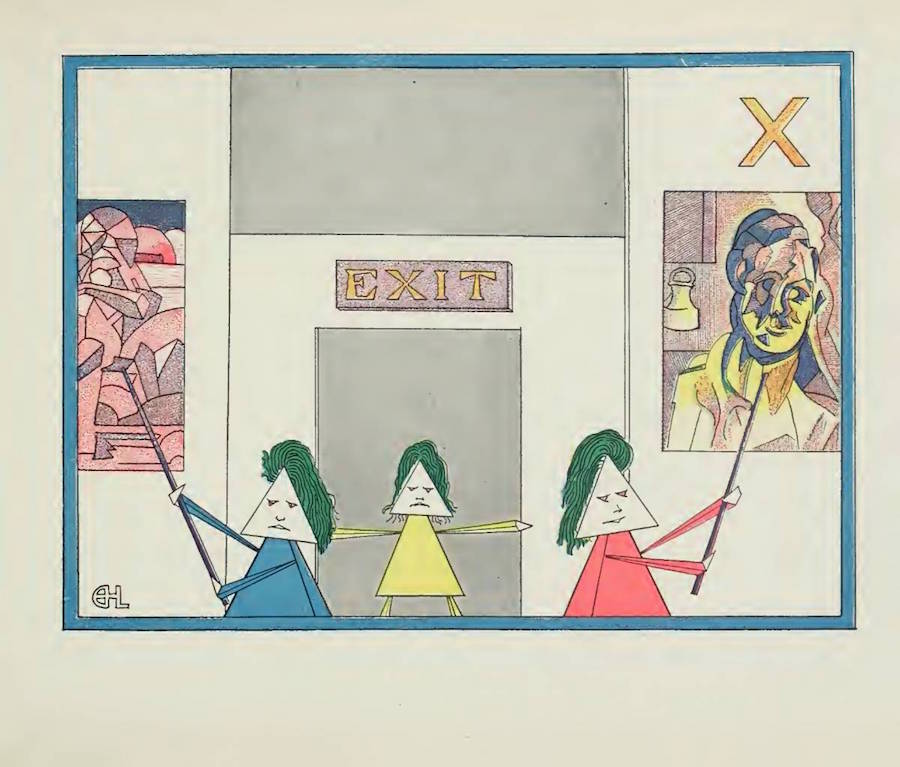
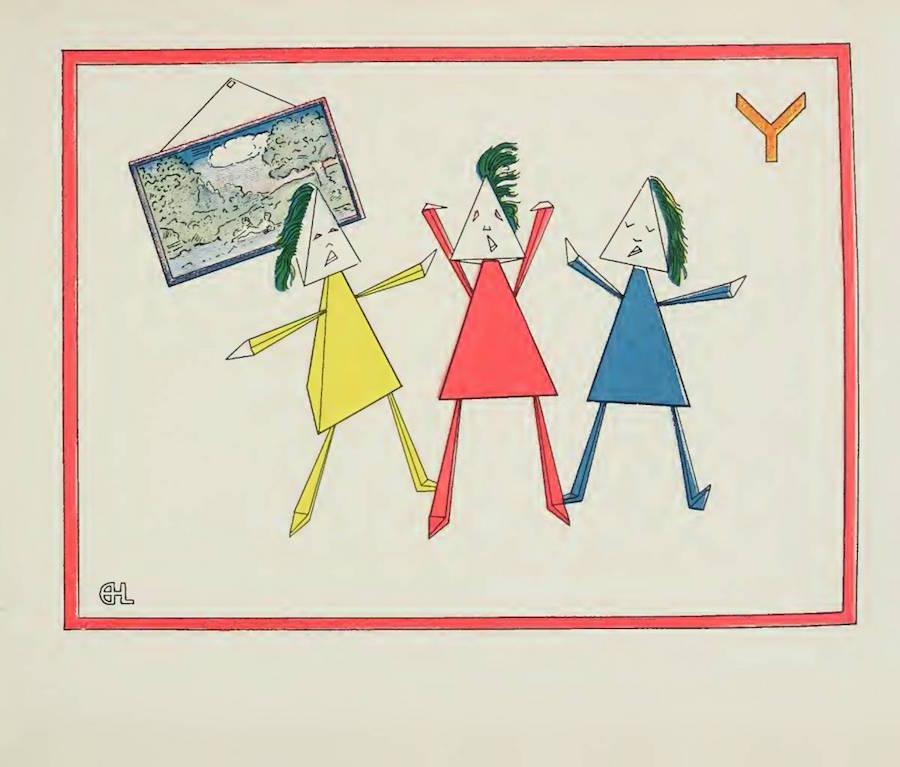
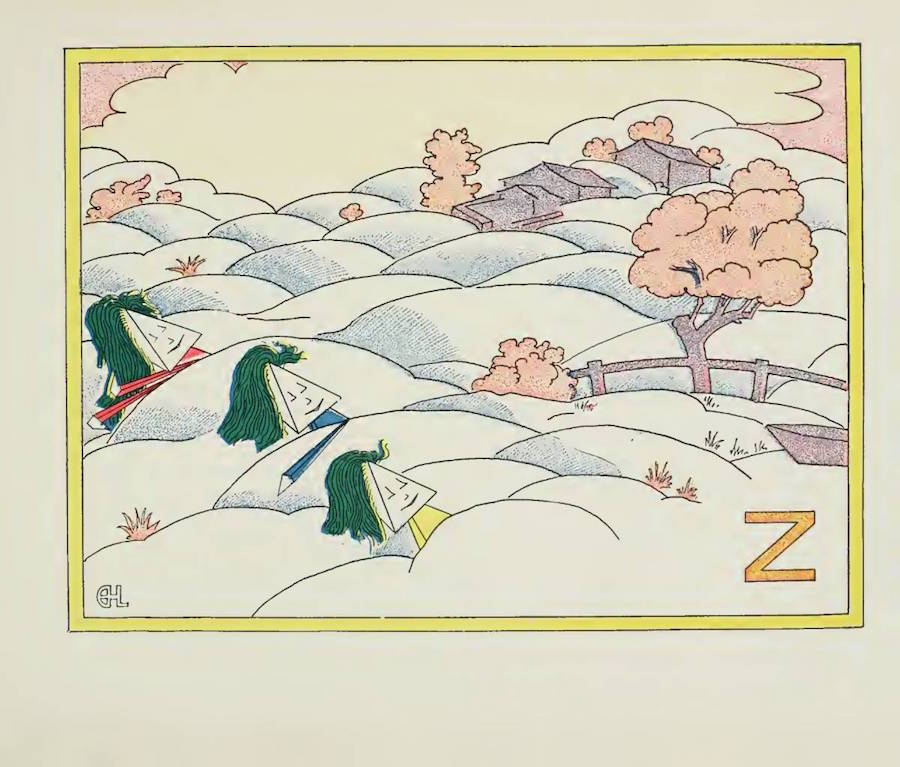
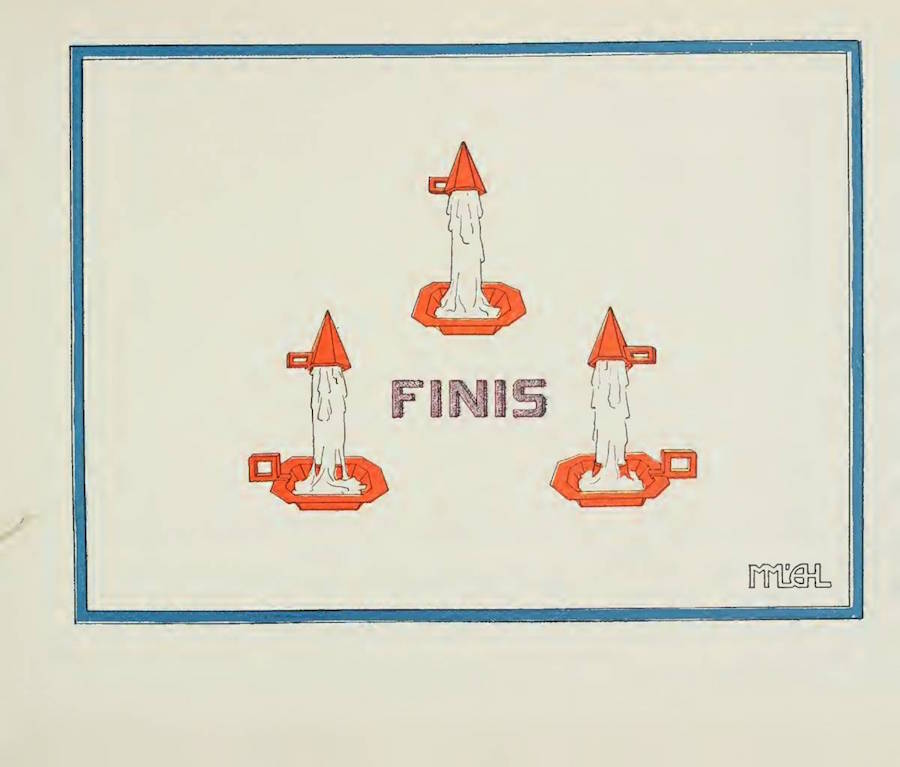
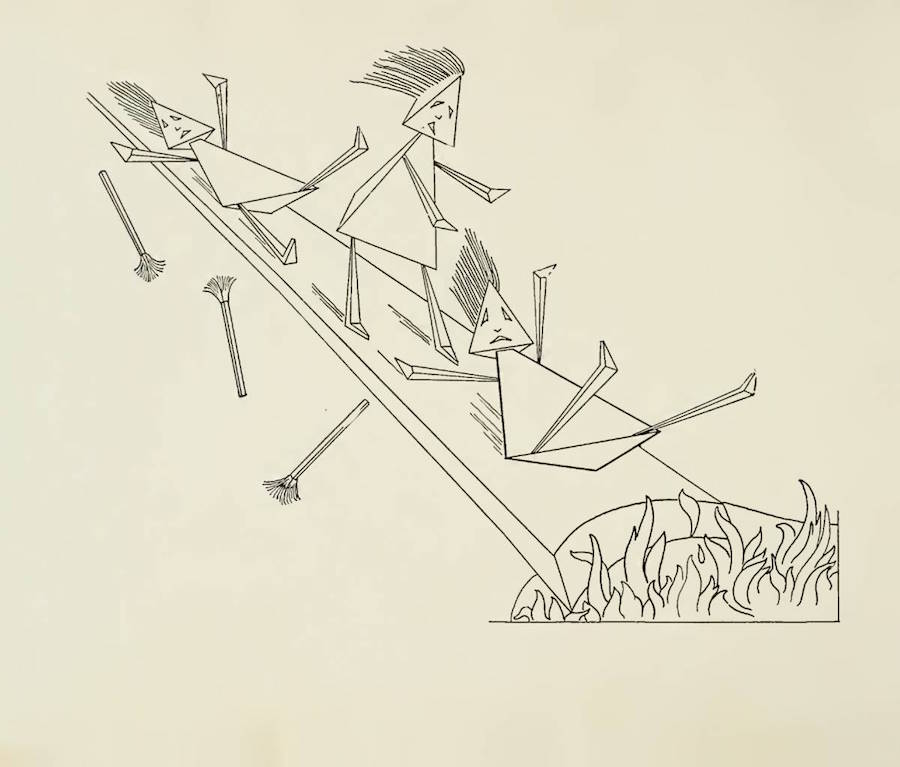
While some welcomed this cultural shift, there were many who clung to the security of the old order of classical art. In 1913, writer Mary Chase Mills Lyall (1879-1963) and illustrator Earl Harvey Lyall (1877-1932) produced an ABC book–intended for both adults and children–which poked fun at this strange new art. Their book The Cubies featured three ultra-modern, triangular figures of indeterminate sex who “moon over anything Cubist and scorn objectivity.” They owed their “incubation” to the Association of American Painters and Sculptors who had organized the Armory Show. Together these three characters lead the reader through their modernist manifesto of art:
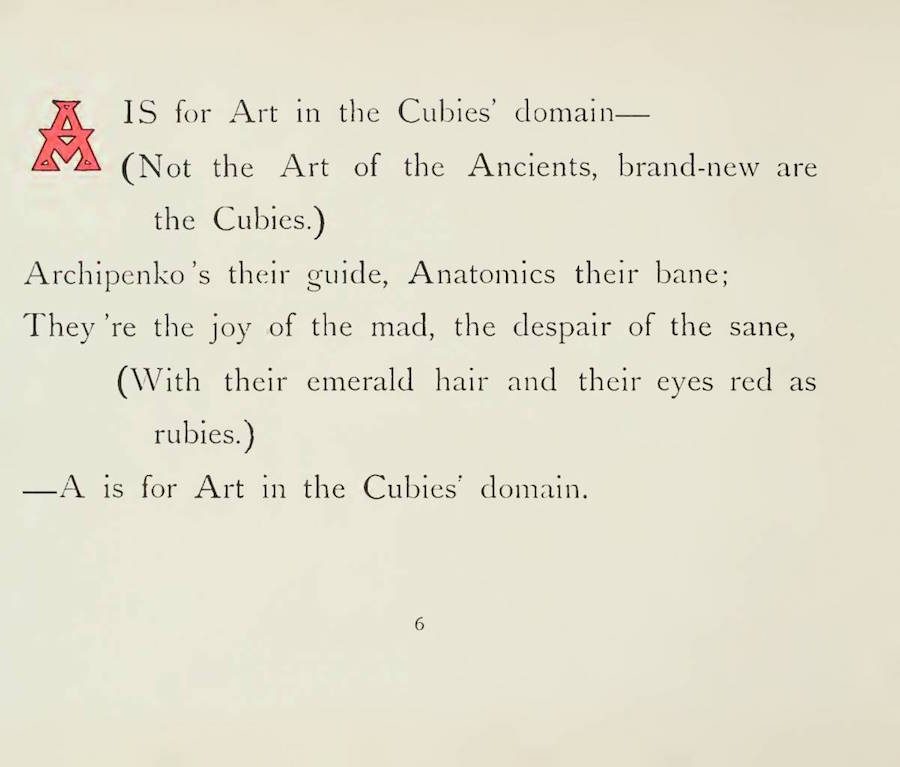
A is for Art in the Cubies’ domain–
(Not the Art of the Ancients, brand-new are the Cubies.)
Archipenko’s their guide, Anatomics their bane;
They’re the joy of the mad, the despair of the sane,
(With their emerald hair and their eyes red as rubies.)
—A is for Art in the Cubies’ domain.
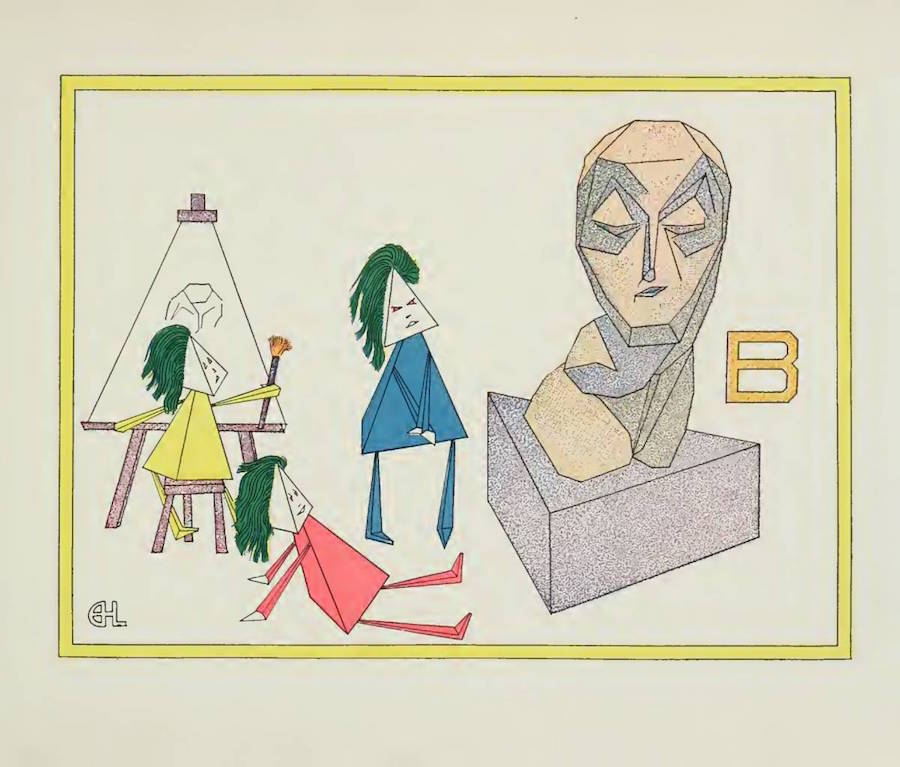
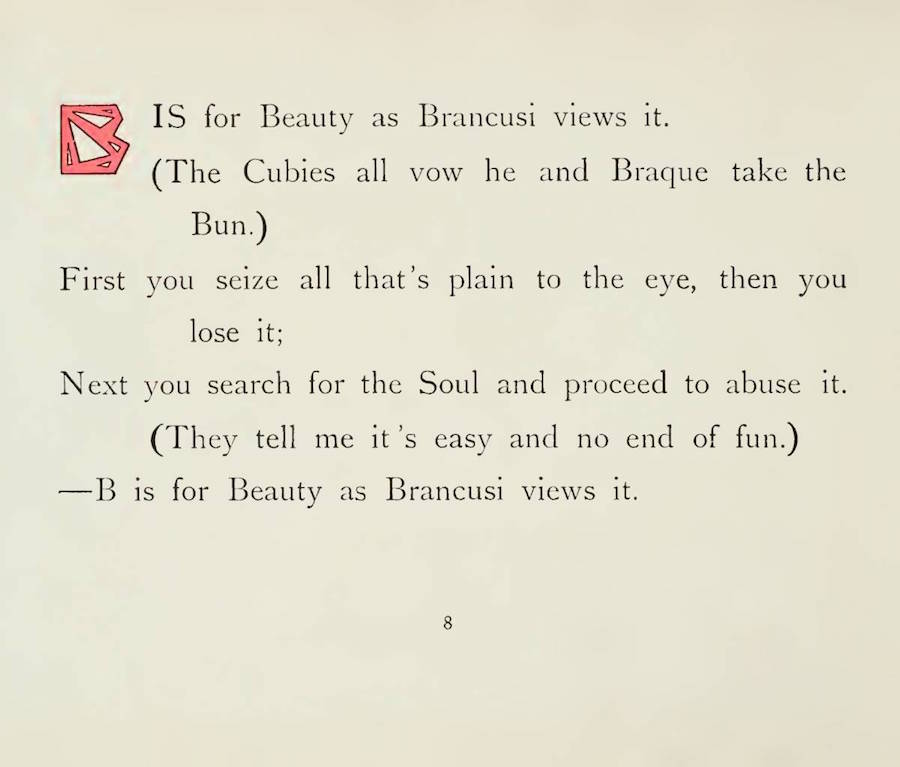
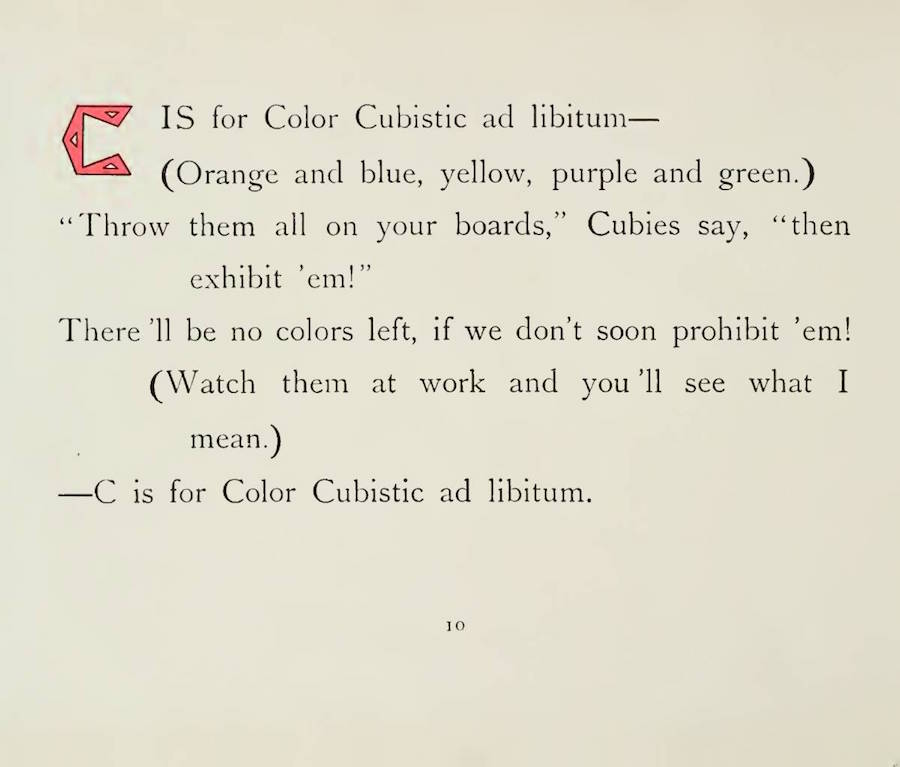
B is for beauty as Brancusi viewed it. C is for “Color Cubistic” where artists are advised to throw paint on a canvas and then exhibit it. D is for Duchamp “the Deep-Dyed Deceiver.” And so on and so on.
Their intention was to belittle and to deride the pernicious influence of this “shock of the new.” What happened next to this husband and wife team is unimportant. It was how America’s artists responded to the challenge set by the Armory Show that mattered. Artists responded not with a hankering for the past but with radical imagination and innovation which placed the United States at the center of Modern Art for the next sixty years.
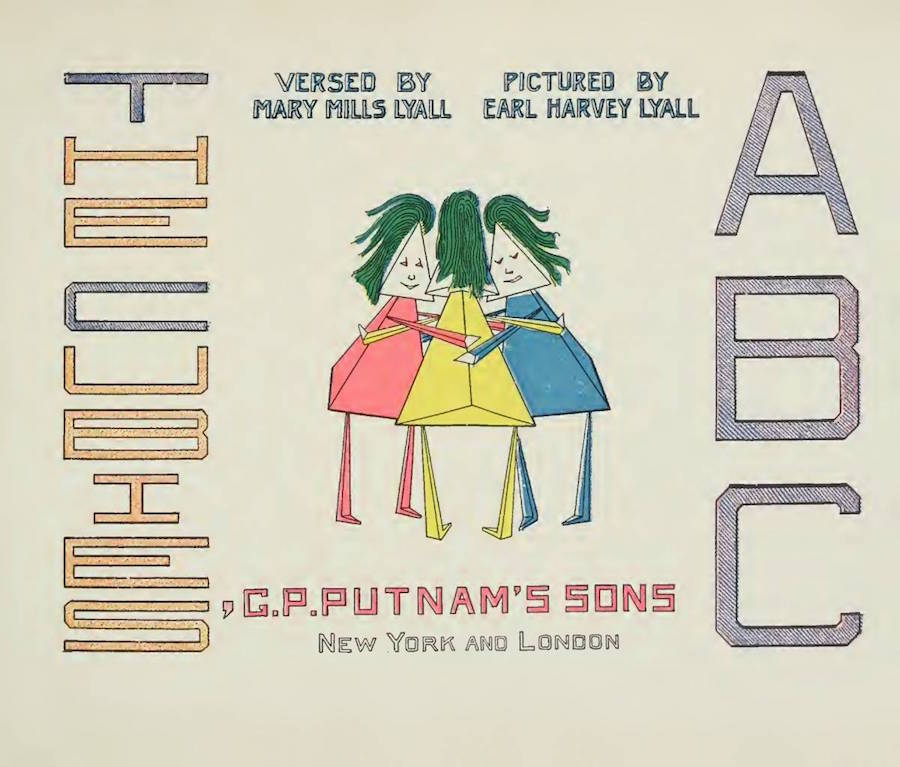








Via Bienecke.