


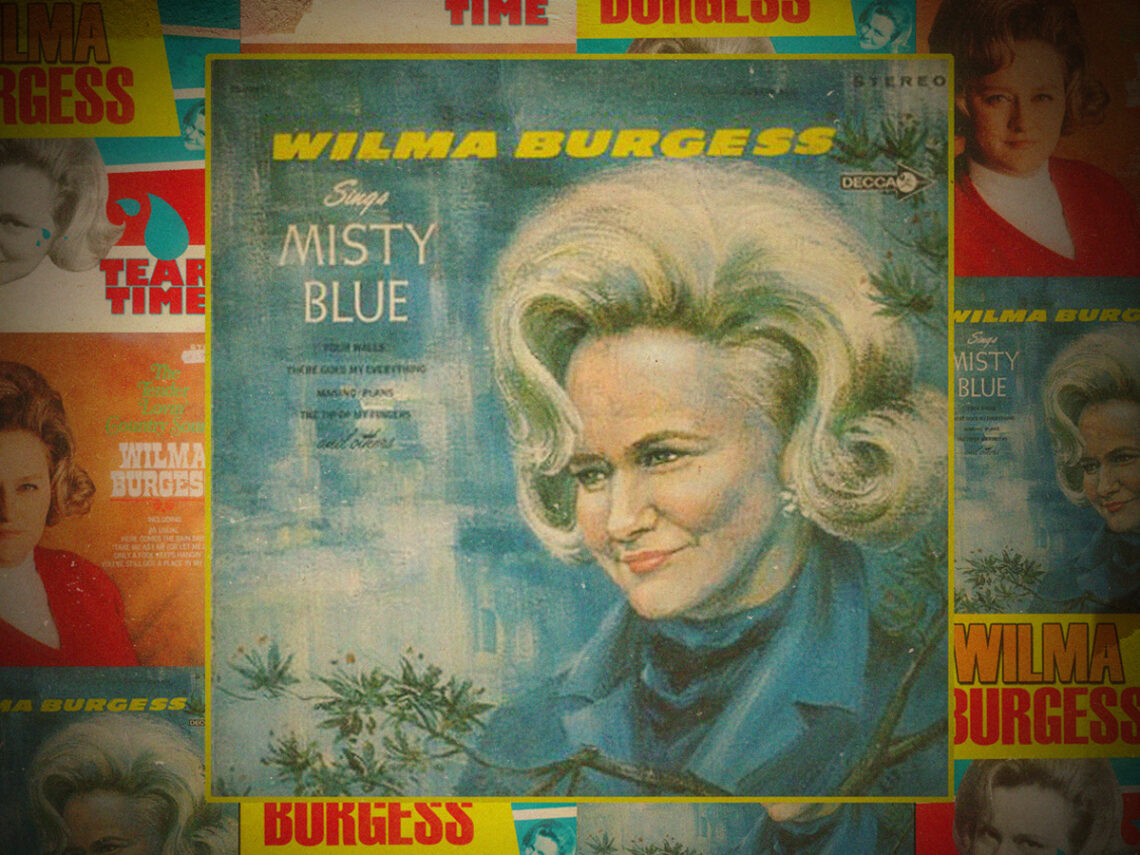
Meet Wilma Burgess, country music’s first openly lesbian singer
When country singer Chely Wright revealed to her fanbase that she was a lesbian back in 2010, many of the magazine articles at the time referenced kd lang or Melissa Etheridge, to name two earlier gay performers who opted to be true to themselves in public, but very few mentioned an even earlier lesbian country music singer to come out of the closet.
Actually, Wilma Burgess, who had several hit singles in the mid-1960s, was never in the closet to begin with.
Burgess was a something of a protégé of the great country music producer Owen Bradley, one of the chief architects of the slick, string-laden “Nashville sound” of the 1950s and ’60s. Bradley, who had been Patsy Cline’s producer, heard in Burgess’ powerful voice a performer able to do something similar to the deceased singer, and he signed her to Decca Records in June of 1964.
Interestingly, Burgess was reluctant to perform teary ballads where she was singing to a man, and preferred her material to be gender neutral and ambiguous. When she did agree to sing a song like ‘Ain’t Got No Man’ it was something she negotiated with her powerful hit-maker mentor: One song she liked but that he didn’t have to, for every one of his choices that she went along with but wasn’t too fond of. Their partnership worked well and produced several hits, most notably the Grammy-nominated ‘Baby’, a 1965 hit Burgess was seen singing in the Jayne Mansfield B-movie The Las Vegas Hillbillys, and ‘Misty Blue’ in 1967.
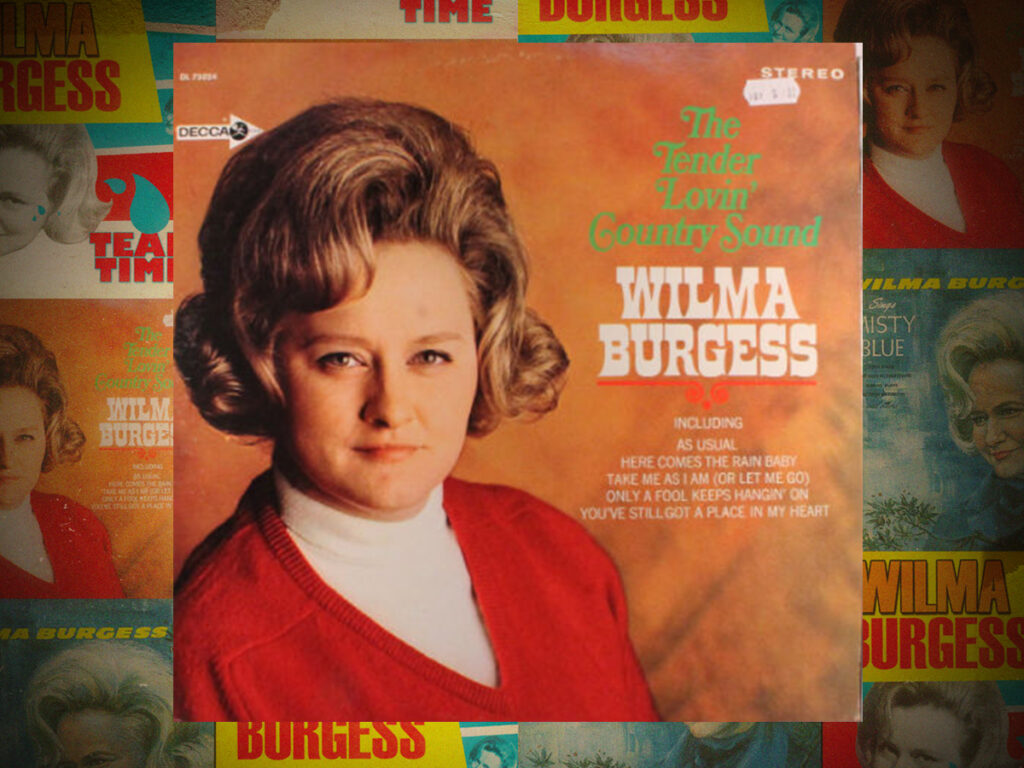
She never got the glory of Patsy Cline, and she wasn’t shifting records like Tammy Wynette, but Burgess had her moment. Mid-60s country radio couldn’t get enough of ‘Misty Blue’ and ‘Baby’, and she had a voice that carried real heft. No fluff and no syrupy nonsense, Burgess enjoyed songs with a bit of backbone, and when she did sing the usual “crying over a man” stuff, you could tell she was rolling her eyes behind it.
So what set her apart? Well, she simply refused to play the Nashville game. Everyone else was cooking up fake romances for the press while Burgess just turned up with her girlfriend like it was the most natural thing in the world. Didn’t shout about it, didn’t hide it either. In the buckle of the Bible Belt, mid-1960s? That’s ballsy as hell.
For obvious reasons, Wilma Burgess ultimately found herself frustrated by the strict and ostensibly pious Nashville scene and left the music business in 1978. She would go on to open The Hitching Post, the first lesbian bar in Nashville, in the late ’80s with the money she made during her career. It became the place if you were looking for a pint, a laugh, or just a space where you didn’t have to keep your guard up. Burgess basically swapped the stage for the barroom, but she was still centre-spot, still pulling people together.
Burgess was never going to be polished Nashville royalty, and she didn’t care. Her catalogue might be small, but she stood her ground in a town that liked women to toe the line. That mix of grit and stubbornness is what people remember, not just the chart positions. She’s not a household name, but Wilma Burgess made a point of living honestly when it would’ve been easier – and safer – to fake it. That, in the long run, is a bigger victory than any gold disc.
Wilma Burgess died at the age of 64 from a heart attack on August 26th, 2003.