


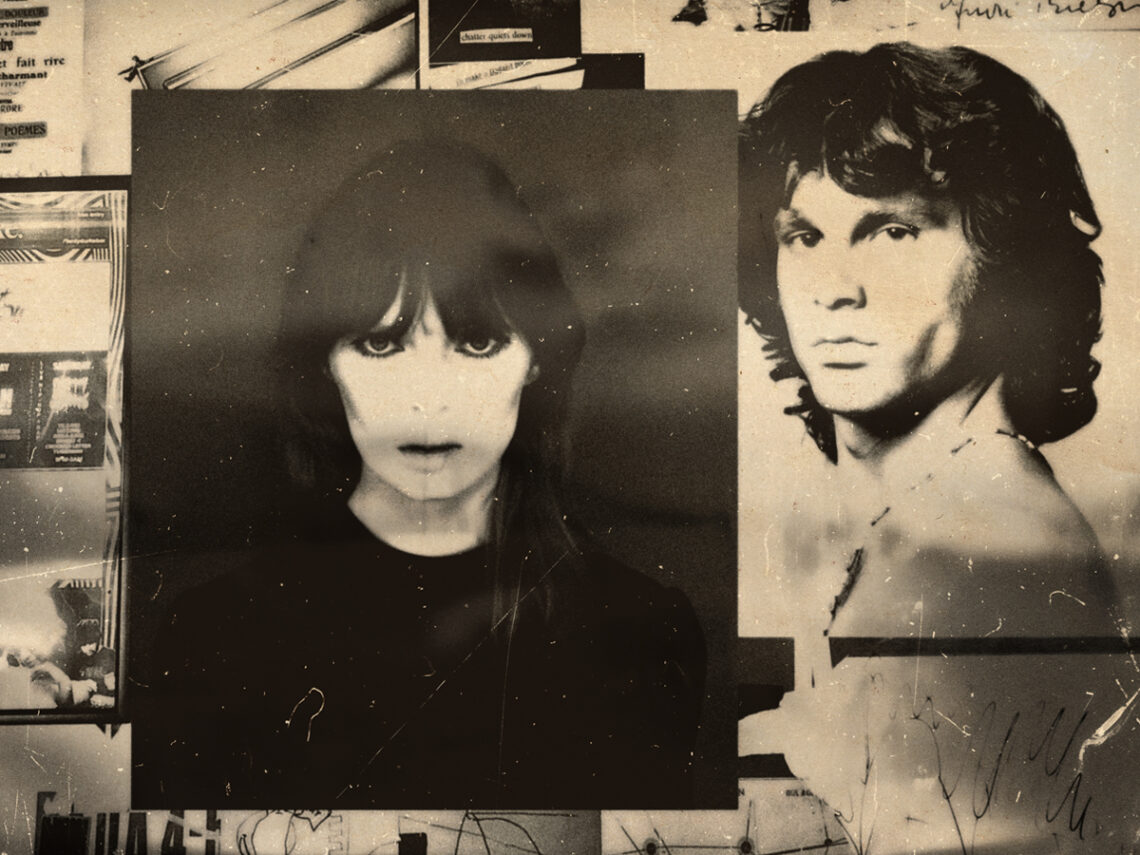
‘You Forget to Answer’: Nico sings about her former lover Jim Morrison
In 1974, somewhere between a divination and a voicemail left too late, Nico recorded one of the strangest, coldest, and most quietly devastating songs ever aimed at a dead lover.
She didn’t name him, didn’t raise her voice, didn’t cry. But everyone knew who it was for. The track was called ‘You Forget to Answer’ – as blunt and cruel as a dial tone – and it was her way of talking to Jim Morrison from the other side.
The song barely even moves. It’s slow and flat, and Nico sings like she’s already somewhere else. There’s no big moment, no real melody, just her voice and that low droning sound underneath. She says the title like she’s talking to someone who’s not there. And she keeps saying it. It’s not clear what she means by it unless you already know the story. There’s no drama in the song, but it still feels heavy. Almost like the weight is in what she doesn’t say.
The song’s cryptic lyrics convey the despair the avant-garde ice queen felt over hearing of the death of her former lover and how she was unable to reach him by phone on the day he died. It would eventually appear on her 1974 album The End, which takes its title, of course, from her infamously doomy cover of the already infamously doomy Doors’ original.
“I thought of Jim Morrison as my brother. So we would grow together. We still do because he is my soul brother. We exchanged blood. I carry his blood inside me.”
Nico
By the time The End came out in 1974, Nico was no longer a Warhol girl, no longer the “femme fatale” the Velvet Underground reluctantly dragged on stage. She was making records no one wanted to sell – records that sounded like long winters in unheated apartments. Make no mistake, The End is fucking brutal. But it’s honest. Nico wasn’t trying to impress anyone anymore, and this was music made by someone who’d seen too much and stuck around anyway.
Morrison’s death haunted the record like a ghost lurking just off-mic. Nico found out he’d died – either in a bathtub in Paris or in the usual shadowy swirl of contradiction and rumour – and couldn’t reach him on the phone that day. The fact that she tried to call becomes the black hole at the centre of the album. The End isn’t a tribute in the traditional sense, and Nico wasn’t interested in mourning like everyone else. She wanted to stare it down, wear it, sing through it. And when she covered The Doors’ ‘The End’, it wasn’t about Jim. It was about her.
I mean, Nico and Morrison were never really a couple in the traditional sense, but then again, nothing about either of them was traditional. They were two beautiful freaks orbiting the same chemical-soaked galaxy, colliding occasionally in hotel rooms, backstage, in whispered conversations over candle wax and wine. They probably understood each other better than anyone else did, if that is in a cosmic, doomed, burning-through-your-body kind of way.
Nico and Morrison each took their own torched paths out of the 1960s. Both started as beautiful people in beautiful bands. Both ditched the commercial world the moment it started to feel fake. Nico went deeper into shadow, Morrison into myth. And decades later, the records still rattle with that same sense of danger.
So here it is: one strange little song about a missed phone call, about death, about silence. And somehow, it says more about love and loss than a thousand ballads ever could. ‘You Forget to Answer’ doesn’t try to make you feel better. It doesn’t try to resolve anything. It just plays once, leaves a cold trace in the air, and disappears.