‘Spectropia’: the surreal 19th-century method of conjuring demons and ghosts
The world is ever divided into the superstitious and the enlightened, and while the enlightened have shown the clear trend of being on the rise, it is not always so.
Ghosts and horoscopes and good-luck charms abound, and poindexterish explanations of why they are all poppycock merely tend to make one an un-adored party pooper—even though this is certainly the correct view.
There’s a tendency to consign all of pre-modernity to the superstitious – one might say “religious” – camp, but that really isn’t the case. Mathematicians and scientists have existed for the entirety of recorded history, which must be the case since language and writing technologies are products of the experimental mindset.
The Enlightenment was a turning point, as rationality was increasingly given a central place in the arrangement of social affairs, and even if irreligious sceptics were (and are) outnumbered, you could still always count on finding someone in the vicinity willing to scoff at the hocus pocus of superstition.
In the 19th century, some scholars were able to use interest in the paranormal to undermine its premises entirely. One such person was JH Brown, who published a book in New York City under the title Spectropia: or, Surprising Spectral Illusions, Showing Ghosts Everywhere, and of any Colour in 1864. The book was popular enough to merit a print run in London in 1865 and a Dutch edition in 1866.
Here is the cover of the US edition:
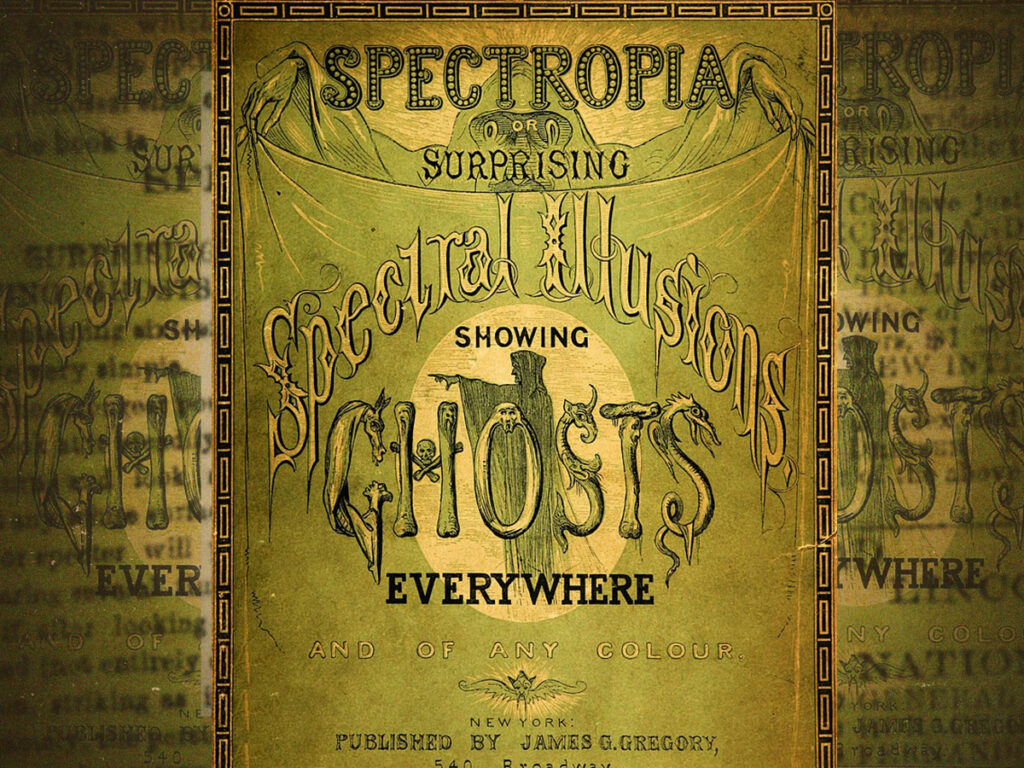
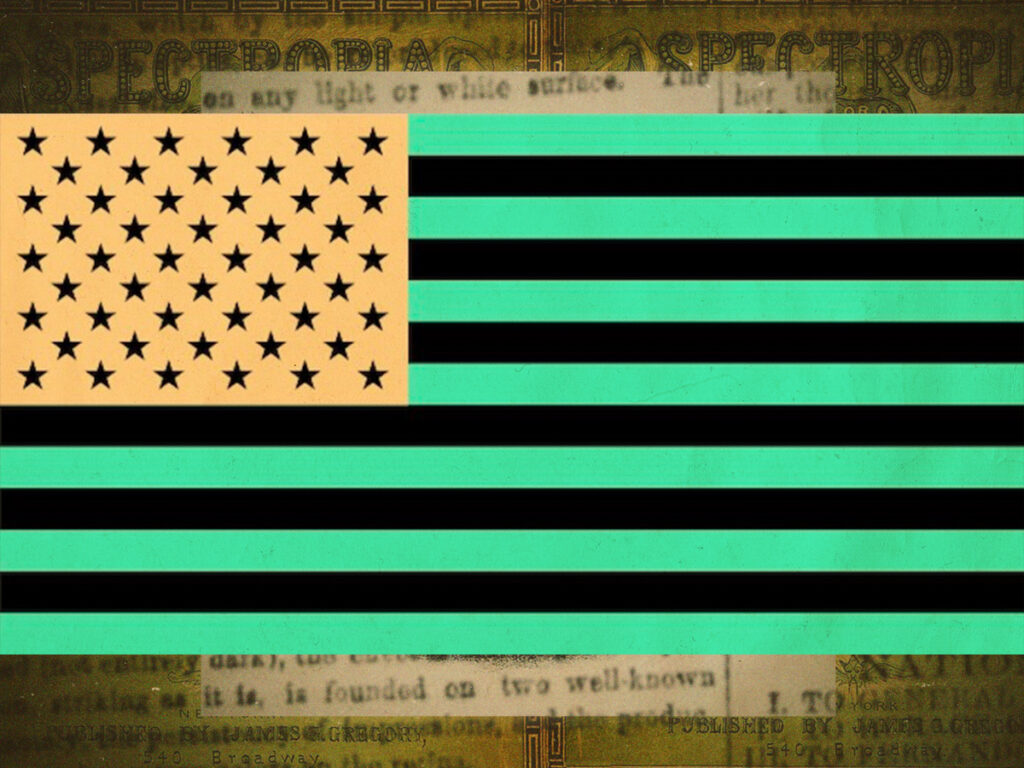
To produce his popular occult-adjacent book, Brown relied on the optical phenomenon of “cone fatigue”, whereby prolonged exposure to an image of a specific colour produces an afterimage (with reversed colours) in the eye for a few seconds after the initial image is replaced with a white field. A common example is an inverted image of the US flag, which produces a more or less colour-accurate version in the eye afterwards.
Brown didn’t use the flag—he used pictures of demons, angels, and skeletons. In the book, Brown stated that his goal was “the extinction of the superstitious belief that apparitions are actual spirits, by showing some of the many ways in which our senses may be deceived, and that, in fact, no so-called ghost has ever appeared, without its being referable either to mental or physiological deception, or, in those instances where several persons have seen a spectre at the same time, to natural objects”.
Here are Brown’s instructions on how to see the spectres:
“To see the spectres, it is only necessary to look steadily at the dot, or asterisk, which is to be found on each of the plates, for about a quarter of a minute, or while counting about twenty, the plate being well illuminated by either artificial or day light. Then turning the eyes to the ceiling, the wall, the sky, or better still to a white sheet hung on the wall of a darkened room (not totally dark), and looking rather steadily at any one point, the spectre will soon begin to make its appearance, increasing in intensity, and then gradually vanishing, to reappear and again vanish; it will continue to do so several times in succession, each reappearance being fainter than the one preceding.
“Winking the eyes, or passing a finger rapidly to and fro before them, will frequently hasten the appearance of the spectre, especially if the plate has been strongly illuminated”.
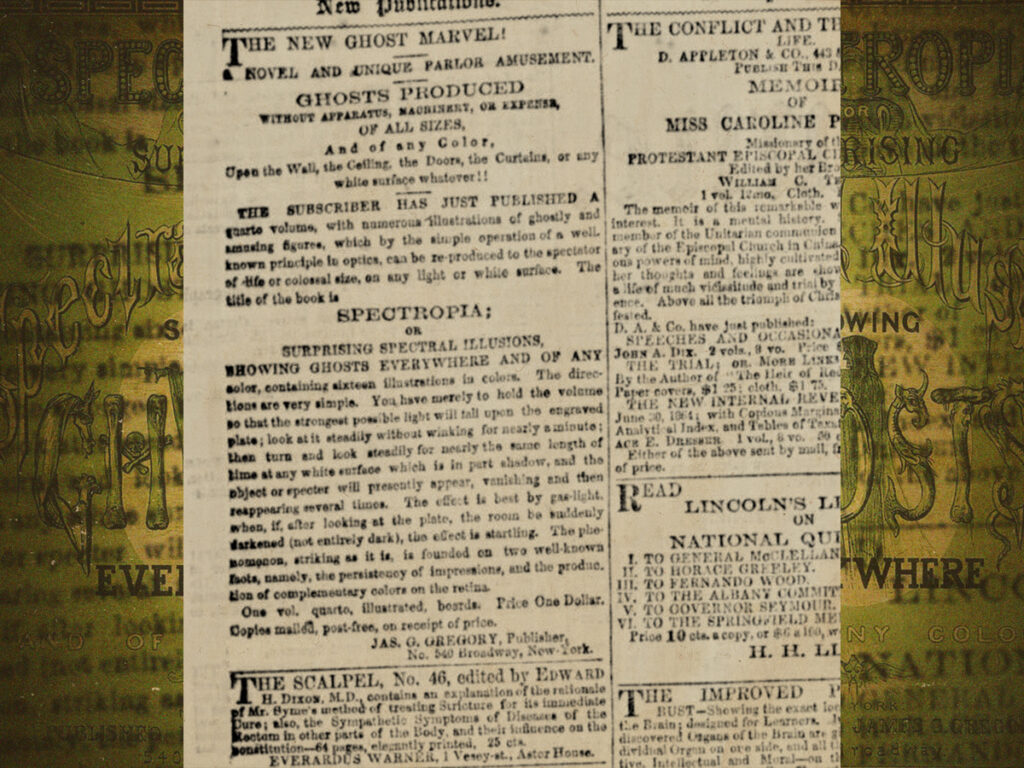
Below, you’ll also find an amusing item from the New York Daily Tribune of September 13th, 1864, in which the publisher introduces to the public “the new ghost marvel” that can produce “without apparatus, machine, or expense” all manner of demons and ghosts “upon the wall, the doors, the curtains, or any white surface whatever!!”
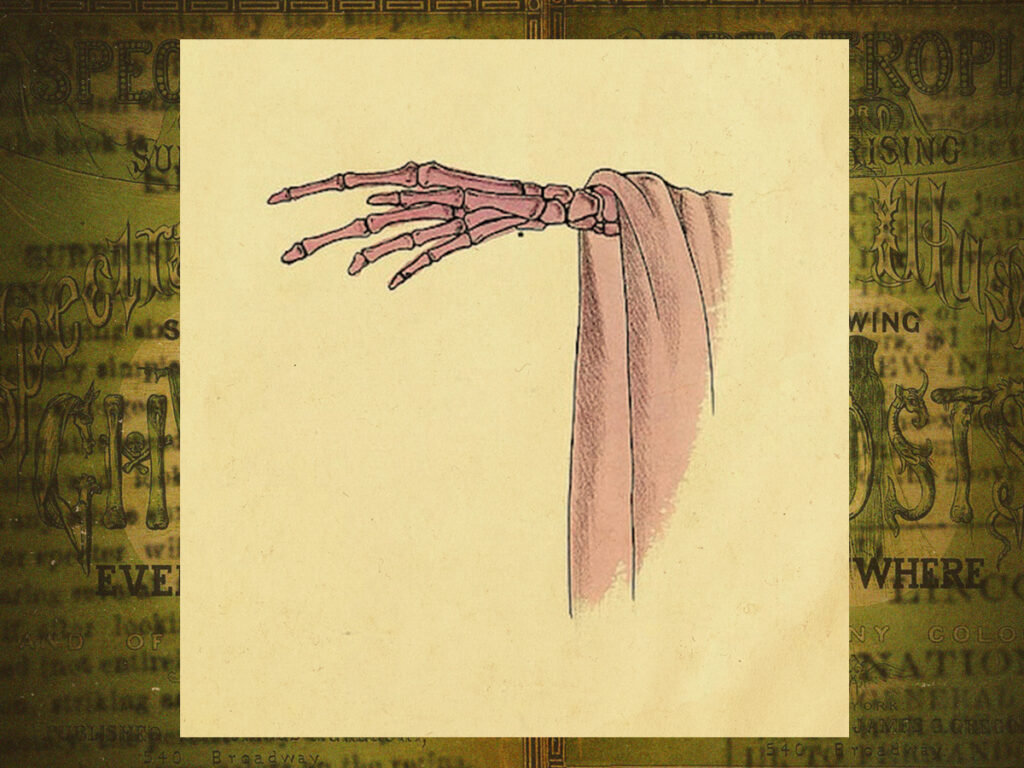
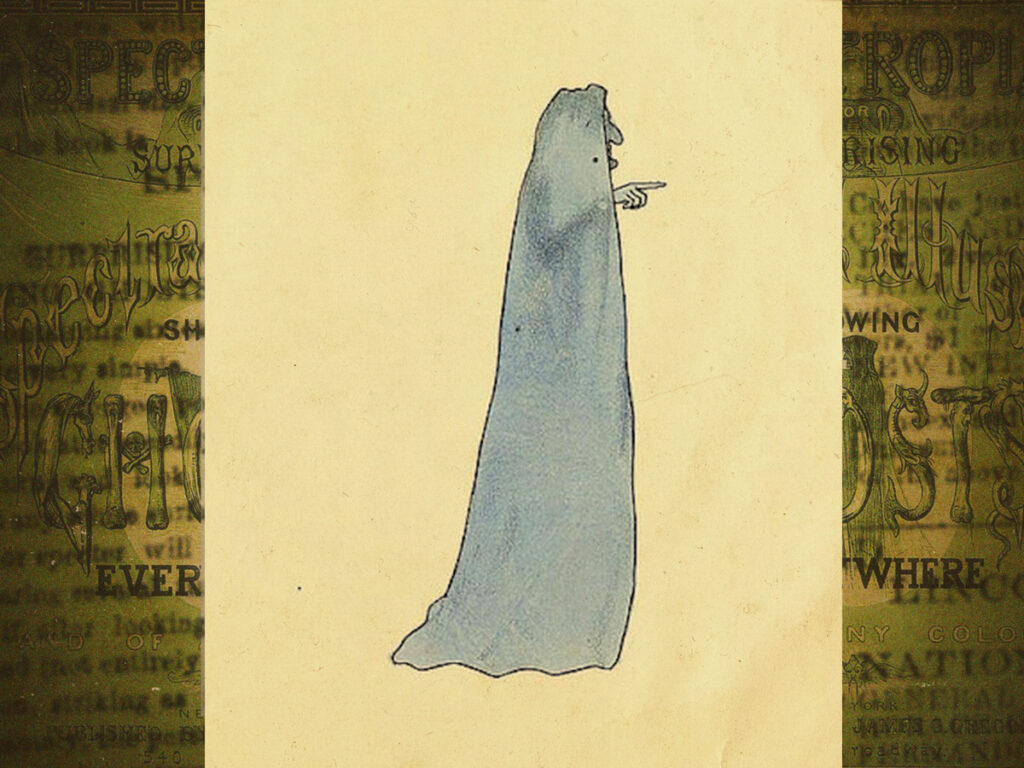
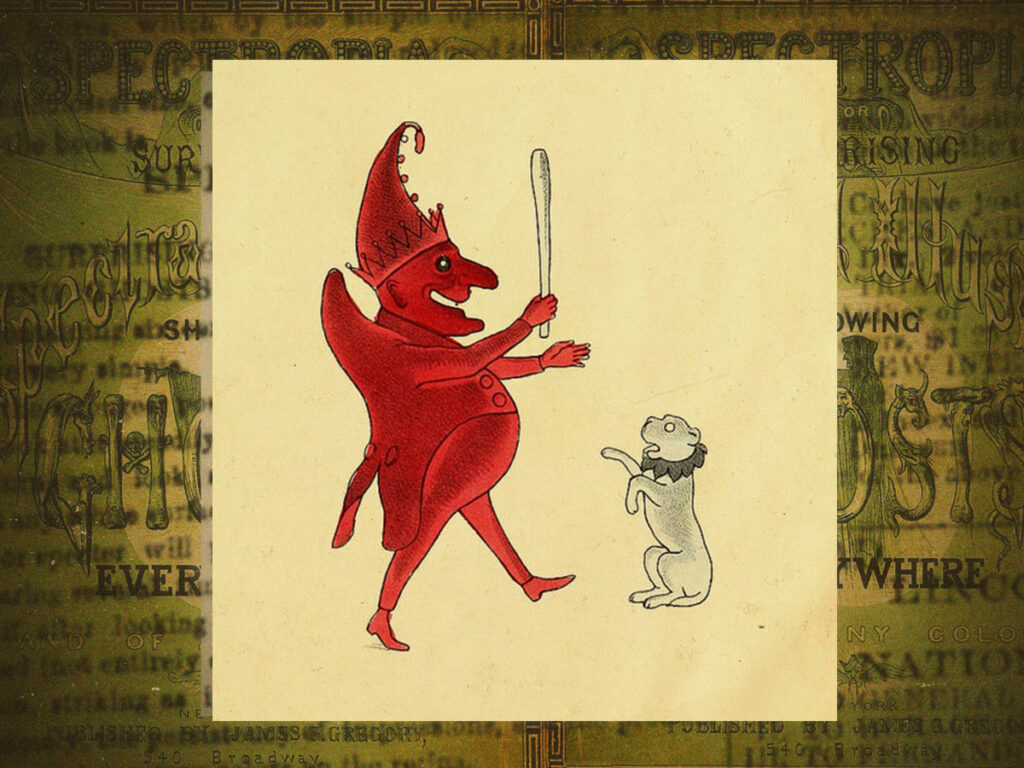
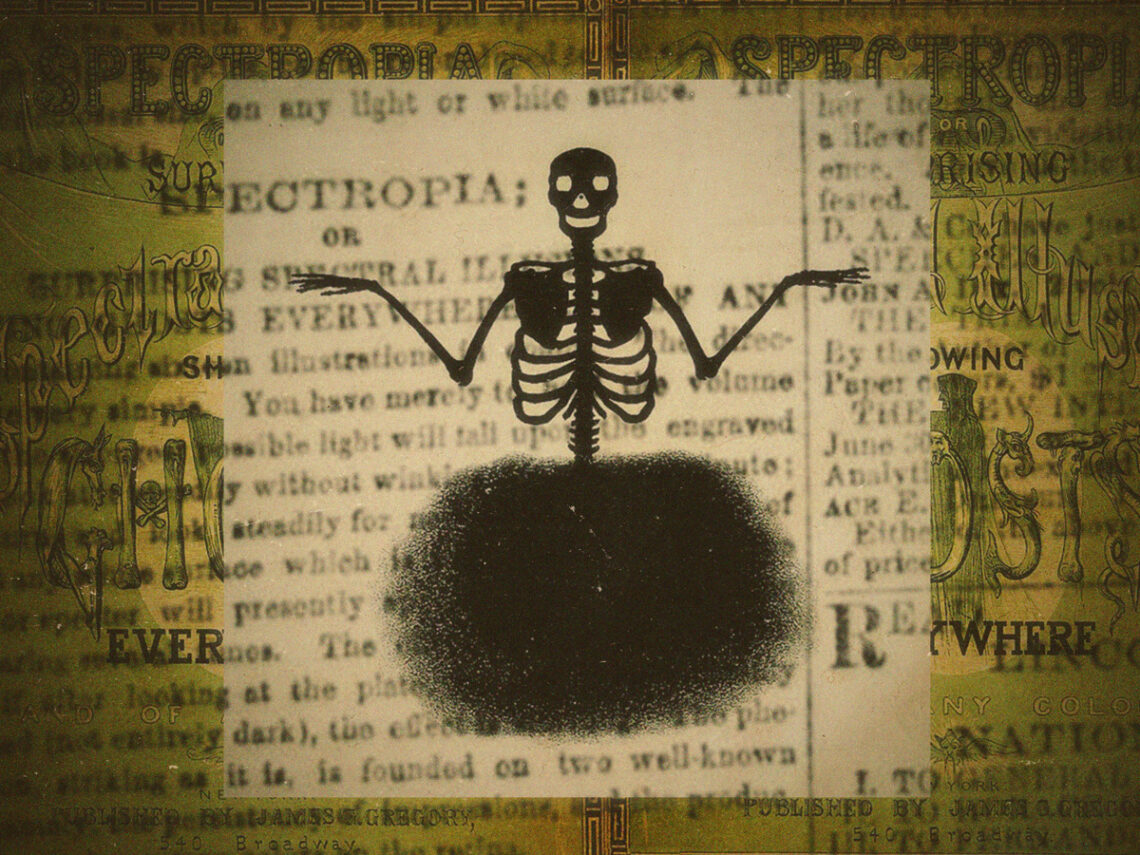
I figure this was sort of the Magic Eye of its day. Below are some of the images from Spectropia, but you can see the whole book at Public Domain Review.
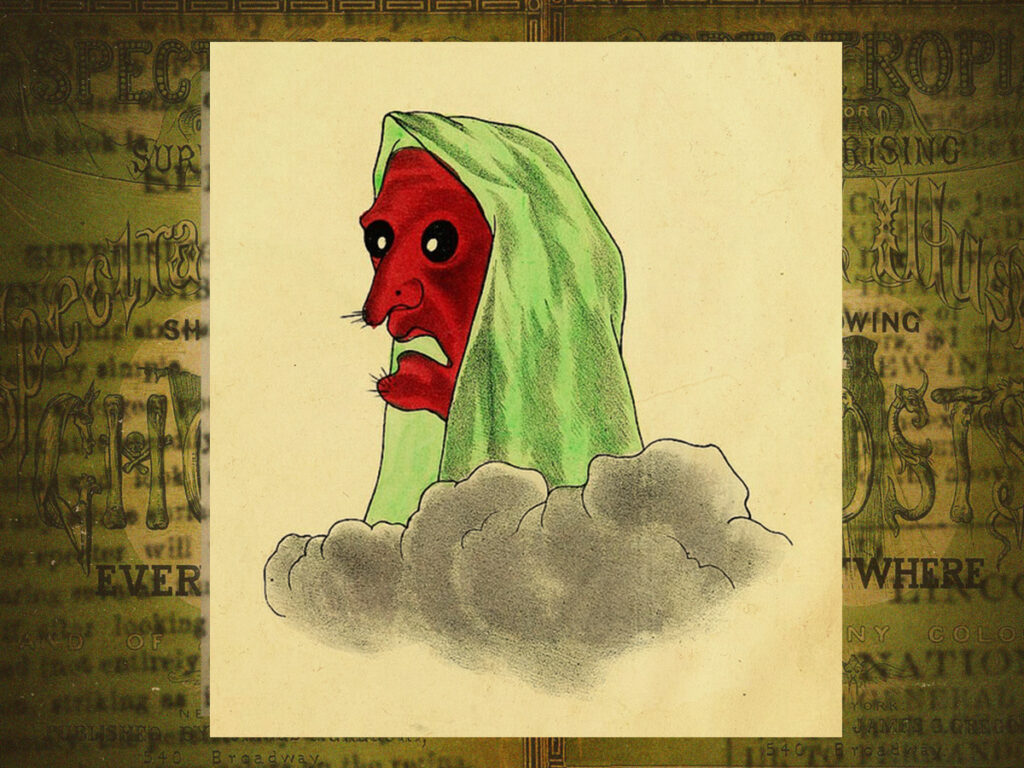
Start with a blood-red devil scowling through a green shroud like he just got caught shoplifting absinthe. His face is pure Punch & Judy malice—googly-eyed and gnarled like something out of a nightmare drawn by a kid who watched too much Jack Chick. He floats on a little puff of grey mist, looking pissed off to be summoned again. This isn’t a spirit here to deliver peace from the beyond—this guy’s just looking for a brawl.
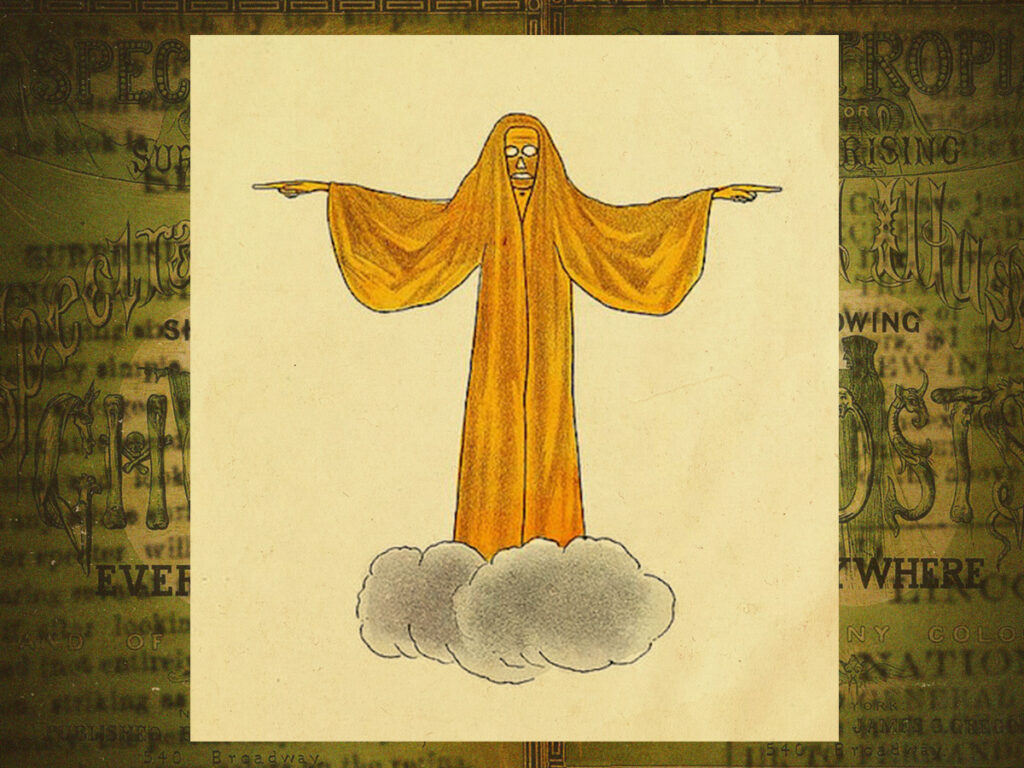
Then there’s the orange-robed prophet, arms out like a spooky traffic cop directing your soul to the afterlife. He’s half Buddhist mystic, half cult leader from a 1970s paperback. Eyes blank. Expression calm. Standing on a puff of smoke like he’s mid-ascension. You’re not sure if he’s blessing you or about to sentence you to 1000 years in the shadow realm.
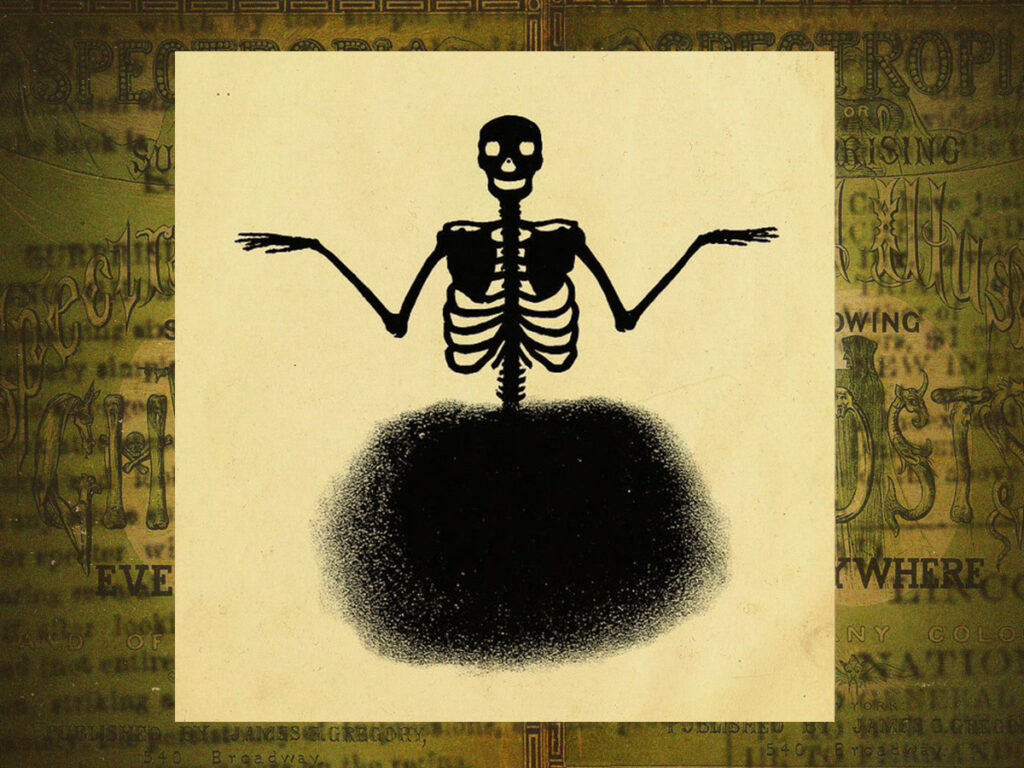
Below, some of the other glorious weirdos from Spectropia—a psychedelic trip without the acid, brought to you by the miracle of 19th-century cone fatigue.