


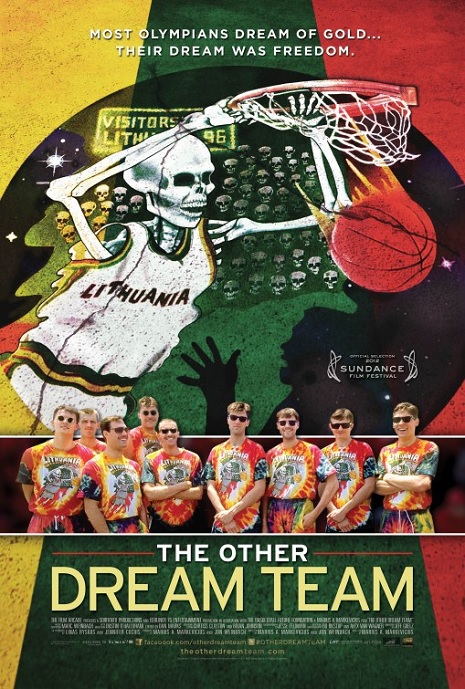
‘The Other Dream Team’: How The Grateful Dead sent Lithuanian basketball to the Olympics
I’ve only formally met one person from Lithuania in my life. I was at a socialist youth conference a few years ago and initially, the event was a bit awkward. It started out as a bunch of people under 30 from different countries, shuffling around, trying to make small talk through the world’s two most common languages, English and liquor. Vainius was small and blonde, warm and smiley. He asked me what part of the U.S. I was from, and after insisting that he wouldn’t know it, I confessed I was from Indiana. His eyes suddenly lit up, and through a thick, Baltic accent, he exclaimed, “Reggie Miller!” Miller was the shooting guard the Indiana Pacers for 18 years, and an institution in the life of nearly every Hoosier.
I quickly realized that Vainius’ knowledge of NBA basketball was encyclopedic, and we no longer had to worry about uncomfortable lulls in the conversation. This was a relief, since the only thing I really knew about Lithuania was, “about 20 years of independence, then Soviets, then Nazis, then Soviets again, then independence again.” But it was also a pleasant surprise to share something so seemingly regional as sports culture with someone from such a historically contrastive country.
I place The Other Dream Team in that category of sports movies that are nearly universally enjoyable, even to those with no interest or knowledge of any sport. What appears to a simple documentary about Lithuanians playing basketball quickly delves into the Cold War, Soviet colonialism, national identity, and inexplicably, The Grateful Dead.
While the movie culminates in the 1992 Olympic games, it starts at the very beginning, with Lithuanian independence and its near immediate occupation by the Soviet Union. While the subsequent Nazi occupation is what catches the ears of most Americans, the oppression of Lithuanians actually started with the Soviets, most notably with mass deportations to Siberia. There’s an interview with a survivor, who speaks movingly of the regulation basketball court prisoners built in the Siberian gulag.
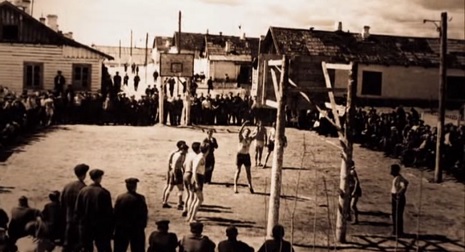
Lithuanians playing basketball on the regulation court they created in a Siberian prison camp
When the Soviets regained control of Lithuania, basketball continued to be the most popular sport, if not the most popular pastime This meant that the Soviet basketball team was always disproportionately dominated by Lithuanian athletes forced to play under the flag of their occupiers. In the 1985, Arvydas Sabonis became the first Lithuanian drafted onto an American team. A mob of boos erupted from the crowd, believing him to be a “Russian” player. The irony was not lost on Lithuanians, who resented Russian Soviets more than anyone, and were understandably angered at being the subject of historically ignorant anti-Soviet sentiment. And of course, the Iron Curtain prevented Sabonis from playing for the NBA until 1989 anyway, after the glasnost policies paved the way for more political openness
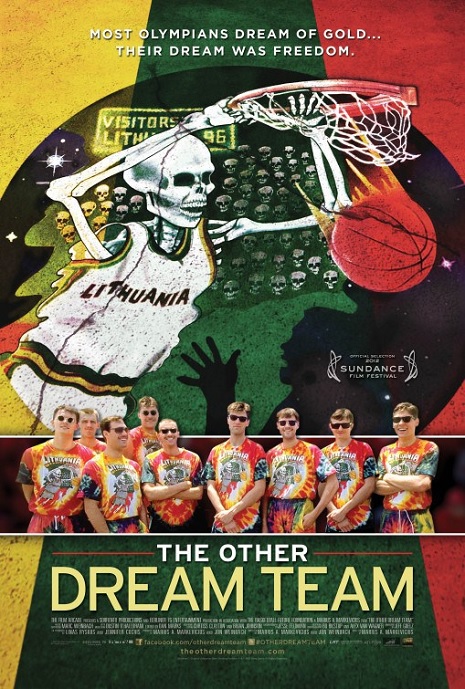
The strangest turn of events occurred after Lithuanian independence was declared, which left the country newly free, yet very poor. Lithuanian basketball was poised to be a major competitor for the next Olympics, but Olympic participation is extremely expensive. After reading a small piece in a local Bay Area newspaper, unexpected basketball fans The Grateful Dead were moved by the plight of the Lithuanians, and decided to fund their team. There was surreal meeting between some Lithuanian players, who spoke no English, and the band, wherein Jerry Garcia smoked a cigar-sized blunt, and suddenly the Lithuanian basketball team was an Olympic contender.
I really can’t recommend The Other Dream Team enough. Even if you’re not into sports, it’s an amazing history lesson and an incredibly moving story that hits you right in the pathos. Plus, you get to see the 1992 Lithuanian Olympic basketball team in Grateful Dead-supplied tie-dye uniforms in colors of the Lithuanian flag, natch!