


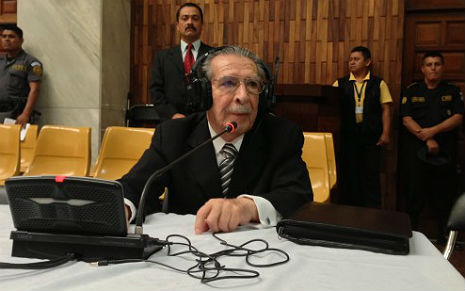
This is Hardcore: Guatemalan genocide trial enters climatic phase
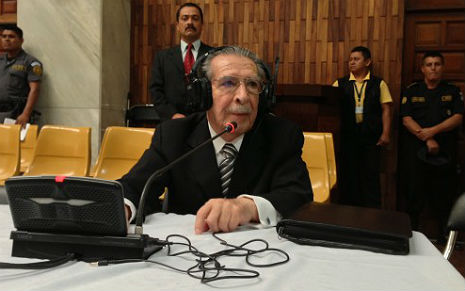
Boing Boing’s Xeni Jardin has been in Guatemala reporting from the trial of General José Efraín Ríos Montt, the former military strongman ruler accused of perpetrating genocide and crimes against humanity in the 1980s.
During his trial, more than 90 Ixil Maya victims have come forward and told the court accounts of sexual violence, assassination, torture and even acts of infanticide committed by the Guatemalan army. There were too many horrific stories to tell them all in court. Ronald Reagan once said that Rios Montt had gotten a “bum rap”!
In Guatemala, we also interviewed people from organizations that produced criminal evidence for the trial, including AHPN and FAFG, and Patrick Ball from the Human Rights Data Analysis Group. Our interviews took place in an increasingly polarized climate in Guatemala; rumors were spreading that some trial witnesses and people involved in the prosecution were receiving threats. Some, we were told, were forced to leave the country out of concerns for safety. Paid 20-page inserts by a pro-Ríos Montt, anti-genocide-tribunal group appeared in each week’s Sunday paper: “The so-called ‘genocide’ trial is a lie perpetrated by neo-Marxist guerrillas enabled by the Catholic Church,” the headlines read.
But the most challenging part of our reporting trip came when we traveled to the Ixil area, to interview Mayan survivors, including a woman who appeared in the tribunal as one of the approximately 100 “querellantes,” or criminal witnesses for the prosecution. We spoke with José Ceto Cabo, an Ixil civil war survivor who runs a small NGO that works to aid fellow Ixil survivors, and we listened as seven Ixil men and women from Chajul, Cotzal, Nebaj, and other communities at the center of the genocide trial told us the stories of the atrocities they survived. In the courtroom back in Guatemala City, women covered their faces with traditional woven shawls as a gesture of grief and to hide the overwhelming pain and fear they felt as they re-lived their trauma. In the room in Nebaj where our cameras and lights were set up, this group of men and women chose to show their faces, even as some of them wept and trembled, retelling horrors.
Today, the trial entered its final phase, with the prosecutors seeking 75 years for acts of genocide and crimes against humanity.
Below, “From Guatemalan Soil, Unearthing Evidence of Genocide,” a report from last night’s PBS NewsHour on the forensic science used in the trial. Produced by Xeni Jardin and Miles O’Brien.
Watch From Guatemala, Scientists Unearth Signs of Genocide on PBS. See more from PBS NewsHour.