


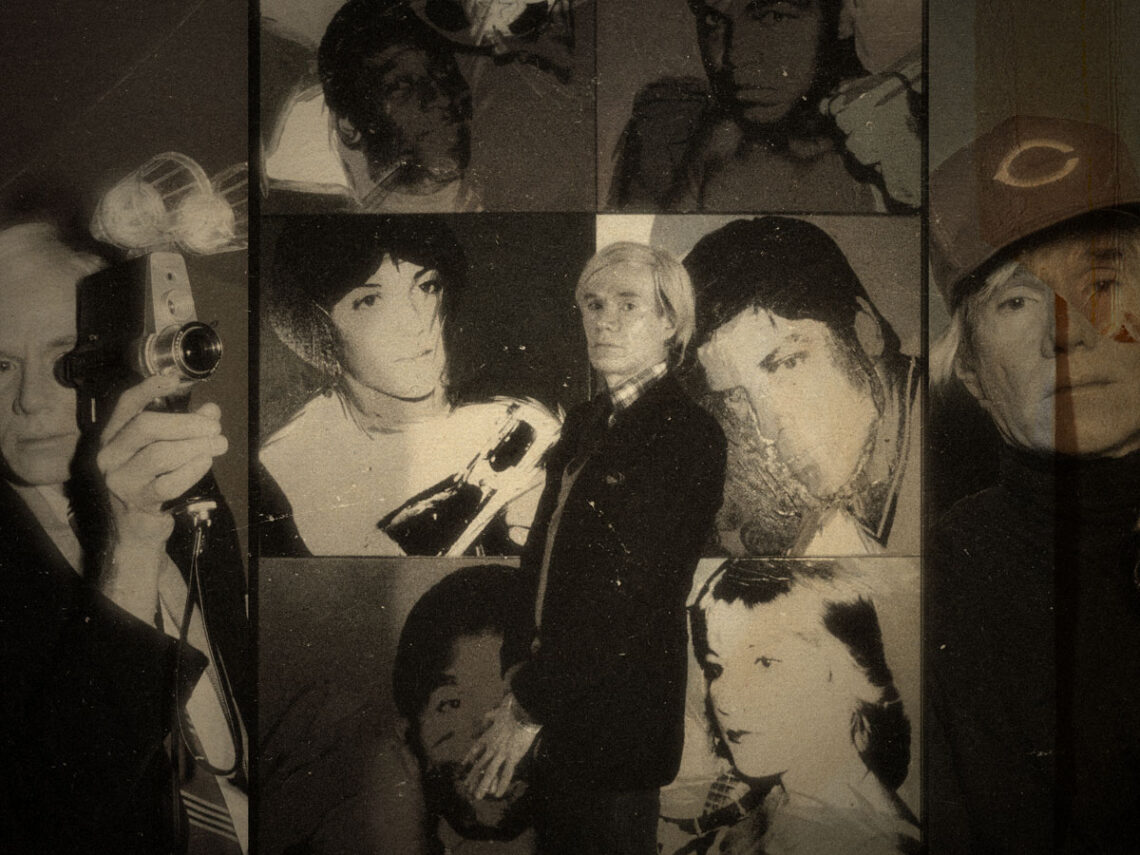
When Andy Warhol died, the lights went out on New York’s cool
I remember vividly when the cover story from New York Magazine hit the stands just three weeks after Andy Warhol’s death.
As a New Yorker myself at the time, it really did feel like something huge had shifted – like someone had pulled the plug on the party and flicked the lights on. That article, Jesse Kornbluth’s “The World of Warhol”, brought it all home in stark, aching clarity. I kept the issue for years. It might still be buried in a box out in the garage somewhere, yellowed at the edges, but that headline still rings in my head.
After Warhol died, New York’s fabled nightlife took a nosedive (there were other factors, too, of course). It wasn’t like you’d be able to see Warhol at a party, a fashion show, a nightclub or a restaurant ever again and think to yourself, “Oh, Andy’s here. I must be in the very best party in the world tonight”.
That was what Warhol’s stamp of approval meant to New Yorkers. His presence made you feel cool. I met Warhol several times. When I’d tell people I was going to move to New York City, they’d ask me what my plans were, and I’d say, “Oh, you know, meet Andy Warhol, hang out at the Factory and something cool is bound to happen”. I actually believed this as an 18-year-old!
And as fate would have it, on the very first night I spent in New York, at an opening party at the Area nightclub, the infamous homicidal club kid king, Michael Alig asked me if I’d like to meet Warhol. “Sure!” I replied, and Michael proceeded to shove me – hard – into the artist, nearly knocking him down. Warhol just shrugged it off and blamed Michael anyway, as he’d seen the whole thing go down. After that incident, I’d run into Warhol every few weeks, and I’d see him (usually with Cornelia Guest) often at Limelight, the nightclub where I was working.
But when he died so suddenly, I can’t stress this enough, it was like a pall had come over the city. It was a real turning point, for me anyway, and New York would just never be quite the same ever again.
When that New York Magazine piece landed, it wasn’t just reportage to me, it felt like a post-mortem on the city itself. Jesse Kornbluth’s piece didn’t mythologise Warhol or turn him into a saint; instead, it did something far more unsettling. It rendered him human. Vulnerable. Mortal. And that was shocking. Andy Warhol wasn’t supposed to die like the rest of us. He was supposed to drift through Manhattan forever, popping up at dinners, openings, clubs, fashion shows—this pale, watchful presence who silently validated whatever scene you happened to be standing in. Reading it then, so soon after his death, I remember feeling like the city had lost its mirror.
The World of Warhol, By Jesse Kornbluth
The first sign that there was something wrong with Andy Warhol, that he might be a mortal being after all, came three weeks ago. It was a Friday night, and after dinner with friends at Nippon, he was planning to see Outrageous Fortune, eat exactly three bites of a hot-fudge sundae at Serendipity, buy the newspapers, and go to bed. At dinner, though, he felt a pain. It was a sharp, bad pain, and rather than let anyone see him suffer, he excused himself. And as soon as he got home, the pain went away.
“I’m sorry I said I had to go home,” Warhol told Pat Hackett a few days later as he narrated his daily diary entry to her over the phone. “I should have gone to the movie, and no one would ever have known.”
In fact, no one remembered. And if anyone suspected trouble, it was dispelled the next week by Warhol’s ebullient spirits at the Valentine’s dinner for 30 friends that he held at Texarkana with Paige Powell, the young woman who was advertising director of Interview magazine by day and Warhol’s favorite date by night. Calvin Klein had sent him a dozen or so bottles of Obsession, and before Warhol set them out as party favors for the women, he drew hearts on them and signed his name. On one for ballerina Heather Watts he went further, inscribing the word the public never associates with Andy Warhol: “Love.”
What makes Kornbluth’s piece hit so hard is its restraint. There’s no melodrama, no grand summation of Warhol’s importance. Instead, we get small details: the dinner plans, the movie, the ritualised three bites of dessert, the embarrassment of pain. That’s the genius of it. Warhol, who spent his entire adult life flattening emotion, packaging celebrity, and turning art into surface, was undone by the most ordinary human thing imaginable. A body failing. The article quietly punctures the illusion that Andy was somehow exempt from consequence, from decay, from time. And in doing so, it marked the end of something much larger than one man.
After Andy died, the city felt different almost immediately. The parties were still happening, sure, but something ineffable was gone. Warhol had been a kind of cultural North Star; if he showed up, it meant the night mattered. Without him, New York nightlife lost its unifying witness. AIDS was already tearing through the scene, money was changing the city fast, and suddenly there was no Andy drifting between worlds, connecting uptown to downtown, art to fashion, drag queens to debutantes. The spell was broken.
Warhol’s death didn’t just close a chapter, it slammed the door shut. The New York that produced him couldn’t survive without him. That New York was messy, dangerous, glamorous, cheap, cruel, and endlessly fertile. After Andy, the city professionalised itself. It monetised cool. It sanded off the rough edges. Looking back now, that New York Magazine article feels like a line in the sand, capturing the precise moment when the city lost its most perfect observer—and, with him, a little bit of its soul.