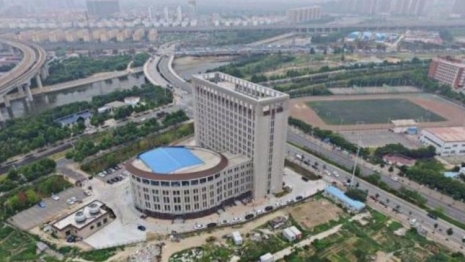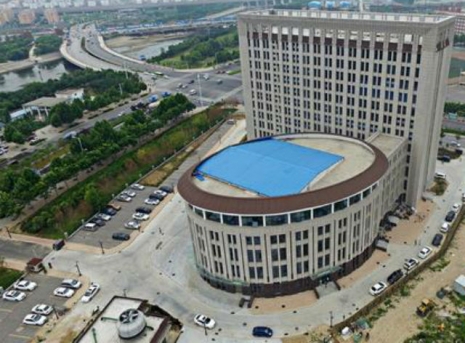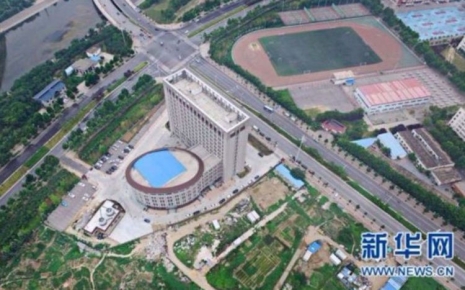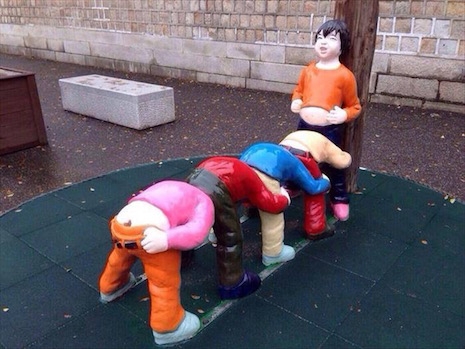
Inexplicably weird products sold in China
02.15.2013
01:03 pm

Topics:
Amusing

Tags:
China


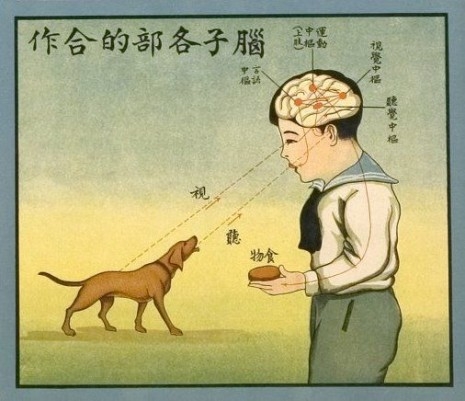
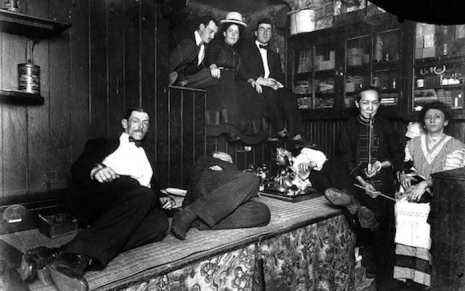
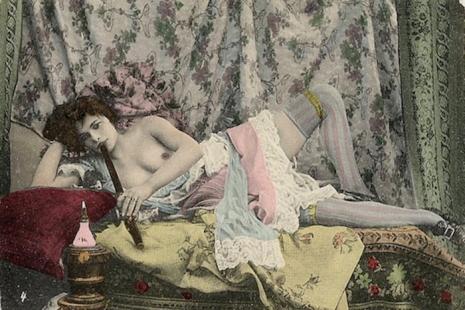
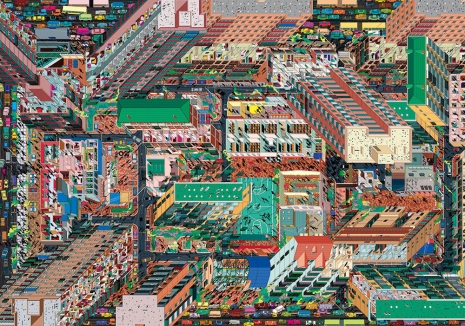
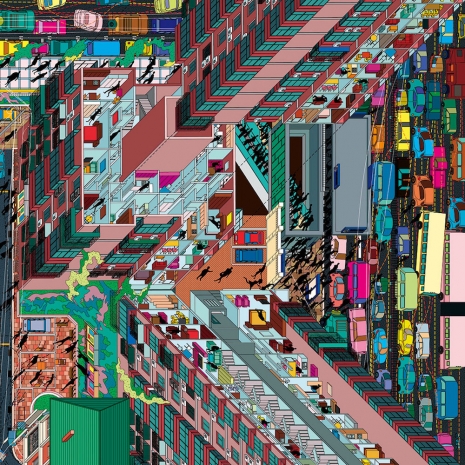
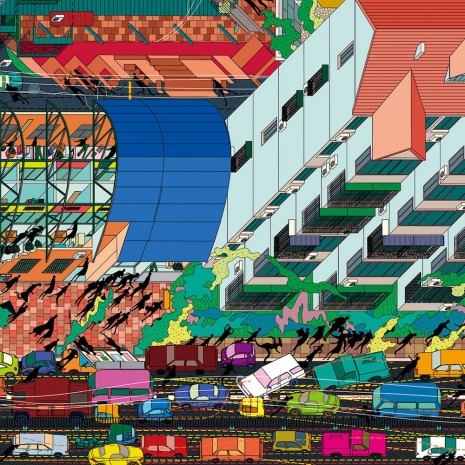
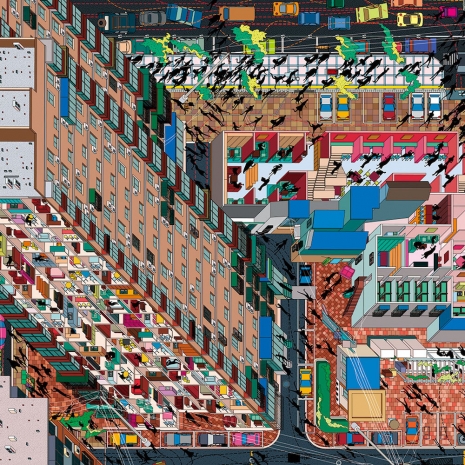
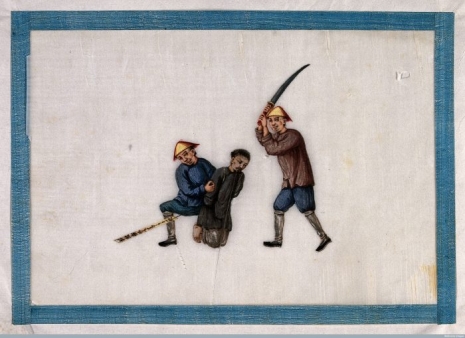
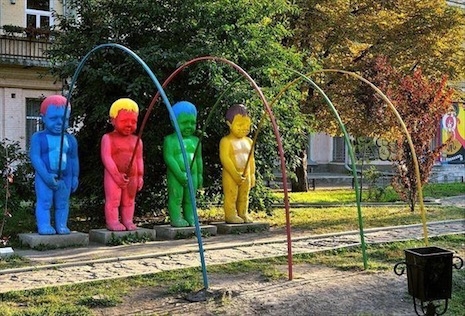
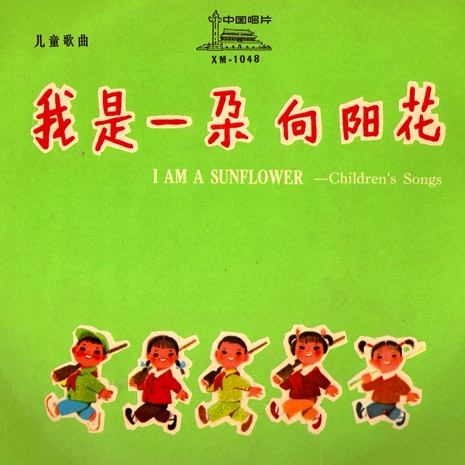
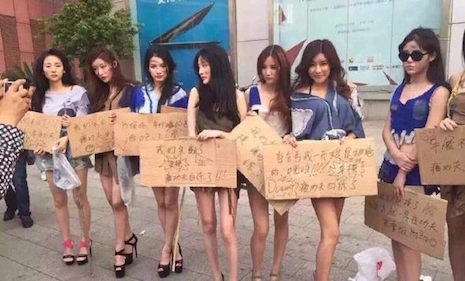
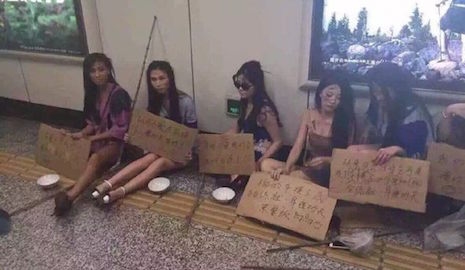
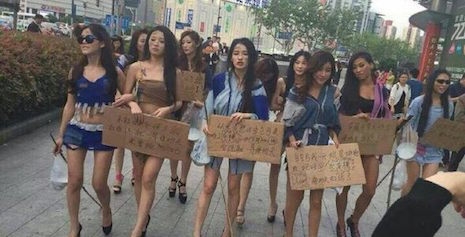
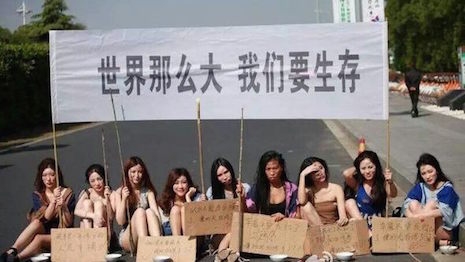
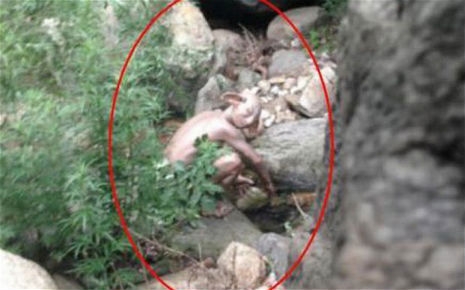
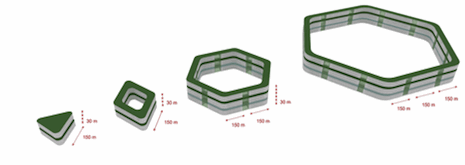
Oh, the glorious Taobao website, where featured products consist solely of whatchamacallits and thingamajigs sold in China.

Here are a few choice selections from Taoboa‘s catalog of I-have-no-idea-what-these-things-are:


More after the jump…
 

Written by Tara McGinley | Discussion
Lay’s markets ‘cola chicken’ flavored potato chips in China
12.14.2012
06:49 am

Topics:
Food

Tags:
China

Chinese Lay's
 
Cola is actually an amazing meat tenderizer—folks in my family have poured a can of Coke on the Christmas ham for years. Apparently in China, it’s common practice to pour it on chicken and cook it out in a stir-fry, leaving a sweet, tangy flavor. As far as I know, I have never eaten cola chicken (though sometimes in Chinatown, I just point at things, so I suppose it’s possible), but this new Lay’s potato chip flavor attempts to capture the magic. Unfortunately, they don’t seem to be available in the U.S. (greatest country in the world, my ass).


Via Ad Age

Written by Amber Frost | Discussion
Beautiful and haunting photographs of Shanxi, China’s Lunar New Year celebrations
08.02.2011
12:14 pm

Topics:
Art
Belief
Fashion

Tags:
China
Shanxi
Zhang Xiao
Lunar New Year


From photographer Zhang Xiao:

These photographs were taken in Shanxi Province in the Northwest of China. They document the ancient customs, which originate from pagan religious beliefs. Today a number of these customs have survived as one of the most important cultural practices in the Lunar New Year. People dress in stunning costumes, paint their faces, and stage themselves as mythical creatures. I suppose, by contrast to their daily peasant lifestyle, on this special occasion everyone must have felt quite extraordinary, especially since they were representing powerful ancient deities. When I first saw them line up and walk around in the village, I kept on wondering: did I step into wonderland?

Zhang Xiao captures his images with a Holga camera, known for its “low-fi” aesthetic.


More of Shanxi after the jump…

Written by Tara McGinley | Discussion
The Little Wed Book: Chinese school gives single women advice on how to marry a rich man
05.29.2011
02:39 pm

Topics:
Amusing

Tags:
Sex
China
Bejing
Money
Shao Tong

image
 
Shao Tong set up Bejing’s Moral Education Center for Women to “help” China’s single women find a rich man.

For only $46 an hour singletons can find out all the skills they’ll need to bag Mr. Rich. From how to read a man’s body language to “new skills in fashion, etiquette and make-up.”

Since the school opened last year, three thousand women have graduated, with thirty couples successfully hitched. Whether these graduates married a rich man is unclear.


Written by Paul Gallagher | Discussion
Capital Exploits Labor: The US-China Trade and Beyond


Why are these people smiling? Fom left, Chinese Vice Premier Wang Qishan, Chinese State Councilor Dai Bingguo, Hillary Clinton, and U.S. Secretary of the Treasury Timothy Geithner at the 2011 U.S.-China Strategic and Economic Dialogue at the U.S. Department of State in Washington, D.C., Monday, May 9.

 
A guest editorial courtesy of our super smart friend, Charles Hugh Smith, cross-posted from his essential Of Two Minds blog:

In a classic Marxist set-up, Capital is free to exploit labor because labor is in surplus.

The fundamental dynamics of the U.S.-China trade partnership—certainly the biggest economic story of this generation—boil down to “capital exploits labor.” I am well aware that this sort of quasi-Marxist analysis is supposed to be passe in the era where young nerds can start billion-dollar enterprises in a garage or dorm room. Capitalism is a priori “win-win,” as all those workers in China are getting ahead while our youth launch $50 million IPOs of social networking Web 2.0 companies.

But if you scrape away the high-gloss propaganda and myth-making, then the fundamental dynamic is definitely Marxist: American capital jettisoned American labor as a costly hassle in favor of cheap, no-hassle Chinese labor.

Since Capital’s best buddy in the whole world is the Central State and its proxies, i.e. the Federal Reserve, then the Central State and the central bank (the Fed) smoothed over the exploitation and furthered the consumer economy by inflating a credit-housing bubble. Since 60% of American households own a home, this enabled the increasingly impoverished “middle class” to borrow trillions of dollars in “free” money that could be spent—surprise!—on the new imports from China that filled the shelves of big box global retailers everywhere.

Allow me to illustrate this dynamic by deconstructing two recent stories in the Mainstream Financial Media: ‘Superjobs’: Why You Work More, Enjoy It Less Businesses expect a lot more out of their employees these days…

Taco Bell and the Golden Age of Drive-Thru: Operational innovations at restaurants like Taco Bell rival those at any factory in the world.

The first piece describes in clinical fashion how U.S. capital is ruthlessly exploiting labor, demanding more work for little to no additional pay. The underlying dynamic here is purely Marxist: capital encourages over-supply of labor, which then drives the value of labor down. Competition for the few jobs available makes desperate wage-earners willing to put up with exploitation and insecurity because the options of escaping the cycle of centralized Corporate value extraction are insecure and risky.

Global Corporate America fosters a surplus of labor in the U.S. via three mechanisms:

1. Vast illegal immigration which keeps labor costs down in low-skill corporate workhouses such as slaughterhouses, fast-food outlets, etc.

2. H1-B visas for high-tech workers (now falling out of favor as those positions are better filled directly in India and China).

3. Ship production, software coding and back-office functions to China, and to a lesser degree, to India and elsewhere in east Asia.

The unemployment rate among PhDs is roughly 50%. So much for “winning” by becoming ever more educated. The number of slots in academia is shrinking, and the total number of research positions is relatively inelastic. For more on academia’s “plantation economy,” please read Faulty Towers: The Crisis in Higher Education (The Nation).

With labor in surplus, capital is free to demand whatever it needs to boost all-important profits. The propaganda machines in HR (human resources) spray-paint slogans everywhere (“you’re really really valuable to us, Super-Duper Team Member!”) but everyone knows the reality: everybody is dispensible, and everyone but the CIO at a hot startup a few months from an IPO is a corporate serf a paycheck away from being booted out of the castle into abject poverty.

As a result of this exploitation—known as “wage abritrage”—corporate profits (which boost the wealth of the top 10% who owns the vast majority of stocks and mutual funds) are extremely plump and juicy:


In the second piece, BusinessWeek breathlessly assures us that we have thousands of highly efficient factories running 24/7 in the U.S.—fast food outlets. Yes, all 6,000 Taco Bells are miniature factories pumping out “product” in vast quantities. The fast food “industry” revenues are $168 billion a year, and the workers, we’re told, are paid $1.25 above minimum wage—woo-hoo, love you, Corporate America!—which means that the full-time employee makes $16,500 a year.

$16K a year doesn’t go very far in urban America, but there is no pressure on Corporate America to raise wages.

I realize that I am an outsider, and biased against global corporate power regardless of the nominal country of origin (down with Canal+!), but I still found it noteworthy that BusinessWeek could run thousands of words of glowing praise for the profitable efficiency of the fast food “industry” without noting that it isn’t an industry at all—it’s just a consumerist fantasy (fast and cheap meals that require no effort or discipline) that produces “food” of low value that pushes the consumer into ill-health with overloads of salt, sugar, and low-grade fat.

70% of the fast “food” served is via the drive-through window, which suggests that an overworked, stressed out, focused on getting through the next two hours American is opting to shut the kids up and stave off hunger by pulling into the drive-through lane and loading up on a “meal” that they know is bad for them but they have no time to make a real meal at home (or so they’ve been brainwashed by thousands of hours of adverts).

If Taco Bell is the “manufacturer/factory of the New America,” then I think we need a peaceful revolution, and soon. The toadies and sycophants of the financial media are pleased to worship 1) CEOs 2) profits 3) efficiencies 4) globalized “growth” as long as its owned by global corporations and of course, everyone’s favorite, 5) innovation, because “innovation” drives profits!

Elsewhere in the latest issue, BusinessWeek breathlessly cooed over digital game company Electronic Arts latest “innovation,” which was selling a digital parrot for $10 a pop that sits on your digital warrior’s shoulder.

Excuse me while I raise my glass to American “innovation.” If pumping out fast food garbage (hello, 60% obesity rates, is there any connection?) is the new American “factory” and “innovation” is selling kids with access to Mom’s credit card a $10 digital parrot (and what does the parrot say? “Kill ‘em all and let God sort ‘em out, brawk!”) for their hyper-violent fantasy wargame, then this nation is well and truly doomed.

To reap a fat profit, you need to sell the stuff being imported from the American-owned factories in China. Since wages have been flat for decades, that posed a problem, as consumers were tapped out. Never fear, capital’s best buddy rode to the rescue, inflating a stupendous credit-housing bubble that enabled the working stiff to speculate “like the big boys” with free money and limitless leverage, all supported by lies (liar loans) and the misrepresentation of risk.

Wall Street reaped tens of billions in profits originating and packaging the debt loaded onto the middle class debt donkeys—not just mortgages, but auto loans, student loans and even credit card debt.

But now, at long last, capital’s doting partner, the Federal Reserve, has run into a spot of bother: the only way to keep profits rising is to crash the dollar, and doing that has squeezed the purchasing power of the debt donkeys. By exporting inflation to China and the rest of the world, the Fed has engineered massive profits for U.S. corporations (when profits earned overseas are stated in dollars, presto, a 10% increase) but it has also forced China into raising prices and fueled an oil and import-driven inflation in the U.S. which has caused millions of insolvent households living paycheck to paycheck to cut back on their consumption.

China has its own problems, namely runaway domestic inflation (thanks, Federal Reserve) and finding places to dump its excess dollars. It was a wonderfully beneficial trade for awhile: we print paper money, and you give us tangible goods for the paper. Thank you very much, and we can offer you some terrific low-yield Treasuries to recycle your growing stash of dollars.

The Fed’s inflation games are sinking the value of the dollar, and the Chinese are not amused. They are trying to buy tangible resources with their ocean of depreciating dollars, and even sinking to buying Spanish debt.

They have another problem: as capital’s return in China slips, it will exit China just as fast as it exited the U.S.

There is a grand irony in that dynamic: a supposedly Communist country trying to run a central-command quasi-capitalist economy will find that Marx had a point after all. Not that the leadership is at risk themselves; the ChiCom offspring already have homes in Vancouver B.C. and Los Angeles and citizenship/green cards, and the family fortune is safely invested in Switzerland and North America.

The “story” is that the Chinese consumer is about to step up spending, and as a result, “you gotta be in China to profit from all the trillions in new consumer spending.” The reality is that the Chinese middle class is already spending like drunken sailors and their 900 million rural compatriots already own TVs and other cheap consumer goods.

The reality is that Capital has already skimmed the big, fat easy profits, and it’s looking elsewhere as labor costs and pesky regulations rise in China. The truth is American and European corporations have already earned out their investments in China, and shipping the factories from China to Vietnam is not much different than crating the factory up in the U.S. and shipping it to China.

There is a theory that the Fed’s “master plan” is to sink the dollar to the point that the low-income states in the U.S. will be the lowest-cost manufacturing base in the world.

At $16,500 a year for full-time workers pushed to maximum production, they might be getting close.

The above essay was written by Charles Hugh Smith and is cross-posted from Of Two Minds

Written by Richard Metzger | Discussion
Osama Bin Laden: News animation of terrorist’s final moments
05.02.2011
09:30 am

Topics:
Animation

Tags:
China
Current Events
Osama Bin Laden

image
 
How Taiwan’s news reported Osama Bin Laden’s death.


Via Madam Miaow, with thanks to Charles Shaar Murray
 

Written by Paul Gallagher | Discussion
Donald Trump says ‘China is raping this country’
04.28.2011
12:02 pm

Topics:
Current Events
Fashion
Politics

Tags:
China
Donald Trump

image
Photo by Justin Elliott
 
I think this speaks for itself.

(via The High Definite and The Daily Beast)

Written by Tara McGinley | Discussion
Ai Weiwei is still missing

image
 
Ai Weiwei is still missing.

A petition calling for Ai Weiwei’s release has been started by the Solomon R. Guggenheim Foundation, Addressed to the Ministry of Culture of the People’s Republic of China (Minister Mr. Cai Wu), the statement reads:  

On April 3, internationally acclaimed Chinese artist Ai Weiwei was detained at the Beijing airport while en route to Hong Kong, and his papers and computers were seized from his studio compound. 

We members of the international arts community express our concern for Ai’s freedom and disappointment in China’s reluctance to live up to its promise to nurture creativity and independent thought, the keys to “soft power” and cultural influence. 

Our institutions have some of the largest online museum communities in the world. We have launched this online petition to our collective millions of Facebook fans and Twitter followers.  By using Ai Weiwei’s favored medium of “social sculpture,” we hope to hasten the release of our visionary friend.

This petition can be signed here.

Following worldwide protests for Ai Weiwei at the weekend, another campaign appeared on New York’s streets:

“Missing.

Call Chinese Ambassador to the US Zhang Yesui.

Demand the release of artist Ai Weiwei

202-495-2266.”

If you’re interested in supporting Ai Weiwei, please sign the petition here.
 
Ai Weiwei - Without Fear or Favour was made by Alan Yentob for the BBC’s Imagine series last year.

Architect, photographer, curator and blogger, Ai Weiwei is China’s most famous and politically outspoken contemporary artist. As Ai Weiwei’s latest work is unveiled in the Turbine Hall at Tate Modern, Alan Yentob reveals how this most courageous and determined of artists continues to fight for artistic freedom of expression while living under the restrictive shadows of authoritarian rule.

As one reviewer noted:

If you found yourself thinking that you were watching Mission: Impossible rather than Imagine, you could have been forgiven. Alan Yentob had clearly been banned from meeting Ai Weiwei in China, and so one of their interviews was conducted over a webcam, with Yentob sitting in the dark, like some spymaster of the arts.

This was even before Ai had been put under house arrest to prevent him from attending a party he arranged to celebrate the demolition of his studio in Shanghai (a studio which the Chinese Government had asked him to put up in the first place…). All of which prompts the question: what does that say about the place of the artist in China?


Previously on DM

Artist and Activist Ai Weiwei arrested and missing in China


Artist Ai Weiwei under house arrest


Written by Paul Gallagher | Discussion
Artist and Activist Ai Weiwei arrested and missing in China

image
 
The US and EU have spoken out over the detention of artist and activist Ai Weiwei, in China. Police detained the 53-year-old at Beijing Airpport, on Sunday morning, as he was going through immigration. No one has been able to contact Ai Weiwei since.

It has also been reported that 8 of his studio workers were arrested at the artist’s studio in the north-west Beijing. They were questioned for several hours and then released. According to Art Lyst:

The police visited the studio several times last week in an attempt to intimidate the artist and his supporters.Dozens of police officers also raided the hotel rooms of supporters of Tan Zuore on Wednesday morning in Chengdu, the capital of Sichuan Province. They were there to testify on behalf of Tan Zuore a well-known writer and human-rights advocate on trial, charged with subversion. The group had also been planning an event, in June to commemorate the anniversary of the massacre of civilians by government forces, during the Tiananmen Square protests.

Mark Toner of the US State Department called for the artist’s immediate release, and added, “We obviously continue to be deeply concerned by the trend of forced disappearances, extralegal detentions, arrests and convictions of human rights activists for exercising their internationally recognised human right for freedom of expression.”

Britain’s Foreign Secretary, William Hague said, “I call on the Chinese government to urgently clarify Ai’s situation and wellbeing, and hope he will be released immediately.”

He also said, “The development of independent civil society and application of human rights under the rule of law are essential prerequisites for China’s long-term prosperity and stability.”

The Guardian reports that the EU delegation to China is concerned by the increasing use of arbitrary detention against human rights defenders, lawyers and activists:

Citing Ai’s case, it added: “We call on the Chinese authorities to refrain from using arbitrary detention under any circumstances.”

France and Germany earlier appealed for the artist’s release. “Ai Weiwei being taken away is not surprising to us; we just didn’t think it would happen now. I don’t think he had expected that either ... Let’s hope for the best,” said Pu Zhiqiang, a human rights lawyer.

Pu said he had agreed to represent the artist if anything happened to him, but added that he had not been able to discuss the issue with Ai’s family yet. “The police had not given any kind of notice to the family – we can’t start the procedures. Even if they detain some kind of street thug, they have to give a notice within certain time, but for Ai Weiwei there is no information,” he added.

Ai has repeatedly clashed with authorities over his outspoken criticism. Friends are particularly alarmed by the length of his detention and the scope and co-ordination of the police operation. Officers have removed dozens of items, including documents and computers, from the artist’s studio.

His wife, Lu Qing, told Reuters: “This time it’s extremely serious. They searched his studio and took disks and hard drives and all kinds of stuff, but the police haven’t told us where he is or what they’re after. There’s no information about him.”

Liu Xiaoyuan, a human rights lawyer, told Reuters: “I hope he doesn’t have to face trial or be jailed,” he said. “But sometimes the things you don’t wish to happen could happen.”

Weiwei was due to visit London for an exhibition at the Lisson Gallery next month, a spokesperson for the gallery said: “We are dismayed by developments that again threaten Weiwei’s right to speak freely as an artist and hope that he will be released immediately.”

However, Ai Weiwei is not the only Chinese artist to have been detained, as the Guardian reports:

The Chinese Human Rights Defenders (CHRD) network said four artists from Beijing were detained on 24 March after a performance art event in the Chinese capital where some pieces touched on the crackdown and the “jasmine revolution”. An anonymous appeal for protests akin to the Middle East uprisings, which was posted on an overseas website, appears to have sparked the campaign against critics.

Artists Huang Xiang, Zhui Hun and Cheng Li were criminally detained for “causing a disturbance” by officers from Songzhuang police station and Guo Gai was also taken away, probably because he had taken pictures during the exhibition, CHRD said.

No one could be reached for comment at the Taihu detention centre, where the four are reportedly held. An employee at Songzhuang police station said: “I don’t know about the situation,” then added: “Actually, it is not convenient to talk about it.”

CHRD, which has been keeping a tally of the number of detentions, says in total about a dozen people have disappeared and 26 criminally detained in the latest sweep, with five released on bail. Another three have been formally arrested and one has been sent to re-education through labour.

Asked about concerns for the whereabouts and safety of those reported missing, the foreign ministry spokeswoman, Jiang Yu, told a regular press briefing last week: “China’s judicial authorities work independently. China, as a country under the rule of law, protects its citizens’ basic rights and freedoms – including freedom of expression – but citizens while exercising their rights have an obligation to abide by the law and should not bring harm to the public interest.”


Previously on DM

Artist Ai Weiwei under house arrest


Ai Weiwei’s TED lecture after jump…
 

Written by Paul Gallagher | Discussion
Virgin Eggs: The grossest food EVER?
03.21.2011
06:05 pm

Topics:
Unorthodox

Tags:
China
gross food
"Virgin eggs

image
 
Yep, this might be the grossest foodstuff I’ve ever heard of: “Virgin Eggs” or eggs boiled in the urine of young boys—yes, you read that right—are considered quite a delicacy in China’s Zhejiang Province. From Oddity Central:

In most places, Spring is all about the smell of blooming flowers, but in Chinese cities like Dongyang, the streets reek of urine. No, the smell doesn’t come from drunk people reliving themselves in dark corners and back alleys, but from the large pots of Virgin Eggs. Called tongzi dan (literally “boy egg) they are an old culinary tradition listed as part of the Dongyong cultural heritage, similar to tea eggs – hard boiled eggs soaked in soy sauce and vinegar. The only difference is Virgin Eggs are soaked in urine.

Vendors collect virgin boys’ urine from elementary schools around the city and use it as a main ingredient for their unusual street food. Plastic barrels are placed outside the classrooms and boys are reminded to pee in them, unless they are sick.  The pee is then used to boil eggs, their shell cracked to allow the flavour to slip through, then soaked in urine and boiled again. The whole “cooking” process takes an entire day. I know it sounds disgusting, but some people say they “have the taste of Spring”, while others claim “they’re so delicious that I could eat 10 a day.”

The “Virgin Eggs” (I guess it’s a bit catchier than “eggs boiled in piss,” isn’t it?) sell for 1.5 yuan (US $0.22) each, and street vendors often sell out. Hell, this “delicacy” would be too much for Fear Factor. Who came up with this? It’s so perverse.

Thank you (I think) Shade Rupe of New York City!

Written by Richard Metzger | Discussion
Behind the Great Wall: Life in China
09.24.2010
05:57 pm

Topics:
Current Events

Tags:
Photography
China
Life

image
 
Incredible photos of life in China. View more here.

 
image
 
image
 

Written by Paul Gallagher | Discussion
Rent a White Guy
06.28.2010
03:36 pm

Topics:
Current Events

Tags:
China
Fred Willard
Caucasians

image
 
This article, about a rather peculiar business practice in China, is quite amusing, I think you will agree. Hell, with my look, I would be in high demand there! From The Atlantic:

Not long ago, I was offered work as a quality-control expert with an American company in China I’d never heard of. No experience necessary—which was good, because I had none. I’d be paid $1,000 for a week, put up in a fancy hotel, and wined and dined in Dongying, an industrial city in Shandong province I’d also never heard of. The only requirements were a fair complexion and a suit.

“I call these things ‘White Guy in a Tie’ events,” a Canadian friend of a friend named Jake told me during the recruitment pitch he gave me in Beijing, where I live. “Basically, you put on a suit, shake some hands, and make some money. We’ll be in ‘quality control,’ but nobody’s gonna be doing any quality control. You in?”

I was.

And so I became a fake businessman in China, an often lucrative gig for underworked expatriates here. One friend, an American who works in film, was paid to represent a Canadian company and give a speech espousing a low-carbon future. Another was flown to Shanghai to act as a seasonal-gifts buyer. Recruiting fake businessmen is one way to create the image—particularly, the image of connection—that Chinese companies crave. My Chinese-language tutor, at first aghast about how much we were getting paid, put it this way: “Having foreigners in nice suits gives the company face.”

I just have one question: What KIND of racism is this? Positive racism? Lucrative racism? Self-loathing Chinese racism? It’s clearly racism of one stripe or another, seemingly positive, at least for white males who look like business men, but still, it’s a bit confusing, isn’t it?

Rent a White Guy: Confessions of a fake businessman from Beijing (The Atlantic)

Via Steve Silberman’s always interesting Twitter feed

Written by Richard Metzger | Discussion
China’s Forbidden Words
01.14.2010
01:38 pm

Topics:
Politics

Tags:
China
Censorship

image
 
A pictorial representation of China’s censored words and blocked websites (minus the pornography).  For a (slightly) larger pic of this, visit InformationIsBeautiful.


Written by Bradley Novicoff | Discussion
Bangers and cash
12.22.2009
09:03 pm

Topics:
Kooks

Tags:
China

image
 
The last line is, as the kids say, LOL funny. From The Croatian Times:

A crackpot crook held off police for an hour before they realised that dynamite and detonators strapped around his waist were really sausages. Oddball Sing He, 23, threatened to blow up a restaurant and its terrified customers in Benxi, northern China, unless they handed him the day’s takings. He kept police at bay for more than an hour until a specialist bomb unit arrived and realised the bangers were more porker than plastique. “When we saw what he had round his waist we couldn’t help laughing. Some of the sausages still had the wrappers on them,” said one bomb squad officer. “It must have been terrifying for the customers but those things would only have gone off if you’d kept them past their sell by date,” he added. He told police he’d planned the raid because he was depressed after breaking up with his girlfriend. “I needed some excitement in my life and to that extent it was a success” he explained.

Written by Richard Metzger | Discussion
To Permit Mouth To Be Able To Rejoice

image
 
What’s wrong with “bite the wax tadpole” as a slogan for Coca-Cola ?
 
via Coca-Cola Conversations :

When Coca-Cola was first sold in China in 1927, it was obvious to the Coke employees in China that the Coca-Cola trademark must be transliterated into Chinese characters. To find the nearest phonetic equivalent to ?

Written by Brad Laner | Discussion
Page 1 of 2  1 2 >