Love him or loathe him, hero or villain, Julian Assange is probably the most talked about person alive today.
WikiLeaks, with Julian as editor-in-chief, has caused quite the stir, and with mirror sites sprouting up around the globe, they will continue to do so for the foreseeable future.
“Collateral murder”, “Cablegate”, sexual misconduct charges against Julian in Sweden, calls for his assassination by the CIA, intrigue, suspense, and conspiracy theories - it all makes for pretty serious stuff.
So where does the Julian Assange Coloring Book fit in?
Well, simply put, it’s not “serious stuff”. It’s a coloring book about Julian Assange (with the occasional WikiLeaks page for good measure).
Coloring in is fun and relaxing - try it and see!
If you fancy coloring in Julian Assange, then try your hand here.
With thanks to Maria Guimil
More coloring book pics of Mr Assange after the jump…
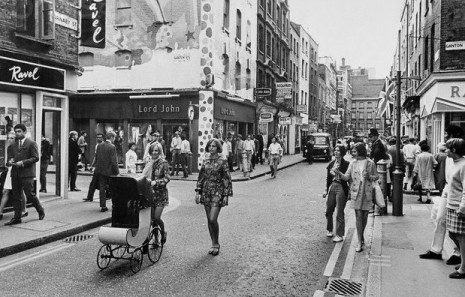
London. The Swinging Sixties. Beat Combos. Guitars. Bri-Nylon Shirts. Bad Teeth. Fast Cars. Chicks. Guys. Fights. Suits. Fights. Chocolates. Exotic Locations. Hair. Lots of Hair. More Chicks. More Guys. George Lazenby. Glossy Color Magazines. Shaw Taylor. Newspapers. Weddings. Symbolism. Cigarettes. What more could you ask for?
The story originally came to me via a friend, who had a friend, who had a film script – that’s how things happen, like ‘Chinese Whispers’, they start off as one thing and become something else. It was a good script, and would have made a fun wee movie, the kind Bill Forsyth or Charlie Gormley made about Glasgow in the 1980s, you can Google the type, Comfort and Joy meets Heavenly Pursuits, something like that.
I hocked it around but no takers, one to put down to experience. But I was still intrigued and thought there was maybe something more here, especially as the story was loosely based on real events. So, I’ll start with how it ended and then tell you how it began and where it all went wrong.
It should have been the best of times, but just weeks after 19-year-old, James McCreadie won £1500 on the Scottish Daily Express Place the Ball competition, three men, who claimed to be from the newspaper, turned up at his door and demanded he hand over £1300 of his winnings. If he didn’t pay up, then the men would put him in a concrete overcoat and dump him in the River Clyde.
Suddenly, it was the worst of times, and while most would have coughed up the money to avoid the fish, McCreadie had a problem - he didn’t have his winnings, he’d spent them on drinking, gambling, and a new £95 color TV for his gran. In fear for his life, the teenager went to the police - and this is how the cops uncovered biggest fraud in British newspaper history.
It began with Catherine McChord. At twenty-seven, she felt her life was over and could only dream of escaping the deprived housing estate in Baillieston, on the outskirts of Glasgow, where she lived with her husband, Eddie, a twenty-seven—year-old taxi driver. When the couple discovered, two years into their marriage, they could not have children, they decided to set their sights on the top, as Cathy later told the Glasgow Herald:
“I don’t really know why I became involved in this. Maybe it would have been different if we could have had children. I don’t know.”
McChord worked as an office clerk at the Scottish Daily Express, where she earned £35 a week. For Cathy, it seemed that her future life was all around her - older women who had worked at the same job in the same office, year-after-year, until they retired, received their handshake, and had nothing to show for it but a few happy thoughts and the faint memory of a fling at the Christmas party. That wasn’t for Cathy, she wanted a taste of the good things in life - holidays, a car, a new home. That was the dream, and in 1973, the dream became a little closer when she was appointed Deputy Competitions Clerk, to the new Head of Competitions, Colin Hunter.
At thirty-six, Hunter was very similar to Cathy. He’d spent a life working hard at a job as a middle management accountant, who knew his promotion to Head of Competitions, with a salary of £80 a week, was as high up as he would ever go.
Like Cathy, Colin wanted more from life. He hated living in Castlemilk. He felt it wasn’t a safe place for his family to grow up in. The sixties promise of a modern Glasgow was now a grey reality of bleak new towns, housing estates and high rises. Hunter felt his best years were over and just wanted to give his wife, and especially his two children something of value, something that would change their lives for the better, and now here was that chance.
In the 1960s and 1970s Britain was addicted to a newspaper competition called Spot the Ball. Each week, the Scottish Daily Express, amongst others, would publish a photograph from a soccer match and invite readers to guess the position of the ball, which has been removed from the picture. In its day, the Scottish Daily Express’ Place the Ball was as popular as the National Lottery today. Unlike the lottery, individuals used mathematical theory, random algorithms, body language, lines of sight convergence, and a considerable amount of potluck to pin-point the exact position of the missing ball.
The Express offered a weekly cash prize of £1,500 – the equivalent of the average workers’ yearly wage. This was later increased to £5,000 and then to £20,500 and £22,000 – the equivalent of a £1,000,000 win today.
Too great a temptation for Cathy, who realized, when it was rumoured the Scottish Daily Express was to close, and the staff made redundant, she had found a way to have those things she had always wanted.
On hearing her suggestion, Hunter turned a blind eye, but later claimed he joined the criminal cartel after he heard redundancy money was being offered at Express departments, and he and his colleagues hoped to collect as well. “But in March 1974, we were told we were being retained. That was the final trigger for the involvement.”
It was a simple plan. Cathy and Hunter ran a syndicate, made up of Eddie McChord, and friends John Smith, Thomas Hutton, and Donald Williamson. These friends located a suitable winner – someone who needed a small sum of money. Once the bogus winner was selected, a winning entry form would be submitted in their name, which then won the £15,000 Place the Ball prize.
The bogus winner kept £200 of their winnings, returning £1300.
The £1300 was divided three-ways: £500 each to Cathy and Hunter; and £300 for the other members of the syndicate.
From March 1974, until April 1977, Cathy and Hunter fixed 67 Place the Ball competitions. They also twice rigged two major jackpots of £20,500 and £22,000, collecting two-thirds of these winnings for themselves.
As Cathy and Hunter did the hardest part of the swindle, they took the lion’s share of the loot.
“I enjoy spending money I like good things, wine, food, travel. And I love clothes, particularly trouser suits. I did make flights to London to buy clothes but not as people made out.
“Whenever I had money from the competitions, I would take it to two building societies. I would put between £100 and £300 in one and about the same amount in the other. I did this several times and never once let Eddie know.”
Amongst the first winners, was Cathy’s mother. The syndicate believed they were modern day Robin Hoods, who gave money to those who needed it most. Winners were found from all over Glasgow, as Eddie McChord used his taxi to find and vet suitable winners; whilst his friends, Smith, Hutton and Williamson sought winners from a network of bars and social clubs.
The inevitable tension began to affect Cathy, and she was hospitalized after a serious bout of asthma.
Even so, she continued with the fraud, as for all involved it meant a life of luxury, flash cars, foreign holidays, new houses, lavish furnishings, and expensive jewelry
Cathy bought a new taxi for her husband, a £3,500 car for herself, and made her dream move from Baillieston to an £18,000 house in the suburbs. She also had £12,000 in a building society account.
Hunter bought a gold watch and bracelet, a new Volvo and was in the process of purchasing a bungalow when caught. He had £18,000 in various building societies and £500 in his pocket when arrested.
It seemed the perfect scam, until 19-year-old, James McCreadie was chosen as one of the 67 bogus winners. For the former Tory election agent and son of a bookmaker, blew the whistle on the scam.
McCreadie had originally needed money to pay a fine of £125 for Kirkintilloch Thistle Boys soccer team, an under-13 group that he helped to run.
McCreadie was told that he could keep £200 of his £1500 winnings, but when no one contacted him to collect the rest of the money, McCreadie withdrew a further £200, and bought his grandmother a £95 television. He then withdrew a further £1,100, and spent the lot.
The turning point for ‘Greedy’ McCreadie came when he was visited by three heavies, who threatened to “Chuck him in the Clyde wearing a concrete overcoat.”
Cathy McChord was jailed for 3 years, along with her boss, Colin Hunter after both admitted defrauding Beaverbrook’s Newspapers Ltd. in Scotland of £143,500.
They also admitted a charge of attempting to defraud a further £1500 from the paper’s Place the Ball competition.
Eddie McChord admitted defrauding the Scottish Daily Express of £4,500. He was fined £1,000 or 12 months in prison.
Mrs McChord’s mother admitted 2 charges involving £3,000. Presiding Judge Lord Johnston said her part was minor and admonished her.
John Smith was fined £12,000 and 12 months in prison for defrauding the firm of £131,000. He did not ask time to pay and was taken to the cells.
Thomas Hutton admitted frauds involving £70,000, was fined £4,000 or 12 months in prison.
Donald Williamson was fined £250 or 6 months, when he admitted fraud of £16,500.
Eddie McChord, Hutton and Williamson were allowed time to pay.
After his conviction Hunter said:
“I want to make a fresh start in life when all this mess is over and I want to wipe the slate clean. I suppose I got between £1500 and £1700 of the total money, and I presume Cathy got the same.”
The police recovered only £4224 of the £143,500. £139,000 is still unaccounted for.
Together, Hunter and the McChords stole over £1million in today’s money from the Daily Express.
Sadly, this wasn’t the end of Cathy’s story, just like those misunderstood whispers that change into something different, her life took a dark, and more horrific turn, when in 1982, she was murdered by deranged killer Ian Scoular.
No suitable video for this…but here’s Archie Gemmill’s genius goal for Scotland against Holland in the 1978 World Cup
Last year, American student, Amanda Knox was convicted of the murder and sexual assault of her British roommate, Meredith Kercher. The killing took place in the apartment the two young women shared in Pergugia, Italy, in 2007. It was an event that literally divided continents - Americans tended to believe Amanda innocent; while Europeans thought her guilty. The paparazzi dubbed the 23-year-old, “Foxy Knoxy”, while the prosecution described her as a sex-mad, drug-addled psycho, all of which detracted from the horror of the crime and complexities of the case.