

Selective memory can be a marvellous thing. It ensures we are never wrong, always right and (best of all) that we have always had such impeccable taste in music.
In Britain there were a lot of drugs about in the nineties—a lot of bad drugs—which might explain why so many of us—who lived through that heady decade—only recall the really good stuff rather than all that crap we apparently really enjoyed—Mr Blobby? Babylon Zoo? Rednex? Will Smith?—well, somebody bought this shit, how else did it all get to #1?
Personally, I have no recollection (officer) as to how all these records charted, but I can certainly give you a brief illustrated history of what we were actually listening to and what we all supposedly liked.
Exhibit #1: Select magazine
Select was arguably the magazine of the 1990s—the one that best represented (or at least covered) what happened during that decade—well, if you lived in the UK that is. Select had attitude, swagger and wit and was very, very opinionated. It didn’t tug its forelock or swoon before too many stars—though it certainly had its favorites.
Select kicked off in July 1990 with his purple highness Prince on the cover. It was a statement of the kind of magazine they were going to be—cool, sophisticated, sexy, sharp. Prince was good—everybody loves Prince. It didn’t last long. Over the next few months, the magazine struggled to find a musical movement it could wholeheartedly endorse. In its search for the next big thing—even The Beatles (rather surprisingly) featured on its cover.
Select threw its weight behind such bands as Happy Mondays, Primal Scream, Blur and most significantly Suede—who never quite managed the level of success the magazine hoped for. Then Select did something remarkable—rather than follow the trend the magazine decided to shape it.
In April 1993, Select published an article by journalist Stuart Maconie entitled “Who Do You Think You Are Kidding Mr. Cobain?” In it Maconie made a very convincing case for abandoning the influence of American music (grunge) and taking up with the “crimplene, glamour, wit, and irony” of local British talent.
Maconie offered up a list of bands he thought would make it big—Suede, Saint Etienne, Denim, The Auteurs and Pulp—lumping them together under the title “Britpop.” Within a year—the idea of one journalist had become a movement of disparate bands, genres and styles—from Oasis to Blur, Elastica to Pulp, Sleeper to The Verve.
Maconie’s idea gave Select their drum—one they were going to bang until everyone was deaf or the thrill had gone.
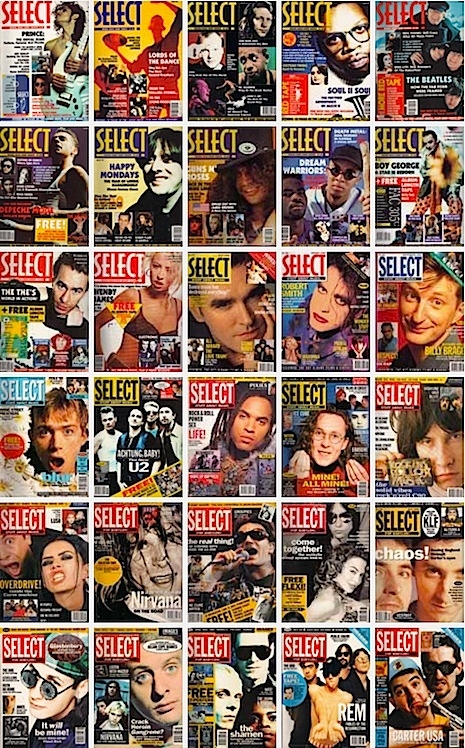
Select lasted for just over a decade 1990-2001. Its final cover featured Coldplay—which might explain where Britpop had gone wrong. Some kind soul has scanned all of the back issues—inside and out—and a trawl through their covers tells the story of what was in, what was hip, and what was “going on.”
If you’ve a hankering for the past or just want to relive the heady days of the 1990s, then check here to read, view and enjoy the whole archive of Select magazine.
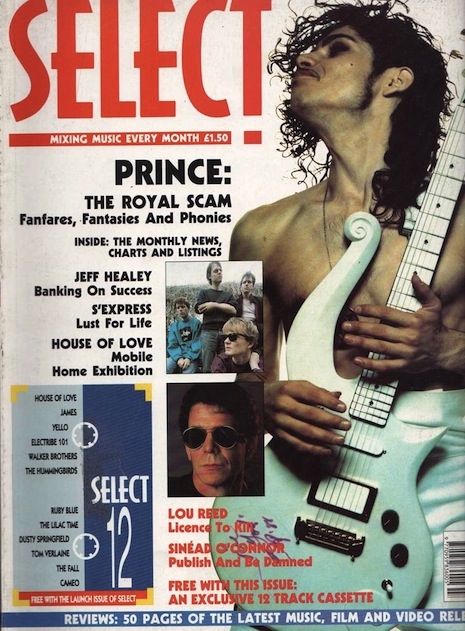
Prince on the very first cover of ‘Select’ July 1990.
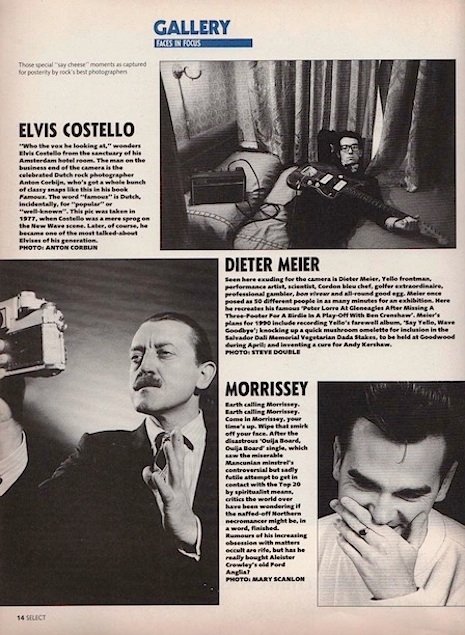
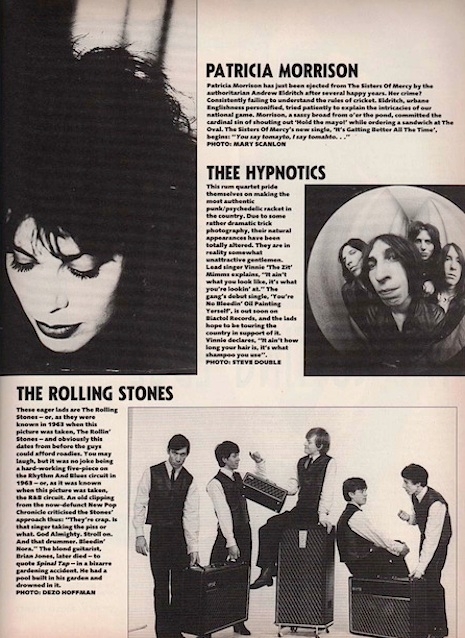
Something old, something new… a taste of what’s to come…
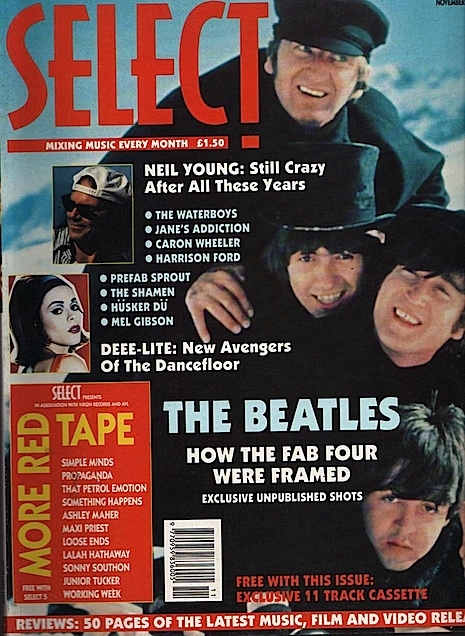
Something very old: The Beatles—but a hint of what this magazine hoped to find in the 1990s…Britpop. November 1990.
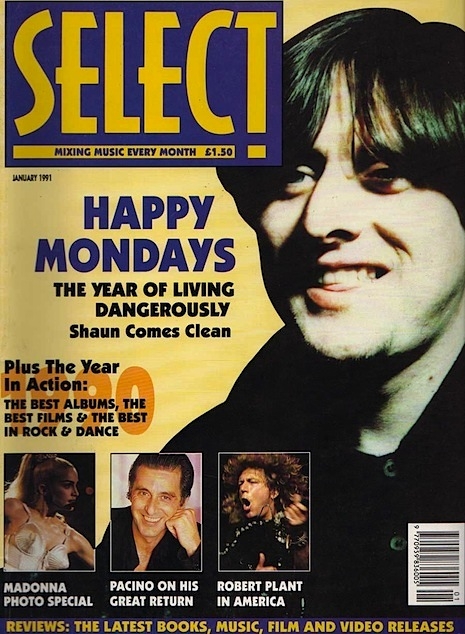
You get the feeling this bloke’s gonna feature a lot in this magazine…Happy Mondays’ Shaun Ryder, January 1991.
More Select covers for selective memories, after the jump…