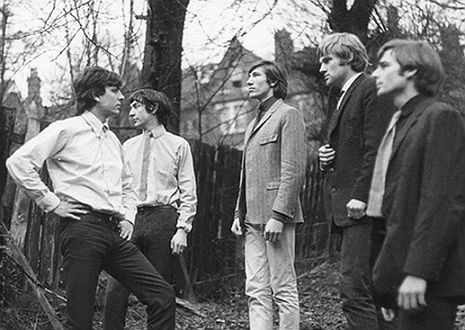
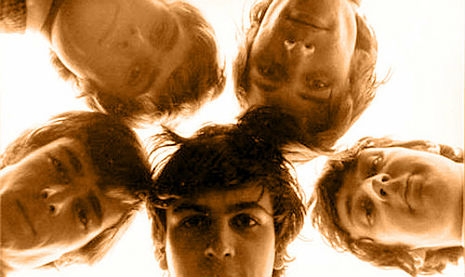
I’m guessing that many, if not most, of our UK-based readers caught this weekend’s big Pink Floyd TV special on the BBC. Obviously this program—a satisfying buffet of solid gold early Pink Floyd performances, in and of itself—is but a brief taster to whet the public’s appetite for that much-heralded (but way overpriced) 27 disc box set that’s coming out in November.
Starting with the Syd Barrett-era rarity of a “Jugband Blues” performance and ending prior to the release of The Dark Side of the Moon, the BBC compilation of HD Floyd footage Pink Floyd Beginnings 1967-1972 is a true stunner. Even if you already have most of this footage on high quality bootlegs—I’ve probably got about 80% of it myself—you’ve never seen or heard it quite like this. The only thing I can really compare the quality to would be last year’s Beatles Blu-ray collection, which was absolutely superb in every way. Even the things that would have have a videotape origin have been nicely rezzed up to high definition. Visually it’s simply dazzling.
Which sucks because now I can easily justify spending the big bucks on this goddamned overpriced box set, despite having the vast majority of it already. Trust me, I’d have been happy to pay $250, but even at over twice that (It’s listed for $571 on Amazon—ouch!) I’m simply salivating to own it after watching this hour-long BBC teaser and know myself well enough not to trust my itchy trigger finger anywhere near that Amazon 1-click button. My wife is just going to kill me.
I thought I’d be able to find Pink Floyd Beginnings 1967-1972 on YouTube—it’s currently not posted there—but but fret not Pink peeps, a kind person posted it on an Arabic language website. Having said that, who knows how long it will last? Use it or lose it, in other words.
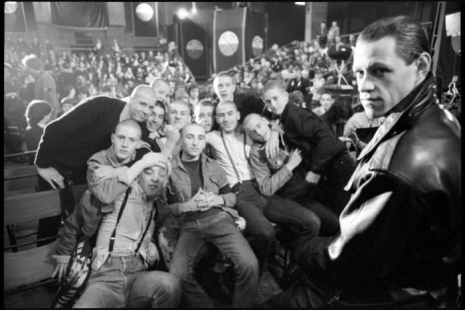
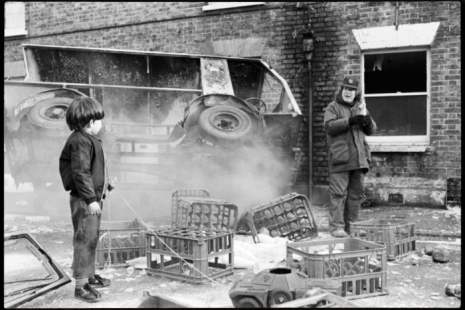
A behind-the-scenes images of Bob Geldof as ‘Pink’ and actual skinheads from the 1982 film ‘Pink Floyd - The Wall.’
I don’t know how many nights I spent in my youth tripping balls on acid in a dark movie theater with 100 or so of my stoned out peers watching 1982’s WTF film Pink Floyd - The Wall for the 20th time (I guess I answered my own question there: 20). It was truly a rite of passage where I grew up back in Boston and I know that wasn’t the only place where young minds were getting blown apart by visions of marching hammers or a bloody, soon to be eyebrowless Bob Geldof screaming “TAKE THAT FUCKERS!” as he tosses a television out of a window.
Before I continue, I’ll give you a minute to recover from that mini-flashback you just had.
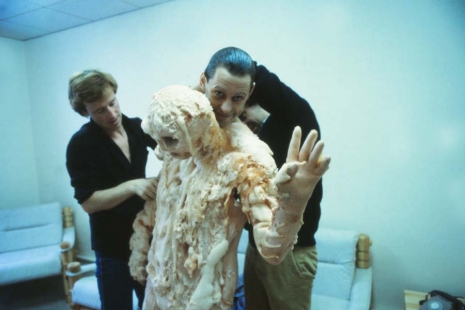
Bob Geldof being transformed into your worst drug-induced nightmare.
If you are following the news at all these days (and I wouldn’t blame you if you and the “news” are on “a break” right now as most of it makes me want to hide under my bed) you’ve likely seen some of the comparisons from last week’s GOP Convention to scenes from director Alan Parker’s brilliant adaptation of Pink Floyd’s 1979 conceptual masterpiece, The Wall. As I am about as nostalgic as they come I decided to watch the film once again (sans acid this go ‘round) and it should be of no surprise that despite a lack of chemicals cavorting around in my head the film is still quite impossible to look away from. It is also quite possibly even more terrifying to watch now when you allow yourself to consider the parallels some scenes seem to run with the ugly rhetoric spewing from the mouths of elected officials and a man who is currently vying to occupy the highest political office in the United States.
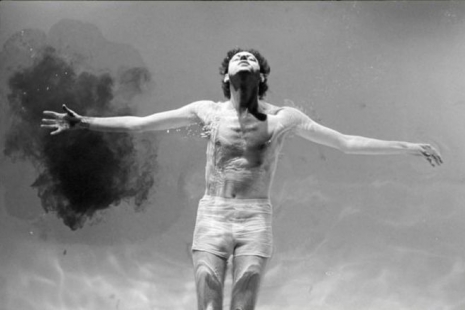
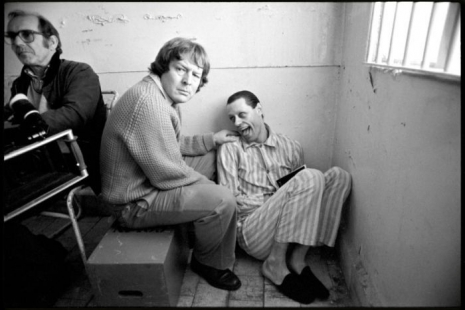
But as I often do, I’ve once again digressed away from the point of this post which is to share with you some remarkable behind-the-scenes photos from The Wall that I had never seen before as well as an interesting tidbit about the film’s star Bob Geldof. Apparently Geldof (who’s allegedly the leader of a new liberal political “party” in England called the “Sneerers” in case you were wondering what he’s currently up to) couldn’t swim and was also massively phobic when it came to blood. So when it came time to film the scene where Pink is bleeding out in a swimming pool, the reluctant Geldof was placed on top of a see-through plastic body mold so he could appear to be floating in the pool among a cloud of his blood for the sequence. Yikes. Many of the images in this post can be found in a must-own book for any Floyd fan by David Appleby, Pink Floyd - Behind The Wall.
Director Alan Parker on the set of ‘The Wall’ with ‘Little Pink’ played by actor David Bingham.
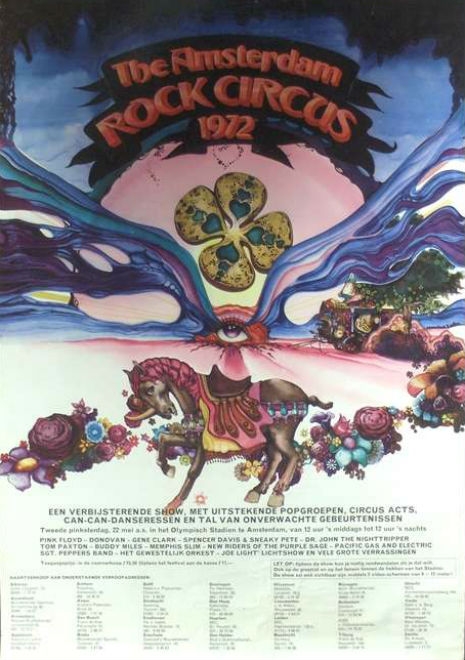
This remarkable footage of Pink Floyd live at “The Amsterdam Rock Circus” was shot on May 22, 1972. The festival was held at Olympic Stadium and the other acts included Donovan, Gene Clark, Dr. John, The New Riders Of The Purple Sage and Buddy Miles. Pink Floyd were the headliners.
This admittedly ragged, yet still quite compelling document is notable for so many reasons: First of all, there is so very little footage of Pink Floyd just before (and after) The Dark Side of the Moon came out in 1973. They were obviously a pretty well-documented band from the very start of their career, but there’s only a small amount of live visual Floyd material from this particular era.
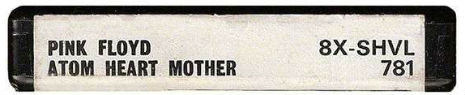
Second, the band is on fucking fire here. Please don’t take my word for it. It starts with an orchestra-less “Atom Heart Mother” (which includes a berserk David Gilmour guitar solo) and then goes into an extra dramatic and extra heavy “Careful with that Axe, Eugene” complete with a massive “festival-sized” pyrotechnics display during “the scream” bit. From the looks of the pyre they had going on there, this cool-as-shit conflagration probably singed some fringe off at least a few of the hippies in attendance that night. There was more fire during Nick Mason’s drum solo as he pounds on a giant flame-encircled gong. They also do “Saucerful of Secrets.”
Lastly, it was the final ever live performance of “Atom Heart Mother.”
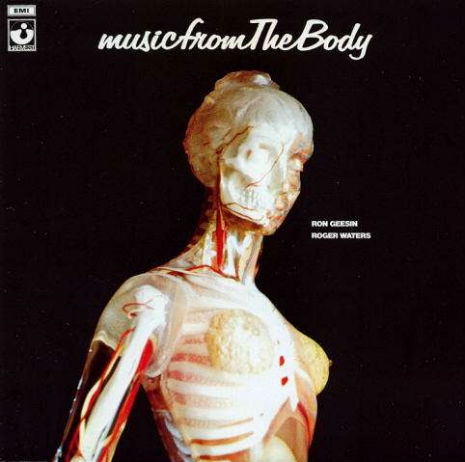
The Body is an innovative scientific documentary film that was directed and produced by Roy Battersby (actress Kate Beckinsale’s Trotskyite stepfather) in 1970. The film’s soundtrack, composed by quirky Scotsman Ron Geesin and Pink Floyd’s Roger Waters, was released as Music from the Body. Some of Geesin and Waters’ songs made use of the human body as a sort of musical instrument. Pink Floyd were always big on using the heartbeat, but Music from the Body even used farts. One of the songs is called “More Than Seven Dwarfs In Penis Land.”
In Battersby’s film, internal cameras are used to show different parts of the human anatomy in action. The film was narrated by actor Frank Finlay and Battersby’s fellow Trotsky admirer Vanessa Redgrave.
“Sea Shell and Stone/Breathe in the Air” plays under the opening credits. If you can’t take the sight of a mother’s breast in a science doc, don’t click play, you’ve been warned, weirdo:
By 1967 Pink Floyd was a significant presence on the UK rock scene. In the autumn of that year the group made its first trip to the United States, where they participated in a rather ill-fated tour that had to be rescheduled due to the late arrival of permits, leading to a great many cancellations. But the tour began in earnest on November 4, 1967, with a show at the Winterland Auditorium in San Francisco. Another factor making the tour difficult was that Syd Barrett was starting to fray in a way that couldn’t be ignored.
That first week in the United States, Pink Floyd taped a TV appearance for a show called Groovy on KHJ Channel 9 at the Cheetah Club in Santa Monica, then appeared on The Pat Boone Show, and a day later, American Bandstand and then another KHJ show called Boss City. These appearances would appear in people’s living rooms in a different order days or weeks later, but it appears that the American Bandstand gig was the third to be taped and the third to appear on TV. The Pat Boone Show appearance was apparently not saved for posterity, but at least a section of the American Bandstand appearance has survived, as you can see.
After playing the band’s fourth single “Apples and Oranges” (which failed to chart), Dick Clark engages in a bit of goofy Q&A banter, inanely asking Roger Waters about American cuisine. Waters says he’s only had “two cheeseburgers,” which “sat quite well.”
At a show at The Fillmore in San Francisco a few days after the American Bandstand appearance, Barrett slowly detuned his guitar during a performance of “Interstellar Overdrive.” By the following spring, Barrett would no longer be in the group.
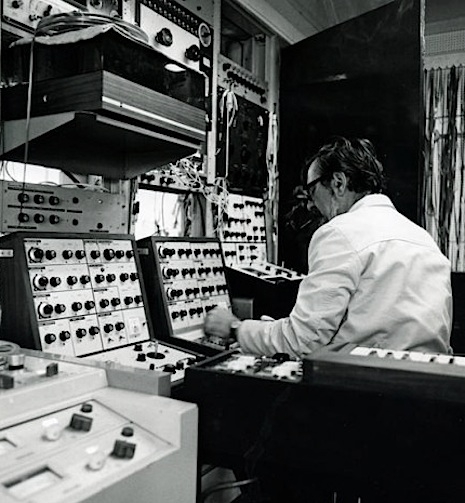
If you’re British and of a certain age then Doctor Who was most likely your first introduction to the sounds of electronic music. Apart from its famous theme tune, Doctor Who used an electronic soundtrack composed by Tristram Cary to underscore the arrival of the Daleks onto TV screens in 1963. At the time, most people considered electronic music as weird, alienating noise. Using it in a primetime TV series like Doctor Who was—as one commentator explains in the fascinating documentary What the Future Sounded Like—a rather subversive act.
Tristram Cary struck upon the potential of tape and electronic music while serving in the Royal Navy during the Second World War. The son of the Irish novelist Joyce Cary (The Horse’s Mouth), Tristram was one of the earliest pioneers of electronic music during the 1950s. A classically-trained composer, he had scored such movies as The Ladykillers and Town on Trial but found traditional music inhibiting. Reasoning that music was just the organization of sound, Cary began to experiment with electronic sounds, tape recordings and musique concrète, in a bid to create “music without frontiers.”
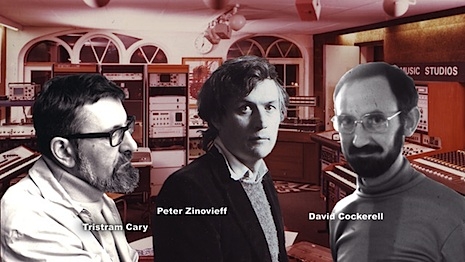
At the same, two other electronic music pioneers, the aristocratic Peter Zinovieff and engineer David Cockerell were separately testing out their own ideas. The three eventually came together to form the Electronic Music Studios in 1969. Their intention was to produce a versatile monophonic synthesiser, which could be cheaply produced for public use. While this proved tricky, Cockerell did manage to design one of the first British portable commercially available synthesizer—or Voltage Controlled Studio—the EMS VCS3. This once futuristic-looking “suitcase synth” is what Brian Eno was seen using during his tenure in Roxy Music.
Fifty years after they were originally recorded, several heretofore unreleased Pink Floyd demos dating from late 1964 and early 1965 were released as a limited edition set of two seven-inch singles on this past November’s Record Store Day as 1965: Their First Recordings. The label, Parlophone, pressed up just 1050 copies of the EP (50 were promo copies) and it was only for sale in the UK.
This unnecessary scarcity may seem odd for a group as huge as Pink Floyd, but more than likely the point was not necessarily to gift this music to the grateful public for Christmas, but rather to extend the copyright which would have expired in 2015 under British intellectual property law and put the recordings into the public domain.
Two of the tracks, “Lucy Leave,” an early Syd Barrett original, and a Slim Harpo cover of his “I’m a King Bee” have been bootlegged countless times since escaping via the famous Magnesium Proverbs bootleg in the early 90s. The songs were recorded when the band would have probably still have been called “The Tea Set” or “The Pink Floyd Sound” (“Pink Floyd” came from two bluesmen, Pink Anderson and Floyd Council. Previous names the band performed under included “Sigma 6” “The Meggadeaths” “The Abdabs” and “The Screaming Abdabs”).
As the oft-bootlegged version of “Lucy Leave”—which was culled from an acetate—had a prominent thudding skip in the opening bars, it’s great to hear this song in higher quality. The absolutely amazing guitar player here is not, as you might expect Syd, but a fellow named Rado Klose who left the group a four piece to continue his architectural studies. I’m nuts about this song. To me this is the equal of ANY later Pink Floyd song. It’s amazing to me that they seem almost embarrassed by it. It doesn’t merely smoke, it burns.
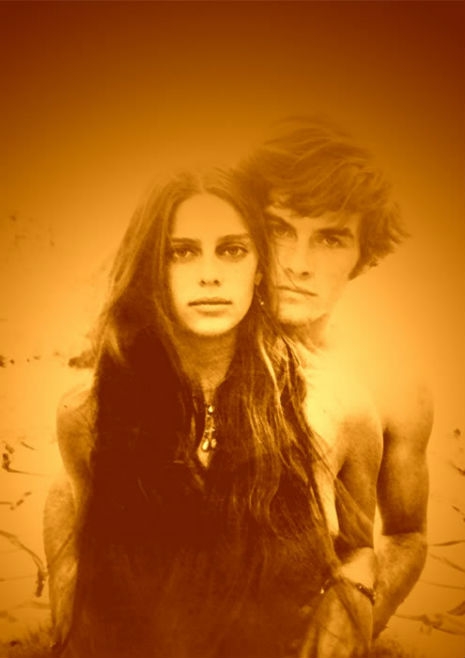
Italian director Michelangelo Antonioni’s Zabriskie Point has always been controversial, dividing even his staunchest defenders. Some feel the 1970 film—Antonioni’s only American movie—completely missed its mark and failed to capture the zeitgeist of the hippie New Left counterculture of the era. Some blame the inexperienced lead actors, Mark Frechette and Daria Halprin (who were linked romantically). When Zabriskie Point was released audiences and critics alike hated it, just hated it, and although that is… perfectly understandable, I find it gorgeous to look at (the man who shot Red Desert certainly knew how to shoot the landscape of Death Valley) and I like the odd “outsider” alienation the Italian employs to examine American culture and consumerism. It’s just not a film to watch when you’re… sleepy if you take my point.
And speaking of Zabriskie Point, I’ve been obsessed with a Pink Floyd bootleg for years now and wanted to call it to your attention, dear readers, chances are that some of you might enjoy it, too.
Apparently the Floyd were at one point to have been the sole composer/musicians for the Zabriskie Point soundtrack. They completed eight numbers for the film, but only three were used. Antonioni added material by The Youngbloods, Roy Orbison, Jerry Garcia, The Kaleidoscope, Patti Page and the Rolling Stones to round out the film’s score. (Oddly, Antonioni visited the Doors in the studio when they were recording the extraordinary “L’America” for L.A. Woman, but the director inexplicably turned down the track, which could have worked spectacularly well in his film.)
Under the titles like “370 Roman Yards” or “A Total Zabriskie Point of View,” you can hear all of the soundtrack music recorded by Pink Floyd for Antonioni that never made it into the film. Whichever name you find it under, these boots purport to be the “lost” Pink Floyd soundtrack to Zabriskie Point with all eight of the tracks recorded for the film appearing in the order of the intended album’s run list. Some of the boots contain all the known outtakes.
It’s an extremely satisfying listen: Some of it sounds like Atom Heart Mother, some of it like Meddle and some of it is reminiscent of “Grantchester Meadows,” Roger Waters’ dreamy, pastoral composition from Ummagumma. “Heart Beat, Pig Meat” was Pink Floyd’s first time using a human heartbeat as a musical instrument (but it would not be the last). It’s one of their most monstrous numbers, truly a mind-blower. Rick Wright contributed a piano number called “The Violent Sequence” which was also unused, but later retooled as “Us and Them” on Dark Side of the Moon. Parts of the score remind me of Erik Satie and it has some of the few Floyd numbers that could be described as “blues rock.” Taken as a whole, it does absolutely sound like a “lost” Pink Floyd album recorded at the end of 1969, because that’s exactly what it is…
This comes from one of the torrents floating around on the Internet…
In the summer of 1969 Michelangelo Antonioni completed the filming of his visionary and prophetic view of America and our society. All that was left was to complete the movie with a good soundtrack. Antonioni was interested in everything that was new and trendy among young people. Don Hall was on the air during his nocturnal DJ program on KPPC FM Pasadena when he was contacted personally by Antonioni at the end of the summer of 1969. Antonioni really liked Don and invited him to have some screenings of the movie. After that Don provided a list of songs he felt would work, most coming from his program. Antonioni asked MGM to hire Don as Music Advisor for the soundtrack and came back to Roma (Don still has a letter from Antonioni, sent from Rome with the list of the songs he’d like to be in the movie, all songs for the radio-desert sequences).
Still they had to find how to score all the main sequences: Beginning, Violent, Take Off, Love and Explosions sequences (and eventually more). Antonioni wanted original music for those sequences. Many artists and bands were contacted to write original music for the movie, but none of them was asked to write the whole soundtrack of the movie.
In October ‘69 Don was in Rome with Antonioni trying to find a way to score the whole movie in time for Christmas. Near the end of the month it happened that Clare Peploe (co-writer of the movie and Antonioni’s girlfriend at the time) brought to Rome a brand new copy of the new Pink Floyd album, Ummagumma, from London. Antonioni, Don Hall and Clare listened to the new album with a small stereo at Antonioni’s house in Rome. Antonioni REALLY liked Ummagumma and listened several times to the whole album. He liked “Careful With That Axe, Eugene” very much and told Don that he’d like a new version for the final sequence of Zabriskie Point. They decided to try and hire Pink Floyd to record all the original music they needed for the movie. MGM contacted Pink Floyd. After that Steve O’Rourke came to Rome alone during the first days of November ‘69 to check and organize it all. All was done in few days, and Pink Floyd came on the 15th of November with Pete Watts and Alan Stiles, cancelling some shows planned for their present tour. Antonioni and Don showed the movie to them several times with some scenes already scored, highlighting those without. At that point Steve and Roger Waters had a talk and asked Antonioni to try to score the whole movie. He, being enthusiastic about Ummagumma, agreed.
Pink Floyd produced a large quantity of music, especially for the Love Scene but Antonioni was not satisfied and the sessions ran longer than planned. In the end Pink Floyd went back to London with some songs to finish. Out of all the entire production of songs, including themes and variations, Antonioni ended up using only three songs. He kept on searching for “something better” till the last days before the premiere of the movie. In London Pink Floyd completed their final versions of eight songs with the intent of them being their eventual album for the Zabriskie Point soundtrack.
You should not have that much of a problem, armed only with Google, of tracking down your own copy of this amazing “lost” Pink Floyd soundtrack album. Here are some highlights:
“Heart Beat, Pig Meat” sees the Floyd do musique concrète (and very well, I might add) over the opening credits:
“The Violent Sequence” which later became Dark Side of the Moon‘s “Us and Them”:
Forty years ago this month, Pink Floyd released their Wish You Were Here album.
Wish You Were Here was released on September 12th 1975, and is considered by band members Richard Wright and David Gilmour,to be their favorite Pink Floyd album. The recording of the album seemed to be somewhat of a tortured affair for the band—Roger Waters has said several times that he felt like the group was exhausted, creatively drained and perhaps should have just broken up—but slowly a powerful album came together, inspired by the band’s debt to its tragic founder, Syd Barrett and the album’s lead-off cut, “Shine On You Crazy Diamond.” The story of an unrecognizable Barrett showing up for an impromptu visit at the recording studio as the song was being mixed is a harrowing anecdote indeed. Several present broke down in tears at the sight of their old friend.
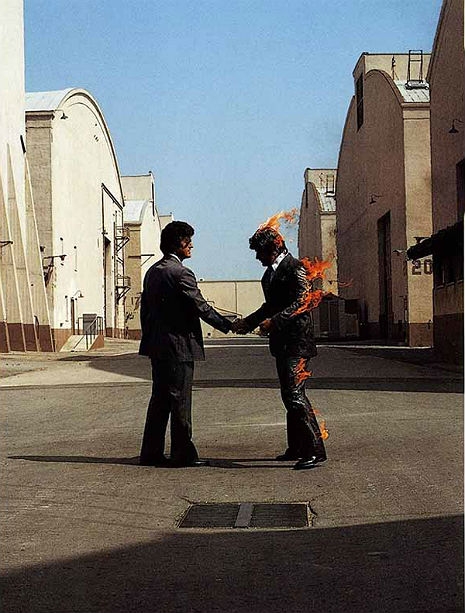
Featured in The Story of ‘Wish You Were Here’ are sleeve artist Storm Thorgerson of the legendary Hipgnosis design firm, folk singer Roy Harper who did the sarcastic vocal for “Have A Cigar” (many people assume this is Roger Waters, it’s not), Hollywood stuntman Ronnie Rondell (the “burning man” of the album jacket), backing vocalist Venetta Fields (The Blackberries) and others, including photographer Jill Furmanovsky who documented some of the sessions. Wish You Were Here recording engineer Brian Humphries also reveals some of the secrets of the master tapes at Abbey Road Studios, illustrating how certain sonic elements were constructed [for instance the shimmering “singing” wine glasses sound that opens the record, was reused from the aborted “Household Objects” recording sessions.
In the final cut: If you’re a big Pink Floyd fan, 2011’s The Story of ‘Wish You Were Here’ is worth a watch. I loved it, but then again, I’m one of those Pink Floyd fans who can hear the same damned stories repeated over and over again without ever getting bored of them. In truth, there is not all that much ground covered here that’s not been covered in past Pink Floyd documentaries, but it’s so well done that this is in no way an impediment to enjoying the film. It certainly wasn’t for me.
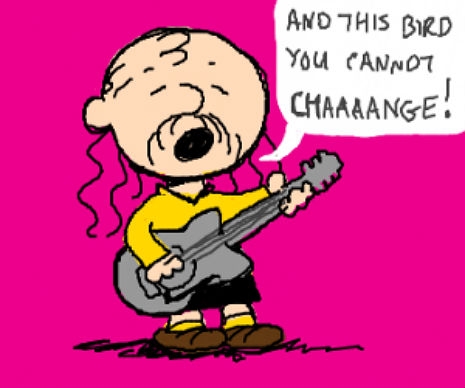
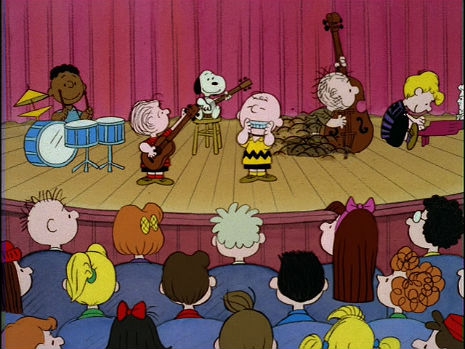
But it took YouTube user Garren Lazar/Super G to see the possibilities in the rest of the animated Peanuts oeuvre. He has made a whopping 34 videos (!) using Peanuts characters to animate videos for songs by a variety of classic hard rock acts, as seen below. These videos are remarkably good—I especially like the use of Schroeder’s impressionistic “Pathétique” sequence, which was just waiting to be used for something like this. The Peanuts version of Pink Floyd’s “Echoes”—24 minutes long, mind you—is especially mind-blowing.
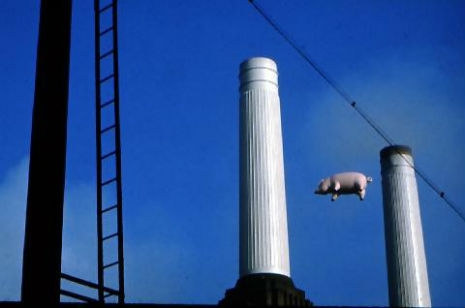
During Danny Boyle’s short film “Isles of Wonder,” shown as part of the Opening Ceremonies of the 2012 Summer Olympics in London, the camera flies from a small stream in the country down the Thames and into the Olympic venue. When the camera gets to the Battersea Power Station, a floating pig flies by, a fun wink, of course, to that most iconic of album covers, the 1977 Hipgnosis-designed sleeve for Pink Floyd’s Animals album.
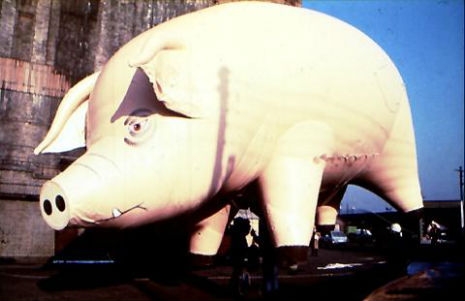
Animals, a bitter Orwell-inspired anti-capitalism screed needed an image that was appropriate for the dark vision of humanity heard within its grooves. Before they settled on the porcine zeppelin—Roger Water’s concept—Hipgnosis had pitched the group on the notion of a child discovering his parents fucking like… animals. Which could have been interesting, but instead they hired noted Australian artist Jeffrey Shaw to design the inflatable pig, which was then manufactured by the German company Ballon Fabrik, who constructed the Zeppelin airships of the early part of the 20th century.
The 30 feet (9.1 m) long pig balloon—dubbed “Algie”—was inflated with helium and positioned in place on December 2, but bad weather delayed the shoot and the following day the balloon broke free of its tethers and floated off, ultimately ending up in a farm near Kent where it apparently terrified a herd of cows.
My first memory of a record album being a media event was Pink Floyd’s The Wall in 1980, when I was 10 years old. I had some KISS albums by that time and the soundtrack to Grease and a couple other things, but The Wall was the first current album that penetrated my consciousness as a Big Fucking Deal. The album was released in late 1979 but I didn’t register that information, for me the phenomenon happened purely in 1980. For you 1980 might be the year of London Calling or Los Angeles; I wouldn’t hear about those albums until a few years later. For me it was the year of The Wall.
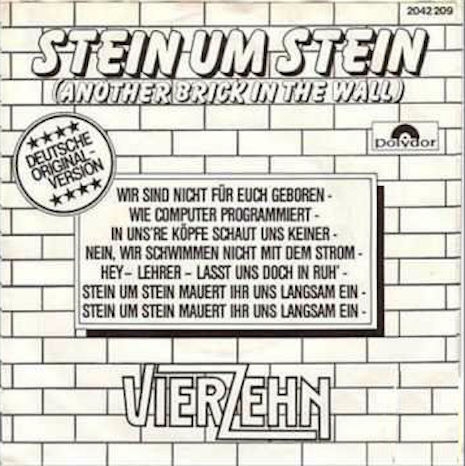
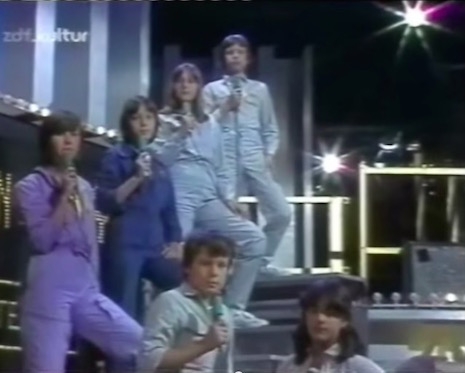
It must have been a big deal in Germany as well, judging from this excellent footage of a duo going by the name “Vierzehn” (which means “fourteen”) performing a German version of “Another Brick in the Wall (Part I)” on two different talk shows. Their rendition is dramatically shorter than the original, consisting of a single verse and chorus performed by the duo and then repeated by a chorus of German schoolchildren who march out at the appropriate moment. Then comes the righteous solo.
There’s very little information about Vierzehn out there, but one of the guys was named Joachim Heider, who sometimes went by “Alfie Khan” and who led a band called the Alfie Khan Sound Orchestra.
The German title is “Stein Um Stein,” which means “brick by brick.” Stein actually means stone; the proper word for “brick is Ziegel or Ziegelstein, but it obviously works well enough.
Here are the German lyrics followed by a translation—you’ll see it doesn’t really match up with the lyrics of Roger Waters (no reference to “dunklen Sarkasmus im Klassenzimmer”):
Wir sind nicht für euch geboren.
Wie Computer programmiert
In uns’re Köpfe schaut uns keiner
Nein, wir schwimmen nicht mit dem Strom
Hey, Lehrer, laßt uns doch in Ruh’!
Stein um Stein mauert ihr uns langsam ein.
Stein um Stein mauert ihr uns langsam ein.
Wir sind nicht für euch geboren. . . .
We are not born for you
Programmed like computers
In our heads nobody is looking
No, we do not swim with the stream
Hey, teacher, leave us alone!
Brick by brick you are walling us slowly in.
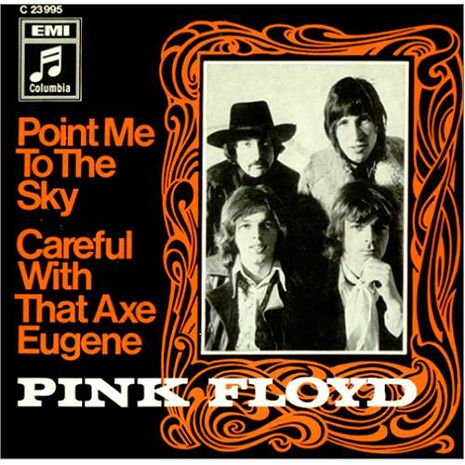
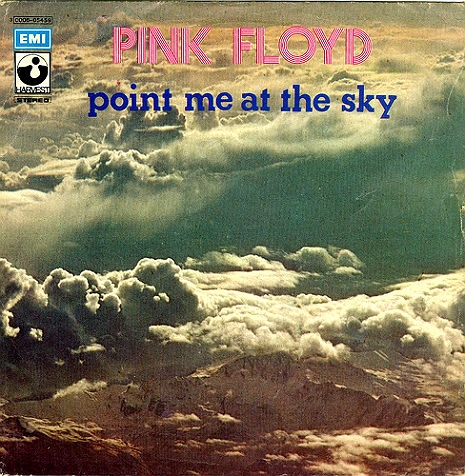
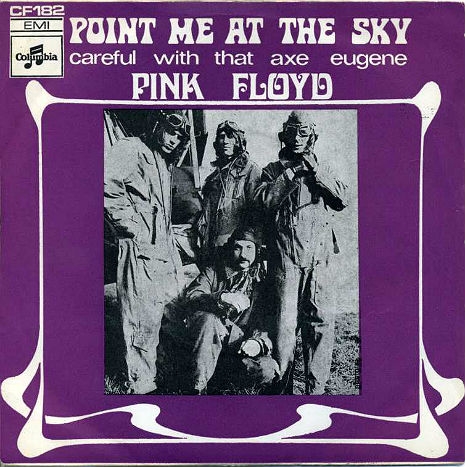
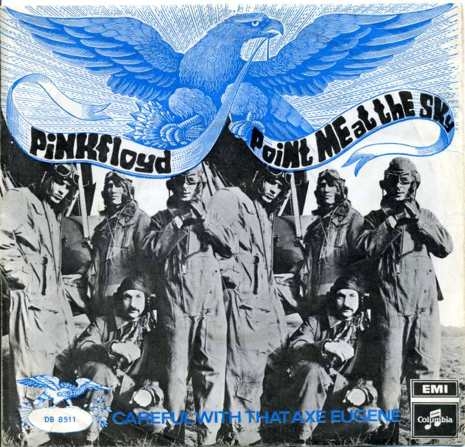
Although apparently seen by some members of the group as one of their most embarrassing moments, 1968’s “Point Me at the Sky,” the fifth single from Pink Floyd is hardly cringeworthy. The song was recorded on November 4, after Syd Barrett’s departure from the group that Spring. It was written by David Gilmour and Roger Waters under duress from the record label to continue producing the sort of catchy psychedelic whimsy their original leader was famous for.
The lyrics describe a fellow named Henry McClean calling up his friend Eugene with an offer of flight…
Hey, Eugene,
This is Henry McClean
And I’ve finished my beautiful flying machine
And I’m ringing to say
That I’m leaving and maybe
You’d like to fly with me
And hide with me, baby
Isn’t it strange
How little we change
Isn’t it sad we’re insane
Playing the games that we know and in tears
The games we’ve been playing for thousands and thousands and ....
Pointing to the cosmic glider
“Pull this plastic glider higher
Light the fuse and stand right back”
He cried “This is my last good-bye.”
Point me at the sky and tell it fly
Point me at the sky and tell it fly
Point me at the sky and tell it fly
And if you survive till two thousand and five
I hope you’re exceedingly thin
For if you are stout you will have to breathe out
While the people around you breathe in
People pressing on might say
It’s something that I hate to say
I’m slipping down to eat the ground
A little refuge on my brain
Point me at the sky and tell it fly
Point me at the sky and tell it fly
Point me at the sky and tell it fly
And all we’ve got to say to you is good-bye
It’s time to go, better run and get your bags, it’s good-bye
Nobody cry, it’s good-bye
Crash, crash, crash, crash, good-bye…
The song was a flop, its B-side, “Careful with That Axe, Eugene” (I wonder if it’s the same Eugene as the A-side?) becoming the better known number. “Point Me at the Sky” is perhaps the most obscure of all the band’s singles, having never appeared on a Pink Floyd album until the 1992 Shine On box’s The Early Singles disc. At that, The Early Singles was still only available to fans who purchased that expensive box set. (In the US, it was never released as a single at all, and available only as a cut on a 1978 Harvest Records sampler that was only sold via mail order.)
The group made a short promotional film for the song, taking flight in a 1920s vintage Tiger Moth aeroplane. The plane flies around the Biggin Hill aerodrome in Southeast London—where the photo of all the group’s equipment was shot for Ummagumma‘s back cover—and there are shots of the trains pulling in and out of Paddington Station.
I can’t imagine why they thought “Point Me to the Sky” was so bad—Roger Waters called it a “notable failure”—I’m in love with this song. They’ve recorded way worse.
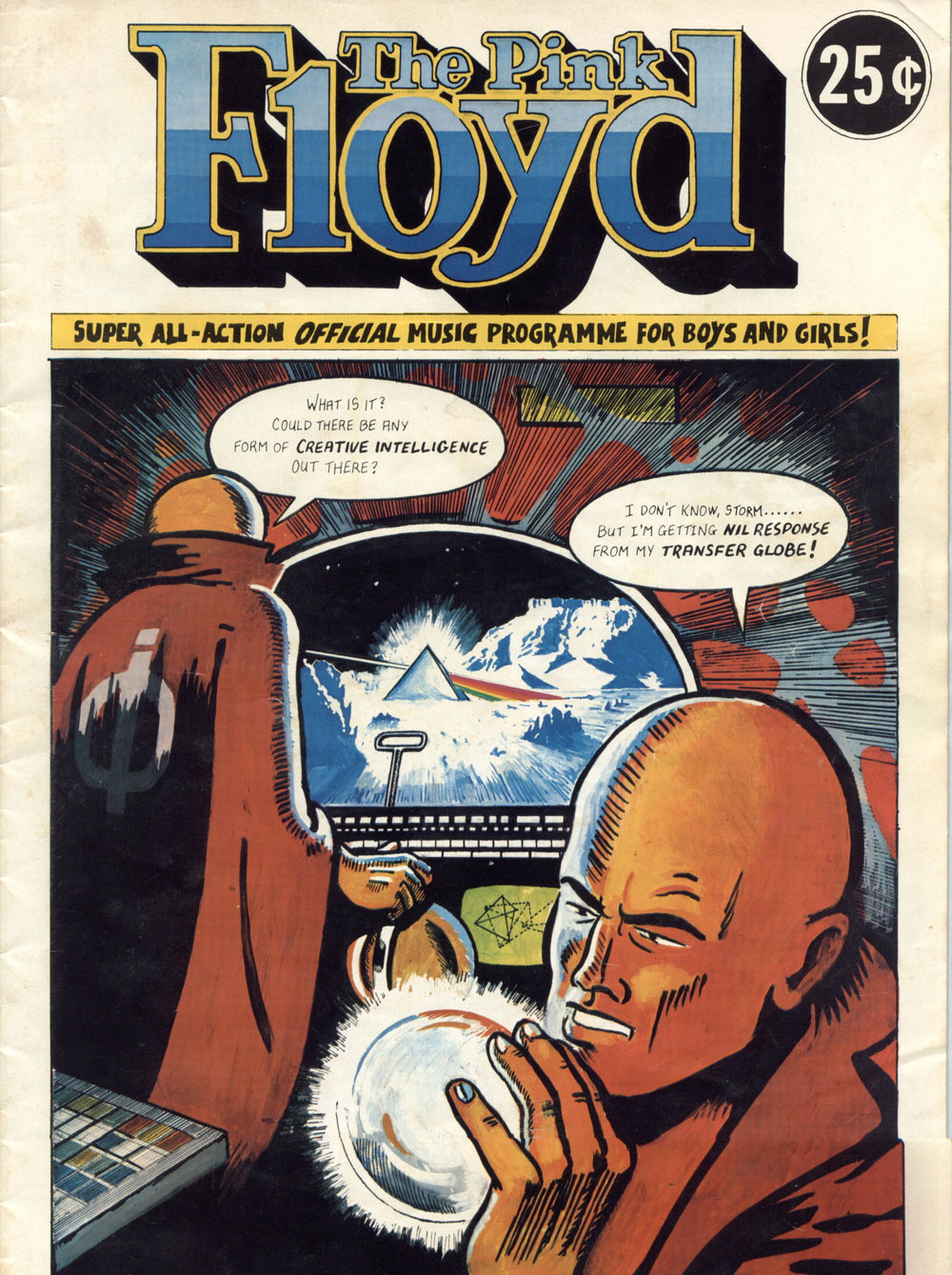
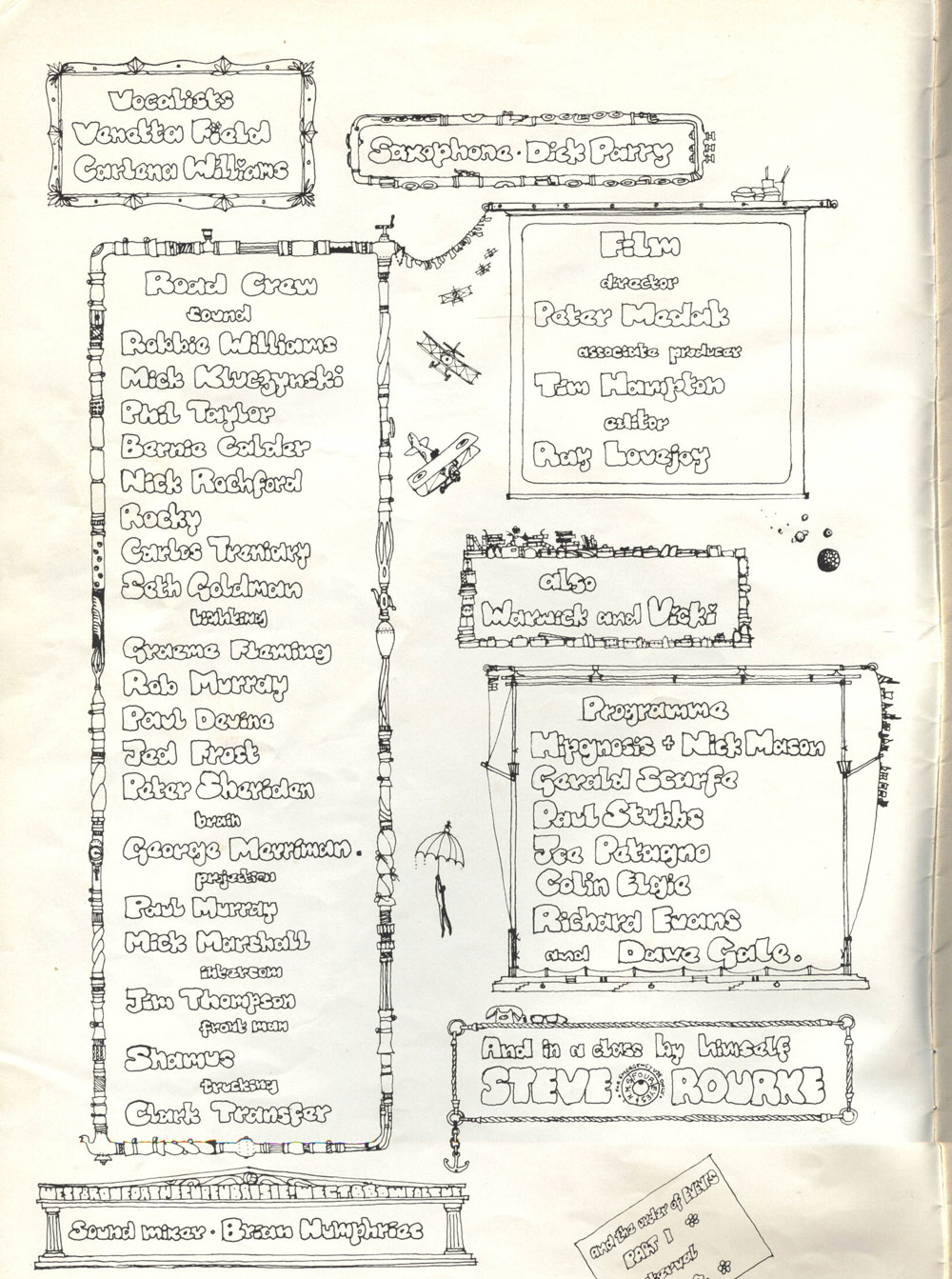
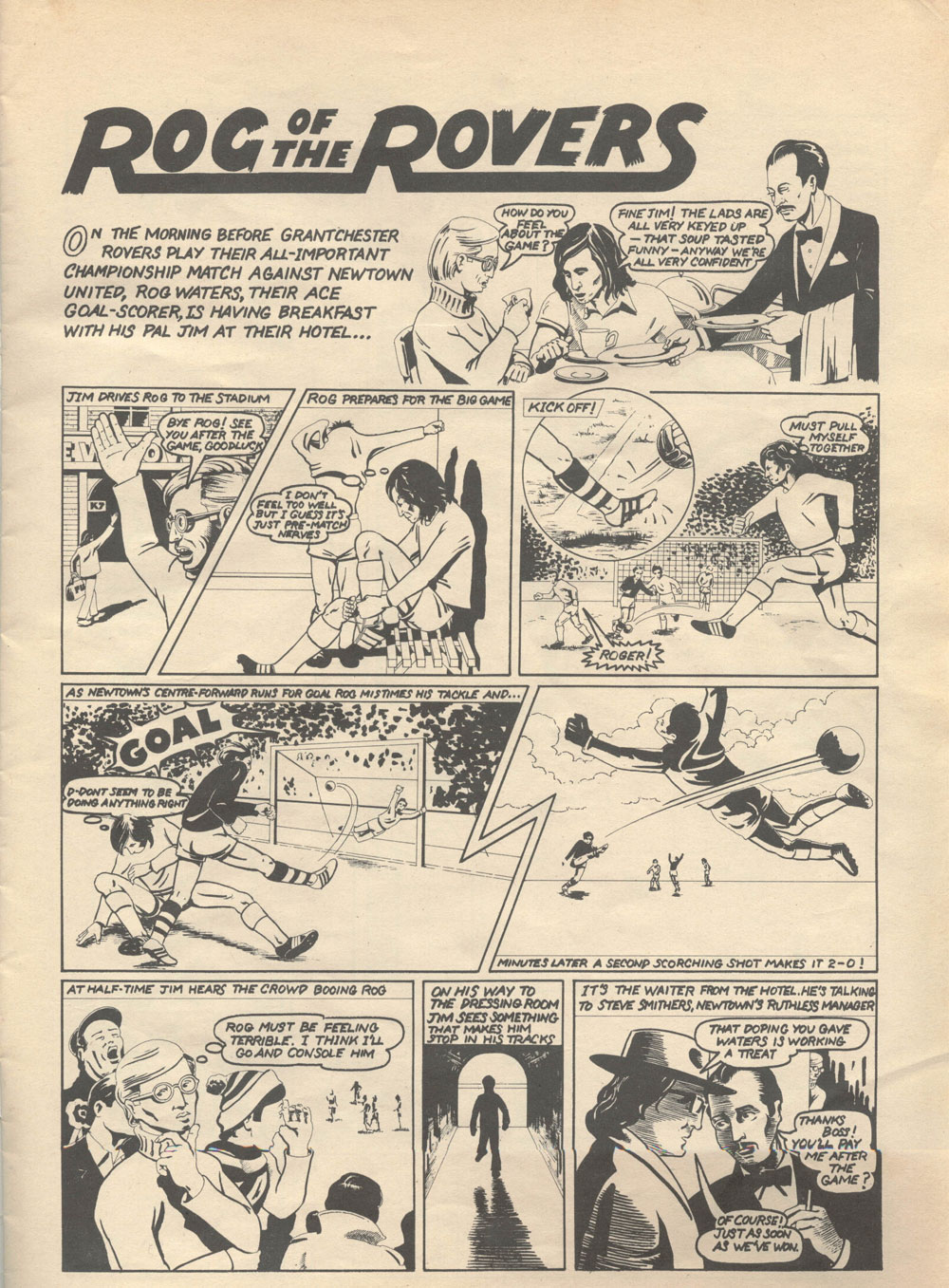
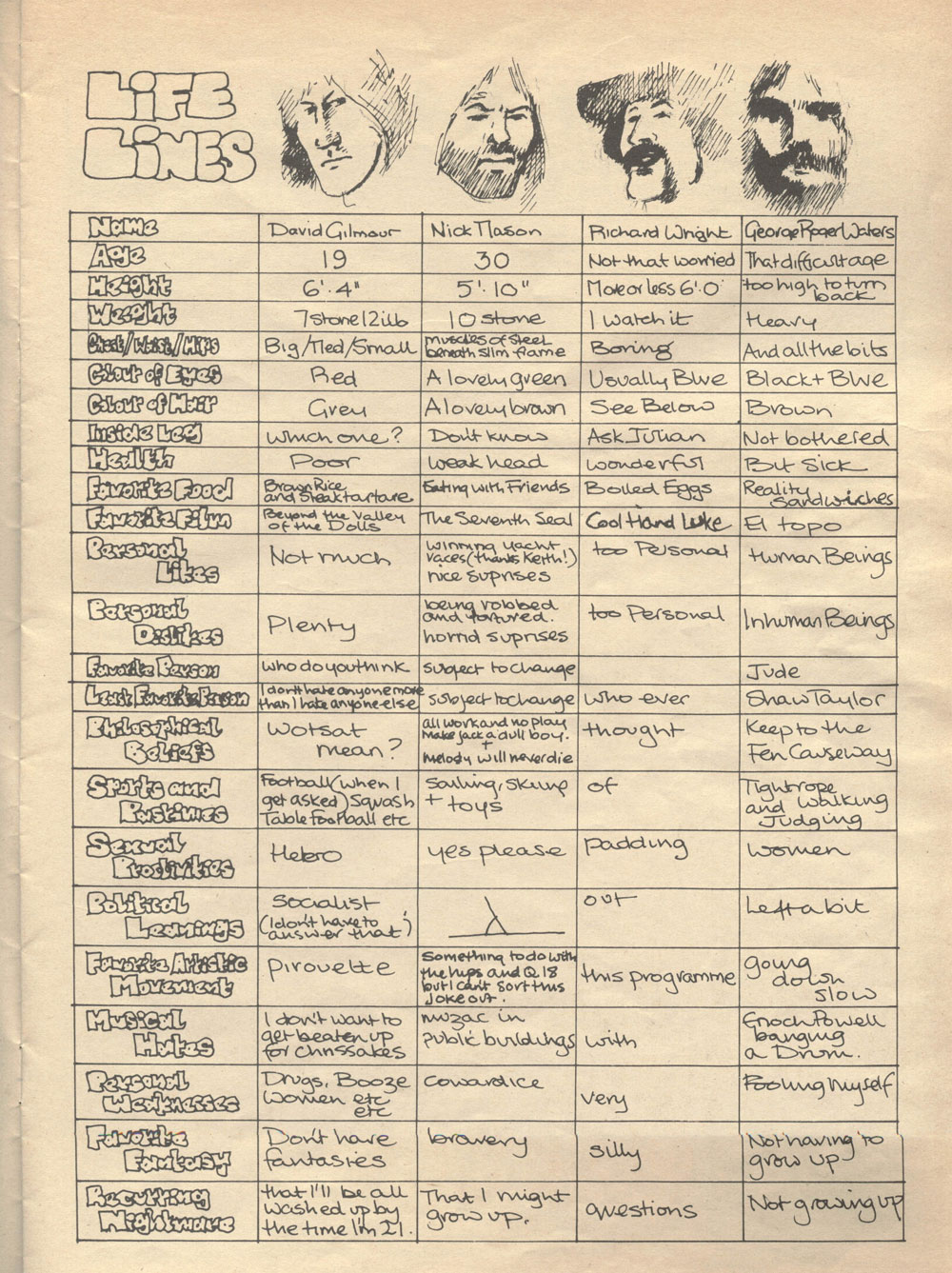
This incredible comic book program, designed by Hipgnosis for Pink Floyd’s 1975 tour supporting The Dark Side of the Moon, is full of wonders. It has an appealing lack of polish that puts it somewhere halfway between “professional promotional item” and “schoolboy’s notebook scribbling.” The bubble letters on page 2, where the credits are, are particularly striking. The “programme” is credited to Hipgnosis, Nick Mason, Gerald Scarfe, Paul Stubbs, Joe Petagno, Colin Elgie, Richard Evans, and Dave Gale. Scarfe, of course, would create the imagery for Floyd’s 1980 album The Wall.
The comic book features a short comic about “Rog Waters,” who is identified as the “ace scorer” of the football squad called the “Grantchester Rovers,” contending with a nefarious waiter who has “doped” him, but he fights back and leads his team to (apparently) ... a rousing tie. There’s also a comic about “Captain Mason,” of the Royal Navy in World War II. There’s plenty more, but I’ll leave you to find out the rest on your own.
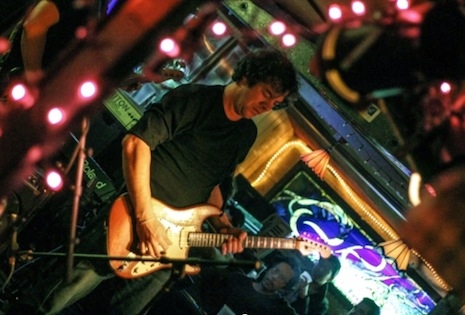
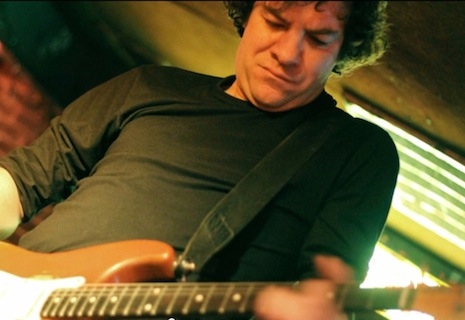
The great and inventive band Ween broke up in 2012, but both parts of the group have remained musically active. Aaron Freeman (Gene Ween) put out Marvelous Clouds, an impressively catchy album of Rod McKuen covers as well as an album called FREEMAN. For his part, Mickey Melchiondo (Dean Ween) has been touring to support his side project Moistboyz’ fifth album, appropriately titled 5. (In that band, which also features Nick Oliveri of Queens of the Stone Age, Melchiondo goes by the name Mickey Moist.)
On February 21 of this year, Melchiondo “fulfilled a long-held wish,” according to Ultimate Classic Rock, when he took the stage at John and Peter’s in New Hope, Pennsylvania (long Ween’s base of operations) and cranked out a monster 37-minute version of Pink Floyd’s “Echoes,” which occupies side 2 of their 1971 album Meddle. That version lasted a paltry 23 minutes, so judging from that metric alone, Melchiondo’s version is obviously 61% better. On Live at Pompeii, the song is broken up into “Echoes, Part 1” and “Echoes, Part 2,” and the two tracks together clock in at about 25 minutes.
Joining Melchiondo for the performance are Guy Heller (vocals), Bill Fowler (guitar and vocals), Ray Kubian (drums), Sean Faust (keyboards), and Chris Williams (bass). If you have any doubts about Melchiondo’s ability to write and execute a lengthy hard-rock guitar piece, I urge you to listen to “Woman and Man,” an epic 11-minute slab of ass-kicking rock that constitutes the penultimate track of Ween’s 2007 album La Cucaracha.
As Melchiondo explained, “We grew up watching Live at Pompeii all the time and finally got to execute this song properly.” I’m no Pink Floyd authority, but I listened to the Pompeii version and the Deaner version back to back, and I think the 2014 version holds up pretty well.