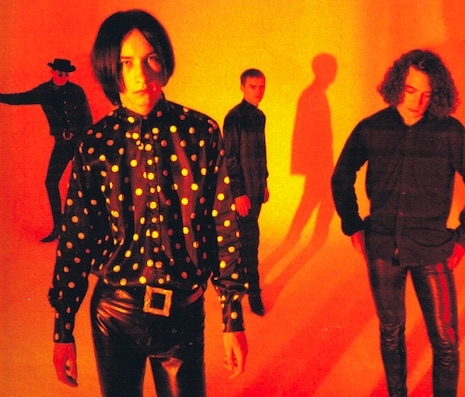
The Making of Primal Scream’s ‘Screamadelica’ album


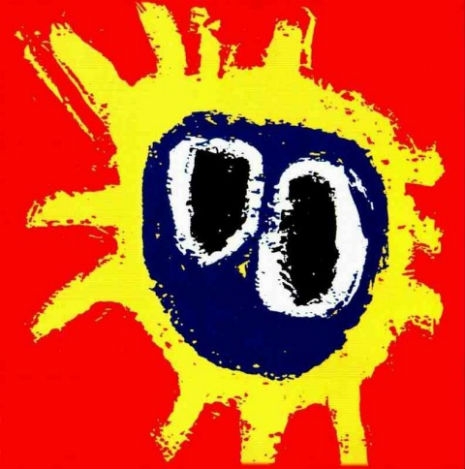
Primal Scream’s Screamadelica album was like an event when it arrived in 1991. Nirvana’s Nevermind, My Bloody Valentine’s Loveless and Massive Attack’s Blue Lines all came out that year, but my friends and I could not get enough of Screamadelica. Practically everybody I knew was deeply into that record, even the ones who weren’t druggies…

“Loaded,” “Come Together,” “Higher Than The Sun”—Screamadelica is an album meant to be listened to when you are as fucked up as possible. It’s one of the ultimate soundtracks for drug use. (“Higher Than The Sun” sounds particularly good after you’ve inhaled a lungful of nitrous oxide, but then again, almost anything sounds great when you’re high on nitrous).

I recall meeting band-leader Bobby Gillespie along with Creation Records head Alan McGee in New York City, the year it came out. I think it must have been for the New Music Seminar. I met them in the “Kenny Scharf Room” (basement) of the Palladium nightclub on 14th Street and although the conversation began well-enough as I complimented him on a record I just loved, Gillespie’s Scottish accent was very, very strong at the time and I couldn’t understand more than one word in ten. I lived in the UK for two years and normally have no problem with a Scottish accent, but with Gillespie, I had to admit defeat. From the sound of things in this new documentary, his accent has gotten a bit softer over the course of the last two decades. You won’t need subtitles, I don’t think.

Primal Scream’s seminal album Screamadelica was released in 1991, and synthesized the band’s rock ‘n’ roll roots with the dance culture of that time; for many, the album’s sound and imagery came to be regarded as quintessential symbols of the acid house era, perfectly catching the spirit and mood of the early 90s.

Using rare archive footage and special performances, this film tells the story of Screamadelica and its hit singles and dance anthems “Loaded,” “Movin’ On Up,” “Come Together” and “Don’t Fight It, Feel It.” From the formation of the band in Glasgow to winning the first-ever Mercury prize, the band members explain the record’s inception with insights from main producer Andrew Weatherall, Creation Records founder Alan McGee and many others involved with or inspired by this joyful record.

Screamadelica both defines a generation and transcends its time, and is a true Classic Album.

A new DVD, Screamadelica Live has just been released by Eagle Rock Entertainment.
 

Written by Richard Metzger | Discussion
Upside Down: The Creation Records Story

image
 
Upside Down: The Creation Records Story is a roller coaster of film, which tells the incredible tale of one of the most important independent record labels of the past fifty years - Creation Records

This excellent film reveals how the gallus Glaswegian Alan McGee started the label with a £1,000 bank loan in the 1980s, and went on shape music in the 1980s and 1990s, as he made Creation home to such talents as The Jesus and Mary Chain, Primal Scream, Medicine, The Pastels, Teenage Fanclub, BMX Bandits, Super Furry Animals, The Boo Radleys, Saint Etienne, Momus, My Bloody Valentine, 3 Colours Red and Oasis - who were signed for £40,000.

McGee originally thought Liam Gallagher was the band’s drug dealer, as he told the Sun:

“I was up in Glasgow seeing my dad and I wasn’t sure I’d even go to the gig. I got there early by mistake. Oasis were on first, before most people arrived. There was this amazing young version of Paul Weller sat there in a light blue Adidas tracksuit. I assumed he was the drug dealer and that Bonehead, the guitarist, was the singer.

“It was only when they went on stage I realised it was the lead singer Liam Gallagher. I knew I had to sign them.

“Noel and I talked after the show and just said ‘done’ and he turned out to be a man of his word.

“I was lucky to be there. We didn’t send out scouts. Most of my signings were because I happened to see new bands. That couldn’t happen any more. If a new band as much as farts it’s all over the internet.”

Upside Down: The Creation Records Story brilliantly captures the creativity that came out of the chaos of the legendary McGee’s drug-fueled reign as President of Pop.

“I was on one continuous bender from 1987 until 1994. Until Oasis came along the Creation staff were more rock and roll than the bands we signed. Then Oasis came along and things got even crazier.

“I was permanently off my head on cocaine, ecstasy, acid and speed. We’d be awake for three days.

“We went one further than having dealers hanging around. We just employed them instead.

“But they were different times. If you behaved now like we used to people would phone the police.”

Upside Down: The Creation Records Story is now available on DVD, with a short cinema release, details here.


Written by Paul Gallagher | Discussion
Wallace Wylie’s ‘Death Rattle: The Travesty of British Alternative Rock in the 90s’

image
 
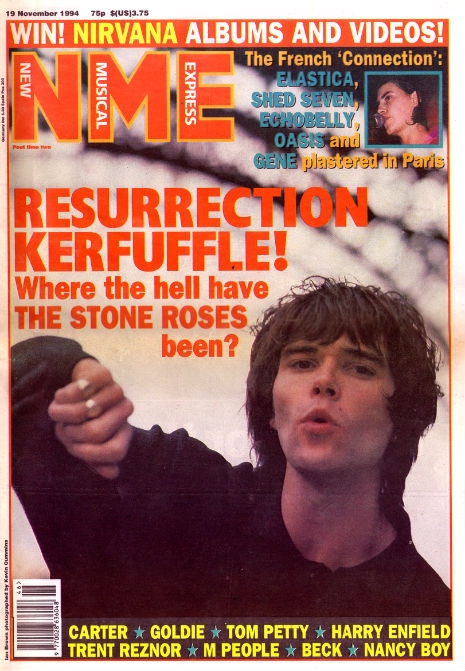
Consider this the perfect accompaniment to “Whatever Happened To Alternative Nation?” This excellent article, by writer Wallace Wylie and published on Everett True’s Collapse Board, centers around three bands (The Stone Roses, Primal Scream and Oasis) and the negative impact they had on the British music industry and general media in the 1990s. In contrast to Steven Hyden’s US-focused articles, Wylie sticks striclty to the UK and does a really great job of skewering that shower of shitty hype we had to endure called “Britpop.” This represents my feelings about the period pretty much exactly—yes, there was LOADS of great and interesting music being made at the time, but for the most part it was not being made by white men with guitars.

It should be obvious to almost everyone by now that Oasis really weren’t very good, and this is coming from somebody who bought into the hype early and even attended their monster concert at Knebworth. Definitely Maybe remains their best release, with the album coming across as rather varied (by Oasis standards) and tuneful. This was before Noel settled in to writing all his songs in the same Let It Be-derived tempo. It isn’t really necessary to go into detail as to why Oasis were substandard. This has been done elsewhere and will continue to be done for a good while yet. Their limited talents soon ran dry but not before they had kicked open the door to a million soundalikes who popped up every other week on the front cover of NME.

We were constantly being told by the press that we were living through a musical golden age to rival the Sixties (aaargh! why is always the fucking Sixites?! booo-ooring), and while I do think the 90s was a golden age of sorts, I am glad that hindsight is x-ray and cuts through all the bullshit. There were many, many groundbreaking things going on in the world, yet the British music press seemed content to just curl up into a little ball murmuring “Beatles, Stones, Beatles, Stones” ad nauseam. Remember, this is the era that saw the launch of backwards-obsessed magazines like Mojo and Uncut, and the calcification of rock culture into a rigid set of rules to be adhered to. It sucked. But hey, don’t take my word for it. Read what Wylie has to say…

Written by Niall O'Conghaile | Discussion
Meet ManWoman: Artist, Poet, Swastika Visionary
09.29.2009
11:59 am

Topics:
Unorthodox

Tags:
Primal Scream
Swastika
ManWoman

image
 
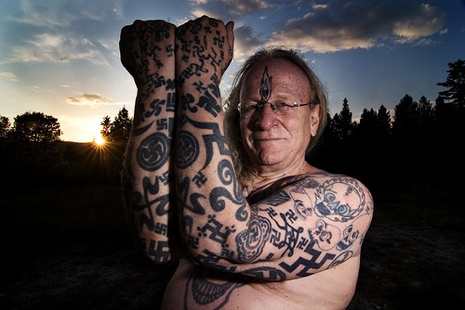
From his rural Canadian outpost, ManWoman, author of “The Gentle Swastika,” and a favorite artist of Dan Aykroyd, continues his quest to “detoxify” the dreaded Nazi symbol:

Born at the start of WWII to a Polish immigrant mother, whose sister and her baby were put in Auschwitz, “Manny” (his original name was Patrick) inherited all the ?

Written by Bradley Novicoff | Discussion
On/Off: Mark Stewart from The Pop Group to The Maffia

image
 
If not tomorrow night in Los Angeles, here’s a documentary I still very much plan on catching.  From Cinefamily:

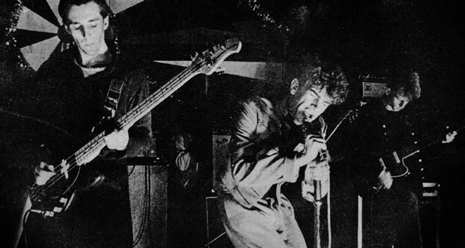
This one’s a must for all post-punk junkies!  The name of singer/industrial hip-hop pioneer Mark Stewart may not be instantly familiar, but his influence is felt the world over.  From his early days with confrontational post-punk pioneers The Pop Group to his myriad collaborations with acts like Trent Reznor, Massive Attack and Primal Scream, Stewart has provided ghostly beats and haunting vocals for over thirty years, and shows no signs of stopping.  German filmmaker T?ɬ?ni Schifer, who followed Stewart with a camera for three years, has crafted a detailed, intimate portrait of the artist, supplemented by interviews with Stewart himself, his Pop Group co-horts Dan Catsis, Gareth Sager and John Waddington, Keith Levine (P.I.L.), Janine Rainforth (Maximum Joy), Douglas Hart (The Jesus & Mary Chain), Fritz Catlin (23 Skidoo), Daniel Miller (Mute Records), Nick Cave, Mick Harvey, Massive Attack and many others, plus some terrific never-before-seen vintage performance footage.

Well, as post-punk authority Simon Reynolds says, reading an interview with The Pop Group was like “having your brain set on fire.”  And If that’s not enough enticement, here’s the trailer for ON/OFF:

 
More On Mark Stewart/On-U Sound

Director T?ɬ?ni Schifer on MySpace

Written by Bradley Novicoff | Discussion