A Writer’s Life: Ray Bradbury on writing and the importance of the subconscious

yrubdarbyarefilsretirw.jpg
 
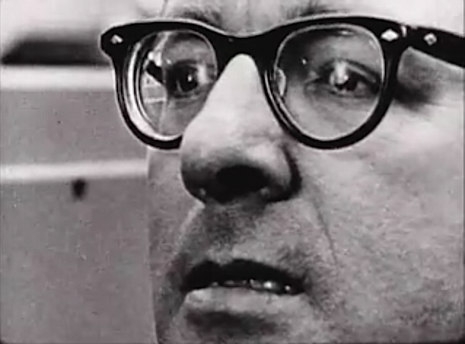
‘A writer moves about, observing, seeing as much as he can, trying to guess how man will play the game,’ Ray Bradbury said in Story of a Writer, a documentary on his life and work from 1963.

‘Constantly measuring the way life is, against the way he feels it ought to be. He is a magnet passing through a factual world, taking from it what he needs.’

Bradbury was always generous with his advice and encouragement, always willing to explain his method of writing to those who wanted to know. Writing was like a love affair.

“You must write every single day of your life… You must lurk in libraries and climb the stacks like ladders to sniff books like perfumes and wear books like hats upon your crazy heads… may you be in love every day for the next 20,000 days. And out of that love, remake a world.”

Bradbury worked his apprenticeship as a writer in libraries, which he later described as places where:

...anything could happen there and always did. All you had to do was pull a book from the shelf and suddenly the darkness was not so dark anymore.

In the “The Importance of Being Startled,” the afterword to his final novel, Farewell Summer, Bradbury described the process by which he wrote:

The way I write my novels can best be described as imagining that I’m going into the kitchen to fry a couple of eggs and then find myself cooking up a banquet. Starting with very simple things, they then word-associate themselves with further things until I’m up and running and eager to find out the next surprise, the next hour, the next day or the next week.

Surprise is everything with me. When I go to bed at night I give myself instructions to startle myself when I wake in the morning.

As Bradbury explained in Story of a Writer, allowing the ‘subconscious time to think’ was essential.

‘The time we have alone; the time we have in walking; the time we have in riding a bicycle; are the most important times for a writer. Escaping from a typewriter is part of the creative process. You have to give your subconscious time to think. Real thinking always occurs on the subconscious level.

‘I never consciously set out to write a certain story. The idea must originate somewhere deep within me and push itself out in its own time. Usually, it begins with associations. Electricity. The sea. Life started in the sea. Could the miracle occur again? Could life take hold in another environment? An electro-mechanical environment?’

This was the kind of thinking that made Bradbury’s book so irresistible. Anything was possible with Bradbury. He had a joyous, child-like enthusiasm for life that infused his books, with a brilliance and pleasure, that makes them so very, very special.

“Stuff your eyes with wonder, he said, live as if you’d drop dead in ten seconds. See the world. It’s more fantastic than any dream made or paid for in factories.”

Ray Bradbury, Fahrenheit 451.


Written by Paul Gallagher | Discussion
Harry Crews on Writing: Four Quotes and an Interview
12.25.2010
11:41 am

Topics:
Literature

Tags:
Books
Harry Crews
Writing

image
 
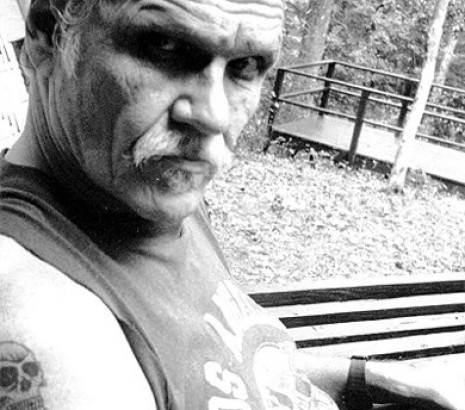
The best advice on writing is to write about what you know, and few writers have done this as well as Harry Crews, author of The Gospel Singer, Childhood and Scar Lover. He’s a legendary figure with a brave and exceptional literary voice. The playwright and author, Max Frisch once wrote, “A writer never betrays anyone but himself.” By that he meant a writer never reveals anything in his writing but himself, and this is true of Crews, a man who has revealed his heart, mind and soul as a brilliant writer.

One

I decided a long time ago—very long time ago—that getting up at four o’clock to start work works best for me. I like that. Some people don’t like to get up in the morning. I like to get up in the morning. And there’s no place to go at four o’clock in the morning, and nobody’s gonna call you, and you can’t call anybody. Back when I was a drunk, at least in this little town, there’s no place to go buy anything to drink. So it was just me and the writing board.

“So, I write until eight or eight-thirty, then I go over to the gym and work out on the weights for a couple hours, then I go to the karate dojo and, as a rule, spar with a guy who consistently whups my ass. It’s point karate—we’re not going full force, we don’t wear pads on out feet and hands, but—even then—when you’re just touching a guy, and you think a guy’s gonna move one way and you kick, and he doesn’t move that way, he moves the other way, he moves right into your kick, you can get hurt. Well, not hurt bad, as a rule. Maybe bloody a nose or something like that. But you can end up pretty sore.

“Then I come home, eat a light lunch, then just go straight back to the thing. I might work till three o’clock . . . there comes a time of diminishing returns. You’re just jerking yourself off thinking you’re doing some good work, then you go back to it the next day and you think, ‘Oh, my God,’ and you have to throw away two or three pages. But the way I do it—I don’t believe I’ve ever heard of anyone doin’ it quite this way.

“I write on a great big square board. sit in a big overstuffed chair with this board on my lap, put a legal pad on top of that and write long hand. After that’s done, at some point I run it through a typewriter that’s older than I am—but it’s a beautiful machine, great action, huge keys, I love it—and then when I get through with that, I put it through the computer to revise, which is the only thing . . . I dunno . . . the only thing a computer is good for is to revise. Because, as you very well know, none of us need to go faster, we all need to go slower. I first among them.

“But the computer is a godsend for revisions. I don’t quite understand how we did it before we had the computer. I seem to remember a lot of tape and scissors.”

Two

“If you’re crazy enough to read yourself, and almost no writer reads his own novel once he finishes it. He never looks at it again. I’ve never read a novel of mine, a whole novel that I did, after it’s published. Never. Why would you?”

Three

“Graham Greene—you’ve probably heard me quote before, because god knows, it’s true—“The writer is doomed to live in an atmosphere of perpetual failure.” There it is. There it is. Nah, you write things and write things—write a book for instance—and write and write and write and write and write, and you know, it’s not—every writer writes with the knowledge that nothing he writes is as good as it could be. Paul Valery: “A poem’s never finished, only abandoned.” The same thing with a novel. It’s never finished, only abandoned. I’ve had any number of novels where I’ve just at some point said to myself, well, unless you’re going to make the career out of this book—spend the rest of your goddamn life chewing on it—you might as well just package it up and send it on to New York. Go on to something else. Because between conception and execution there is a void, an abyss, that inevitably fucks up the conception. The conception never gets translated to the page. It just doesn’t. I don’t think it ever does.

I think [Gustave] Flaubert kept Madame Bovary for nine years. Took him nine years to write it, well, he didn’t write it all in nine years. He could have written it in nineteen years, and he would still have felt the way he felt, and that was that it was a fine piece of work, but it was not as good as it could be. Same old same old.

Four

“There is something beautiful about all scars of whatever nature. A scar means the hurt is over, the wound is closed and healed, done with.”


More from Harry Crews plus bonus clip after the jump…
 

Written by Paul Gallagher | Discussion