


The ambitious 1979 piece of art that bit off more than it could chew
Dear reader, a poser for you. Is art solely to be looked at via the context of the time it was created, or does it have to stand the test of time in order to be considered good?
Of course, the ideal is that a piece of art should be able to pass both tests. A Shakespeare play, for example, can help someone in the 21st century understand themselves better, the way that studying Hamlet as a teenager did for me. However, it can also tell us invaluable information about life in early modern England. Yet, not everything is a Shakespeare play, and while some pieces of art are lucky enough to blossom over time, the vast, vast majority of them do the opposite.
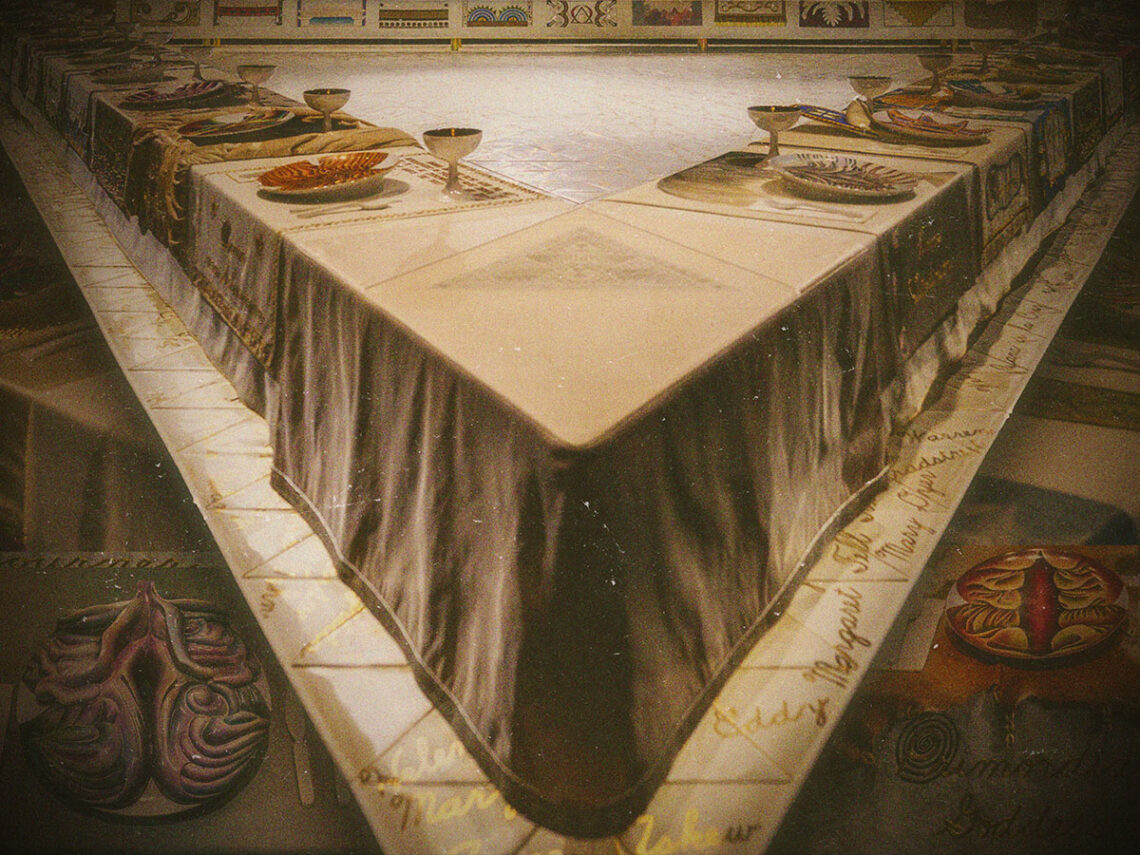
Which brings us to The Dinner Party. A work novel enough and ambitious enough that I can’t write it off entirely, but one that can’t help but carry a peculiar, off-putting resonance today. The work is by Judy Chicago, and as a piece of craft, it’s still incredible. An enormous triangular dinner table set for 39 guests, each plate a tribute to a famous woman of history, from Ishtar and Kali from ancient times, to Elizabeth the First and Christine de Pisan from the reformation, to Sacajawea and Virginia Woolf from more modern times.
Each of these woman get honoured with a segment of the table crafted in tribute to them featuring a china plate, ceramic cutlery and a chalice. Each of them is elaborately styled and crafted down to the slightest detail. It’s undeniably an incredible achievement, which took five years and over $250,000 to produce. However, it’s a different story when you zoom in and explore the details.
Starting with the plates themselves, with all but one of them crafted to look like stylised vaginas.
Why was The Dinner Party so controversial in the world of art?
Nearly each of the plates are stylised yonic imagery save for one (and don’t worry, we’ll get to that). Now, from a 21st-century perspective, this is problematic. After all, sensible people have grown out of defining gender via someone’s genitals. However, even at the time, people found this vision of femininity crass. No matter what this tribute was meant to come across as, Chicago had essentially boiled down these incredible women of history to their (assumed) sex organs.
Or at least, she’d done that to most subjects of the piece. Only one plate wasn’t styled this way, that of the only Black woman on the list, Sojourner Truth. The fact that there was only one Black woman on the list is astonishing to begin with, but that she also didn’t get the same tribute as everyone else makes the entire artwork fall to pieces. On the one hand, Chicago didn’t do it because there’s something crass about depicting a tribute to Sojourner Truth that way (and to be clear, there is), in which case the same could be said for every other tribute.
On the other hand, if the yonic tributes on the other plates are “beautiful” and “natural” tributes to femininity, why doesn’t Sojourner Truth get one?! The more you look at The Dinner Party, the more it becomes clear that this was a piece of art that was misguided at best and outright thoughtless at worst. In fairness to Chicago, this is something that she has copped to with grace. She told W Magazine in 2017 that this was a piece made before the “incredible advance that we’ve begun to understand the complexity of identities.”
A year later, complaints also surfaced that there is nobody “from Spain, Portugal, or any of those empires’ former colonies in the Americas”. Writing in response, Chicago said, “At the time I was working on The Dinner Party, in the mid-1970s, there was little or no knowledge about any of these women. The prevailing point of view was that women had no history. It is important to remember that our research was done before the advent of computers, the Internet, or Google search.”
Chicago is not wrong. Researching this piece in a way that would have done justice to all the women it depicts would have been next to impossible without a small fleet of academics committed to that cause. One can argue that, since the budget for the piece was worth $1.5 million dollars in today’s money, she could have afforded exactly that. However, that’s not the way the piece turned out.
I don’t think for one second that was due to cruelty or bigotry on Chicago’s part, to be clear. It was an insanely ambitious work of art that saw her bite off a little more than she could chew. Men have spent centuries doing the exact same thing in the world of blockbuster art, and true feminism is calling out when women do that, too.