


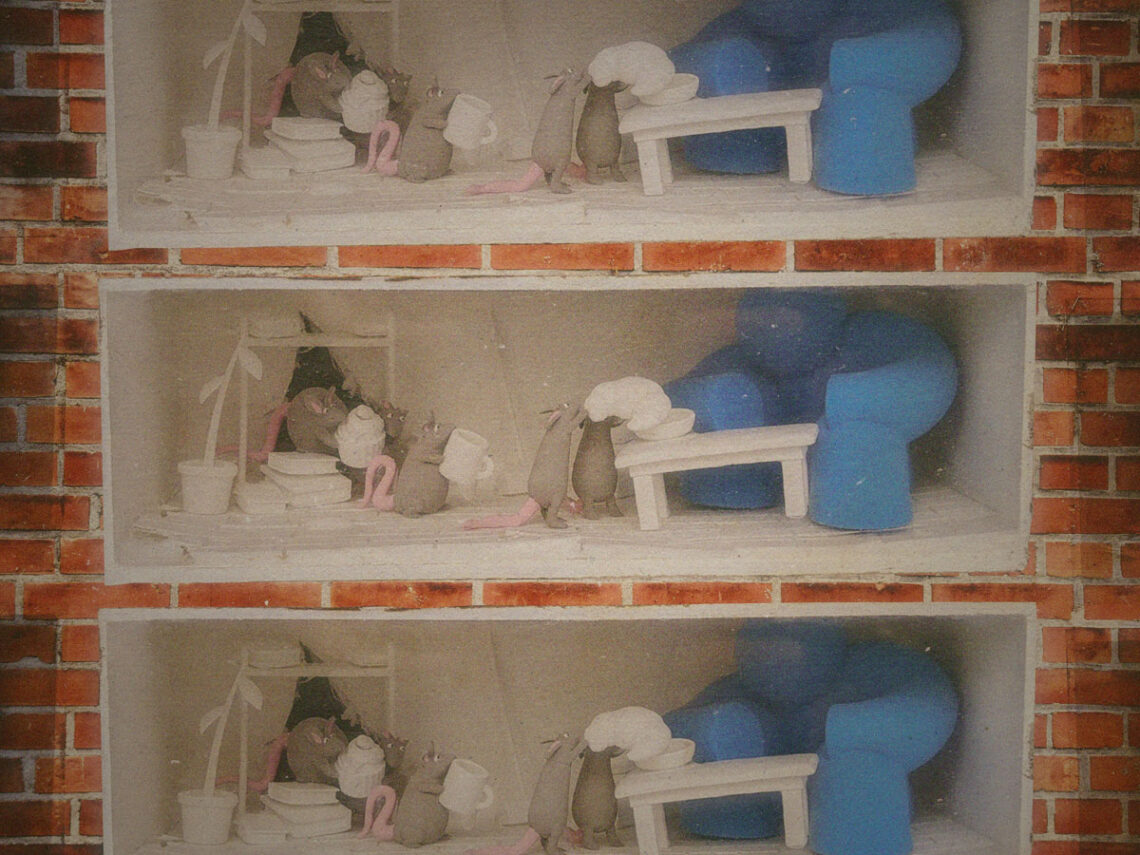
Brickflats: the tiny dioramas hiding in the streets of London
Dear reader, if you ever find yourself in the glorious streets of Stoke Newington, London, I could show you around them because, fun fact, I grew up there!
I could show you the overgrown gothic joy of Abney Park Cemetery. The deer enclosure and the aviary in Clissold Park. Go for a variety of incredible meals on Church Street. Through all of that, wherever we go, you’d best keep your eyes peeled. No, not for the charity muggers outside Sainsbury’s. Something much, much cooler. You’ll want to keep a lookout because, out of the corner of your eye, you might just catch one of our prized Brickflats!
Now, I know they sound like the latest in a long line of “affordable housing” schemes that you’d hate yourself for seriously considering. That’s actually kind of the point, but we’ll get to that later. Drawing the eye as a flash of colour on an otherwise unremarkable brick wall, Brickflats have become iconic parts of the tapestry of street art.
They’ve shown up in Islington, Hoxton, Dalston and Shoreditch, becoming something of a viral phenomenon. Which checks out, not only because the current housing crisis is one that is far from centralised to north-east London, but because the man behind Brickflats isn’t from there either. What’s more, it wasn’t even inspired by his time in London.
No, this is work by Raphael Vangelis, an Austrian artist who was first inspired to create a Brickflat after living in New York City.
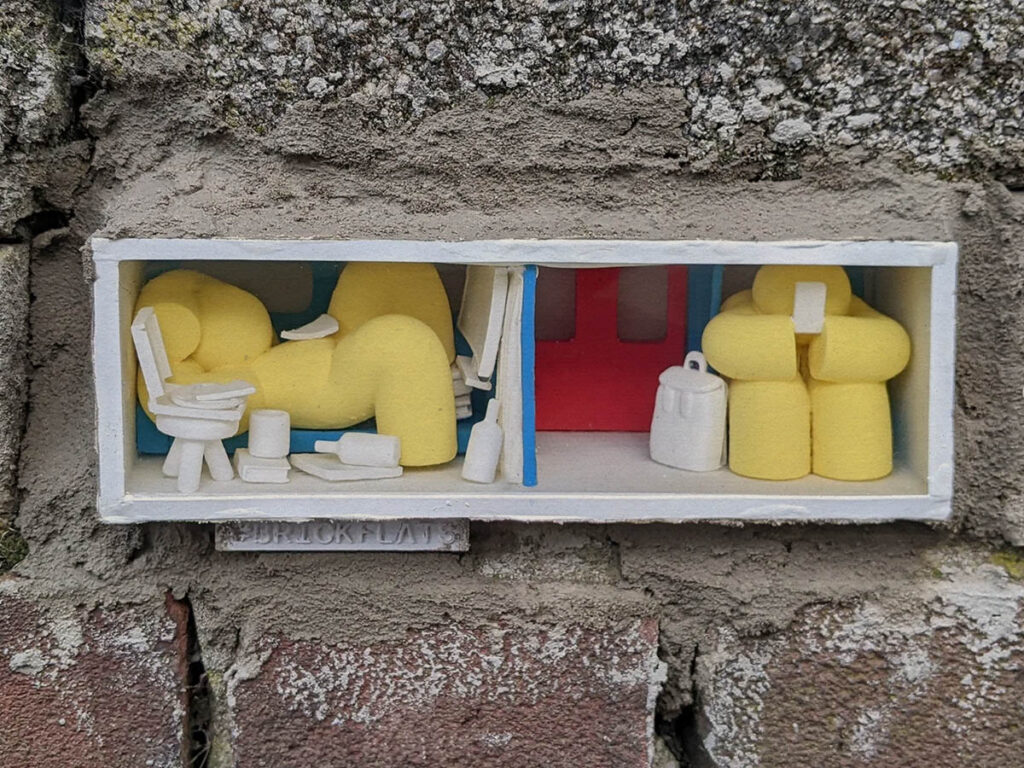
What inspired Brickflats?
According to an interview with Walking Post, Vangelis was inspired to create Brickflats due to his living situation while in NYC – he was one of five people living in the same apartment (yes, apartment), which is why he was confined to his bedroom at nearly all times and, in a truly depressing twist, his bedroom was the only one that didn’t have a window in it. Thus, he felt like he was living in a brick whenever he was home. Fortunately enough (in a way), that wasn’t often.
Vangelis was working while in New York as well, and was working within walking distance. His commute took him past a canal that had a cobblestone loose on the bike path. Thinking about how to fill those empty spaces with art took him back to his thoughts about living in a brick at home. When he finally moved to London, he saw many more of these opportunities to fill holes in walls with pieces of art and thus, Brickflats was born.
To this day, Vangelis never has fewer than two new Brickflats on the go. Partially because his existing ones keep getting removed by overzealous local councils. Partially because this is London, and there are ample spaces for them to go. Mainly, though, he keeps at it for a much more human reason than any of that. People absolutely love them. They lighten the day of everyone who sees them, myself included, and in a city like London, where everyone of all ages needs a pick up at any given time, they were an injection of childlike joy in an otherwise mundane part of the world.
Just another reason why my neck of the woods is one of the best in the city. Not that I’m biased or anything!