


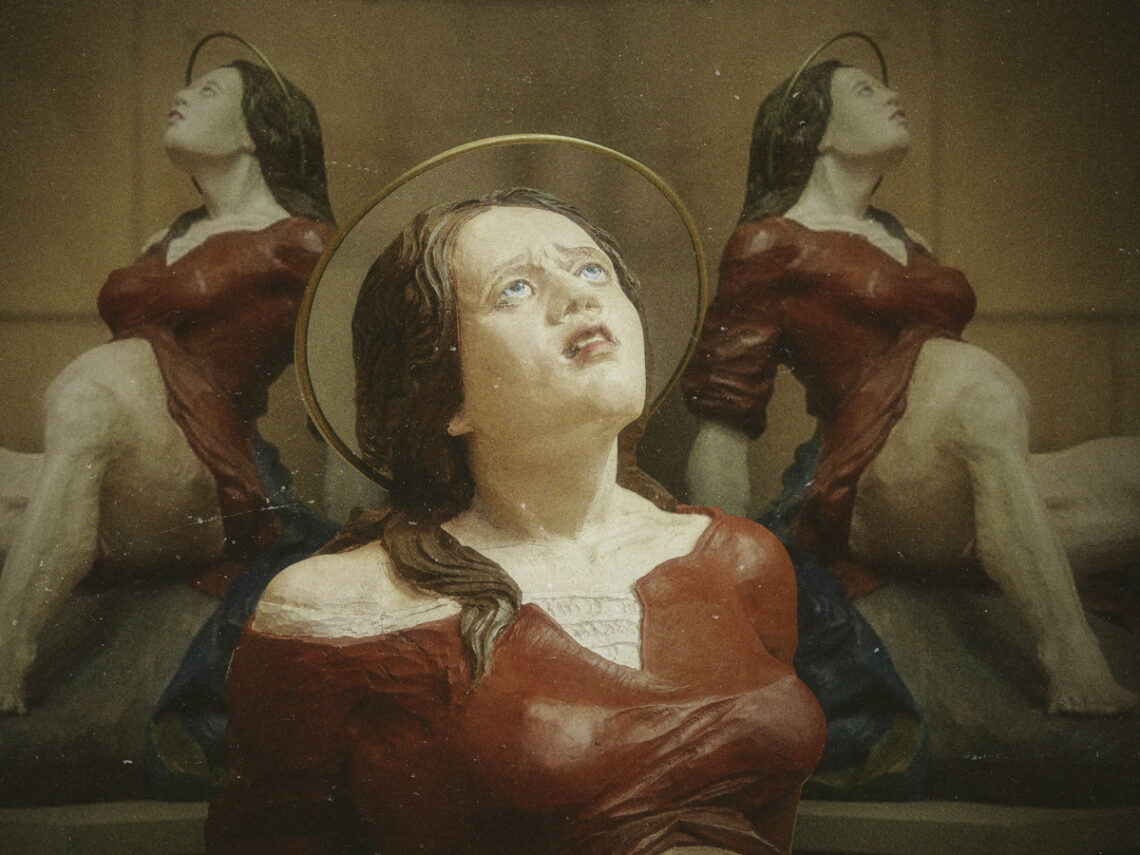
The controversial statue of the Virgin Mary giving birth
According to some interpretations of the Ten Commandments given by God to Moses to spread His word, “Thou shalt not covet any graven images of me” is either the second commandment or the second half of the first.
No matter the translation or version of the Bible you have in your hand, it’s kind of wild that the Big Man wanted Moses to know that you shouldn’t create representations of Him that early. Not that you shouldn’t kill. Not that you shouldn’t steal. Not that you should probably give your mum a ring, it’s been a while. No, right up there with the fact that he is, to quote President Bartlett, “the Lord your God”, is the fact that you shouldn’t seek to contain his likeness in any graven images.
Now, to be clear, this is because Christianity in its modern state (and any form of Christianity that has been put into a Bible or any kind of book is a modern form) evolved as a way of wiping out paganism, especially in European countries. Most pagan practises involved creating idols to represent individual deities, so this command is as high up the list as it is because it essentially outlawed the practise in Christian countries. Most countries in Europe considered themselves Christian countries.
As with most of the Ten Commandments, people claiming to be Christians have spent the next few centuries making a mockery of the whole “graven images” thing. There are, after all, statues of Jesus Christ himself on the crucifix in nearly every Christian church in the world, and that does count as a graven image of God. Holy trinity and all that. Yet still, the right graven image, or in this case very wrong graven image, can still cause controversy.
It just has to be of a woman giving birth to get people’s hackles up.
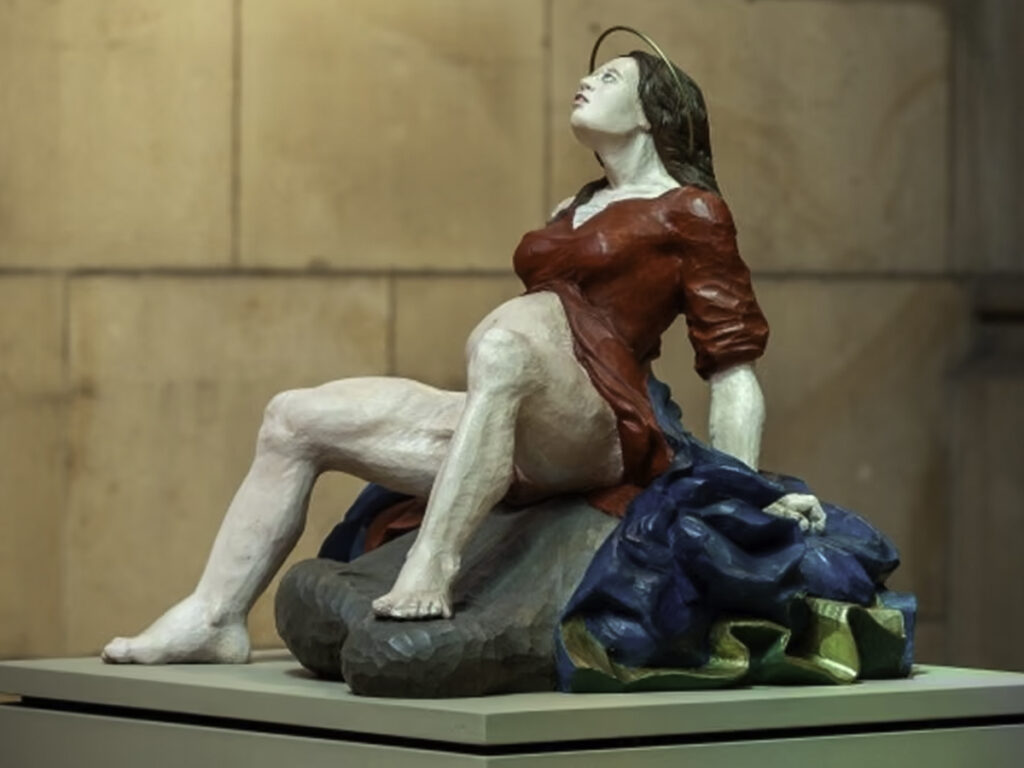
Why were people so angry about this sculpture of the Virgin Mary?
St Mary Cathedral, Austria’s largest, can be found in Linz, and in 2025, it hosted a truly eye-catching piece of art. Created by Esther Strauss, it was an image of the Virgin Mary giving birth to Jesus Christ. The son of God visibly crowning if you looked at the sculpture from the right angle. The work is honest and unforgettable, a comment on the way that Mary is portrayed by men in religious works of art that robs her of her humanity. With this piece, Strauss made sure that, in her words, “Mary gets her body back.”
Needless to say, people were furious. Most would keep their outrage to online discourse, but this went one step beyond. On July 1st, a group of vandals broke into the cathedral and decapitated a literal Madonna, all in the name of “religious purity”. At least, that’s what we can assume from the act. The culprits were never found, but we do have the word of Alexander Tschugguel, a traditionalist Austrian Catholic who claimed to know who did it and posted a statement from them on social media.
In their eyes, they found the piece “abominable and blasphemous”. Thus, they contacted the church with no doubt, reasonable and well-thought-out complaints about the sculpture. The church ignored them (I can’t imagine why), and thus they felt like they had to take decisive action. By destroying a depiction of one of the most famous and beloved religious figures ever.
I try to make sense of religious people, I really do.