


David Bowie, Iggy Pop and the painting that guided their masterpieces
The friendship between Iggy Pop and David Bowie should have ended in disaster.
The two legends spent the whole 1970s as close as they were addicted to drugs, and few people have ever been as addicted to drugs as the Thin White Duke and The Stooges’ mainman were in that decade.
Both of them reached a point in the middle of the decade that would have killed most people in their position. Bowie with the kind of cocaine psychosis that led him to believe that a coven of witches led by Jimmy Page was trying to steal his semen, and Iggy Pop was clearly trying to end his own life at every concert he was playing.
Their friendship should have been the kind of toxic camaraderie that sees two addicts unlock and encourage the worst of each other. According to reports, there were points where their friendship was exactly that, especially early on in the decade. However, by the time both had decamped to Berlin later in the decade, they’d actually become surprisingly positive influences on each other’s lives. Coaching each other through the toughest parts of getting clean, Bowie to Pop in particular.
What’s more, this influenced the music they were making at the time. Pop had just begun his solo career in earnest as David Bowie began work on the Berlin trilogy, according to some fans, the pinnacle of his entire career. In 1977, both released albums that have seriously convincing arguments to be their masterpieces. Bowie’s “Heroes” and Pop’s The Idiot.
As a tribute to their parallel natures, the cover art for both records are strikingly similar.
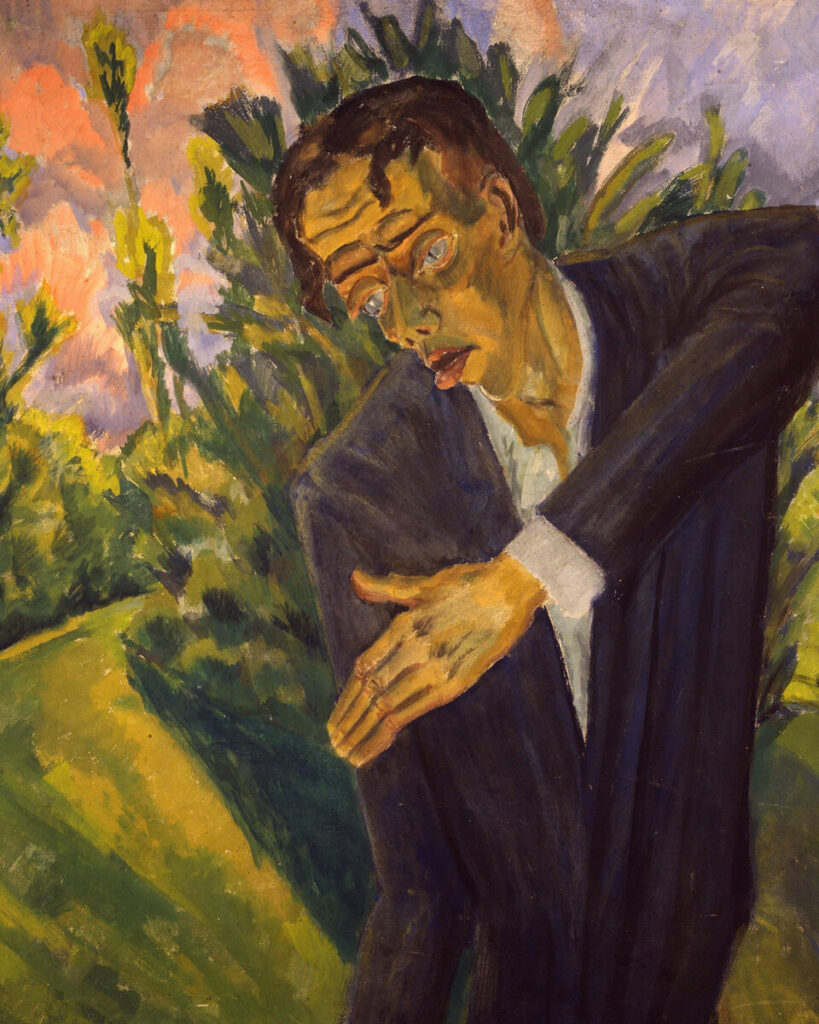
What made Iggy Pop and David Bowie decide on their album covers?
Both find their creators depicted in stark, monochrome photographs, dressed in black as they pose dramatically. Their arms stuck out at angles, dancer-like, as they looked impassively towards the camera. This similarity is not an accident, but not for the reason you might think. You see, when Bowie and Pop left America for Berlin, Bowie in particular did so to immerse himself in all the art that the city had to offer. Not just music, but photography, theatre and in particular, its rich history of visual art.
David Bowie became enamoured with German expressionism, and one of his biggest influences became the painter Erich Heckel. In particular, his 1917 masterpiece Roquairol made a deep impression on him, especially when he delved into its inspiration.
Heckel’s painting depicts fellow artist Ernst Ludwig Kirchner in the throes of a profound psychological breakdown due to his experiences in World War One. Both Bowie and Iggy Pop saw more than a little of their own fragmented psyches depicted in the painting. Thus, when the time came to decide on a cover for Pop’s The Idiot, Bowie suggested a version of Heckel’s masterwork.
Months later, when working on his own cover for “Heroes”, Bowie settled on doing his own version of Roquairol as well. After all, it only made sense. The two albums, much like their creators, are spiritual siblings to each other. Both documents of periods of profound difficulty and profound change in their lives.
The two had seen not only themselves, but most likely the other in Roquairol, and chose to immortalise that influence on the cover. A fitting monument to a friendship that pulled both young men out of the most dangerous period of their lives.