


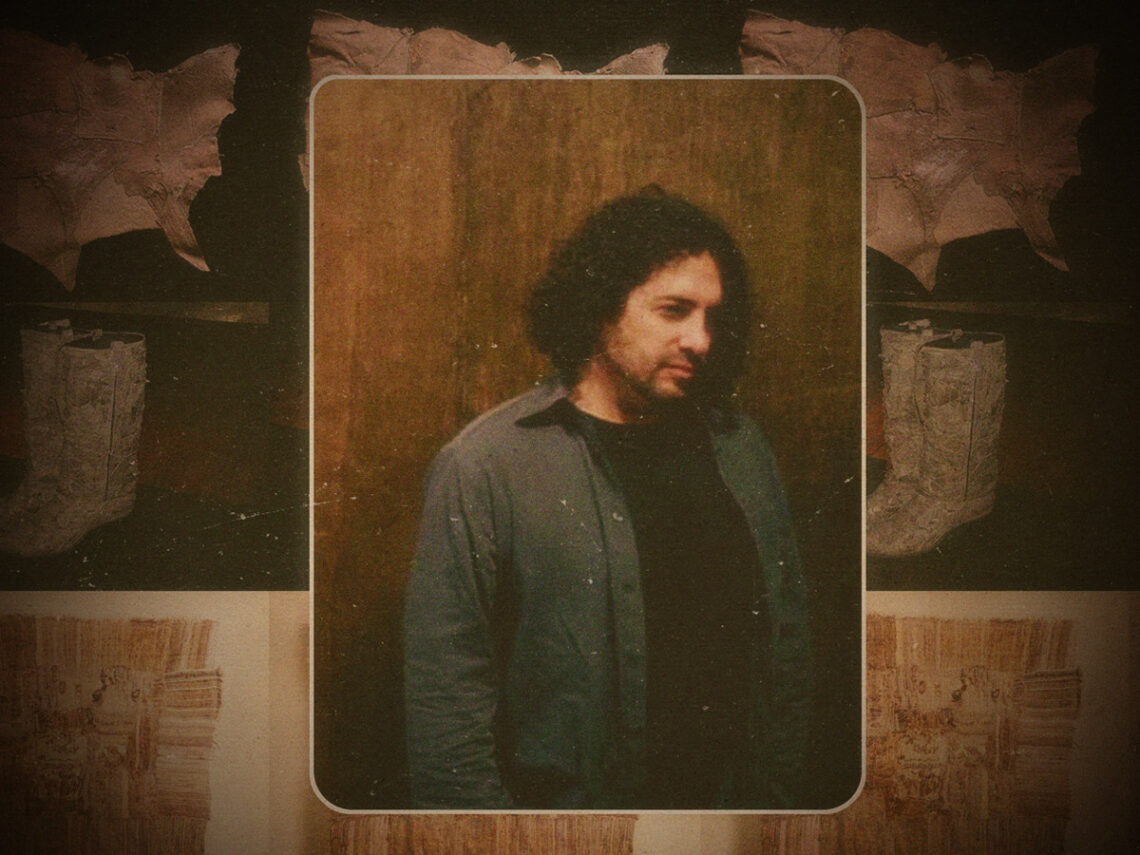
20 years of human sculpting: how Andrew Krasnow makes art from flesh
There’s a damn good reason that the world’s greatest philosophers haven’t been able to find a definition of beauty that isn’t “eh, whatever floats your boat”. As everything that humans have produced in the name of art proves, pretty much anything can be found beautiful by someone.
However, that pursuit can lead some people to believe that the point of art as a whole is the pursuit of beauty, which is absolutely not the truth. In fact, there’s a very good reason to mistrust anyone who tells you that, because that would also imply that there’s such a thing as subjective beauty within art, and the kind of people who will tell you that are almost always fascists, weirdly enough. The other side of that statement is the fact that a whole lot of art is about finding the complete opposite of beauty.
Few artists get to the heart of this quite like the sculptures of American artist Andrew Krasnow. Just looking at his work is enough to turn stomachs, as his work almost always looks as if he’d made it with human skin. No matter what the sculpture is depicting, whether that’s the USA or a ten-dollar bill or a lampshade (which we’ll get back to, trust me), they always look like they’re made of human skin, flayed off a corpse and then stretched into gruesome parodies of real life.
Krasnow achieves this effect with a very simple method. His works are actually made of human skin, flayed off a corpse and then stretched into gruesome parodies of real life.
I’m sure there are people out there who are depraved enough to find this beautiful. However, that is certainly not the intended reaction to Krasnow’s work. In fact, quite the opposite. The queasy feeling of looking at something you are really not meant to see is absolutely the point. Even knowing in your heart that every inch of the flesh on display was ethically sourced from bodies donated to science, it doesn’t make it any less shocking.
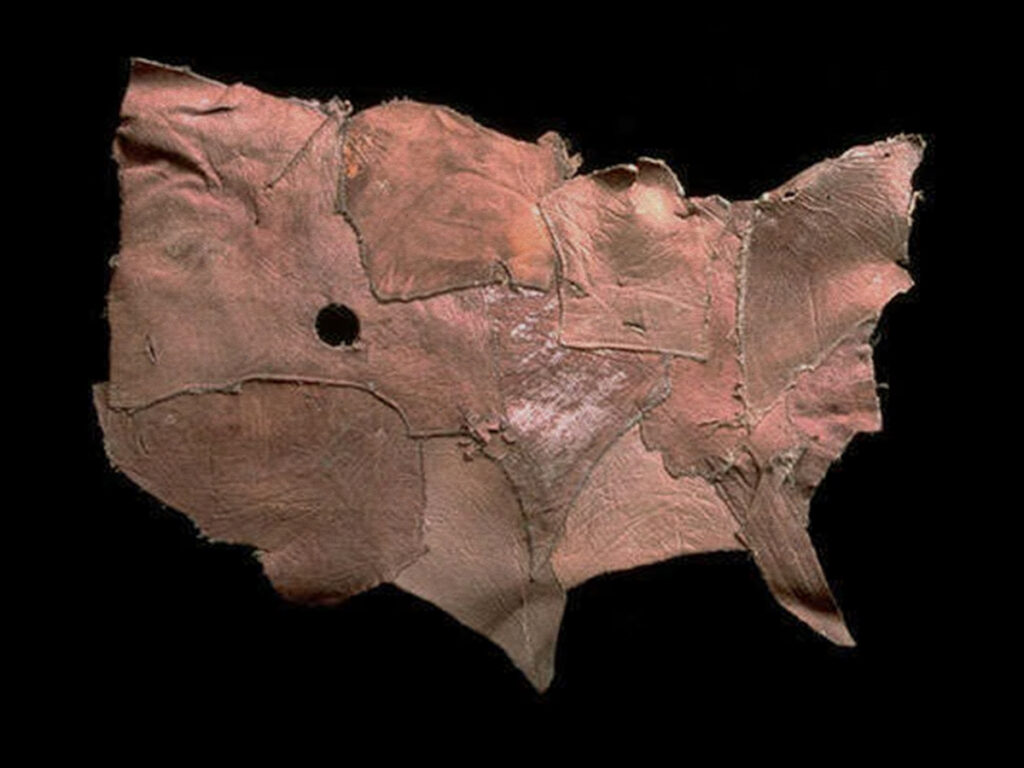
That is the question at play here. Krasnow’s work is designed to shock and appal. In fact, the first time he tried to get his map of the USA exhibited in the 1990s, no lesser figures than Republican Senators Newt Gingrich and Bob Dole publicly denounced the work. At the time, this was enough to kneecap the entire project, and they wouldn’t be showcased until the following decade. Even then, it wasn’t in the United States but instead overseas.
It would be easy to say that the response was the point. That it was nothing more than gross shock tactics, but Krasnow maintains that it wasn’t. He maintained that it was made after the first Gulf War was declared and is a comment on the impossibility of war being conducted in a “moral” and “ethical” way. Which might sound absurd. Another case of a pretentious artist making excuses for a work that’s nothing more than a shock tactics. Yet I think there’s something to it.
After all, war is arguably built on the idea that there’s a “right way” and a “wrong way” to do it. Yet one look at anything that happens during every war tells us that it’s still murder on a horrifyingly large scale. Contrast that with a lamp made of human flesh. That was something made legally. Yet there is still something that feels profoundly wrong about it. What’s more, it was created as a direct response to the rumours that the flesh of Holocaust victims was fashioned into household items at the Buchenwald concentration camp.
That’s the result of war. No matter how you dress it up in treaties and conventions. Any art that makes that point as eloquently as the Krasnow work may not be beautiful, but it sure as hell is art.