


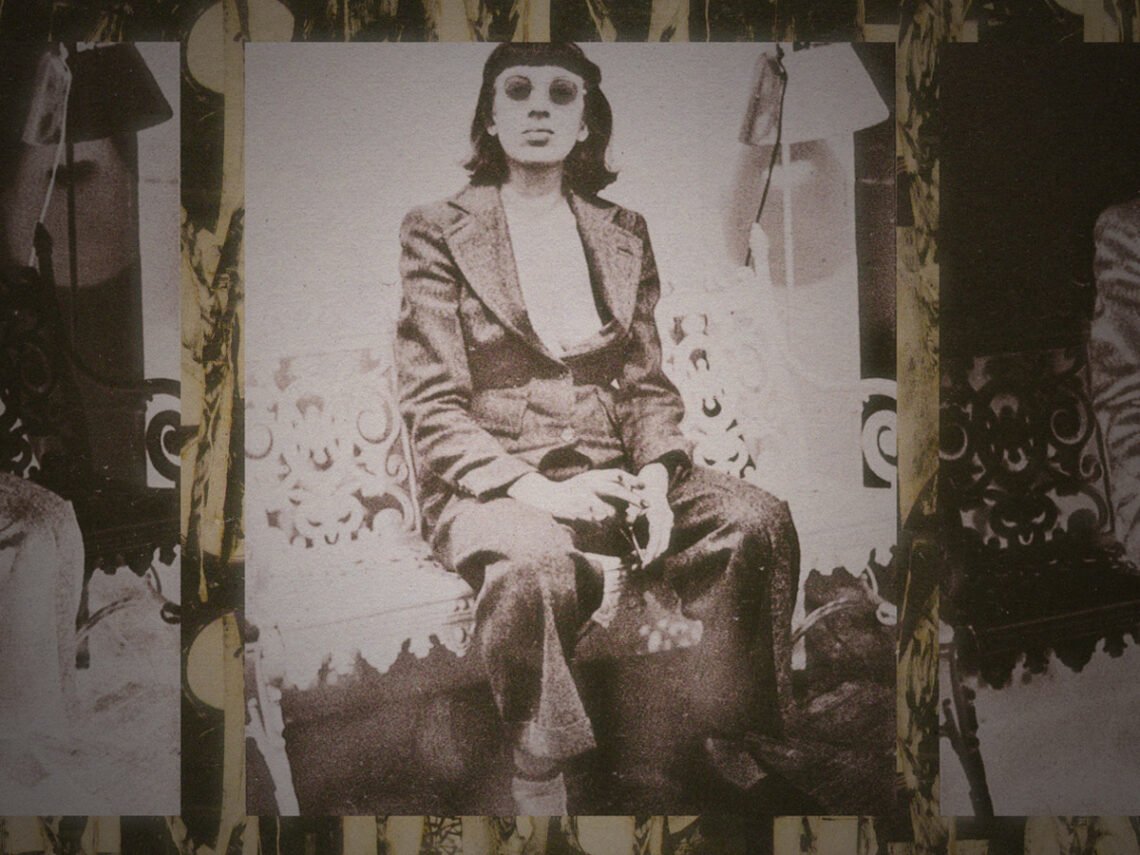
The woman behind abstract expressionism: “Do you like to fuck?”
You only get one shot at a first impression in any world, including art, and Jackson Pollock had just absolutely fucked it.
The year was 1936. The location was a loft in Manhattan. The occasion was a party held by a friend of his in the New York City art scene, and Pollock had his head turned by a girl he’d met there. The 24-year-old prodigy wanted to chat her up and wandered over to try his luck. There was just one problem. Pollock was absolutely wasted.
Caught up in the early days of an alcohol dependency that would colour his entire life. Thus, when he caught this girl’s attention, the only thing he could slur in her general direction was “Do you like to fuck?”
Word to the wise, that’s not how you talk to anyone you don’t know. It’s also not really how you talk to anyone you do know, truth be told. It’s definitely not how you speak to someone who is a much more established figure in the art scene that you’re currently trying to break into, the way that Pollock did. Because the person he’d slurred that lecherous come-on to was none other than Lee Krasner, a fellow artist who actually knew every other artist at that party in a way that Pollock, who’d only recently settled into New York City, did not.
However, first impressions aren’t everything. In 1942, Krasner found herself utterly taken by Pollock’s work without knowing it was him. Their work was exhibited together, and on the opening night of that exhibition, they were reintroduced to each other. Pollock (seemingly) had more of his shit together and was able to start afresh. Three years later, the two were married in a very private ceremony, one that had all of two witnesses. Yet Lee Krasner was much more than Pollock’s wife, the two collaborated on several pieces and were equally inspired by each other.
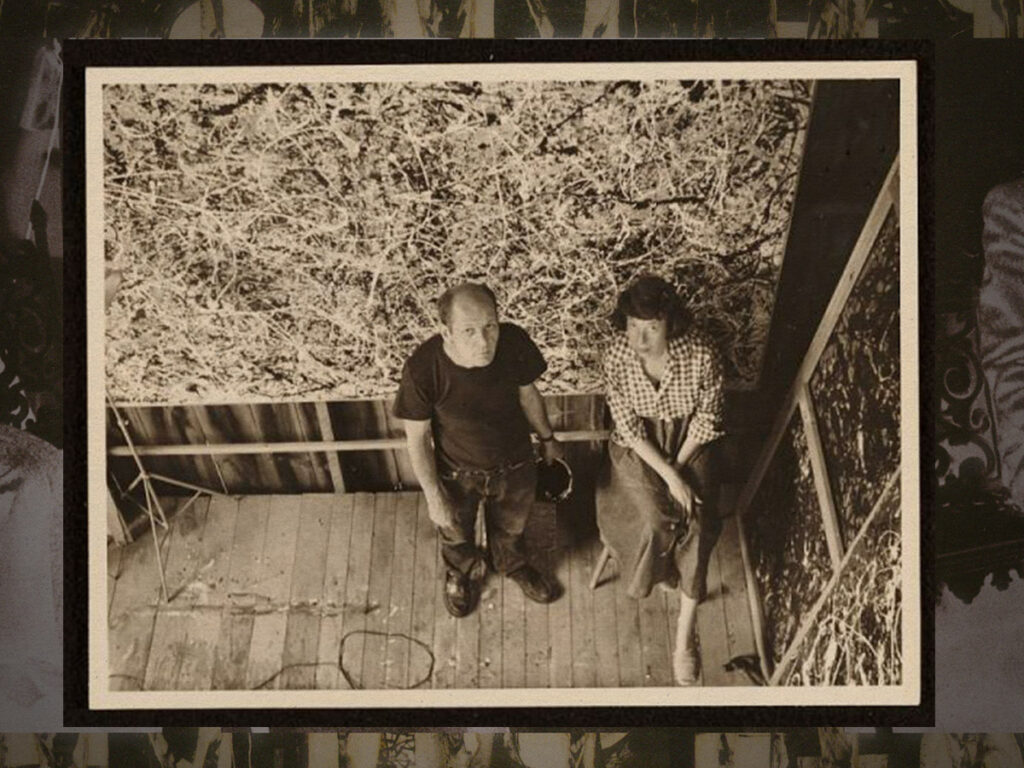
How did Lee Krasner affect the art world?
The two moved into an old farmhouse in East Hampton, New York. A solitary place where the two could work in peace. The two married while Pollock was in the process of becoming one of the most acclaimed painters of his age, and while people assume that she put her own art to one side to be a homemaker for their house, that’s not true. The truth is that she became a close confidant of Pollock’s, constantly working on pieces alongside him, introducing him to new inspirations and guiding him, talking him out of the black moods that plagued his life.
Thus, when people talk about the effect that Pollock had on the world of art, they’re talking about Lee Krasner just as much as they’re talking about him. One can see this by looking at the work she did after Pollock’s death in a car crash in 1956. Not only did Lee Krasner keep working, but the way she did was radically ahead of her time. She painted several masterful works of her own, but the most forward-thinking was the way she depicted her time with Pollock, both as a wife and as an artistic collaborator, inspired by an otherwise traumatic incident in 1951.
Lee Krasner was prone to destroying works of hers that she wasn’t satisfied with, and after an unsatisfactory exhibition, she had torn up the canvases that had been displayed in it. However, she became inspired by looking at the discarded piece and began making new pieces out of it. By Pollock’s death, she had already made a few pieces around combining parts of her own work with his, works that took a new, profound meaning after his passing.
Works like these, along with the work of Pollock that she assisted, lead her to be credited as the mother of abstract expressionism today.