


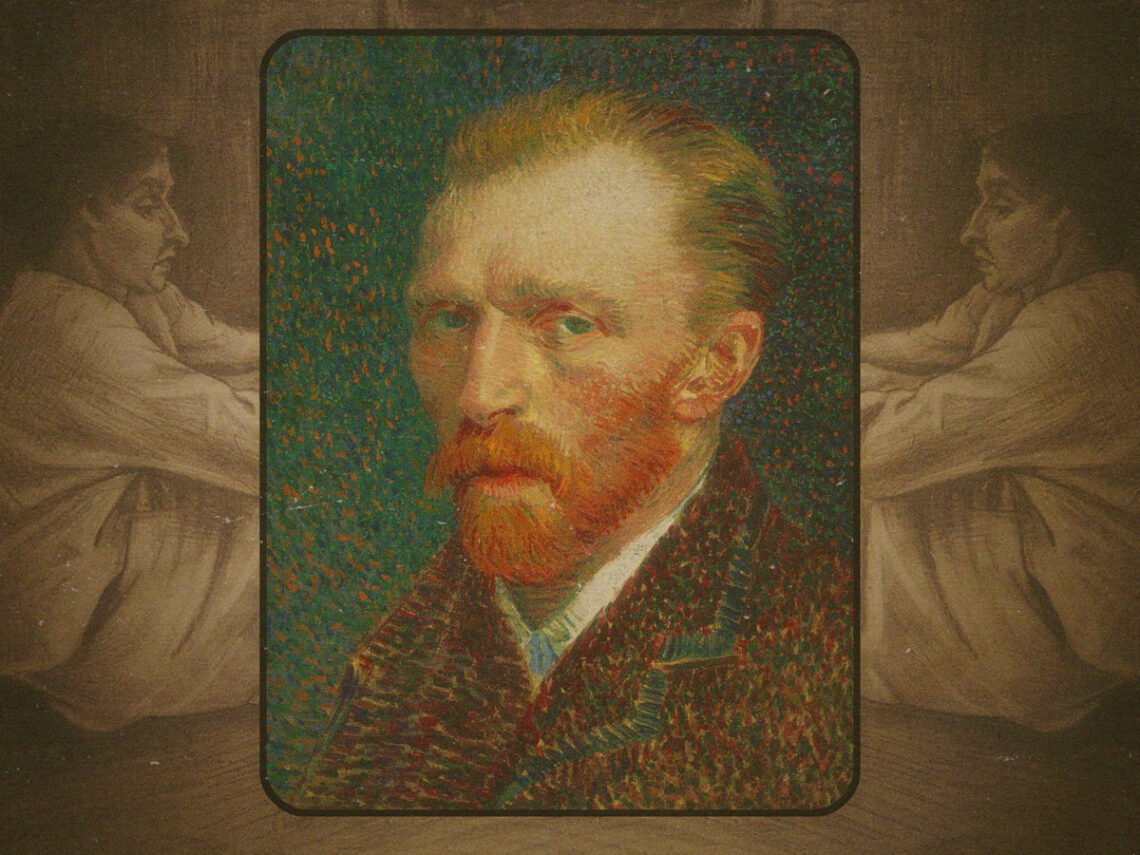
How a sex worker divided Vincent van Gogh from his family
The life of Vincent van Gogh should only be perused by people with a strong stomach for tragedy. Seemingly everywhere you look in the life and times of arguably the greatest painter of all time, who forever changed art, is the kind of misery that even simply reading about makes you want to go and stare at a wall for an afternoon.
The ear jokes get intensely hard to stomach when one realises that he didn’t really do it for any reason. He was in a state of confusion and panic after a row with his roommate. It’s the same with the story of him eating yellow paint. It wasn’t so he could feel the joy he saw in the colour, he was trying to poison himself. Possibly to replicate the effect of the strong alcohol he’d become addicted to and had no access to anymore, but more likely as a way of ending his life.
This is not to paint van Gogh as a powerless victim. Like a depressing amount of folks with chronic mental illnesses, van Gogh was responsible for a considerable amount of hurt, especially among his family, who famously spent a lot of time and money assisting Vincent however they could. This is despite Vincent falling in obsessive love with his cousin in his late 20s, and his incessant pursuit of her, despite her turning him down repeatedly, caused most of van Gogh’s family to cut contact with him.
There were only two members of van Gogh’s family who remained in contact with him after this debacle. The one with whom van Gogh was most in contact initially was his second cousin, Anton Mauve. A successful painter at the time, Mauve was everything the young van Gogh wanted to be, and he hung off his second cousin’s every word. He took art classes at the suggestion of Mauve, which were almost always paid for by his cousin.
This was until Vincent started his first serious relationship.
Why did the van Gogh family hate Vincent’s relationship?
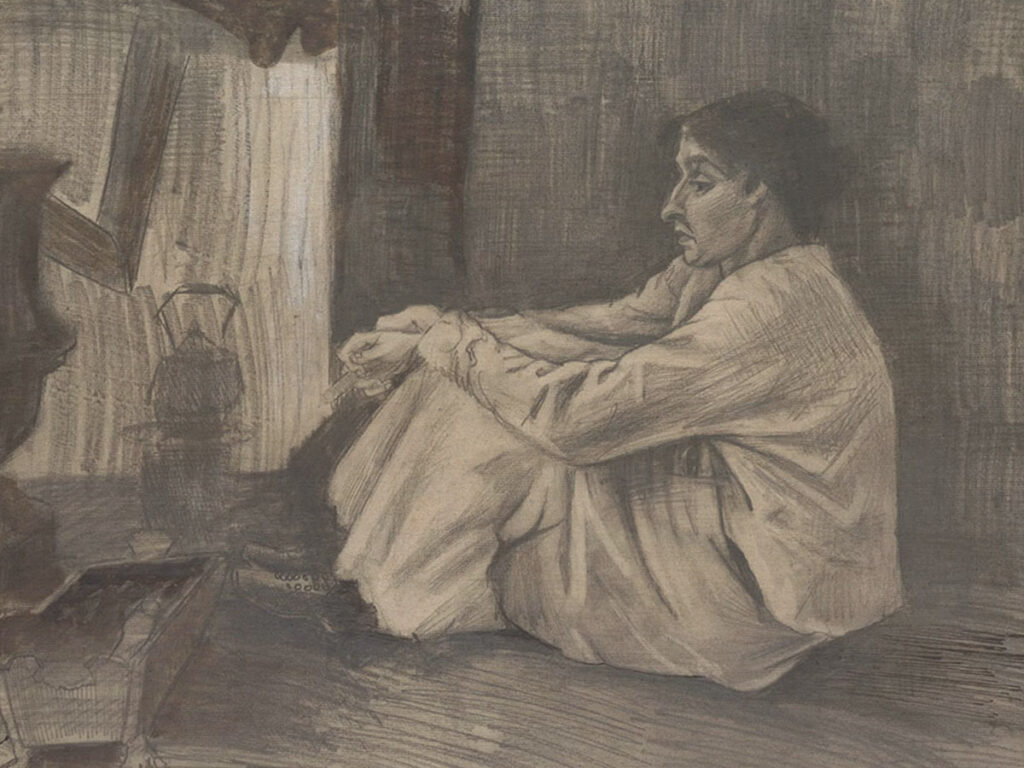
In January 1882, Vincent met Clasina Maria Hoornik, known to her intimates as Sien.
Like van Gogh, Sien was an alcoholic, but unlike van Gogh, she was a parent to a young daughter and a prostitute. Nonetheless, van Gogh and Sien fell for each other and began cohabiting with Sien’s daughter, Maria. Taking up with a prostitute was the final straw for van Gogh’s family. The correspondence he’d been keeping with Mauve ends shortly after news of their relationship was passed on to Vincent’s father, and for the rest of the year, Vincent committed himself to Sien and Maria.
One of the ways he did this was, typically, by creating some of the most enduring and beautiful works of art of that era. Sien wasn’t just his partner, he was his muse, and van Gogh created one of his most celebrated series of works as a tribute to her, painting her in no fewer than 20 works in total. However, the relationship couldn’t last, namely because the only other family member with whom van Gogh was in contact, the one who never, ever gave up on Vincent, was telling him the relationship was a bad idea.
Vincent’s brother Theo was everything to him. His biggest cheerleader, confidante and benefactor, so once Theo started telling Vincent that his relationship with Sien was bad news, Vincent finally relented, leaving Sien and moving back in with his parents in 1883. 14 years after van Gogh’s death, Sien took her own life in 1904 at the age of 54.
Truly, no part of the life of Vincent van Gogh is unmarked with tragedy, even long after he passed.