


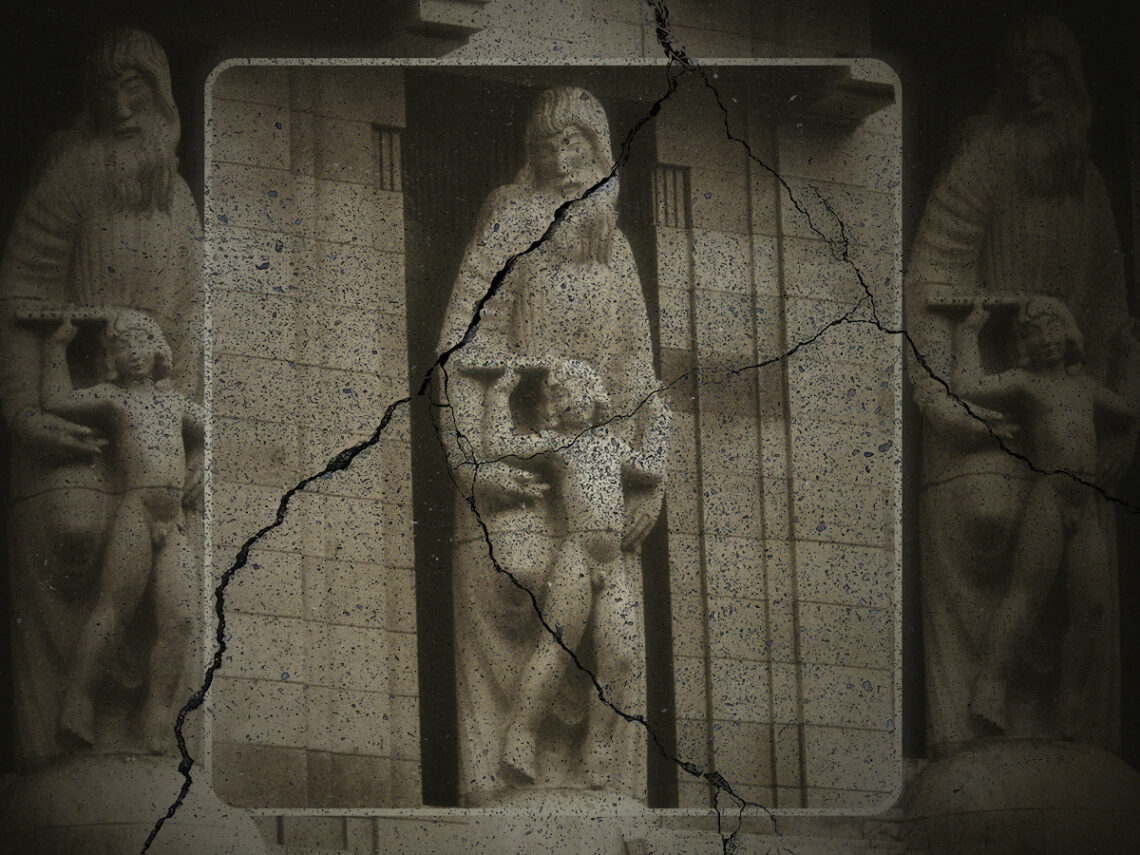
The dark reason a statue outside the BBC was vandalised with a hammer
The headquarters of the BBC, in the heart of London, looks more like a church than a broadcasting centre.
It’s a grand old building made of Portland limestone, standing tall in the middle of the West End. Rather than being a corporate office, it appears more like a local landmark, which is aided by the presence of several pieces of art.
These include a sculpture of Helios by TB Huxley-Jones, the friezes decorating the entrance to the Radio Theatre by Gilbert Bayes, as well as a statue of George Orwell by Martin Jennings, with a quote from the great author’s introduction to Animal Farm etched into the wall next to him, which reads, “If liberty means anything at all, it means the right to tell people what they do not want to hear.”
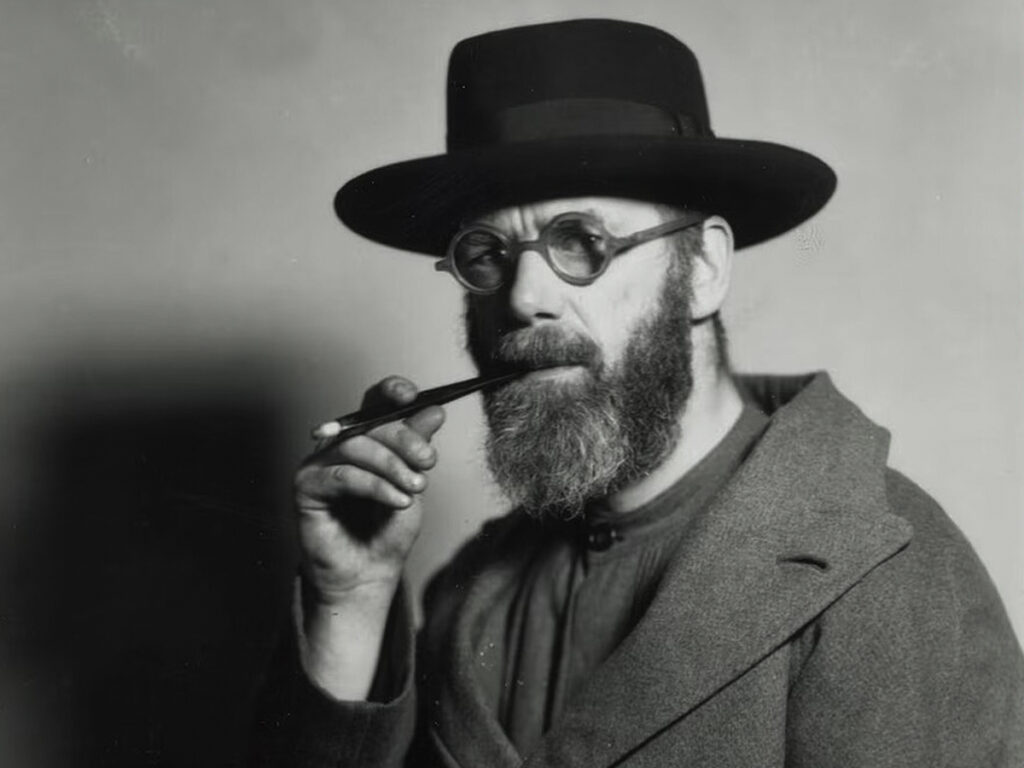
The only artist to have two additions to this auspicious collection is a highly controversial name. One that, given the nature of his crimes, you’d be hard pressed to find a good reason that one of his sculptures still stands at the BBC headquarters, let alone two. Admittedly, the works are incredible, a statue of Prospero and Ariel from William Shakespeare’s The Tempest outside the building and another statue, The Sower, in the building’s main entrance. However, that doesn’t excuse the fact that they were both made by Eric Gill.
When the building was opened, it made a degree of sense to have Gill’s work at its core. He was simultaneously one of the country’s most respected artists and one of its most respected craftsmen. As known for his breathtaking sculptures as he was for his fonts, including the creation of Gill Sans. Up until his passing in 1940, he was a genuine national treasure and was so for the next 40 years after that.
That all changed in 1989 with the publication of a biography by Fiona MacCarthy.
Why are these sculptures outside the BBC so controversial?
In making this biography, MacCarthy accessed Gill’s private diaries. In those books, Gill wrote of the incestuous relationship he had with his sister, along with the sexual abuse of his daughters and, in one case, his dog…
While it’s doubtful that these stories needed corroborating, as the perpetrator wrote about them himself, one of the daughters in question was still alive when the biography was published. Not only did Petra Tegetmeier confirm that this had all happened, but she also claimed to be unaffected by it.
Needless to say, these revelations caused a firestorm of controversy. One so all-consuming that the conversation of what to do about Gill’s exhibited works was actually one of the less pressing questions. Yet this is a conversation still being had in the present day. A conversation that in 2023 was forced when a vandal attacked the statue of Prospero and Ariel outside the BBC with a hammer. David Chick of Northamptonshire was arrested for the act, pleading not guilty to the charge the following year.
Was Chick justified in his act? It’s difficult to argue against it, especially considering the sculpture in question does very much include a nude child in it. The BBC paid for the restoration out of its own pocket to the tune of over half a million pounds, saying via a spokesperson that they wanted to draw a line between Gill’s actions in life and the status of his artworks. Both of Gill’s sculptures still stand at the BBC to this day, and there’s no sign of that changing any time soon.
One would think that in the wake of Jimmy Savile and Huw Edwards, the BBC would want to think very carefully about showing these works. Apparently not.