


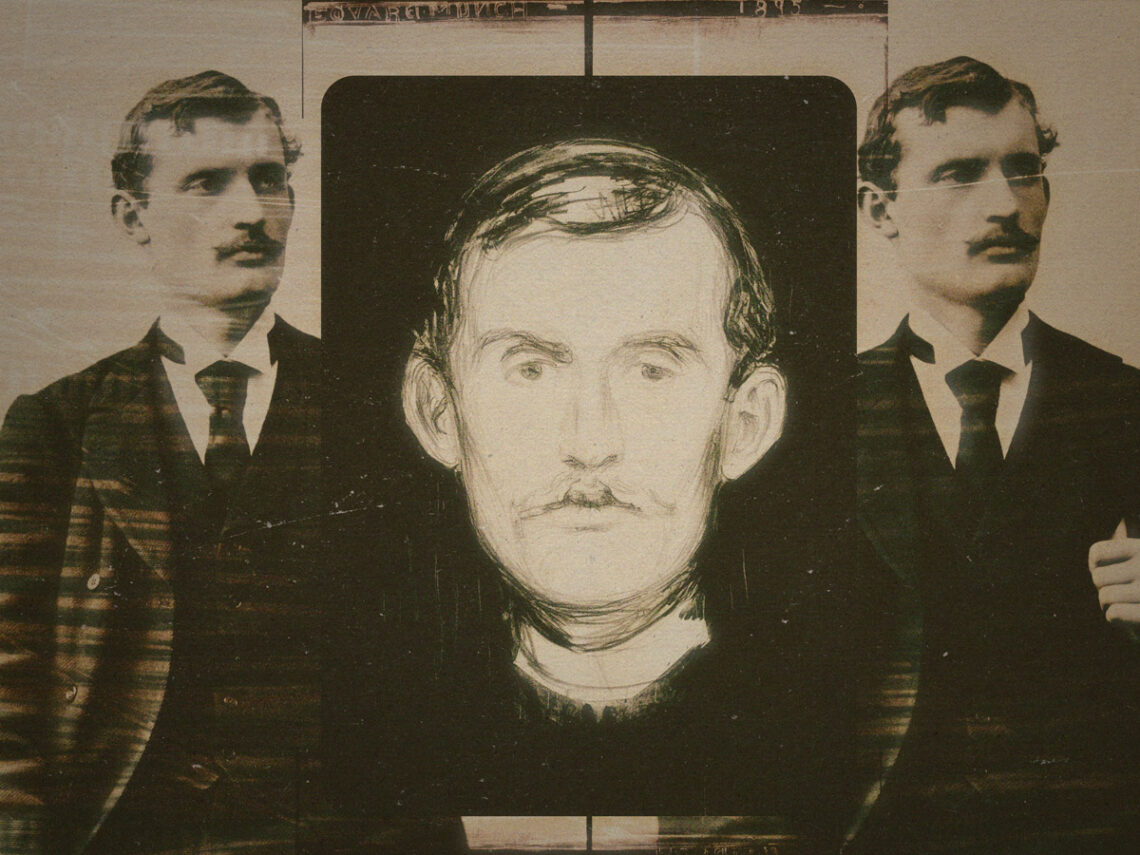
The transformative electroshock treatment of Edvard Munch
They say true art comes from pain. This isn’t true, but if you look at a life like the one lead by Edvard Munch, you can be forgiven for believing it.
The Norwegian master had it rough from the very beginning. By the age of 14, both his mother, Laura and his favourite sister, Johanne Sophie, were dead. He was raised by his obsessively religious father, who, despite his best intentions, would often scold his son by claiming that his mother was looking down from heaven and was deeply disappointed with them. Munch himself was a sickly, fearful child, and the mix of his childhood ailments and his intense upbringing led to a young adulthood spent wrestling with bipolar disorder and depression when he wasn’t dealing with the mental illnesses affecting him.
Later, Munch was able to translate his suffering into art. However, his vivid, foreboding paintings caused the wrong kind of stir initially. His work was frowned upon by critics for being vulgar and by his father for being unholy. This caused him to fall in with alternative scenes that would later become known as the post-impressionists, who shared his feelings of nihilism and depression and encouraged him to work them out on the canvas.
This isn’t the healthiest way of expressing your demons, but they are better out than in. Munch himself travelled Europe on the back of his controversial art, studying and working for various collectors and patrons at that time. However, trouble would often follow where he went. He was a drinker and a violent drunk, whose aggressive works were only matched by his aggressive personality. He rubbed a lot of people up the wrong way and, as a result, became one of art’s first true rock stars.
And in true rock star fashion, he suffered from a mental breakdown as a direct result.

How did Edvard Munch break down?
In the autumn of 1908, Munch felt like there were only two ways his life could go. On the one hand, he could drink and fight himself into an early grave, one possibly created at his own hand. On the other hand, he could finally seek help.
His mental health had gone far beyond the depression and mania he was used to and into full-blown psychosis, suffering from debilitating paranoia and even hallucinations, according to the letters he was writing to friends at the time. Thus, he checked himself into the hospital under the care of one of the premier minds in psychiatry of the time.
Munch spent the next eight months in the care of Daniel Jacobson, and though mental healthcare methods of the 1900s may sound like a scary prospect, they worked like a charm. After an initial period of strict dieting and nonconvulsive electroshock therapy, Jacobson allowed Munch more freedom the longer his stay in his care went on. After a while, Munch’s mood stabilised, and while the therapy continued, Jacobson allowed him to work on whatever he wanted at the time, whether that was photography, sketching or painting.
This allowed Munch to get back in touch with art for the sake of art, rather than earning money or maintaining a reputation. Munch even painted Jacobson and sketched a self-portrait of himself in the middle of his electroshock therapy, so even if there were probably some growing pains, we can be sure that Munch appreciated the therapy while he was receiving it. Thanks to this therapy, Munch was able to turn his life around, putting the drinking and fighting to bed while appreciating the more nourishing things in life until his death in 1944.
These were decades that absolutely wouldn’t have been there if it weren’t for Jacobson and his therapy. Proof, if it was needed, that it’s never too late to get help.