


What’s in a Notname? The history of anonymous artists
I often find myself taking on questions that the greatest minds in human history have failed to come up with an answer to, as if I could do any better, such as, why do people make art?
You could have libraries full of books and papers asking the same question, and every single tome in them could come down to different answers. It’s a spiritual calling, some would say. It’s a way of understanding the world, others might claim. It’s a way of communicating with others beyond words, a way of reaching the hearts of others with emotion, rather than reason. The more cynical would say that’s just a fancy way of saying it’s a decent way of getting laid.
Inarguably, something that unites most reasons why humanity makes art is, at its core, a need for recognition. This might sound like one of the other more cynical reasons why, but I honestly don’t think it is. People can want to make a mark on the world for reasons beyond mere ego, which explains why there are so many works of art by anonymous individuals. I mean totally anonymous, as well, not even a pseudonym left to so much as allude to a creator.
There are countless paintings, sculptures and tapestries that are completely unattributed. Not to mention how songs rarely have their creator mentioned in the lyrics. So, how do you attribute a work of art to someone who quite clearly didn’t want their name attached to something? In films, you have the director’s pseudonym Alan Smithee, but in the wonderful world of art, you have something a little more direct.
You have the phenomenon of the notname.
How did the notname come about?
Fittingly for a practise so blunt, the practice came about through German art historians who sought to attribute works of art that had remained anonymous. Thus, they came up with the idea for Notnamen, where the identity would not be referred to by a name, but by the aspect of their art that they have clearly mastered. This does lead to some spectacular notnames given out to people who almost certainly had no idea how they’d go down in history.
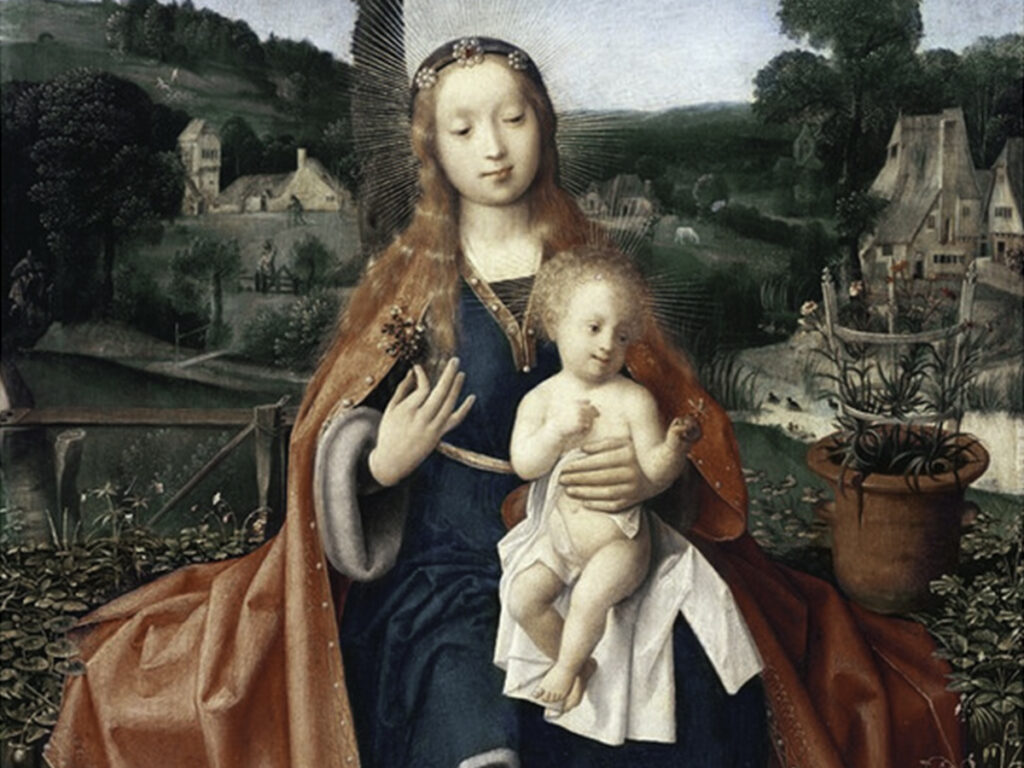
People like the person who painted Virgin and Child in a Landscape, who is now known as ‘Master of the Embroidered Foliage’. This is because the historian who uncovered the painting, Max Jakob Friedländer, compared the way that the foliage was painted in the work to the repeated patterns of stitching in embroidery. The same historian attributed Saint Mary Magdalene Preaching to ‘Master of the Legend of the Magdalen’ due to it whoever painted the work being clearly responsible for several other works depicting Mary Magdalene.
The tradition has continued ever since. What’s more, notnames have since become less about referring to one specific artist and more like a title. If an artist is clearly a master at something, but has no name to attribute, then if historians can at least work out where they lived, they can refer to him as ‘Master’ of that city. For example, ‘Master of Frankfurt‘ isn’t thought to be one, but many artists of a similar style whose work was often commissioned by nobles in Frankfurt.
Which, to me, is a genuinely hopeful sentiment. Even if your name leaves us, your work might just be remembered for hundreds of years afterwards. If that’s not at least one of the reasons we make art, we may never know it at all.