Astonishing rarely-seen illustrations from the set of Stanley Kubrick’s ‘2001: A Space Odyssey’
Over 50 years ago, Stanley Kubrick’s singular motion picture 2001: A Space Odyssey, later styled the “strangest blockbuster in Hollywood history”, was presented to general audiences for the first time.
The movie was released during an unusually eventful week: just four days earlier, Lyndon Johnson had announced that he would give up the presidency due to the increasing unpopularity of the military conflict in Vietnam. A day after the premiere, a bullet from the gun of James Earl Ray would end the life of Dr Martin Luther King Jr.
Kubrick didn’t just make a sci-fi movie; he built a monolith, dropped it into the middle of the Cold War, and let the apes and astronauts sort it out. 2001 was light-years ahead of its peers, ditching the rayguns and rubber suits for a slow-burn meditation on technology, evolution, and the existential dread of deep space. Audiences expecting Buck Rogers got Beethoven and bone clubs. It was baffling, beautiful, and borderline psychedelic—half science lecture, half religious experience. And in classic Kubrick fashion, he refused to explain any of it.
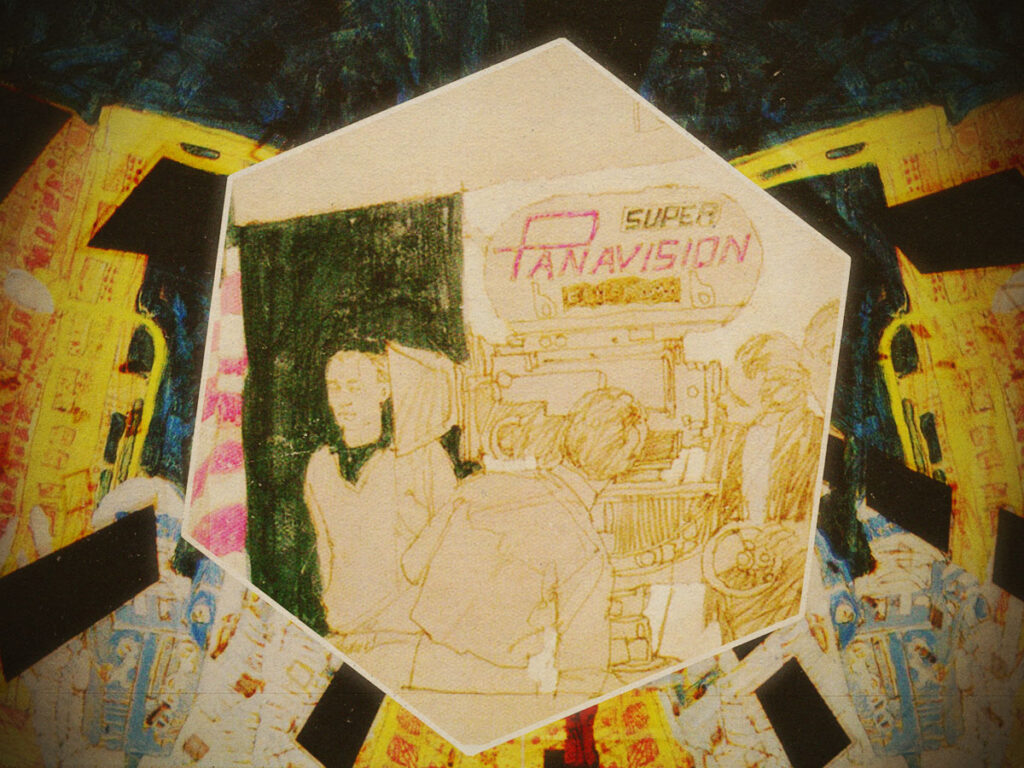
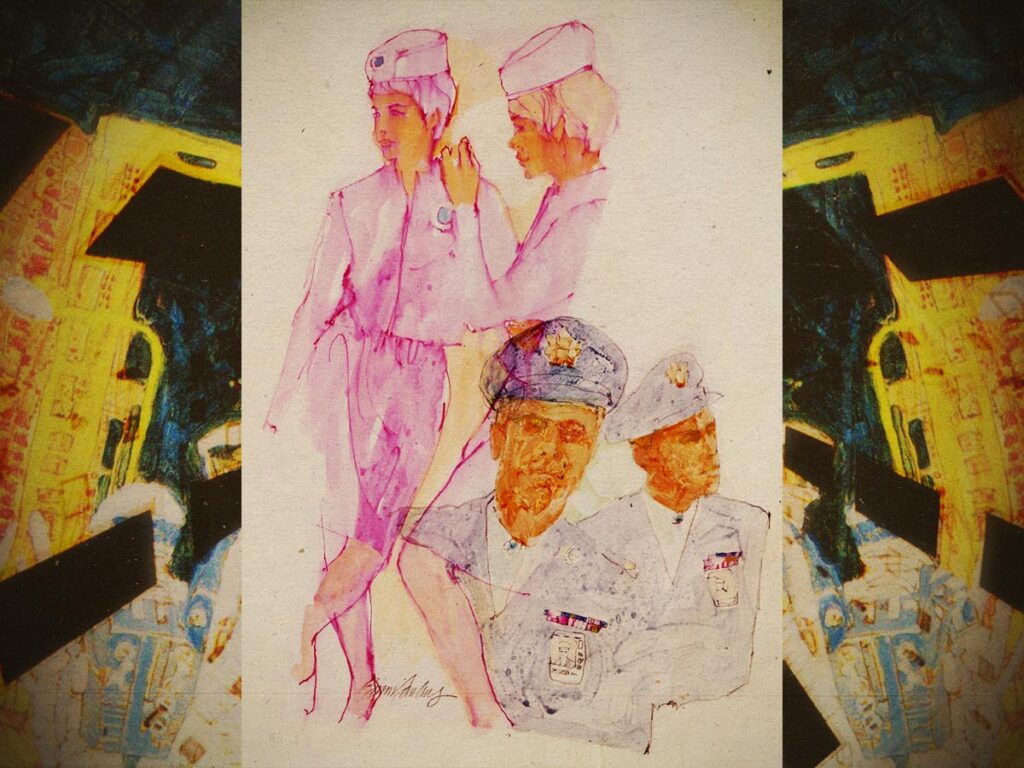
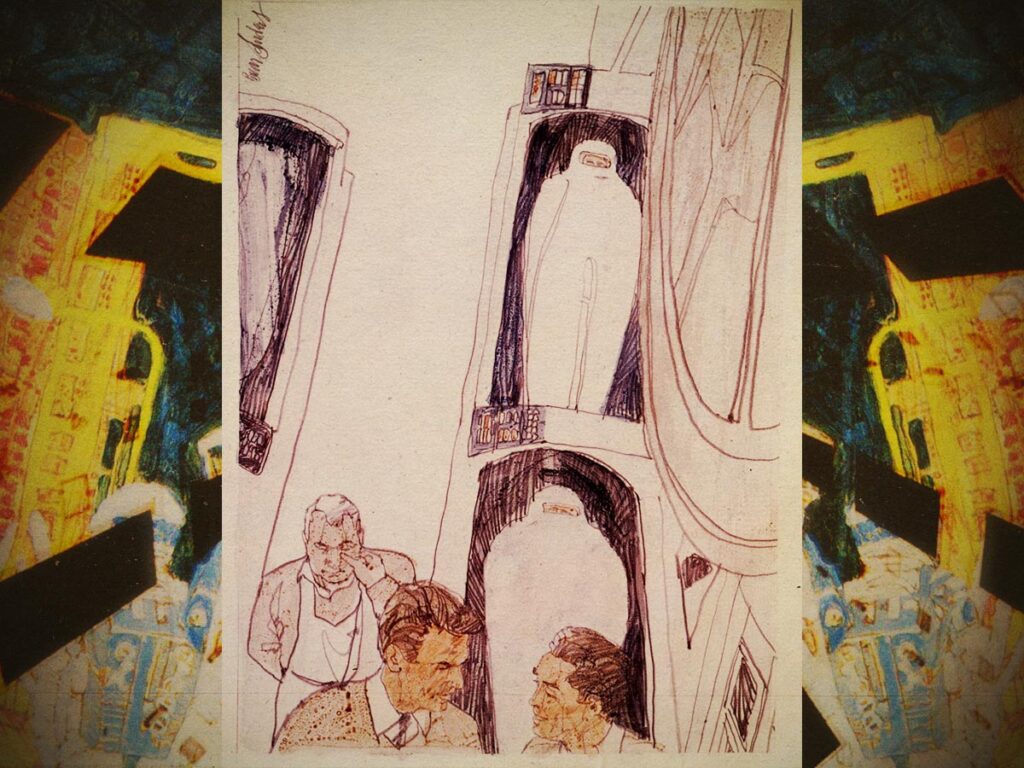
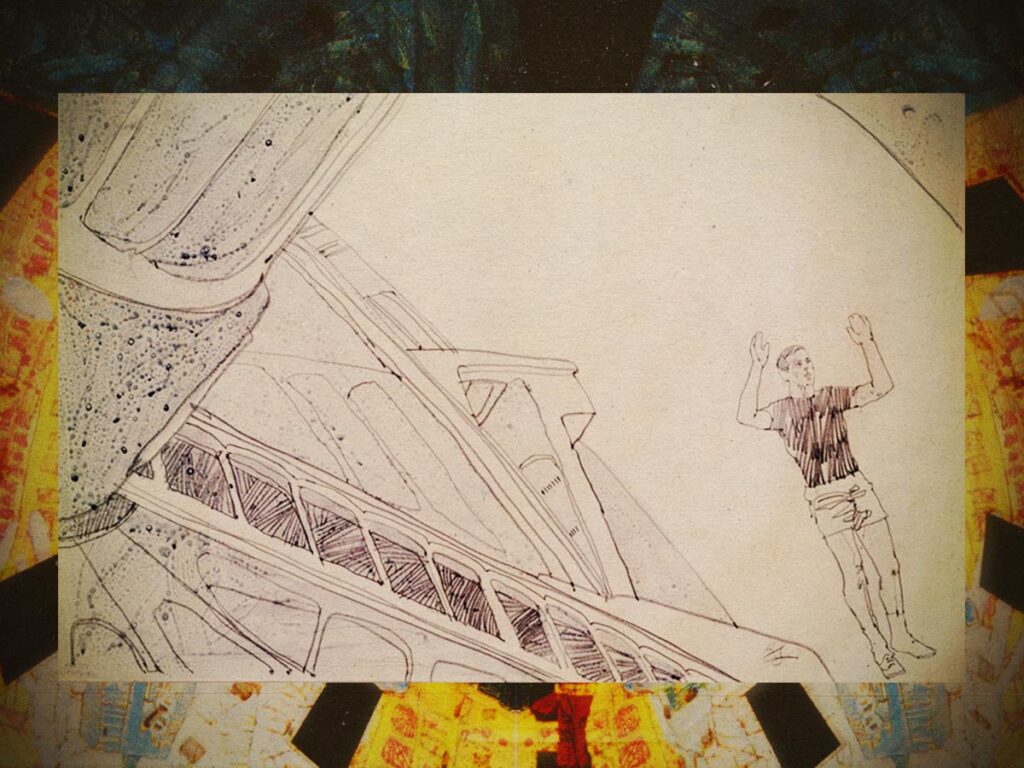
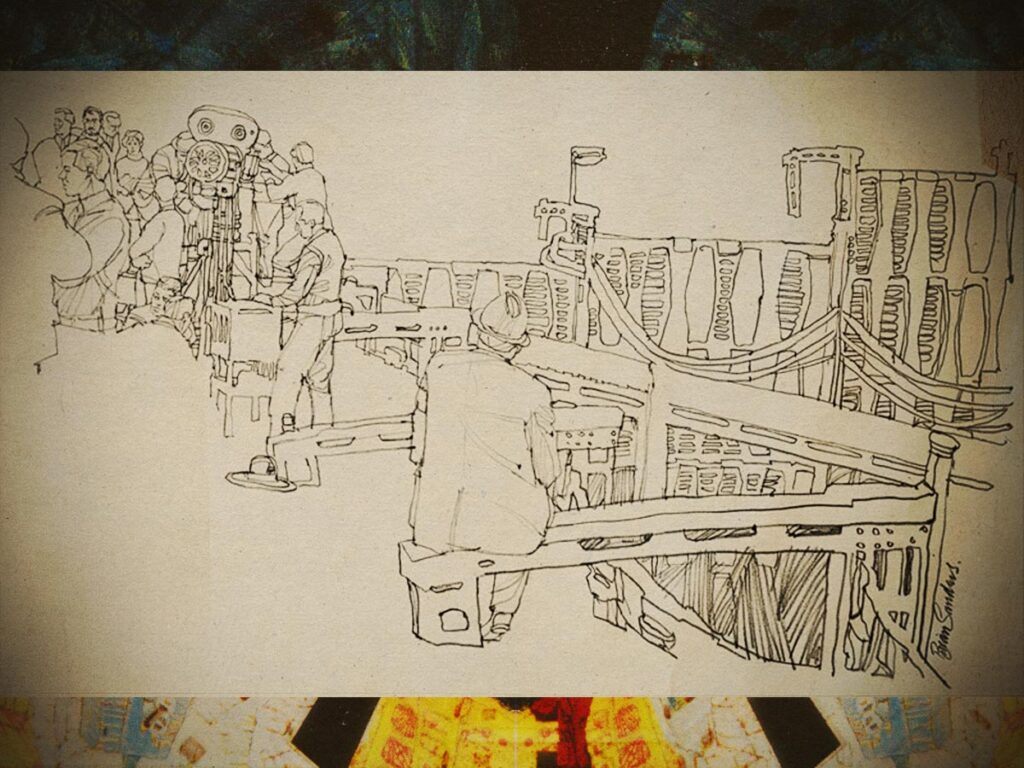
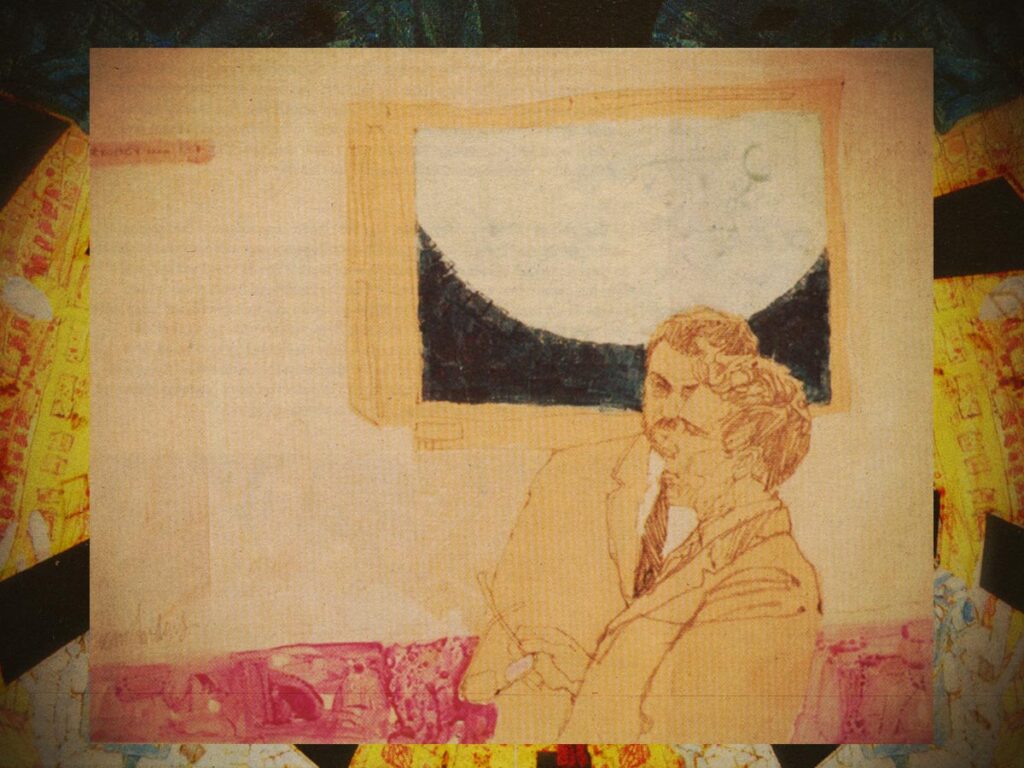
In 1965, Kubrick hired a well-known British magazine illustrator named Brian Sanders to document the making of 2001. Sanders was given complete access to the production to document the creation of the remarkable sets and so forth. Sanders would spend two days a week on the set, drawing sketches, and the rest of the week at his studio working on larger paintings. Kubrick singled out Sanders as the only person permitted to take photographs on the set.
Of his collaboration with Kubrick, Sanders said: “It was a wonderful brief to be able to draw on the set and go back to the studio to paint the bigger pictures. I could do whatever I wanted and it was absolutely lovely not working to a tight brief”.
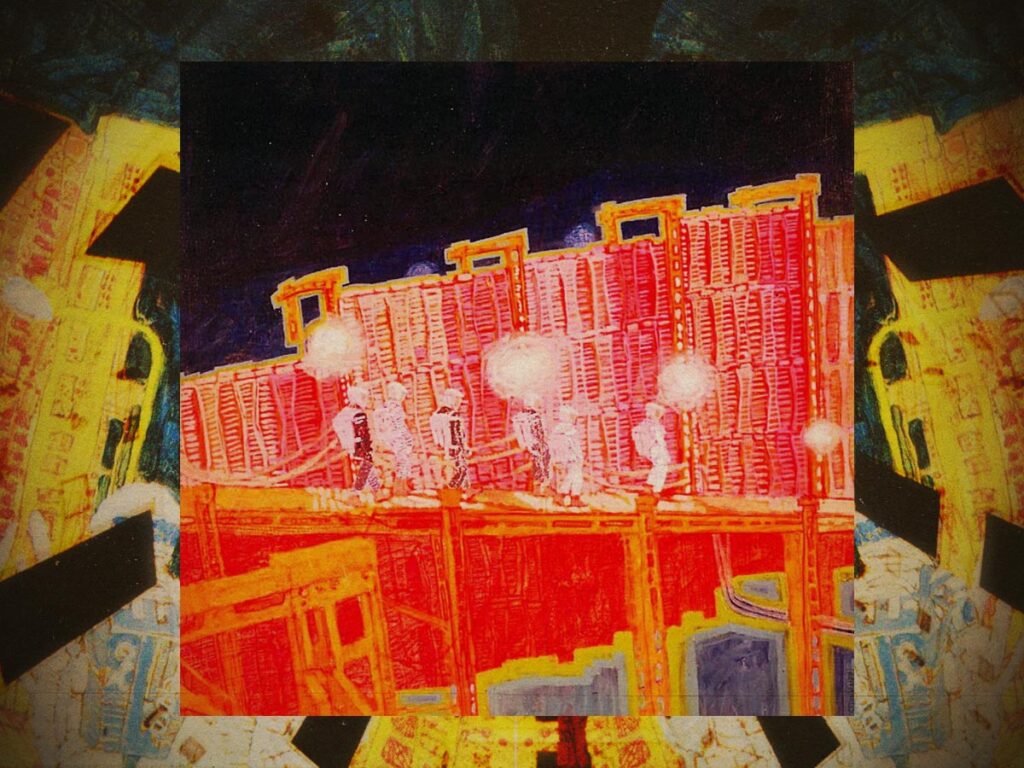
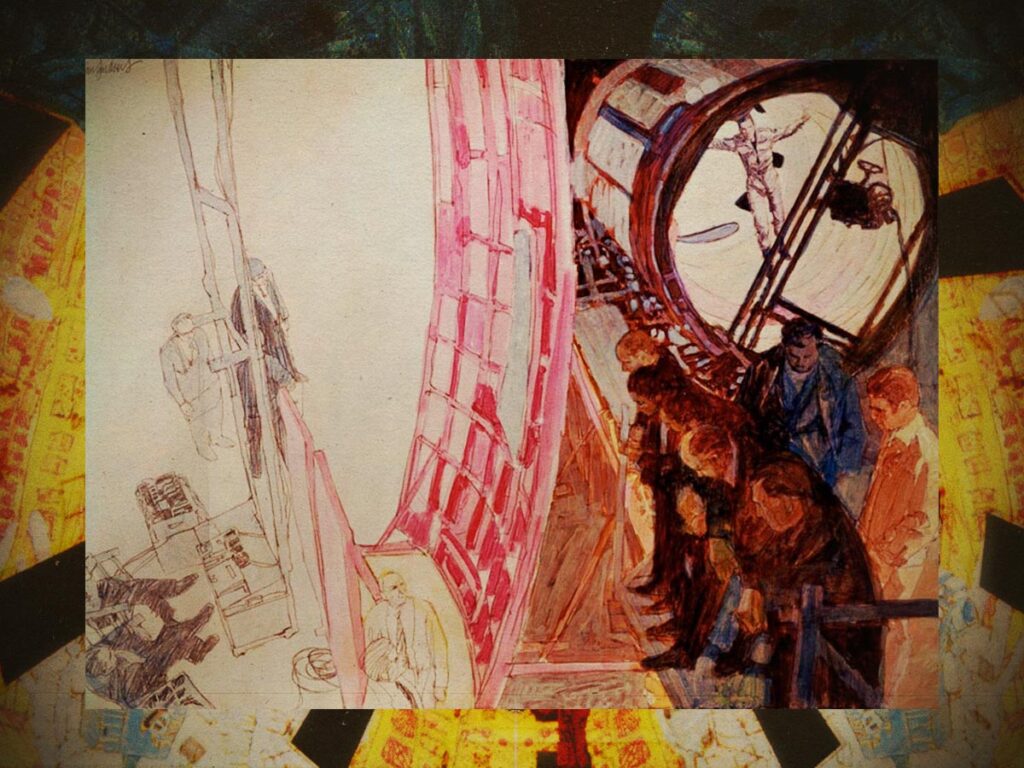
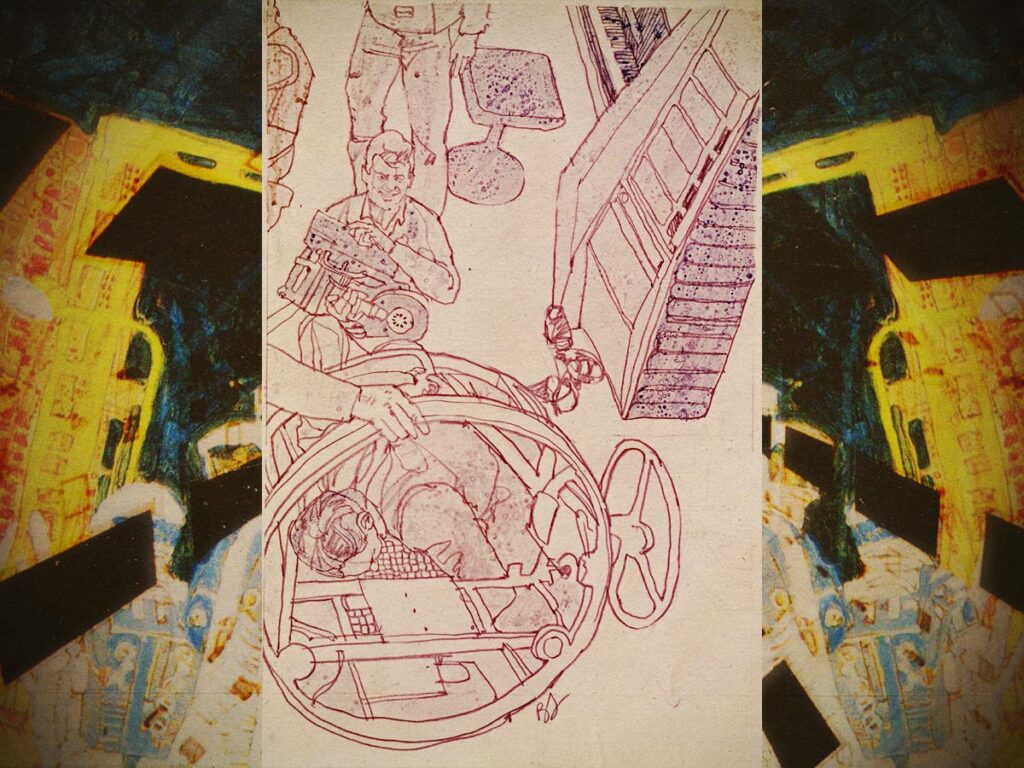
“Also, when I saw what Stanley had built, it was just incredible,” Sanders added. “There was the centrifuge, which you see the inside of in the film, with people running around the ceiling and various parts of it. That alone must have been 30 feet high. I remember when it started up for the first time, all of its lights were connected to one big console, and they began to pop!”
Sanders continued: “So, he was very much in new territory. He obviously collaborated with other people, but he invented new concepts, such as a mounted camera where the actual camera itself would revolve. The invention was amazing. I was quite young at the time, so to be able to work with him on the set was really incredible”.
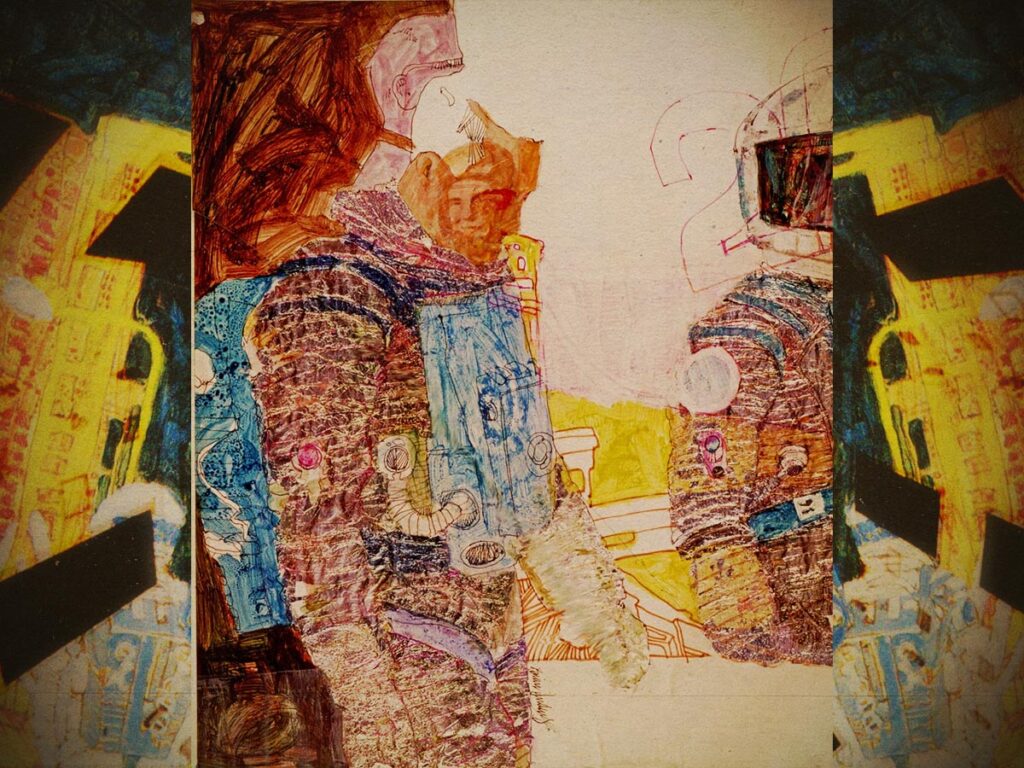
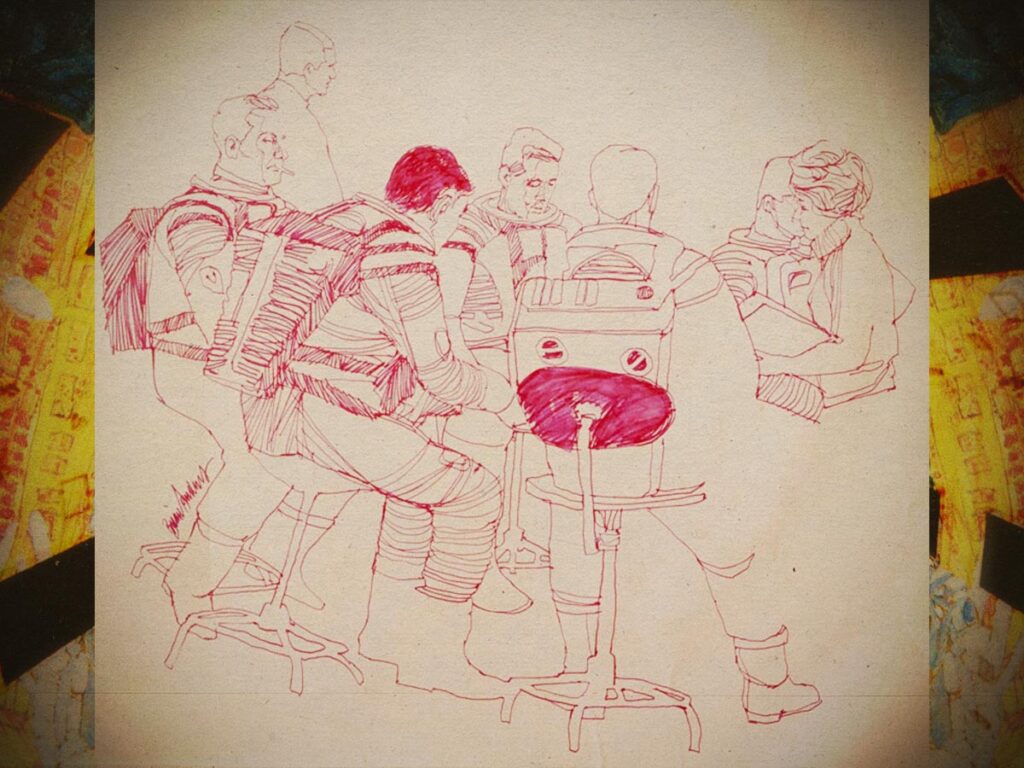
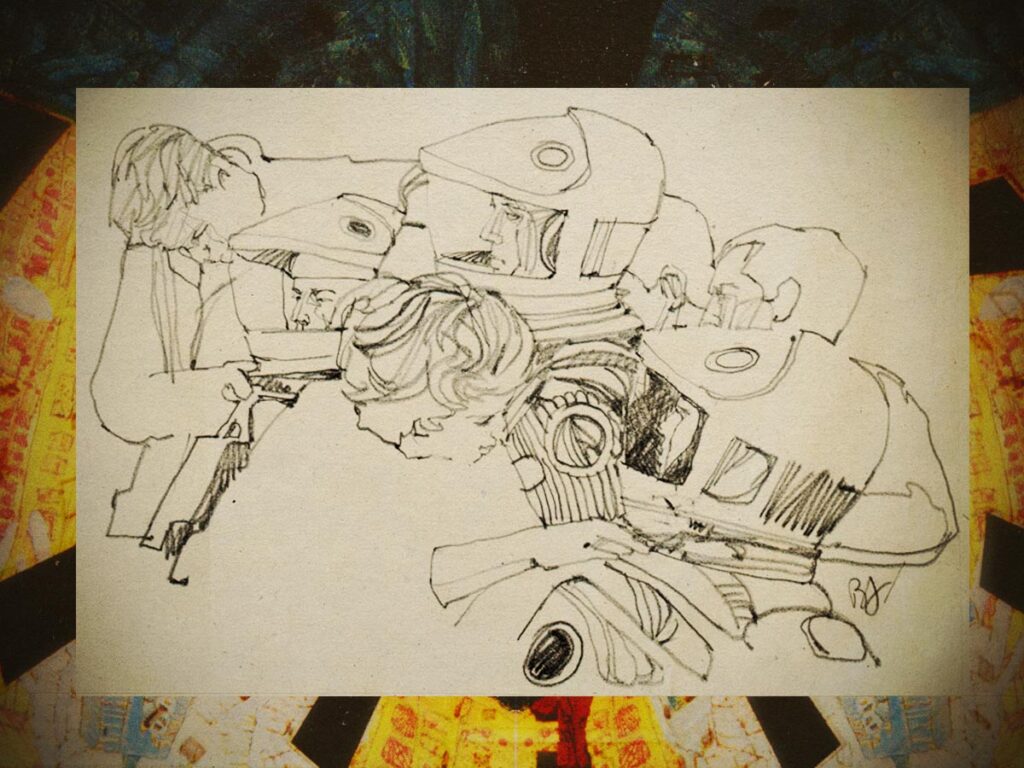
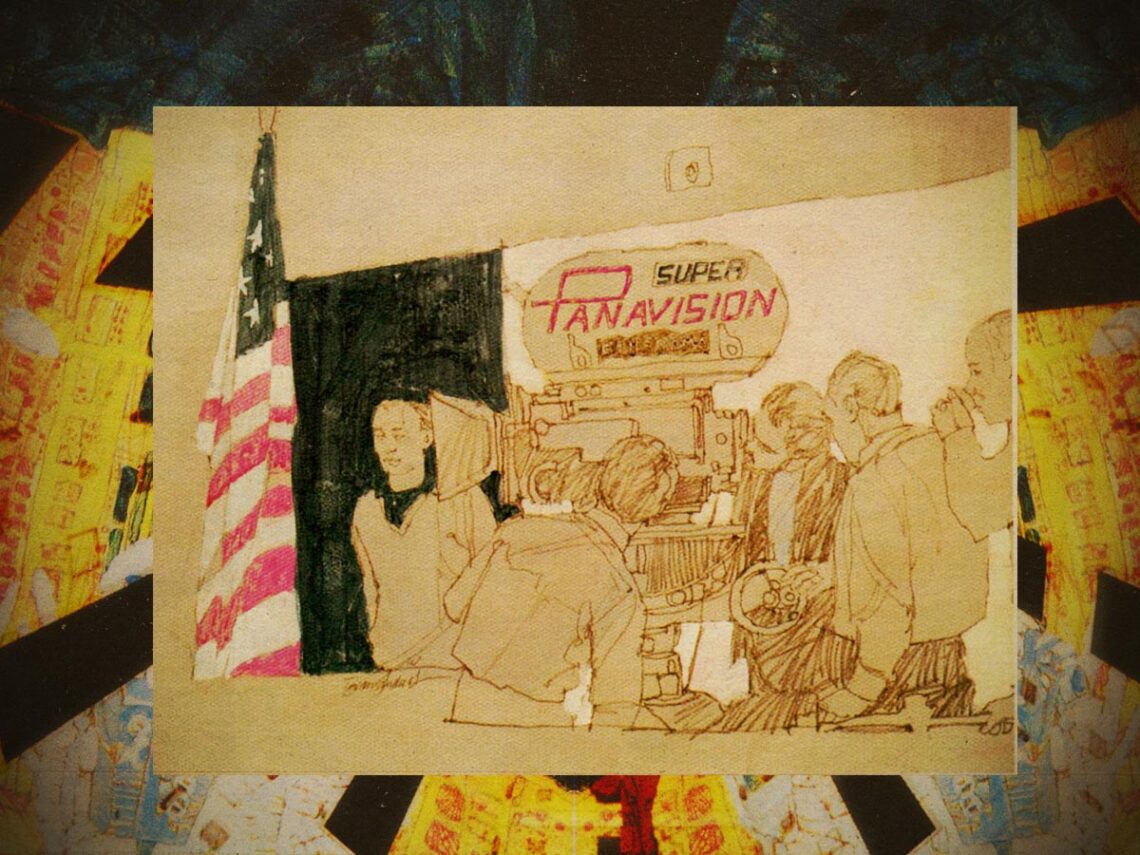
Just look at the drawings below. You’ve got men in suits loitering in front of what looks like a minimalist moonscape (or a BBC weather map gone rogue), astronauts crammed together like bored commuters, and blokes in boiler suits holding gear like they’re about to fix your boiler on the moon. There’s something wonderfully casual about it all—like a high-concept film wrapped in the mundane reality of 9-to-5 work. Sanders captured the off-camera poetry: spacesuits as workwear, interstellar set design as everyday graft.
In the red-ink sketch of the suited-up crew perched on stools, you can practically hear the hum of studio lights and the clatter of coffee cups. This wasn’t sci-fi mythology yet, it was a job site. There’s something cheekily grounding in these images: future-tech fantasies staged by very human hands, men who probably popped out for chips between takes. Sanders caught the surreal normalcy of building a future that didn’t exist yet.
Many of the photographs would remain unseen for several decades. Secretive Stanley took the images from Sanders and did nothing publicly with them—only two images ever saw the light of day during the movie’s initial run. Sanders was disappointed, saying later that “the works never appeared anywhere in the end—it was a terrible anti-climax. I understood how the actors in A Clockwork Orange felt when he withdrew it from show.”
In short, every movie set should have its own documentarian illustrator.