


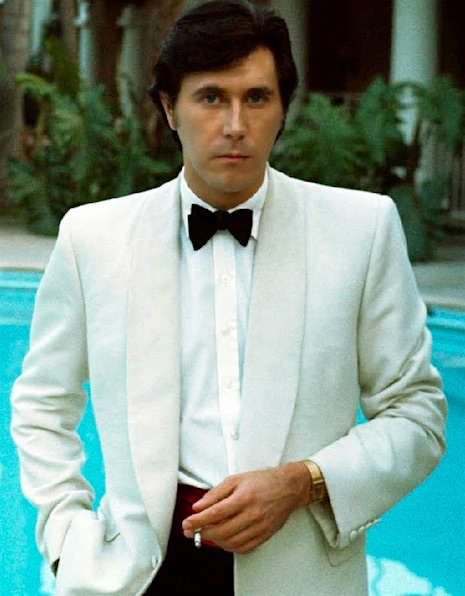
Back to the Future: Bryan Ferry live in concert, Japan 1977
In 1983, Dexy’s Midnight Runners’ frontman Kevin Rowland managed to get his band booted off their prestigious support gig on David Bowie’s Serious Moonlight tour. Dexy’s were riding high as a ragamuffin band of “Celtic soul rebels” who had scored big with their single “Come on Eileen.” Despite the plum role on Bowie’s show-bill, Rowland was no fan of the Thin White Duke. Unfortunately, he made his antipathy public during one gig at the Hippodrome d’Auteuil, Paris, when he told the audience David Bowie was “full of shit,” before adding:
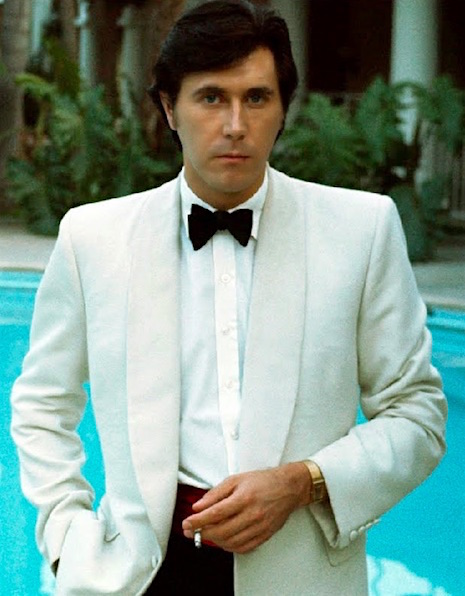
“I don’t know why you are so fussed about Bowie. Bryan Ferry has much more style.”
To be fair, Rowland had a point–well, half a point. Bryan Ferry has always been stylish, while Bowie often latched onto trends, characters, and talented collaborators (like Mick Ronson, Tony Visconti, and Brian Eno) to find his style and further his career. Ferry always seemed to know exactly who he was, what he was about, and where he was going.
A baby boomer born into a working class family in Washington, County Durham in 1945, Ferry inherited his obsession for music from his mother. Music was just noise to his father, but for his mother it was a passion. From the age of ten, Ferry was obsessed with rock and jazz. He preferred American artists like Little Richard, Fats Domino, and Charlie Parker, rather than the homegrown sounds of ’50s skiffle. He got a Saturday job delivering newspapers and magazines so he could read up on all the new record releases and any reviews or interviews with his favorite artists.
Ferry said he never quite fit in at school and always felt a bit of “an oddity.” While his classmates argued about the differences between Bill Haley and Chuck Berry or Cliff Richard and Tommy Steele, he chose to follow the artists on the Stax and Tamla Motown labels. It wasn’t just the music he liked but how these artists presented themselves–synchronized dance routines, sharps suits, and beautifully coiffed hair styles. It was show business where the image was as important as the sound.
The confirmation that he was on the right track came when he started studying fine art at Newcastle University. Under the guidance of noted British pop artist Richard Hamilton, Ferry became more confident in his own nascent talents and began writing songs. These were at first influenced by Hamilton’s pop aesthetic, best heard in songs like “Virginia Plain” which was inspired by a painting Ferry had made of a packet of cigarettes (Virginia Plain was then a brand of cigarette).
His musical ambitions were brought into sharper focus after he hitch-hiked to London to see Otis Redding perform in concert in 1967. It was then that Ferry knew he had to become a singer.
After a few false starts with bands The Banshees and Gasboard, Ferry formed Roxy Music with friend and bass player Graham Simpson in late ’69 early 1970. The pair were soon joined by saxophonist and oboist Andy Mackay, together with Brian Eno on tapes and synthesiser, Phil Manzanera on guitar, and Paul Thompson drums. Ferry was working as a teacher in London–a job he hated–writing songs and rehearsing with the band in his spare time, and hocking a demo tape around record labels on his days off.
A music journalist, Richard Williams, took an interest in the band and gave Roxy Music some much-needed copy in the Melody Maker in 1971. This led to a record deal. In June 1972, the same week Bowie released The Rise and Fall of Ziggy Stardust and the Spiders from Mars, Roxy launched their self-titled debut album. It gained some very favorable reviews but it was the single “Virginia Plain” (not included on the LP) that made the band famous and earned them a top five hit.
Four studio albums followed over the next five years, each progressively more brilliant than the last. The quality of Roxy Music was the strange amalgam of five disparate talents who almost seemed on the verge of pulling the band in different directions, if not at times literally apart. A year after the first Roxy’s debit disc, Ferry released a series of solo albums in quick succession starting with These Foolish Things. These mainly featured cover versions of songs by Leiber and Stoller, Goffin and King, Jagger and Richards, Lennon and McCartney, the Everly Brothers, and Bob Dylan. But they delivered the singer a catalog of hit singles like “A Hard Rain’s a-Gonna Fall,” “Let’s Stick Together” and “The Price of Love” and inspired Bowie to release his own album of covers Pin Ups and John Lennon to do something similar with Rock ‘n’ Roll.
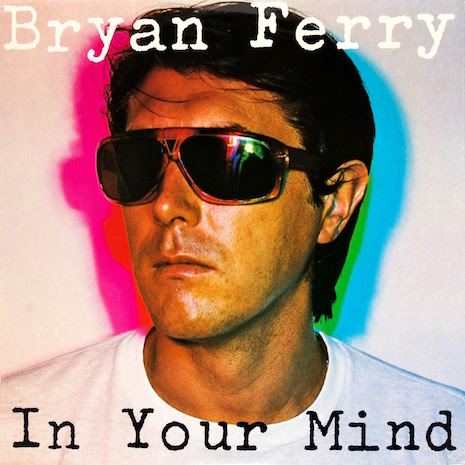
In 1977, Ferry released In Your Mind–his first solo album consisting wholly of his own (new) compositions. Rock critic Allan Jones described In Your Mind as representing “some of the most impressive statements that Bryan Ferry has yet achieved.” An album of “compelling excellence” which was:
…a spirited, adventurous, dynamic, at times fiercely emotional album, superbly performed by a selection of some of the finest musicians currently available in British rock.
Ferry toured the album to rave reviews, including three sell-out nights at the Royal Albert Hall. In June 1977, Ferry showcased songs from the album together with a selection of his previous solo work on a special televised concert from Tokyo. Supported by Chris Spedding (guitar), John Wetton (bass), Ann Odell (keys), and Roxy bandmates Paul Thompson (drums) and Phil Manzanera (guitar), and brass section Chris Mercer, Mel Collins, and Martin Drover. It would be one of Ferry’s last big highs as a solo artist before returning to Roxy Music in 1979 with the album Manifesto.
Set List: “Let’s Stick Together,” “Shame, Shame, Shame,” “In Your Mind,” “Casanova,” “Love Me Madly Again,” “Love is the Drug,” “Tokyo Joe,” “This is Tomorrow,” “A Hard Rain’s a-Gonna Fall,” and “The Price of Love.”