Death on canvas: the crash series by Fernando Gómez Balbontín
In April 1970, author JG Ballard opened his exhibition of ‘Crashed Cars’ at the New Arts Lab in Camden Town, London. It was a wrecker’s yard of smashed autos, crumpled bodywork, blood-flecked upholstery, and diamond-scattered windscreens. A topless model wandered through the exhibition as a “sexy” counterpoint to these relics of death and destruction.
Ballard claimed, “The car crash is the most dramatic event we are likely to experience in our entire lives apart from our own deaths.”
His show caused an uproar among the invited guests with allegations of sexual assault, small incidents of violence, and acts of wanton vandalism, including people urinating into the exhibits. By confronting the audience with death, Ballard’s exhibition triggered more basic primal instincts.
This was something noted by the philosopher Ludwig Wittgenstein when he served as a soldier in the First World War. Wittgenstein noted he never felt more alive than when confronted with the imminence of his demise in the midst of battle. He became reckless and his behaviour more extravagant, as if indifferent to the consequences of his actions.
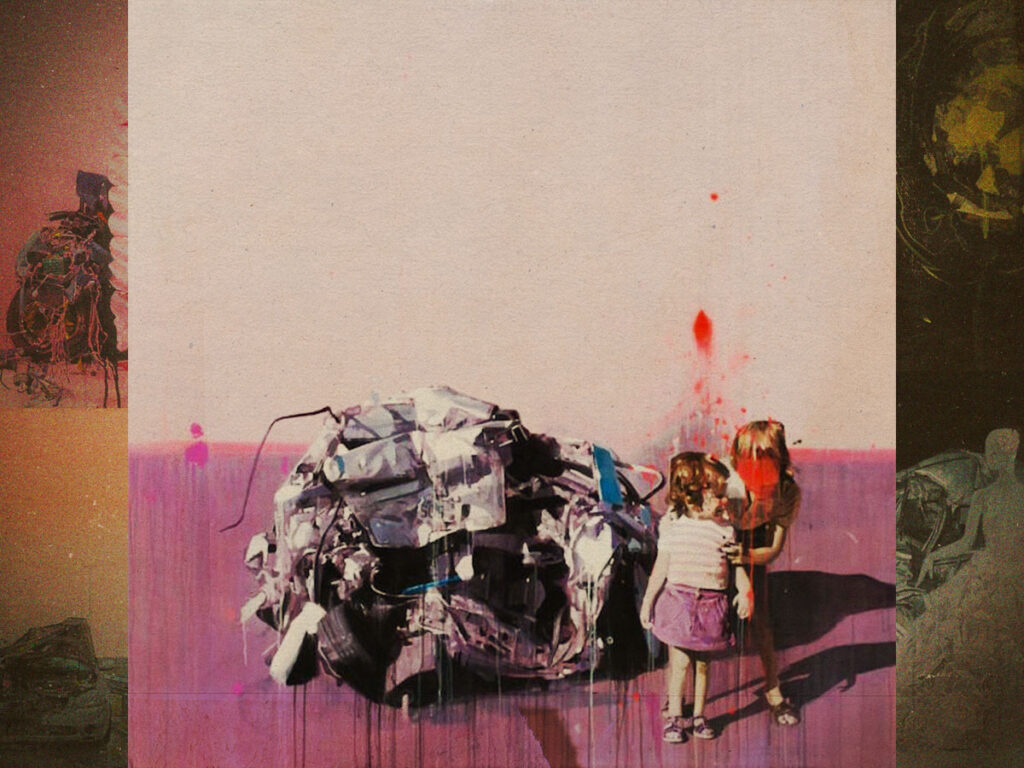
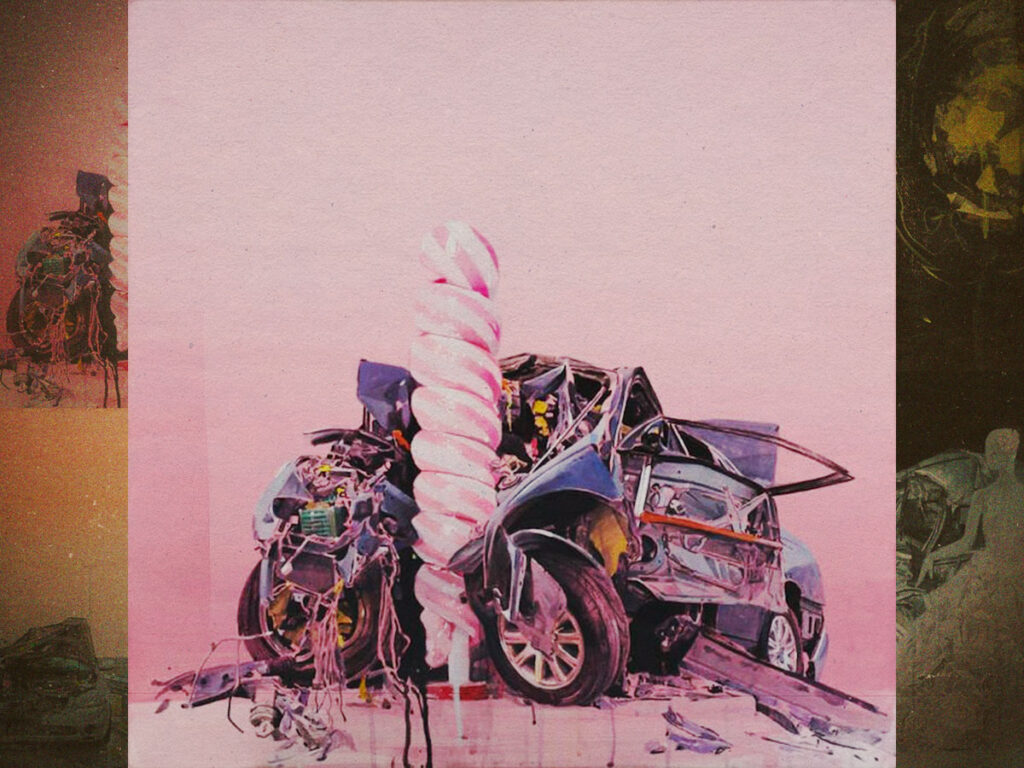
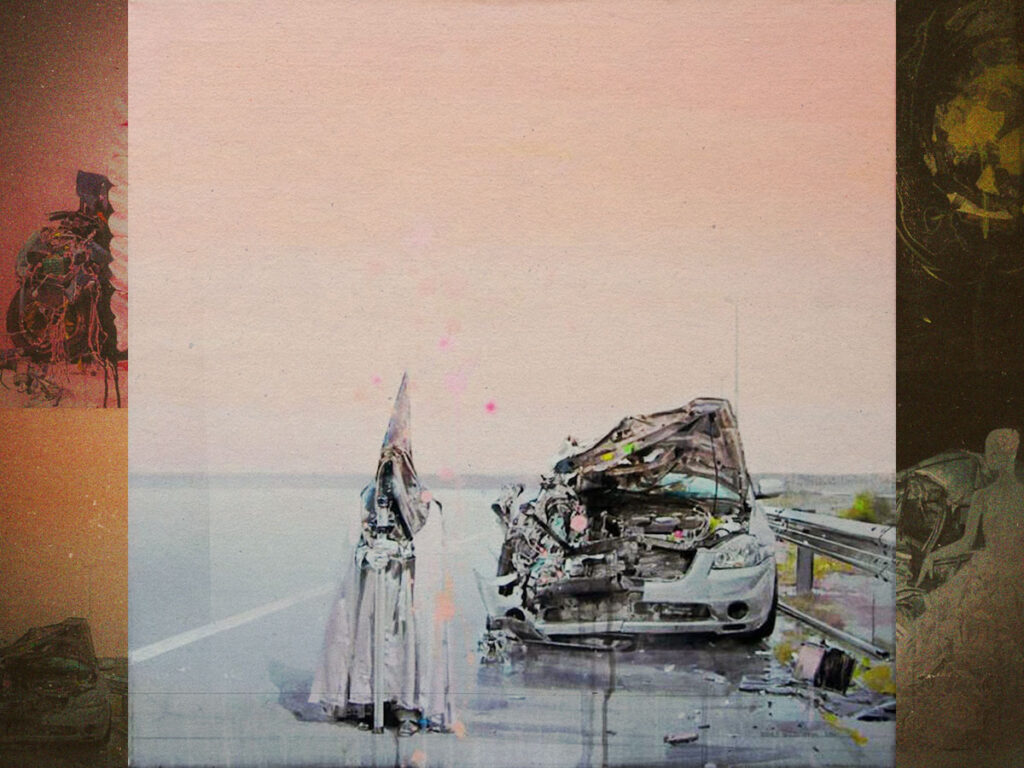
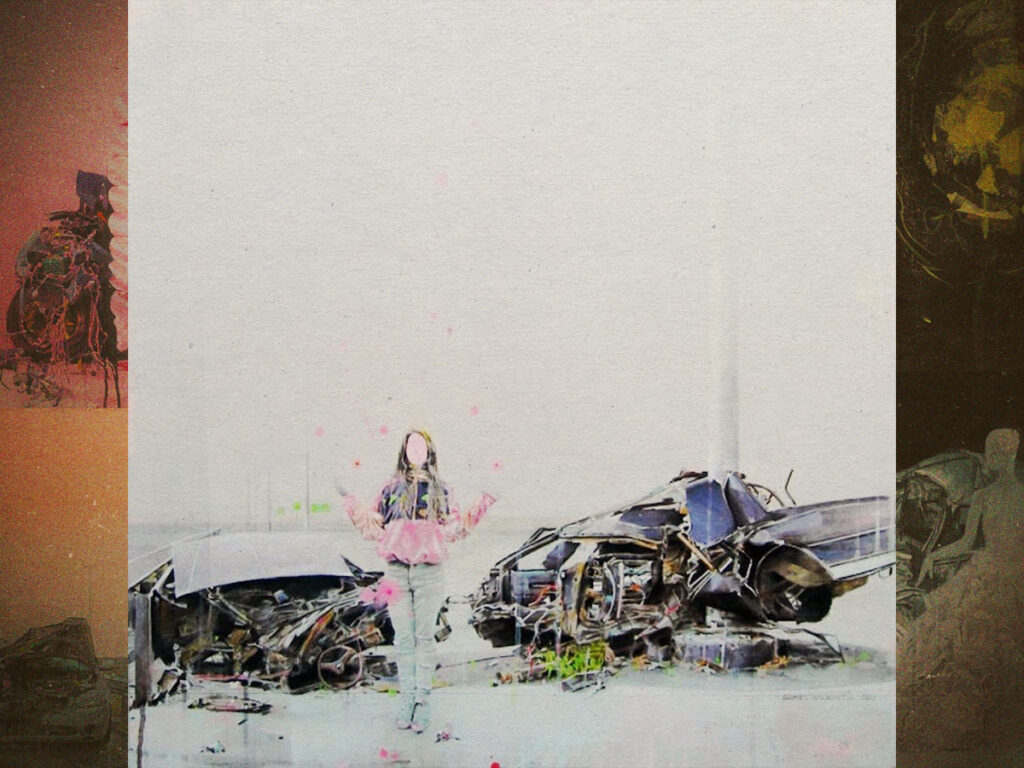
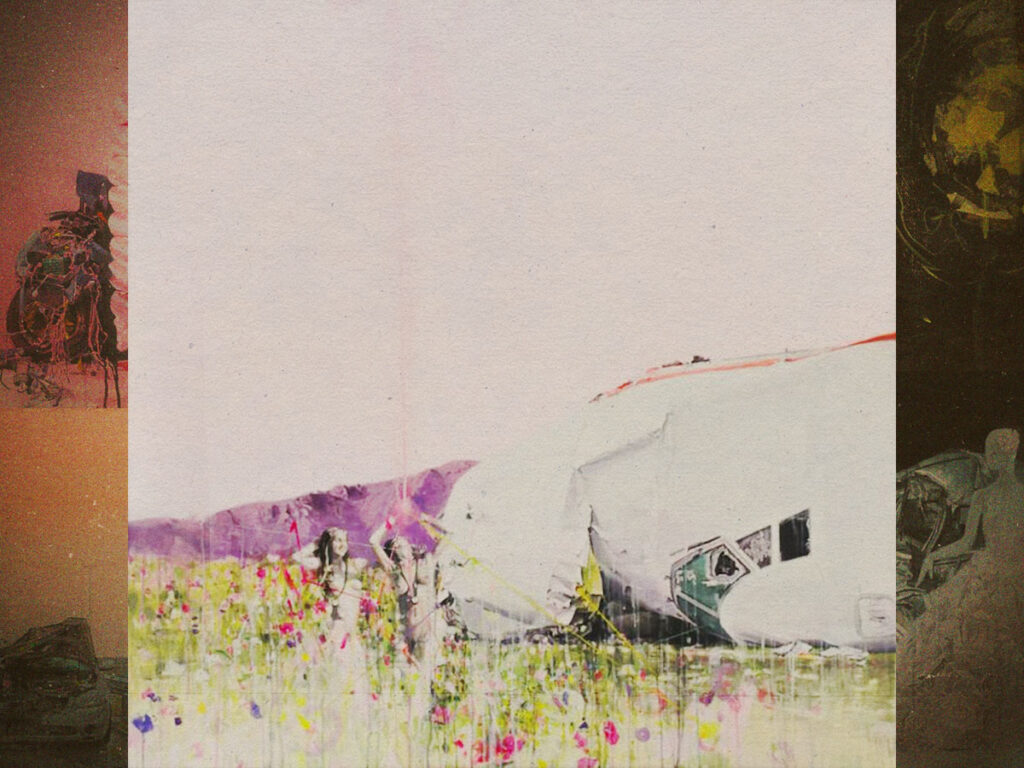
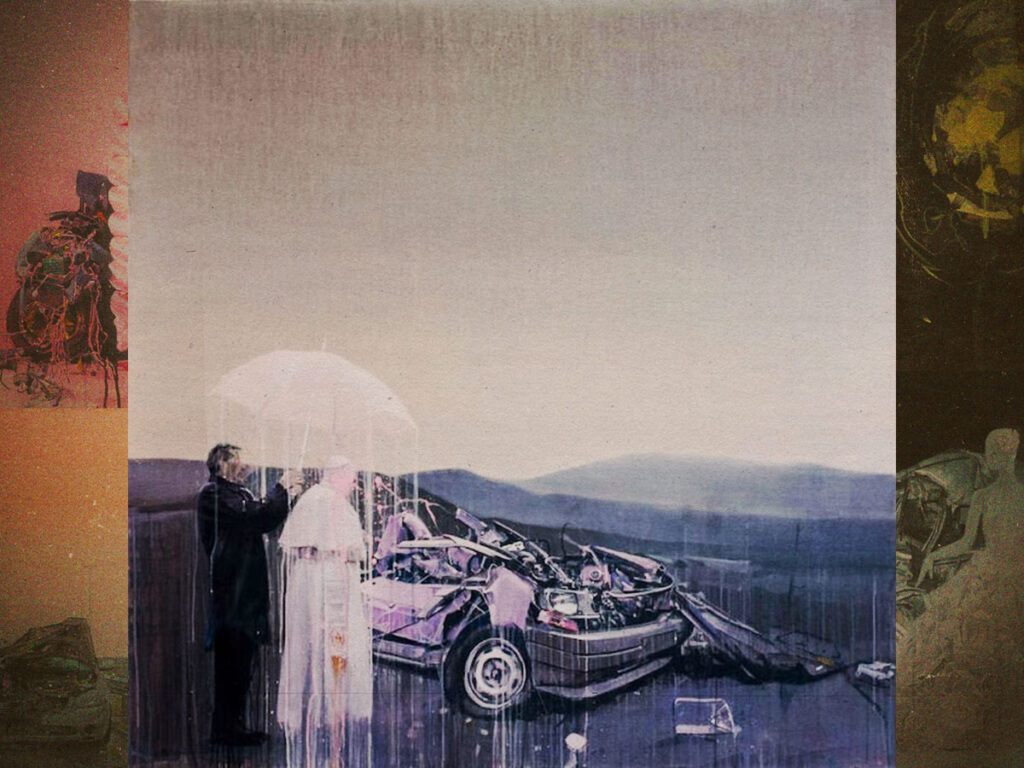
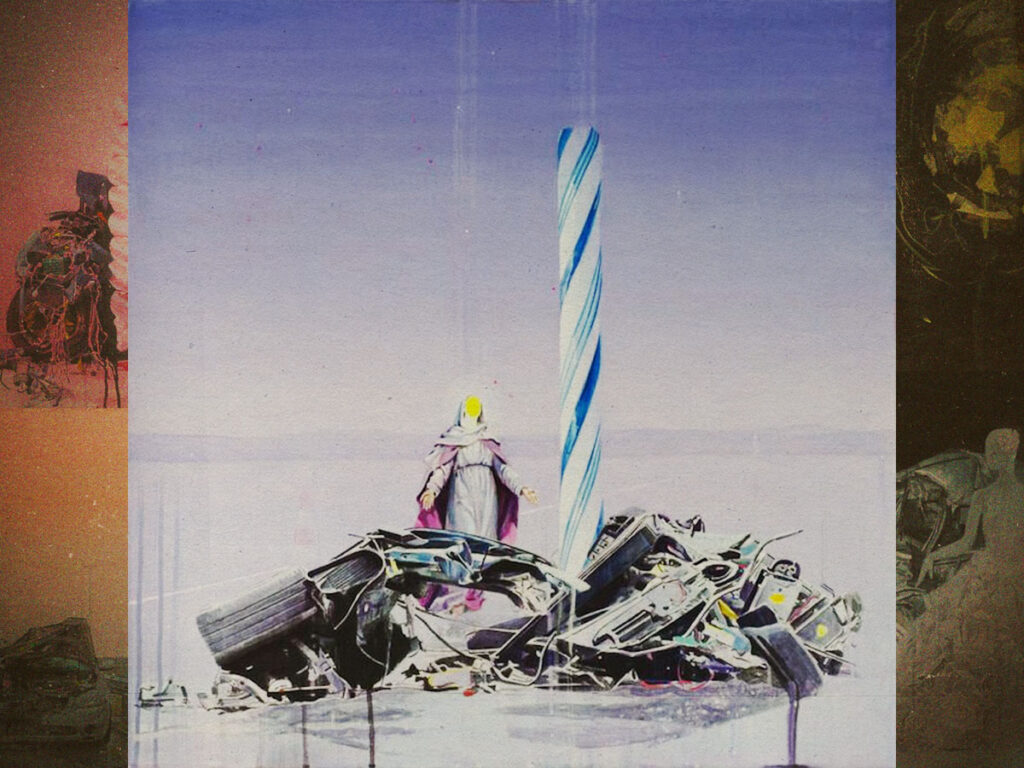
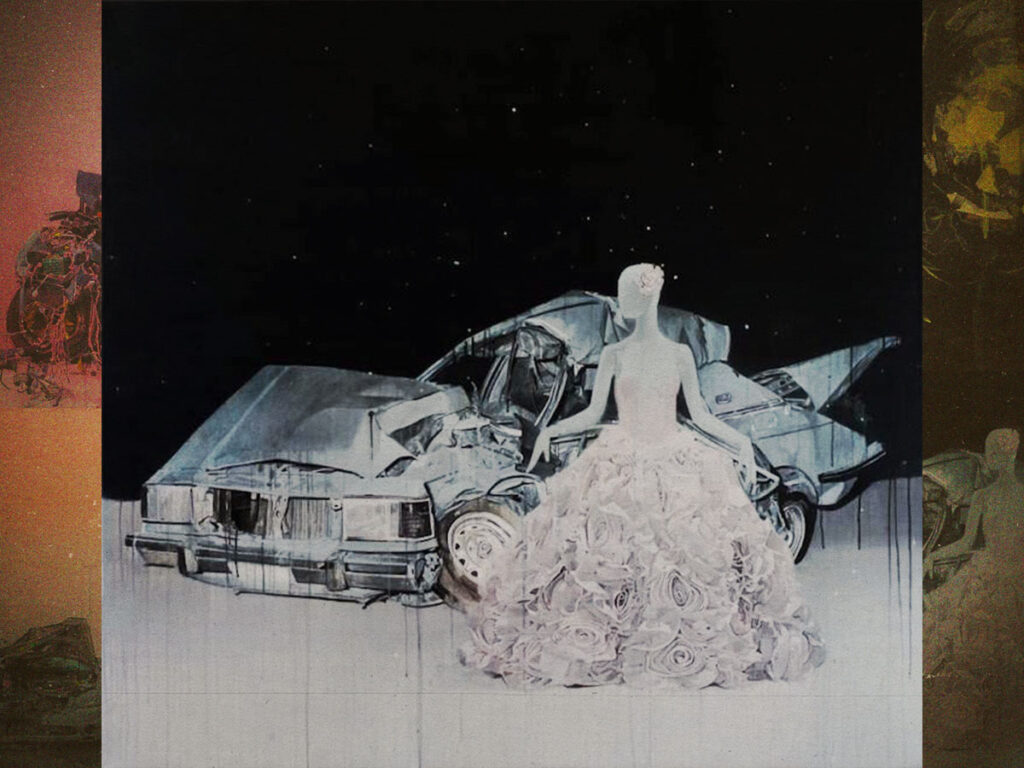
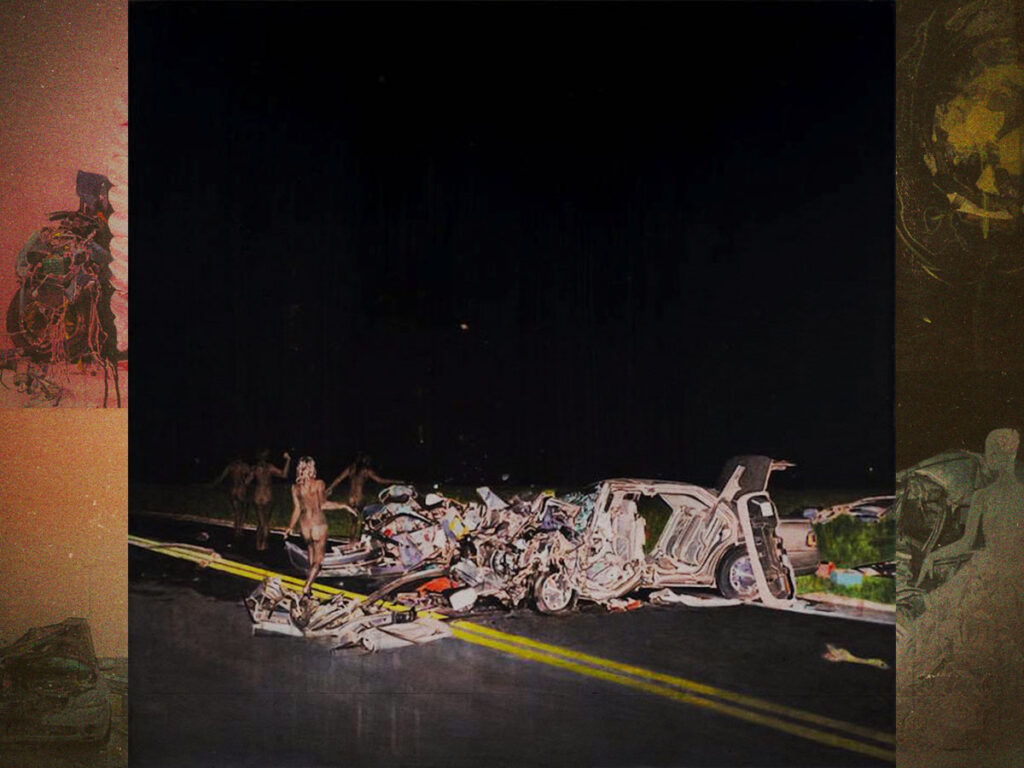
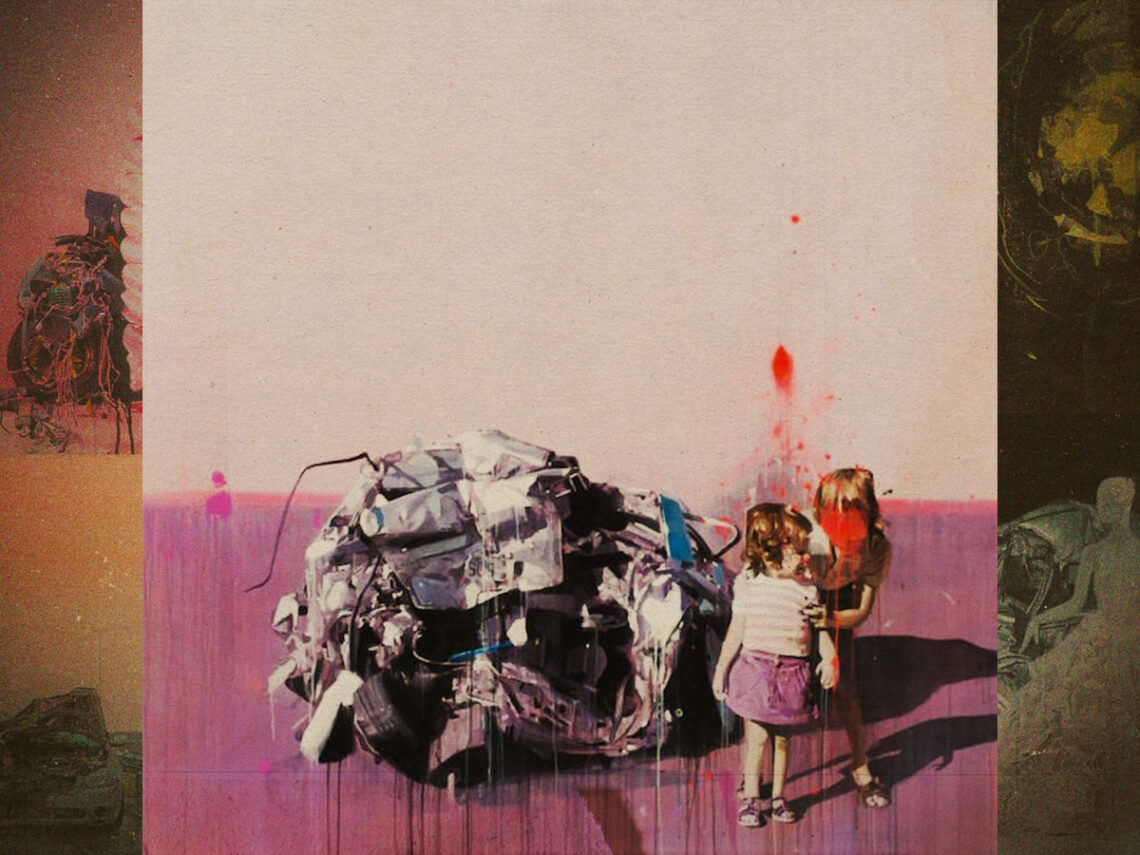
Chilean artist, Fernando Gómez Balbontín, explores similar ideas about our need to confront or at least come to terms with death in his series of paintings, Thoughts About Life and Death. These large, colourful paintings, which depict the wreckage of automobile accidents, are intended to make the viewer reconsider their existence and their relationship to others.
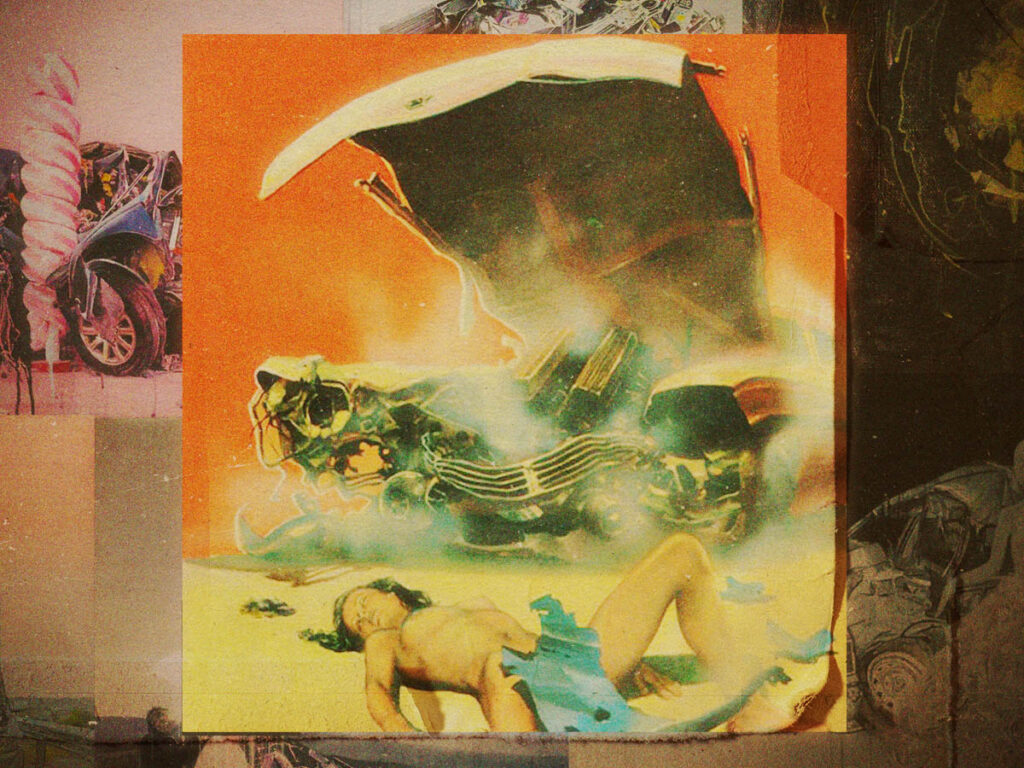
We seem to live in an inevitable nonconformity. We do not accept the uncertainty that arises from our total ignorance about death, and while denying the only certainty that we probably have, we construct a hopeful discourse about a hypothetical future in which it is impossible to stop existing.
The representation of an imaginary on death pretends to rethink life’s real sense, inducing the observer to an act of resistance to the consumption of ideas imposed by a contaminated society.
The carnage shown in his paintings is attended by figures representing our response to death through religion, ritual, procreation, and distraction.
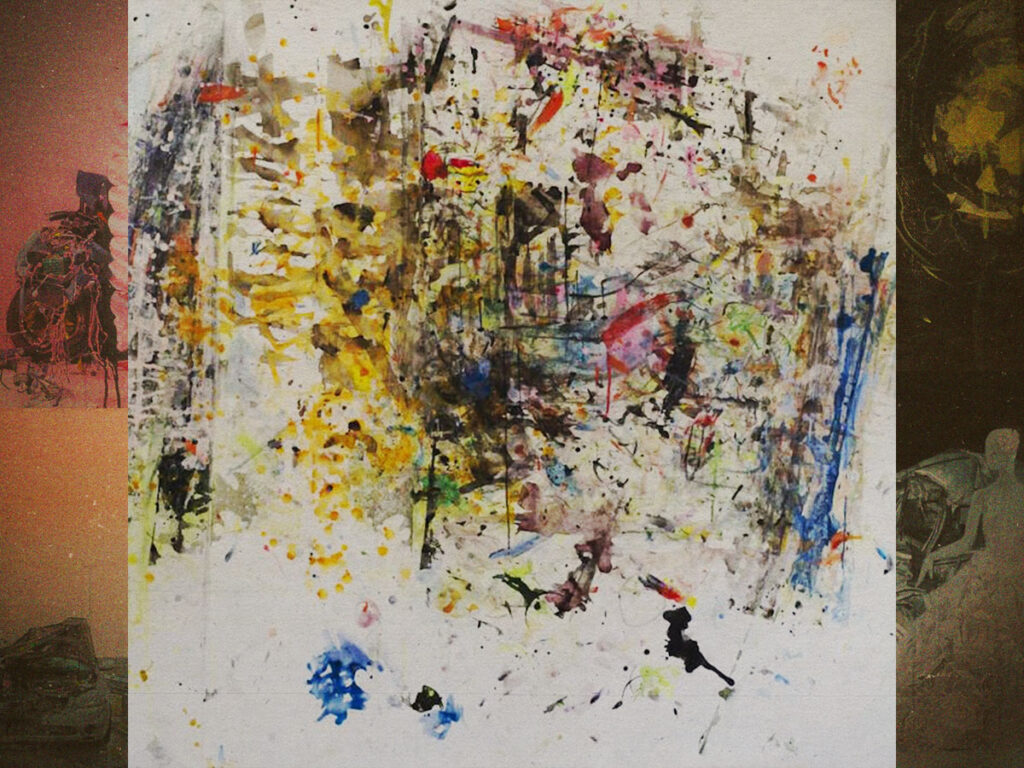
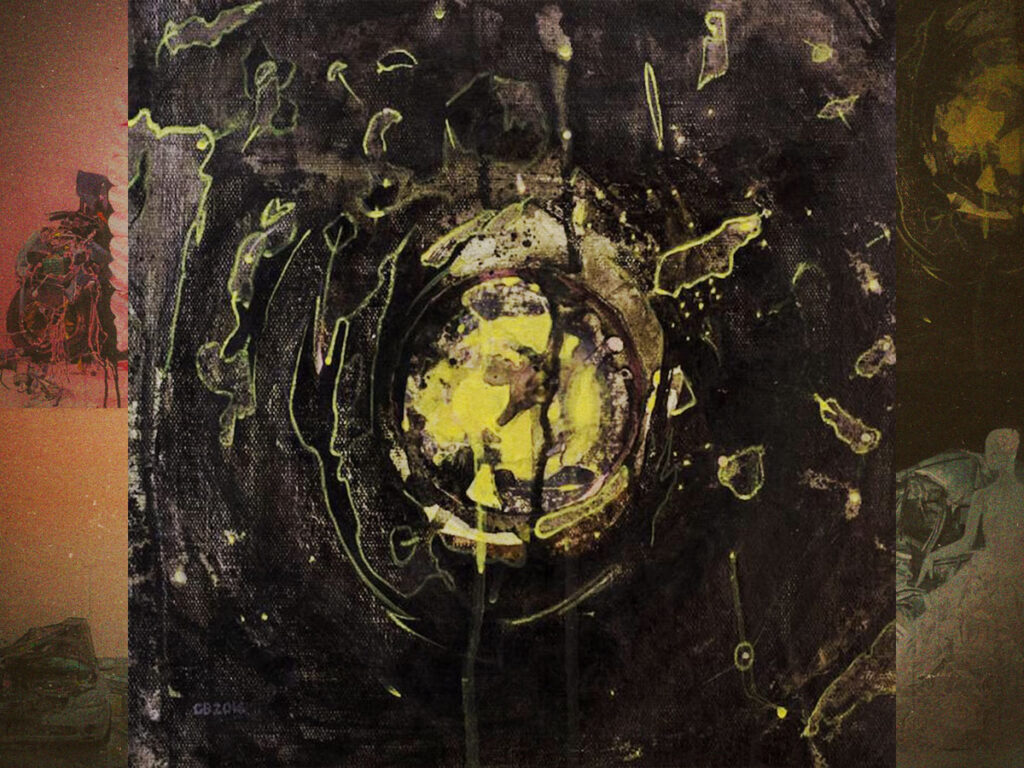
Balbontín was born in Santiago in 1981. He studied architecture at the Finis Terrae University, graduating in 2006, before deciding to take up art as his chosen career. He describes his work as a study of how “society lives”, creating a visual language as a contemplation of death. Most recently, his work has become more abstract, almost atomised, as he explores all existence with his series Todo Existe, which includes the paintings ‘Big Bang’ and ‘Destruction of Shape’.
“Denying death is denying life. So, perhaps it is necessary to understand that tragedy is not the supposed reality of death. Tragedy is about not accepting this possibility and consequently, not having enough time to live.”
Fernando Gómez Balbontín
Thoughts about life and death emerges from the necessity to create a visual language based on the critical representation of contextual realities,” Balbontín says. “The purpose is to build a shape as a consequence of the content, and the result of it is nothing but the register of a thoughtful process”.
Adding: “Through painting I try to build anti-dogmatic situations which represent a critique to a western system (immersed in a consumer society) that probably keeps us in denial of living in harmony with our inherent condition of mortal and spiritual beings.”
See more of Balbontín’s work below.