


New Age Steppers: the post‑punk dub supergroup nobody saw coming
London, 1980: the aftertaste of punk still hung in the air like a cigarette you couldn’t quite put out, and reggae basslines rolled out of basement windows in Brixton like an underground weather system. Squats smelled of burnt toast, Red Stripe, and patchouli; record shops stocked Augustus Pablo LPs alongside wire-bound fanzines with photocopied PiL screeds.
If you hung around long enough, you’d see the same faces drifting between worlds—dreadlocked Rastas leaning against the same sticky bar as peroxide punks, trading knowing nods over the dub playing on the jukebox. It wasn’t “fusion” in the polite, art-school sense—it was a street-level collision of the alienated. From that collision, and from the orbit of one Adrian Sherwood’s fevered imagination, came New Age Steppers: a post-punk/dub organism too weird to live, too perfect to die.
Sherwood was never the kind of producer who sat quietly behind glass. He treated the mixing desk like an unruly instrument—faders slammed, delay cranked to lunatic levels, bass EQ’d until your ribcage rattled. Ari Up, fresh from The Slits and already a chaos merchant of the highest order, matched him move for move. She could howl like a banshee one minute and sound like she was singing from the bottom of a drained swimming pool the next.
In would wander Mark Stewart, Neneh Cherry, Vivien Goldman, and Keith Levene—whoever happened to be within shouting distance and up for throwing themselves into the mix. Everything was about building a sound system for the disenchanted, an accidental supergroup that played in the space between genres and didn’t give a toss if you couldn’t keep up.
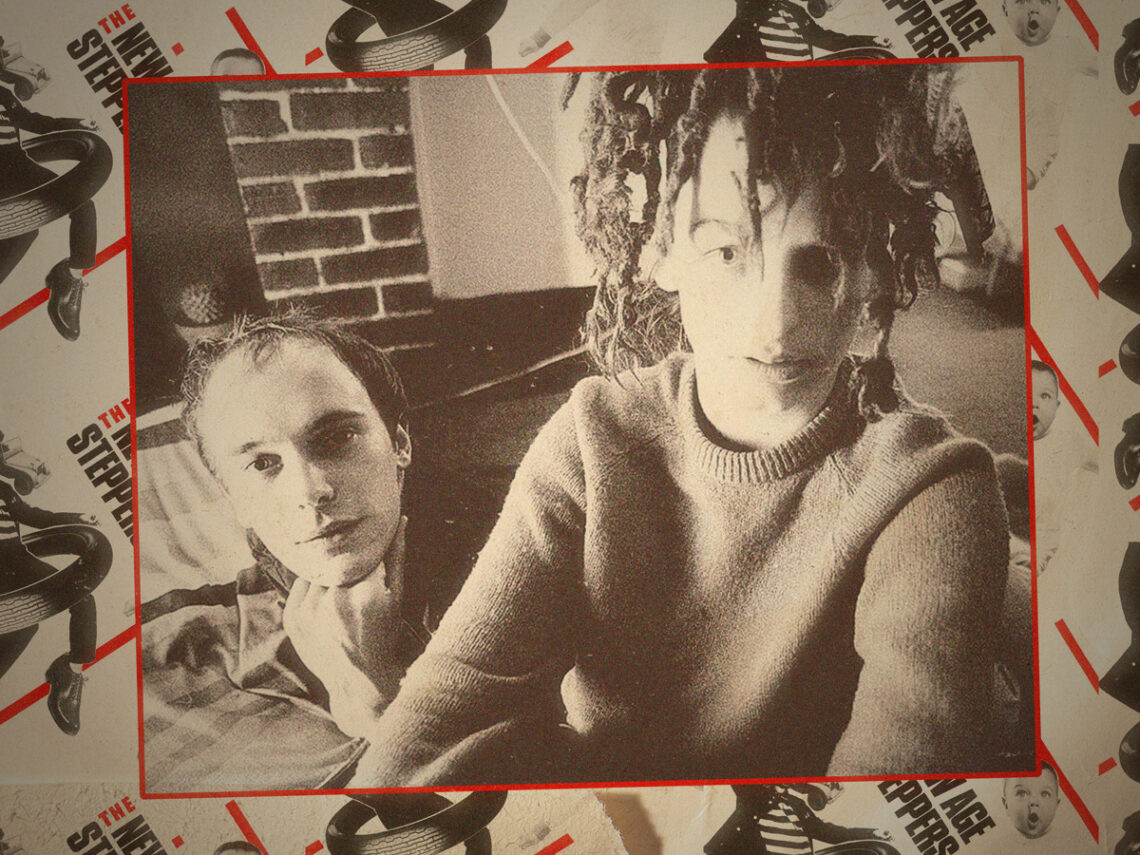
If the New Age Steppers moniker is unfamiliar to you, Mark Stewart of the Pop Group—himself a participant—called the band “the only ever post-punk supergroup”.
New Age Steppers (“stepper” refers to a particular reggae riddim, and is a word in Jamaican patois meaning both dancer and criminal) was more of a long term project helmed by producer Adrian Sherwood and Ari Up, than it was a proper band, with a revolving door cast of musical notables that included the Pop Group’s Bruce Smith, Public Image Ltd’s Keith Levene, a young Nena Cherry, Sounds editor Vivien Goldman, Steve Beresford, Slit Viv Albertine, Raincoats violinist Vicky Aspinall, Rip, Rig + Panic’s John Waddington, and vocalist Bim Sherman.
The foundation of the New Age Steppers sound was provided by Eskimo Fox, Style Scott, Crucial Tony and George Oban, musicians who’d worked with Aswad, Burning Spear, Prince Far I and Gregory Isaacs and extensively with Sherwood. There is a lot of personnel overlap in Adrian Sherwood’s various projects, and it’s difficult to say where one “band” truly ends and another begins, certainly during his early 1980s output.
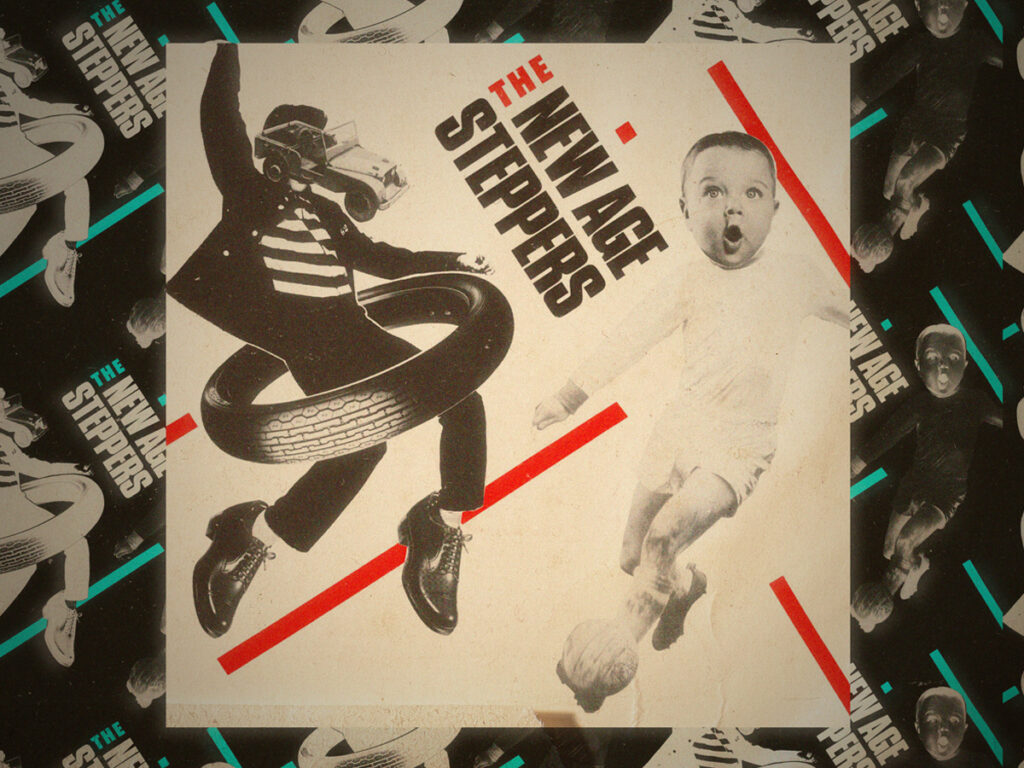
The New Age Steppers’ self-titled debut album is an incredibly trippy musical experience. The music is both spacious and spacey. The haunted vocals are languid and distant, just floating along in the mix. Inventive sound effects that have been sliced, diced and transformed into something you don’t even know what it is anymore. Time and space are distorted. It’s the dark stuff, druggy, even a little scary.
When I first heard it—as part of a cassette only release (which came in a plastic bag with a snap top and poster) titled Crucial Ninety that came out in 1981—it was still a good two years before I would ever hear Jamaican dub, so my idea of the “dub” concept was nearly entirely formed by the first two New Age Steppers albums and a Slits B-side. As a testament to just how far out the sounds were that Sherwood was able to squeeze from his mixing desk when I first started exploring reggae, none of the “proper” JA dub I was finding sounded nearly as weird or as hard as the New Age Steppers or Creation Rebel, and I was initially very discouraged.
But drop the needle on those early Steppers records now and you still get that delicious vertigo—like you’ve stumbled into the wrong club at the wrong hour and can’t quite tell if you’re welcome or not. A bassline creeps in, all menace and low-end seduction, while the percussion clatters like it’s been recorded in an abandoned factory. Voices drift through the fog—sometimes angelic, sometimes threatening—before evaporating into a cloud of echo. It’s reggae stripped for parts and rebuilt by people who read The Face in the bath and talked revolution over lentil stew. The New Age Steppers weren’t trying to cross over; they were broadcasting on a pirate frequency, and if you happened to catch the signal, you were in.