


‘The Last Sacrifice’: Rupert Russell’s New Film Examining the Murder That Inspired ‘The Wicker Man’
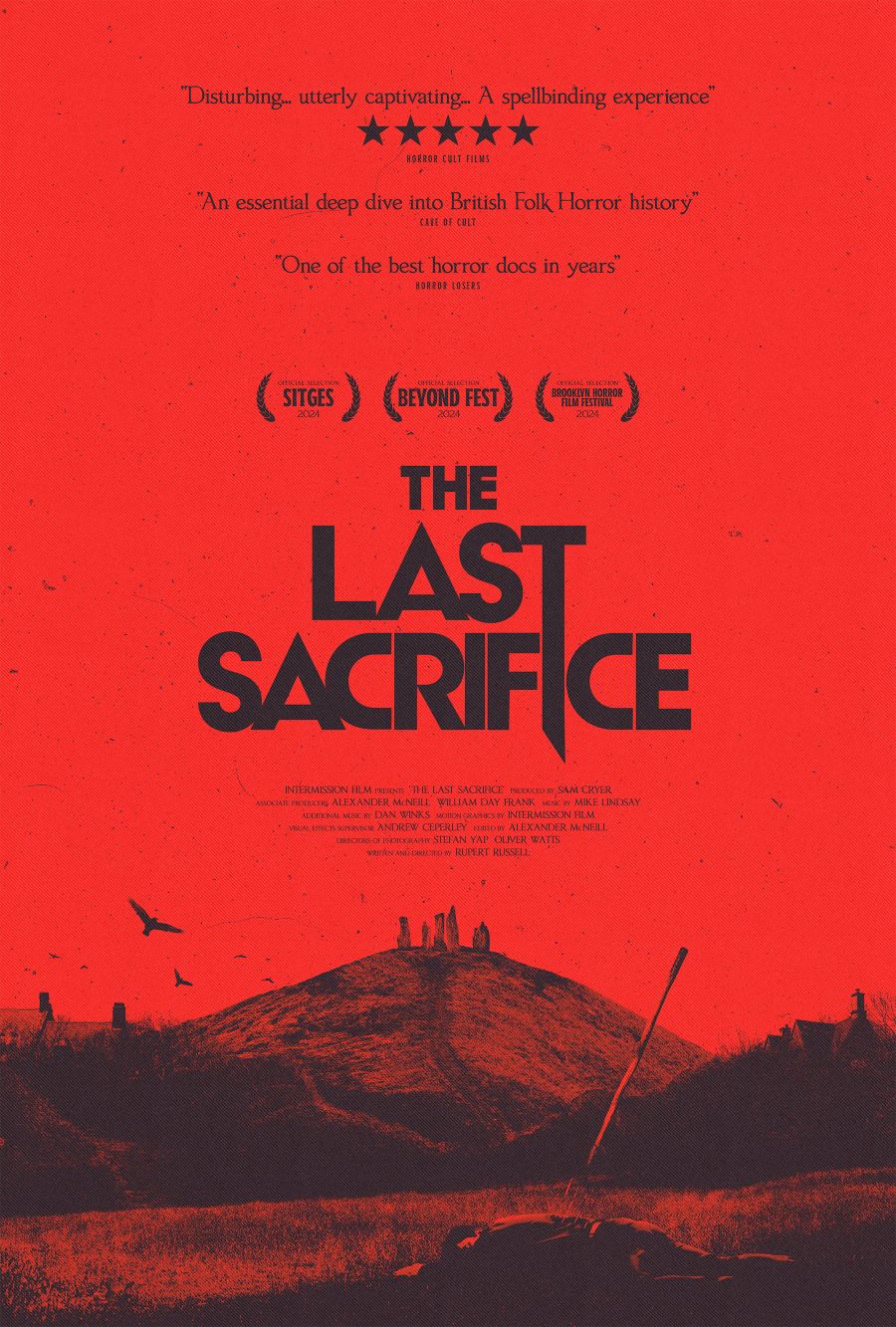
Scene: Lower Quinton in South Warwickshire, England. Population 493. A quiet village, settled in its ways, where everyone knows each other and strangers are not welcome–or so it seems.
On the morning of Saint Valentine’s Day 1945, Charles Walton a seventy-four-year-old farm laborer left his home at Lower Quinton to begin his day’s work. Walton was employed by Alfred Potter at Firs Farm. He was tasked with cutting down hedges at a field on the slope of Meon Hill. It was a cold morning. Mist slowly dispersed as the sun warmed the land. There had been a bad harvest in the previous year, it was hoped this summer would bring a better yield.
Potter later claimed he saw Walton working in his short sleeves at around lunchtime. He said Walton had an hour’s worth of hedge still to trim. He watched as Walton hacked away at the branches with his trouncing hook.
When Walton’s adopted niece Edith Walton returned from her work that night, she was surprised to find her uncle not yet home. Edith knew Walton did not like working late as he suffered from arthritis. She decided to go and look for her uncle. She enlisted the help of a neighbor, Harry Beasley, and the farmer Alfred Potter.
Climbing up Meon Hill, the three discovered Walton’s body. He had been brutally murdered. His trouncing hook was embedded in his neck. His blood soaked the ground. A pitchfork had been thrust through his head, puncturing eye and cheek. His trousers were undone. His shirt and jacket open. A large cross had been carved on his chest. It was later said natterjack toads were placed around his body. Walton’s death looked like a ritual sacrifice.
Charles Walton was a quiet man. He was feared by some and considered odd by others. It was said he could cast an evil eye which could blight crops and kill cattle. They said he could also talk to animals, tame wild dogs, and call birds from the sky into his hand. This led to the whispered accusation Walton was a witch.
Walton’s murder attracted the attention of the London press. The countryside was a remote, foreign land to those denizens of the city, who tended to view country folk as backward, filled with superstition, strange individuals who practiced pagan rituals and witchcraft.
The local constabulary were baffled by Walton’s murder. Scotland Yard was approached for assistance. On February 16th, Chief Inspector Robert Fabian, the Yard’s most successful detective, was dispatched to solve the crime.
Fabian decided to interview all of the inhabitants of Lower Quinton. However, he found the local residents taciturn and unwilling to cooperate with his investigation. He also discovered the only other murder to have previously taken place in the village had been in 1875 when a young woman Ann Tennant was similarly slaughtered with a pitchfork by a farm laborer James Heywood. Heywood claimed he had killed Tennant because she was a witch who had cast spells against him.
The ritualistic nature of Walton’s murder intrigued academic and Egyptolgist Margaret Murray. She traveled to the village to make her own inquiries. Murray was an expert on the occult and believed Walton’s death was a blood sacrifice carried out by a coven of witches.
Fabian believed he knew the perpetrator of Walton’s murder, but he had insufficient evidence to make an arrest. He returned to London. Walton’s murder remains unsolved to this day.
In 1970, Fabian wrote about Charles Walton’s murder in his memoir The Anatomy of Crime:
I advise anybody who is tempted at any time to venture into Black Magic, witchcraft, Shamanism – call it what you will – to remember Charles Walton and to think of his death, which was clearly the ghastly climax of a pagan rite.
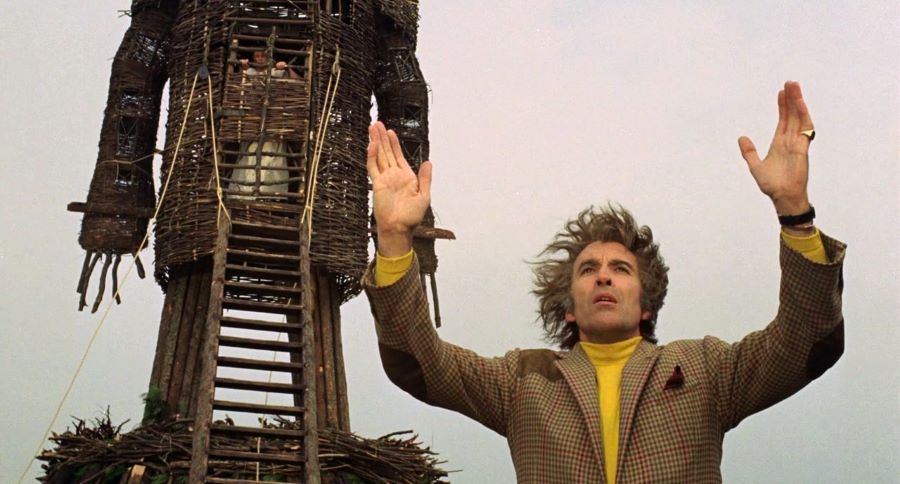
So begins Rupert Russell‘s excellent documentary film The Last Sacrifice, which examines the events surrounding Charles Walton’s death. The film explains how this bloody murder in 1945 unleashed a new genre called folk horror leading to a slate of books and films like Plague of the Zombies, The Blood on Satan’s Claw, and most famously The Wicker Man.
Russell is an award-winning director and writer best known for his powerful factual documentaries like Freedom for the Wolf (on the rise of illiberal democracies) and Price Wars (an investigation into the financial forces that fueled the global chaos of the 2010s). A film on ritual murder and the occult may seem a bit leftfield but Russell has crafted an intelligent and beautiful five star film which weaves classic horror film clips with archive footage to propel his narrative. Highlighting the sometimes uncanny similarities between fact and fiction on screen and page. His film also examines the rise of witchcraft in British society during the 1960s and 1970s and our need to make sense of the unknown. Russell’s The Last Sacrifice is destined to become a classic.
I contacted Russell to find out about his latest film and the story behind The Last Sacrifice.
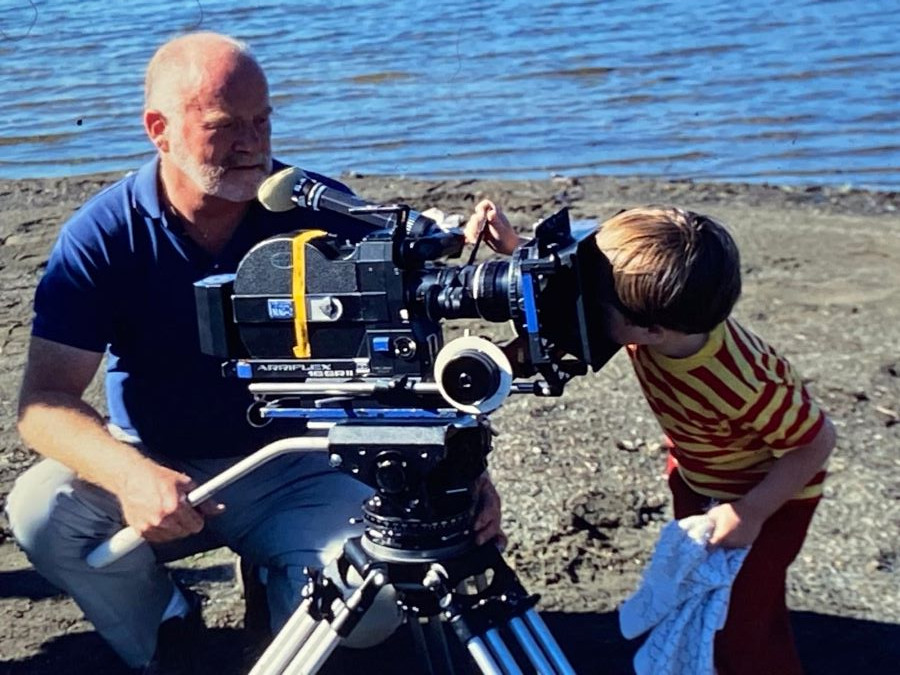
Portrait of the artist as a child: A young Rupert Russell on location with camera operative Dick Bush, who worked on ‘Blood on Satan’s Claw.’
Where did the idea for The Last Sacrifice come from and how did you find the connection with The Wicker Man?
Rupert Russell: Embarrassingly, I had only watched The Wicker Man for the first time in 2022. I did not see it as a horror film. To me, it was a documentary of what living in Britain was like over the past several years. The madness of Summerisle was indistinguishable from the madness of the British isles. That climatic scene on the mountaintop, where Sgt. Howie pleads for his life, begging them to see that “killing me won’t save your apples,” only to be met by the collective shrug his Lordship gives, “I know it will,” for me has been an almost daily experience.
Self-destruction is by no means a uniquely British trait. But there is something about that pairing of aristocratic idiocy and condescension paired with an irreverent pantomime silliness that is utterly unique. We seem to have forgotten – or rather, repressed – this schizophrenia lately. I feel that The Wicker Man, and so many great folk horror films of the ‘60s and ‘70s, not only were all too aware of it, they recognised its destructive nature.
I was telling a close friend all this when he stopped me and said, ‘well, you know there was a real murder this was all based on?’
What was this murder and who was Charles Walton?
RR: Charles Walton was a 74 year-old farm labourer who, on Valentine Day, 1945, was discovered in a field in the Cotswolds with a pitchfork in his face and a bellhook buried in his throat. The scene was so grizzly that the Warwickshire police called Scotland Yard requesting help, and they sent none other than Britain’s most famous detective: Robert Fabian of the Yard. When he arrived, he described the murder as a “slaughterhouse horror”. But despite his own investigation, and years and years of further attempts by the local police, no one was ever charged with the crime.
The Last Sacrifice explores the different theories that sought to explain just how what happened to Charles Walton that day. Although just is important is the context around each theory, why it emerged, and why it was believed.
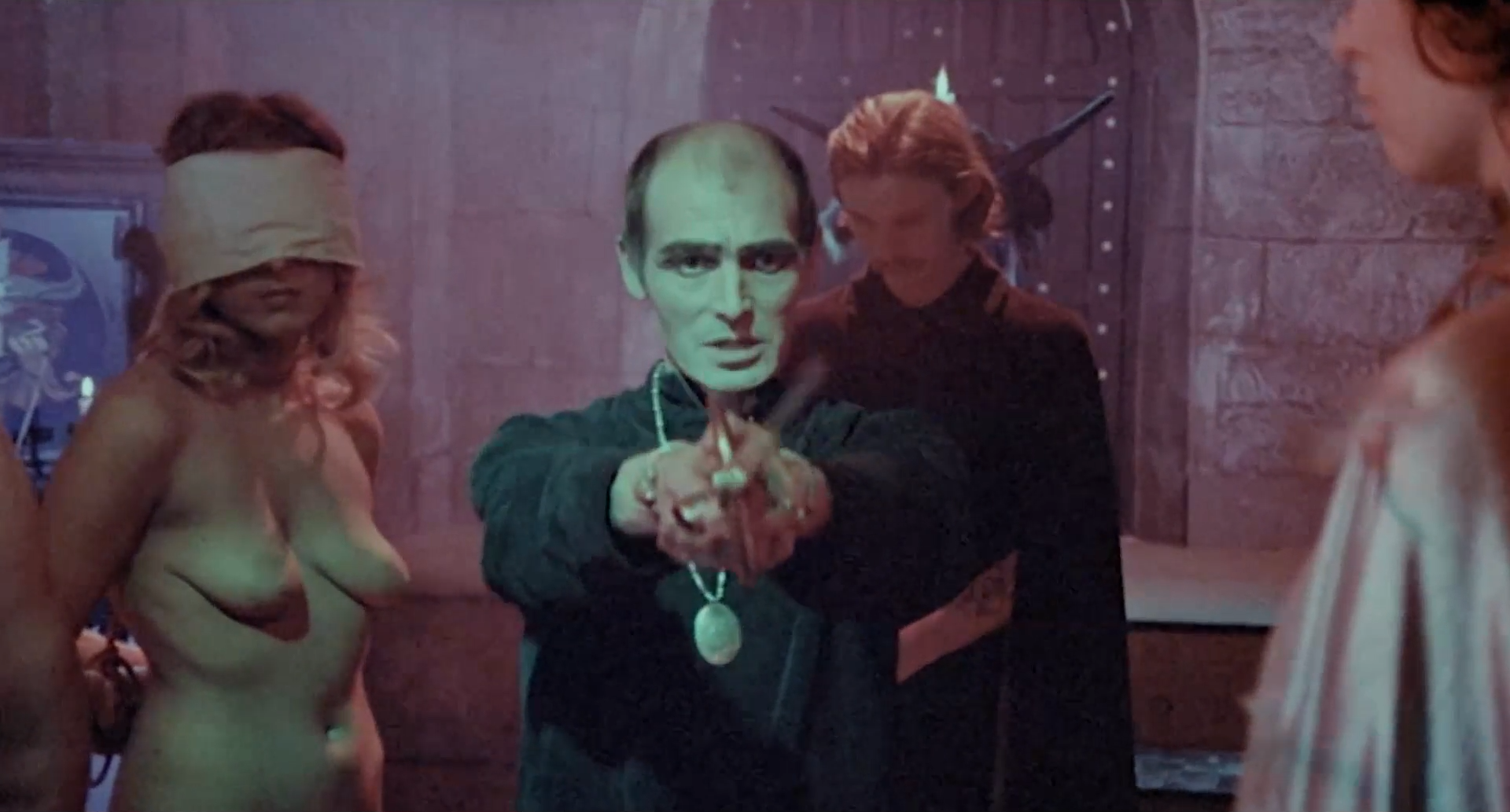
Archive footage of High Priest Alex Sanders as featured in ‘The Last Sacrifice.’
You make the connection between Walton’s murder and the rise of folk horror, witchcraft, and to an extent changes in society, can you talk about this and how much does your film reflect Britain in all its strange and wonderful complexities?
RR: The folk horror movies of the late ‘60s and early ‘70s are the result of a collision of cultural forces. They’re an incoherent mishmash of all sorts of weird and wonderful things that were happening in Britain at the time. Authors, screenwriters and directors joined the dots between the Walton murder, the rise of Wicca, the counter-culture, the hippie movement, women’s liberation, the sexual revolution, class war and so much more. They all kind of swirled together in a technicolor vortex around the figure of the witch. This figure became a kind of organizing metaphor for all that was being torn up and a warning of the new world that might be around the corner.
But out of this chaos, was a clear-cut genre with its tropes, rules, and message. This is most clear when we compare the British folk horror films to the American ones that came later. The British ones all feature a member of the new professional class – a teacher, doctor, or policeman – who goes to a strange English village. They’re the victim of a conspiracy between the peasantry and an aristocrat who commands their loyalty through pagan gods or voodoo magic. They are paranoid tales of a reactionary counter-revolution, where [Labor Prime Minister Clement] Atlee’s new social democracy will be rolled back to a feudal time. In contrast, the American films are about going somewhere foreign and are lead by naive tourists, such as An American Werewolf in London or Midsommar. They encounter not a class-conflict, but a cult: an ideology taken to a dangerous extreme. When you consider that the Americas are the place we dumped our own religious nutters in the 17th and 18th centuries, their fears may well be quite rational.
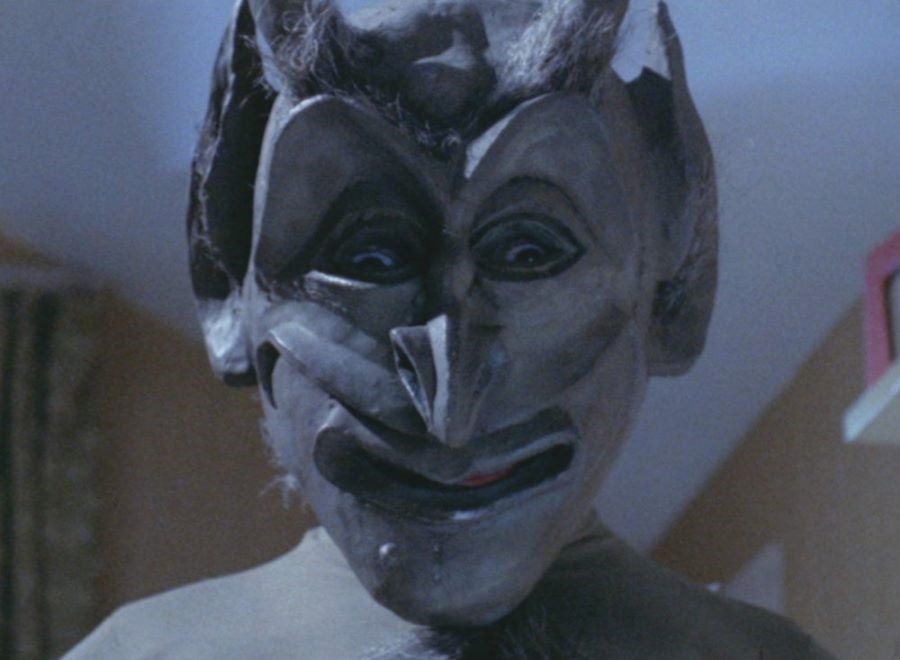
‘Penda’s Fen’ – written by David Rudkin, directed by Alan Clarke.
What are your own favorite Folk Horror films?
RR: I was ignorant of the genre when I started making the film and it was a true joy to take a compressed crash course. My favorites would be Penda’s Fen, The Plague of the Zombies, Twins of Evil, and Demons of the Mind.
Do you think social media has increased the proliferation of urban myths? Are urban myths or folklore necessary for people to give meaning or narrative to their lives?
RR: This is precisely the plot of the most iconic ‘urban folk horror’ films, Candy Man. And a weekly feature of The X-Files. It’s easy to forget just how paranoid the 1990s were, and just how much popular culture coming from America was laced with secret plots over the federal government, aliens and Bigfoot. I have a feeling that in a few decades time, when we look back at this social media age, we will conclude it was a massive net-zero. Conspiracy theories, beliefs in the occult and folklore are found in every age. In fact, as soon as photography was invented the Victorians used it not to capture the real world, but to manufacture images of fairies dancing on roses. The compulsion to live in a fantasy world is not unique to Summerilse nor the social media age, but a defect of the human condition.
Where can we see The Last Sacrifice?
RR: We are currently on the festival circuit and have quite a few screenings coming up this year and next. We’re in talks with a number of distributors but I can’t say anything about that or I’ll get into trouble. Follow our social pages.

‘The Last Sacrifice.’
Watch a teaser for ‘The Last Sacrifice’ here.