


The Subversive Pop Perfection of the Fun Boy Three: Live in Concert, 1983
The death of one form brings forth life in another.
Something was going wrong. It wasn’t just with the band, it seemed to be happening everywhere across the country. The Specials were on tour promoting their second album More Specials. It should have been a happy time. But in every city they visited, every gig they performed the tension, the anger on the streets and in the concert halls was becoming more and more apparent. There was a feeling the country was falling apart.
In 1979, the newly-elected Conservative government gave a promise to “heal” the nation “and sow peace” after the failure of Labour’s policies in 1970s which had given rise to three-day weeks, power cuts, endless strikes, a “winter of discontent,” where the dead were left unburied and the garbage piled-up on city streets. But as soon the Tories were elected, they turned true to form crucifying the poor and helping the rich. They closed down factories, destroyed hope, and created mass unemployment. The promise of a better future and the opportunity to achieve was only intended for a select class.
Jerry Dammers the Specials co-founder, producer, chief song-writer and keyboard player thought the new Prime Minister “Margaret Thatcher had apparently gone mad”:
…she was closing down all the industries, throwing millions of people on the dole. We could actually see it by touring around. You could see that frustration and anger in the audience. In Glasgow, there were these little old ladies on the streets selling all their household goods, their cups and saucers. It was unbelievable. It was clear that something was very, very wrong.
While there was something wrong going on in the country, there was also something very wrong with the Specials. When the band got together to record their next single “Ghost Town” everyone stood “in different parts of this huge room with their equipment, no one talking.” Dammers left the recording twice in tears seeing his hope for the band falling apart.
As fellow bandmate Neville Staple recalled the Specials ended “differences of opinions”:
…some wanting to lead things in one direction, some in another. I guess we were such a mixed bag of personalities, with various skills and talents, we just wanted different things and couldn’t agree enough to stay together.
It was probably the wrong move but Staple took “the bull by the horns and got stuck in and just kept going…[..]..never stopped.”
In the summer of 1981, the Specials released “Ghost Town.” It became the band’s biggest hit spending three weeks at number one in the UK Charts. The song reflected the sense of despair that had spread across the country as riots erupted in London, Liverpool, Birmingham, Manchester and Leeds. The country was burning. At the moment of their greatest success, the Specials split.
Staple teamed-up with his fellow bandmates Lynval Golding and Terry Hall. and formed a new band–the Fun Boy Three.
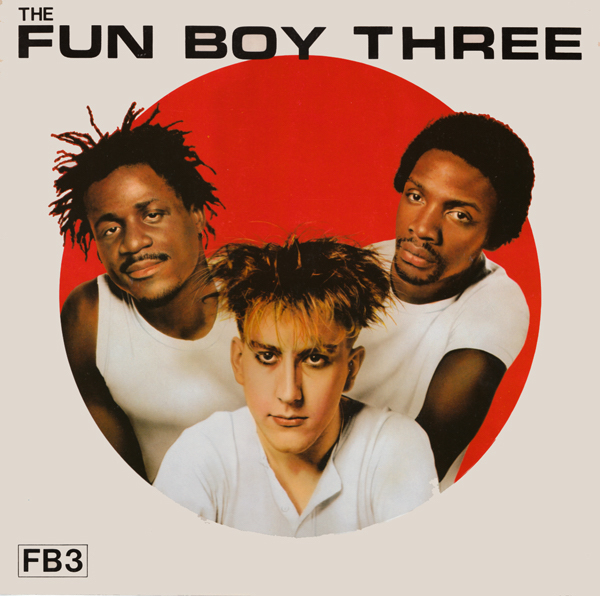
I’ve thought it before. but I will say it here: Terry Hall is one of the greatest recording artists of the past forty years. His back catalog has an unequalled range and genre-bending diversity from ska to indie pop and art rock to soulful introspective songs and some of the most daring collaborations of the past wee while. When Hall first joined the Specials he felt he had been given “a voice” and the chance to express himself. Then when the Specials fell apart and he teamed-up with Staple and Golding, he felt he was back in the schoolyard and could enjoy the pleasure of making music afresh.
The trio formed a perfect partnership. Hall with his all-conquering vocal was an able counter to Golding’s dextrous, sharp, upbeat guitar-playing and Staple’s ska-infused rhythms and deep resonant vocals. Together they produced two great albums, their eponymous debut and the classic Waiting produced by David Byrne. While the Specials had shown their commitment to politics and social commentary, the Fun Boy Three were far more subversive in presenting strong political comment through high-end danceable pop tunes. The band’s debut single “The Lunatics (Have Taken Over the Asylum)” was a powerful protest anthem suitable for every generation that cut deep from its opening lines:
See a clinic full of cynics
Who want to twist the peoples’ wrist
They’re watching every move we make
We’re all included on the list.
Next up came the Ella Fitzgerald song “‘Tain’t What You Do (It’s the Way That You Do It)” written by Melvin “Sy” Oliver and James “Trummy” Young. This famous jazz number was reinvented as a ska pop song with backing support from Bananarama. (The FB3 returned the compliment by singing backing vocals on Bananarama’s single “Really Sayin’ Somethin’.”) The success of the band’s singles and then the debut album allowed Staple, Golding, and Hall some freedom to create.
Commercial success takes a lot of pressure from the band. There is tension among us but we can talk about it, and we try to avoid each other as much as possible. With The Specials tension split us up; but I think all groups should eventually. Changing helps the progression of music like doing cover versions to take music further, the way we did “T’Ain’t What You Do…” with Bananarama. Unlike Phil Collins, his version of “You Can’t Hurry Love” took music back about ten years.
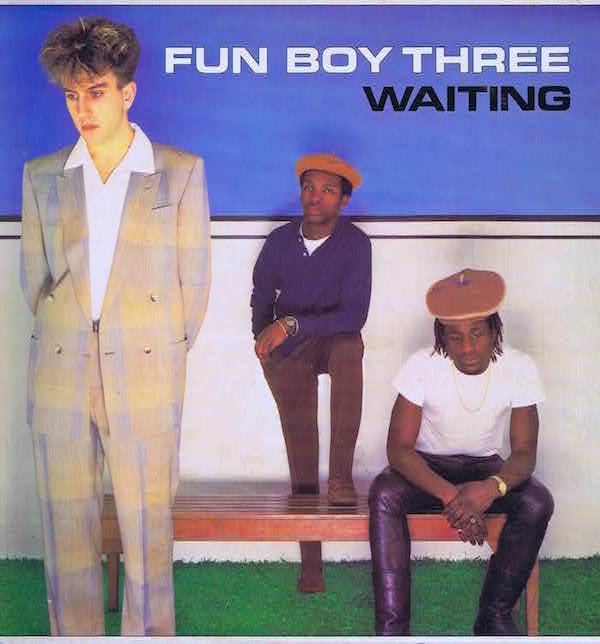
Fun Boy Three followed-up their debut album with Waiting a work of brilliant, beautiful, dark, disturbing, thrilling pop perfection. From the misdirection of the unexpected opening track (a cover of the theme music to Murder, She Said the movie version of Agatha Christie’s novel 4.50 from Paddington starring Margaret Rutherford) which segued into the scathing ire of “The More I See (The Less I Believe)”:
The more that I see, the less I believe
The barbed wire fences have replaced all the trees
The houses of God are full of sinners every week
Praying for forgiveness for those they leave to bleed
The playwright Joe Orton once said that comedy is a double-edged sword with which to make a moral point. The audience laugh at the joke and later understand what the joke meant. It was the same with the Fun Boy Three’s music–fast, exciting pop undercut by powerful social commentary. Like “Farmyard Connection” which was about “surviving life without a job and unable to go on the dole, so you grow weed to sell, while dodging a corrupt police drug squad” who end up nicking your haul anyway. Or, “Going Home” about immigrants invited into the UK only to be treated as second-class citizens.
Of course, there were also the classic pop songs like “The Tunnel of Love” and “Our Lips Are Sealed” (which was written by Hall and Jane Wiedlin and was a hit for the Go-Gos). Yet, it’s the album’s last track Well Fancy That” which puts Waiting into the classic album list.
The song details Hall’s horrific sexual abuse as child by a school teacher.
You took me to France
On the promise of teaching me French,
We were told, to assemble, to meet up at 10,
I was 12 and naive,
You planned out our route…..
We found the hotel, checked in to a room and unpacked,
It had been a long day, you said “let’s hit the sack”,
As I changed, I could feel your eyes watching me,
I crept into bed, you pretended to read,
The lights went out, I fell asleep,
Woke up with a shock, and your hands on me,
I couldn’t shout, I couldn’t scream,
Let me out, let me dream,
I turned onto my side,
I laid there and cried,
On my first night in France,
Well fancy that,
You terrified me, I just wanted to sleep
Well fancy thatMorning came, light shined through,
I left France, I arrived home,
The hedge that you dragged me through
led to a nervous breakdown,
If I could have read, what was going on inside your head,
I would have said, that I was blind to your devious mind,
There’s no excuse, but your abuse, and the scars that it leaves,
Where do you draw the line,
On school trips to France,
Well fancy that
You had a good time
Turned sex into crime
Well fancy that.
Hall sings the song with little emotion against a discordant upbeat almost carnivalesque French cabaret music. It sounds almost playful, like Nick Cave’s later song “The Carny,” but turns truly horrific when the meaning of the words sink in.
After two years, the Fun Boy Three split up. Hall moved onto a completely different genre of music with his indie guitar band The Colourfield. Staple teamed up with Ranking Roger of the Beat to form Special Beat. Golding went to work with Robert Wyatt, the Pogues and others before forming Gigantor and then reuniting with Staple and Hall in the Specials.
During the promotional tour for Waiting, Fun Boy Three appeared on a special televised concert for the BBC’s Old Grey Whistle Test–a series the BBC should really bring back. Introduced by music journalist David Hepworth, the Fun Boy Three showcased a selection of tracks from Waiting plus a couple of past singes including one from their time in the Specials.
Track Listing: “The More I See (The Less I Believe),” “The Pressure of Life (Takes the Weight Off the Body),” “Going Home,” “Things We Do,” “Summertime,” “The Alibi,” “Our Lips are Sealed,” “The Tunnel of Love,” “We’re Having All the Fun,” “Gangsters,” and “‘Tain’t What You Do (It’s the Way That You Do It).”