


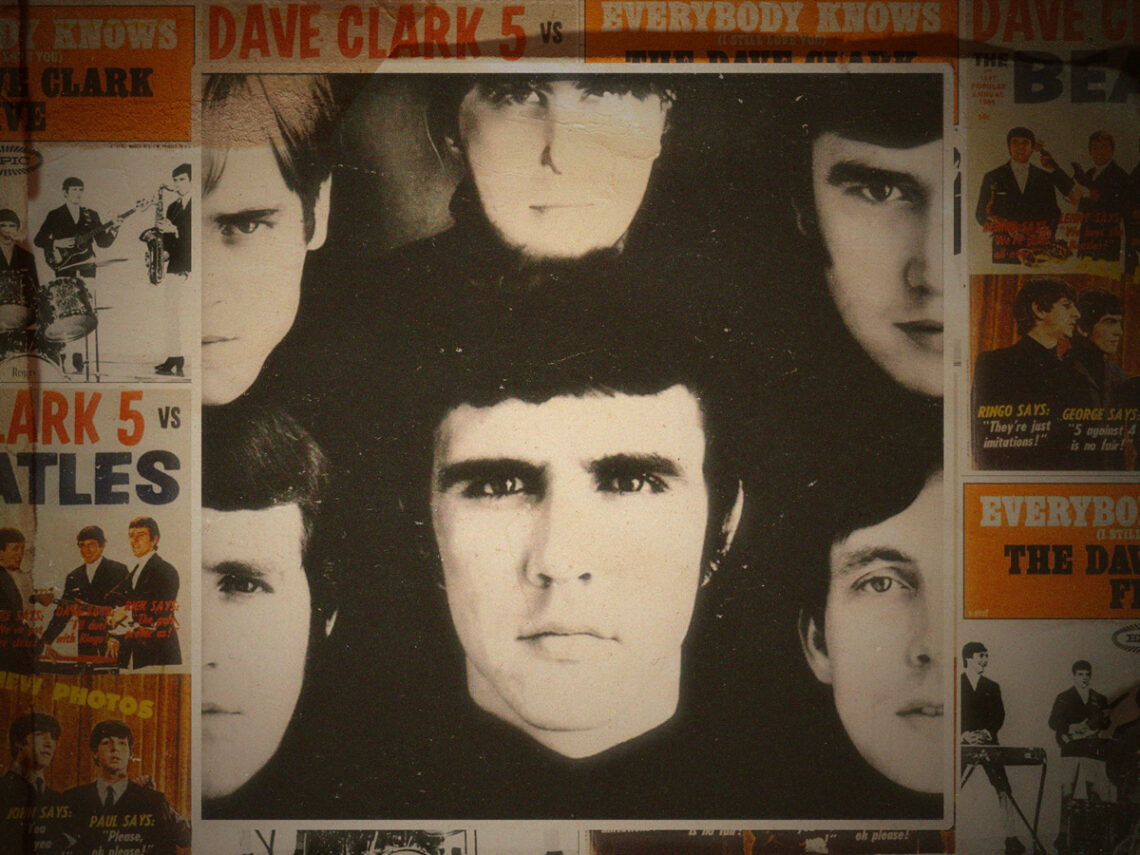
The Dave Clark Five were once bigger than the Beatles—so where did they go?
Although they were one of the top selling pop acts of the British invasion, just under The Beatles with sales of over 100 million records, The Dave Clark Five is little-remembered today.
Despite a (belated) 2008 induction into the Rock and Roll Hall of Fame and the airing of a documentary about them several times on PBS, if you are much younger than say 60, then chances are that you’ve never heard of them, or heard any of their music.
Which is really too bad, because they were an awesome band. Their sound was exciting. The guitars buzzed, the vocals were frenzied, and the drummer (Dave Clark) was a right thumper. Lead singer Mike Smith was a great frontman and songwriter. They weren’t exactly that hip, I will grant you, but most rock snob aficionados of 1960s garage bands will come around to The Dave Clark Five eventually—sometime after exhausting the Paul Revere and the Raiders catalog down to the last B-side, I would imagine—but the civilian, the man on the street? Nope, no idea who you are talking about.
Dave Clark? The name might ring a bell, but they think that maybe Dick Clark had a band, or something.
Suffice to say that this wound—the poor decision that would, for all intents and purposes, erase them from pop culture history (or at least see their career summed up as I am doing it here)—was self-inflicted. Unlike most groups, The Dave Clark Five owned their own masters. They weren’t obliged to go along with just any company that wanted to release their music on CD; they (Dave Clark in particular) had complete control and sat on the catalogue, hoping for the biggest pay-off they could get. But Clark apparently waited too long.
Astonishingly, you couldn’t purchase the music of The Dave Clark Five on any format from 1975 to 1993.
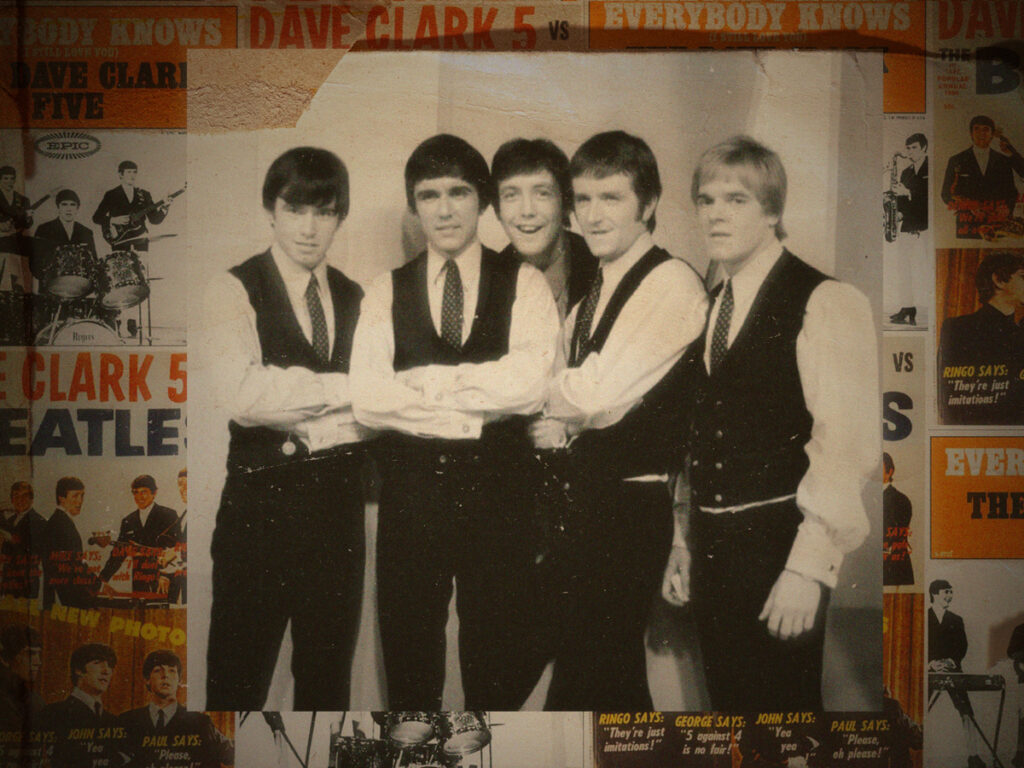
Harold Bronson, one of the co-founders of Rhino Records wrote about “what happened” to the Dave Clark Five on Huffington Post. He ably gets across how “Who are these guys?” one’s first exposure to the DC5 might be today.
Bronson said, “To a younger pop music fan, familiar postwar newsreel footage of hysterically screaming girls and a beaming boy band lip synching to a soundtrack of unfamiliar songs might lead one to suspect that the program is a spoof documentary of a fake group like the Rutles. Although the Dave Clark Five were a real group that had more hits than bands like the Kinks, the Animals and the Yardbirds, why are they less-well remembered?”
Bronson goes on to answer this question at length in his essay Dave Clark’s Miscalculation, explaining: “Dave hadn’t realized that by keeping the records out of the stores for nearly twenty years, he diminished their value. Oldies radio programmed less of the hits, as they were not available to the stations. Similarly, the records did not get exposed in other media like movies, TV shows, and commercials”.
Adding, “He also was insensitive to music fans who wanted to hear the records: some wore out their vinyl copies, others replaced their turntables with CD players. Whatever residual presence the Dave Clark Five records had, had dissipated, and much of the band’s great music faded from memory. Record fans might still remember ‘Glad All Over’ and maybe ‘Catch Us If You Can’, but how many can recall the top ten hits ‘Because’, Can’t You See That She’s Mine’, and ‘Over and Over’?”
For younger fans stumbling across old footage of the band, Bronson said, the whole thing could easily look like a spoof: a sea of screaming teenagers, a slick group miming along to songs you’ve never heard. Almost like The Rutles, except it wasn’t a parody – it was a genuine hit-making machine that had notched up more chart success than the Kinks, the Animals, or the Yardbirds.
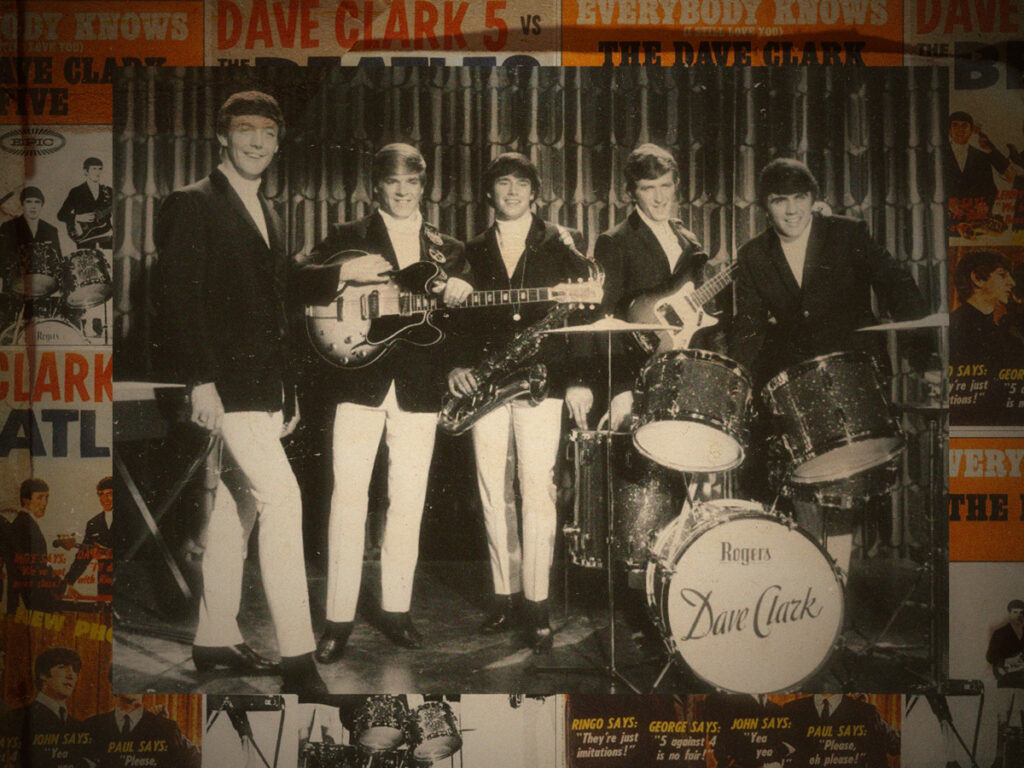
So why didn’t their reputation stick? Bronson puts it squarely on Clark’s decision to keep the records locked away:
- By keeping the music out of shops for nearly 20 years, the band’s visibility tanked.
- Oldies radio played fewer of them, since the tracks weren’t accessible.
- Films, TV, and adverts – the usual ways a band’s legacy keeps ticking over – had nothing to license.
- Meanwhile, fans who wanted to hear them wore out their vinyl copies or moved on to CDs, with nothing to replace them.
As Bronson bluntly put it, whatever presence they had left had simply fizzled out. A few people might still recall ‘Glad All Over’ or ‘Catch Us If You Can’, but big hits like ‘Because’, ‘Can’t You See That She’s Mine’, and ‘Over and Over’ were all but wiped from the collective memory.
By the time Clark did finally agree to reissues in the 1990s, the damage was already done. The band’s absence from the marketplace meant they’d missed two full decades of rediscovery. Unlike The Beatles or The Rolling Stones – whose catalogues were endlessly repackaged, played on radio, and embedded in film and television – The Dave Clark Five became a ghost band, remembered dimly, if at all.
It wasn’t just about money, then. It was about cultural presence. Music history tends to favour those who stay visible, even if the records themselves don’t sell in huge numbers. For the DC5, being locked away in a vault for so long meant their moment in the spotlight simply faded into the background noise.
In the end, The Dave Clark Five serve as a curious cautionary tale. They had the songs, the sales, the screaming fans—all the ingredients to be remembered alongside the greats of the ’60s. But by trying to hold out for the perfect deal, Clark ended up dimming his own band’s legacy.
It’s ironic, really: a group that once stood shoulder to shoulder with the Beatles in record sales is now more of a trivia question than a household name. And yet, listen back to their catalogue today – when you finally can – and you’ll hear just how alive, loud and gloriously energetic they were. Proper “buzzsaw pop” at its best. Maybe not the hippest band of their time, but definitely one that deserved more than to be filed away and forgotten.