


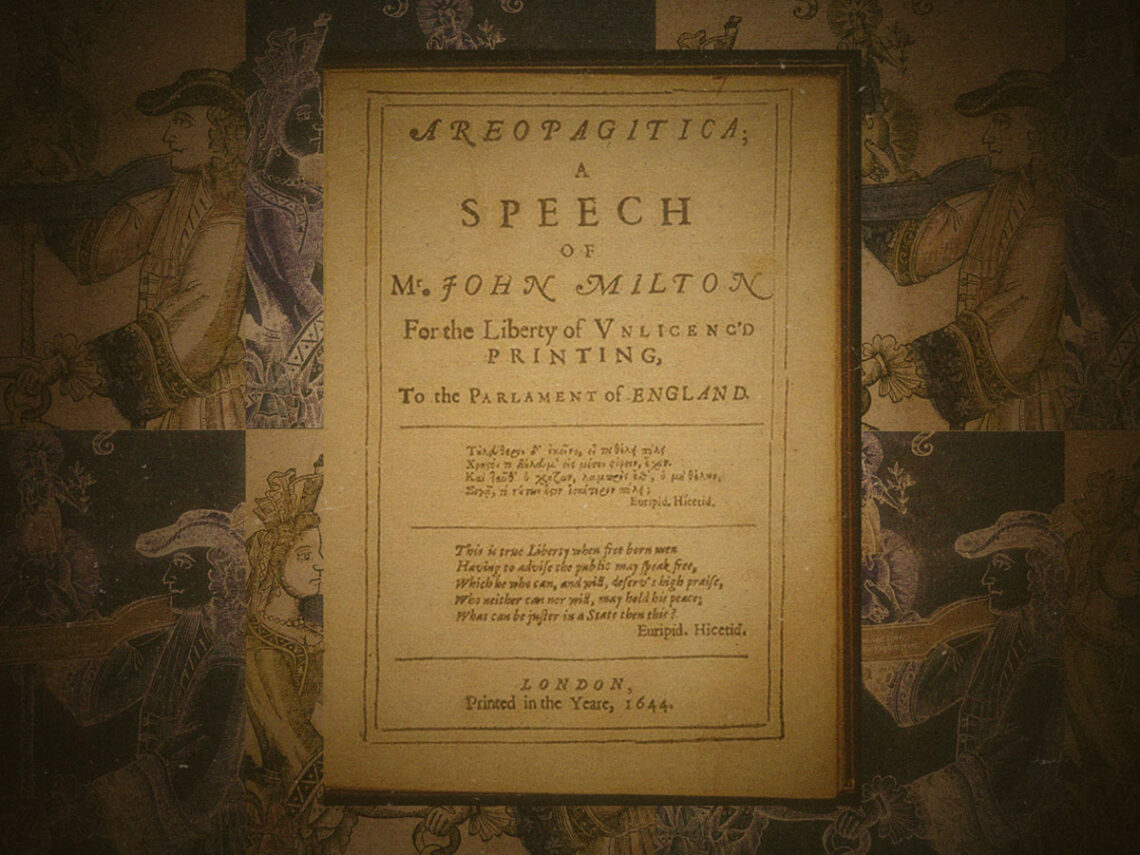
‘Areopagitica’: The first book ever banned in Britain
There’s a hill in Athens called the Areopagus.
It doesn’t look like much today, especially when it’s almost directly northwest of the Acropolis of Athens. Which means there’s absolutely something that can take one’s attention away from it, one doesn’t know precisely what they’re looking at. However, you probably won’t have to look that fucking hard to discover exactly what you’re looking at when you see this otherwise unassuming outcrop of limestone, because it’s arguably the most important goddamn hill in the history of Western civilisation.
You see, the Areopagus loosely translates to English as Hill of Ares. It’s named that because in the mythology of Ancient Greece, the war God Ares was put on trial there by the Olympic Pantheon for the murder of Poseidon’s son Halirrhothius. Thus, the first judicial groups assembled in Ancient Athens to debate cases of homicide, wounding and certain religious offences. That hill in Athens was the site where the first legal system was worked out, and thousands of years later, John Milton used a variation on it as the title of the first book ever banned in Britain, Areopagitica.
To understand why, we need to go back to another court established thousands of years after the Areopagus, the whimsically named Star Chamber of 1641. Established in the Palace of Westminster (the Houses of Parliament to you and me), the Star Chamber was a Royal Court established to do something actually pretty cool. It would ensure that accusations of crimes levelled at socially and prolifically prominent people would actually go to trial, and over the years, it expanded to several other uses. One of which was deciding what early pamphlets would actually be published and which wouldn’t be.
In 1641, the Star Chamber was abolished. That may sound like cause for celebration. After all, the crown had the only say over what books were being published at the time and now, the court that decided that was no more. High fives all around, right? No. Very few things the English government ever does inspire high fives all around, and this is actually a perfect example of that. They were getting rid of something the Crown was in charge of, in order to introduce something they were in charge of.
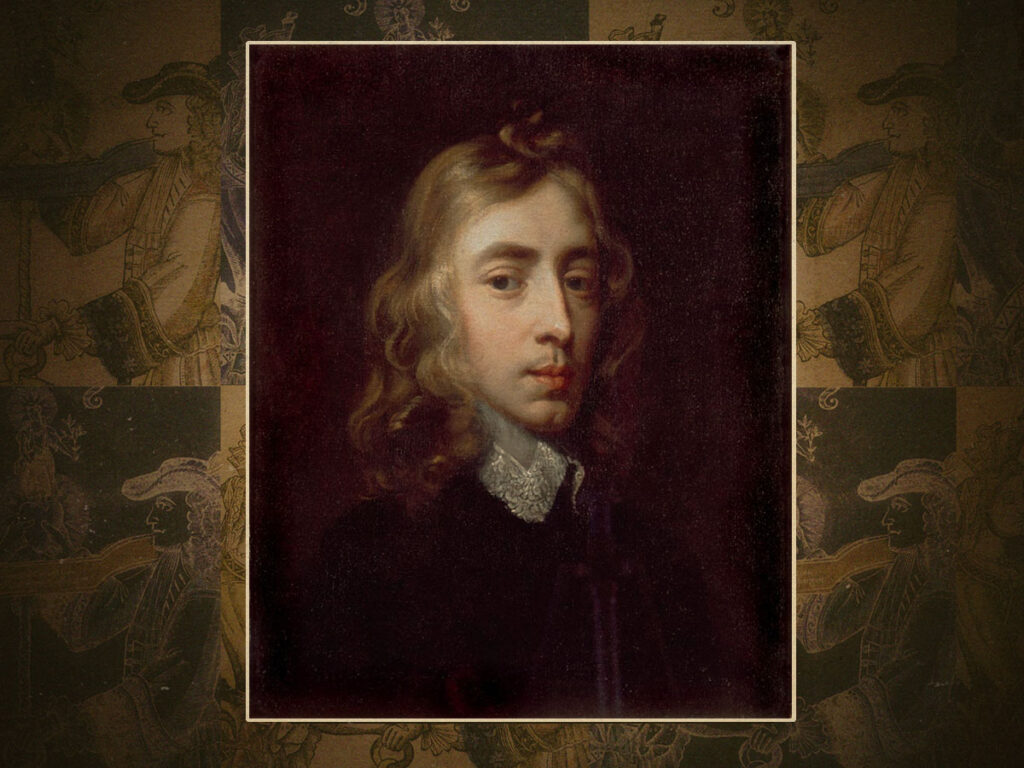
What caused John Milton to write ‘Areopagitica’?
In fairness, the history buffs among you will have clocked the years that these events were happening in and realised that at the time, there was actually a pretty chasmic difference between the Crown and Parliament. You see, this was happening during the English Civil War, when the Crown and Parliament were mainly interacting via the medium of trying to stick bayonets in each other’s necks. What’s more, if anyone tries to tell you there was a right and a wrong side to the English Civil War, they’re lying to you.
In a depressingly English fashion, both sides of the Civil War were totalitarian dickheads trying to impose opposing theocracies over the common people. Thus, when Parliament introduced the Licensing Order of 1643, which meant that anyone trying to get a piece of writing published had to have an official license from Parliament permitting them to do so, it really was a case of “meet the new boss, same as the old boss”. Even those sympathetic to the Parliamentarian course were scandalised, none more so than poet and civil servant John Milton.
Milton did as he had done a few times previously, and wrote a polemic against a state that he had supported, yet was sliding closer into the very tyranny it replaced day by day. The core of its argument was connected to its title. In it, Milton compared the fact that the first courts assembled in Ancient Greece nearly eight thousand years previously could find it in themselves to distribute materials critical of themselves, yet this parliament could not.
Needless to say, Milton published the pamphlet without the license that the government were asking for, making the pamphlet the first banned book in Britain. A lineage that also contained the likes of Lady Chatterley’s Love, Last Exit to Brooklyn and The Anarchist Cookbook.