


Saving Throws: How Dungeons and Dragons survived the Satanic Panic
Any TV executive would murder their own grandma for the kind of numbers that Critical Role gets.
Every week, millions of eager fans tune in to watch their favourite bunch of nerdy-ass voice actors play Dungeons and Dragons, the tabletop role-playing game that has become a phenomenon in recent years. Very few people could have ever seen such a niche subculture become so mainstream. Thanks to the likes of The Big Bang Theory, not so long ago of the role-playing game was shorthand for friendless, virginal nerd. Today, thanks to a myriad of reasons, this is no longer the case.
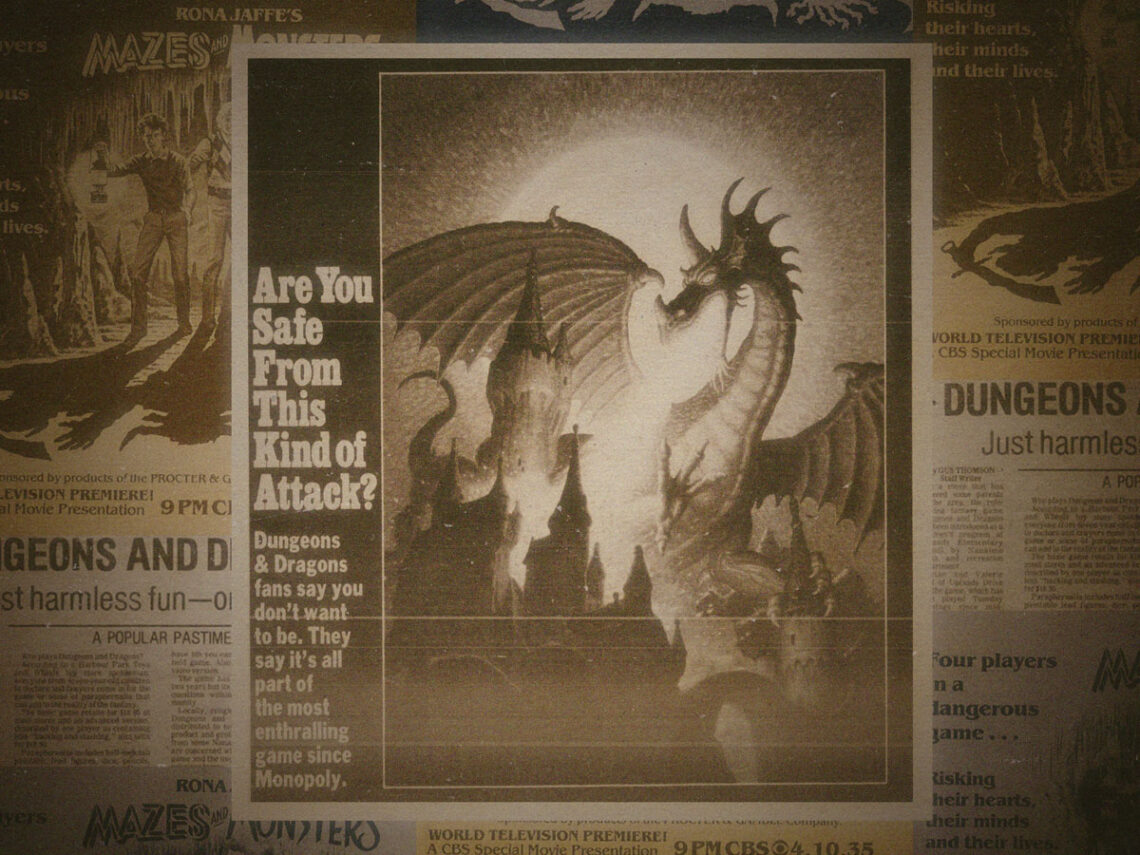
The first example of this was the game’s featured placement in Stranger Things, arguably the biggest TV series around at the moment. Now, back in 2016, Dustin, Mike and the gang were seen playing the game to establish them as immature, nerdy dorks. Yet their natural charm saw people try their hand at the game they loved and fall for it as well. The irony of it all is that Stranger Things takes place in the mid-1980s, when a concerted effort was taking place to kneecap that game’s skyrocketing popularity.
What’s more, that effort was very nearly successful, as it went hand in hand with a moral panic sweeping the United States in the early 1980s. In fact, the people hawking the con of the Satanic Panic must have been just as thrilled by the success of Dungeons and Dragons as Gary Gygax and Dave Arneson themselves.
In the game, they saw something that middle America didn’t understand, but was hugely popular with their kids. The perfect fuel for their fire of misinformation and demonisation.
How did Dungeons and Dragons get caught up in the Satanic Panic?
By 1979, Dungeons and Dragons had been around for five years.
The first edition had been published in 1974 and had spent the next half-decade building up a fairly large following, mainly among kids and college students. One of those D&D fans was, funnily enough, both. James Dallas Egbert II was a computer prodigy who’d been accepted into Michigan State University at the tender age of 16. In August 1979, he went missing after writing a suicide note. His parents hired a private investigator to locate him, who, understandably, had no idea what this bizarre goddamn hobby called “Dungeons and Dragons” was.
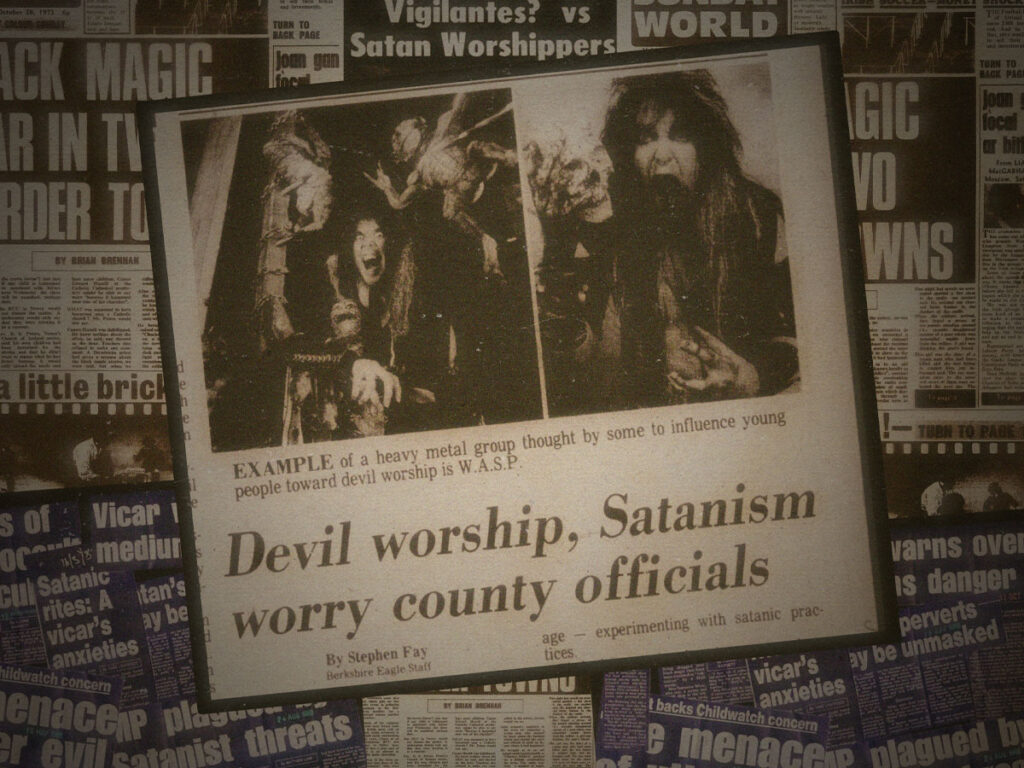
After talking to some of Egbert’s friends about his hobby, the private investigator speculated that perhaps a game of D&D held in the maintenance tunnels had gone awry, and he was down there injured in some way. This thrown-out thought was the first step in a fucking game of media Chinese Whispers that blossomed into national news stories about how this demonic board game had brainwashed Egbert into taking his own life, and your children could be next! Obviously, this was a barefaced lie that had nothing to do with what actually happened. Also, obviously, this frightening lie spread like wildfire.
The following year, Egbert tragically took his own life. This was followed two years later by the equally tragic case of Irving Pulling, who also took his own life in 1982. His mother, Patricia, fully placed the blame on her son’s love of Dungeons and Dragons, going so far as to say his principal put a curse on her son via this, and I cannot stress this enough: a child’s board game. From then on, all bets were off. Any horrible news story where the perpetrator had some connection to the game became a story about how D&D had been a conduit for Satan himself, who had possessed them through the dice. Or something.
Of course, none of this is true. In fact, the opposite of all of this is true. Perhaps due to the scrutiny that bad-faith grifters forced upon the hobby in the 1980s and 1990s, many psychological studies were conducted on people playing tabletop role-playing games. Rather than the hobby “brainwashing” them, or leaving them “unable to separate fantasy from reality”, role-playing games were found to bring kids out of their shells. At its best, it was able to teach people problem-solving skills and how to make positive moral choices. Those best-case scenarios are also the most likely scenarios.
It’s not entirely high fives all around. Part of the reason that the D&D moral panic faded is due to the rise of video games as the next moral panic stoked by bad-faith actors scrounging for a dime. Today, the popularity of Dungeons and Dragons stands as a beacon of what great things can be done when art is given space to just be art, rather than smothered by fake moral outrages. Here’s hoping that the right lessons can be learned the next time someone makes terrifying shit up about whatever it is young people are into next.