


‘Lord Horror’: how a dystopian Nazi satire became the last book banned in the UK
1984. Maus. Lady Chatterley’s Lover. Lolita. The Color Purple. The list of novels banned by governments is a real murderer’s row of classics, and one thing you might notice is that a lot of them are a lot more recent than you’d expect.
After all, governments banning books is something you’d expect from pre-World War, Victorian era societies with puritanical views about what art should and shouldn’t be. It stands to reason that the likes of Lady Chatterley’s Lover would be banned and that The Picture of Dorian Gray was only published after several cuts were made to its incendiary original draft but… Maus? A comic published in the 1980s and banned in 2022?! Surely we’re a little past that now?
Well, that’s actually an interesting question. You see, we are…kind of. Maus itself was only banned by a single school board in rural Tennessee, and wide-scale bans on books from entire national governments are still rare in the Western world. However, you don’t have to look that far back to find the last case of the UK banning a book for reasons of obscenity and even sending its author to prison for a short sentence. No matter how barbaric that ruling may be, the last time it happened was as recently as 1989.
The victim of such an insane and backwards ruling was the author David Britton, a respected author who’d come out of the worlds of sci-fi, speculative fiction and horror after founding a number of small press magazines dedicated to the genres in the 1970s. However, looking at the work he went down for, one can’t help but think this was a guy trying very hard to get noticed for his sheer vulgarity. If anything, the government was doing him a colossal favour.
He didn’t name this book Lord Horror for nothing.
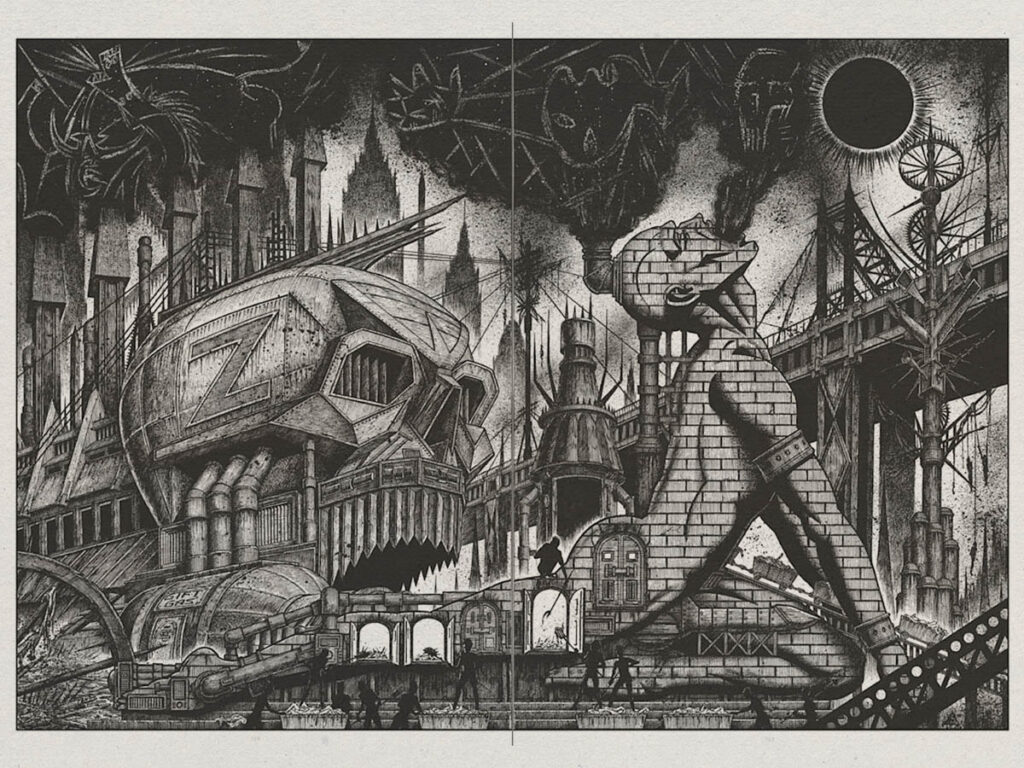
But what is ‘Lord Horror’ and why was it banned?
At its core, Lord Horror is yet another “what if the Third Reich won the Second World War” book.
Now, jury’s out on whether there are still fresh stories to be told in the tried and tested chestnut, but credit where it’s due, Lord Horror does show just how tasteless a concept this is at its very core. This may be the very last bit of credit due to this novel, however, because everything afterwards reeks of someone trying extremely hard to shock for the sake of shocking.
The title character is a Lord Haw-Haw-style figure of English nobility who broadcast pro-Nazi propaganda during the Second World War. With the war won, he is now a high-ranking figure in the English government and goes about his days indulging in the kind of indiscriminate, perverted cruelty that Jeffrey Epstein himself would have been proud of. Murdering or experimenting on the few Jewish people that remain in the UK with impunity in order to find a way of resurrecting a long-dead Adolf Hitler.
Now, this sounds bad already. However, you can spend as long as you like imagining how depraved and foul this novel gets and still not come close to the horrific stuff within. The hat made of disembodied and mutilated vaginas doesn’t even make the top ten in the end. In a way, it makes sense that this would get done for obscenity laws; that’s clearly what Britton was trying to do in writing such a viscerally horrible takedown of fascism.
Yet perhaps he was too effective. Not only was Britton arrested and jailed for writing the book, but the vast majority of its copies were pulped by the Metropolitan Police, making the book one of the most sought-after pieces of British literature of its time. If anything, the whole spectacle just made Britton’s reputation, making sure that a work of his would be constantly passed around in underground horror circles and that those same circles would keep paying attention to the new chapters of the Lord Horror saga.
Because yeah, the story of Lord Horror continued. Spoiler alert: It didn’t get any better.