


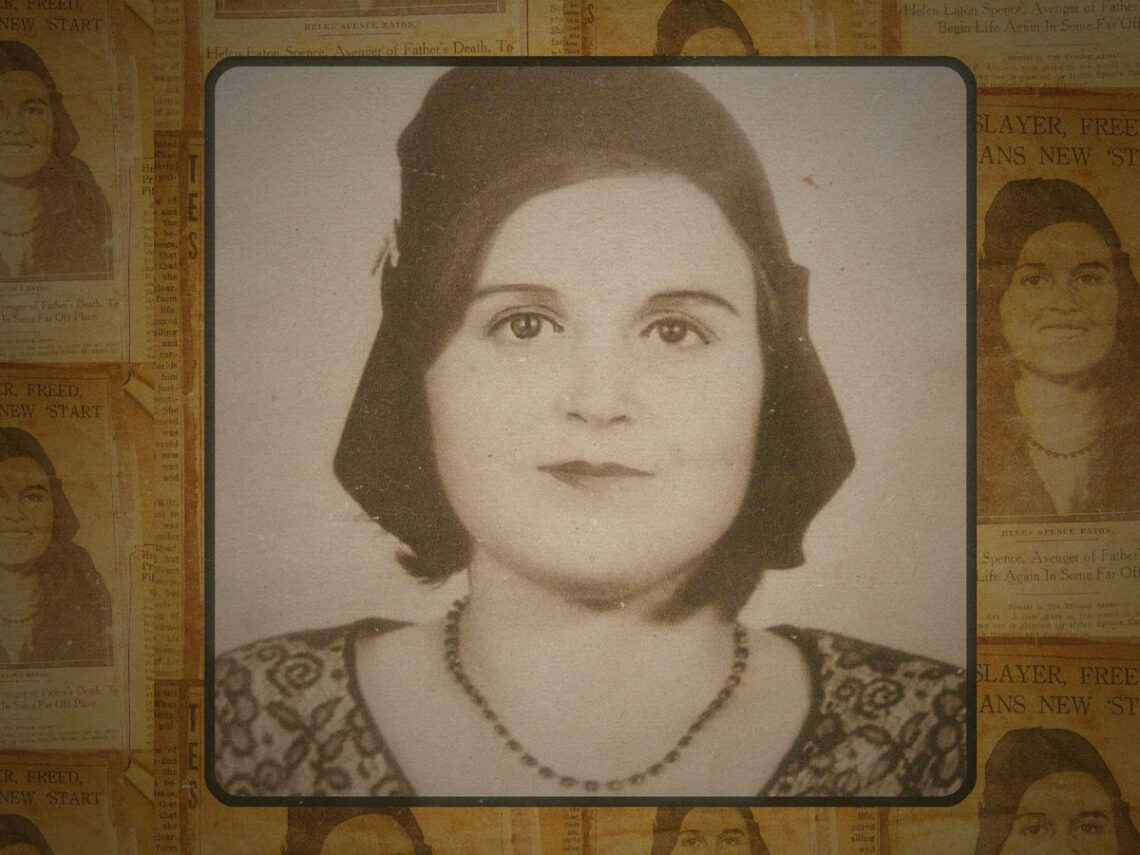
The River’s Revenge: how Helen Spence became a true folk hero
What does it mean to be a folk hero?
It’s a term so bandied about that it runs the risk of losing all meaning. Especially when a considerable number of Americans would consider a boot-licking, murderous con artist like Kyle Rittenhouse a folk hero. This is despite the fact that anything that witless freak has ever done with his failure of a life has been to uphold the status quo and support his government of choice.
No, if someone does something in the name of a sitting president, they are absolutely not a folk hero and never will be, no matter what side of the political divide they find themselves on. No, to be a folk hero is to actually stand against accepted norms and bring justice to someone who would otherwise use that status quo to accept it. This shit goes back to Robin Hood; it’s not that hard to understand. The rich folks that he was stealing from were following the letter of the law. However, that law was unjust, so Robin and his Merry men broke it for the greater good of providing for the people fucked over by those unjust laws.
It’s not that Americans don’t have these folks as heroes in their history. In fact, there’s a bunch of them. However, in true American fashion, the ones you’ve heard of, your Bonnie and Clydes and your Rittenhouses are ones that didn’t get famous for their actions. They got famous for their willingness to play up what they did for the media and sell themselves out to anyone who’d put them on the cover of a newspaper or point a camera at them.
No, as is the case with most real folk heroes, you have to look a little deeper to find them. After all, no regime in the world wants you to think positively about the people who actually undermined them, or think about them at all. Thus, you’re left looking at the annals of history for genuinely brave, genuinely moral people facing down the system and going, “absolutely fucking not”. It’s an important thing to do, actually, because some of the people you’ll discover this way will really restore your faith in people.
People like Helen Spence of Arkansas County.

Who was Helen Spence, and why was she a folk hero?
Spence had it rough. Born on a houseboat on the White River, Arkansas, in February 1912, she was already a figure of derision and disrespect when her family were chased off the river they called home by the US Army. Her mother died in her adolescence and and after her first marriage failed, she returned to live with her father and stepmother, only semi-legally on the river she grew up on. Then, in January 1931, when Spence was only 19 years old, she lost that family too.
A man called Jack Worls shot her father dead and assaulted her stepmother. Worls was caught but Spence had seen men like this escape justice time and time again and reasoned that if she had nothing else, she had her agency. Spence snuck a gun into the courthouse on Worls’ sentencing day, and when he rose to have his sentence read out by the jury, Spence shot him dead where he stood.
Her only statement upon her own arrest was, “He killed my daddy”.
After an overwhelming public backlash to her arrest, Spence was paroled and freed after a year in prison. However, that didn’t stop her from facing other disgusting, misogynistic attacks. Namely, from a man named Jim Bohots, who wouldn’t stop harassing Spence and pressuring her with sexual advances, even finding her place of work to continue these threats further. Nothing was going to be done by the cops, but Bohots clearly didn’t know who he was fucking with. He was found dead, shot by his own pistol, and Spence turned herself in for the murder like a total badass.
The problem is that this instead put Spence into the prison system. If you think the prison system is bad now, back in the 1930s… Well, it probably wasn’t actually that much worse than it is now, but that’s still saying a hell of a lot. After all, the American prison system really is just legalised slavery, and back then it just wasn’t as covered up as it is now. Spence was subjected to backbreaking labour and institutional corruption; her matron regularly bused her inmates into nearby cities to be prostituted.
So, what happened next?
Spence tried many times to escape and very nearly did, but was caught each time before she could get too far.
This caused her to be essentially tortured by her prison guards, but still, she kept up her regular escape attempts. Her prison finally snapped and murdered her in 1937, letting her escape just so one of the guards, a convicted murderer by the name of Frank Martin, could find her on the road outside the prison and shoot her from behind. A more cowardly act than Spence had ever done in her entire life.
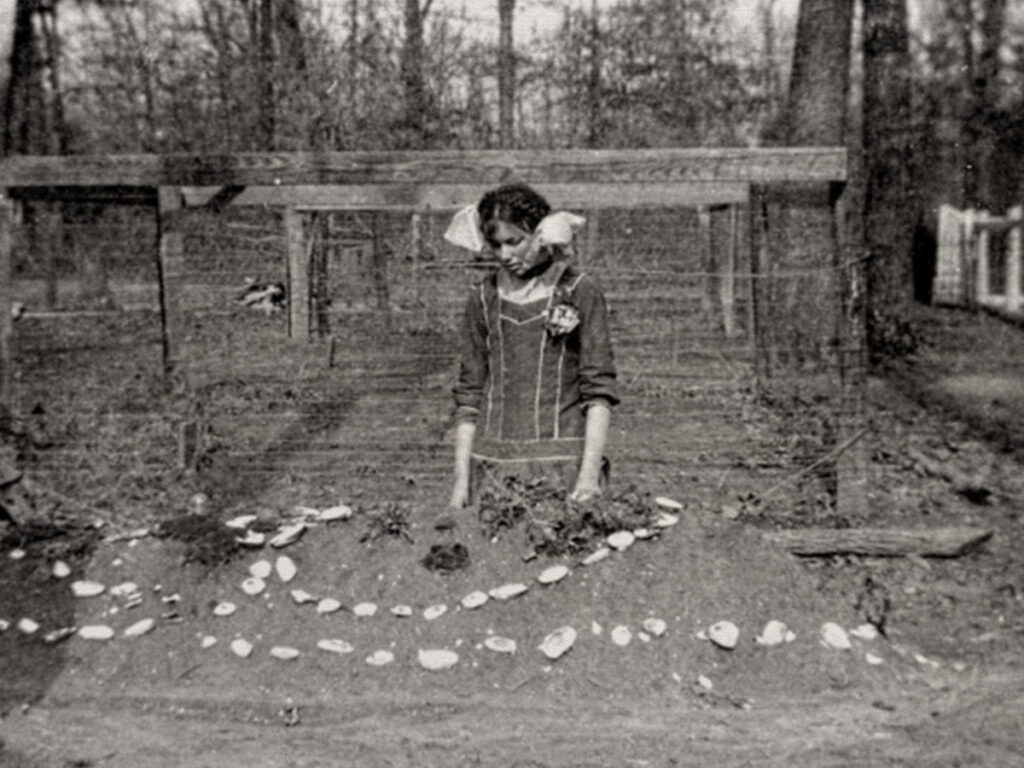
Both Martin and Spence’s prison superintendent were tried for the murder of Spence; both got away with it, of course, and Spence was buried next to her father in her home of St Charles, Arkansas. A sad story, but an inspiring one, as we can see in the fate of Frank Martin. Legend has it that he went into town after he was paroled and bragged to all that would listen (and a number that wouldn’t) about how he was the man who took down Helen Spence.
One of the places he crowed about this murder was the grocery store, where the woman behind the counter overheard him. When he went up to buy his loaf of bread, she switched his loaf out for a new one she’d prepared that day. A cheaper one, made with love, for all his service to the town. He had that loaf for his dinner that night and didn’t wake up the next morning. If anyone asked about the death of Frank Martin, all anyone would say was, quite simply, “The river got ‘im”.
That, right there, is a motherfucking folk hero.