


Self-starter: how independent publishers popularised the novel
I don’t think I’ll ever forget the first time I realised a novel I was reading was initially self-published.
I won’t say the name because, at its core, the novel was a bit of harmless fun, and I don’t want to dogpile on it. However, I’d already had my suspicions. The tone had been a little all over the place in much the way a lot of fan fiction is. Pleasantly juvenile while at the same time having the potty-mouth of a pre-teen who’s just discovered swearing. Some bafflingly horny sections in amongst the butter-wouldn’t-melt YA-isms of a novel that boiled down to, essentially, “what if Hogwarts, but for time travellers”. Then the main character, who mere chapters earlier had spent pages picking out a prom dress, had a miscarriage.
I was cringing my soul out of my body. Literally any editor worth their salt would have saved the author from writing such a nakedly ill-fitting “all is lost” moment for their charming YA fantasy novel. One so horrifically out of place it sailed straight over harrowing and landed square on hilarious. It’s the same mistake that, bless their cotton socks, lots of fan fiction writers tend to make. Especially when they’re trying to put their favourite characters in situations that are “more adult” than the kids books they came from.
That’s when I realised why the editor had let them get away with it. There hadn’t been one. The author had put the whole thing online first, and then the book had been picked up by another publishing house and released more or less as it was. It was the book that made me understand why the world of self-publishing gets the dodgy reputation it has today. An industry of con artists peddling sub-par work that adds up to little more than jumped-up fan fiction.
This is despite the fact that novels, and the literature industry in general, owes a debt to self-publishing that it’ll never truly repay.
How did self-publishing help develop the novel?
The first place to look when it comes to the history of self-publishing is to find out why people felt the need to self-publish in the first place. After all, we associate the publishing industry with free-market capitalism, at least in the West.
Say what you want about it, but if someone believes that a book will sell, someone will publish it, whether that’s The Satanic Verses or Confessions of a Shopaholic. This hasn’t always been the case, and, annoyingly enough, the initial way books were published was the one method that could stifle creativity even more than free-market capitalism.
You see, publishing used to be regulated by royalty. Most infamously, this was the case in England, where nothing got published without the express say-so of the crown or, after the English Civil War, the crown. This was where the idea of self-publishing began to build traction. After all, if you had the money, theoretically you could print your own copies and sell them with the help of a distributor, getting around predatory publishing houses or the ever-lurking eye of the crown.
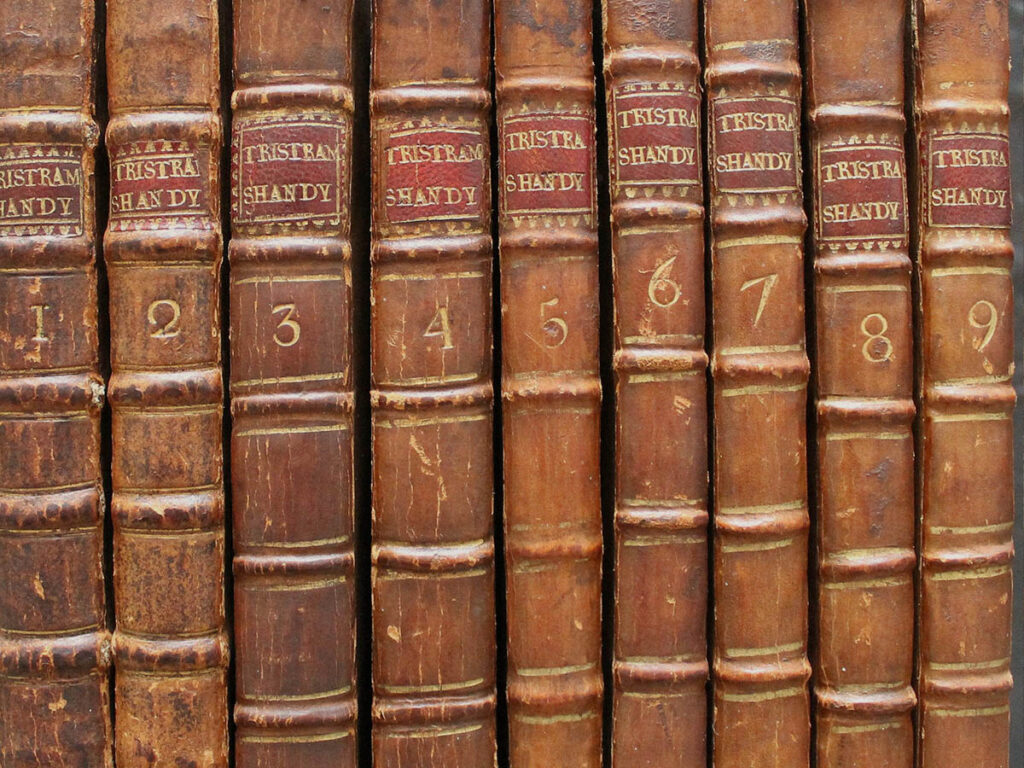
Not only is the first person to exploit this loophole a celebrated writer who has gone down in the history of English Literature, but he also did so to publish one of the defining texts of the whole canon. Laurence Sterne paid for the publication of the first two volumes of The Life and Opinions of Tristram Shandy, Gentleman, out of his own pocket in 1759 as a way of proving the story’s worth to a prospective publisher. This was a risky move, but it worked like a charm. Tristram Shandy was an immediate success and taught the country that, if approached in just the right way, any work of literature could be brought to life.
Considering this is a route everyone from Jane Austen to Walt Whitman went down since, maybe think twice the next time you begin to doubt a book just because it was self-published. You never know what you might discover!