


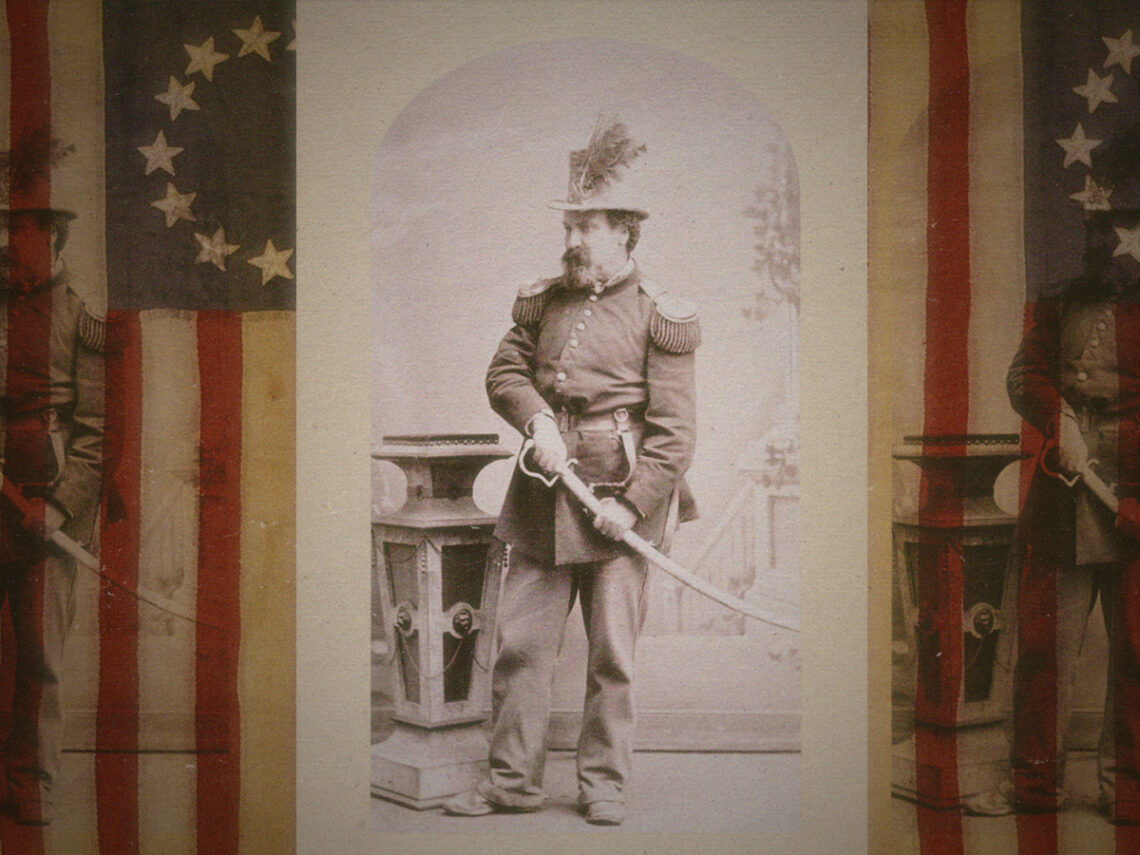
The deluded man who declared himself “Emperor of the United States” in 1859
The United States of America is a country built on rebellion, and telling a bunch of snooty Brits where precisely they can stick their taxes, their aristocracy and most infamously, their tea. Or at least, that’s what they’ve said historically.
Ever since then, America has prided itself, at least on the surface, of being the land of opportunity. Where everything is accessible to everyone, no matter the situation of your birth. Anyone who is born in that country (at the time of writing) is a citizen of the United States and can thus hope to grow up to be president one day. Whether they were born in a barn in Duluth, Georgia, a shack in Marlin, Washington or one of the finest hospitals in New York or Los Angeles.
Since the American ideal is built around equal opportunity, few things should piss off an American quite like the idea of a King or Emperor of the United States. Yet, as we’ve seen over the last decade, a considerable amount of its voting populace is fine with being lorded over by a lone figure who wields unquestioned power over the entire country, who has also ordered attacks on other countries with the express intention of conquering them, who has bandied about the idea of staying in power until he dies, laughing in the face of the very democracy that America claims to stand for.
Of course, it would be churlish to ignore the millions of people who stand against him. Who really believes that an Emperor of the United States stands against everything the country stands for? The crowd shots of those No Kings protests were wonderful to see at a time when we really needed to see something wonderful in the world. However, the truth is that the idea of an American Emperor is one a lot older even than the orange commander in chief.
And bafflingly enough, people thought he was charming. The more things change.
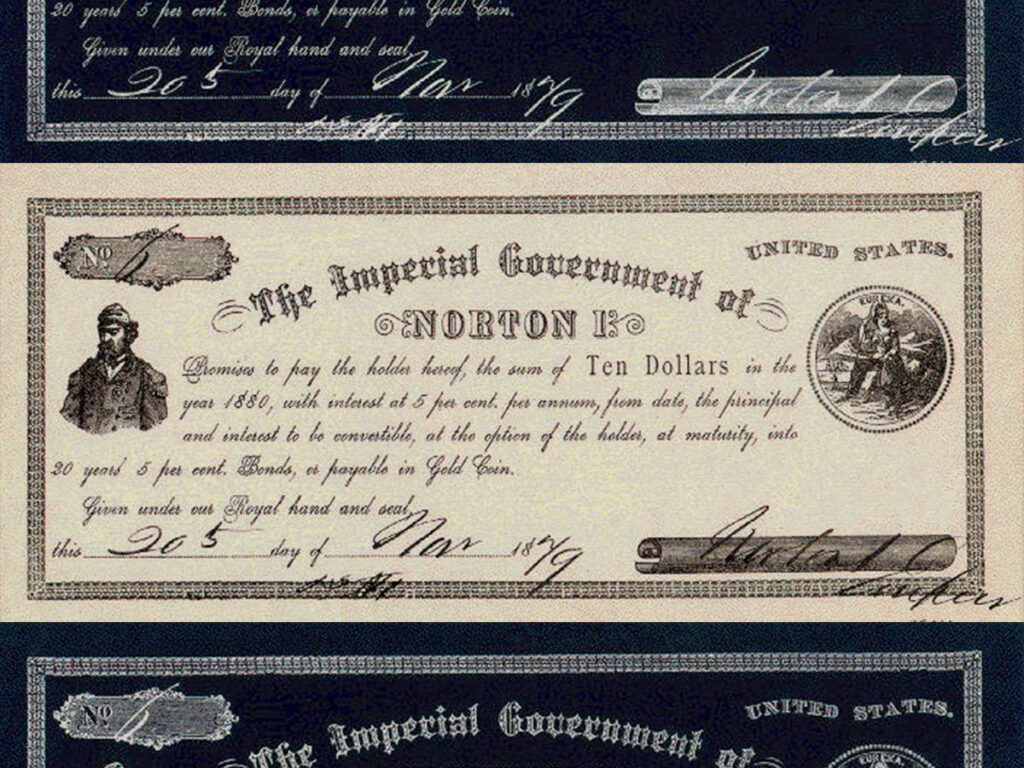
Who was “the Emperor of the United States”?
Joshua Abraham Norton was born in February 1818. We don’t know the specifics of his birth, it’s likely he was actually born in England, since his parents were based in Deptford in the early 1800s, but as merchants, his family moved around a lot, and after spending the majority of his upbringing in South Africa, Norton reportedly arrived in the city he’s most associated with, San Francisco, in 1849, after which he set about finding his fortune, and for at least a period of time, he found it.
Norton found success in real estate and became one of the most influential and famous people in San Francisco. Then, as is often the case with real estate, he lost all his money and tried to capitalise on his fame by moving into politics to keep the wolf from the door. The more things change. In 1858, he announced a campaign to run for Congress, which failed almost as soon as it began, so the year afterwards, he decided to take matters into his own hands.
On September 17th, 1859, Norton hand-delivered a letter to the offices of The San Francisco Bulletin, which declared, “I, Joshua Norton, formerly of Algoa Bay, Cape of Good Hope, and now for the last nine years and ten months past of San Francisco, California, declare and proclaim myself Emperor of these United States”, and thus began a 20-year “reign” as emperor of the United States of America, with his first decree coming the year afterwards when he demanded the national guard seize and depose the fraudulent government in Washington, DC.
Norton, or Norton I, as he referred to himself going forward, was a harmless figure of fun in his “reign”. A goofball who enjoyed strutting around his neighbourhood in his emperor regalia, who made a habit of sending letters to Queen Victoria to improve relations between “his” and her countries that went resoundingly ignored. Most famously, he set a fine of $25 (serious money at that time) for anyone who had the temerity to refer to his beloved hometown as “Frisco”. Something that San Franciscans would probably enforce to this day, to be honest.
If only anyone else looking to serve as Emperor of the United States could be so personable.