


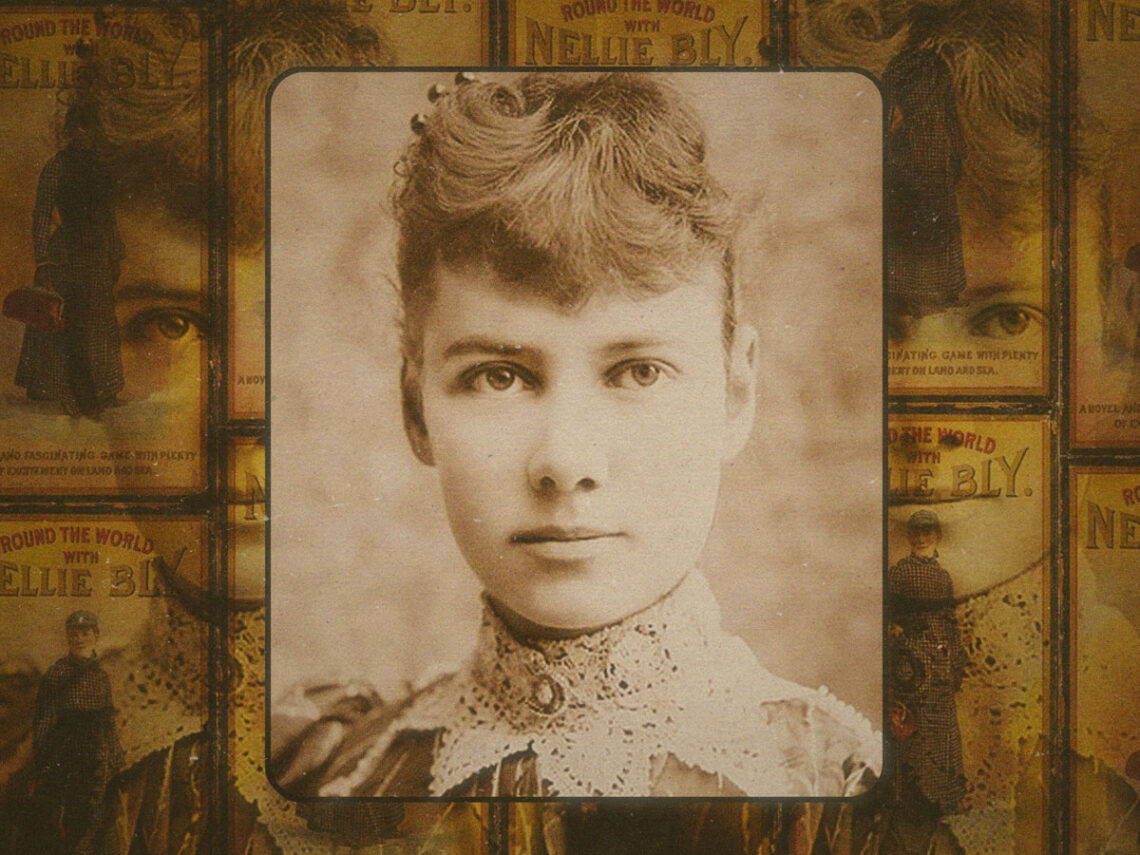
Nellie Bly: The woman who changed journalism forever by being committed to a New York “madhouse”
Nellie Bly seemed like a hopeless case.
A haunted-looking waif who checked into a New York City boarding house without a red cent to her name in 1887, Bly didn’t say much to anyone, but had quite a lot to say to herself.
Her paranoia made her regard everyone else at the house with suspicion, her unkempt hair and sallow, pale cheeks giving her the look of a ghost piloting her own corpse. Then, she shouldn’t go to bed. Screaming at anyone who came near her that they were “crazy”. The police were called the following morning, and after several doctors examined her, she was deemed insane. All had gone according to plan.
You see, Bly wasn’t insane. She’d spent most of the previous night at her bedroom mirror, practising how to look insane by perfecting her facial expressions and teasing her hair into an unkempt mess. She was a writer, however. A different kind of insane, but a (slightly) more societally acceptable one. After a last-ditch meeting with Joseph Pulitzer (yes, that one), editor of the New York World at the time, Bly took on an incredibly dangerous assignment.
You see, reports had started to emerge that the psychiatric hospitals of the time were hotbeds of abuse, where brutality and abuse were the norm. Pulitzer wanted someone to go in and write an undercover expose about it, and Bly, penniless and desperate for the work, was just the right kind of brave to give it a shot. After the scene she caused at the boarding house, she was committed to the Women’s Lunatic Asylum on Blackwell’s Island and found that the reports weren’t just accurate.
The reality was much, much worse.
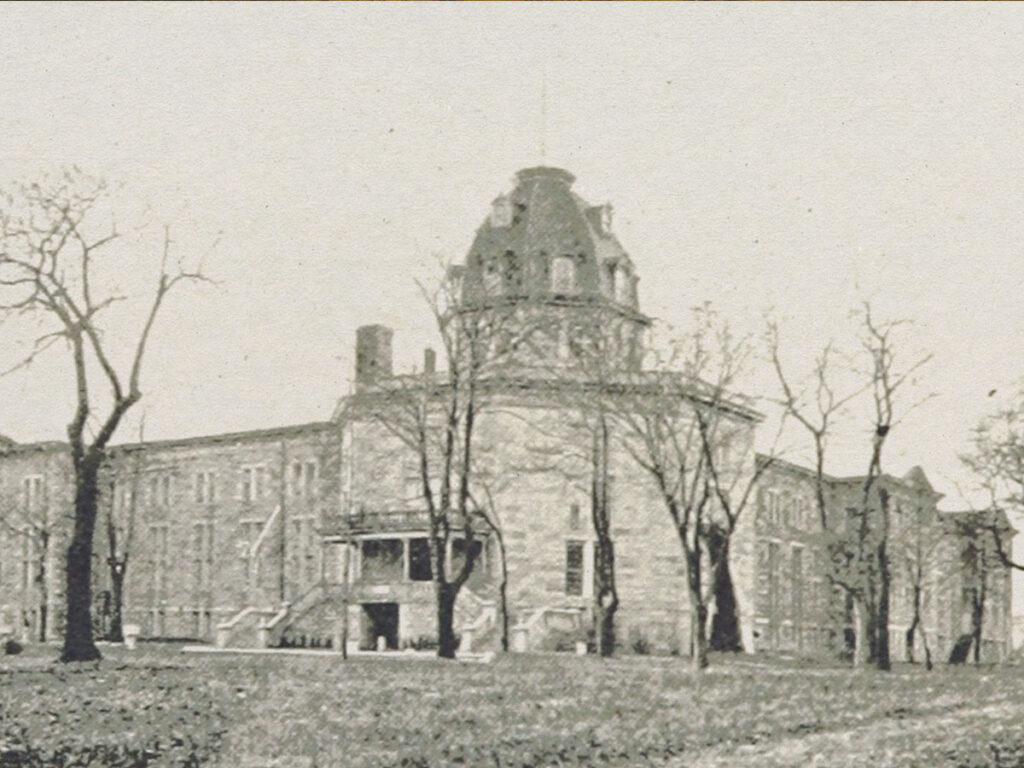
What did Nellie Bly discover?
Pretty much everything that could be used to bully and abuse the patients was used to bully and abuse the patients.
Nurses who were outright cruel, doctors who saw their patients as little more than cadavers to experiment on and conditions that would be considered unacceptable to house war criminals in. The food was uniformly spoiled and unhealthy, and the patients considered dangerous (which was most of them) were literally tied together with rope, and human waste lined the floors.
These were the conditions that Bly found herself in. She wrote, “What, excepting torture, would produce insanity quicker than this treatment? Here is a class of women sent to be cured. I would like the expert physicians who are condemning me for my action, which has proven their ability, to take a perfectly sane and healthy woman, shut her up and make her sit from 6 a.m. until 8 p.m. on straight-back benches, do not allow her to talk or move during these hours, give her no reading and let her know nothing of the world or its doings, give her bad food and harsh treatment, and see how long it will take to make her insane. Two months would make her a mental and physical wreck.”
Which led to an absolutely terrifying prospect. The moment Bly was sectioned, she gave up the pretence of being insane, presenting herself as sanely and reasonably as she possibly could. These were all taken by her doctors to be symptoms of her mental illness, which led to the possibility of this stay being a lot longer than she intended. What’s more, Bly didn’t think she was the only sane person committed to that asylum; she just had the luxury of a famous newspaper coming in and demanding her release. Many women in that asylum were just as worth of release as she was, but weren’t so lucky.
Bly turned her experience into a series of tell-all articles for the New York World, which were then collected into the book Ten Days in a Mad-House, which catapulted her to fame. Readership of the New York World skyrocketed, Bly became one of the most famous female writers in the world, but all of that pales in comparison to the most important result of her daring, impossibly brave feat of investigative journalism.
Bly’s work inspired a grand jury to begin an official investigation into the way asylum’s were run at the time, with Bly herself assisting. The Judy’s report resulted in an $850,000 budget increase for the Department of Public Charities and Corrections, improving the lives of many committed patients and preventing the sectioning of many otherwise sane people.
There were still miles to go in the fight for just mental healthcare, and still is to this day, but the work of Nellie Bly shows just how much one person can do to help it.