


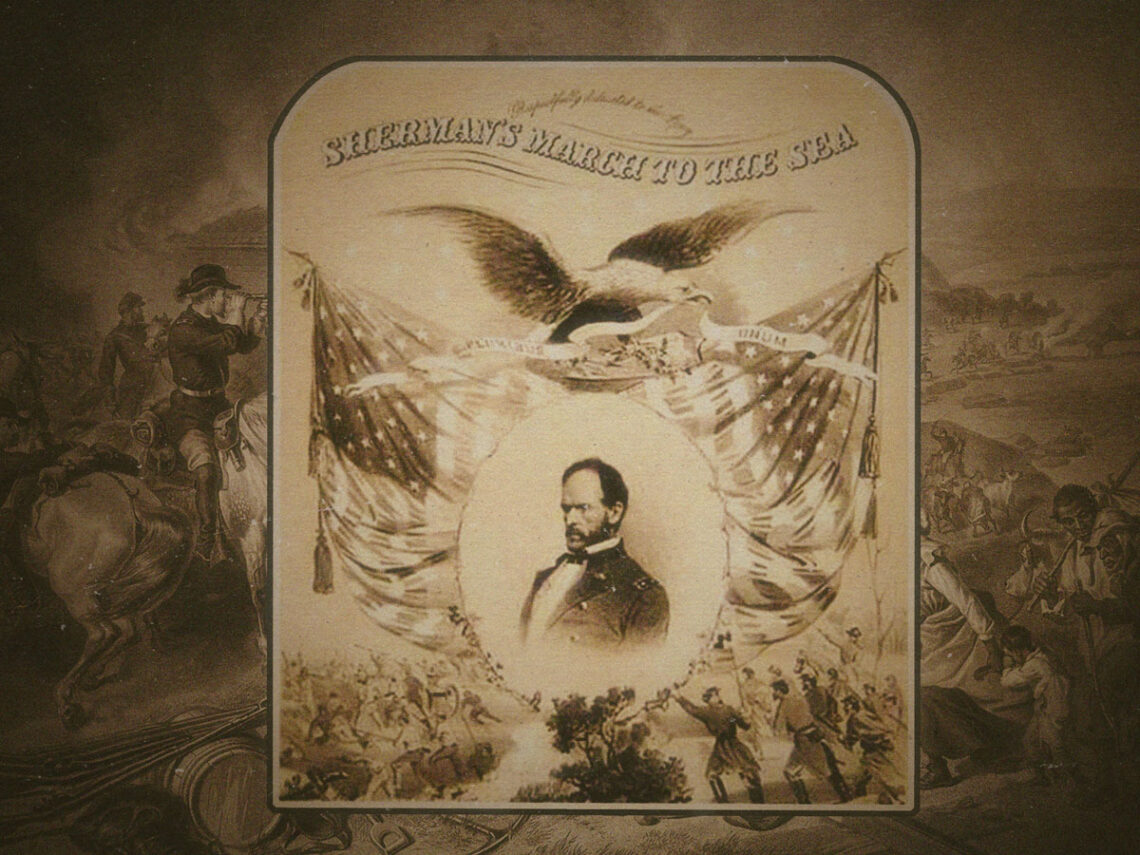
Total War: the one building that survived Sherman’s March to the Sea
War is a strange old thing. It’s assumed that wars must go on until one enemy has been sufficiently defeated, but the truth is a little bit different from that, at least historically. Not too long ago, there was a feeling that, broadly speaking, wars were meant to bring with them a minimum of collateral damage. However, no one seemed to give General William Tecumseh Sherman that memo.
The history of warfare is filled with entire conflicts that were essentially fought to a stalemate until negotiations convinced one side that surrender was a better option than risking even more bloodshed and loss. Now, to be clear, human history is filled with examples of wars going the complete opposite direction, where the only option that one opponent had in mind was the complete eradication of their opponent. An example of this is Major General William T. Sherman’s March to the Sea.
This delightful little month in American history happened during the Civil War, specifically from November 15th to December 21st, 1864. Sherman’s Union Army had captured Atlanta, Georgia, one of the Confederacy’s true strongholds. His eyes then went to Savannah, the port in Georgia, where, along with much of the Confederacy in general, supplies were being received. If Sherman’s men cut a swathe through Georgia and ransacked the entire state, ending with a climactic burning of Savannah, the supply line aiding the entire South would be gone.
It was a risky move, not necessarily due to the challenges to the army but because it was an act of total war. Again, this was a tactic considered needlessly brutal in the so-called ‘gentlemanly’ art of war for the time. Many civilians would be starved and killed as a direct result of Sherman and the Union’s Commander, Ulysses Grant’s actions. Sounds horrible, right? Then you remember this is an entire wannabe state fighting, killing and dying for the right to own slaves.
Fuck ’em.
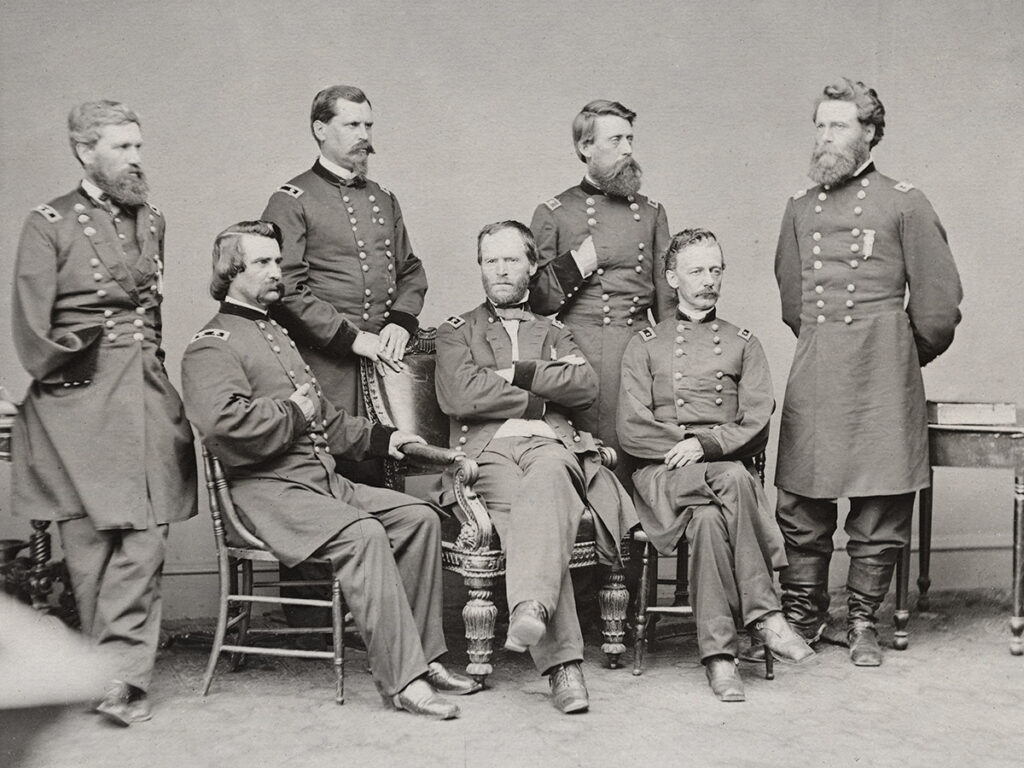
What survived the March to the Sea by General Sherman?
Every great military action has to start somewhere and Sherman’s men had just taken Atlanta. Lovely city, Atlanta, Georgia. I’ve had some wonderful evenings there in my time, even if the traffic will kill you if you so much as blink without thinking about it. However, as mentioned earlier, the Confederacy had very much made its proverbial bed and shat in it. Thus, the March to the Sea began with Sherman and his men raining bloody hell on Atlanta.
Everything from the crops to the railroads to the homes of civilians to the infrastructure to the farms had to go in a way that couldn’t be easily brought back. Scorched Earth barely covers it, yet even after Sherman and his men had left the city, one building stood tall, the Church of the Immaculate Conception. The church’s pastor, Father Thomas O’Reilly, had heard of Sherman’s plans to salt the earth and immediately sought out one of Sherman’s generals, Henry Slocum.
O’Reilly pleaded his case that the church was being used as a hospital for both Union and Confederate soldiers, and was a house of God, that it should remain standing no matter what else happened to its surroundings. O’Reilly had also spotted that a large number of Sherman’s men were Catholics, and if they went through with their plans to tear down the church, he would excommunicate them on the spot.
Slocum was moved by O’Reilly’s plight and took this to Sherman, who agreed and didn’t just let the Church of the Immaculate Conception stand, but the Presbyterian, Episcopalian, Methodist, and Baptist churches surrounding it as well. The church has had a name change and a facelift, but it still stands today as the Shrine of the Immaculate Conception.