


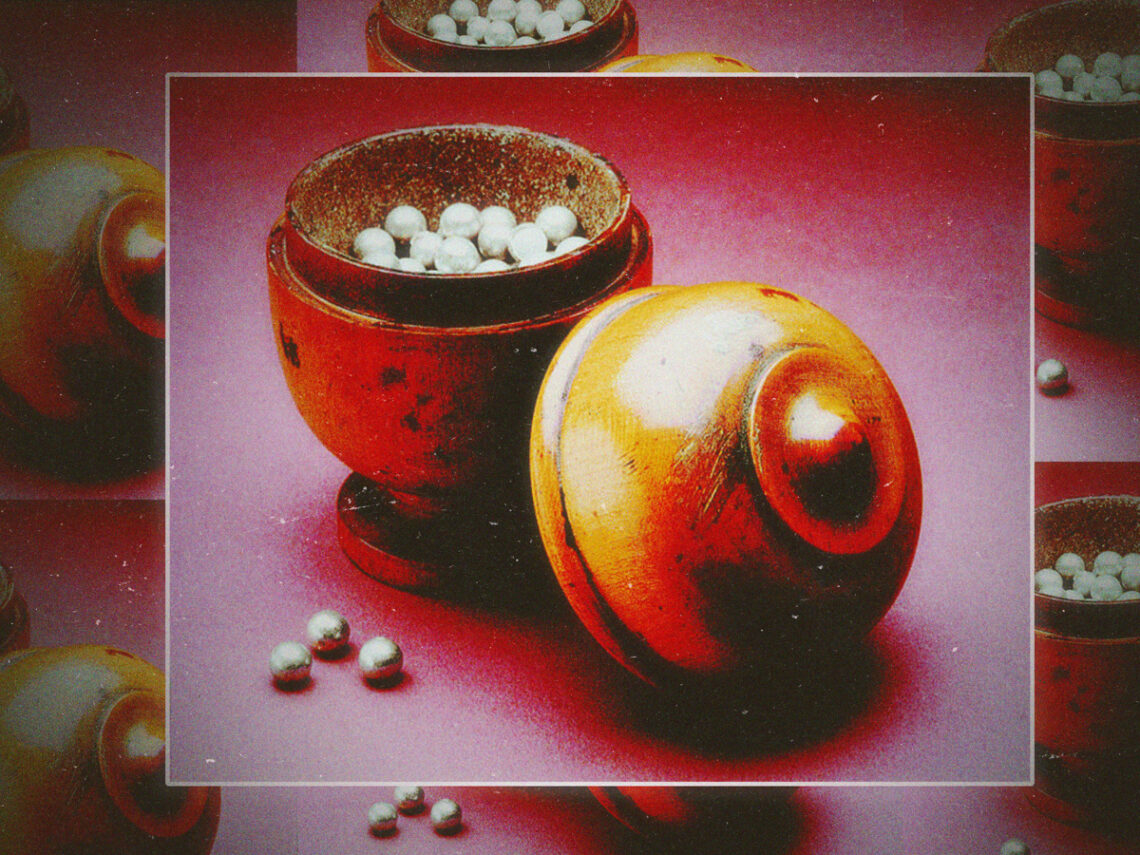
Perpetual Pills: the bonkers reusable laxatives of the Middle Ages
There’s a reason why The Devils of Loudun remains one of Aldous Huxley’s most slyly subversive books.
Ostensibly a historical account of mass hysteria and religious corruption in 17th-century France, it’s also a Trojan horse for some of Huxley’s most entertaining tangents—hallucinogenic theology, psychosexual exorcisms, and, memorably, an extended riff on medicinal antimony, the heavy metal darling of early modern quackery.
The tale of how pharmacists once pushed metallic purgatives you could fish out of the toilet and reuse is almost too good to be true. But it is. And Huxley, never one to pass up a morbid curiosity, gleefully runs with it.
Of course, the story of Huxley’s The Devils of Loudun is interesting enough—it’s the basis for Ken Russell’s The Devils, hardly a dull movie. Yet the book is full of entertaining digressions, such as a lengthy parenthesis on the medical uses of antimony. It reads: “Certain compounds of antimony are specific in the treatment of the tropical disease known as kala-azar. In most other conditions, the use of the metal or its compounds is hardly worth the risks involved. Medically speaking, there was no justification for such indiscriminate use as was made of the drug during the sixteenth and seventeenth centuries. From the economic point of view, however, the justification was ample”.
Adding, “[Loudun pharmacist] M. Adam and his fellow apothecaries sold Perpetual Pills of metallic antimony. These were swallowed, irritated the mucous membrane as they passed through the intestine, thus acting as a purgative, and could be recovered from the chamber pot, washed and used again, indefinitely. After the first capital outlay, there was no further need for spending money on cathartics. [Antimony-as-medicine opponent] Dr. Patin might fulminate and the Parlement forbid; but for the costive French bourgeois, the appeal of antimony was irresistible. Perpetual Pills were treated as heirlooms and after passing through one generation were passed on to the next.”
The image of a Perpetual Pill being passed down through generations – like a cherished locket, only designed to blast your guts out – is both hilarious and horrifying. But let’s not forget: these things could kill you. Antimony may have flushed you clean, but it also thinned your blood, wrecked your liver, and in some cases, finished the job entirely. As science crept forward, the Enlightenment crowd finally decided that maybe grandma’s reusable gut bomb wasn’t worth the risk of an agonising death. Still, the lure of thriftiness never dies, and neither did the obsession with antimony.
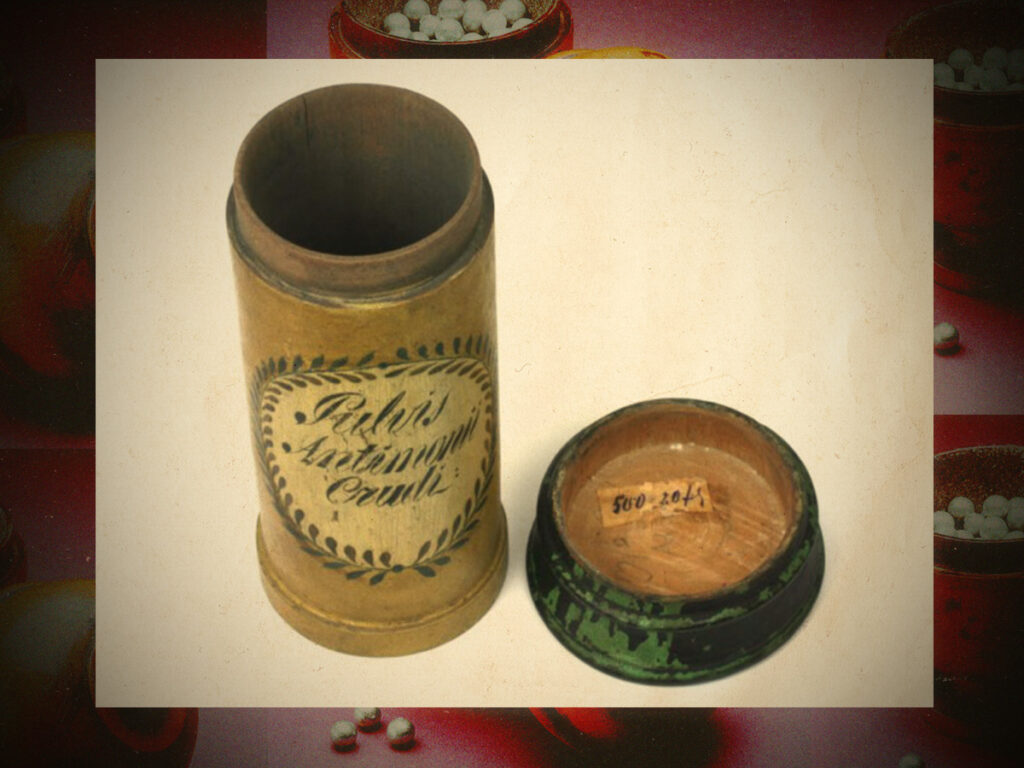
That’s when the marketing pivoted: no more swallowing solid metal pellets. Now, just sip your evening wine from a charming little antimony cup and let the toxins gently leach in overnight. It’s poison with panache. Meanwhile, the 18th-century version of Pinterest, Pierre Pomet’s Complete History of Drugs, was pushing full-on DIY kits. Want to cast your own bowel-blasting bullets at home? Just melt horse nails and saltpeter and ask your local blacksmith to whip up a batch. If you’ve got a musket-ball mould lying around, congrats—you’re halfway to your own line of artisanal purge pills.
If you dreamed of grandma’s Perpetual Pill, you might not have had to wait too long to get your hands into her chamber pot, because another result of taking antimony is death. Some researchers believe that Mozart died as a result of his “treatment” with antimony. Its reputation as a wonder drug coexisted uneasily with its reputation as a lethal poison.
No matter how great the savings passed on to you, the consumer, in the little metal pill that lasts forever, there is such a thing as bad publicity—and one of its forms is agonising death. Around the time of the Enlightenment, history’s real “greatest generation” stopped fishing Perpetual Pills out of their toilets.
“A more refined alternative, generally used in the 1600s after the pellets were outlawed, was to drink wine that had been left standing in an antimony cup overnight.”
A report by Nature.
But the English translation of Pierre Pomet’s Complete History of Drugs, published in 1748, contained some DIY advice for the unregenerate Perpetual Pill-seeker, in the chapter Of Regulus of Antimony with Mars or Iron (described as “made of Antimony, Salt-petre, and Points of Horse-nails, or small Nails melted together”).
It read: “Whereas most People who have Occasion for the Goblets or Cups of the Regulus, find difficulty to come by them, let them apply to a Founder, and they may have what Sorts and Sizes they will, at a cheap Rate, without troubling themselves with Moulds, as several have done to their Labour and Cost, who have at last been obliged to give over the Attempt, not being able to make one Cup without a Hole, or some other Defect. You may also get these same Founders to make you the Perpetual Pills, or you may easily make them yourself with a Musket-ball Mould”.
Adding: “The Pills serve for those that have the Twisting of the Guts, or Miserere mei, so called. When they are returned from out of the Body, it is but washing and cleaning them again, and they will serve as oft as you please; which gives them the name of Perpetual.”
There’s a perverse poetry to the Perpetual Pill—a medical marvel designed to be endlessly recycled through the same unfortunate colon. It’s as if early pharmacists decided that both the cure and the economy of medicine should come out the back end. And for all the warnings from doctors and bans from parliaments, the pills persisted because they embodied something very human: a deep-seated belief that suffering now (with maximum efficiency) means health later, even if that suffering involved projectile agony and the occasional brush with death.
It’s only fitting that Screamin’ Jay Hawkins would be the one to immortalise this twisted legacy with ‘Constipation Blues’, his unhinged ode to the very misery antimony promised to relieve. Groaning, howling, wailing into the void—Hawkins doesn’t just sing the pain, he exorcises it. Which, in the end, ties us right back to Huxley and The Devils: a world where suffering was sacred, toxins were salvation, and nobody batted an eye at a family heirloom you had to wash off in a bucket after each use.