


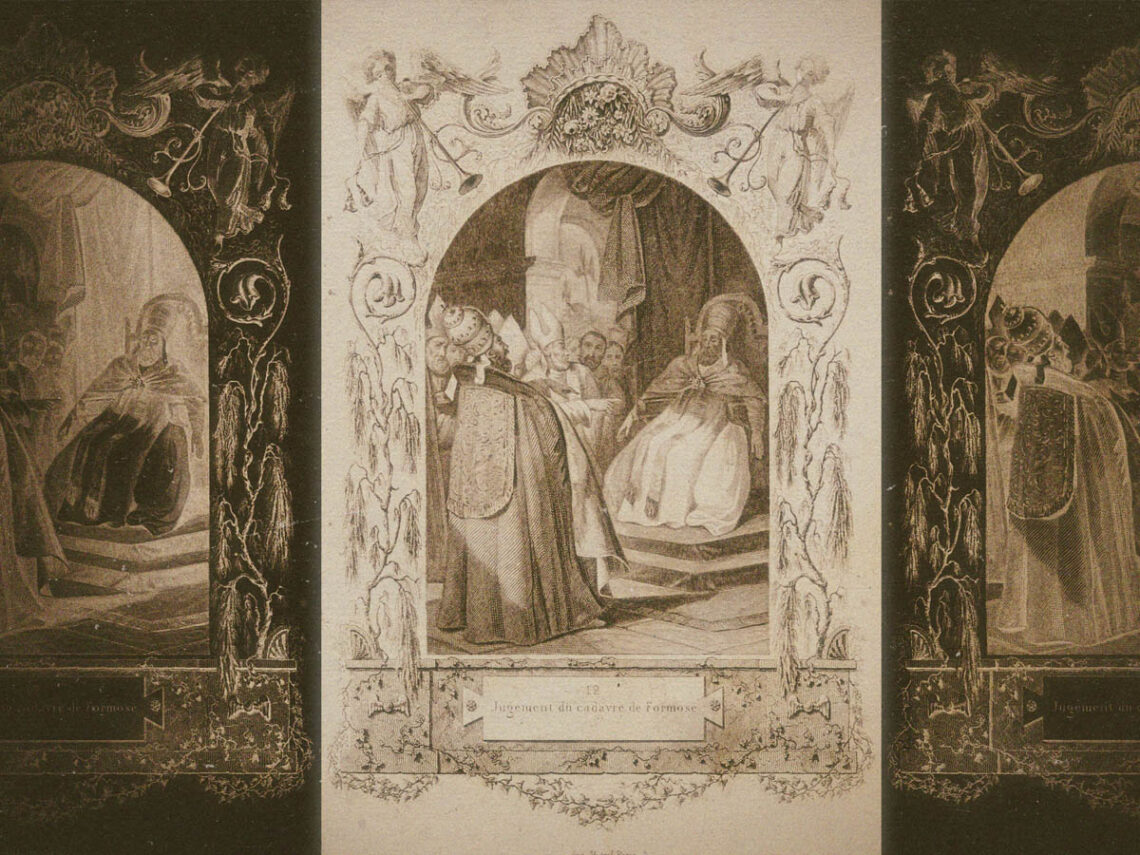
Cadaver Synod: Why the corpse of a pope sentenced to death
Throughout history, there has always been a sneaking suspicion among many that justice is merely performative, even when carried out by a court of law.
There’s an argument to be made that the act of punishing someone has nothing to do with the person being punished and everything to do with the populace watching it. Is “performative justice” the same thing as “making an example of someone”? Or, perhaps, the point of punishing someone is to try to correct the errors of judgment in that very person and show people that their actions have consequences.
It’s a fine question, but one seemingly answered by the fact that there’s a long and storied tradition across many cultures of trying, sentencing and executing people who are already dead. Oliver Cromwell, Rasputin, Edward Teach, otherwise known as the pirate Blackbeard. All men who, long after they shuffled off this mortal coil, had their remains dug up, stuffed into a court of law (can you imagine the smell!?), were found guilty and then their dead bodies mutilated again, all in the name of so-called justice.
Take a moment and imagine that scene. Grown men, lawyers no less, stating a case to a jury, standing across from a literal rotting corpse. A judge asking a literal rotting corpse how they plead. A group of executioners propping up a literal rotting corpse and slipping a noose across a neck that probably had all the consistency of rotting meat. Because that’s exactly what it was. How could one look at that and see capital punishment as anything other than a circus?
In that case, perhaps it’s perversely fitting that the first recorded person to suffer this fate was a literal pope.
How did a pope get executed posthumously?
After being elected pope on October 6th, 891, Pope Formosus had a reign as troubled as it was short. He lasted five years before his death in 896 and in that time he was seen as someone using the papal office to fulfil personal and political ambitions rather than actually serve the church.
The reasons why are plenty and involve a deep dive into European squabbles a literal millenia old but suffice to say that long before he was elected pope, Formosus was neglecting his duties as a man of the cloth to make deals in Rome to secure his future papacy.
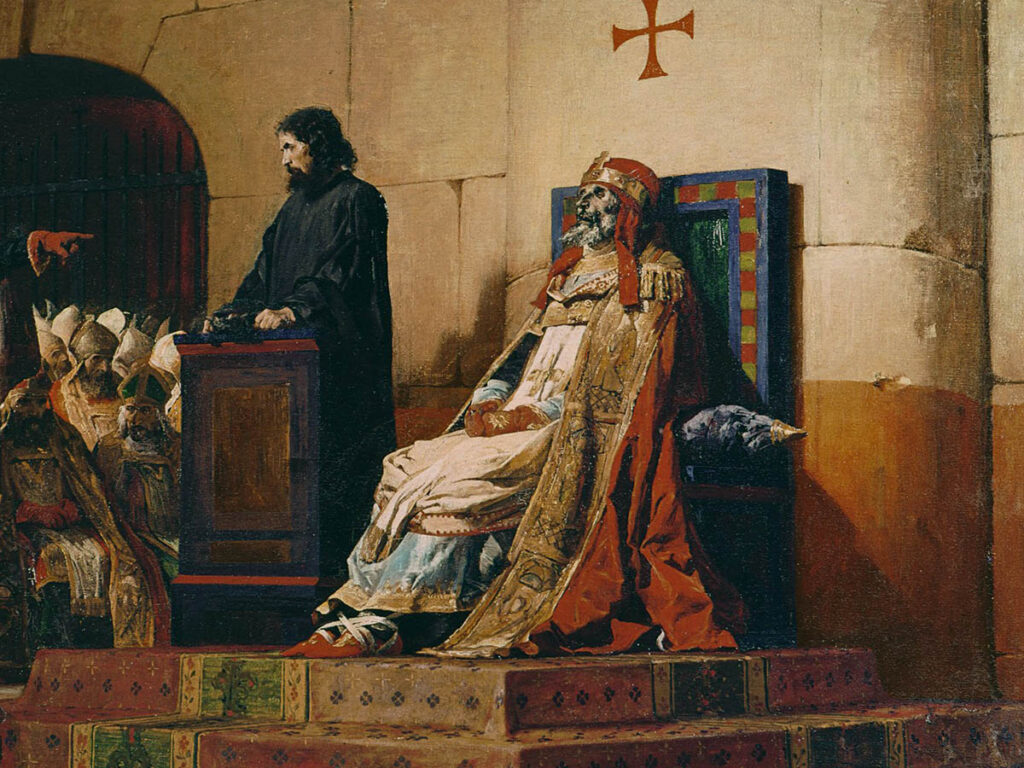
He was a controversial figure in life, so after he died, a successor of his saw fit to give him the day in court he deserved in life. Pope Stephen VI had Formosus’ remains exhumed and what happened next went down in history as the Cadaver Synod. A dead body brought to the papal court for judgement. Hilariously, Stephen accused Formosus of perdury during this trial. I can’t stress enough how dead Formosus was at the time but still, the law just brings the worst out of people I guess.
Needless to say, the corpse was found guilty of perverting the office of the Pope, and thus, Formosus’ papacy was declared null. His corpse was stripped of papal vestments, the blessing fingers on his right hand cut off, and, as a final indignity, he was dressed in the clothes of a layman and interred in a grave for commoners. Before being dug up again, tied to weights and thrown into the river Tiber. Clearly, this was all a power play, a show for the public to demonstrate the Vatican’s wrath.
The irony is that this spectacularly backfired. Formosus wasn’t a beloved figure, but the Cadaver Synod was seen as cruel. Word got around that Formosus’ corpse was still performing miracles, and the public of Rome deposed and imprisoned Stephen before he was strangled in prison. Then, would you believe it, the whole charade began again of Formosus’ corpse being dug up again, pardoned, then reburied in a manner fitting of the Papal office.
Tough to see what lesson Formosus could have learned from all that, but that’s the law for you, I guess.