


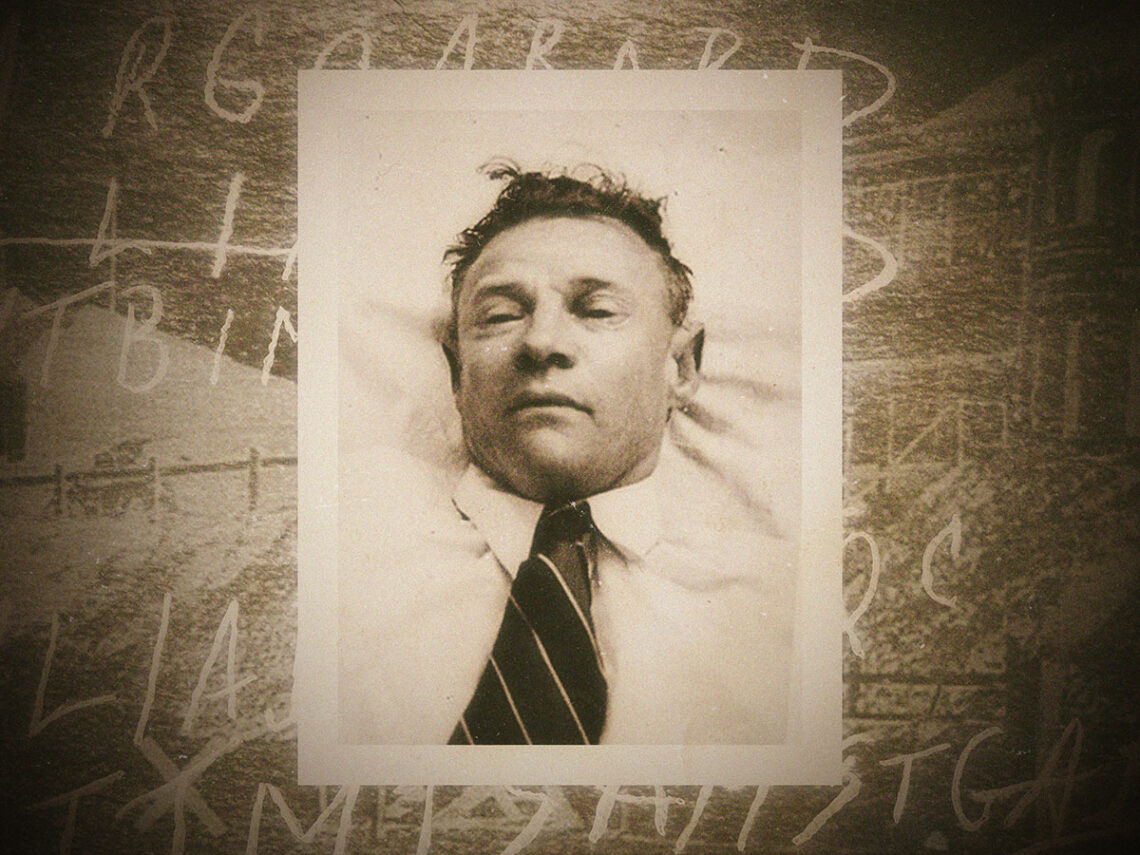
How Australia’s biggest mystery of 1948 was finally solved
On December 1st, 1948, a body was found on Somerton Park beach in Australia, opposite a children’s home. Dressed in a business suit, with a half-smoked cigarette in his coat. Then, months after his discover, a note was found in his pocket containing a single phrase in Persian.
“Tamám shud”, it said. Loosely translated to English, the phrase means, quite simply, “It is over.”
No identification was found on the body. One of his pockets contained a train ticket from Adelaide to Henley Beach, but no name of the buyer could be found on it. No one came to identify or claim the body, and not even his dental records could bring about a match, so he was known as nothing more than the Somerton Man.
It’s a case that baffled Australian true crime fanatics for decades, especially as the moment you look closer at it, the stranger it gets.
For starters, the autopsy reports showed that the Somerton Man was in good physical condition. This wasn’t a death from heart failure or any other kind of illness of that nature. Instead, it appeared to be either suicide or murder. There had seemingly been prep work for the former. As previously mentioned, there was no identification on the body, and all the labels on his clothes had been removed. He had no hat or wallet either, all signs of a man who was prepared for his fate.
Yet, the autopsy also reported some suspicious activity in his body. Not the kind that spoke to an illness, though, the kind that spoke to ingesting something that didn’t agree with you in the slightest.
The plot thickened even further when a briefcase was discovered in a nearby hotel that hadn’t been claimed for weeks after the discovery of the body. Moreover, the contents fitted the body perfectly and were bought from the same outlets as the clothes on the body were bought from.
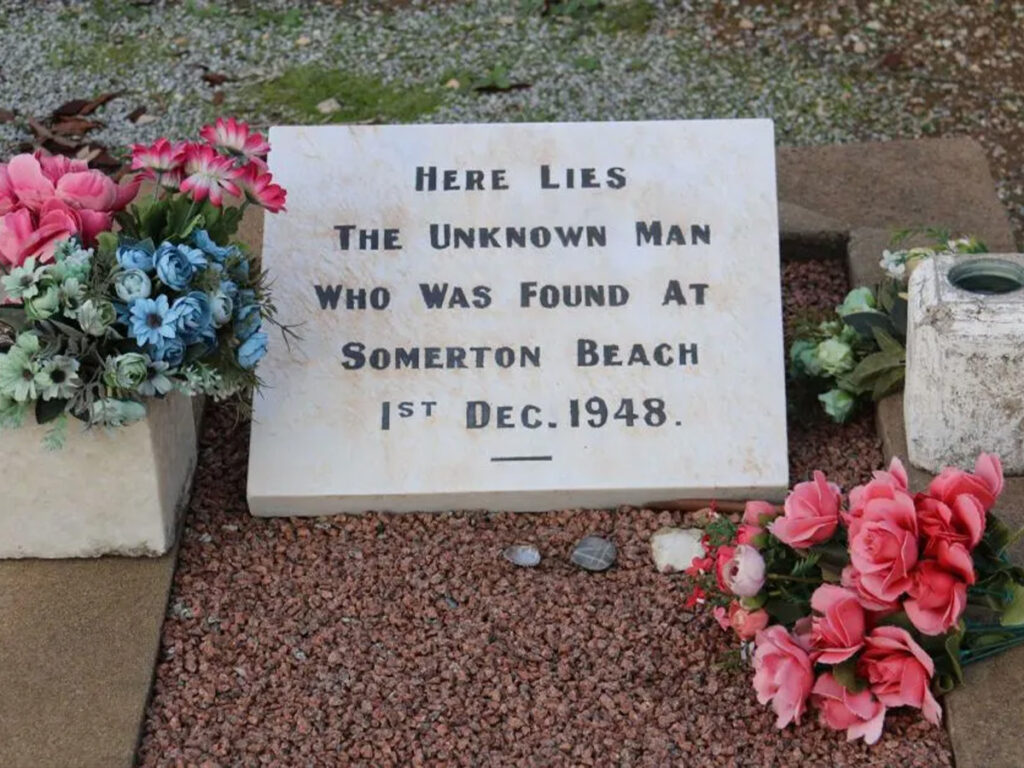
These had some name tags on them, identifying their owner as T Keane. Mystery solved, right?
Not so much. You see, wartime rationing was still rampant. Thus, many people bought second hand clothes to get around that. These clothes rarely had the nametags removed and every other tag in this luggage had been removed. Which lead to two possibilities. Either someone had removed all the nametags that pointed to their real name, or someone really wanted people to think that the body on Somerton Park Beach was named T Keane.
This led to a large, deep and twisting rabbit hole. There are some who believe the Somerton Man was a spy whose body wasn’t taken care of correctly and is causing an international incident behind the scenes. There are some who think that he was a jilted lover who took his own life out of the despair of being cheated on. There are some who think he was a Russian KGB operative in Australia, but one thing we do seem to know is his identity.
In 2022, genetic testing was done on a lock of his hair, leading to the revelation that the Somerton Man was in fact a 43-year-old electrical engineer from Melbourne by the name of Carl ‘Charles Webb. This was double-checked against death certificates from the area. While Webb did live in Melbourne in the mid-20th century, a death was never formally reported, at least until now. Of course, the identity only solves one part of the mystery.
Who was Charles Webb really? Why did he seemingly take his own life? What was with the note in his pocket? We’ll never truly know, so let’s get speculating!