


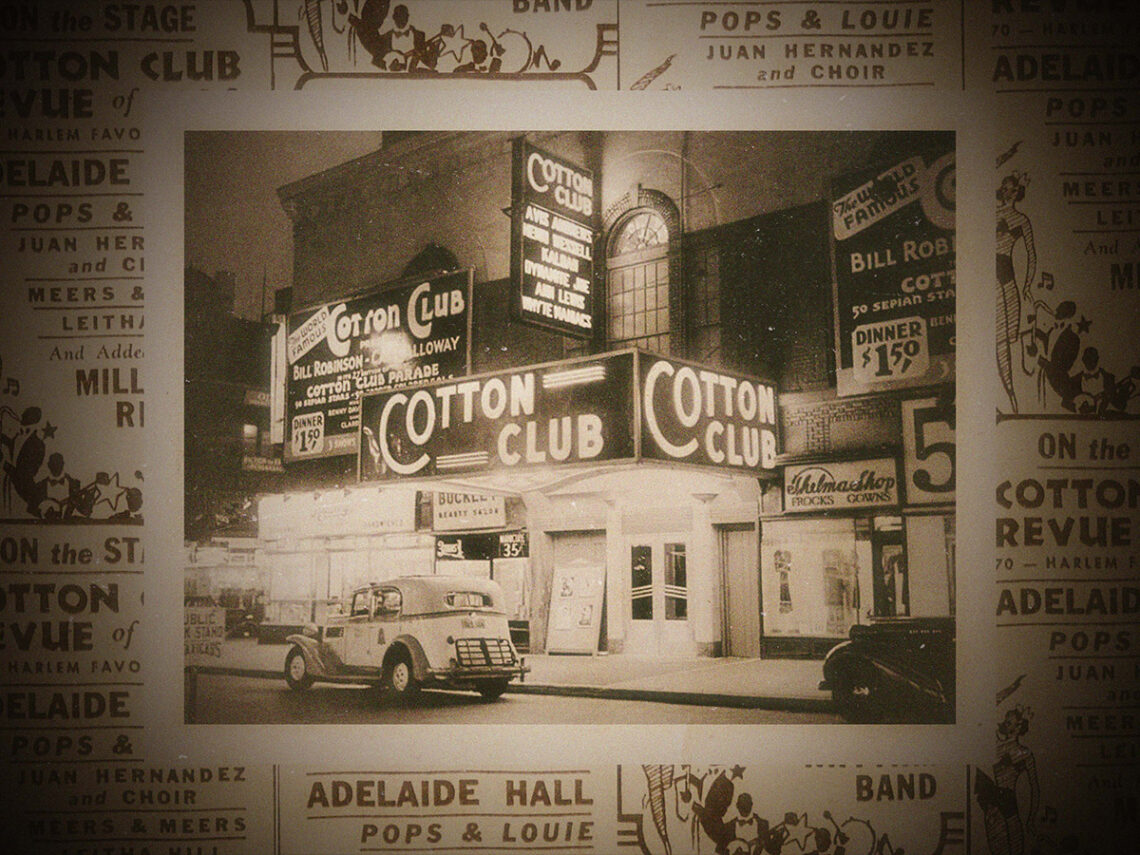
The troubling history of how The Cotton Club became New York’s most infamous haunt
“That’s just the way things were.” “It was a different time”. Analysing the way we talk about history is a pastime that begins as fascinating as any piece of historiography, but descends into something truly depressing very quick.
After all, one does have to bear in mind that the march of progress is never-ending and values change all the time. However, you do also have to keep in mind what you’re actually doing with language like that. Take the old James Bond films, for example. The troubling scene in Goldfinger gets waved away with the old chestnut, “It was a different time”. This ignores the fact that the film was considered a troublingly misogynistic work at the time of its release in 1964.
Talking about the past as this blissfully ignorant period where people went about their days committing atrocities against their fellow man without really knowing it ignores that people were just as conscious of how wrong their acts were then as they are now. Just because it was more widespread didn’t make it acceptable. For a more chilling example of this, look at The Cotton Club, a nightclub opened in 1923 to be one of the premier jazz hot-spots in New York City.
Anyone who knows the slightest thing about the 1920s would probably assume that The Cotton Club was segregated, and bands made up almost entirely of Black jazz players would entertain white audiences on the regular. “That’s just the way things were back then.” Except it wasn’t. At least, that wasn’t what it was envisioned as. No, the world didn’t just naturally bend towards white supremacy back then in a way that it doesn’t now. Instead, white supremacists found a beautiful thing and broke it.
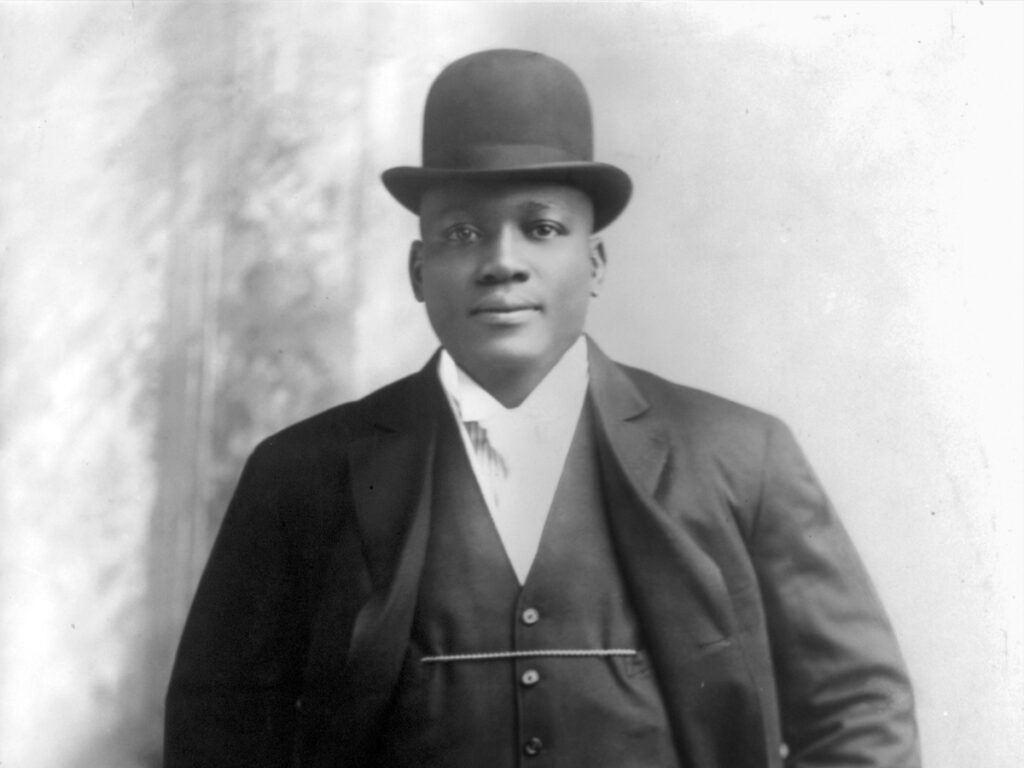
Everything, even down to the name The Cotton Club, is a perversion of its original vision, one brought forward by Jack Johnson, one of the most celebrated boxers of his era.
What did The Cotton Club begin as?
Johnson was a megastar and a lightning rod of controversy everywhere he went. He was arguably the best boxer in the world and an African-American man. That combination made an awful lot of horrible people very cross indeed. His winnings gave him the cache to branch out into avenues other than boxing and one of them was the Club DeLuxe. Johnson rented the upper floor of a building on the corner of 142nd Street and Lenox Avenue and opened it as a (to use the parlance of the time) a Black and tan club.
This was to mark it out as a club for use by black and mixed-race clientele, and over the next few years, Club DeLuxe became one of the most high-profile clubs in New York City. A club that was happening enough to catch the attention of notorious gangster Owney Madden, despite the fact that Madden was in prison by the time the club opened. That didn’t stop him from planning to descend upon it the moment he was free and when he was released, that’d exactly what he did.
In 1923, Johnson sold Club DeLuxe to Madden, who immediately started rebranding the club. His first act was to segregate it, turning this haven for people of colour to enjoy the culture that they created into just another place that white people could watch Black people perform for their entertainment.
Going a step further, Madden seemingly had to rub it in the club’s previous owner’s face. Turning the decor of the club into a horribly racist celebration with jungles and plantations painted on the walls while dancers wore leopard-print bikinis.
The final indignity is one that the observant among you would have already noticed. The name change. Club Deluxe became The Cotton Club.
Despite that, the likes of Duke Ellington, Ethel Waters, Cab Callaway, Lena Horne, Sammy Davis Jr. and Louis Armstrong all still took to its stage to perform.
After all, “It was a different time”.